
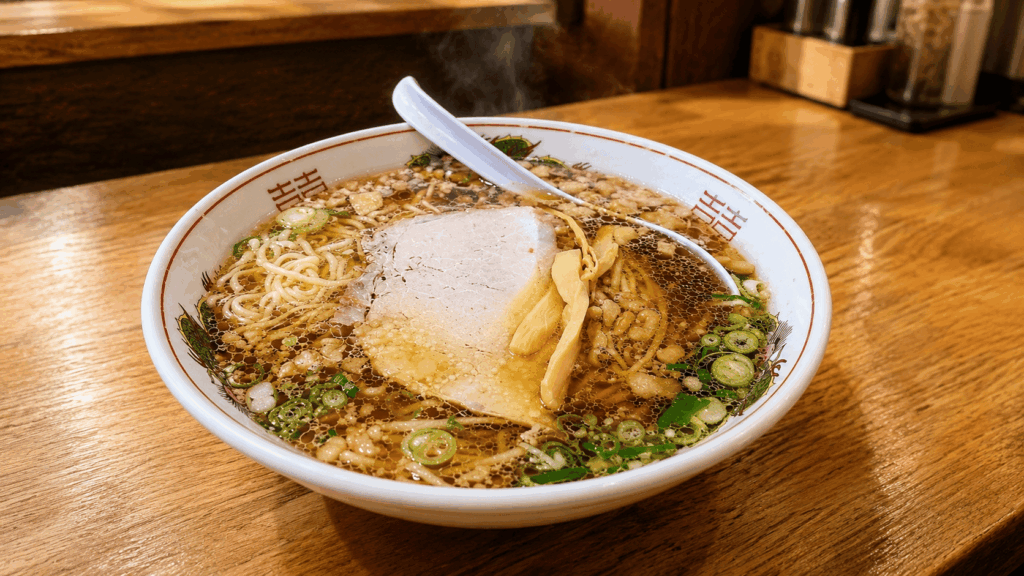
If you only have one meal in Onomichi, make it Onomichi ramen. If you have a half-day, I’d add two more stops to the same walk: curry bread at Panya Koro and an ice monaka at Karasawa. That’s the whole plan — three shops, all within easy walking distance of the station, arranged so you hit the most time-sensitive stop first.
Onomichi’s food scene is bigger than these three places, and I’m not going to pretend this is a ranking of the most delicious restaurants in town. What it is, is the route I actually use when I bring first-time visitors here: it covers the food this port town is known for, keeps waiting to a minimum, and leaves room for the temples and the ropeway you probably came to see.
If the food stops are only one part of a packed Onomichi day, a customizable private guide can remove some of the route and timing juggling. Check the 4- and 6-hour options, current availability and recent traveler reviews for this Onomichi private tour before deciding whether the extra help is worth it.
What Should You Eat in Onomichi?
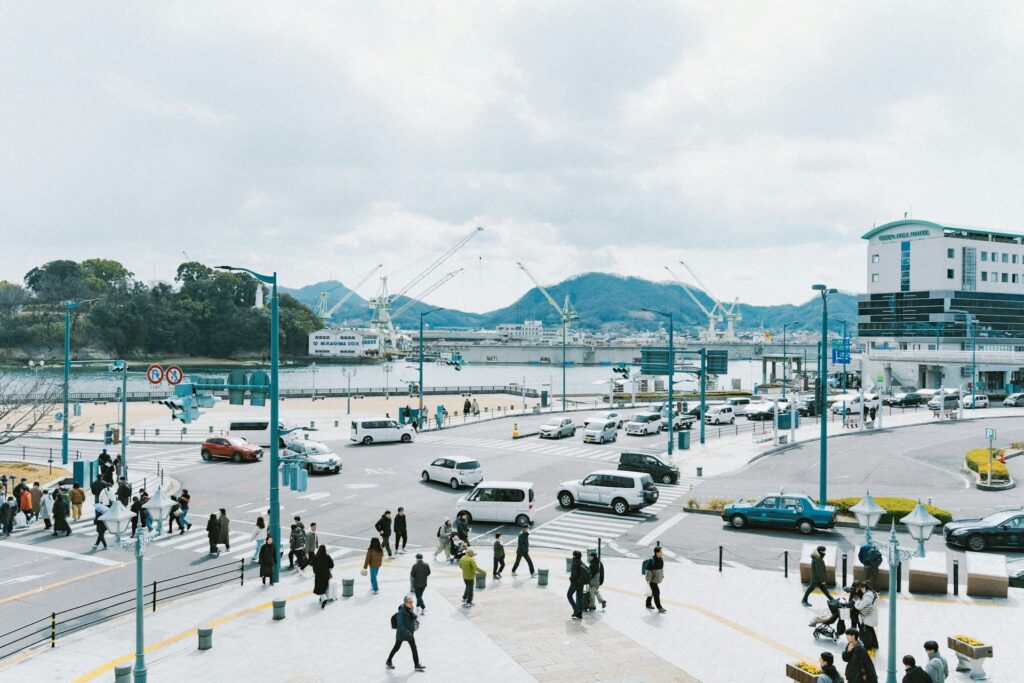
Here’s the short version if you’re planning on the train. Four foods matter for a first visit; the first three form the walking route in this guide, and the fourth is worth knowing about even if you don’t have room for it.
| Food | Where I’d eat it | Why it’s worth trying | Best for | Main downside |
|---|---|---|---|---|
| Onomichi ramen | Ichibankan, on the waterfront in Tsuchido | Soy-sauce broth with Seto Inland Sea small-fish flavor and a layer of pork back fat, over flat noodles | First-time visitors; groups; the one meal that anchors a short trip | Weekend lunch queues; the shop closes when soup runs out; closed Fridays |
| Beef tendon curry bread | Panya Koro, near the Hondori shopping arcade | Crisp, craggy crumb around a rich beef tendon curry | Eating on the move; stocking up for the next morning | Popular items can sell out later in the day; the shop is tiny |
| Ice monaka | Karasawa, on the waterfront | Egg-based ice cream in a wafer shell that’s filled to order | A light, cool finish after ramen; hot days | Seasonal hours; closed Tuesdays; expect a short wait even though the line moves fast |
| Onomichi-yaki | Sit-down okonomiyaki shops around the arcade | Hiroshima-style okonomiyaki with sunazuri (chicken gizzard) and ika-ten (fried squid) | Travelers with a second meal slot in the day | Heavier and slower than the other three; hard to fit into a half-day |
The mistake I see first-time visitors make is trying to squeeze in every listed specialty. Onomichi looks compact on a map, but the slopes, the temple paths and the arcade absorb time quickly — and most people are here for the views as much as the food. That’s why this guide doesn’t try to be exhaustive. It walks through each stop in order, including when to go, what to order and how to avoid the worst queues — plus the one situation where I’d tell you to skip the route entirely.
If you’re pairing these food stops with the temple walk and the ropeway, our one-day Onomichi itinerary fits them into a realistic walking order rather than a map scatter of ten restaurants. And if you’d rather have a local build the food stops into the rest of your sightseeing, a private guide is a reasonable option — I’ll cover the trade-off in the tour section later in this article.
Why Onomichi Ramen Should Be Your First Food Stop
Onomichi ramen is a regional style built around a clear soy-sauce broth that picks up its flavor from small fish caught in the Seto Inland Sea — anchovy is the fish you’ll hear named most often — with a layer of pork back fat, called seabura, floating on top. The noodles are medium-thin and flat, cut the way they are so the broth clings to every strand. It developed in this port town’s fishing and shipping trade, and today it’s the dish most people associate with Onomichi.
Before my first bowl, I expected the visible back fat to make it heavy. What surprises most first-time visitors is how light it reads: the fish stock keeps the broth savory rather than oily, and the fat mostly adds aroma and a soft coating on the noodles. You can finish the bowl and still face one of Onomichi’s hills without regret. That’s the honest version — the soup is rich, not greasy.
I’d still make it the anchor of your food crawl, for three practical reasons. First, it’s the one dish Onomichi is known for, so it gives you the town in a single bowl. Second, the shops that serve it open around 11:00, which suits a morning arrival by train from Hiroshima or Okayama. If you are still planning your route, check our guide on how to get to Onomichi from Tokyo or Osaka. Third, a bowl is filling without being so heavy that it kills the next two stops — which is exactly what you want before a walk through the arcade.
One thing to know: Onomichi ramen isn’t one restaurant. Several long-standing shops around town serve the style, and regulars argue about which is best. For a first visit I’d default to Ichibankan, and I’ll explain why in the next section — including when I’d steer you somewhere else and how to handle the weekend queue.
My Pick for First-Time Visitors: Ichibankan
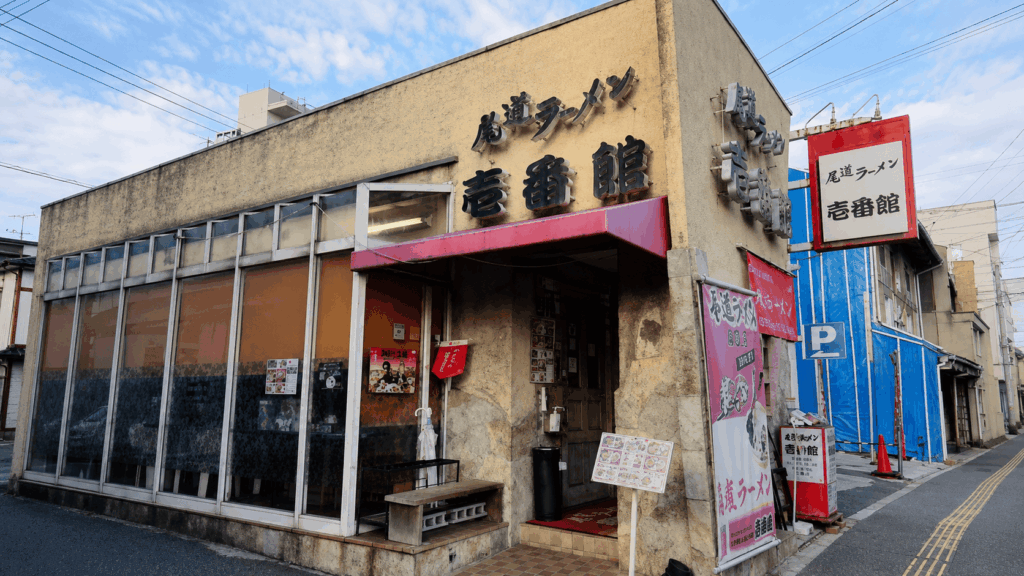
Onomichi Ramen Ichibankan — 尾道ラーメン壱番館 — sits on the waterfront in the Tsuchido neighborhood, roughly a 10-minute walk from JR Onomichi Station through the shopping arcade. It’s one of the long-standing shops that helped make Onomichi ramen famous, and it’s the place I default to when I bring someone here for the first time.
To be clear, this isn’t me declaring Ichibankan the most delicious bowl in town — regulars will happily argue about that over a bowl of their own. I recommend it because it’s the practical choice for a visitor: the dining room is bigger than at some of the other famous shops, so a group can usually sit together without splitting up, and it sits on a flat stretch of the waterfront that makes the rest of this route easy to walk. If you’re traveling solo or as a pair and willing to queue early, one of the smaller legendary shops can work just as well — but for a first visit with limited time, I’d start here.
Ichibankan opens at 11:00 and closes when the soup runs out, which is usually well before the evening. It’s closed on Fridays (open on holidays, but check before you go). The most popular order is the kakuni ramen topped with braised pork belly, and it’s made in limited numbers each day — it sells out. If it’s gone, the standard chashu bowl is still a solid first impression of the style.
What the Ramen Tastes Like
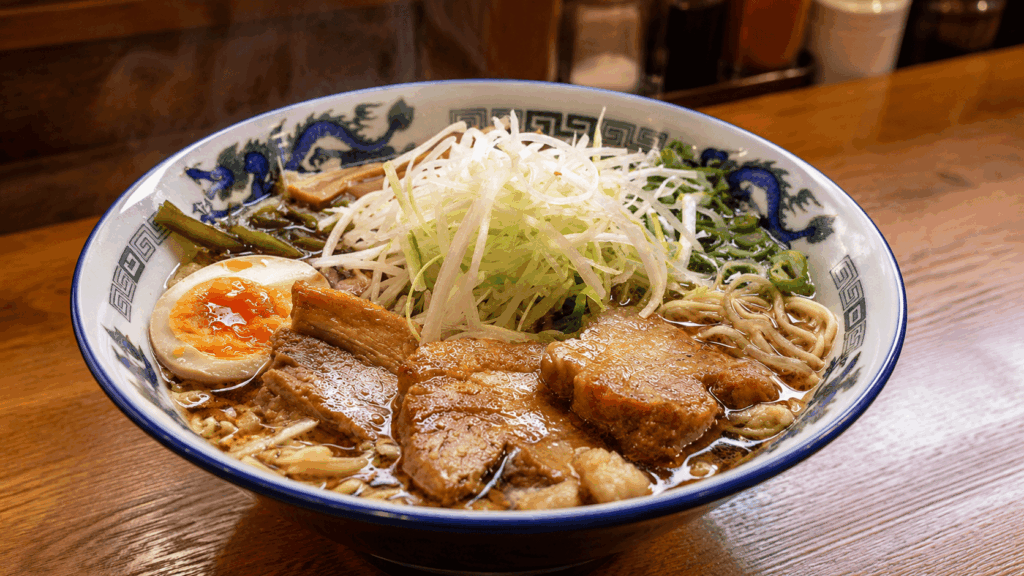
The broth is a clear soy-sauce base flavored with small fish from the Seto Inland Sea — anchovy is the fish named most often — plus chicken and pork stock, finished with a layer of seabura, or pork back fat. The noodles are Ichibankan’s own medium-thin flat noodles, slightly wavy, cut so the broth clings to them. If you’re ordering the kakuni version, you get a slow-braised slab of pork belly on top that’s sweet, soft and worth the extra cost.
My honest read after many bowls: the visible back fat makes it look heavier than it tastes. The fish stock keeps the broth savory rather than oily, and the fat mostly adds aroma and a silky coating on the noodles. First-timers are usually surprised by how comfortably they finish the bowl — and how ready they still are for the next stop on this route.
How to Avoid the Worst Queue
Weekend lunchtime is the bottleneck. Between roughly 11:30 and 13:00 on Saturdays and Sundays, expect a line that can reach 30–40 minutes or more; on weekday afternoons it’s usually calmer. Ichibankan seats people continuously rather than by ticket, so the queue moves, but it moves slowly when tables turn over for groups.
Kai’s tip: On weekends, aim to arrive 15–20 minutes before the 11:00 opening and join the first seating wave. You’ll usually walk in within the first 20 minutes instead of waiting out the noon rush. This works because the first seating empties in one big turnover — but I wouldn’t count on it during Golden Week, summer holidays or long weekends, when the early line forms even earlier.
Driving? Don’t Depend on the Restaurant Parking Lot
Ichibankan has a small customer lot, but it holds only a few cars and it’s easy to miss if you don’t know where to look. On weekends, cars circle the block waiting for a space to open. If you’re driving, my advice is to skip the restaurant lot entirely.
Kai’s tip: Park once, on foot. Leave the car in a coin parking lot near Onomichi Station or along the waterfront, then walk the whole route — Ichibankan to Panya Koro to Karasawa is a flat, manageable walk of about 15 minutes in total. You’ll pay a modest parking fee and save the time you’d otherwise spend hunting for a space between every stop. On weekends, the station-side lots fill up too, so aim for a weekday or arrive before 10:00 if you’re parking downtown.
Stop 2: Panya Koro for Curry Bread and Tomorrow’s Breakfast
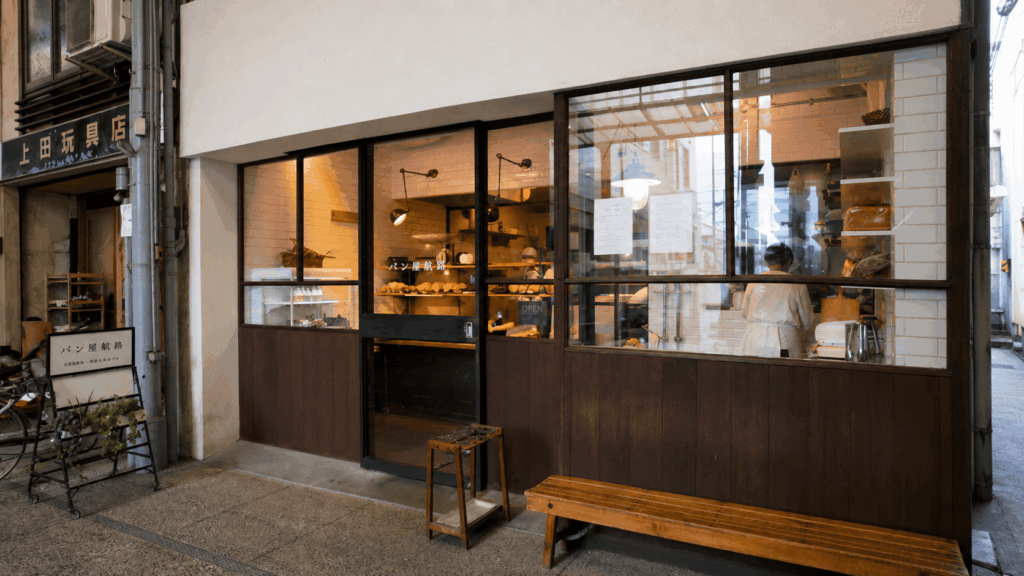
Panya Koro — パン屋航路 — is a small bakery tucked just off the Hondori shopping arcade, about a 5-minute walk from Onomichi Station. Its reputation rests on one thing: a beef tendon curry bread with a craggy, crispy crumb that shatters when you bite into it. It’s the second stop on this route for a reason — it’s the most likely thing to sell out if you leave it too late.
Be aware that the shop is genuinely tiny, with just a narrow counter and a few baskets of bread. Recent visitors consistently mention a small in-store limit — often around four people at a time — so expect a short wait to get inside even when the line outside looks short. It moves quickly, but it’s worth knowing before you arrive with a group of six.
What to Buy at Panya Koro
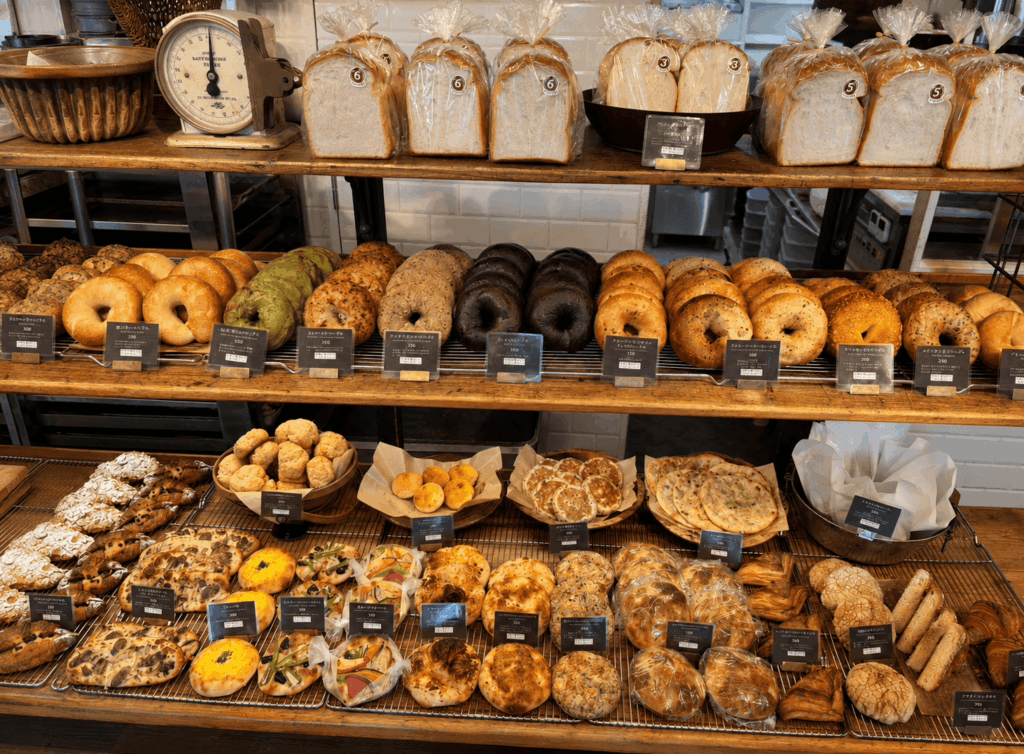
Order the beef tendon curry bread — around 200 yen — and eat it while it’s still warm if you can. The outside is coated in rice-cracker-like crumbs that stay crisp, and the curry inside is rich with a slight sweetness that balances the heat. It’s genuinely one of the best things I’ve eaten standing up in Onomichi.
Recent visitors report a purchase limit of around three curry breads per family, so don’t plan to stock up on the signature item alone. That’s where the rest of the bakery comes in: Panya Koro also bakes hard rolls and savory loaves that keep well, which makes it a practical stop for tomorrow’s breakfast if you’re staying overnight in town. A couple of rolls plus the curry bread turns one visit into both today’s snack and tomorrow’s morning meal.
Why You Shouldn’t Leave the Bakery Too Late
Panya Koro opens early — around 7:00 — and closes when the bread sells out, which on busy days can happen in the afternoon. The mistake I see travelers make is treating it as an anytime stop and arriving after the temple walk, only to find the curry bread gone.
Kai’s tip: Don’t push the bakery to the end of your day. In the order I use, ramen comes first (Ichibankan opens at 11:00, so there’s no reason to arrive earlier), and Panya Koro comes immediately after — usually around 12:30–13:00, when the first baking waves are still fresh but the crowd from the morning has thinned. Curry bread is for eating on the move; buy the hard rolls for the hotel fridge and tomorrow morning. If you’re passing through on a Monday or Tuesday, check their Instagram stories before relying on them being open — the closing days shift.
Stop 3: Karasawa’s Ice Monaka by the Waterfront
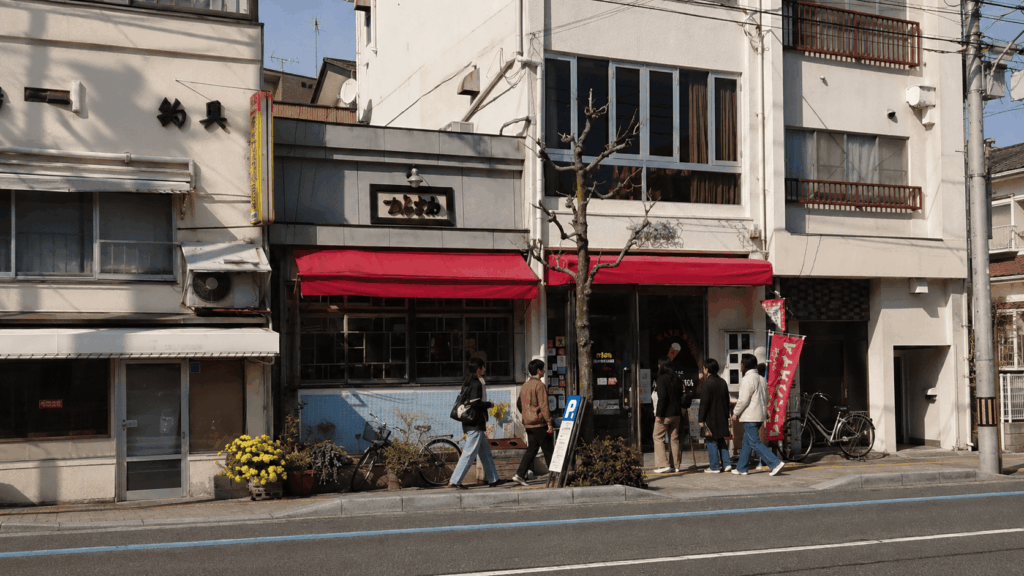
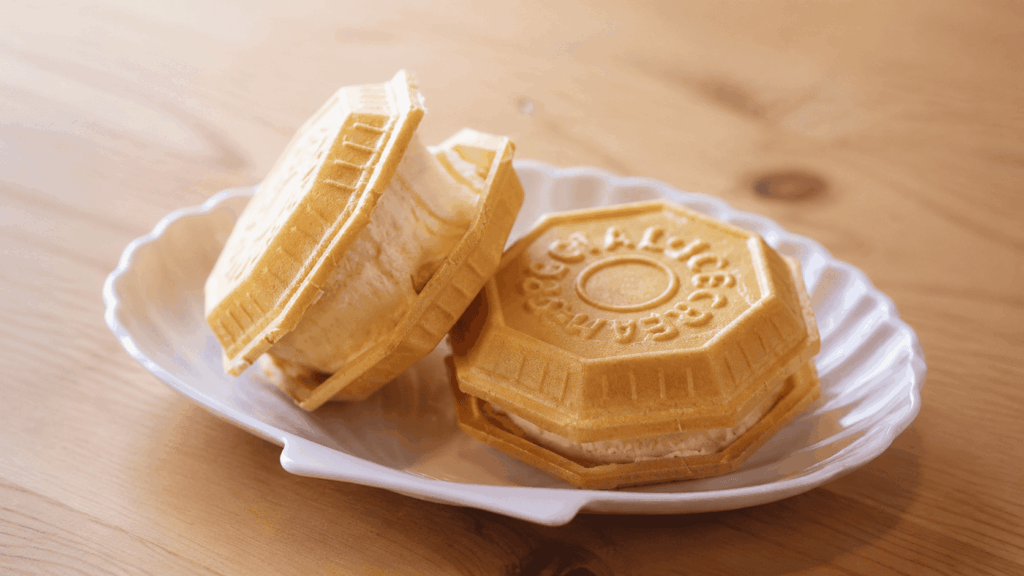
Karasawa — からさわ — is a tiny ice cream shop on the waterfront that has been hand-making ice cream since 1939. Its signature is the ice monaka: a crisp wafer shell filled to order with egg-based ice cream, sold for around 180 yen. It’s the light, cool finish this route needs — especially after a bowl of ramen and a fried curry bread.
The ice cream itself is simple and old-fashioned, with a clean egg flavor and none of the heaviness of modern gelato. The monaka is assembled when you order, so the wafer stays crunchy rather than softening into the ice cream. On a warm day, eating it while looking across the water at the islands is one of those small Onomichi moments that costs very little and lingers.
Is the Line Worth Waiting For?
Karasawa draws a steady line on weekends, and I’d be lying if I said there’s never a wait. But it’s a takeout-first shop with a quick counter, so the line moves in short bursts — you’re usually in and out within 10–15 minutes even when it looks long. If you’re arriving late in the day, check the closing time first: it’s usually around 17:30 on weekdays and 18:00 on weekends, with seasonal changes, and the shop is closed on Tuesdays (plus the second Wednesday from autumn through early spring). The official Instagram is the most reliable place to confirm hours before you go.
The Best Order to Eat These Foods in Onomichi
Here’s the logic behind the route, because it’s what makes this different from a list of ten restaurants: eat the most time-sensitive thing first. Each stop fails in a different way, and only one of them punishes you for arriving late.
| Stop | Best timing | What to order | Main risk if you delay | Why it works in this order |
|---|---|---|---|---|
| 1. Ichibankan (ramen) | Right at 11:00 opening, or by 13:30 on weekdays | Kakuni ramen (limited), or standard chashu ramen | Weekend queues; soup runs out and the shop closes | Opens latest of the three, so it anchors the start; the bowl is filling but light enough to walk on |
| 2. Panya Koro (curry bread) | Straight after ramen, before 14:00 | Beef tendon curry bread; hard rolls for tomorrow | Signature items sell out; shop closes when bread is gone | Still stocked at early afternoon, and the walk from Ichibankan settles the ramen |
| 3. Karasawa (ice monaka) | Anytime before closing, mid-afternoon is fine | Ice monaka (seasonal flavors available) | Only the hours; the line moves fast even when long | Takeout with quick turnover, so it absorbs any schedule drift |
This order also respects your stomach: ramen is a proper meal, the curry bread is a snack you eat while walking, and the monaka is a light finish. Reversed, you’d be eating dessert first and then trying to face a bowl of ramen and a fried bread on a full stomach — which is exactly the over-full feeling people worry about when they search for Onomichi food.
If you’d rather not manage the timing yourself, that’s a fair reason to consider a guide — see the tour section below for when that’s worth it.
What If You Only Have One Meal in Onomichi?
The route above assumes a few hours. Here’s how I’d cut it down by the time you actually have:
- One meal only (about an hour): Skip everything else and get Onomichi ramen. It’s the town’s defining dish, and every other stop on this route is a bonus on top of it.
- 2–3 hours (typical stop between trains): Ramen at Ichibankan, then curry bread at Panya Koro on the way back toward the station. Drop Karasawa only if the line looks long — it’s the easiest stop to skip without regret.
- Half a day (4–5 hours): Do all three stops in order. You’ll have time for the arcade and the waterfront in between, and the whole food walk stays under 20 minutes of total walking.
- A full day: Add Onomichi-yaki as a second meal — see below — or fold the food stops into the temple walk and ropeway route in our one-day Onomichi itinerary.
What About Onomichi-yaki?
Onomichi-yaki is the local take on okonomiyaki: a griddled pancake layered with cabbage, noodles and egg, finished with the town’s signature additions of sunazuri (chicken gizzard) and ika-ten (fried squid). It’s genuinely local, and if you have a second meal slot in your day, a sit-down okonomiyaki shop around the arcade is a great way to fill it.
I’d still not make it the anchor of a half-day visit. It’s a sit-down dish, it’s heavier than ramen, and it takes longer — which is the opposite of what you want when you’re trying to see the temples and the ropeway on a short schedule. My rule of thumb: ramen first if you only eat once; add Onomichi-yaki as a relaxed second meal (lunch or early dinner) if you’re staying overnight.
Is a Food Tour or Private Guide Worth It in Onomichi?
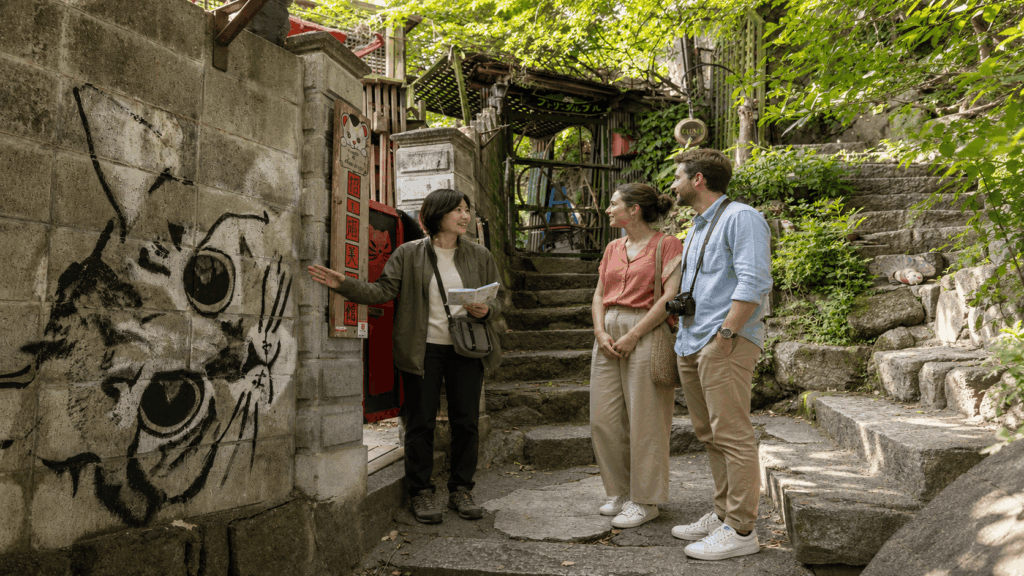
Straight answer: no, you don’t need one for the food itself. The three stops in this route are all walkable from the station, they take credit card and cash inconsistently (cash is the safe default), and the ordering is simple enough to manage without Japanese. I’d only consider paying for help if you’re also trying to fit the temple walk, the ropeway and the viewpoints into a tight window — that’s where a guide earns the money, not at the lunch counter.
If that describes your day, GetYourGuide runs a customized private tour of Onomichi with a licensed English-speaking guide, in 4- or 6-hour formats, with free cancellation on most bookings. It works best for travelers who’d otherwise be juggling maps, opening hours and sightseeing priorities themselves. It is not a food tour — meals aren’t the focus, and the itinerary is built around your interests, which you can steer toward food stops if you want. Pricing varies by option and travel details, so check the current rate and conditions for your date.
If you want the ramen and local snacks but also need to make the temples, ropeway and viewpoints fit into the same limited window, this is the one booking worth comparing against doing everything independently.
Why I’d book this one
- It is a private, customizable tour with a licensed guide, so the sightseeing can be shaped around the parts of Onomichi you actually want to prioritize rather than forcing you into a fixed food-tour itinerary.
- Recent travelers consistently mention strong local knowledge and thoughtful, personalized planning, which matters in a town where opening hours, slopes and small detours can eat into a short visit.
- Travelers also highlight smooth organization and useful local context, including food suggestions — a better fit for combining this route with the rest of Onomichi than paying for guidance at the lunch counter alone.
Practical Tips Before You Go
- Go on a weekday if you can. The difference between a Tuesday lunch and a Saturday lunch at Ichibankan is the difference between walking in and waiting 30 minutes.
- Check hours the morning of your visit. Ichibankan closes when the soup runs out, Panya Koro closes when the bread runs out, and Karasawa changes hours by season. All three have official presences you can check the day before.
- Bring cash. Small shops in Onomichi take cash more reliably than cards. A few thousand yen covers the whole route with room to spare.
- Don’t drive between stops. The three shops are a 15-minute walk total. Parking near the station once and walking is faster, cheaper and less stressful than moving the car three times.
- Mind the season. Ramen is perfect if you are visiting Onomichi in winter; the monaka is the summer move. In August the waterfront walk between stops is hot — the arcade route offers shade, so use it.
- Respect the small spaces. Panya Koro and Karasawa are tiny. Keep groups small, order efficiently, and eat takeout food on the move rather than blocking the counters.
FAQ
What food is Onomichi famous for?
Onomichi is best known for Onomichi ramen — a soy-sauce broth flavored with small fish from the Seto Inland Sea, topped with a layer of pork back fat and served over medium-thin flat noodles. For a fuller first visit, travelers also seek out the beef tendon curry bread at Panya Koro, the ice monaka at Karasawa, and Onomichi-yaki, the local take on okonomiyaki with chicken gizzard and fried squid.
What is the best Onomichi ramen for first-time visitors?
For a first visit, I’d default to Ichibankan on the waterfront in Tsuchido. It’s not a declaration that it’s the most delicious bowl in town — regulars argue about that — but it’s the practical pick: the dining room fits groups more easily than some of the smaller famous shops, it opens at 11:00 which suits a morning arrival, and its flat waterfront location makes the rest of the walking route easy. The trade-off is a real weekend queue, so go early or on a weekday.
How long should I allow for lunch in Onomichi on a weekend?
Budget around 60–75 minutes for ramen at Ichibankan if you arrive right at the 11:00 opening: roughly 20 minutes of waiting at most, then 30–40 minutes to eat. If you arrive at noon on a Saturday, the wait alone can stretch to 30–40 minutes, so the same meal can take closer to 90 minutes. Arriving 15–20 minutes before opening is the most reliable way to keep the whole stop under an hour.
Can you visit these Onomichi food spots on foot?
Yes — all three stops are within walking distance of JR Onomichi Station. Ichibankan is about a 10-minute walk from the station, Panya Koro is roughly 5 minutes from the station just off the Hondori arcade, and Karasawa sits on the waterfront. Walking the full route from Ichibankan to Panya Koro to Karasawa takes about 15 minutes in total, which is why the guide recommends parking once near the station rather than moving a car between stops.
Is Onomichi-yaki worth trying if I already had Onomichi ramen?
Only if you have a second meal slot. Onomichi-yaki is a sit-down dish that’s heavier and slower than ramen, so it doesn’t fit well into a half-day food crawl. If you’re staying overnight or have a full day, it’s a great relaxed second meal — look for okonomiyaki shops around the shopping arcade. If you only eat once in Onomichi, ramen is the better use of that meal.
Final Verdict: The Food I’d Prioritize on a First Trip to Onomichi
What I’d tell a friend visiting Onomichi for the first time: don’t try to eat the town. Pick the three stops that represent it, eat them in an order that respects both your time and your stomach, and you’ll leave with the food memory intact instead of a list of half-remembered meals.
- Choose this route if you have at least 2–3 hours in Onomichi, you want to taste the town rather than collect restaurant names, and you’d rather spend your time on the temples and the ropeway than in a queue.
- Choose another plan if you’re a dedicated food traveler who wants the deep dive across many shops, you’re on a strict diet that rules out ramen and fried bread, or you’re traveling with someone who can’t walk the short distances between the three stops.
- For first-time visitors: start with Ichibankan’s ramen, add Panya Koro’s curry bread, and finish with Karasawa’s ice monaka. That’s the complete Onomichi food experience in under two hours of eating time.
- For families: the route works well because the shops are casual and fast. Go on a weekday if you can, arrive at Ichibankan before it opens, and remember the curry bread purchase limit applies per family — send one person in while the rest hold the table or the stroller.
- For travelers on a tight schedule: do ramen only, and time it for the 11:00 opening. Everything else is a bonus you can add if the day runs smoothly.
- For repeat visitors: you already know the ramen. Use a second visit to try Onomichi-yaki at a sit-down shop around the arcade, or explore the smaller legendary ramen shops — but go early, because their queues are part of the experience.
Hi, I’m Kai. I’m a Tokyo-based travel writer, tourism industry insider, and the author of a published guidebook for international visitors to Japan. With over 10 years of professional experience at a leading Japanese tourism company, my mission is to help you skip the tourist traps and navigate Japan’s best destinations like a local. I believe the perfect day trip is like a traditional kaiseki meal: a beautiful balance of precise planning and unforgettable seasonal discovery. When I’m not out conducting field research, you’ll usually find me drafting new itineraries with one of my favorite fountain pens!