
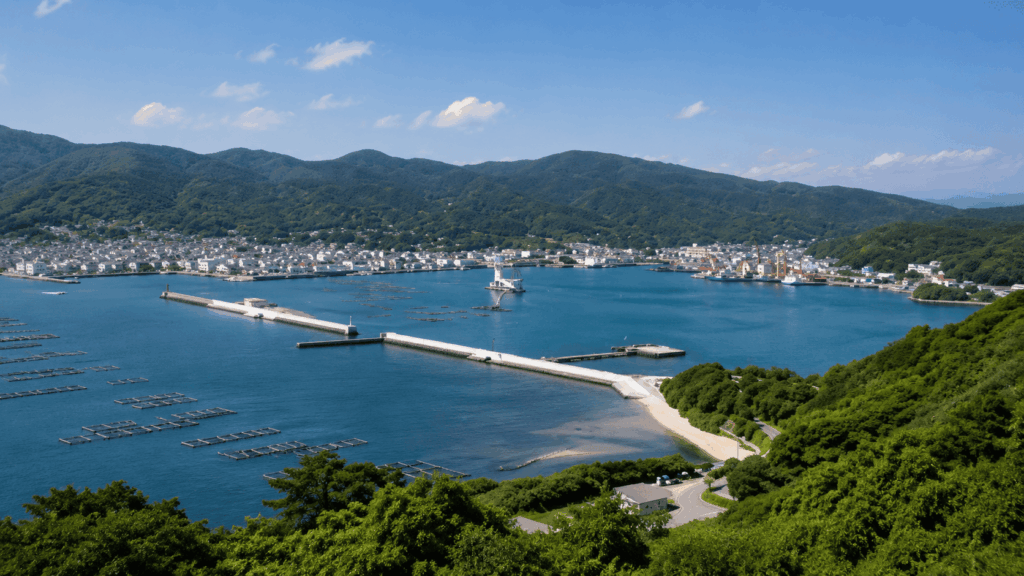
Awaji Island is the long, narrow island in the Seto Inland Sea that the Akashi Kaikyo Bridge — the suspension bridge with the world’s longest central span — connects to Kobe. For travelers looking for day trips from Osaka or Kobe, it’s one of the easiest excursions in Kansai and one of the most misunderstood. The island doesn’t have a single landmark that defines it. What it has is a string of very different experiences spread from north to south: hilltop flower fields, Japan’s oldest shrine, a Tadao Ando architecture complex, an anime theme park, and the Naruto whirlpools at the southern tip.
So the real question isn’t “is there anything to do on Awaji Island?” — it’s “which things to do on Awaji Island fit the day I actually have?” That’s what this guide is for. My short answer for a first visit: yes, the island is worth a full day trip from Kansai, but only if you pick one theme and build the day around it. Trying to collect everything is the fastest way to spend most of your day in the car.
If Awaji sounds worth a full day but driving unfamiliar roads is the part you’d rather skip, a private customizable tour can cover the island with pickup from Osaka or Kobe while letting you focus on the stops that matter most. Check the Awaji Island & Naruto private tour’s live availability, pickup details and current booking options before you lock in your route.
Is Awaji Island Worth Visiting?
Yes, for most first-time visitors based in Kansai — provided you can give it a full day and you choose a theme. A day on Awaji feels completely different depending on whether you spend it on flower fields and food, on the whirlpool cruise, or inside the anime park, so “worth it” depends entirely on what you’re after.
The mistake I see first-time visitors make is treating the island like a checklist. The drive from the northern bridge end to the southern whirlpool port takes around an hour, so a six-stop itinerary quietly becomes four hours of driving with ten minutes at each stop. Awaji rewards the opposite approach: pick one or two strong experiences, and let the drive itself — coastal views, onion fields, the Onaruto Bridge — be part of the day.
What surprises most travelers is how un-touristy the island still feels. Outside a handful of well-known stops you’re sharing the roads with farmers and local buses, not tour groups. That’s part of the appeal, but it also means you need to know where you’re going — there’s no single pedestrian center to fall back on if a plan collapses.
Who should skip it: if your Japan itinerary is already packed and you can only spare a rushed half-day, skip it — a compressed visit won’t show you why people make the trip. And if what you really want is old-town streets, temples and nightlife, Awaji (outside the anime park) is a daytime, nature-and-food destination; Kyoto or Nara serve that other impulse better.
Awaji is easiest to explore by car. If you’d rather not drive on unfamiliar roads, a private customizable day tour from Osaka or Kobe covers the same route with a driver — more on that later in the transport section.
Quick Guide: What Should You Do on Awaji Island?
Awaji works best when you choose a theme. The table below is the short version of what each stop offers, who it’s for, and how much time it honestly takes. It assumes a car; public transport is workable but much slower, and the trade-offs are covered in the transport section.
| Stop | Best for | Time to allow | Where on the island | Main catch | First visit priority |
|---|---|---|---|---|---|
| Awaji Hanasajiki | Views, photos, families | 45–60 min | North, hilltop | Flowers vary by season; weekend parking | High — start here |
| Uzu no Oka | Food, souvenirs, quick photos | 1–1.5 hrs | South, near the Onaruto Bridge | Lunch queues on weekends | High — pairs with the cruise |
| Uzushio Cruise | The signature whirlpool experience | ~1.5 hrs | South, Fukura Port | Depends on the tide; can be cold on deck | High — plan your day around it |
| Nijigen no Mori | Anime and game fans, families | Half a day | Center, Awaji Island Park | Costs add up; timed entry | Only if anime is your priority |
| Awaji Yumebutai | Architecture, gardens | 1–2 hrs | North | Quiet; some paid areas | Medium |
| Izanagi Jingu | Culture, mythology | 45–60 min | Center | Low-key, no spectacle | Medium |
| Hompukuji Water Temple | Architecture, quiet moments | 30–45 min | North | Small; small entry fee | Lower |
| Akashi Kaikyo National Government Park | Families, flowers | 1–2 hrs | North | Seasonal | Optional |
If you only plan one route on a first visit, the classic is a north-to-south day: Hanasajiki in the morning, Uzu no Oka for lunch and photos, and the Uzushio Cruise in the afternoon when the tide suits. The next sections go into each stop in detail, and later I’ll show you how the full route fits together — plus what to swap in if your priority is anime or architecture instead.
1. Start With the Views at Awaji Hanasajiki
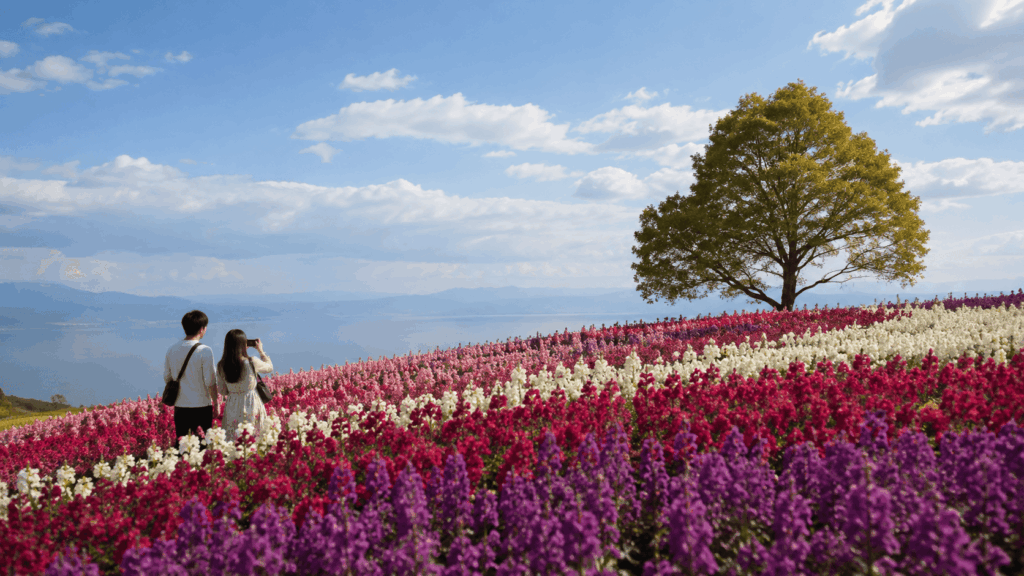
Hyogo Prefectural Awaji Hanasajiki is a hilltop flower park in the north of the island, a short drive off the main north-south road (National Route 28) near Kusumoto, Awaji City. What makes it special is the setting: fields of seasonal flowers slope toward the sea, with views over Osaka Bay and, on clear days, the distant skylines of Kobe and Osaka. It’s the fastest place on the island to get the “I’m on a Japanese island” feeling after crossing the bridge.
Best for: first-time visitors who want the classic island view, families with strollers (the paths are paved and the slopes are gentle), and photographers. It’s also the cheapest stop on the island — entry is free and parking costs ¥200.
Plan your visit
- Open 9:00–17:00 (last entry 16:30). Free entry; parking ¥200 per regular car (about 200 spaces).
- Closed for year-end and New Year holidays, plus some Wednesdays through the year — check the official calendar before you go.
- The flowers change by season: rapeseed in early spring, sunflowers and globe amaranth in summer, cosmos in autumn. The official site publishes a bloom calendar and a live camera, so you can check what’s actually blooming before you commit a morning to it.
Kai’s tip: The approach road winds up through hills and narrows in places — it’s the stretch where rental-car drivers feel most nervous, so take it slowly and don’t let the GPS rush you. On fine weekends the lot fills early, so arrive before 10 a.m. or after 2 p.m.; mid-morning is when the entrance backs up.
What can go wrong
Flowers aren’t a guarantee — after a cold spring or a rainy week the fields can look thin, which is exactly why the bloom calendar exists. In late summer the bees are active around the flowers, so keep snacks packed away. The park sits on an exposed hilltop, so it’s noticeably windier and cooler than the coast below.
How much time: 45–60 minutes is plenty — walk the main path, take photos, and you’re done. It’s a view stop, not a half-day destination.
Pair it with: the northern cluster, where Awaji Yumebutai and Akashi Kaikyo National Government Park are close by. Or use it as the first stop of the north-to-south route, then head south for lunch and the cruise.
2. Make Uzu no Oka Your Food-and-Photo Stop
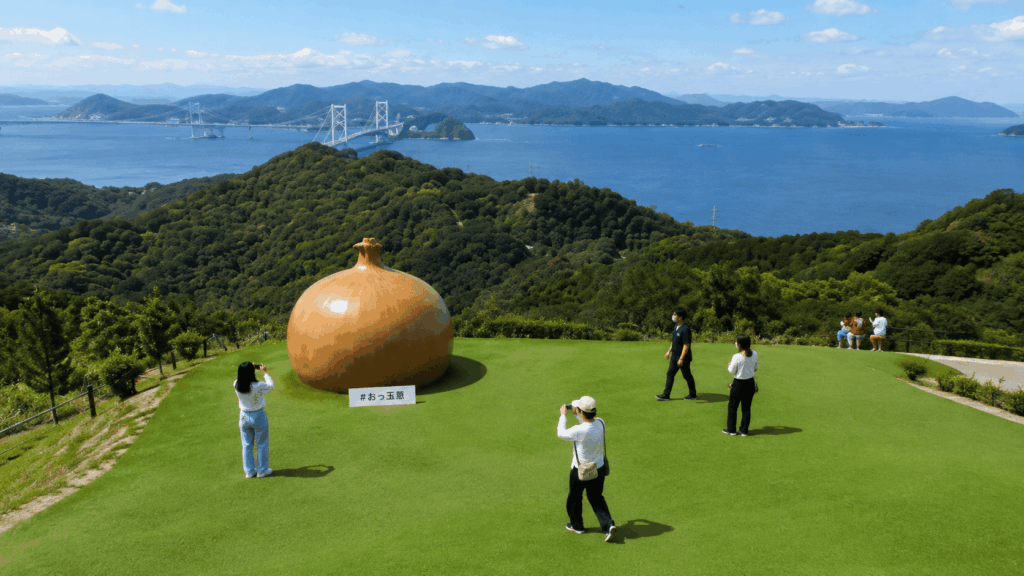
Uzu no Oka is the Onaruto Bridge Memorial Museum, a sprawling hilltop complex at the island’s southwestern tip near the Onaruto Bridge. It’s part rest stop, part food hall, part photo studio, and it’s the natural base for a southern-Awaji day — the Uzushio Cruise port at Fukura is just a few minutes’ drive down the road.
Why go: the rooftop deck gives a 360° view of the Onaruto Bridge and the Naruto Strait; the famous O-Tamanegi — a 2.5-metre-high giant onion — is the photo spot everyone poses with, and onion wigs are available to rent, even in baby and dog sizes. The onion catcher crane game is a genuine local institution. And the food is the real draw: the Awajishima Onion Kitchen counter serves the award-winning Awaji Island Onion Beef Burger, while the Zekkei Restaurant upstairs pairs sea views with local specialties like sea urchin shabu. The shop is also the best souvenir stop on the island, with local onion dressings, whitebait and island snacks.
Best for: food-focused travelers, families, and anyone who needs a proper lunch stop with something to look at afterward.
Plan your visit
- The complex is open 9:00–17:00; entry and parking are free. Note the closures: Tuesdays, plus year-end and New Year.
- The view restaurant runs 10:00–15:30 (last order 15:00) and takes walk-ins only — no reservations. The burger counter is the faster option and runs 9:00–16:00. The Uzushio Science Museum (small separate fee) is open 9:00–16:30.
- The official site shows live wait numbers for the restaurant, which is worth checking before you decide where to eat.
Kai’s tip: On weekends the view restaurant runs on a walk-in waitlist, and at midday the wait can stretch past an hour. If the Uzushio Cruise is next on your list, don’t gamble a long sit-down lunch on a tight schedule — the burger counter is the faster call, or take your cruise slot first and eat after. What catches people out is budgeting lunch as a 30-minute stop when it’s really a 60–90-minute one.
What can go wrong
The restaurant stops taking orders at 15:00 and may close its waitlist even earlier on busy days. If you’re planning a southern day, don’t leave Uzu no Oka for a Tuesday — the whole complex is shut.
How much time: 1–1.5 hours with lunch; 30–45 minutes if you’re only doing photos and the burger counter.
Pair it with: the Uzushio Cruise at Fukura Port, and the Onaruto Bridge views along the coast road.
3. See the Naruto Whirlpools on the Uzushio Cruise
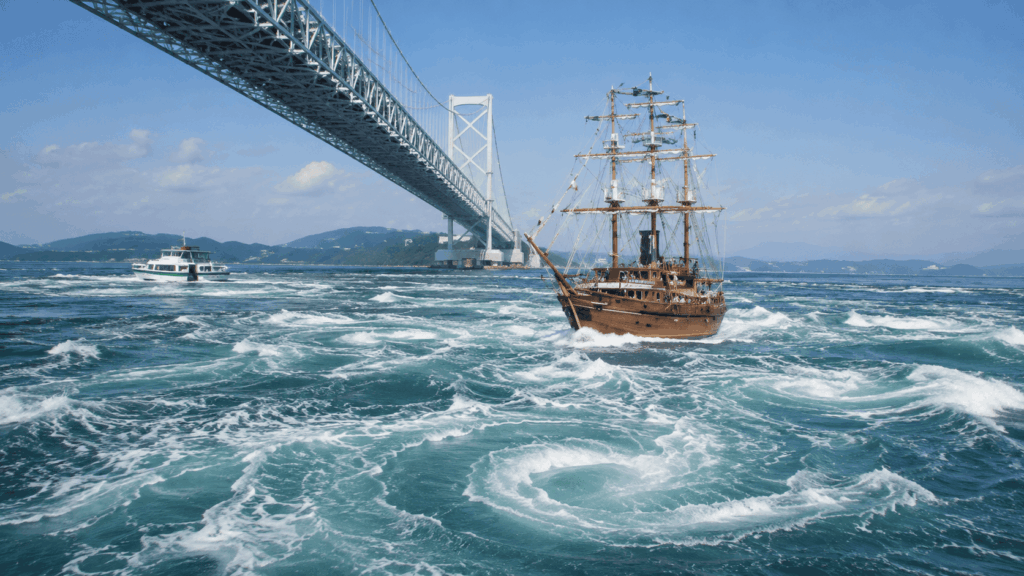
The Naruto Strait, between Awaji Island and Shikoku, produces some of the world’s largest whirlpools. The Uzushio Cruise takes you from Awaji’s Fukura Port out under the Onaruto Bridge and into the middle of the action: a 60-minute round trip on one of two boats, the Kanrin Maru or the Nippon Maru. The boat slows right where the currents collide, so you watch the whirlpools form, spin and dissolve at deck level, with the bridge overhead.
Why go: it’s the island’s signature experience and the one thing you can’t reproduce anywhere else on the trip. Best for: first-time visitors who want a clear highlight, families (children find the spinning water genuinely exciting), and photographers with a telephoto lens.
Plan your visit
- Fares (as of August 2026): ¥3,000 for adults (junior high and up), ¥1,500 for elementary school children. Preschool children ride free with one paying adult; extra preschoolers are charged the child fare. Children cannot board alone.
- This is the one stop where you plan the day around a fixed time. The whirlpools are driven by the tides — strongest around high and low tide, largest around spring tides. Departures change every day, and the official timetable marks each sailing with an expectation rating, from large whirlpools on spring-tide days down to weak ones on small tides.
- Book ahead: web reservations open 45 days before your sailing and close 40 minutes before departure (credit card only). Aim to arrive about 30 minutes early. On low-expectation sailings, departures with fewer than about ten passengers can be canceled.
Kai’s tip: Pick your cruise time around the tide window before you plan anything else — the timetable changes daily, and the whirlpools genuinely differ in size between sailings. And even on a warm day the strait can feel cold on the water, so bring a windbreaker or an extra layer; I’ve watched summer visitors shiver on the open deck.
What can go wrong
A weak tide means small whirlpools — the cruise is still scenic, but don’t expect the classic giant spirals unless the tide is in your favor. The strait can be choppy, so if you’re prone to seasickness, take the usual precautions. And because sailings can be canceled when too few passengers show up on weak-tide slots, booking the strong window is also the reliable window.
How much time: about 1.5 hours total, including check-in and boarding.
Pair it with: Uzu no Oka for lunch or photos just before or after — the port and the complex are only a few minutes apart.
Note: a separate whirlpool cruise operates from the Tokushima side of the strait (Naruto Park). The one described here departs from Awaji’s Fukura Port — worth knowing when you book, because the two are easy to confuse.
Once you’ve confirmed the tide window for your dates, you can book the Uzushio Cruise directly through the official site or as part of a day tour — check availability before you finalize your route.
If you’re driving yourself and only need the cruise, check current Klook sailing options for the Uzushio Cruise after confirming the tide window for your date. Compare the available sailings before you finalize the rest of the route.
4. Spend Half a Day at Nijigen no Mori if Anime Is Your Priority
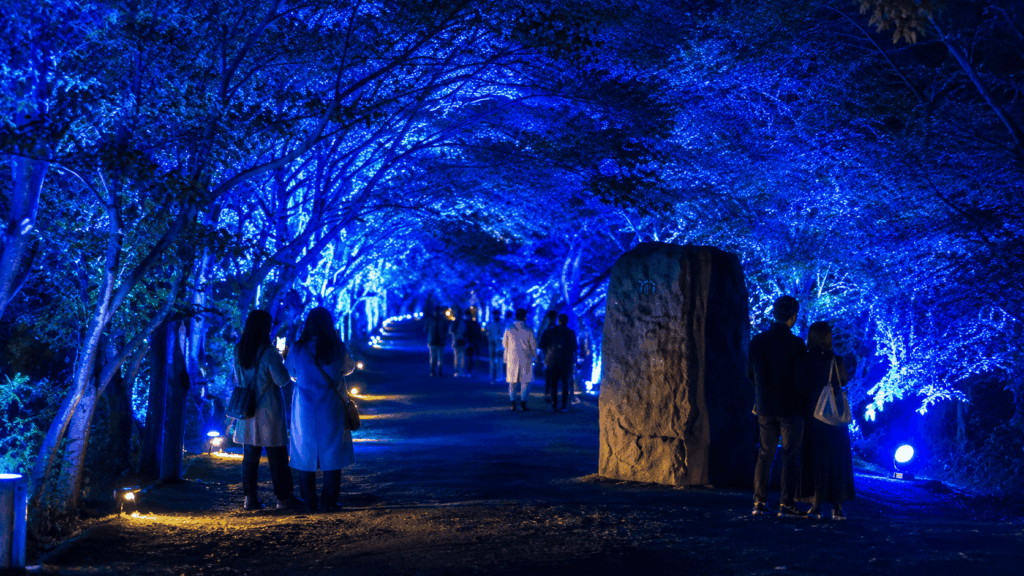
Nijigen no Mori is a theme park set inside Hyogo Prefectural Awaji Island Park in the center of the island — and it’s a completely different Awaji from the flower fields and whirlpools. Entry to the park itself is free; you buy timed tickets for individual attractions, which means a visit can cost anywhere from a couple of thousand yen to well over ten thousand yen per person, depending on how much you stack.
Why go: the current lineup is built around major franchises — Dragon Quest Island, NARUTO & BORUTO Shinobi-zato, Godzilla Interception Operation, Crayon Shin-chan Adventure Park, TV Anime Attack on Titan × Nijigen no Mori, and TOKYO SCRAMBLE. If one of these is the reason you’re considering Awaji, the park justifies the trip on its own.
Best for: anime and game fans, and families with kids who know the franchises. Skip it if: you want the classic island scenery and whirlpool day — the park eats a full half-day and a real chunk of budget.
Plan your visit
- Prices and hours change by attraction and season (many run roughly 10:00–22:00, some open 9:00 on busy periods). Example light-ticket ranges: Dragon Quest Island adults roughly ¥3,400–4,500; NARUTO & BORUTO Shinobi-zato adults roughly ¥3,300–4,100; Godzilla Interception Operation adults roughly ¥2,800–3,600. Children’s light tickets run lower; premium and gold tickets cost more.
- Time commitments are significant. Dragon Quest Island’s main quest alone takes around 2 hours (3–4 hours in busy seasons), and a full subquest run can take 3 hours or more (4–5 hours in busy seasons).
- Timed-entry tickets are available in advance online and on the day; booking ahead is the reliable way to lock in a slot on weekends and holidays.
How much time: treat it as a half-day minimum — one main attraction plus wandering is a realistic afternoon; two or more attractions is a full day.
The honest trade-off: because the park sits in the middle of the island, an anime-focused day and the scenic whirlpool day pull in opposite directions. You can technically do both, but you’ll be watching the clock the whole time. For most first-time visitors, I’d pick one theme rather than squeezing both into a single day.
Pair it with: Izanagi Jingu, which is a short drive away and a calm bookend to a park-heavy day — or an early or late Uzushio Cruise if you can match the tide.
5. Explore Tadao Ando’s Architecture at Awaji Yumebutai
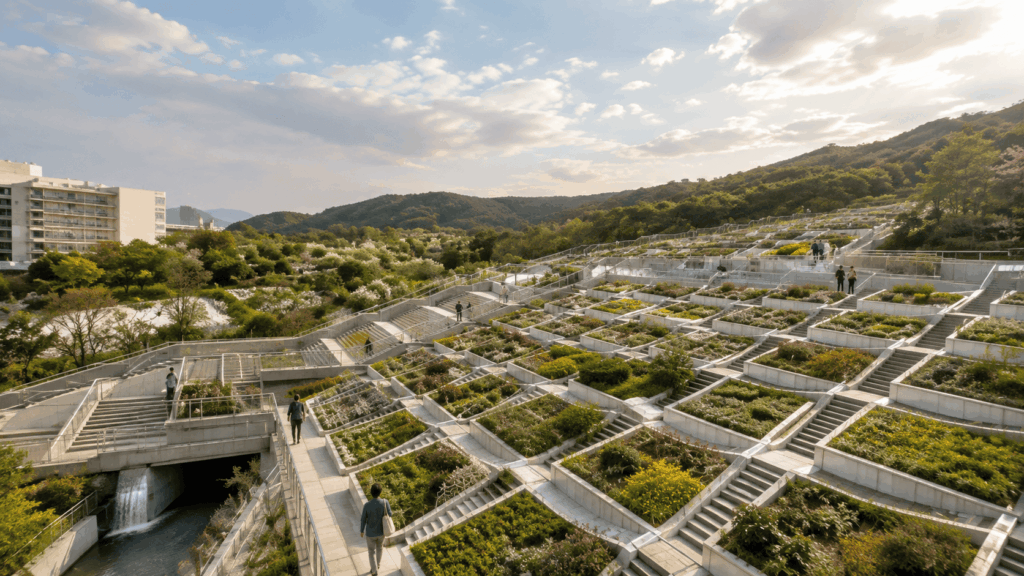
Awaji Yumebutai is the Tadao Ando-designed conference-and-garden complex on the north side of the island, built for the 2000 garden expo. The centerpiece is the Hyakudanen — a huge terraced bank of a hundred flower beds stepping down a former quarry slope — which is striking in any season. The promenade garden, the observation decks and the buildings themselves (exposed concrete, sharp geometry, framed views of the sea) make it the strongest architecture stop on the island.
Best for: design-interested travelers, slow-paced couples, and anyone who wants a quieter, less crowded alternative to the southern tourist stops.
Plan your visit
- The Hyakudanen and surrounding gardens are free to walk. The Awaji Greenhouse (a glasshouse with tropical plants) charges around ¥700 for adults, with discounts for seniors and free entry for high school students and younger; it’s usually open 10:00–18:00 (last entry 17:30), with a closure on the second Thursday of July and November.
- Next door, Akashi Kaikyo National Government Park (seaside lawns, flowers and a big children’s playground) charges around ¥450 for adults, with reduced rates for seniors and free entry for junior high students and younger. Opening hours shift with the season.
- Getting there: the Yumebutai bus stop on the Kobe–Awaji highway bus route puts you right at the complex, about 60 minutes from Sannomiya or Shin-Kobe; by car it’s a few minutes south of the Awaji IC on Route 28.
How much time: 1–2 hours for the gardens and Greenhouse; add an hour or so if the kids want playground time in the national park.
Pair it with: Awaji Hanasajiki (a short drive away) and Hompukuji — all three sit in the island’s northern band.
6. Visit Izanagi Jingu for Awaji’s Mythological Side
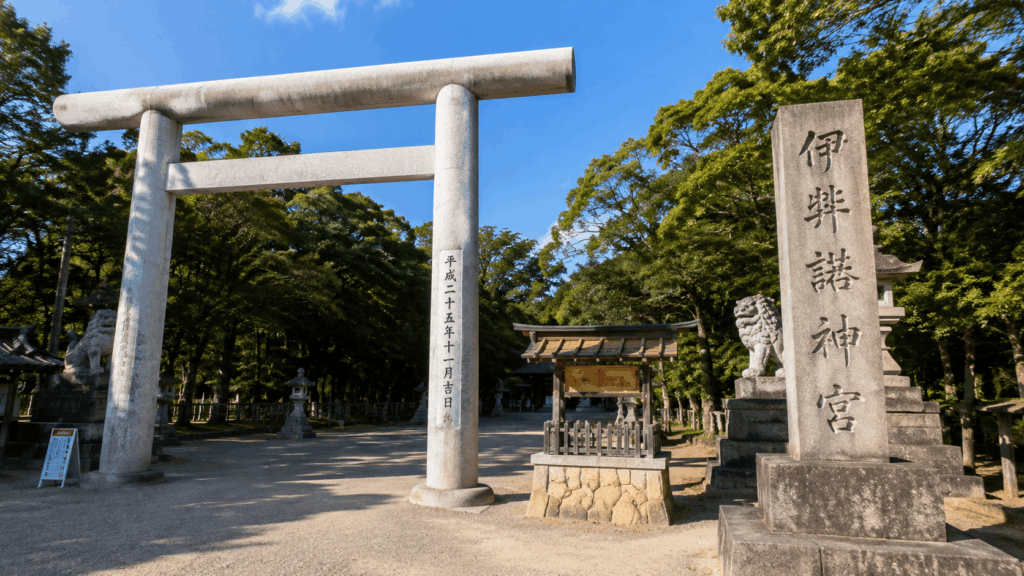
Izanagi Jingu, in the center of the island near Awaji City, is often described as Japan’s oldest shrine, built around the two deities of the Japanese creation myth — Izanagi and Izanami. The shrine grounds are large and forested, with a long approach path, quiet gardens and a main hall that feels genuinely old rather than rebuilt. It’s a low-key cultural stop: no spectacle, no crowds, just atmosphere and a very different energy from the rest of the island.
Best for: travelers who want a traditional Japanese shrine experience without Kyoto’s crowds, and anyone curious about the island’s mythological identity — the shrine is the center of Awaji’s “island of the gods” claim.
Plan your visit
- The grounds are open all day, every day, and entry is free. The shrine office is typically open 9:00–17:00 if you want a goshuin (calligraphy seal) or an amulet.
- Free parking is available on site. From Nijigen no Mori it’s only a short drive, which makes it a natural pairing.
- Standard shrine etiquette applies: bow at the gate, wash hands at the water pavilion, and bow twice, clap twice, bow once at the main hall.
How much time: 45–60 minutes — the approach path alone is worth the walk.
Pair it with: Nijigen no Mori (anime) for a mixed day, or the north-to-south route as a mid-island pause between the flowers and the whirlpools.
7. See Hompukuji Water Temple if You Like Quiet Architecture
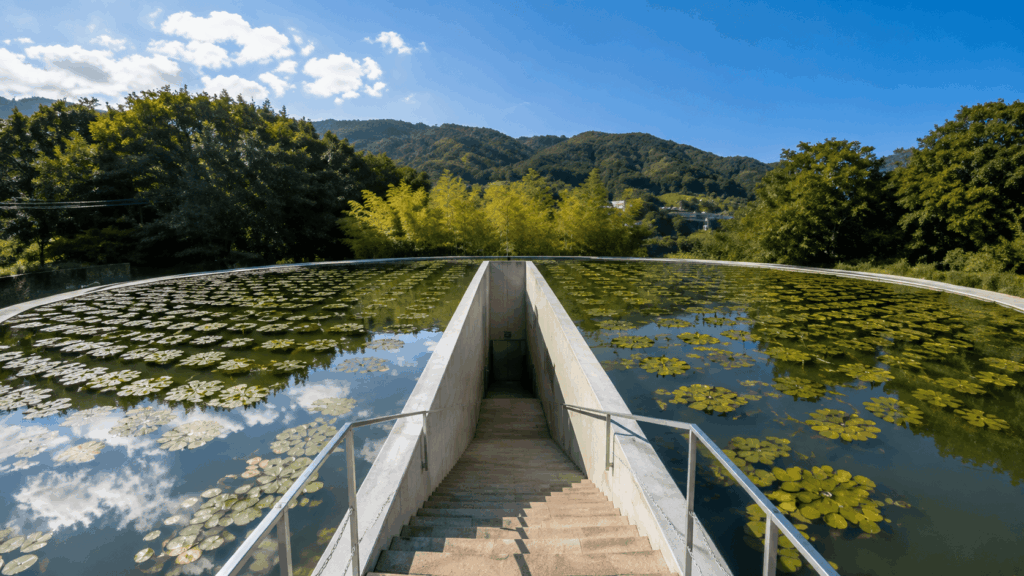
Hompukuji (the Water Temple, a branch of the Hompukuji temple) is another Tadao Ando work, in the northern part of the island. Its signature move is a shallow oval pond of lotus flowers — you descend a staircase through the water to reach the temple hall below, so the approach is a slow transition from bright outdoors to dim, concrete interior. It’s a small, contemplative stop that rewards people who like architecture and silence more than spectacle.
Best for: Ando completists, photographers, and travelers who want a brief, calm break between the bigger stops. Skip it if: you’re on a tight schedule and temples aren’t your interest — it’s the easiest item to cut.
Plan your visit
- Generally open around 9:00–17:00, with a small entry fee (in the region of a few hundred yen).
- It’s off the main road, so check the access details — the local loop bus stops nearby (Tateishikawa stop) if you’re not driving.
How much time: 30–45 minutes.
Pair it with: Awaji Yumebutai and Hanasajiki in the northern cluster.
8. Add a Seasonal or Family-Friendly Stop if You Have Extra Time
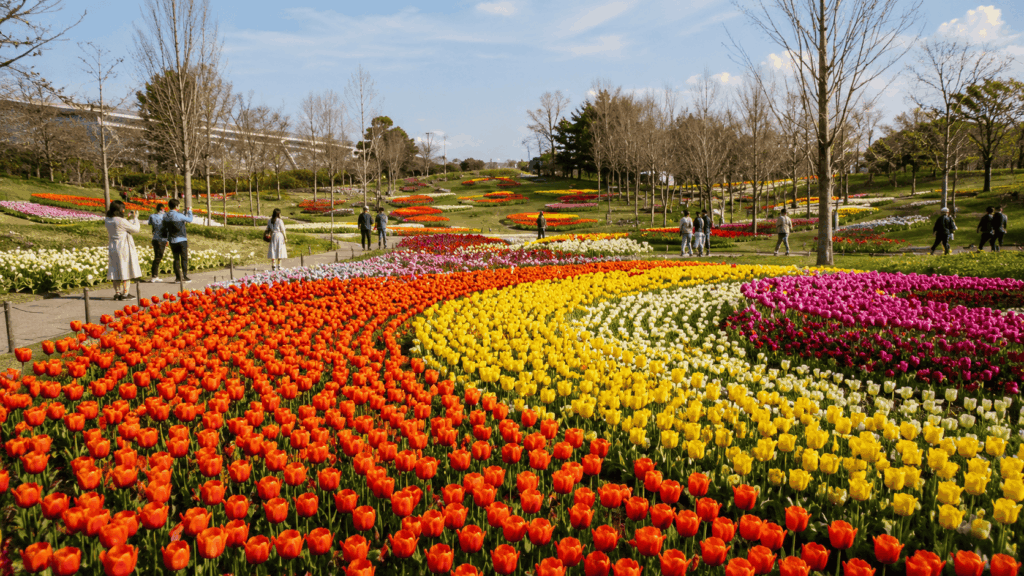
If your core plan is set and you still have room, these are the stops to add — not to chase.
- Akashi Kaikyo National Government Park (north): seaside lawns, seasonal flower beds and a large playground. Best for families who want the kids to run free; opening hours and adult entry around ¥450 shift with the season.
- Awaji Greenhouse at Yumebutai (north): a warm, green break that works well on a rainy or windy day, with the small entry fee noted above.
- Sumoto Castle (south, near Sumoto City): a reconstructed hilltop castle with views over Sumoto Bay. It’s a modest stop compared with Himeji, so it suits travelers who want a castle tick without the crowds.
None of these changes the shape of a first-visit day; each just fills time you already have.
The Best One-Day Route for First-Time Visitors
The most reliable first-visit day on Awaji is the north-to-south scenic route (see our detailed one-day itinerary with maps): Awaji Hanasajiki in the morning, Uzu no Oka for lunch and photos, and the Uzushio Cruise in the afternoon at a sailing that matches the tide. The drive between each stop is 30–50 minutes on good roads, and the day flows geographically — you never double back.
What I’d tell a friend planning this: lock the cruise time first. Check the tide-based timetable for your dates, choose a sailing in a good window, then build everything else around it — morning in the north, lunch at Uzu no Oka, cruise in the south. If the tide is better at midday, reverse the order; the route works in both directions because the stops are on the same line.
| Day type | Best for | Core stops | Transport | What you give up |
|---|---|---|---|---|
| Scenic first-timer | Views, food, the signature whirlpool experience | Hanasajiki → Uzu no Oka → Uzushio Cruise | Car or private tour | Nijigen no Mori, architecture-focused time |
| Anime-focused | Fans of DQ, Naruto, Godzilla, etc. | Nijigen no Mori (1–2 attractions) + Izanagi Jingu | Car or private tour | Whirlpools — unless you match an early/late cruise |
| Architecture & culture | Ando fans, slow travelers | Yumebutai → Hompukuji → Izanagi Jingu | Car or private tour | Whirlpools, the anime park |
Scenic route timing (a realistic sketch): depart Osaka or Kobe around 8:00–8:30; Hanasajiki 9:30–10:30; drive south; Uzu no Oka 11:30–13:00 for lunch and photos; Fukura Port 13:30; cruise around 14:00–15:00 (match your tide window); drive back north and cross the bridge by 17:30–18:00. This fits comfortably in one day — the reason the classic route works is that every stop is on the same north-south line, so the driving is honest and the order is flexible.
If you like this route but don’t want to drive unfamiliar roads yourself, a private customizable Awaji Island day tour from Osaka or Kobe covers the same ground with a driver — a realistic alternative if rental-car driving is the thing holding you back.
Do You Need a Car on Awaji Island?
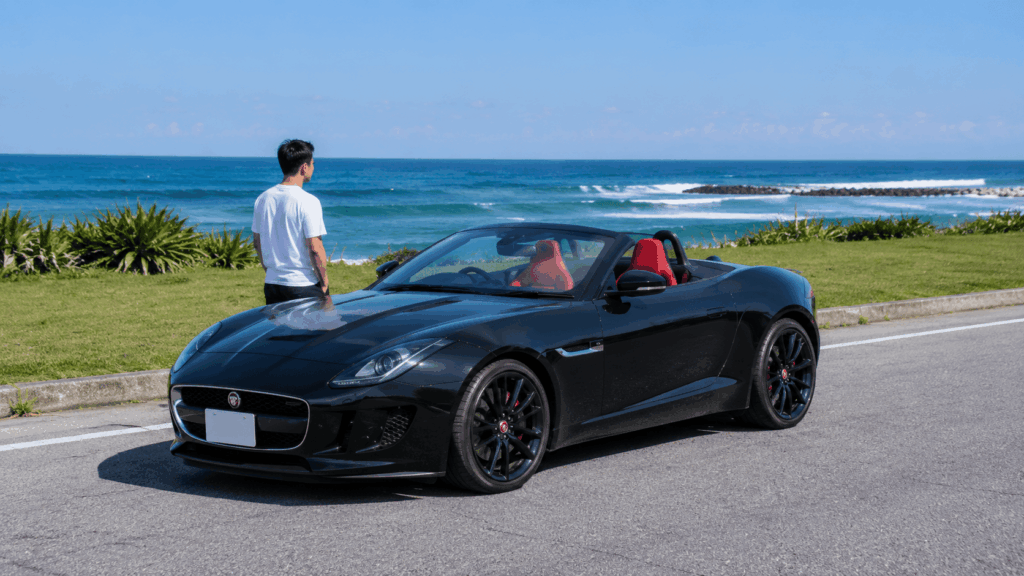
For the classic route, a car is the practical answer — the three main stops are spread across a 60-kilometer island and the best views are on hilltops and at the coast. Public transport exists (highway buses from Kobe, local buses, ferries from Akashi), but the island’s bus network is thin — see our guide on how to get to Awaji Island for full options — and reaching Hanasajiki, Uzu no Oka or the Fukura cruise port without a car means long waits between connections.
| Option | Cost level | Flexibility | Effort | Who it’s best for |
|---|---|---|---|---|
| Rental car | Medium (car + tolls + parking) | Highest — stop anywhere, match the tide | You drive on unfamiliar roads | Confident drivers; the classic route |
| Highway bus + local buses | Lowest per person | Low — fixed schedules, limited island coverage | High — connections, waiting, less time at stops | Travelers on a budget or who won’t drive |
| Private customizable tour | Highest | High — route built around your picks | Low — driver handles the roads | Non-drivers; families; those short on time |
If you want the scenic Awaji route but don’t want the day to depend on bus connections or unfamiliar driving, this is the one option worth comparing directly with a rental car.
Why I’d book this one
- The private, customizable format lets you build the day around Awaji stops such as Hanasajiki and the Naruto area instead of following a fixed checklist.
- Pickup from Osaka or Kobe and a driver handling the island roads remove much of the transport friction described above.
- The booking page lets you check current availability, pickup details and cancellation terms before you commit to the day.
If you drive: the main roads are well maintained, but be ready for winding hill sections (the Hanasajiki approach is the trickiest), and carry cash or an IC card for parking fees — not every lot takes foreign cards. ETC for the bridge toll makes the Akashi Kaikyo crossing smoother.
If you don’t drive: the realistic options are the highway bus from Sannomiya (about 1.5 hours each way, in the region of ¥2,270 one way) combined with local connections — or a private tour that includes pick-up from Osaka or Kobe. A tour removes the two big risks of a car-free day: missing a connection and arriving at the cruise port after your sailing. Whichever way you go, decide the transport before the tide window, because the two are linked — if you can only catch one cruise sailing, everything else has to bend around it.
Day Trip or Overnight: How Long Do You Need?
Consider staying overnight in two cases: if Nijigen no Mori is your main reason for coming (the park rewards a relaxed day, and evening hours and lighting extend some attractions), or if you want to slow down across two days — day one for flowers, food and the cruise, day two for the anime park or the architecture cluster, with an onsen stay or an island hotel in between. Overnight also helps if you arrive late or want to catch a specific tide without starting the day from Kobe.
What I’d tell someone deciding: if the plan is the classic scenic route, don’t overthink it — one full day is the honest answer. If you’re mixing the scenic route with Nijigen no Mori, two days is more realistic than cramming both.
Practical Tips Before You Go
- Cash and IC cards: parking lots and smaller food counters often take cash only (parking is typically a few hundred yen per stop). Keep some cash on hand even if you’re paying most things by card.
- Check the tide before you commit to a date: the whirlpools are the one experience on the island you can’t move to a different hour on a whim. The official Uzushio Cruise timetable shows the expectation for each sailing — use it when picking your day, not just your time.
- Weekend rhythm: on fine weekends, expect the Uzu no Oka lunch queue and the Hanasajiki car park to be busiest around midday. Start early and take lunch at 11:00 or after 14:00 to dodge the worst of it.
- Rain plan: the cruise runs in light rain but can be unpleasant in a storm; the Greenhouse at Yumebutai and the museums at Uzu no Oka are the best indoor fallbacks. In typhoon season (roughly August–September), check sailing status the day before.
- Seasickness: the strait can be choppy around strong tides — if you’re prone to it, take precautions before boarding, and note that the strongest whirlpool windows can also be the roughest.
- English support: major attractions and the cruise have English materials, but menus at smaller counters are often Japanese-only. Translating apps handle the menu situation fine; pointing plus a smile works at the counters.
- Children: preschool children ride the cruise free with a paying adult (extra preschoolers pay the child fare), and Hanasajiki’s paved paths are stroller-friendly. The national park playground is the best unstructured kids’ stop.
FAQ
Is Awaji Island worth visiting, or should I spend the day in Kyoto or Nara instead?
It depends on what you want. Kyoto and Nara deliver temples, old streets and concentrated history; Awaji delivers scenery, food, the Naruto whirlpools and — if it’s your thing — anime attractions. If your itinerary already has enough temples and you want a relaxed, nature-led day that most tourists skip, Awaji is worth the trip. If you only have one free day in Kansai and your priority is classic sightseeing, save Awaji for a future visit.
Do I need a car to visit Awaji Island?
For the classic scenic route, a car (or a tour with a driver) is the practical choice: the main stops are spread across the island, and the bus network is thin with long waits between connections. You can reach the island by highway bus from Kobe, but you’ll spend noticeably more time on transport and less at the sights. If you don’t want to drive, a private customizable day tour from Osaka or Kobe removes most of the friction.
Is a day trip from Osaka or Kobe enough?
Yes, for the classic first-visit route — flowers in the morning, lunch and photos at Uzu no Oka, and the whirlpool cruise in the afternoon fits comfortably in one day, with time to cross the bridge home by early evening. The main reason to stay overnight is if Nijigen no Mori is your priority, or if you want a two-day, slower pace with the anime park and the architecture stops split across days.
When is the best time to see the Naruto whirlpools?
The whirlpools are strongest around high and low tide, and largest around spring tides — so the best time changes every day. The Uzushio Cruise official timetable marks each sailing with an expectation rating (large whirlpools down to weak), which is the most reliable way to pick your window. A weak tide doesn’t mean no whirlpools, but the classic giant spirals are a tide-and-date thing, not a daily guarantee.
Can I do the whirlpools and Nijigen no Mori in one day?
Technically yes, but you’ll be watching the clock all day. Nijigen no Mori needs a half-day minimum (a single Dragon Quest Island main quest alone runs about 2 hours, more in busy seasons), and it sits in the middle of the island while the cruise port is at the southern tip. For most first-time visitors, picking one theme gives a better day than squeezing both into one.
How do I get to Awaji Island from Osaka or Kobe?
From Kobe, the fastest route is the Akashi Kaikyo Bridge: by car or taxi, or by highway bus from Sannomiya (about 1.5 hours, in the region of ¥2,270 one way). From Osaka, you typically travel via Kobe or Shin-Kobe. There’s also a ferry from Akashi to Iwaya on the north coast, but the bridge routes are the most practical for a day trip.
Is Awaji Island good for families with young children?
Yes, with the right stops. Hanasajiki’s paved paths are stroller-friendly, the whirlpool cruise genuinely excites kids, and Akashi Kaikyo National Government Park has a big playground. The main things to plan around are the weekend lunch queues at Uzu no Oka and the fact that the cruise has no guarantee of calm seas on strong-tide days.
What is the best season to visit Awaji Island?
Any season works, because the island’s character changes with it: rapeseed flowers in early spring, sunflowers in summer, cosmos in autumn, and the whirlpools run year-round. The practical considerations are rain (typhoon season roughly August–September can disrupt sailings) and the exposed hilltop and deck spots, which feel cold and windy in winter even in sunshine.
Final Verdict: What Should You Prioritize?
Awaji Island is one of those places where the quality of the day depends on the decision you make before you arrive — not on luck once you’re there. Here’s the short version by traveler type.
- First-time visitors (the default): build the day around the scenic north-to-south route — Awaji Hanasajiki in the morning, Uzu no Oka for lunch and photos, and the Uzushio Cruise at a tide-matched sailing. Lock the cruise time first, then arrange everything else around it. This is the route I’d give anyone visiting for the first time.
- Anime and game fans: make Nijigen no Mori the centerpiece and treat everything else as optional. Pick one or two attractions, book timed tickets in advance, and add Izanagi Jingu as a calm bookend if you want a second stop.
- Families with children: the cruise plus Hanasajiki is the core, with the national park playground as the release valve. Keep lunch flexible — the burger counter at Uzu no Oka beats a long sit-down wait when kids are hungry.
- Travelers who won’t drive: a private customizable day tour from Osaka or Kobe is the realistic way to cover the classic route without the stress of unfamiliar roads — it removes the two biggest risks of a car-free day, missed connections and a missed cruise sailing.
- Architecture and slow-travel enthusiasts: skip the scramble and spend the day on Yumebutai, Hompukuji and Izanagi Jingu — quieter, less crowded, and a completely valid version of Awaji.
- Travelers on a tight schedule (half a day or less): save the island for a proper full day. A compressed visit of one or two stops will leave you with the “was that it?” feeling that this article is designed to prevent.
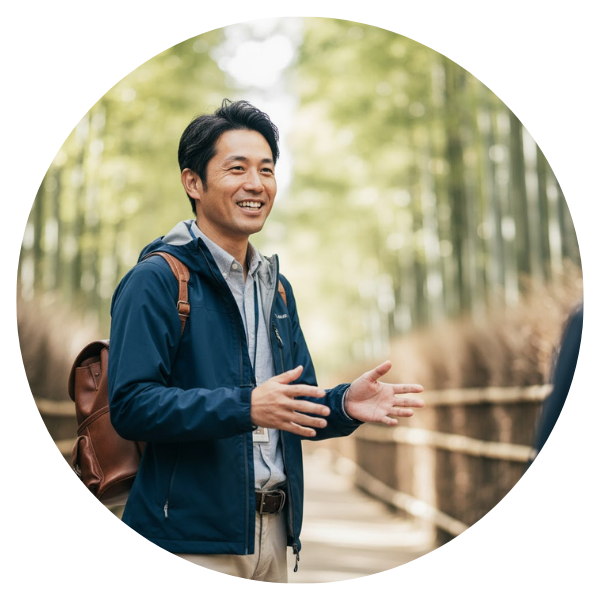
Hi, I’m Kai. I’m a Tokyo-based travel writer, tourism industry insider, and the author of a published guidebook for international visitors to Japan. With over 10 years of professional experience at a leading Japanese tourism company, my mission is to help you skip the tourist traps and navigate Japan’s best destinations like a local. I believe the perfect day trip is like a traditional kaiseki meal: a beautiful balance of precise planning and unforgettable seasonal discovery. When I’m not out conducting field research, you’ll usually find me drafting new itineraries with one of my favorite fountain pens!