
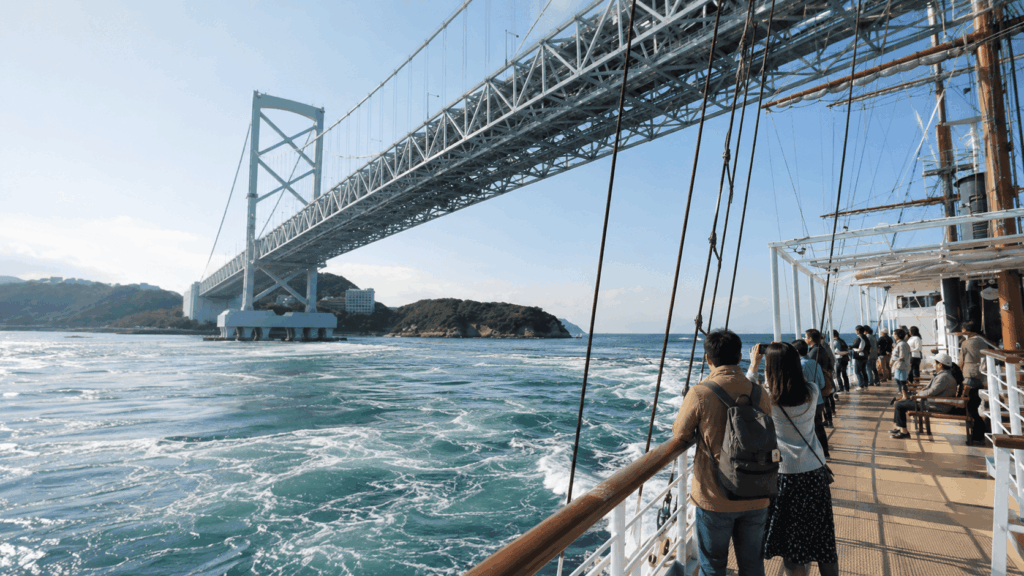
There is no train station on Awaji Island, and no airport either. For most visitors the practical route is a highway bus from Kosoku Maiko — the expressway stop at the mainland end of the Akashi Kaikyo Bridge — or a rental car across that same bridge. The option that actually suits you depends less on which city you start from and more on which part of the island you are heading to.
The mistake I see first-time visitors make is searching for a “train to Awaji” and assuming the island is connected like the mainland. It is not: the bus and the car are your two realistic ways across, and both are easier than most people expect once you pick the right gateway. Here is how to do it, from Osaka, Kyoto and Tokyo.
If juggling a train-to-bus connection sounds like more hassle than you want, compare the private Awaji Island & Naruto tour from Osaka/Kobe — the listing lets you check current availability, pickup details and trip length before weighing it against the DIY routes below.
The Short Answer: What Is the Easiest Way to Get to Awaji Island?
From Osaka or Kyoto, the standard public-transport route is: JR train to JR Maiko Station, a short walk to the Kosoku Maiko Bus Stop, then a highway bus across the Akashi Kaikyo Bridge. From Tokyo, take the Shinkansen to Shin-Kobe first, then continue by bus from Sannomiya or via Maiko. Drivers simply cross the Akashi Kaikyo Bridge and enter the island at Awaji IC, about 10 minutes after the toll gate.
Getting onto the island is not the hard part — getting around it is. Awaji is roughly 55 km long, and the difference between the north end and the south end is over an hour by bus. So the real first decision is not “bus or car,” but which gateway matches your destination:
- North Awaji (Nijigen no Mori, Awaji Highway Oasis): get off at Awaji IC — most highway buses stop here.
- Central Awaji (Sumoto area): head for Sumoto Bus Center.
- South Awaji (Fukura, Naruto whirlpool cruises): target Fukura or the southern hub Riku no Minato Seidan, and check the last leg carefully.
First, Choose the Right Gateway on Awaji Island
Almost every route question comes down to this table. Find your destination, then read the matching section below.
| Your destination | Best gateway | How you get there | Who it works for |
|---|---|---|---|
| Nijigen no Mori, Awaji Highway Oasis, North Awaji sights | Awaji IC | Most highway buses from Osaka, Kobe and Kosoku Maiko stop here; free shuttle runs to Nijigen no Mori | First-timers, anime and game fans, families with limited time |
| Iwaya, north tip, Akashi Kaikyo Bridge views | Iwaya Port | Akashi–Iwaya ferry from Akashi, then local bus or taxi | Cyclists, travelers who want the shortest possible crossing |
| Sumoto city, central-east Awaji, castle and harbor area | Sumoto Bus Center | Highway buses from Osaka, Kobe, Sannomiya and Kosoku Maiko | Travelers staying overnight in central Awaji |
| Fukura, Naruto whirlpool cruises, southern Awaji | Fukura or Riku no Minato Seidan | Direct buses are fewer; allow for transfers at Riku no Minato Seidan | Whirlpool cruise visitors, southern sightseeing |
| Several areas in one day | Rental car | Drive across the Akashi Kaikyo Bridge and use the island’s expressway | Anyone covering multiple zones or traveling with kids |
For North Awaji and Nijigen no Mori: Awaji IC
If your plan centers on Nijigen no Mori, the anime and game theme park in Hyogo Prefectural Awajishima Park, you do not need to travel deep into the island at all. Get off at Awaji IC and take the free shuttle from the interchange to the park (check the current shuttle timetable before you go). The same area includes Awaji Highway Oasis, the large rest complex with restaurants, souvenir shops and an observation deck facing the Akashi Kaikyo Bridge — a natural first stop after crossing.
For Sumoto and Central Awaji: Sumoto Bus Center
Sumoto Bus Center is the practical anchor for central Awaji. Highway buses from Osaka, Kobe and Kosoku Maiko stop here, and the island’s local bus network (run by Awaji Kotsu) fans out to Sumoto city and nearby sights, including the castle and the harbor area. It is a genuine base for a car-free stay (especially if you plan to book a local onsen ryokan) — just do not treat it as a hub for the whole island.
Kai’s tip: When I put together a car-free day for guests staying in central Awaji, I build the itinerary around Sumoto Bus Center rather than around individual sights: check which highway buses arrive before you book anything, then work outward from the terminal. It saves a surprising amount of backtracking — but if your plan mixes the north and the south in one day, this is exactly the point where a car (or a tour) stops being a luxury and starts being the realistic option.
For South Awaji and Fukura: Plan the Last Leg Carefully
The south — Fukura, the Naruto whirlpool cruises, and the onion-themed sights around Uzu no Oka — is reachable by public transport, but it is the part of the island where connections matter most. Direct bus options exist from Sannomiya and Osaka, yet frequencies drop once you leave the north, and the southern hub Riku no Minato Seidan (a park-and-ride facility on the south coast) is where many routes converge. Before you commit to a DIY day in the south, confirm both the outbound bus and the last return service — return options in the evening are thinner than in the morning.
How to Get to Awaji Island from Osaka
Osaka is the most common starting point, and it offers three realistic approaches. Which one fits depends on your destination, your luggage, and how comfortable you are with one transfer.
Option 1: JR to Maiko + Highway Bus from Kosoku Maiko
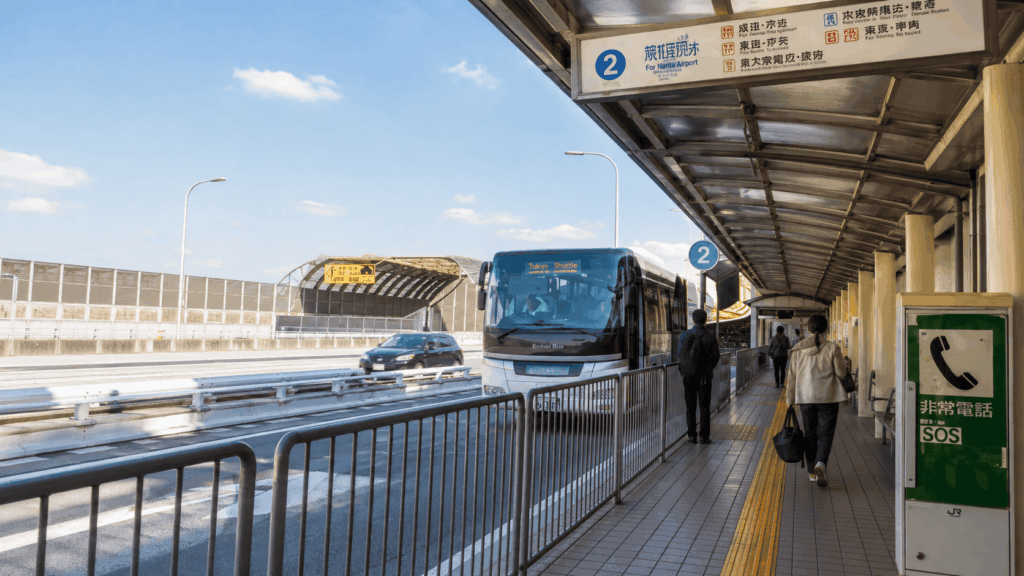
This is the route I use most often with guests, because it gives you the widest choice of buses once you reach the island. Step by step:
- From JR Osaka Station, take the JR Kobe Line Rapid or Local to JR Maiko Station — about 50 minutes, roughly ¥840. What catches people out here is the Special Rapid (Shinkaisoku): it is the fastest train toward Kobe but it does not stop at Maiko. Take a Rapid or Local directly, or change at Sannomiya or Kobe.
- Exit the ticket gate and follow the yellow “Expressway Bus Stop” signs up to the Kosoku Maiko Bus Stop, which sits on the expressway above the station. The walk is about 5 minutes by escalator or elevator, but give yourself 10–15 minutes the first time — there is no staffed ticket counter up there, so you will want time to find your platform (1 or 2) and check the board.
- Board a highway bus toward your destination. You cross the Akashi Kaikyo Bridge within minutes: Awaji IC is about 10 minutes after boarding, Awaji Yumebutai around 15 minutes, and Sumoto Bus Center roughly an hour.
Buses on this section are run by several operators — Awaji Kotsu, Honshi Kaikyo Bus, Shinki Bus and West Japan JR Bus among them — and fares vary by route, typically from around ¥600 for the short hop to Awaji IC and from about ¥1,900 for Sumoto. Payment differs by route too: some take IC cards, others expect cash, so carry a little change as backup.
Option 2: Direct Highway Bus from Osaka
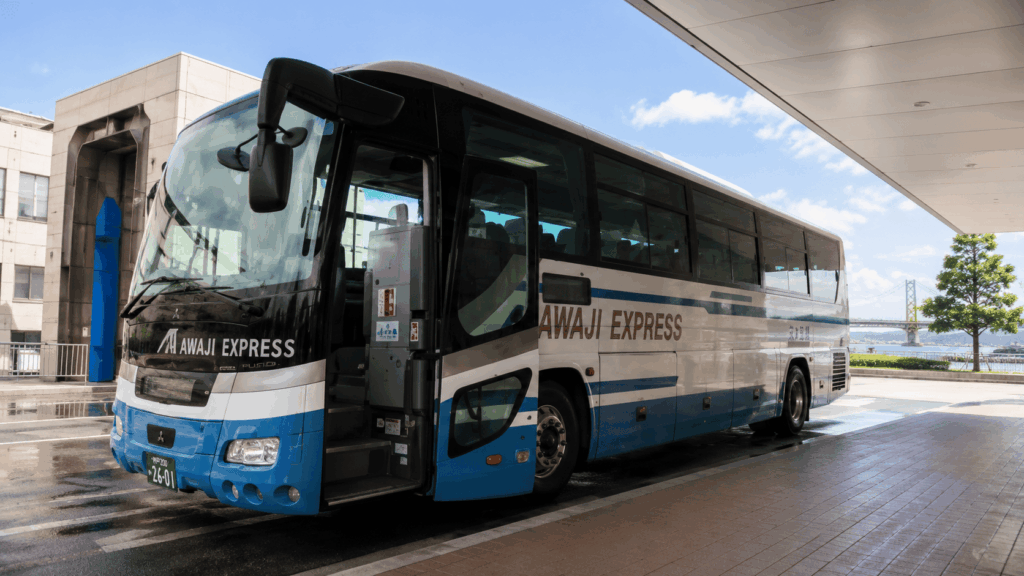
If you want zero transfers, direct buses do exist from Osaka, with two main boarding points:
- JR Osaka Station Express Bus Terminal: West Japan JR Bus runs to the Nijigen no Mori area — convenient if the park is your destination, but service is limited (roughly two departures a day), so this works best when your schedule is flexible.
- JR Osaka Station, under the Sakurabashi Exit viaduct: Foot Bus / Takamatsu Express runs more frequently (about once an hour) toward the Kosoku Awaji-Shichi area, with fares from around ¥2,600.
The trade-off is simple: no transfer, but fewer choices about where you land on the island. Confirm the exact drop-off stop against your itinerary — some of these routes serve the expressway-side stops rather than the main sightseeing areas, which can leave you with an unexpected local bus or taxi at the end.
Option 3: Rent a Car and Drive Across the Akashi Kaikyo Bridge
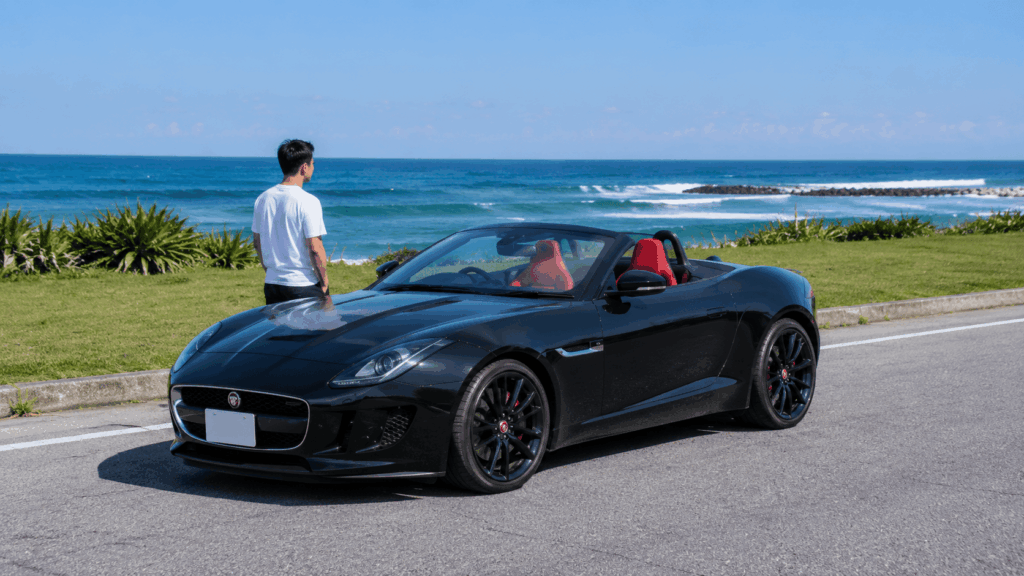
Driving is the most flexible option and the most realistic one if you want to see the north and the south in a single day. From central Osaka, allow around 1 to 1.5 hours to reach the bridge depending on traffic, then cross to Awaji IC and follow the island expressway south. The main expressway runs the length of the island, so distances feel short — but parking fills up at popular stops on weekends, which I will come back to in the driving section below.
Rental cars need an International Driving Permit for most foreign visitors, and you should book well ahead for weekends and holidays. For families, anyone with heavy luggage, or travelers planning multiple stops, this is often the least stressful option despite the cost.
How to Get to Awaji Island from Kyoto
From Kyoto Station, the realistic public-transport route also runs through the Kobe side of the bay. Take the JR line toward Kobe and get off at JR Maiko Station — roughly 1 hour 15 minutes to 1 hour 20 minutes — then follow the signs up to Kosoku Maiko for the highway bus across the bridge. The same warning from the Osaka section applies here: the Special Rapid skips Maiko, so take a Rapid or Local train, or change at Sannomiya or Kobe.
An alternative that many visitors find easier to read on a map is Kyoto → Sannomiya → Kosoku Maiko: take a train to Sannomiya (about 1 hour by Special Rapid, which does stop there), then board one of the frequent highway buses from Sannomiya to Kosoku Maiko before crossing the bridge. Kyoto also has a handful of direct highway services toward the island, but frequencies are limited, so treat them as a bonus rather than your plan A.
What this means practically: a day trip from Kyoto is possible, but it is a long one — plan on roughly two hours each way before you even reach your first sight on the island. If you are based in Kyoto, an overnight stay on Awaji (or combining it with a Kobe stop) tends to make the journey feel worth it.
How to Get to Awaji Island from Tokyo
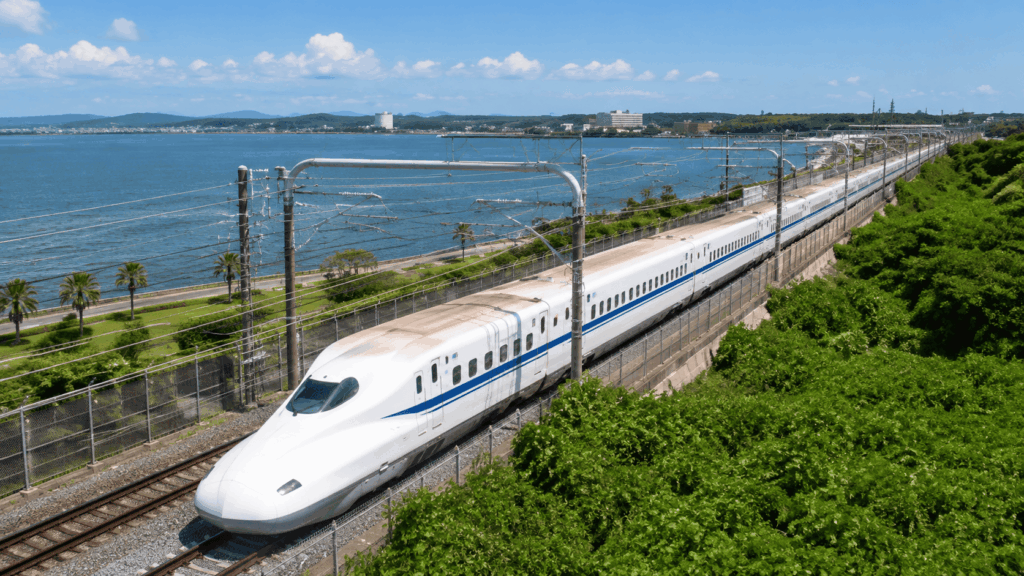
From Tokyo Station, take the Nozomi Shinkansen to Shin-Kobe — about 2 hours 40 minutes to 2 hours 45 minutes. From Shin-Kobe, continue to the island in one of two ways:
- Via Sannomiya: a short train ride (or subway) to Sannomiya, then a highway bus toward Awaji. Sannomiya is the largest bus hub on the mainland side, so this option gives you the widest choice of departures and drop-off stops.
- Via JR Maiko Station: from Shin-Kobe, take the JR line toward Akashi and get off at Maiko (Rapid or Local — the Special Rapid skips it), then transfer at Kosoku Maiko. This adds a second transfer but can be quicker than riding back toward Sannomiya depending on timing.
The honest assessment: a same-day round trip from Tokyo to Awaji Island is possible but not sensible. You would spend most of the daylight hours on trains and buses. The way I would frame it for anyone planning a Japan trip from Tokyo is to treat Awaji as part of a Kansai block — fly or take the Shinkansen into the region, spend a night or two in Osaka or Kobe, and visit Awaji from there. That keeps the travel time on the day itself manageable.
Can You Visit Awaji Island Without a Car?
Yes, but only if your itinerary matches the bus network. This is the most important reality check on the island, and it changes how you should plan.
Car-free works well for:
- A single destination in the north — for example, Nijigen no Mori: get off at Awaji IC and take the free shuttle, no onward island travel needed.
- Staying in Sumoto — Sumoto Bus Center puts the city, castle and harbor within easy reach, and overnight stays make the limited evening buses far less stressful.
- Simple out-and-back day trips — where you return to the mainland on the same route you came in on.
If you are keeping the day to North Awaji and prefer to stay independent, check the Kita Awaji Bus Pass and currently covered routes before building the day around individual fares and connections.
Car-free gets difficult when you try to:
- Combine the north and the south in one day (the bus ride between them alone eats over an hour each way).
- Reach west-coast sights like Awaji Yumebutai and the Kiseki no Hoshi botanical garden and then continue elsewhere — you end up stitching together several local buses.
- Visit the southern tip around Fukura and Uzu no Oka and get back the same evening.
Four things cause most of the car-free frustration, and they are worth knowing before you book anything:
- Limited frequency. Island buses run less often than mainland urban lines; a missed bus can mean a 30–60 minute wait.
- The last-mile gap. Highway buses stop at interchanges and bus centers, not at the sight itself — check the final local bus or taxi leg before you commit.
- Multiple operators. Different companies run overlapping routes, which makes Google Maps and the official timetables disagree more often than they should.
- Transfer timing. A tight connection between a highway bus and an island bus can fail without much warning.
If you want to reach southern Awaji or cover several areas without renting a car, a transport-included day tour from Osaka removes most of the connection risk — it is worth weighing against the DIY routes when you plan the day.
Highway Bus Tips That Make Awaji Island Much Easier
Once you have chosen your gateway, these small details decide whether the day feels smooth or stressful.
- Reservations are not required on every route. Some highway services are book-only, others are first-come on the day, and many sit in between. On weekends and holidays, reserving ahead is the safer choice — check the operating company’s site rather than assuming one rule applies island-wide.
- Payment varies by operator. Some buses take IC cards (ICOCA, Suica, etc.), others expect cash, and a few accept both. Carry some cash as a backup; it is the only payment method that never fails.
- Do not trust Google Maps alone. It merges multiple operators into one view, so a departure can vanish or shift when you compare it with the official timetable. For island buses, the Awaji Kotsu timetable is the reference point.
- Check the last return bus before you leave the mainland. Evening frequencies drop noticeably, especially toward the south.
- Allow for bridge traffic on weekends. Buses use the expressway so they are fairly stable, but holiday traffic around the bridge can add time to any plan.
Kai’s tip: The single most reliable trick I have found for car-free days on Awaji is simply to start early. Morning departures from Osaka and Kobe run more frequently than midday ones, so a missed connection costs less, and you arrive on the island with time to absorb a delay without losing your return bus. If your plan involves a local-bus transfer after the highway bus, aim to be on the island before 10 a.m. — the afternoon versions of the same journey are where I see guests end up waiting.
What About the Ferry from Akashi to Iwaya?
The Awaji Jenova Line ferry runs between Akashi Port (on the mainland, about 40 minutes from Osaka by JR) and Iwaya Port at the northern tip of Awaji. The crossing itself is short — roughly 13 to 18 minutes — with fares in the region of ¥500–700 depending on the current fare structure, so check the operator’s site for the latest.
Two things to know before you build a plan around it:
- It is a passenger ferry, not a car ferry. You cannot drive a rental car onto it; it is for foot passengers and cyclists.
- Iwaya is only the beginning of the island. From Iwaya Port you still need a local bus or taxi to reach Sumoto or the south, so the ferry is not a shortcut for central or southern Awaji. It shines for cyclists, for travelers who want the shortest possible water crossing, and for visiting the Iwaya area itself with its bridge views.
In short: a lovely option for the north tip, but not the way to reach Sumoto or Fukura efficiently.
Bus, Rental Car or Tour: Which Should You Choose?
By now you know the island’s geography, so the choice comes down to your travel style. This table compares the four realistic approaches.
| Option | Best for | Flexibility | Transfers | Main downside |
|---|---|---|---|---|
| Highway bus (DIY) | Single-area trips, confident public-transport users, budget-conscious travelers | Low — you follow the timetable | One or two (train to bus, or bus to island bus) | Evening frequencies drop; last-mile gaps at some sights |
| Rental car | Multiple areas in one day, families, travelers with luggage | High — stop anywhere, any time | None once you are on the road | Weekend parking crowds at popular stops; International Driving Permit needed for most visitors |
| Akashi–Iwaya ferry | Cyclists, north-tip sightseeing, shortest water crossing | Medium | Ferry plus an onward local bus or taxi | Passenger-only; not efficient for central or southern Awaji |
| Organized day tour | Car-free travelers who want the south or multiple areas without connection stress | Low — itinerary is fixed | Handled for you, including the crossing | Less personal freedom; pace set by the group |
If you want southern Awaji or several stops in one day but do not want to drive, this is the option that lines up most closely with the problems the DIY routes create.
Why I’d book this one
- Fewer moving parts: the private vehicle removes the train-to-highway-bus and local-bus handoffs that make multi-area days harder without a car.
- More useful flexibility: the itinerary can be shaped around Awaji Island and Naruto rather than forcing you to build the day around several separate bus timetables.
- Lower commitment before the trip: the listing lets you review current pickup details, cancellation terms and payment options before finalising your plan.
If the comparison still feels like a coin flip, a transport-included day tour from Osaka removes the connection risk entirely — worth checking alongside the DIY options before you commit to a plan.
My Practical Tips for Driving onto Awaji Island
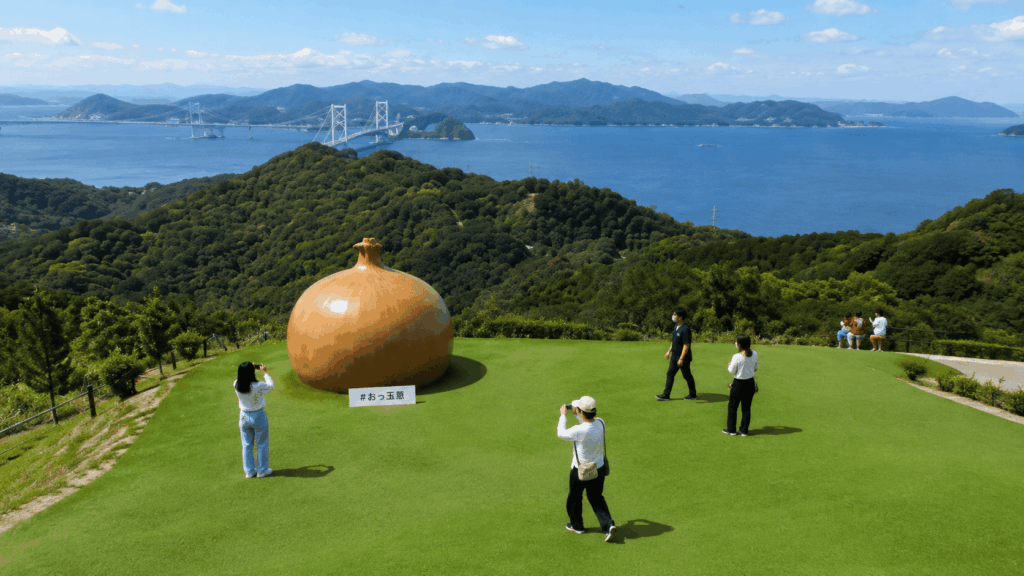
Driving gives you the most freedom, and it is also where I see travelers make two avoidable mistakes: confusing the island’s three similar-sounding facilities, and underestimating weekend parking.
Know the difference between the three stops near the bridge. Many guides blur these, but they are separate places:
- Awaji Highway Oasis — the large rest complex immediately after crossing the bridge, with restaurants, souvenir shops and an observation deck facing the Akashi Kaikyo Bridge. Opening hours are roughly 9:00–19:00 (later on weekends), varying by shop, so check before relying on it for dinner.
- Michi-no-Eki Awaji — a road station directly under the bridge in the Iwaya area, known for Awaji beef rice bowls and fresh shirasu (whitebait) bowls. Hours are around 9:30–17:30 on weekdays (9:00 on weekends and holidays) and shorter in winter.
- Awaji Service Area — the expressway rest stop on the highway itself. It is convenient for a break, but it is not the sightseeing complex; do not plan your whole stop around it.
Kai’s tip: The pattern I see every weekend at Awaji Highway Oasis and Michi-no-Eki Awaji is the same: parking fills up between mid-morning and early afternoon, and drivers end up circling the lot for ten or fifteen minutes at the busiest hour. If you arrive before 10 a.m., you walk straight in; if you arrive at noon on a Saturday, budget time for parking before you even queue for food. One rainy weekday afternoon the lots were nearly empty — but that was a single visit, and on holiday weekends I would not count on rain saving you a space.
Two more notes for drivers. First, fresh shirasu is a seasonal item — it is most associated with spring through summer, so do not assume the whitebait bowls will be the same in winter (the beef bowls are a safer year-round bet). Second, the Akashi Kaikyo Bridge can restrict or close traffic in strong winds or typhoons, so if the forecast is rough, check road conditions before setting out.
Frequently Asked Questions
Is there a train to Awaji Island?
No. There is no train station on Awaji Island and no airport either. The standard public-transport route is to take a JR train to JR Maiko Station on the mainland, walk up to the Kosoku Maiko expressway bus stop, and continue across the Akashi Kaikyo Bridge by highway bus. Note that the fastest JR service toward Kobe (the Special Rapid) skips Maiko, so take a Rapid or Local train, or change at Sannomiya or Kobe.
What is the easiest way to get from Osaka to Awaji Island?
For most travelers it is JR Osaka Station → JR Maiko Station (about 50 minutes, roughly ¥840) and then a highway bus from Kosoku Maiko — Awaji IC is about 10 minutes after boarding, Sumoto Bus Center about an hour. If you prefer zero transfers, direct buses do run from JR Osaka Station toward the island, but departures and drop-off points are fewer, so check that the stop matches your destination. Drivers can simply cross the Akashi Kaikyo Bridge, about 1 to 1.5 hours from central Osaka depending on traffic.
Can you visit Awaji Island without a car?
Yes, if your plan matches the bus network. A single destination in the north works well — Nijigen no Mori is reachable via Awaji IC plus the free shuttle — and staying in Sumoto works because Sumoto Bus Center anchors the local bus network. What gets difficult without a car is combining the north and the south in one day, or reaching scattered west-coast sights, where you end up stitching several local buses together. For the south or multi-area days, a transport-included day tour from Osaka removes most of that connection risk.
Do I need to reserve a bus to Awaji Island?
Not on every route. Some highway services are reservation-only, others are first-come on the day, and the rules differ between operators such as Awaji Kotsu, Honshi Kaikyo Bus, Shinki Bus and West Japan JR Bus. On weekends and holidays, reserving ahead where the operator allows it is the safer choice. Check the operating company’s website for your specific route rather than assuming one rule applies island-wide.
Is Awaji Island a day trip from Osaka?
Yes, and it is one of the more practical day trips from the city — especially if you stay in the north. Osaka → Kosoku Maiko → Awaji IC takes around 1.5 to 2 hours door to door, and the north holds most of the classic sights. Sumoto is doable in a day but eats more travel time, and a full loop of the south (Fukura, the Naruto whirlpool cruises) plus a return the same evening is tight by public transport. From Kyoto, a day trip is possible but long; from Tokyo, it is better treated as part of a Kansai stay rather than a same-day outing.
Final Verdict: Which Way Should You Get to Awaji Island?
Choose the highway bus (DIY) if you are heading to a single area — Nijigen no Mori via Awaji IC, or Sumoto via Sumoto Bus Center — you are comfortable with one transfer, and you want the most budget-friendly option. The route via JR Maiko and Kosoku Maiko gives you the widest choice of buses on the island.
Choose a rental car if you want to cover the north and the south in one day, you are traveling with kids or heavy luggage, or you simply want to stop wherever looks interesting. Most foreign visitors need an International Driving Permit, and weekends mean parking crowds at Awaji Highway Oasis and Michi-no-Eki Awaji, so start early.
Choose an organized day tour if you are staying car-free and want to reach southern Awaji (Fukura, the Naruto whirlpool cruises) or several areas without managing multiple connections yourself. You trade some freedom for a day where the crossing and the logistics are handled for you.
Choose the Akashi–Iwaya ferry if you are cycling, want the shortest possible water crossing, or are visiting the Iwaya area at the northern tip. Remember it is a passenger ferry, so it only helps if your destination is the north end.
For first-time visitors, what I would tell a friend planning the trip is: do not try to see the whole island in one day. Pick one gateway — Awaji IC for the north is the most forgiving — and you will enjoy the day far more than someone racing from Sumoto to Fukura and back. You can always come back for the rest.
For families, the rental car usually wins if you can arrange it, simply because of luggage, snack stops and nap flexibility. If you stay car-free, base yourselves in Sumoto or stick to the Awaji IC area and take the free shuttle to Nijigen no Mori.
For travelers on a tight schedule, take the direct bus from Osaka if it lines up with your plans — zero transfers is worth a lot when time is short — otherwise use the Kosoku Maiko route and commit to one area rather than hopping between zones.
For repeat visitors, the rewards are in the south and the west coast: Fukura, Uzu no Oka and Awaji Yumebutai are all reachable by public transport with careful planning, but this is also where a car or a tour pays for itself in saved waiting time.
For travelers coming from Tokyo, treat Awaji as part of an Osaka or Kobe block — fly or take the Shinkansen into Kansai, stay a night or two, and visit the island from there. The island itself is worth the trip; a same-day race from Tokyo is not.
Hi, I’m Kai. I’m a Tokyo-based travel writer, tourism industry insider, and the author of a published guidebook for international visitors to Japan. With over 10 years of professional experience at a leading Japanese tourism company, my mission is to help you skip the tourist traps and navigate Japan’s best destinations like a local. I believe the perfect day trip is like a traditional kaiseki meal: a beautiful balance of precise planning and unforgettable seasonal discovery. When I’m not out conducting field research, you’ll usually find me drafting new itineraries with one of my favorite fountain pens!