
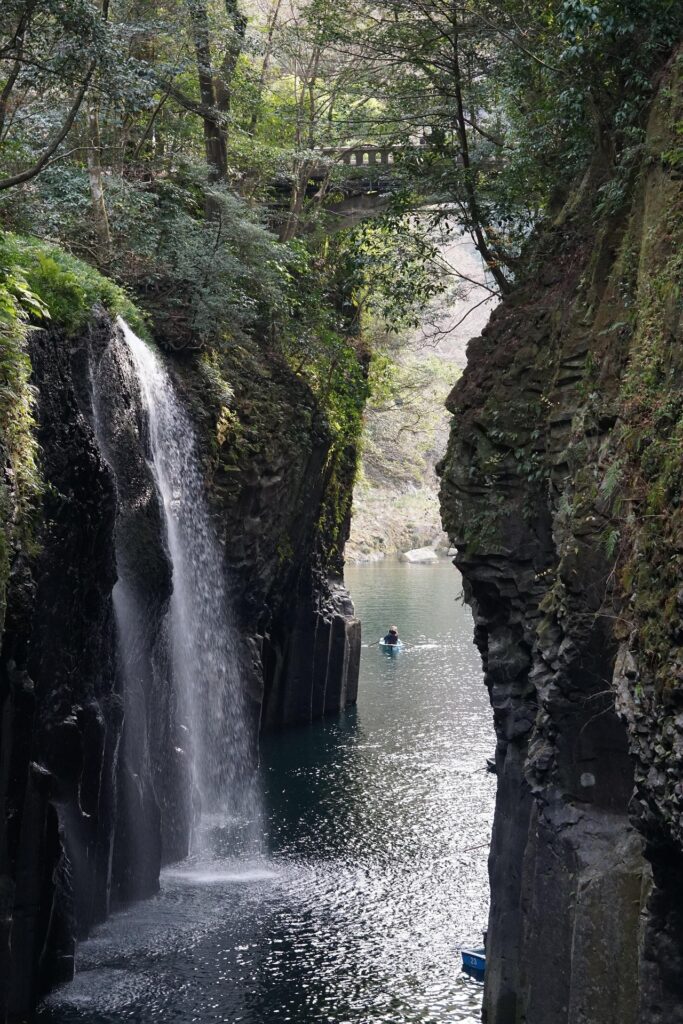
Takachiho Gorge looks unreal in photos: emerald water, vertical lava walls, a waterfall pouring into a narrow canyon. It pops up in countless reels and blog posts, so it’s natural that people based in Tokyo start searching “Takachiho Gorge from Tokyo” or even “Takachiko Gorge day trip.”
The reality is less Instagram and more logistics. Takachiho sits deep in the mountains of Kyushu, far off the usual Tokyo–Kyoto–Osaka route, with no Shinkansen station and no nearby airport. Getting there is absolutely possible, but it’s a side trip to a different island, not a quick hop from Shibuya.
If you already know you want to reach Kyushu and then hand the tricky part to someone else, a full-day Mt Aso & Takachiho tour from Fukuoka is the simplest way to bundle both spots into one day. ➡️[View Tour Details]
If you want to go deeper into routes, bus stops, and alternative bases around the gorge, you can pair this overview with a more detailed access guide.
➡️Mt Aso & Takachiho Gorge Day Tour from Fukuoka: What to Expect Before You Book
Quick Verdict
Takachiho Gorge is not a realistic day trip from Tokyo. Even with domestic flights and efficient transfers, you’re looking at roughly 6–8 hours one way. That means at least one night in Kyushu, and ideally two or more, or you will spend most of your “Takachiho day” in vehicles and airports.
It is worth the effort if you’re the kind of traveler who gets excited about dramatic landscapes, myth-heavy countryside, and hot spring towns, and you don’t mind adding a Kyushu module to your Japan route. It’s less worth it if your trip is under 10–12 days or you hate changing bases.
If you already know that once you’re in Kyushu, you would rather not deal with rental cars, mountain roads, and bus timetables, then a Mt Aso & Takachiho day tour from Fukuoka is usually the easiest way to make this detour feel like a highlight instead of a headache. ➡️[Check availability & prices].
Where Is Takachiho Gorge, and Why Is It Tricky from Tokyo?
Takachiho is a small town in northern Miyazaki Prefecture, on the island of Kyushu. On a map of Japan, Tokyo and Osaka sit on Honshu, the main island; Kyushu is the chunk of land to the southwest, across the water and a good distance away.
Key points that make it awkward from Tokyo:
- There is no JR train station in Takachiho. You arrive by long-distance bus or car.
- The nearest major hubs are places like Fukuoka, Kumamoto, and Nobeoka.
- The gorge sits in a narrow valley, which means steps, slopes, and a bit of walking from bus stops and parking.
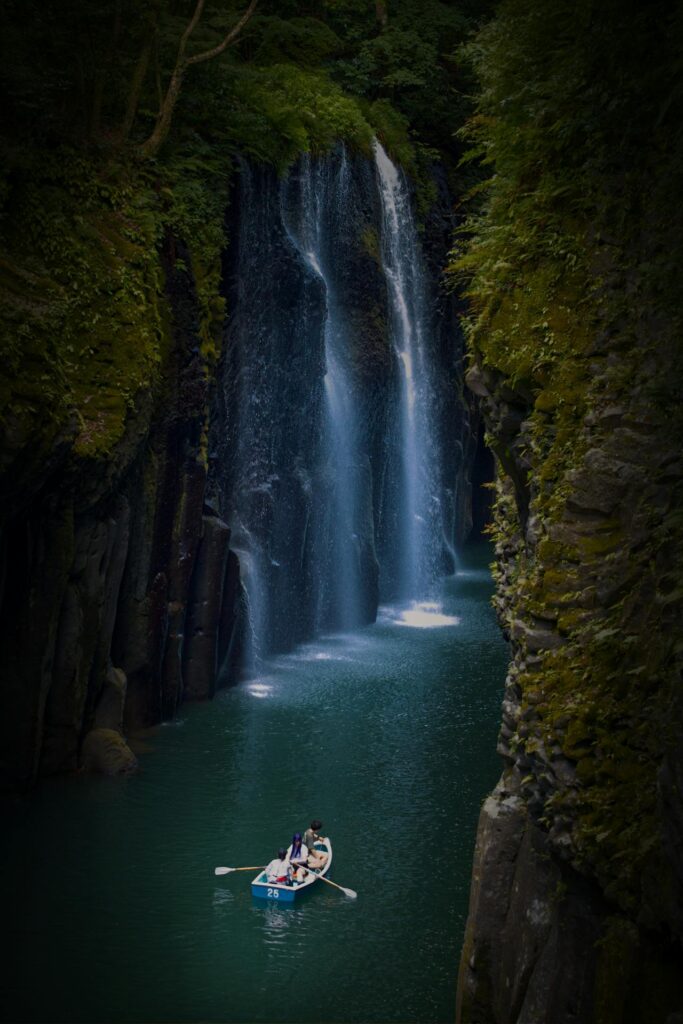
What you get in return is a gorge carved by ancient lava flows, with hexagonal basalt cliffs, the Minainotaki waterfall, and quiet green water that looks almost painted in certain light. The mood is very different from big-name spots like Hakone or Nikko: fewer souvenir streets, more cedars and shrines, and a sense that you’ve really left the “Golden Route” behind.
Travel Time from Tokyo to Takachiho Gorge
Fastest Route: Tokyo → Kyushu by Plane + Bus or Car
Most travelers who attempt Takachiho from Tokyo fly first and then continue by bus or car. The rough pattern looks like this:
- Tokyo → Kyushu by air: A 1.5–2 hour flight from Haneda or Narita to Fukuoka, Kumamoto, or Miyazaki, plus time for check-in and airport transfers on both ends.
- Kyushu hub → Takachiho: About 3 hours by highway bus or rental car through mountainous roads.
- Takachiho town → gorge: A short taxi ride or a 20–25 minute walk from the bus center or your accommodation.
By the time you add airport transfers, check-in/security time, and walking, you’re realistically at 6–8 hours door to door one way. It’s doable as a single travel day, but not as a “pop over and back” day trip.
Rail-Only Route: Shinkansen + Local Bus
If you avoid domestic flights, the Shinkansen-plus-bus route turns Takachiho into a slow migration to Kyushu rather than an outing.
A common pattern is:
- Tokyo → Hakata or Kumamoto by Shinkansen (around 5–6 hours, depending on changes).
- Transfer to a highway bus bound for Takachiho (roughly 3 hours).
- Short local transfer to reach the gorge area.
Door to door, that’s more like 8–9 hours one way. It makes sense if you want the journey itself, and plan to stay in Kyushu for several days afterward, but it’s not efficient if Takachiho is your only Kyushu target.
Why a Tokyo Round Trip in One Day Doesn’t Work
On a perfect day with perfect connections, you might be able to sketch an ultra-early flight to Kyushu, rush to the gorge, then sprint back to Tokyo at night. But:
- Flights can be delayed.
- Buses don’t line up perfectly with every arrival.
- The gorge and boat ride actually deserve some time to enjoy.
- You’d be gambling with the last flight back to Tokyo, which is not a fun kind of adrenaline.
For almost everyone, Takachiho only makes sense if you accept it as part of a Kyushu side trip – not an extension of your Tokyo commuting zone.
How Many Days Do You Need for Takachiho from Tokyo?
“Express” 2-Day Tokyo–Kyushu–Tokyo Plan
If your Japan itinerary is packed but you’re emotionally attached to seeing Takachiho, you can just about compress it into 2 days:
- Day 1: Fly or take the Shinkansen from Tokyo to Fukuoka or Kumamoto. Drop your luggage, wander the city a bit (canal-side in Fukuoka, castle area and local food in Kumamoto), and rest.
- Day 2: Dedicate the day to Takachiho, usually combined with Mt Aso on a tour, and then head back to Tokyo in the late evening.
This is intense and doesn’t leave much buffer for bad weather or sudden closures at Mt Aso. It works best if you’re comfortable with long days and you treat it as a “mini mission” inside your trip.
More Comfortable 3–4 Day Kyushu Loop
A 3–4 day Kyushu loop is where Takachiho really starts to feel good:
- Day 1: Travel from Tokyo to Kyushu (Fukuoka or Kumamoto), settle in, and explore the city.
- Day 2: Full day Mt Aso + Takachiho Gorge (tour or DIY).
- Day 3: Onsen time in Kurokawa, Beppu, or another hot spring area, or more city time in Fukuoka.
- Day 4: Travel onward to Osaka/Hiroshima, or back to Tokyo.
Kyushu is often called Japan’s onsen island, and folding Takachiho into a wider loop gives the detour a theme: rural landscapes, hot springs, and volcanic scenery instead of just “chasing a single photo spot.”
If you’re trying to understand how Takachiho could slot into a broader Kyushu route, it can help to see a few sample itineraries and route maps. ➡️Mt Aso & Takachiho Gorge Day Tour from Fukuoka: What to Expect Before You Book
DIY vs Tour for Takachiho (Coming from Tokyo)
Who Should Consider a DIY Trip
A DIY trip works well if you like solving travel puzzles. Renting a car in Kyushu gives you total freedom: you can linger at viewpoints, stop at roadside onsen, or stay overnight in Takachiho to see the evening kagura performance at Takachiho Shrine.
It also suits people who:
- Don’t mind driving on the left on narrow, occasionally winding roads.
- Are okay with fewer English signs and more “figure it out on the spot” moments.
- Want to slip in quieter experiences, like early-morning walks to shrines before the buses arrive.
Public transport–only DIY is technically possible, but bus schedules are sparse enough that missing one departure can domino into a very long day. It’s best for slow travelers who are used to rural timetables and don’t panic if plans shift.
When a Guided Tour Makes More Sense
A guided tour, especially from Fukuoka, is ideal if you see Takachiho as one highlight inside a larger trip rather than the main project. It’s a good fit if you:
- Would prefer not to drive, especially on unfamiliar mountain roads.
- Want to see Mt Aso and Takachiho Gorge in one day with guaranteed transport.
- Don’t want to track things like volcanic gas levels at Mt Aso or last-minute detours.
- Appreciate having a guide explain local myths, geology, and history in English while you look out the window.
If that sounds like your travel style, a long but well-organized Mt Aso & Takachiho day trip from Fukuoka can turn a complicated logistics web into “show up at the meeting point, nap on the bus, and enjoy the views.”
What This Mt Aso & Takachiho Gorge Tour Includes (At a Glance)
Once you’ve reached Fukuoka from Tokyo by plane or Shinkansen, this kind of Mt Aso & Takachiho tour typically offers:
- Around 10–11 hours round trip from central Fukuoka, with coach transport throughout.
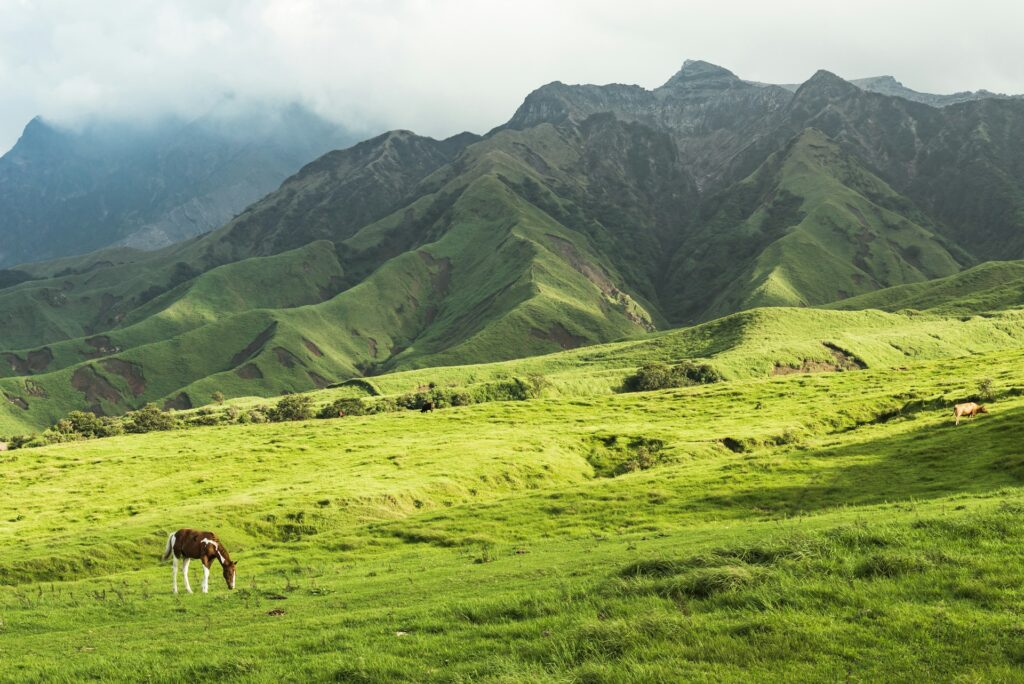
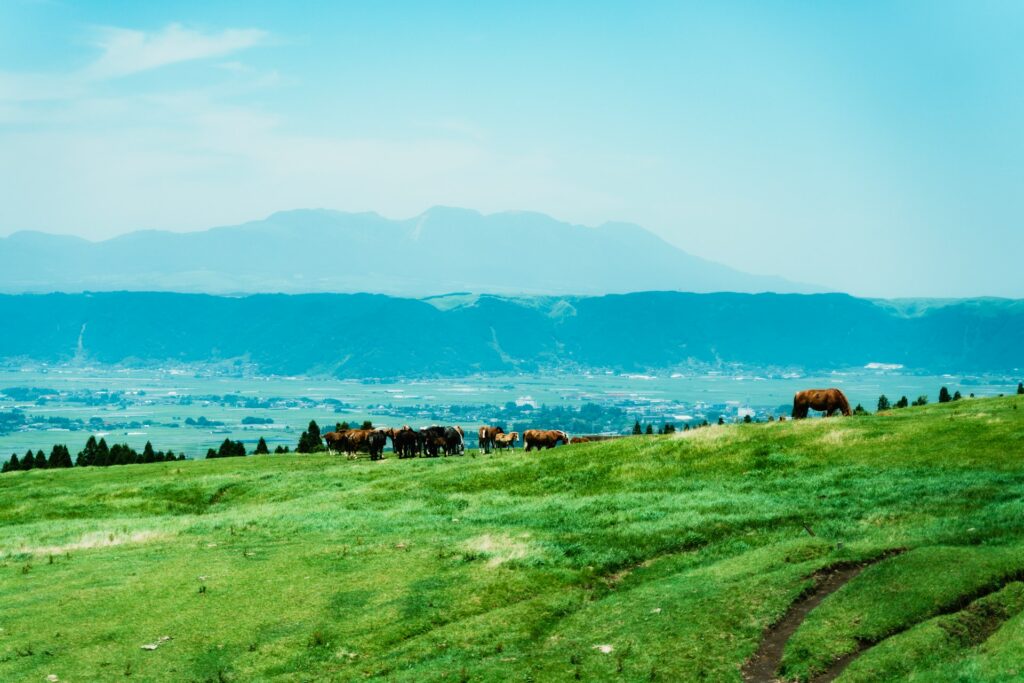
- Visits to Mt Aso’s crater area when open, plus the wide, grassy landscapes of Kusasenri, where you can see the volcano from a distance and walk around at your own pace.
- About one hour of free time at Takachiho Gorge, enough to walk the main path and, if your timing allows, join the optional boat ride.
- An English- and Chinese-speaking guide, generally with solid reviews, and free cancellation up to a certain deadline.
- A note that it is not suitable for visitors with significant mobility issues due to steps, slopes, and uneven paths around the gorge.
Think of this tour as a ready-made Takachiho solution for people who are already planning to use Fukuoka as their base.
What to Do at Takachiho Gorge (Once You’re There)
Walking the Gorge Path
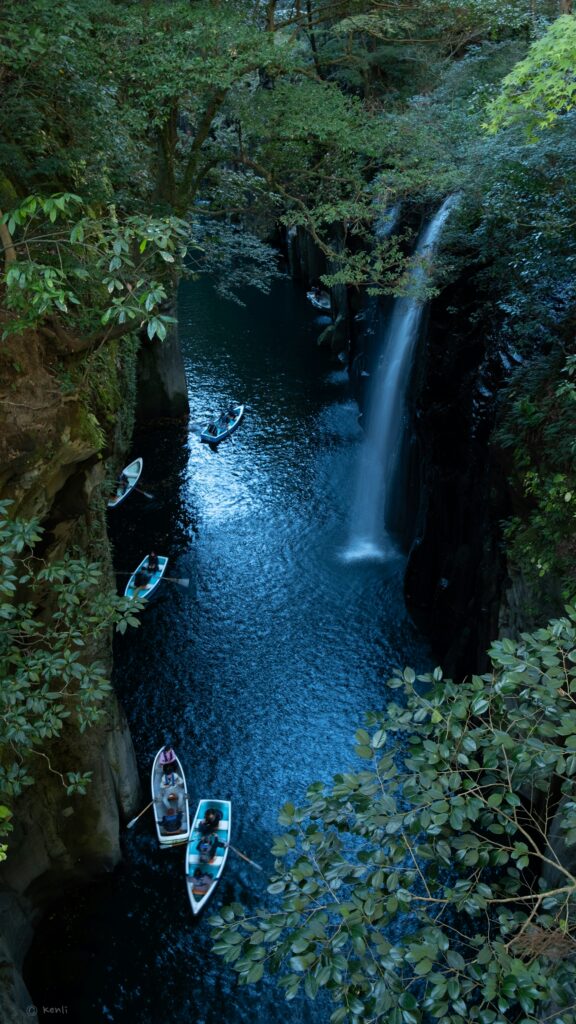
On foot, you follow a path that runs along the edge of the gorge, dipping in and out of cedar trees and opening up to sudden balcony-style viewpoints. From above, you see boats sliding along the green water, tiny against the cliffs, while the waterfall throws mist into the air.
Parts of the path are paved and have railings, but expect steps, slopes, and some uneven surfaces. If you like to take photos, allow time to walk both at river level and on the higher paths; each angle feels like a different place.
Rowing the Famous Boats
Rowing under the cliffs is the scene that shows up in most photos. Boats typically seat up to three people, and you get about 30 minutes to paddle up toward the falls and back. It’s not a guided tour – you’re literally rowing yourself – which makes it feel more intimate and slightly adventurous.
Recently, the boat system has shifted more to advance reservations, with only limited walk-up slots. In busy seasons (spring, Golden Week, autumn foliage weekends), treat a reservation as almost mandatory. If you’re going on a tour that includes the boat option, check whether they handle the booking or if you need to reserve your slot separately.
Nearby Shrines and Mythology
Takachiho is one of the classic landscapes of Japanese mythology. Two places in particular are easy to add if you have the time:
- Takachiho Shrine, surrounded by old cedar trees and known for its nightly kagura performance, where masked dancers retell stories from the Kojiki (Japan’s ancient chronicles) in a surprisingly relaxed, local way.
- Amano Iwato Shrine, associated with the legend of the sun goddess Amaterasu hiding in a cave, leaving the world dark until the other gods lured her out.
Even if you don’t know the stories in detail, visiting these shrines gives Takachiho a feeling of depth – like the gorge is just one face of a much older, layered landscape.
Best Time to Visit Takachiho Gorge
Seasons in Brief
Each season changes the gorge’s character:
- Spring: Fresh green and comfortable temperatures, with misty mornings that can make the cliffs look soft and dreamlike.
- Summer: Lush, saturated foliage and cool air down by the water, but also humidity, passing showers, and heavier Japanese school holiday crowds.
- Autumn: Some of the best light and colours, especially when the trees on the canyon rim turn red and gold; busy on peak foliage weekends.
- Winter: Quieter and sometimes almost empty on weekdays; colder and more subdued in colour, but the stillness has its own charm.
If you are flexible, late spring and the middle part of autumn usually offer the best combination of scenery, daylight, and comfort.
Avoiding Crowds and Securing a Boat
Most day tours and big private groups tend to arrive in the late morning to early afternoon window. If you want a quieter feel:
- Aim for early morning, when the paths are calm and boat traffic is lighter, or
- Visit later in the afternoon and stay overnight nearby, so you are not racing a final bus or tour departure.
Boats are limited, and on busy days, popular time slots can vanish quickly. If you don’t want to juggle online reservations, backup slots, and weather forecasts, letting a structured tour handle boat timing and plan B options can make the whole day feel smoother.
Alternatives Closer to Tokyo If Takachiho Is Too Far
After looking at the travel time, some travelers decide that Takachiho is a detour too far for a first trip or a short itinerary. If that’s you, you can still get your “river, cliffs, and boats” fix without leaving Honshu.
Options include:
- Hakone: Easy access by train or bus from Tokyo, with lake cruises, hot springs, open-air art, and (on clear days) Mt Fuji views rather than canyon scenery.
- Nagatoro (Saitama): Riverboat rides through a rocky valley, reachable as a simple day trip north of Tokyo, with a much more relaxed schedule.
- Okutama and western Tokyo: Lakes, forest trails, and rivers within Tokyo’s own prefectural borders, offering a surprisingly wild feel for somewhere technically still “Tokyo.”
These places are not substitutes for Takachiho, but they are good trade-offs if you want nature without changing islands. If you decide to keep your whole trip around Tokyo, it’s worth looking at a broader round-up of nearby nature escapes.
Practical Tips for Visiting Takachiho from Tokyo
- Think in bases, not day trips: Plan to base yourself in Fukuoka, Kumamoto, or Nobeoka and visit Takachiho from there. Store big suitcases at your base (hotel baggage hold or coin lockers) and travel to the gorge with a smaller bag.
- Consider fitness and mobility early: The gorge path includes steps, slopes, and slightly uneven sections. The boats require stepping down into a small craft and keeping your balance as it moves. For people with bad knees or serious mobility issues, the area can be tiring or risky.
- Build in a weather and volcano buffer: If you pair Takachiho with Mt Aso, remember that the crater may close at short notice due to volcanic gas. Tours usually have fallback plans; self-drivers should plan alternatives so the day doesn’t feel wasted.
- Prepare for rural Japan: Outside Fukuoka and Kumamoto, English signage drops off. Some spots still prefer cash, and bus stops aren’t always obvious. A translation app, some yen in your wallet, and patience with slower rural rhythms will go a long way.
Always double-check the latest info on official sources before you travel.
So, Is Takachiho Gorge from Tokyo Worth It?
If your Japan trip is mostly about ticking off big-name sights on the Tokyo–Kyoto–Osaka line, then adding Takachiho might feel like too much work for one gorge, no matter how pretty it is. The extra flights, buses, and hotel changes are real.
But if you like the idea of seeing a different side of Japan – volcanic plains, hot springs, cedar forests, and a gorge that feels tucked away from the usual circuits – then building in a 2–4 day Kyushu module can be incredibly rewarding. Takachiho becomes not just a place you saw on Instagram, but a turning point in your trip where the mood shifts from “city and trains” to “myths, mountains, and onsen.”
If you’re ready to commit to that detour but want it to feel smooth rather than stressful, letting a Mt Aso & Takachiho day tour from Fukuoka handle the heavy logistics is often the easiest way to turn the idea into something you can actually enjoy.
FAQ – Takachiho Gorge from Tokyo
1. Can I visit Takachiho Gorge as a day trip from Tokyo?
Realistically, no. Even with flights and efficient transfers, you’re usually looking at 6–8 hours one way. That doesn’t leave enough time to enjoy the gorge and still get back to Tokyo the same night.
2. Is Takachiho Gorge doable as a day trip from Fukuoka instead?
Yes. It makes for a long but manageable day, especially with an organized tour that combines Mt Aso and Takachiho and returns you to Fukuoka in the evening.
3. How long should I actually spend at the gorge itself?
Aim for at least half a day if you can: enough time to walk both the riverside path and the upper viewpoints, take photos from different angles, and enjoy a 30-minute boat ride without rushing.
4. Do I need to book the Takachiho boats in advance?
In busy seasons, yes. Advance bookings are strongly recommended, and same-day slots can sell out in the late morning. On quieter winter weekdays, you may have more flexibility, but it’s still wise to check the latest system.
5. Is Takachiho Gorge suitable for young kids or older travelers?
It depends on mobility. Many families with children enjoy it, but you’ll need to watch kids on steps and near the water. For older travelers with bad knees or balance issues, the combination of slopes, stairs, and small boats can be challenging.
6. What’s the best way to fit Takachiho into a Japan itinerary?
The most common way is to add a 2–4 day Kyushu section between Tokyo and Kansai. Use Fukuoka or Kumamoto as hubs, dedicate one day to Mt Aso & Takachiho, and spend the remaining time on hot springs or city food before heading back to the main island.
➡️Mt Aso & Takachiho Gorge Day Tour from Fukuoka: What to Expect Before You Book