
Takachiho Gorge looks like something out of a fantasy film—sheer basalt cliffs, emerald river, and those famous rowboats gliding beneath a waterfall. But once you start researching how to get there, “Takachiho bus” and even “Takachi-ho” quickly turn into a rabbit hole of old blog posts, half-translated timetables, and conflicting advice.
The good news: buses do exist from Fukuoka, Kumamoto, Aso, and Nobeoka. The less good news: departures are limited, connections are tight, and the last-mile from Takachiho Bus Center to the gorge is more of a small adventure than a simple transfer. This article walks you through what’s realistically doable by bus and where an organized tour quietly becomes the more sensible option.
Quick Verdict
If your main question is “Can I reach Takachiho Gorge by bus?” the answer is yes—but it’s best for travelers who are patient, flexible, and okay with early starts or late returns. Direct highway buses from Fukuoka and Kumamoto run only a few times a day, and missing one can blow up your plan.
A same-day DIY trip from Fukuoka just for the gorge is possible with careful timetable checking; combining Mt. Aso + Takachiho by public transport in one day is extremely ambitious. If you want both places in a single, guaranteed day with minimal logistics, a full-day Mt. Aso & Takachiho bus tour from Fukuoka is the low-stress choice.
If you’d like to see how Takachiho fits into a wider Kyushu itinerary, you can always cross-check this overview with a more detailed regional breakdown:➡️ Mt Aso & Takachiho Gorge Day Tour from Fukuoka: What to Expect Before You Book. And if you already know you’d rather not deal with rural bus timetables, you can skip ahead and look at this full-day Fukuoka departure that covers Mt. Aso and Takachiho Gorge with an optional boat ride:➡️ [Check availability & prices].
What people usually mean by “Takachiho bus”
When travelers type “takachiho bus” into search, they’re usually thinking about one of three things:
- A direct highway bus from Fukuoka to Takachiho Bus Center
- The express Takachiho-go bus line from Kumamoto
- The short hop between Takachiho Bus Center and Takachiho Gorge
The confusing part is that all of these routes exist, but each has its own operator, timetable, and booking channel. Information gets out of date quickly, and English-language blogs often quote old timetables.
Another common surprise: the bus takes you to Takachiho town, not directly to the river. From the bus center you still have to walk, take a taxi, or hop on a local bus to reach the gorge.
Why bus access to Takachiho feels confusing
Limited departures, high stakes
Takachiho is a rural area, so think “a few departures per day” rather than “every 20 minutes.” From Kumamoto, the Takachiho-go highway bus typically runs twice a day in each direction, taking about three hours from Kumamoto Station to Takachiho Bus Center.
That means:
- Miss the morning bus and you might not arrive until mid-afternoon.
- Miss the last return bus and you’re suddenly looking at an unplanned night in Takachiho.
From Fukuoka, direct buses to Takachiho Bus Center take roughly 3–3.5 hours, again with just a handful of departures per day. It’s perfectly manageable if you plan around one specific departure; it’s a headache if you treat it like a city bus.
Multiple “correct” routes from big cities
There isn’t a single “official” way to reach Takachiho. Depending on where you’re coming from, the most realistic options are:
- Fukuoka → Takachiho Bus Center by direct highway bus
- Kumamoto → Takachiho Bus Center on the Takachiho-go line
- Aso Station → Takachiho on a smaller intercity line
- Miyazaki / Nobeoka → Takachiho on a bus from the east coast
Each version has slightly different booking tools and stops. A route that looks straightforward on one comparison site may actually show an old or seasonal timetable.
Weather, boats, and last-mile reality
Takachiho Gorge itself adds a few more variables:
- The rental rowboats usually run from around 8:30 to late afternoon, but times shift by season and boats stop whenever river conditions aren’t safe.
- On busy weekends and holidays, there can be long waits for boats, sometimes over an hour in the late morning and midday.
- The walk from the bus center to the gorge is downhill on the way there and uphill on the way back; with photo stops and crowds, the round-trip can easily take 30–40 minutes.
When you’re on a tight bus schedule, that gentle uphill stroll can suddenly feel quite urgent.
Concrete bus routes you can actually use
1. From Fukuoka to Takachiho by highway bus
For most travelers without a car, the Fukuoka → Takachiho highway bus is the most direct public-transport option.
Typical pattern (subject to seasonal changes):
- Board at Fukuoka Airport or Hakata Station / Tenjin bus terminals
- Ride about 3–3.5 hours to Takachiho Bus Center
- Cost is usually in the ¥3,000–6,000 range one-way depending on seat type and operator
- Some buses require advance reservation; others allow same-day purchase if seats remain
You’ll generally want an early morning departure from Fukuoka to reach Takachiho by late morning or lunchtime. That gives you a few hours at the gorge before taking an afternoon or early evening bus back.
A rough shape of a same-day DIY plan might look like:
- 08:00–09:00: Depart Fukuoka
- Around 12:00: Arrive at Takachiho Bus Center
- 12:30–15:30: Explore the gorge (walk the path, optional boat if available)
- Late afternoon: Return bus to Fukuoka
- Evening: Arrive back in the city
This works best if you’re comfortable booking specific buses in advance and are okay with a long day that’s mostly travel time.
2. From Kumamoto to Takachiho (Takachiho-go line)
From Kumamoto, the Takachiho-go highway bus makes the trip more straightforward but still not “hop on any time” easy.
As of the latest timetable, typical timings are:
- Kumamoto Station → Takachiho Bus Center
- Morning departure around 09:10–09:20, arriving just after 12:15
- Afternoon departure around 15:30, arriving early evening
- Takachiho Bus Center → Kumamoto Station
- Morning bus back around 08:40–09:00
- Late afternoon bus back around 16:50–17:00
This has a few important implications:
- A same-day trip from Kumamoto is doable if you take the morning bus in and the late afternoon bus out, giving you roughly 4 hours on the ground.
- You should still book or reserve seats where possible, especially in peak seasons and on weekends.
- If you want a slower pace or extra time for shrines like Amanoiwato, an overnight stay in Takachiho is much more relaxed.
For some travelers, an organized day trip from Kumamoto that bundles bus seats and a simple plan can be easier than piecing together your own tickets, even though the route is technically public transport.
3. From Aso or Nobeoka
If you’re already exploring Kyushu more deeply:
- From Aso Station, there is an intercity bus line connecting Aso and Takachiho a few times a day, often marketed as the “Aso-Takachiho line,” taking around 2 hours.
- From the east coast, Nobeoka Station → Takachiho buses also run several times a day, useful if you’re coming from Miyazaki or heading that way afterwards.
These routes are great for a multi-day Kyushu loop, less so for a quick hit from Fukuoka.
4. Inside Takachiho: bus center to gorge
Once you arrive at Takachiho Bus Center, you still have the last leg to the gorge itself.
You essentially have three options:
- Walk: around 20–30 minutes downhill to the river area, longer coming back up.
- Taxi: often available at or near the bus center; useful with luggage or if it’s raining.
- Local town bus: limited services linking main town stops and the gorge area; works best if you’ve checked the timetable beforehand.
Because the walk back is uphill and the gorge paths include stairs, this last section can feel demanding for anyone with knee issues or heavy bags—worth factoring into your schedule.
After you finish mapping out your buses, if everything feels a bit tight but you still want independent planning, it might be worth cross-checking with a fuller regional breakdown in ➡️ Mt Aso & Takachiho Gorge Day Tour from Fukuoka: What to Expect Before You Book to decide whether to keep the DIY plan or shift to something more structured.
The extra challenge: fitting Mt. Aso and Takachiho into one day by bus
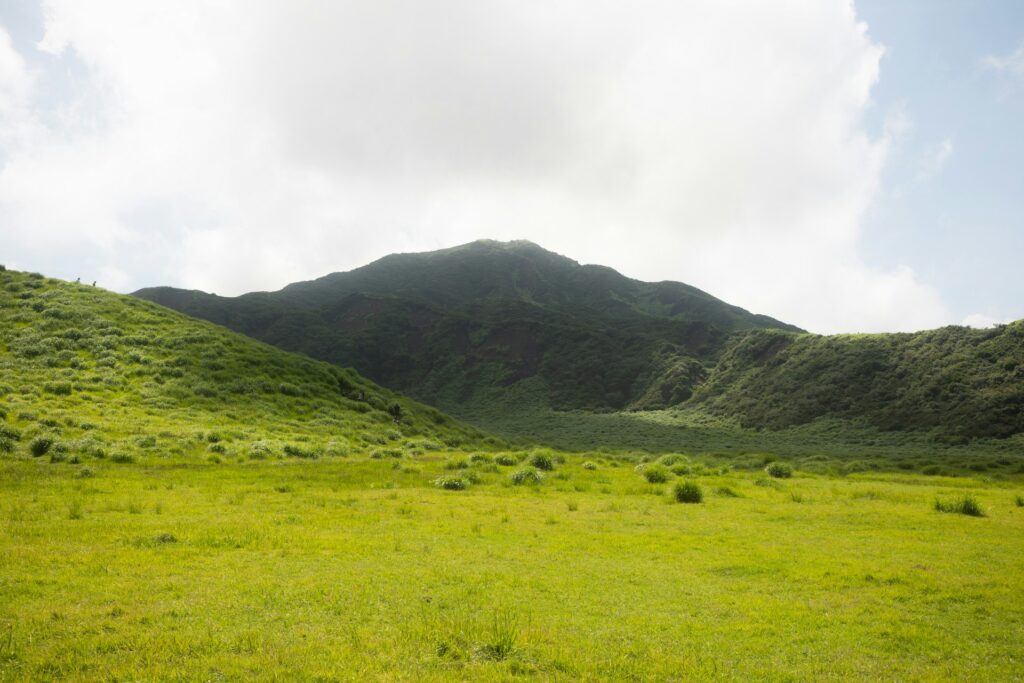
On the map, Mt. Aso and Takachiho don’t look far apart. In reality, doing both in one day by public bus and train is very hard:
- From Fukuoka, you’d have to go Fukuoka → Aso → Takachiho → Fukuoka, switching between trains and rural buses with limited departures.
- From Kumamoto, you could try Kumamoto → Aso → Takachiho → Kumamoto, but again you’re juggling low-frequency lines.
If even one bus is delayed or full, you risk missing the next connection and losing the entire day’s plan. That’s why many travelers who specifically want “Aso + Takachiho in one day” either rent a car or join a tour designed exactly for that combo.
What this Fukuoka-based tour includes (at a glance)
If you’ve read this far and are thinking “I just want Aso and Takachiho done in one clean day,” a full-day bus tour from Fukuoka can be a very reasonable trade-off. One popular option (the one you’re likely seeing in search results) typically includes:
- Round-trip coach from central Fukuoka with a fixed meeting point and clear instructions
- Visits to Mt. Aso (with the crater area if open) and the Kusasenri grasslands
- Around one hour of free time at Takachiho Gorge, with the choice of a walking-only plan or a version that includes the boat ride
- A full-day schedule (about 10–11 hours) that brings you back to Fukuoka the same evening
- English and Chinese-language support, plus free cancellation up to a set cut-off time
The big advantage is psychological: you only have to show up at the meeting point on time. No separate bus reservations, no guessing about transfer windows, no worrying whether the last Takachiho bus will be full.
If you’d rather exchange rural timetable puzzles for a single, well-structured day, this kind of Mt. Aso & Takachiho tour from Fukuoka is the most straightforward option:➡️ [Check availability & prices]..
Sample one-day comparison: bus vs tour
If you go by public bus from Fukuoka
A realistic, though long, DIY day could look like this (exact times will vary):
- Early morning: Highway bus from Fukuoka to Takachiho Bus Center
- Late morning to mid-afternoon: Walk or taxi to the gorge, explore viewpoints, maybe rent a boat if the line isn’t too long
- Late afternoon: Walk or taxi back up to the bus center, catch your return bus
- Evening: Arrive back in Fukuoka, fairly tired
This works best in good weather with no boat closure and if all buses are running on time. It’s satisfying if you enjoy figuring out local transport and don’t mind a bit of uncertainty.
If you join the Fukuoka bus tour
The tour schedule is designed for you:
- Morning: Depart Fukuoka on a tour coach, without needing separate tickets
- Late morning: Visit Mt. Aso, with flexibility to adjust if the crater is closed
- Mid-day: Enjoy Kusasenri grasslands without worrying about how to get to the next place
- Afternoon: Free time at Takachiho Gorge, with a pre-arranged boat option on some packages
- Evening: Relax on the return drive to Fukuoka
You sacrifice a little spontaneity but gain a lot of predictability—especially useful in winter, during Golden Week, or in rainy season when driving yourself or chasing buses may feel stressful.
Practical tips before you decide
Even if you’re leaning toward DIY buses, a few principles help:
- Check current timetables: Use official bus booking sites or operator pages, not just old blog posts. Focus on Fukuoka–Takachiho, Kumamoto–Takachiho (Takachiho-go), Aso–Takachiho, and Nobeoka–Takachiho routes.
- Reserve when you can: Some highway buses allow or require advance seat reservation, especially in peak travel seasons and on weekends.
- Build buffer time: Don’t plan to arrive at Takachiho, ride the boat, and sprint back to the bus center in less than two hours—you’re leaving no margin for queues, photos, or the uphill walk.
- Think about your energy: If you have limited time in Kyushu, consider whether you really want to spend 6–8 hours of a single day on buses, or whether a one-day tour or an overnight in Takachiho would feel better value for your energy.
If you decide you’d rather spend your energy on scenery instead of logistics, that’s exactly where a curated Aso & Takachiho tour from Fukuoka shines: you swap spreadsheets and timetables for a reserved seat and a guide. You can always keep this article as a reference for a future slow, bus-based trip and in the meantime secure one day of guaranteed views:➡️ [Check availability & prices].
FAQ: Takachiho bus & tour basics
Is there a direct bus from Fukuoka to Takachiho?
Yes. Highway buses generally run from Fukuoka (often from the airport and/or main bus terminals) to Takachiho Bus Center in about 3–3.5 hours, a few times per day. Reservations are strongly recommended in busy seasons.
How long does the bus take from Kumamoto to Takachiho?
The Takachiho-go highway bus usually needs about 3 hours one-way between Kumamoto Station and Takachiho Bus Center. There are typically two departures in each direction per day, so you should plan around those specific times.
Can I do Takachiho as a day trip from Fukuoka by bus?
It’s possible, but it’s a long day and not very forgiving if you miss or delay one bus. You’ll have limited time at the gorge and need to be disciplined about your schedule. Many travelers feel more relaxed using public buses when they stay overnight in Takachiho rather than forcing a same-day round trip.
Is the Takachiho boat ride worth it if I’m on a tight bus schedule?
Most people find the boat ride memorable, but waits can be long at peak times and operations stop when river conditions aren’t safe. If you only have a couple of hours before your return bus, prioritizing the clifftop walking path and viewpoints may feel more secure than gambling on a long queue.
Tour vs bus: which is better in winter or bad weather?
In winter, during typhoon season, or when you’re nervous about driving on mountain roads, a tour is often less stressful. If the crater is closed or boats stop running, the operator can usually adjust the itinerary, whereas on a DIY trip you’ll be improvising on your own.