
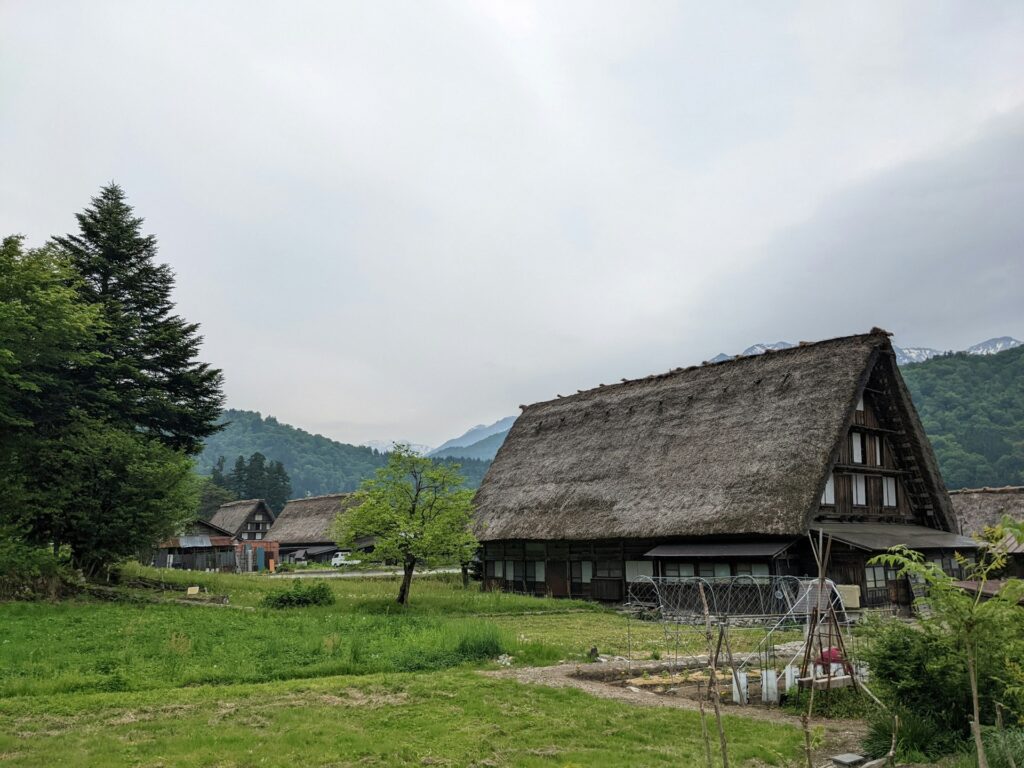
Quick Answer: What to Eat in Shirakawa-go on a Short Visit
For most first-time visitors, Shirakawa-go works better as a snack-first village than a full lunch destination. The scenery, viewpoint, bus schedule, and short walking route matter too much to let one restaurant queue control your visit.
If you only have about 2 hours in Shirakawa-go, buy one savory snack early, explore the village and viewpoint, then add one sweet item or drink on the way back. If you have about 4 hours, you can usually fit in one snack plus one simple sit-down meal, but only if you keep your route tight and avoid peak waiting times.
- Best strategy for most day-trippers: Eat early, keep it simple, and do not build your whole stop around one restaurant.
- Most reliable local picks: Gohei mochi, Hida beef croquettes, Hida beef skewers, and pudding-style sweets.
- Best choice for a longer lunch: Hoba miso, soba, tofu, suttate, or another traditional set meal.
- Best call if dinner matters to you: Keep Shirakawa-go light with snacks and save your larger Hida beef meal for Takayama later.
- Main risk to avoid: Arriving hungry in the late lunch window, when smaller kitchens may be winding down or sold out of popular items.
Note: Opening hours, payment methods, menu availability, prices, and seasonal items can change, especially at smaller family-run shops. If one specific food stop matters to you, confirm on the day you visit.
At a Glance: Snacks or a Sit-Down Meal?
| Your Situation | Best Food Strategy | What to Prioritize | What to Skip |
|---|---|---|---|
| About 2 hours in the village | Snacks first | 1 savory item + 1 sweet item or drink | A full sit-down lunch at peak time |
| About 4 hours in the village | One snack + one simple meal | Eat one quick item early, then add one restaurant stop if timing works | Trying to fit too many food stops into one visit |
| Strict bus schedule | Grab-and-go choices only | Fast local specialties near the main walking route | Any meal that needs a long wait |
| Food matters, but sightseeing matters too | Keep Shirakawa-go light | Iconic snacks and one dessert | Using your best photo hour in a queue |
| You want a proper Hida beef meal | Save the bigger meal for Takayama | Quick bites in Shirakawa-go, dinner later | Forcing a long lunch into a short village stop |
Best Foods to Prioritize First
These are the foods most worth looking for on a typical short visit. Prices and availability vary by season and by shop, so treat any budget idea as a planning guide rather than a guarantee. Each entry includes a practical place to check so you can head in the right direction instead of wandering hungry.
Kai’s tip: The mistake I see travelers make is waiting until they feel properly hungry before buying food. In a small village with limited kitchens, that often means you start looking at the same time as everyone else. I always tell readers to buy one simple savory item near the start, even if they plan to eat a bigger meal later.
Gohei Mochi (Grilled Rice Skewer)
A classic mountain-region snack made from pounded rice and grilled with a sweet-salty miso glaze. It is quick to eat, easy to carry to a nearby bench or resting area, and one of the best first stops if you want something local without losing time.
- Where to check: Oishi-bou / おいしんぼ, which is listed by the Shirakawa-go Tourist Association with gohei mochi, and other snack counters around the main village walking route.
- Budget roughly: Often a few hundred yen, but confirm locally because prices can change.
- Best timing: Early in your visit, before the lunch rush builds.
Hida Beef Croquette
One of the easiest wins in Shirakawa-go: crisp, hot, filling, and fast. It is ideal when you need something savory before walking uphill, heading toward the viewpoint, or continuing to your next stop.
- Where to check: Kondo Shoten / 今藤商店, which is listed by the tourist association as a place where you can try Hida beef croquettes and Hida beef skewers.
- Budget roughly: Usually a small snack budget, but check the current price at the counter.
- Best timing: Good as your first savory bite if you arrive before peak lunch time.
Hida Beef Skewer
The fastest way to try Hida beef without committing to a full restaurant meal. It is a good fit for travelers who want something more special than a croquette but still need to keep moving.
- Where to check: Kondo Shoten / 今藤商店 and other takeout counters around the village center.
- Budget roughly: More than a croquette in most cases, depending on the cut and portion; confirm before ordering.
- Best timing: Better earlier in the day, because popular hot items can sell out or slow down when crowds build.
Water Pudding & Local Pudding Sweets
If you want one photogenic dessert rather than a heavy lunch, pudding-style sweets are a strong choice. They are light, easy to fit into a short stop, and work well as your second food item after one savory bite.
- Where to check: Souvenir shops and snack stands along the main walking route. Look for signs for pudding, local sweets, or seasonal desserts.
- Budget roughly: Usually a small dessert budget, but prices vary by shop and season.
- Best timing: On the return leg of your walk, after the viewpoint or main village stroll.
Hoba Miso
Hoba miso is a better choice when you actually have time to sit down. Miso and local ingredients are cooked over a magnolia leaf, often as part of a set meal. Expect a slower pace than a snack counter.
- Where to check: Traditional restaurants in the village that serve local set meals, such as Irori Restaurant or other gassho-zukuri-style dining spots.
- Budget roughly: Set meals cost more than snacks and vary by restaurant; check the current menu before sitting down.
- Best timing: Only if you have enough time buffer, ideally closer to a 4-hour visit than a 2-hour stop.
Suttate (Shirakawa-go Bean Soup)
Suttate is one of the more region-specific dishes to look for if you want something beyond the usual Hida beef snack lineup. It is a warm local dish based on stone-ground soybeans, often combined with a miso and soy-sauce-style broth. It is more of a meal than a quick snack.
- Where to check: Restaurant Gasshou is one place to check for suttate-style dishes and local meals. It is outside the tightest core of the village, so it works better if you are not rushing for the next bus.
- Budget roughly: Treat it as a sit-down meal budget rather than a snack budget, and confirm the current menu on the day.
- Best timing: Better for a longer stop, a car-based visit, or travelers who specifically want a regional sit-down meal.
Shirakawa-go Restaurant Comparison: Which Sit-Down Meal Fits Your Visit?
If you decide to go for a proper meal, choose carefully. Not every restaurant works well for a short day trip, and opening hours, English menus, payment methods, and reservations can change. Use this table as a planning filter, then confirm locally on the day.
| Restaurant | Best For | Atmosphere | Price Feel | Time Needed | Reservation | English Support |
|---|---|---|---|---|---|---|
| Irori Restaurant | Set meals, soba, tofu, local-style lunch | Gassho-zukuri building close to the bus terminal | Usually mid-range | Allow a proper lunch buffer | Check directly; group reservations may be available | Check on the day |
| Ochiudo | Light lunch, cafe break, relaxed stop | Cozy former gassho-style residence with a cafe feel | Often lighter than a full set meal | Better for a shorter sit-down stop | Check directly | Village listing notes an English menu |
| Soba Dojo | Handmade soba if visiting the open-air museum area | Traditional soba experience | Varies by menu | Works best if already nearby | Usually not the main choice for tight schedules | Check on the day |
| Nomura Soba | Soba-focused lunch | Traditional soba restaurant | Usually mid-range | Allow a proper lunch buffer | Check directly | Check on the day |
| Restaurant Gasshou | Suttate-style dishes, soba, Hida beef, dango | Restaurant outside the most central walking route | Usually mid-range | Better with extra time | Confirm directly if making a special trip | Check on the day |
Quick take: If time is tight, skip the sit-down meal and stick to snacks. If you have enough buffer and want atmosphere, choose a restaurant close to your walking route, such as Irori Restaurant or Ochiudo. If you specifically want suttate or a slower local meal, Restaurant Gasshou is worth checking, but it is less convenient for a strict short stop.
Where to Find the Best Food Stops by Area
For most travelers, the best plan is not chasing one perfect restaurant. It is finding food along your natural walking route through the village. Here is how food stops break down by area.
Kai’s tip: What catches people out is that Shirakawa-go looks compact on a map, but every small detour costs attention: photos, crowds, road crossings, snow or heat, and the walk back to the bus area. When I plan a short village stop for readers, I think in loops rather than individual shops. Buy food where you already need to pass, not on the far side of the village just because one dish sounds interesting.
Around the Bus Terminal & Wada House Area
- Irori Restaurant: Very close to the bus terminal and useful if you want a sit-down meal without walking far. The tourist association lists it as a gassho-zukuri building restaurant.
- Oishi-bou / おいしんぼ: A gohei mochi option listed by the tourist association, around the Ogimachi village area.
- Kondo Shoten / 今藤商店: Listed by the tourist association for Hida beef croquettes and Hida beef skewers.
- Ochiudo: A cafe in a former gassho-style residence; the village listing notes an English menu, which can make basic ordering easier.
Along the Main Walking Route
- Snack and souvenir shops: Look for pudding-style sweets, soft serve, local sweets, and seasonal items.
- Small counters: Useful for a quick savory snack, but menus and payment methods vary.
- Local sweets shops: Good for your second stop after the viewpoint or main village walk.
Inside or Near Museum Areas
- Soba or set-meal options: Can work if you are already visiting a museum-style attraction, but do not detour only for food unless you have time.
- Best for: Travelers with about 4 hours in the village, not travelers on a tight bus schedule.
Further from the Core Village
- Restaurant Gasshou: Better for travelers with extra time, their own car, or a more relaxed schedule.
- Other local restaurants: Menus and opening days vary, so confirm before making a special detour.
Realistic Food Timing for a Shirakawa-go Day Trip
The biggest mistake in Shirakawa-go is eating too late. Many travelers arrive, walk first, take photos, and only start thinking about food once everyone else is already queueing. In practice, the smarter move is usually to eat one savory item early, then do your main walking while you still have time and energy.
2-Hour Plan: The Best Default for Most Visitors
If your visit is short, treat Shirakawa-go as a two-food-stop village, not a full lunch destination.
- Arrival: Buy your first savory bite immediately, such as gohei mochi, a croquette, or a skewer.
- Early walk: Move through the main village area and head toward the viewpoint shuttle or walking route.
- Priority stop: Visit the viewpoint or your highest-priority scenic area before food queues absorb your time.
- Return walk: Add one sweet item, coffee, or light second snack if you still have time.
- Final buffer: Keep time for the bus stop, parking area, toilets, luggage, or regrouping.
This is the most realistic plan for travelers arriving on a bus schedule or combining Shirakawa-go with Takayama on the same day. For a more detailed breakdown of how to structure this time, see our full Shirakawa-go itinerary guide with bus times and walking routes.
4-Hour Plan: Better Odds for a Sit-Down Meal
With about four hours, you have more breathing room, but the same principle still applies: eat one quick item early, then decide later whether a proper lunch still makes sense. This protects your day in case lines are longer than expected or a kitchen closes earlier than you hoped.
- Start with one quick snack instead of waiting until peak lunch time.
- Choose only one major add-on: Either a sit-down meal, a historic house interior, or extra unhurried wandering time.
- If you choose a sit-down meal, choose a restaurant close to your route rather than walking far across the village just for lunch.
- If you are continuing to Takayama later, consider saving your larger meal for the evening and using Shirakawa-go for lighter regional bites. Takayama offers much more variety for dinner, and you can also explore our guides to hidden gems in the Hida region and whether Takayama is worth it for broader planning.
Recommended Option If Food Timing, Luggage, and Connections Matter
If your day is not just “visit Shirakawa-go and return,” but something more complicated like Kanazawa to Shirakawa-go to Takayama, the food problem becomes a logistics problem. You are not only deciding what to eat; you are deciding how much freedom you have before the next bus, where your luggage goes, and whether a slow lunch ruins the rest of the day.
Why I’d consider a private transfer-style Shirakawa-go day:
- It protects the snack-first plan: You can use Shirakawa-go for quick local bites without constantly checking the next public bus departure.
- It makes luggage less annoying: Transfer-day travelers often underestimate how much bags affect lunch, toilets, photos, and regrouping.
- It gives families and groups more control: If someone needs a slower pace, a toilet break, or a proper lunch, the whole plan is easier to adjust than with fixed public connections.
If you are still comparing DIY buses against a private format, read this before booking: Shirakawa-go private tour worth it? Honest cost, value and verdict.
| Option | Best For | Food Flexibility | Luggage Stress | Cost Check |
|---|---|---|---|---|
| DIY bus visit | Solo travelers, budget-focused trips, simple round trips | Lower; you need to protect the bus schedule | Depends on lockers, hotel forwarding, or route | Confirm current bus fares and reservations |
| Private transfer-style day | Families, groups, luggage-heavy transfer days, food/photo flexibility | Higher; easier to add a short meal or adjust snack timing | Usually easier, depending on the vehicle and operator | Confirm current availability and inclusions |
Seasonal & Photo-Worthy Food Tips
Summer Favorites
- Doburoku or chestnut-style sweets at Yoze: Yoze is listed by the tourist association near Wada House and notes doburoku and chestnut sweets depending on the season. Check what is available on the day.
- Cold drinks and soft serve: Useful if you are walking in summer humidity.
- Light snacks instead of a heavy lunch: Summer visits can feel hot and crowded, so keeping food simple often works better.
Winter Favorites
- Hot soba or udon: Warming and practical after walking through snow.
- Hida beef skewers: Especially satisfying on a cold day if you want something hot and quick.
- Suttate or a warm set meal: Better if you have enough time for a sit-down stop.
Most Photogenic Bites
- Water pudding or local pudding sweets: Light, pretty, and easy to photograph.
- Hida beef nigiri at Okesa: Okesa is listed by the tourist association as a Hida beef nigiri shop, with limited quantities and daytime hours. Treat it as a nice bonus if available, not a guaranteed stop.
- Gohei mochi: Simple, local, and easy to photograph against a gassho-zukuri backdrop.
Local Rules and Practical Tips
Kai’s tip: I always tell readers to treat Shirakawa-go as a lived-in village first and a sightseeing spot second. Buy food, step aside, finish it neatly, and keep wrappers with you until you can return them or dispose of them properly. This small habit makes a big difference in a village that receives far more visitors than its size suggests.
- There are no public trash cans in the village. If you buy food, plan to carry your rubbish with you or return containers and wrappers to the shop where you bought them.
- Do not treat the village like a walking food market. Step aside, eat near the shop or in an appropriate resting area, and then continue exploring.
- Carry cash. Some larger restaurants and shops accept cards or digital payments, but smaller snack counters may still be cash only. Bring small bills and coins.
- Eat earlier than feels necessary. In a short-visit destination, the best food decision is often the one you make before everyone else gets hungry.
- Expect small-shop variability. Hours, menu availability, and even closing times can shift with weather, staffing, or sell-outs.
- Do not assume every restaurant follows the same hours. Many food places are daytime-focused, often opening late morning and closing by mid- to late afternoon, but exact hours vary by shop and season.
Dietary Needs and Expectation Setting
Shirakawa-go is a small rural village, not a city with broad dietary coverage. If you have strict dietary needs, the safest approach is to keep your expectations realistic and choose foods with simple, visible ingredients whenever possible.
Kai’s tip: For vegetarian and fish-free travelers, the tricky part in rural Japan is often not the visible topping but the broth, glaze, or seasoning. A dish can look meat-free and still contain bonito-based dashi. If your restriction is strict, keep Shirakawa-go as a light snack stop and plan your main controlled meal somewhere with more restaurant choice, such as Takayama.
- For vegetarians: Gohei mochi may be one of the simpler choices, but ask whether the glaze contains dashi or other animal-derived ingredients. Suttate may also work in some cases, but confirm the broth.
- For fish-free diets: Be careful with broths, sauces, and set meals, which may use bonito dashi even when the dish looks meat-free.
- For allergies: Small kitchens may have limited flexibility during busy periods, especially at lunch.
- For English ordering: Ochiudo is listed by the village as having an English menu, which may help with basic ordering, but dietary restrictions still need direct confirmation.
- For the lowest-risk plan: Choose one or two straightforward snack items rather than relying on a customized sit-down meal.
- Best plan for food-restricted travelers: Keep Shirakawa-go light and flexible, and save your main controlled meal for Takayama later in the day, where restaurant choices are broader.
When a Tour or Transfer-Day Format Helps
A tour does not guarantee the shortest line or the best lunch table, and I would not book one for food alone. The real advantage is timing: more control over your stop length, less stress about luggage, and fewer decisions when a restaurant queue or slow counter starts eating into your sightseeing time.
If your day combines Kanazawa, Shirakawa-go, and Takayama, keeping Shirakawa-go food simple is often the best strategy. Use the village for one or two regional bites, prioritize the viewpoint and main walking route, and save your larger meal for later.
If managing bus schedules, luggage, and lunch timing sounds stressful, compare whether a private transfer-style day makes sense for your group: Shirakawa-go private tour worth it? Honest cost, value and verdict.
Final Food Strategy for Most Visitors
If you are visiting Shirakawa-go on a typical day trip, the winning approach is simple: eat early, keep it light, and do not overcommit to one restaurant. The village is more rewarding when food supports the visit rather than taking it over.
- Best first pick: One hot savory snack soon after arrival, such as gohei mochi, a Hida beef croquette, or a skewer.
- Best second pick: One sweet item, coffee, or light follow-up stop later, such as pudding or a seasonal sweet.
- Best move for tight schedules: Skip the sit-down lunch and protect your sightseeing time.
- Best move for food-first travelers: Allow a longer stay, or shift your main meal to Takayama.
Final Recommendation: When I Would Upgrade From DIY Bus to Private
For a simple round trip, DIY buses can work well if you reserve early and keep your food plan light. But for a transfer day, a family trip, or a luggage-heavy route, I would seriously compare a private option before locking in the bus plan.
Why I’d book the private-style option for the right traveler:
- You can keep Shirakawa-go enjoyable instead of tactical: Food becomes part of the route, not a race against the next connection.
- You can use Takayama better: A lighter Shirakawa-go snack plan pairs well with a proper dinner later in Takayama.
- You reduce the hidden costs of stress: Missed buses, luggage juggling, and hungry decision-making are exactly what make short rural day trips feel harder than expected.
Before deciding, compare the route, inclusions, and current availability here: Shirakawa-go private tour worth it? Honest cost, value and verdict.
Final Verdict by Traveler Type
- Choose the snacks-first approach if: You are on a day trip, have 2–4 hours, and want to see the viewpoint and village without feeling rushed by a restaurant schedule.
- Choose the restaurant route if: You are staying longer, visiting outside peak hours, or food is your primary reason for the stop.
- For families: Grab-and-go snacks work well with kids. Let them try gohei mochi or a croquette while keeping the visit moving.
- For first-time visitors: Stick to the short-visit plan with one savory and one sweet stop. You will see the highlights without stress.
- For travelers on a tight schedule: Eat even earlier than you think you need to. A savory snack in the morning can make your whole visit smoother than a rushed lunch later.
- For travelers continuing to Takayama: Save your appetite. Shirakawa-go is excellent for snacks; Takayama is usually easier for dinner.
- For travelers with luggage, kids, or a multi-city route: Compare a private transfer-style day before committing to the public bus plan.
The goal is not to cover every Shirakawa-go food. It is to enjoy the best local flavors without losing the atmosphere, scenery, and pacing that make the village special.
Shirakawa-go Food FAQ
What is the best food to try in Shirakawa-go first?
For most short visits, start with a quick savory item such as gohei mochi, a Hida beef croquette, or a Hida beef skewer. These are the easiest foods to fit into a short stop without sacrificing sightseeing time. Oishi-bou is a good place to check for gohei mochi, while Kondo Shoten is worth checking for Hida beef croquettes and skewers.
Should I choose street snacks or a sit-down lunch?
If you only have around two hours, choose street snacks. If you have closer to four hours, you may have enough time for one snack plus one simple sit-down meal. The shorter your stop, the more important it is to avoid building the whole visit around lunch.
What is suttate?
Suttate is a traditional Shirakawa-go dish made with stone-ground soybeans and a miso or soy-sauce-style broth. It is usually more of a sit-down meal than a grab-and-go snack. Restaurant Gasshou is one place to check if you want to look for suttate-style dishes, but confirm availability before making a special detour.
What time do food places start winding down?
Many food stops in Shirakawa-go are lunch-focused and may begin closing or selling out in the mid-afternoon, especially smaller kitchens or counters with limited stock. It is safer to think in terms of early lunch to mid-afternoon availability rather than assuming you can eat whenever you like.
Can I rely on cards for food in Shirakawa-go?
Not always. Some restaurants and larger shops accept cards or digital payments, but smaller snack counters may still be cash only. Bring enough small bills and coins so you do not have to skip something good because of payment limits.
Is it better to eat a full meal in Shirakawa-go or Takayama?
For many day-trippers, it is smarter to keep Shirakawa-go light and save the bigger meal for Takayama. Shirakawa-go works especially well for quick regional snacks, while Takayama offers more restaurant variety, longer evening options, and better flexibility for dietary needs.
Is Shirakawa-go good for vegetarians?
It can work for a light snack stop, but options are limited compared with larger cities. Gohei mochi may be a simple choice, but check whether the glaze contains dashi. Suttate may also be possible depending on the broth. If you have strict restrictions, keep Shirakawa-go light and save your main controlled meal for Takayama.
Where can I try Hida beef in Shirakawa-go?
For a quick bite, check Kondo Shoten / 今藤商店 for Hida beef croquettes or skewers. For a fuller meal, look for traditional restaurants serving Hida beef set meals or hoba miso-style dishes, but confirm the menu and wait time on the day.
What is the biggest food mistake people make in Shirakawa-go?
The most common mistake is waiting too long to eat. Visitors often arrive, walk first, and only start looking for lunch once the busiest part of the day has already started. Eating one quick savory item early usually leads to a much smoother visit.
Is a private tour worth it for Shirakawa-go food?
Not for food alone. A private tour or transfer-style day becomes worth considering when food timing is part of a bigger problem: luggage, children, older travelers, a Kanazawa-to-Takayama transfer, or limited public bus options. In that case, the value is flexibility, not guaranteed restaurant access.
Want a looser schedule for food, photos, and luggage? Read this before choosing your route: Shirakawa-go private tour worth it? Honest cost, value and verdict.
Restaurant details, opening hours, payment methods, menu availability, prices, and seasonal items can change. Check the latest local information on the day, especially if one specific food stop matters to your plan.

Hi, I’m Kai. I’m a Tokyo-based travel writer, tourism industry insider, and the author of a published guidebook for international visitors to Japan. With over 10 years of professional experience at a leading Japanese tourism company, my mission is to help you skip the tourist traps and navigate Japan’s best destinations like a local. I believe the perfect day trip is like a traditional kaiseki meal: a beautiful balance of precise planning and unforgettable seasonal discovery. When I’m not out conducting field research, you’ll usually find me drafting new itineraries with one of my favorite fountain pens!