
Yes—Okinawa without a car is realistic if you stay in Naha and plan each day around one area. For three full sightseeing days, a useful first-trip route is Naha, one Kerama island, and Churaumi Aquarium or a northern sightseeing day. Use the monorail and walking in the city, a ferry plus an island transfer for the beach, and a direct bus or tour for the north.
This works less well for spontaneous stops at remote beaches and coastal cafes. You can still have a rewarding trip without driving; the important decision is which journeys to organize independently and where arranged transport earns its cost.
Want Churaumi, Kouri Island and a northern day shaped around your interests? Compare a private Okinawa tour with an English-speaking guide and hotel pickup. Agree the route and aquarium time before booking; confirm the selected duration, entry fees and total for your party.
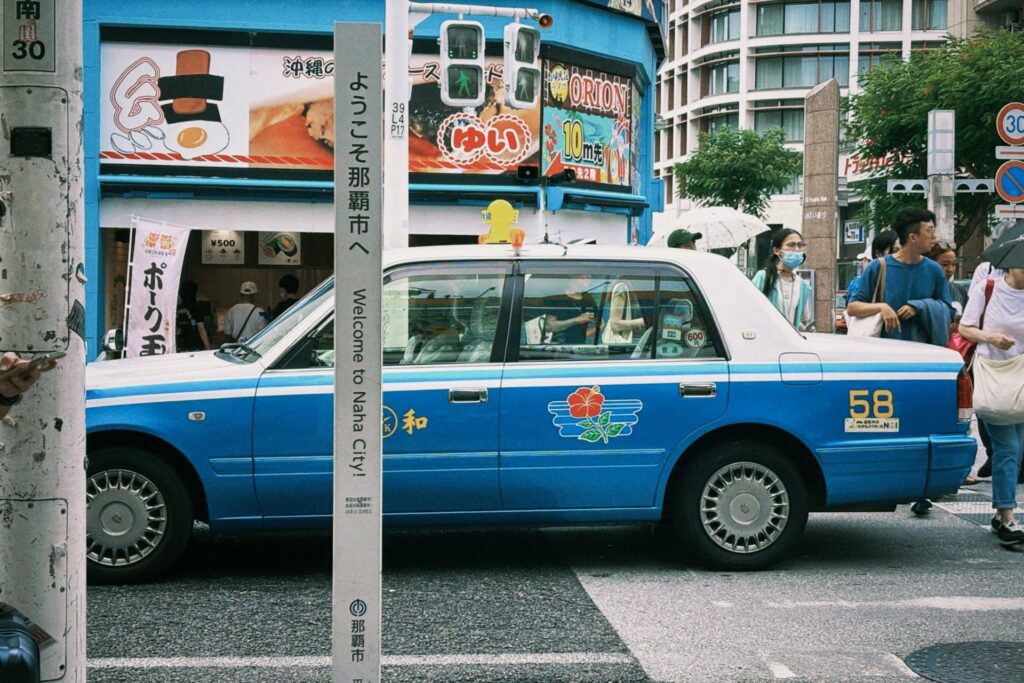
This guide focuses on Okinawa’s main island and Kerama day trips from Naha. It explains bases, transport, payment and a workable three-day structure. For a longer stay, compare the three-to-five-day Okinawa itinerary.
Can You Visit Okinawa Without a Car?
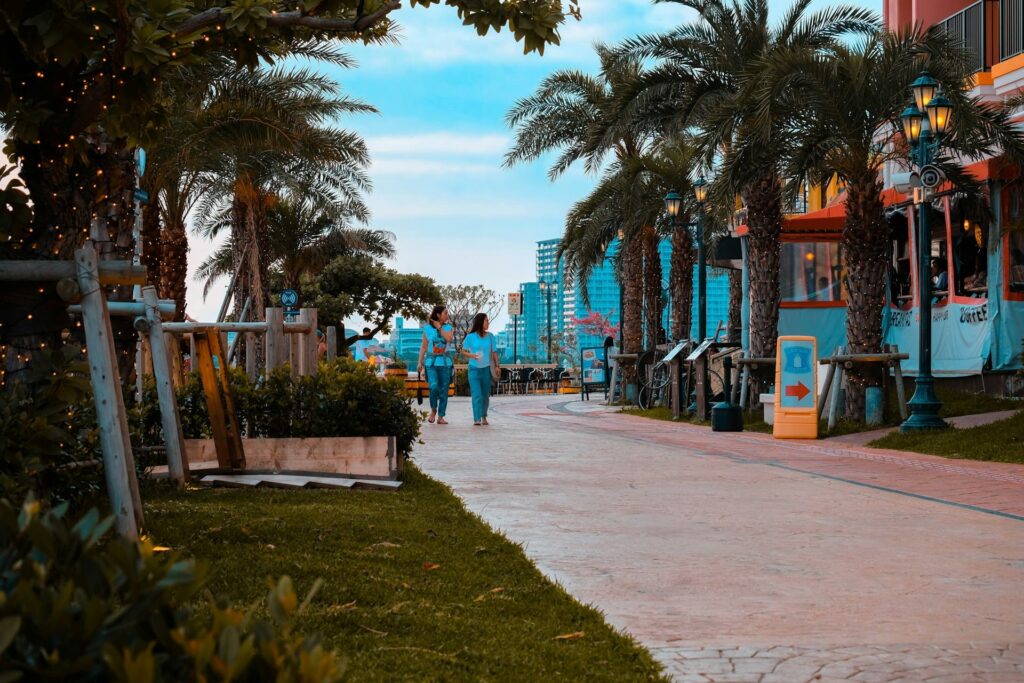
Yes, particularly for a first visit based in Naha. The main limitation is the gap between destinations outside the city. A place can be reachable by bus yet awkward to combine with two other places on the same day.
| A good fit without a car | Needs more thought |
|---|---|
| Three to five days with a Naha base | Several hotel changes with luggage and limited connections |
| City sightseeing, one island beach day and one northern day | Remote beaches, hidden cafes and spontaneous coastal stops |
| Travelers willing to mix public transport, short taxi rides and tours | A strict public-transport-only trip covering many distant sights |
| A Chatan stay focused on American Village and the surrounding area | A Chatan base with repeated early departures from Naha or Tomari Port |
“Without a car” need not mean “everywhere by local bus.” A taxi to the ferry terminal or one organized northern day can keep the rest of the trip independent. Choose those services to solve a specific journey rather than adding transport bookings to every day.
Count full days, not calendar dates. The itinerary below assumes three usable sightseeing days. If you arrive on Day 1 and fly out on Day 3, choose one major day trip and fit Naha around your flights. A northern loop followed by a same-day flight is a poor place to depend on perfectly clear roads.
Where Should You Stay in Okinawa Without a Car?
Your base determines how often you need an extra taxi or transfer. Before booking a hotel, compare its walking route to the transport you will actually use. The Okinawa hotel area guide looks more closely at Naha, Chatan and resort stays.
Naha: The Best Base for First-Time Visitors
Naha is my first choice for this itinerary. It gives you airport access by Yui Rail, city restaurants, bus boarding points and access to Tomari Port without changing hotels between day trips.
- Asahibashi and Naha Bus Terminal: useful when your chosen bus departs there; check the exact operator’s stop.
- Kencho-mae and the western end of Kokusai Dori: a useful compromise for dining, the monorail and some northern bus or tour meeting points.
- Miebashi and the Tomari side of central Naha: worth comparing if an early Kerama departure is a priority.
- Makishi: useful for Kokusai Dori, the market area and Tsuboya, with an additional journey to some bus and ferry departures.
A monorail station, Naha Bus Terminal and Tomari Port are not interchangeable departure points. For example, the Yanbaru Express has a Kencho Kitaguchi stop, while other aquarium services use different boarding locations. Check the stop on the actual service before choosing the hotel around it.
Likewise, Tomari Port is a waterfront area with different terminals and piers. Allow time to reach your boat’s ticket counter and berth, not just the first map pin marked “Tomari Port.” A short taxi can be worthwhile with children, luggage or an early departure.
Chatan: The Better Base for a Resort Feel
Chatan suits travelers who want walkable evenings around American Village, the Sunset Beach area, oceanfront cafes and a slower pace. It can be a better fit than central Naha when the surrounding neighborhood is the main attraction.
The trade-off is access to Naha-based ferry departures and tour meeting points. Do not assume a tour collects from Chatan simply because it visits American Village later. Check the airport-to-hotel service and your day-trip departure separately.
| Base | Best use | What to confirm |
|---|---|---|
| Naha | This three-day mix of city, Kerama and northern sightseeing | Walking routes to your specific bus stop, ferry counter and tour meeting point |
| Chatan | American Village, coastal evenings and a slower stay | Airport connections and any early return journey to Naha |
| Northern resorts | Resort time, with selected outings | Airport transfer, meals, nearby services and confirmed sightseeing pickup |
A northern resort can work without driving if you want to stay mainly there. It is a different plan from using Naha as a hub for several day trips. Hotel availability alone does not prove that restaurants, beaches and attractions will be easy to reach independently.
How Does Public Transport Work in Okinawa?
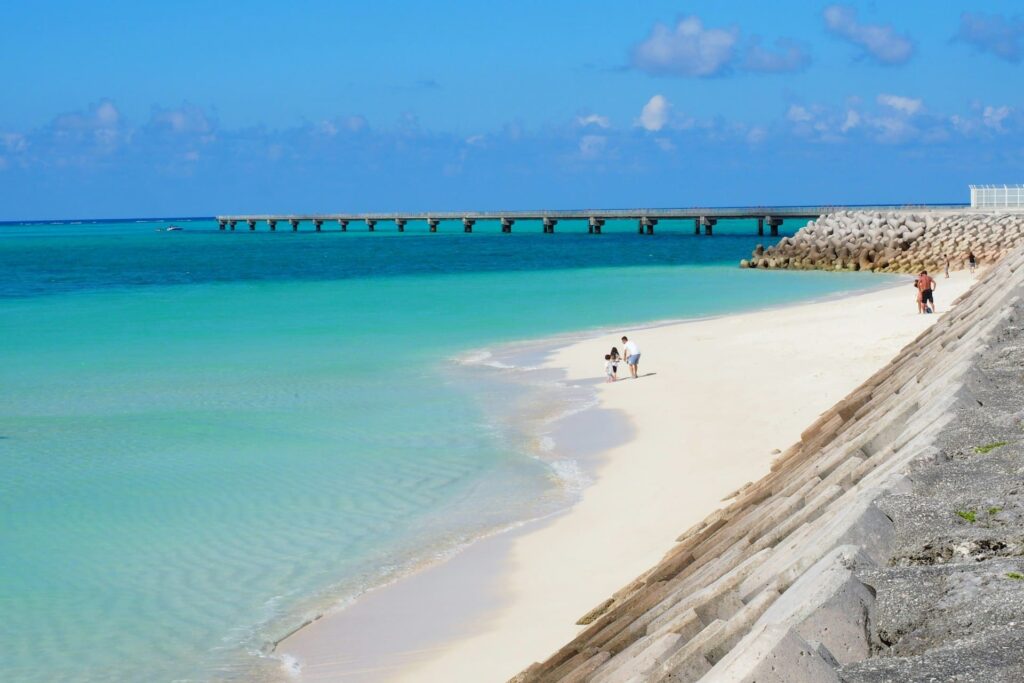
Use the Yui Rail for the city, direct coaches for suitable longer journeys, and local buses for the routes that fit your day. Ferries and island transport need their own plan. There is no single pass or payment method to assume will cover all of them.
How Useful Is the Yui Rail?
The monorail connects Naha Airport with central Naha and continues beyond Shuri toward Urasoe. It avoids road traffic and is useful for Asahibashi, Kencho-mae, Miebashi, Makishi and Shuri. It does not continue to Chatan, Churaumi Aquarium or northern beach resorts.
Suica, PASMO and other supported nationwide IC cards work on the monorail, as do supported contactless payment cards. If you already have Suica, you do not need to buy OKICA just for the Yui Rail. See the official boarding and payment guide.
The current adult unlimited tickets cost ¥1,000 for 24 hours or ¥1,800 for 48 hours, counted from issue. Compare them with your actual rides: a day away on a ferry or northern tour may make a longer monorail pass unnecessary. These are monorail tickets, not island-wide transport passes.
Can You Use Suica or Pasmo on Okinawa Buses?
Check the operator rather than treating all Okinawa buses alike. OKICA is useful on many main-island local buses, while nationwide IC-card acceptance differs. A particularly useful exception is the Yanbaru Express: it accepts Suica and PASMO, but its published payment guide says OKICA is not accepted.
Carry small cash even if you normally travel cashless. The official Okinawa bus guide recommends ¥1,000 notes or coins and notes that some machines may not support newer notes or ¥500 coins. Prepare usable change before a time-sensitive journey.
On distance-based local services, take the numbered boarding ticket and match it to the fare display when leaving, or follow the operator’s card procedure. Some flat-fare city services collect payment on boarding. Yanbaru Express also collects its fare on boarding, so do not apply the local-bus routine to every coach.
When Should You Use Express Buses or Airport Shuttles?
Use a direct service when it connects the place you are staying with the attraction you actually want. For Churaumi, options include Yanbaru Express, route 117 and airport shuttle services. Boarding points, stops, reservation rules and payment methods differ; the aquarium’s official access guide links the operators.
Allow roughly two to three hours each way for a Naha–Churaumi day, depending on the service and traffic, plus the walk at the park. Some scheduled journeys from central Naha are shorter than three hours. The worked example below shows why the bus can be a reasonable aquarium day rather than something to dismiss automatically.
For a Chatan or resort hotel, check whether the airport coach serves that hotel or only a nearby stop. A service that works for airport arrival does not necessarily provide a useful sightseeing loop the following day.
Are Taxis and Ride-Hailing Apps Useful?
Taxis are useful for short hops: hotel to ferry counter, a station to a destination with an awkward final walk, or returning after dinner. DiDi, GO and Uber have Okinawa services, but availability depends on the area, time and ride type shown in the app.
The official taxi guide is a useful starting point. Check pickup availability before relying on an app from a remote attraction. A successful outbound taxi does not automatically arrange the return.
For a long northern loop, compare an agreed sightseeing service with repeated metered rides. Ask about duration, route, waiting time and what is included. A transfer with a driver is also different from a tour with guiding and commentary.
How Should You Spend 3 Days in Okinawa Without Driving?
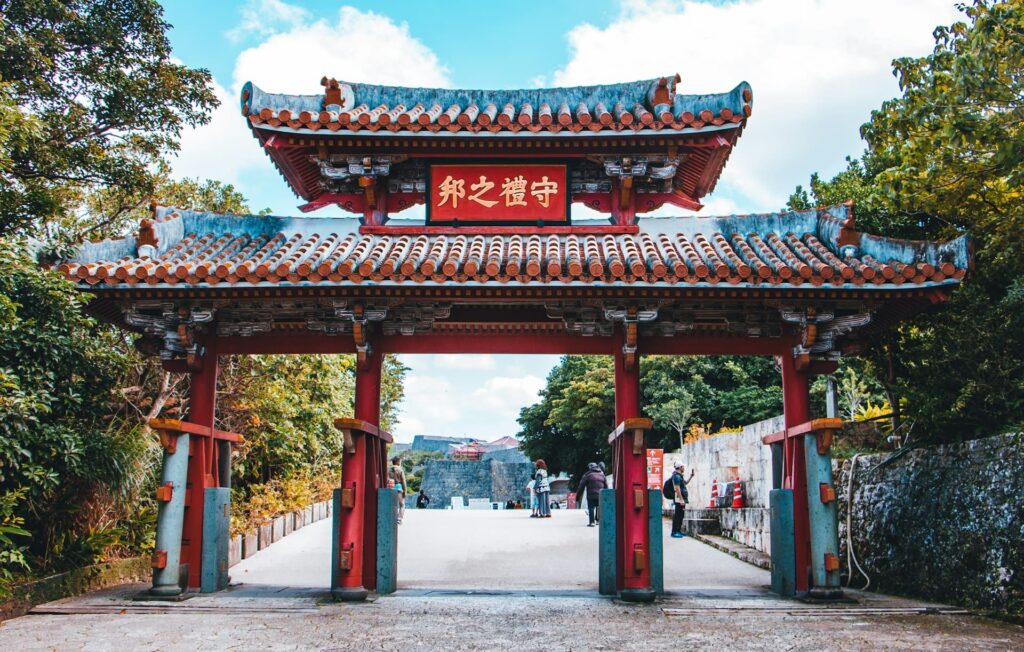
Keep a Naha base and give each full day one transport pattern. Naha is the flexible day; Kerama depends on sea conditions; the north needs either a return-bus plan or an agreed tour route.
Day 1: How Should You Explore Naha?
- Morning: use the Yui Rail for Shuri, then walk to Shurijo Castle Park. The station is not at the castle entrance, so include the final walk and hills.
- Afternoon: return toward central Naha and explore Tsuboya Yachimun Street for pottery shops.
- Evening: walk Kokusai Dori and eat around Makishi Public Market or the surrounding side streets.
Shurijo planning note: the Seiden main hall is scheduled to open on November 23, 2026, with advance timed reservations for the interior. The park is closed on November 22; opening-day main-hall access starts at noon. Park access and a reserved interior visit are different things. Check the official Shurijo visitor information for your date.
You can enjoy Tsuboya’s streets and shops without building the afternoon around a museum visit. If you intend to enter the pottery museum, check its reopening notice: the current monorail visitor information lists a renovation closure through March 31, 2027.
Keep this day light if it follows a flight. For dinner ideas beyond choosing a restaurant on the busiest stretch of Kokusai Dori, use the Okinawa food and Naha restaurant guide.
Day 2: How Can You Visit Okinawa’s Beaches Without a Car?
A Kerama island can be an excellent no-car beach day, but choose one island and one beach plan. A ferry ticket gets you to the island’s port, not automatically to the sand, a snorkeling boat or a rental shop.
| Island | Boat journey | Plan after arrival |
|---|---|---|
| Tokashiki | About 40 minutes by Marine Liner or 70 minutes by car ferry | For Aharen Beach, arrange the bus or an included transfer. Do not assume a ferry ticket includes it. |
| Zamami | High-speed journeys vary by stopping pattern; the slower ferry takes around two hours | Use the village bus or an arranged transfer for Furuzamami; check the return connection. |
| Aka | Choose a sailing that calls at Aka, not merely one advertised for the village | Decide the beach and walking or transfer plan before boarding; allow for hills and heat. |
For Tokashiki, the adult return fare from October 1, 2026 is ¥4,180 by ferry or ¥6,270 by Marine Liner, with a separate ¥100 environmental cooperation tax where applicable. The village’s English ferry guide has fares, monthly timetables and check-in information.
The Aharen bus is listed at ¥400 each way for adults. Check its current connection rather than treating the transfer as an on-demand shuttle; the local Aharen Beach guide explains access. Bring cash for the island day.
For Zamami, the village bus currently costs ¥300 for adults. Its guidance directs passengers to buy tickets at Ao no Yukurukan; buy the appropriate return ticket before going to a beach without a ticket machine. Check the date-specific timetable.
Book both ferry directions and identify the correct Tomari counter and pier. Tokashiki asks visitors to allow about an hour at the ticket office during busy periods; all passengers must be aboard ten minutes before departure. Check live sailing status before leaving your hotel.
Late-2026 service note: the Tokashiki ferry portal announces Marine Liner maintenance from November 16 to December 11, 2026. Do not build those dates around the usual high-speed sailings.
Our Tokashiki day-trip guide compares independent ferries and tours. If you book an island activity, check whether it begins in Naha or requires you to reach the island yourself. A snorkeling product is not automatically a ferry-and-beach package.
Prefer a simpler mainland option? Naminoue is a city beach you can combine with Naha sightseeing, rather than a substitute for an island excursion. The beach operator lists swimming from April to October and no swimming from November to March. Check the designated area and day’s conditions; winter beach scenery does not mean swimming is open.
Day 3: How Can You Visit Churaumi Aquarium and Northern Okinawa?
Choose the transport around the day you actually want. Aquarium and Ocean Expo Park: compare direct buses. A fixed loop of famous sights: compare a shared coach tour. Your own stops, pace or pickup arrangement: consider a private guide.
Churaumi, Kouri Island and Cape Manzamo are spread out. A bus that delivers you to the aquarium does not solve all the onward journeys. Equally, a private tour is unnecessary if your only aim is a long aquarium visit and the direct-bus timetable suits you.
Give the north a full day. Keep a flight-departure day in or near Naha, with an appropriate airport buffer. Do not add a late airport connection to the example sightseeing day below.
How Can You Visit Churaumi Aquarium Without a Car?
The useful comparison has three options, rather than only a cheap bus and an expensive private tour. Each solves a different problem.
| Decision | Direct bus | Shared tour | Private tour |
|---|---|---|---|
| Best for | Aquarium-focused visitors | A fixed loop of famous sights | Your priorities, pace and pickup needs |
| Route | Travel to the aquarium area; organize anything extra yourself | Published stops and departure points | Agree a feasible route with the operator |
| Aquarium time | Choose around your return service | Time allowed by the booked itinerary | Request your preferred allocation before booking |
| Tickets | Budget for admission separately | Check package inclusions before buying tickets again | Confirm admission and meals for the selected option |
| Kouri and Manzamo | Additional journeys; not a simple extension of the aquarium bus | Choose a tour that explicitly lists both | Confirm they fit the duration and starting location |
| Main trade-off | Fixed services and a long return journey | Shared timing and limited control at each stop | A higher budget and the need to agree what fits |
A Realistic DIY Bus Day from Naha
The current Yanbaru Express timetable offers this example:
- Outbound: Kencho Kitaguchi at 8:40 AM → Royal View Hotel Churaumi at 10:47 AM.
- Return: Royal View Hotel Churaumi at 4:13 PM → Kencho Kitaguchi at 6:32 PM.
That provides about five hours and 26 minutes between the scheduled buses, before walking and a boarding buffer. It is an example from the timetable checked in November 2026, not a guarantee for your date. The operator does not take seat reservations; traffic and capacity still matter.
Check the precise stop and walking route. The aquarium’s access guide gives around ten minutes from the bus stop to the aquarium. Leave enough time to return to the correct side of the road, rather than leaving the exhibit at the bus departure time.
If you also want Bise Fukugi Tree Road, map the extra walk and your return boarding point before adding it. Do not turn spare time between buses into an itinerary that depends on finding a taxi at the last minute.
For a cost reference, the operator’s airport timetable lists ¥2,000 each way from Naha Airport to the aquarium area; use the fare finder for your actual city boarding point. General adult aquarium admission is ¥2,180, so the airport-based reference total is ¥6,180 before food and local transport. See the official admission charges.
The aquarium normally opens 8:30 AM–6:30 PM, with last admission at 5:30 PM; check the current hours for extensions or temporary closures. For a bus visitor, the return service may constrain the day before the attraction’s closing time does.
Should You Choose the DIY Bus or a Guided Tour?
Choose the direct bus if you want unhurried aquarium and park time and are comfortable with a fixed return. Choose a shared tour if you like the published circuit and want the journeys between attractions organized.
One option to compare is this Naha-based Churaumi, Kouri Island and Manzamo shared tour. The current itinerary also includes American Village and lists about 3.5 hours at the aquarium area. It advertises aquarium and Manzamo admission; verify the selected package.
Its meeting points are in Naha, not an automatic pickup from any hotel. The attendant leads guests to attraction entrances, with independent sightseeing inside. That is different from having your own guide throughout the visit. Check the language, meeting point and final return time before booking.
My Recommendation for Northern Okinawa Without a Car
Pay for a private day when control over the route matters to you. For example, you might want longer at the aquarium, fewer shopping stops, a pottery village instead of American Village, or a pickup that avoids an extra early transfer.
The linked private listing offers English guiding, itinerary planning and main-island pickup/drop-off, with several durations including six-, eight- and ten-hour itineraries. Ask which duration fits your starting point and requested northern stops. A long list of possible attractions is not a promise to visit all of them.
Build one northern day around your priorities. Send the operator your hotel, date, party size and must-see places. Confirm time at Churaumi, any child-seat or mobility needs, admission costs and the complete quote before you commit.
“Private” means your booking is exclusive; it does not automatically mean the displayed price is a flat vehicle price. Compare the final quote for everyone traveling, rather than dividing a one-person headline price between your group.
| Option | Budget for | What you gain |
|---|---|---|
| DIY direct bus | Return fare, aquarium admission, food and any extra transport | Control over your time within the bus schedule |
| Shared sightseeing tour | The dated package price and anything excluded | Several listed stops without arranging each connection |
| Private guided tour | The selected duration and full-party quote, plus confirmed exclusions | An agreed route, personal pace and pickup arrangement |
Should You Rent a Car for One Day?
A one-day rental can make sense if you can legally drive in Japan, feel comfortable on the roads and specifically want a flexible coastal day. It is optional, not something you must add to make this itinerary worthwhile.
Check the official driving-document guidance before making a rental plan. An ordinary foreign license alone is not a universal solution, and the required documents differ by issuing country or region. Do not assume you can resolve missing paperwork after arriving.
| Stay without a rental | Consider one rental day |
|---|---|
| You want Naha, one Kerama island and a planned northern day | You want spontaneous beach, cafe and viewpoint stops |
| You prefer someone else to handle the driving | You have the required documents and a confident driver |
| A direct bus or suitable tour covers your priorities | Your preferred route does not fit available services |
| You want to avoid collection, parking and return logistics | The collection location and opening hours fit your day |
Compare the full rental cost, fuel, tolls, cover options and the time needed to collect and return the vehicle. A low advertised daily rate is not the complete cost or the amount of sightseeing time you will have.
What Are the Biggest Mistakes to Avoid Without a Car?
Should You Stay at a Remote Resort?
Yes, if resort time is the goal and you have a workable arrival, meal and departure plan. Before booking, check the last usable airport connection, nearby dining and any shuttle reservation requirements. A bus stop near the hotel is useful only if the service operates when you need it.
Should You Trust Google Maps Completely?
Use it to explore routes, then check the operator for important departures. Confirm the stop name, direction, date-specific timetable and final return. Save the details offline. A mapped connection with only a few minutes between services is not a buffer against road traffic.
Should You Put Kerama Islands on Your Final Day?
Avoid making an island return part of your flight day. Strong winds or waves can affect sailings, including the return after an outward crossing has operated. Check the Okinawa ferry cancellation guide before committing to tight connections.
Put the island excursion earlier in the stay and keep a Naha alternative. If you need to swap days, check the availability and cancellation terms of any other bookings too. Do not assume a northern tour or activity can be moved free of charge.
Choosing an earlier return helps only when a suitable sailing exists. Some ferry schedules leave little choice. The stronger plan is a confirmed return booking, a beach-to-port transfer and a mainland night before the flight.
Should You Try to See Too Much in One Day?
Give each day one main area. Do not combine a Kerama crossing with northern main-island sightseeing. For the north, choose the aquarium plus a realistic set of stops, rather than treating every attraction in a tour’s option list as included in your day.
If a shared tour already visits American Village, avoid repeating it unless you deliberately want more time there. If you choose a private route, list your priorities in order so the operator can suggest what to leave out.
Okinawa Without a Car FAQ
Is Okinawa worth visiting without a car?
Yes, if you choose accessible places and plan the longer journeys. Naha, one Kerama island and a northern day can make a rewarding first visit. A spontaneous road trip through remote beaches and cafes is a different kind of holiday.
Where is the best place to stay in Okinawa without a car?
Naha is the most practical base for this itinerary. Compare Asahibashi, Kencho-mae, Miebashi and Makishi against your actual departures. Chatan is a good alternative when coastal evenings matter more than easy access to Naha-based ferries and tours.
Can you use Suica or Pasmo in Okinawa?
Yes on the Yui Rail and on some buses, including Yanbaru Express. Do not assume acceptance on every local service. OKICA and nationwide IC cards have different coverage; carry small cash and check the chosen operator.
How do you get to Churaumi Aquarium without a car?
Use a direct bus for an aquarium-focused day, a shared sightseeing coach for its published loop, or a private tour for an agreed route. Confirm the stop or meeting point and whether admission is included.
Is the bus from Naha to Churaumi Aquarium difficult?
A suitable direct service is straightforward, but it is a long day and you need the return plan first. Some central-Naha services take just over two scheduled hours; allow for traffic, walking and boarding time. You do not need to change local buses if you choose a suitable direct route.
Can you visit Kouri Island without a car?
Yes, including by northern bus connections or a tour. For a short visit, adding Kouri to Churaumi and Manzamo independently takes more planning than the aquarium bus alone. Compare a shared loop if you like its stops, or request Kouri in a private itinerary.
Can you go to Okinawa beaches without a car?
Yes. For Kerama, book the boat and plan the island’s port-to-beach transfer. For a short mainland outing, consider Naminoue or a beach near your chosen base. Check swimming seasons and conditions; the ability to reach a beach does not guarantee swimming or snorkeling.
Do you need to book Kerama ferries in advance?
Advance booking is strongly recommended, particularly for popular dates. Book both directions, check the monthly timetable and recheck operations on the day. A reservation secures a place on an operating service, not protection from a weather cancellation.
Are taxis expensive in Okinawa?
Short rides can be a useful part of a no-car budget. Repeated long journeys or a taxi kept waiting through northern sightseeing need a separate cost comparison. Ask for the appropriate quote and arrange the return rather than assuming a car will be available anywhere.
Is a guided tour worth it for northern Okinawa?
It can be, when you want several distant stops without driving. Compare the shared tour’s fixed itinerary with the private tour’s route options. Pay for private flexibility when it solves your needs; choose the direct bus if the aquarium is enough.
Final Verdict: Is Okinawa Without a Car Worth It?
Yes: stay in Naha, organize one area per day and reserve arranged transport for the journeys that need it. Three full days can cover Naha, one Kerama island and either an aquarium-focused bus day or northern sightseeing. With shorter arrival and departure days, reduce the number of major excursions.
The best plan depends on what you want to do after arriving. A ferry still needs a beach transfer; an aquarium bus does not connect every northern viewpoint; a private tour needs an agreed route. Solving those details makes a no-car visit feel manageable.
Want to settle the northern day before choosing your hotel? Check whether the private option fits your pickup, must-see stops and budget. Confirm the duration, aquarium time and full-party total.

Hi, I’m Kai. I’m a Tokyo-based travel writer, tourism industry insider, and the author of a published guidebook for international visitors to Japan. With over 10 years of professional experience at a leading Japanese tourism company, my mission is to help you skip the tourist traps and navigate Japan’s best destinations like a local. I believe the perfect day trip is like a traditional kaiseki meal: a beautiful balance of precise planning and unforgettable seasonal discovery. When I’m not out conducting field research, you’ll usually find me drafting new itineraries with one of my favorite fountain pens!