
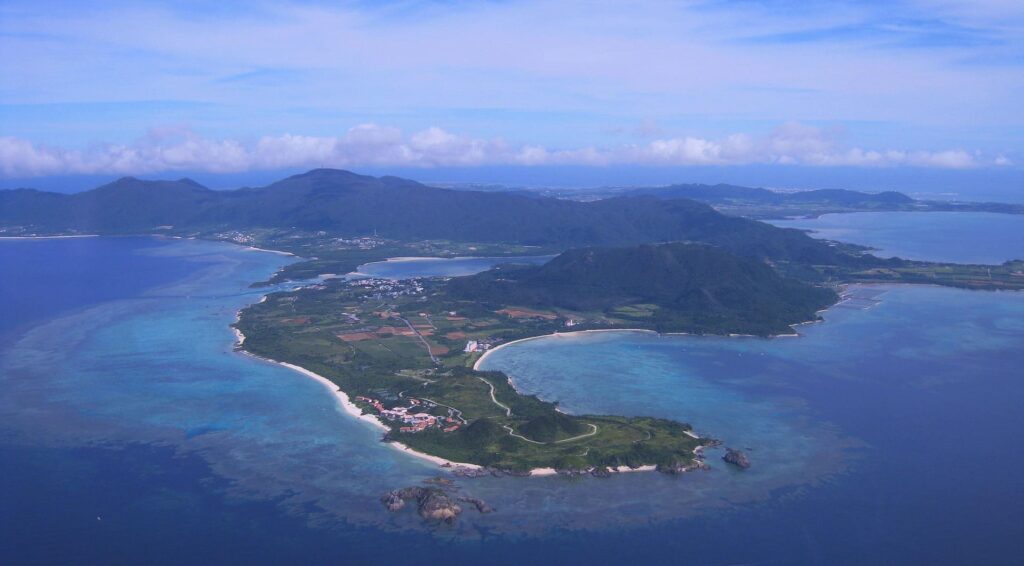
Okinawa Main Island and Ishigaki are both in Okinawa Prefecture, but they are not two versions of the same trip — they are two different trips. If the ocean, snorkeling, diving and Yaeyama island hopping are the reason you are going south, Ishigaki is the better base. If you want a more forgiving trip with reliable transport, more restaurants and shopping, cultural sights and stronger backup options when the weather turns, Okinawa Main Island is the safer call.
A quick note on naming: in this guide, “Okinawa” means Okinawa Main Island — the main island around Naha, where the Yui Rail monorail runs, Kokusai Street is, Shuri Castle Park sits and most visitors base themselves. Ishigaki is a separate island about an hour’s flight south of Naha and the gateway to the Yaeyama archipelago. Comparing them is really about deciding what kind of travel you are buying.
If you are leaning toward Okinawa Main Island but do not want to give up a serious ocean day, compare live availability and recent traveler reviews for this full-day Kerama snorkeling trip from Naha. It is a practical way to keep Naha’s flexibility while adding the kind of clear-water experience that makes Ishigaki tempting.
The Short Answer
Here is the decision in three lines:
- Choose Ishigaki if the ocean is the main reason for your trip and you can give 3–4 days to beaches, snorkeling and island hopping.
- Choose Okinawa Main Island if this is your first visit to Okinawa, you are traveling with young children, you do not plan to drive, or you want a trip that still works when the weather turns.
- If you are genuinely 50/50, start with Okinawa Main Island. You can add a Kerama Islands day trip from Naha for water clarity that comes close to the Yaeyamas — and the downside if the weather fails is much smaller.
| Category | Okinawa Main Island | Ishigaki | Winner |
|---|---|---|---|
| Beaches & snorkeling | Good, especially with a Kerama day trip | Exceptional around Kabira Bay and Yonehara Beach | Ishigaki |
| Island hopping | Not really — Kerama is the exception | Taketomi 10–15 min, Iriomote 40–50 min by ferry | Ishigaki |
| Getting around without a car | Yui Rail covers Naha, Kokusai Street and Shuri | Doable in town, hard for beaches and viewpoints | Main Island |
| Rainy-day backup | Aquarium, museums, shopping | Limited | Main Island |
| Food, shopping & nightlife | Wide choice, large malls | Compact, local, smaller range | Main Island |
| Culture & history | Shuri Castle, Ryukyu-era sites | Yaeyama village life, water-buffalo carts | Main Island |
| Who it suits | First-timers, families, non-drivers | Beach-first travelers, repeat visitors | — |
This table shows which island wins each category — not which island you should book. The section that matters most for your decision is the last one: what kind of traveler you are.
If you are leaning toward Okinawa Main Island mainly because it feels safer, but the ocean is your real reason for coming south, the practical middle ground is a day trip to the Kerama Islands from Naha — roughly 40–50 minutes by fast ferry from Tomari Port, with water clarity that rivals what many people fly to Ishigaki to see. I will come back to that option later in this guide.
The Biggest Difference: What Kind of Trip Are You Actually Buying?
Okinawa Main Island is a multi-purpose destination. Base yourself in Naha and you have the Yui Rail monorail, Kokusai Street’s shopping and dining, Shuri Castle Park, and easy day trips north to places like Okinawa Churaumi Aquarium and the beaches around the Motobu Peninsula. Add a rental car and the island opens up further — cape viewpoints, resort beaches, family parks. It behaves like a small but complete travel destination with urban infrastructure underneath it.
Ishigaki is a different shape of trip. The island itself has beaches, a compact town, farmland and viewpoints, but its real value is as the hub of the Yaeyama Islands: Taketomi Island is 10–15 minutes by ferry, and Iriomote Island’s jungles, mangroves and waterfalls are 40–50 minutes away. Your days are built around the water, the reef and the islands beyond the harbor — not around a menu of attractions you can walk to.
The mistake I see first-time visitors make is treating the two islands as interchangeable and then trying to do both in a short trip. It is technically possible — the flight from Naha to Ishigaki takes about an hour — but each island rewards a different pace, and on a 3–5 night trip, splitting time between them usually leaves both halves feeling rushed. If you want to see how a well-paced Ishigaki itinerary fits together day by day, we have a separate guide that breaks it down by length of stay.
Which Has Better Beaches: Okinawa or Ishigaki?
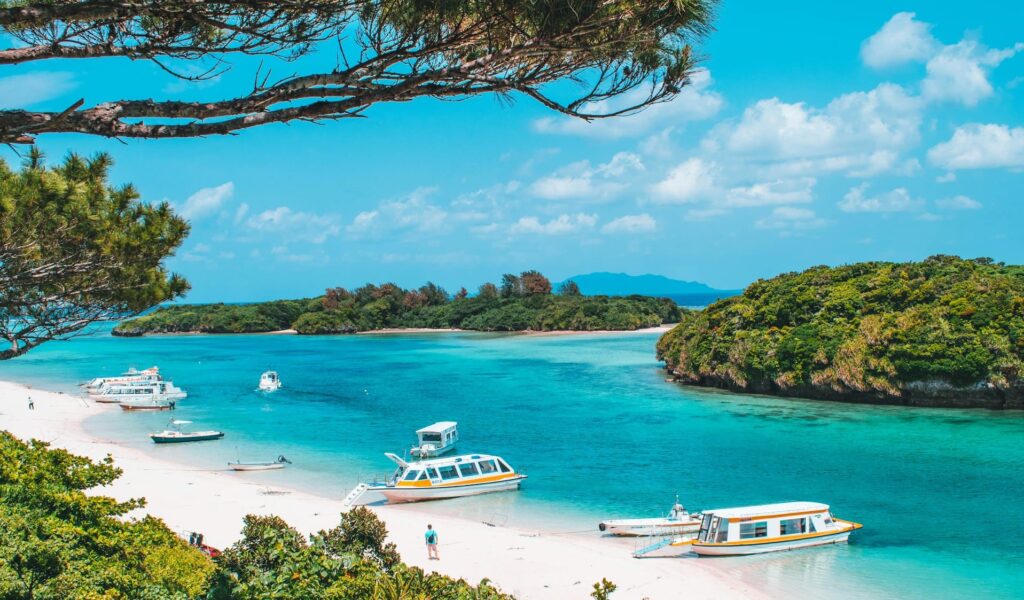
Winner: Ishigaki — with one exception. Around Kabira Bay and Yonehara Beach, the water has a layered blue-green color that the beaches near Naha rarely reach, and the coral sits close enough to shore that you can snorkel straight off the sand at Yonehara. The exception is the Kerama Islands: a fast ferry ride from Naha, they have the kind of clarity locals simply call “Kerama Blue,” and they narrow the gap considerably for anyone based on the main island.
Why it wins: On Ishigaki, the reef is part of daily life. You see it from the road above Kabira Bay, from the glass-bottom boat, and from the shallows at Yonehara. On the main island, the best water is concentrated in the north or requires a boat ride to reach.
Who should care: Anyone whose mental picture of this trip is a turquoise sea with coral visible under the surface. If that image is doing the work in your decision, Ishigaki is where that image actually lives.
Who can skip this advantage: Travelers who mostly want to relax on a beach rather than snorkel or photograph water, and anyone willing to spend one day of a main-island trip on a Kerama ferry.
A Note About Kabira Bay
Kabira Bay is Ishigaki’s most photographed spot, and the first view from the road above it stops most people mid-sentence. One thing that surprises visitors is that you cannot swim there: swimming is not allowed because of fast tidal currents and the black pearl cultivation in the bay. The way to see the underwater life is the glass-bottom boat, which runs through the day — typically from around 9:00 to 17:00 with departures every 15–20 minutes, weather permitting. Coral, tropical fish and sea turtles are the usual sightings. Turtles are common enough that the boat crews know where to look, though no operator can guarantee one on any single run.
Kai’s tip: The glass-bottom boats are stable, but you spend most of the ride leaning over the window in the floor, which some people find disorienting. If you are prone to seasickness, sit toward the back of the boat, look up at the horizon between coral patches, and skip the ride right after a big lunch. On calm days you can usually buy a ticket and board without a reservation, but departures pause when the sea gets rough — check the conditions at the dock before you plan anything else around it.
If you want to get in the water on Ishigaki, Yonehara Beach on the north coast is the easier option: shallow water, coral and fish close to shore, and a favorite with families. The trade-off is that on calm sunny days it draws a crowd and parking is limited — the same trade-off you would accept at any popular beach on the main island.
Weather Risk: Ishigaki Has a Bigger Upside — and a Bigger Downside
Ishigaki is not necessarily a worse-weather destination than Okinawa Main Island. Both share the same subtropical climate: the rainy season runs roughly May to June, and typhoon risk rises from July to October, peaking around August–September. The real difference is what bad weather removes. On the main island, a rainy day still leaves you museums, the aquarium, shopping streets and indoor attractions. On Ishigaki, a grey sky takes the color out of Kabira Bay, kills snorkeling visibility, can suspend the glass-bottom boats, and in stronger wind can delay or cancel ferries to Taketomi and Iriomote. A larger share of what you came for is weather-dependent.
What catches people out here is not that Ishigaki rains more — it is that the day you lose costs you more. When I help travelers read forecasts for the islands, I look at wind speed before rainfall. A passing shower rarely ruins a day; sustained wind is what cancels boats and leaves the sea looking grey from morning to night.
Kai’s tip: When you check the forecast for an Ishigaki trip, read the wind speed before the rain percentage. Light showers pass quickly and often clear the crowds. Strong wind is the number that actually threatens your plan — it is what suspends glass-bottom boats and ferry crossings, and it is usually visible in the forecast a day or two ahead, which gives you time to reshuffle your itinerary.
What Happens If It Rains?
On Ishigaki, a rainy day is a low-key day: the Euglena Mall arcade in town, the farmers market near the port, a bowl of Yaeyama soba, a slow drive with the windows up. It is manageable, but it is a slower day than you planned, and the evening options in Ishigaki city are limited compared with Naha.
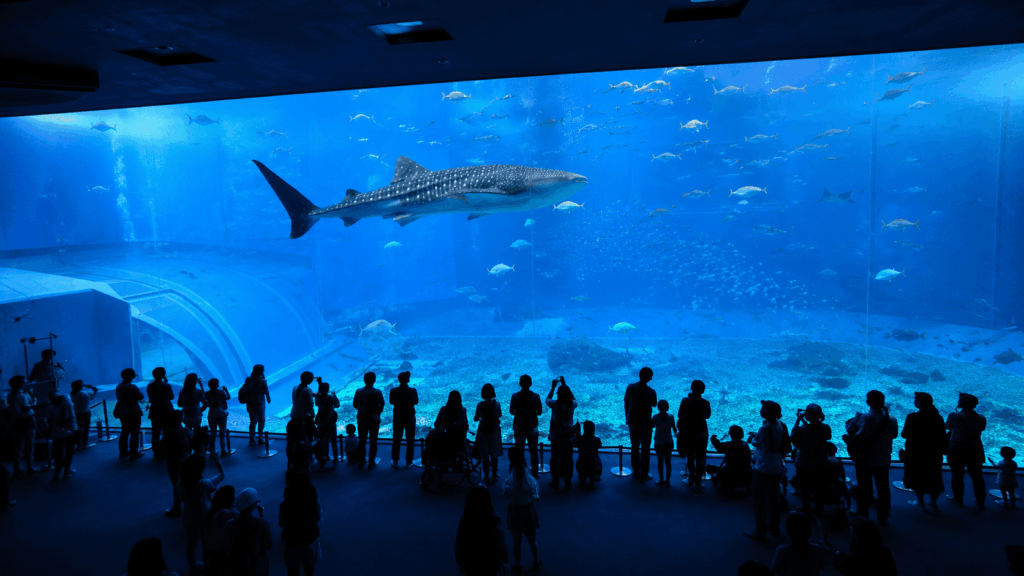
On the main island, the backup list is longer. Okinawa Churaumi Aquarium in the north is typically open 8:30–18:30 with last entry at 17:30 and extended summer hours; Kokusai Street and Palette Kumoji cover shopping and food in central Naha; and Shuri Castle Park is reachable by monorail. Note that the castle’s main hall is still being rebuilt after the 2019 fire — the park and surrounding areas remain open, and the reconstructed main hall is scheduled to reopen on November 23, 2026. Check the latest status before you go.
Island Hopping: Ishigaki Wins Easily
This is the category where the two islands are not close. Okinawa Main Island has no island hopping scene to speak of — the Kerama Islands are the exception, and they are reached from Naha’s Tomari Port, not from the main island’s own beaches. Ishigaki, by contrast, is built around it.
Ferries leave from the Euglena Ishigaki Port Remote Island Terminal, right at the edge of the city center — you can walk there from many hotels in town. From that one terminal:
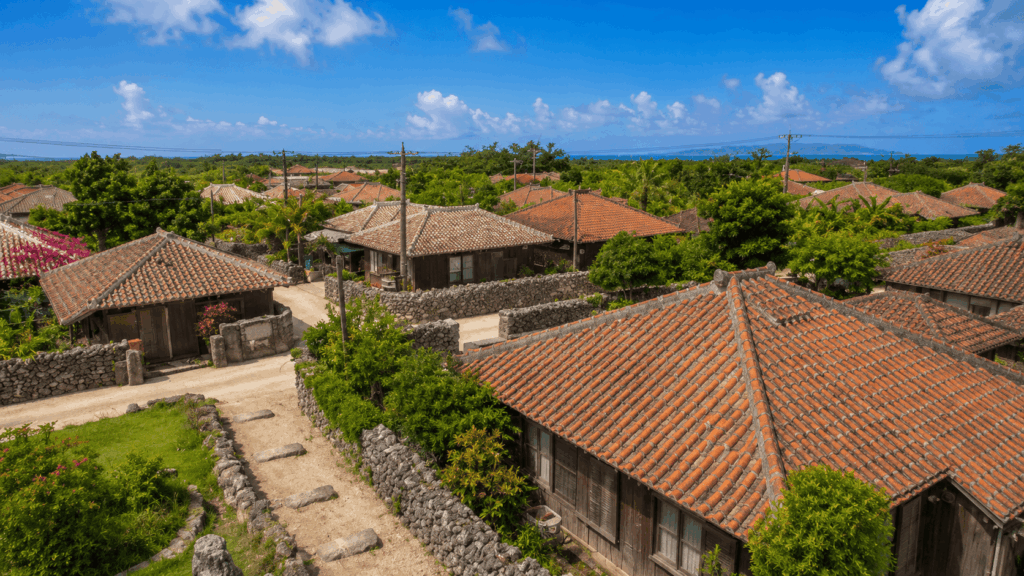
- Taketomi Island — roughly 10–15 minutes. The classic half-day trip: red-tile village streets, water-buffalo carts, quiet beaches. You can do it as a morning or afternoon excursion and still have the rest of the day on Ishigaki.
- Iriomote Island — around 40–50 minutes to Uehara Port, or 35–45 minutes to Ohara Port. This is a full-day commitment: mangrove forests, jungle trails, waterfalls and rivers. It rewards a full day far more than a rushed afternoon.
Two ferry companies — Yaeyama Kanko Ferry and Anei Kanko — run the routes, and schedules shift with the season, so check departure times for your exact dates. In calm weather, Taketomi is easy enough to visit independently; for Iriomote, most travelers use a tour or a rental car on the island side because the sights spread out from both ports.
The practical point for your decision: on Ishigaki, the value of the trip multiplies with each extra day because the islands beyond the harbor are part of the package. On the main island, there is no equivalent loop of day-trip islands. If you choose Ishigaki, build at least one full day for Taketomi or Iriomote into your plan — a stay that only touches Ishigaki’s own beaches misses half the point of basing yourself there. Guided day trips that combine snorkeling with Taketomi’s village sights are the most popular way to fit both into one day, and they are worth comparing against doing it independently with a ferry ticket and a map.
If Ishigaki is already your pick and you would rather combine a water activity with Taketomi sightseeing instead of arranging the pieces separately, compare the current Ishigaki and Taketomi activity options, schedules and cancellation terms on Klook.
Getting Around: Do You Need a Car?
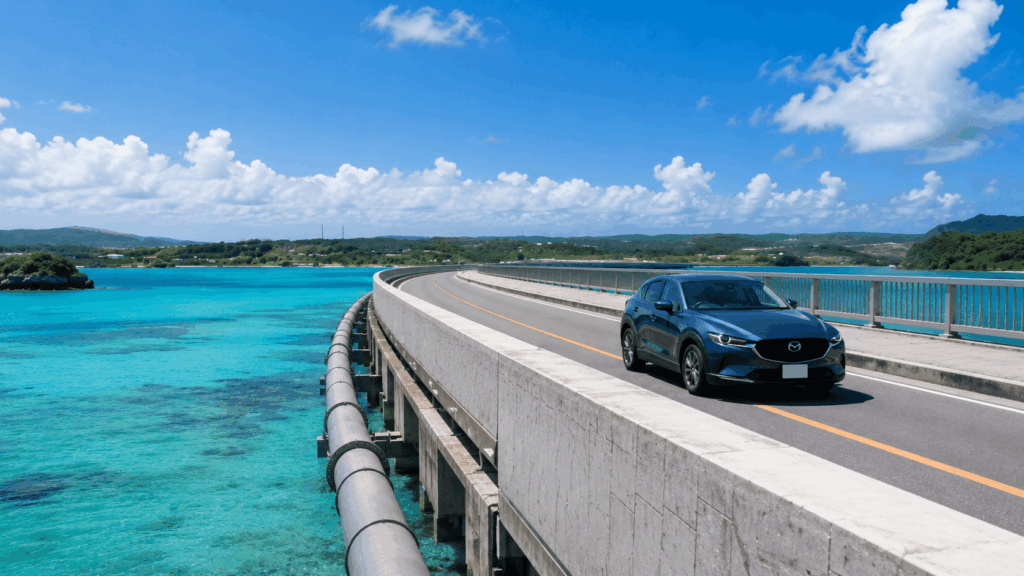
Short answer: on Okinawa Main Island, no — if you stay around Naha. The Yui Rail monorail runs from Naha Airport through the city center (Kokusai Street, Shuri Castle Park) and farther north, which covers the core of a first trip. Everything beyond that — the Churaumi Aquarium, the Motobu Peninsula beaches, the cape viewpoints — is a long bus ride or a rental car. Many visitors compromise with two nights in Naha and two nights with a car in the north.
On Ishigaki, the common claim that you cannot travel without a car is only half true. The convenience of the island is concentrated in a small triangle: Painushima Ishigaki Airport (buses to town take roughly 30–40 minutes), the city center, and the ferry terminal at its edge. Stay in town, use ferries for the outer islands, and you can have a full trip without driving. The car dependency starts the moment you add the places you actually came for: Kabira Bay, Yonehara Beach, Tamatorizaki Observatory and the northern farmland viewpoints all need wheels, a taxi, or a bus that does not run often.
Kai’s tip: When I watch first-timers plan Ishigaki, the pattern is almost always the same: they start with a car-free plan “because the island is small,” then add Kabira and Yonehara and a sunset viewpoint, and quietly end up renting. If you know you want those spots, decide on the rental at the planning stage — it changes where you stay, and it is cheaper and less stressful than scrambling for taxis at the end of the day. If you genuinely do not drive, build the trip around town plus Taketomi, and budget for one taxi day for Kabira Bay.
A Small Cost Travelers Often Miss: Fuel
If you do rent on Ishigaki, budget for fuel prices that run higher than on the main island — petrol has to be shipped in, and the surcharge shows at the pump. It is not a deal-breaker, but it is a cost that almost never appears in comparison articles. On the main island, fuel is cheaper and rental stations are more plentiful; on Ishigaki, filling up in town before heading north avoids hunting for a station near the beaches.
Food, Shopping and Nightlife: Main Island Is Much Easier
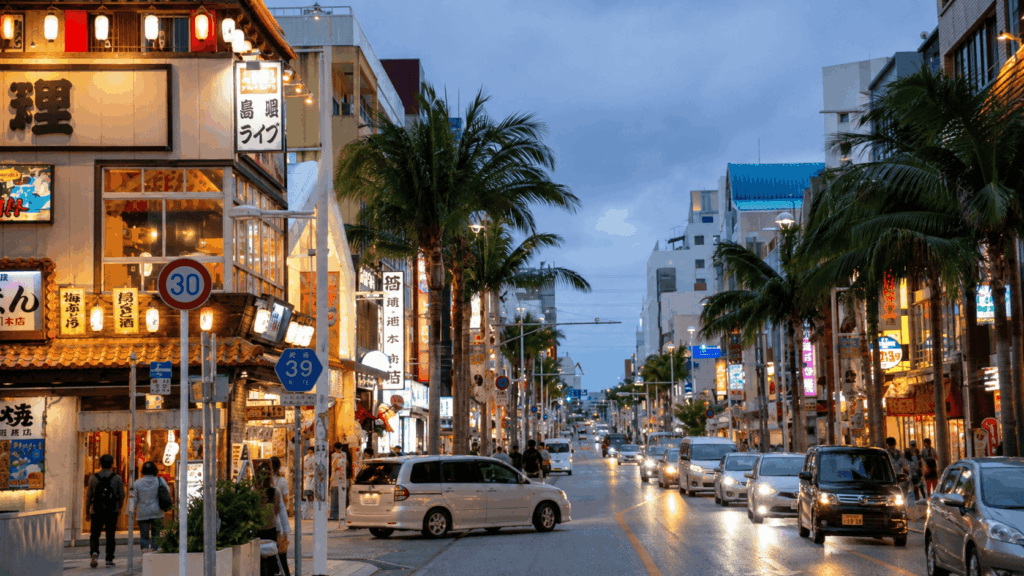
Okinawa Main Island wins this category without much of a fight. Naha gives you Kokusai Street’s dense run of restaurants and souvenir shops, large covered options like Palette Kumoji, and full-scale malls such as SAN-A Naha Main Place — useful on a rainy evening or with kids who need a food court. You can eat a different Okinawan specialty every night for a week and still have options left.
Ishigaki’s food scene is smaller and more local, which is exactly why some people love it: the Euglena Mall arcade in town, the JA Farmers Market Yaeyama Yuratiku Market near the port with island-grown fruit and produce, and a handful of excellent soba and izakaya streets (for specific recommendations, check out our guide on what to eat in Ishigaki). The honest trade-off is scale. In town, dinner options thin out earlier than in Naha, and the variety narrows — you are choosing among a dozen good local places, not a hundred.
What surprises most visitors from the main island is how compact everything is: the town, the port, the market and the arcade all sit within a short walk of each other. It never feels inconvenient, just smaller. If your trip needs a big mall, a late-night food scene or museum-quality indoor options, the main island is the safer base; if your idea of a great evening is a bowl of Yaeyama soba and a walk through the arcade, Ishigaki delivers that easily.
Which Is Better for a 3-, 4- or 5-Day Trip?
Your trip length changes the math more than any other factor, so here is the honest breakdown by stay:
- 3 nights: For most first-timers, Okinawa Main Island is the better use of a short trip — you can see Naha, take the monorail to Shuri, and still fit the aquarium as a day trip. Ishigaki works in 3 nights only if the ocean is your absolute priority and you keep the plan tight: city, one beach day, one day for Taketomi or a snorkeling trip. Adding both Taketomi and Iriomote in 3 nights is overpacking, and I would not recommend it.
- 4 nights: This is where Ishigaki starts to pull ahead for ocean-first travelers. You get a full island day (Kabira Bay, Yonehara, a viewpoint), one day for Taketomi, and a flexible day for snorkeling or a second island. On the main island, 4 nights comfortably covers Naha plus the north — both work, but the choice now comes down to your priorities rather than time pressure.
- 5+ nights: Both islands are comfortable. On the main island, split between Naha and the north with a rental car, and add a Kerama day trip for the clearest water. On Ishigaki, use the extra days for Iriomote and a slower pace — this is the point where the Yaeyama islands really show their value over the main island’s day-trip menu.
If you are still weighing a full itinerary for either option, the length-of-stay guides for Okinawa Main Island and Ishigaki lay out day-by-day plans that make the trade-offs concrete.
Okinawa Main Island vs Ishigaki for Different Travelers
| Traveler type | Better choice | Why |
|---|---|---|
| First-time visitors to Okinawa | Main Island | More forgiving transport, more backup activities, easier to see a lot in a short time. |
| Couples prioritizing beaches & scenery | Ishigaki | Kabira Bay, Yonehara and the outer islands deliver the postcard experience most couples are after. |
| Families with young children | Main Island | Aquarium, malls, monorail, shorter transfers and more rainy-day options. Ishigaki’s ferry days are harder with toddlers. |
| Travelers without a car | Main Island | Yui Rail covers the core. Ishigaki works only if you stay in town and plan ferry days. |
| Repeat visitors to Japan | Ishigaki | Feels genuinely different from mainland Japan — small islands, local food, slower pace. |
| Snorkelers & divers | Ishigaki | Direct reef access and island hopping. Main Island needs a Kerama trip to compete. |
| History & culture travelers | Main Island | Shuri Castle, Ryukyu-era sites and museums outweigh Ishigaki’s village charm for this interest. |
The Best Compromise: Stay on Okinawa Main Island and Add a Kerama Day Trip
If the ocean keeps pulling you toward Ishigaki but the practical side of your trip points to the main island, there is a middle path that most comparison articles miss: base yourself in Naha and spend one day in the Kerama Islands. Fast ferries leave Tomari Port for Tokashiki (around 40 minutes) and Aka — with Zamami nearby — (around 50 minutes), and the water there is so clear that locals simply call the color “Kerama Blue.” Snorkeling and beach time in the Keramas come closer to the Yaeyama experience than anything else reachable from the main island.
Day trips from Naha handle the ferry, the transfer and usually the snorkeling gear, which removes most of the logistics — useful because the Kerama schedule is limited and the fast ferry can sell out in high season. The honest limits of this compromise: it gives you one day of exceptional water, not the multi-day island-hopping rhythm of Ishigaki, and it does not replace the atmosphere of the Yaeyama town evenings. But for a first trip with mixed priorities, it is the strongest way to get both the convenience of the main island and a real taste of subtropical sea.
If that compromise describes your trip — you want Main Island flexibility but still want one full day built around the water — this is the tour to compare first.
Why I’d book this one
- Recent travelers consistently mention organized logistics and attentive guides, which matters when you would rather spend the day snorkeling than coordinating transport and equipment.
- Pickup, snorkeling gear, lunch, photos and onboard facilities are bundled into the day, reducing the number of separate arrangements you need to make.
- Flexible booking terms such as free cancellation and a pay-later option can be useful on an Okinawa trip where wind and sea conditions matter.
If the Kerama option sounds right for your itinerary, a dedicated guide to the day trip from Naha covers the ferry details, the best beaches and what to bring — including the important note that ferry schedules change with the season and weather.
FAQ: Okinawa vs Ishigaki
Is Ishigaki better than Okinawa Main Island for beaches?
For raw water quality, usually yes — Kabira Bay and Yonehara Beach have a color and clarity that the main island’s Naha-area beaches rarely match, and the Yaeyama islands add more snorkeling depth. The exception is the Kerama Islands: a 40–50 minute fast ferry from Naha, they come close to the Yaeyama experience and close most of the gap for anyone based on the main island. If you want the very clearest water and can plan around weather, Ishigaki is the stronger pick; if one great beach day is enough, Main Island plus a Kerama day trip is the practical alternative.
Is Ishigaki worth visiting for only 3 or 4 days?
Three nights is tight but doable if the ocean is your priority: city, one island day (Kabira Bay and Yonehara), and one day for Taketomi or snorkeling. Adding both Taketomi and Iriomote in 3 nights is overpacking. Four nights is where Ishigaki starts to shine — you can cover the island, one outer island and a snorkeling or dive day without rushing. If you want a broader trip with culture, shopping and rainy-day backups, those 3–4 nights are better spent on the main island.
Can you visit Ishigaki without a car?
Yes, with limits. Stay in Ishigaki city, use the ferry terminal at its edge for Taketomi and Iriomote, and you can have a full trip car-free. The problem is the places you came for — Kabira Bay, Yonehara Beach, Tamatorizaki Observatory — all need wheels, taxis, or infrequent buses. If you want those spots, rent a car at the planning stage rather than deciding on arrival; if you do not drive, plan one taxi day for Kabira and build the rest around town plus ferry trips.
Which is better for first-time visitors, Okinawa or Ishigaki?
Okinawa Main Island, for most first-timers. The Yui Rail monorail covers Naha and Shuri, there are more restaurants, malls and rainy-day options, and the trip still works if the weather turns. Ishigaki is a better fit for a first visit only if the ocean is the single biggest reason you came — and even then, a Kerama day trip from Naha gives you a strong taste of that water without committing the whole trip to it.
What should I do if rain is forecast during an Ishigaki trip?
Read the wind forecast before the rain percentage — light showers pass and often clear crowds, but sustained wind cancels ferries and glass-bottom boats. If strong wind is coming, reshuffle early: move island days to calmer days, keep a low-key day in town (the Euglena Mall arcade and the farmers market near the port), and if you have a car, save it for the driest window. On the main island the same rule applies, but the backup list is longer — aquarium, museums, shopping streets.
Final Verdict: Choose Ishigaki or Okinawa Main Island?
Here is the honest way to finish this comparison: the two islands are not competing versions of the same holiday, they are different holidays, and the right choice depends on which one you are actually trying to buy.
Choose Ishigaki if…
- The ocean is the main reason for the trip — snorkeling, diving, photographing water that looks like the postcard.
- You have 4 nights or more and can give at least one full day to Taketomi or Iriomote.
- You are comfortable with a smaller, quieter base and can accept that a grey day costs you more.
- You are a repeat Japan traveler who wants something genuinely different from the mainland.
Choose Okinawa Main Island if…
- This is your first visit to Okinawa and you want a trip that is easy to plan and hard to ruin.
- You are traveling with young children or anyone who needs reliable backup options.
- You do not plan to drive — the monorail covers Naha, and everything else is a manageable choice rather than a necessity.
- Culture, shopping, food variety and rainy-day options matter as much as the beach.
Still 50/50? Use this tie-breaker
Ask yourself one question: if a typhoon or a string of grey days hit your trip, which island’s worst week would bother you less? If the answer is the main island — because the aquarium, the malls and the museums would still fill the days — then choose the main island and add a Kerama day trip to get your ocean fix. If the answer is Ishigaki — because even a grey day there beats a sunny day spent mostly indoors — then book Ishigaki and plan your island days around the forecast window.
What I would tell a friend planning their first trip south is this: the biggest difference I notice between the two islands is not cost or convenience — it is what the water does to people. On the main island, the sea is scenery you pass on the way to other things. Around Kabira Bay, it stops the conversation. If that is the feeling you are booking, choose Ishigaki and give it the days it needs. If you are booking a whole trip — food, culture, transport, children, weather insurance — the main island is the more complete answer, and the Keramas will still give you a day of the same blue.

Hi, I’m Kai. I’m a Tokyo-based travel writer, tourism industry insider, and the author of a published guidebook for international visitors to Japan. With over 10 years of professional experience at a leading Japanese tourism company, my mission is to help you skip the tourist traps and navigate Japan’s best destinations like a local. I believe the perfect day trip is like a traditional kaiseki meal: a beautiful balance of precise planning and unforgettable seasonal discovery. When I’m not out conducting field research, you’ll usually find me drafting new itineraries with one of my favorite fountain pens!