
People often ask me which of Kinosaki Onsen’s two Nishimuraya properties they should book, and it is easy to see why: both carry the same celebrated name, and both promise a full ryokan experience. I have stayed at both and have guided travelers through this exact decision for years, so here is the short version. Choose Nishimuraya Honkan if you came to Kinosaki to experience the town itself — the evening yukata walks between public baths, the quieter historic atmosphere, the sense of staying somewhere old. Choose Nishimuraya Hotel Shogetsutei if you want the easier, more flexible stay — Western beds, younger children in your group, or a trip where you plan to relax mostly inside a large, well-equipped property.
If the classic Kinosaki experience is the side of this comparison that sounds like you, check Nishimuraya Honkan’s current room availability and rates for your dates before narrowing down the room type.
Nishimuraya Honkan vs Shogetsutei: The Quick Verdict
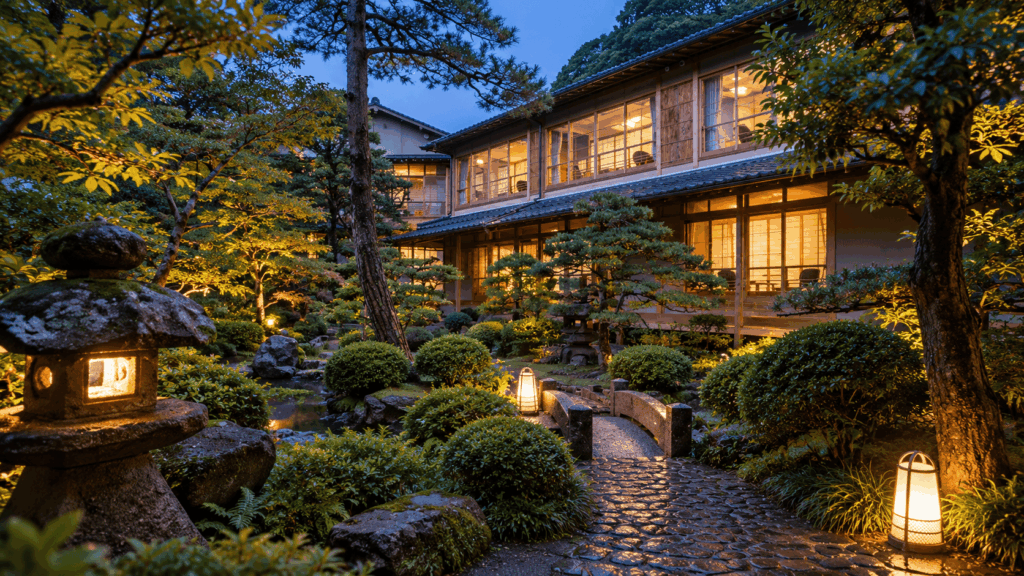
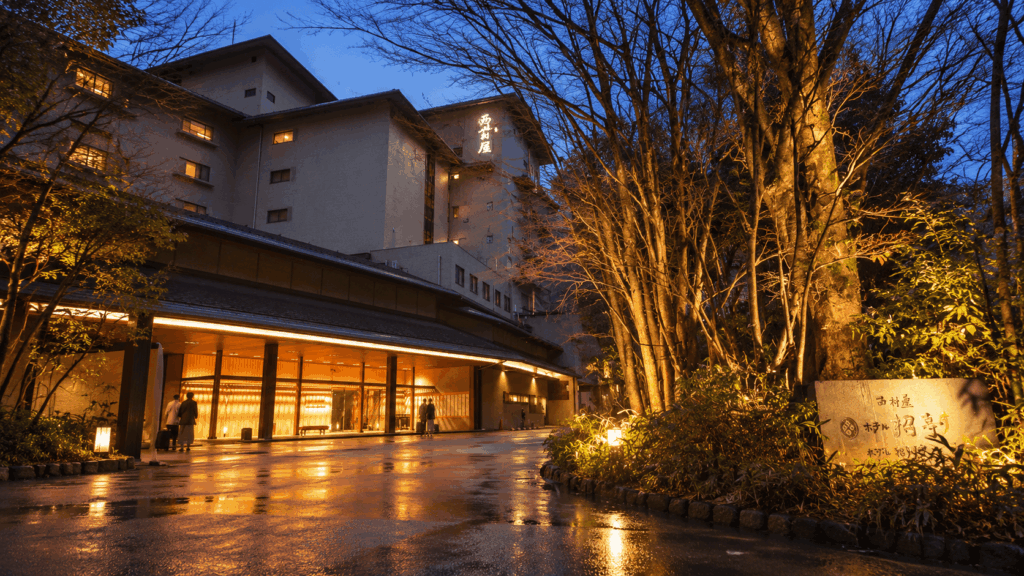
These are sister properties under the Nishimuraya name, but they answer different questions. Honkan is a 165-year-old ryokan in the middle of the onsen town, built around a manicured Japanese garden. Shogetsutei is a much larger, modern Japanese-style hotel set against a mountain forest on the edge of town. One is not simply “better” — the right choice depends on where you want your Kinosaki experience to happen: out in the town, or inside your ryokan.
Choose Nishimuraya Honkan if:
- Walking Kinosaki’s streets in yukata and hopping between public baths is the whole point of your trip. Mandara-yu is about a 2-minute walk from the entrance, and several other baths are within 5–10 minutes.
- You want an intimate, historic ryokan feel: garden views, tatami rooms, kaiseki dinner served in your room, and a notably quiet, adult-focused atmosphere.
- You are traveling without children under 10. Honkan’s minimum age is 10, so children aged 0–9 cannot stay here at all.
- A special occasion justifies a higher price for atmosphere, location and tradition.
Choose Nishimuraya Hotel Shogetsutei if:
- You are traveling with children under 10 — Honkan will not accept them, and Shogetsutei offers far more flexible room options.
- You want a Western bed or a Japanese-Western room, which Shogetsutei sells in clearly defined categories.
- You would rather stay inside the property: large communal baths with saunas, a summer pool, a gym, restaurants, a night lounge, and a bookable private hot-spring spa.
- You prefer modern hotel comfort to historic character and do not mind taking a free shuttle to reach the town’s public baths.
To see which side of this trade-off fits your budget, check Nishimuraya Honkan rates for your dates and check Nishimuraya Hotel Shogetsutei rates for your dates using the same dates, the same number of guests and the same meal plan. Honkan is usually the more expensive of the two — sometimes by a significant margin — so the rest of this article is about what that premium actually buys you.
Honkan vs Shogetsutei at a Glance
The table below is designed so you can filter by your own deal-breakers — children, beds, private baths — before reading the detailed comparison.
| Category | Nishimuraya Honkan | Nishimuraya Hotel Shogetsutei | Better for |
|---|---|---|---|
| Overall style | Historic 165-year ryokan in the heart of the onsen town, built around a Japanese garden | Modern Japanese-style hotel set against a mountain forest on the edge of town | Traditional ryokan atmosphere |
| Location for public bath hopping | In the town center — Mandara-yu 2-min walk; Goshono-yu and Kouno-yu 5-min; Ichino-yu 8-min | About a 25–30-min walk from the station; free shuttle service to and from town | Guests who plan several bath visits |
| Property-focused relaxation | Smaller: garden, lounge, museum, elegant in-house baths | Larger: saunas, cold plunge, summer pool, gym, restaurants, night lounge | Travelers who stay mostly indoors |
| Families with children under 10 | Not accepted — minimum age is 10 | Accepted, with a wider choice of rooms and meal formats | Families with young children |
| Western beds | A few Japanese-Western rooms added after the 2026 renovation | Dedicated Western-Style and Western & Japanese-Style room categories | Travelers who want to sleep in a bed |
| Traditional atmosphere | Strong — historic architecture, tatami, sliding doors, garden views | Softer — a large hotel with ryokan touches | First-time ryokan guests seeking the classic feel |
| Large communal bath / sauna | In-house hot-spring baths are refined but modest in scale | Big gender-separated baths with open-air areas, dry saunas and cold baths | Bathers who want facility choice |
| Private onsen spa | None on site — but Honkan guests can book the private spa at Shogetsutei | Three rental private hot-spring baths on site (Gingetsu, FU-RO, Rinsen) | Couples who want a private soak |
| Dinner experience | Kaiseki served in your room at your own pace | Kaiseki in your room or a private dining room; more formats overall | Guests who value a private, unhurried dinner |
| Breakfast style | Japanese or Western breakfast in the historic Senrei dining hall | Buffet with 30+ Japanese and Western dishes | Depends on preference — see Food section |
| Quiet / adult atmosphere | Very quiet and adults-focused | Family-friendly; livelier common areas | Adults-only travel |
| Best for | Couples, bath-hoppers, special occasions, classic ryokan seekers | Families, bed sleepers, stay-in comfort seekers | — |
| Main drawback | Premium price, plus the trade-offs of a historic building | Distance from the bath-hopping center — you will use the shuttle | — |
The Biggest Difference: Do You Want to Experience Kinosaki Outside or Inside Your Ryokan?
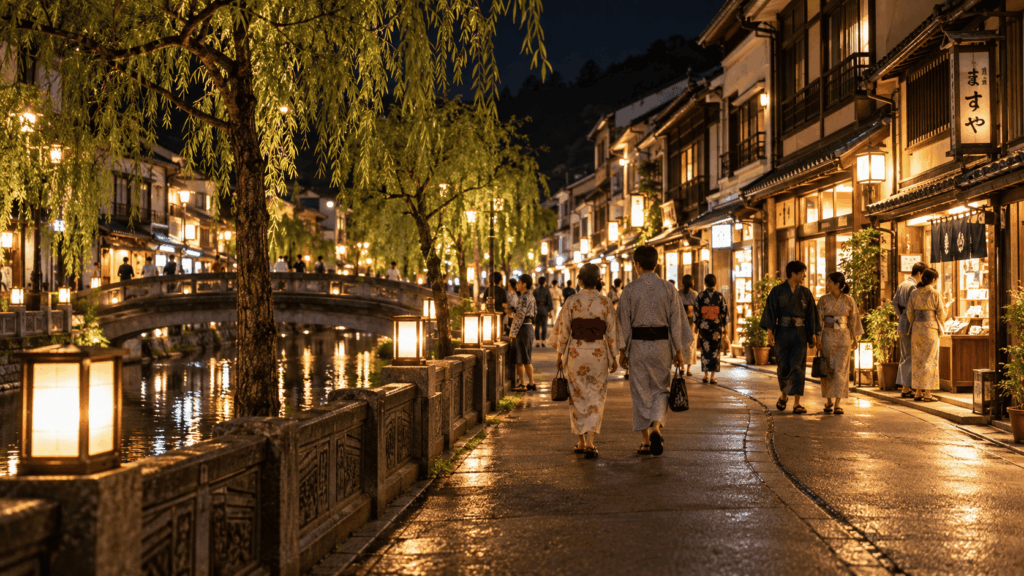
Kinosaki is not a ryokan destination where you simply check in and soak — the town’s ritual is the sotoyu meguri, the public bath circuit. Guests dress in the yukata their ryokan provides, slip on geta sandals, and walk between the town’s historic bathhouses in the evening and again in the morning. Free entry to the public baths is included with your stay at both properties.
This is where the two Nishimuraya properties divide. Honkan sits in the middle of that circuit: from its entrance, Mandara-yu is about 2 minutes on foot, Goshono-yu and Kouno-yu about 5, and Ichino-yu about 8. You can realistically step out for a bath, come back, rest, and go out again. In my experience, that is exactly what most overseas guests want to do — so when someone tells me the public baths and the yukata walk are the reason they chose Kinosaki, I point them to Honkan.
Shogetsutei answers a different question. It is set in forest on the town’s edge, about a 25–30-minute walk from the station, with a free shuttle that runs from the hotel to the station area through the afternoon and evening. Some travelers worry this makes it inconvenient; in practice the shuttle handles the distance well, but it does mean you will plan your bath-hopping around the timetable instead of stepping out the front door. Guests who tell me they want to arrive, check in and not think about transport again are usually happier at Shogetsutei — the baths, saunas, restaurants and forest walks keep the whole stay on site.
Choose Honkan if public bath hopping is the point of your trip
If you picture your Kinosaki evening as a slow circuit of two or three bathhouses in yukata, with dinner in between, Honkan’s location quietly multiplies the value of your stay. The more times you plan to go out — sunset soak, after-dinner stroll, early-morning bath — the more that 2-minute proximity matters. It also means you can linger over a long kaiseki dinner without worrying about catching the last shuttle back to the hotel.
Choose Shogetsutei if the ryokan itself is your destination
If your ideal ryokan day involves a long bath, a sauna session, a lounge with a view, a massage, dinner on site and little else, Shogetsutei is the more rational choice — and often the better value, since you are paying for facilities you will actually use. The property has large gender-separated hot-spring baths with open-air areas, dry saunas and cold plunges, a summer pool, a fitness gym, several restaurants and lounges, and forest grounds with a walking trail. For travelers who mainly want to switch off, the distance from the town center simply stops mattering.
Kai’s tip: Before you book, count how many times you realistically expect to leave the ryokan. First-time visitors almost always overestimate their bath-hopping energy after a long kaiseki dinner and a soak. If you think you will go out once or twice in the evening plus once in the morning, Honkan’s location earns its premium. If the honest answer is “maybe once,” Shogetsutei’s larger baths and saunas will serve you better — and if you do stay there for the evening circuit, tell the staff when you arrive that you need the evening shuttle. It runs until around 22:00, but the late departures are irregular and operate on request rather than on a fixed schedule like the afternoon bus.
Rooms, Beds and Families: Shogetsutei Is the More Flexible Choice
If you are traveling with children under 10, this section settles the debate immediately: Honkan’s minimum age is 10, and children aged 0–9 cannot stay there. Shogetsutei accepts children and is the property I steer families toward — not because Honkan is unwelcoming, but because the practical pieces of a family stay are easier here: bedded rooms, a buffet breakfast that suits different appetites, and a summer pool with a shallow children’s area.
Shogetsutei also wins on room choice for adults who want to sleep in a bed. Its categories are clearly defined: Japanese-style rooms, Japanese-Western rooms that pair a tatami area with a proper western bed, fully Western-style rooms, and top categories such as the Keigetsu Suite with its own open-air bath. You can filter for exactly the sleeping arrangement you want instead of hoping for the best.
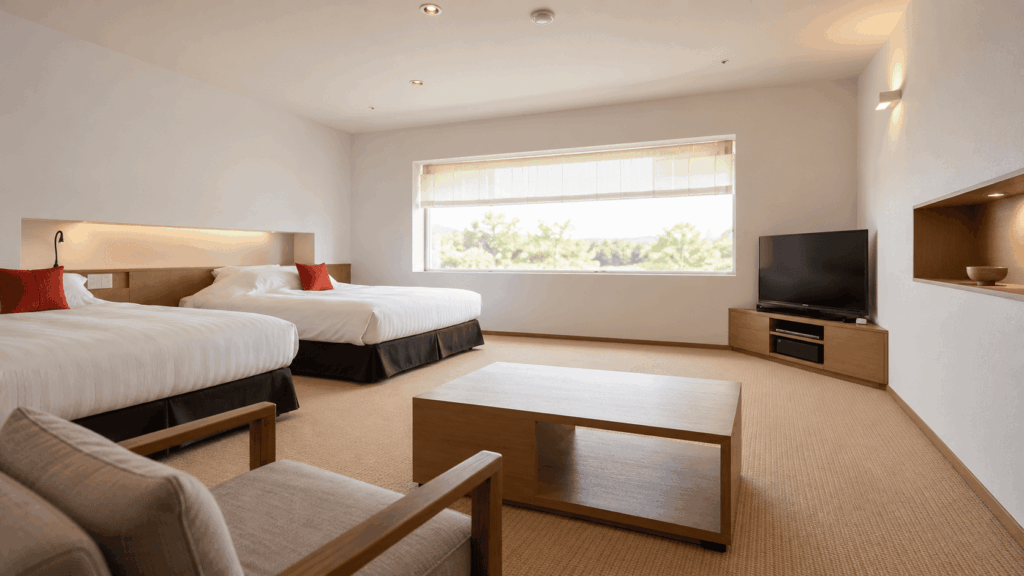
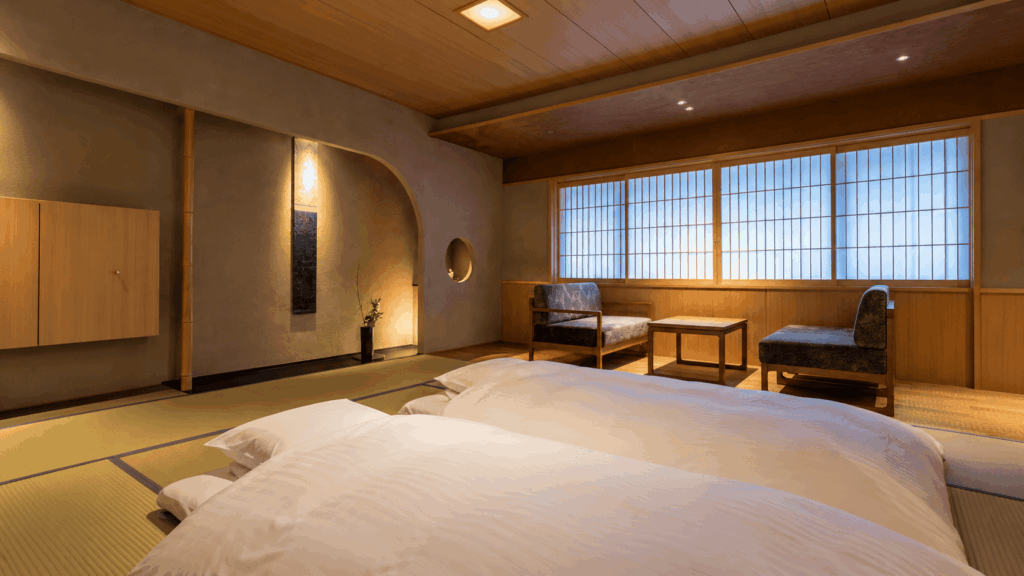
Honkan is a different story, and it is worth correcting a common assumption: after the 2026 renovation, Honkan is no longer futon-only. The property closed from late June to late August 2026 to refurbish guest rooms, converting six rooms into Japanese-Western style and installing individual air conditioning throughout. Rooms such as Wakakusa now combine tatami space with a twin-bed bedroom. That said, tatami-and-futon rooms still dominate the inventory, and the bedded rooms are a small share of the property — so if a bed is a hard requirement, Shogetsutei remains the easier booking.
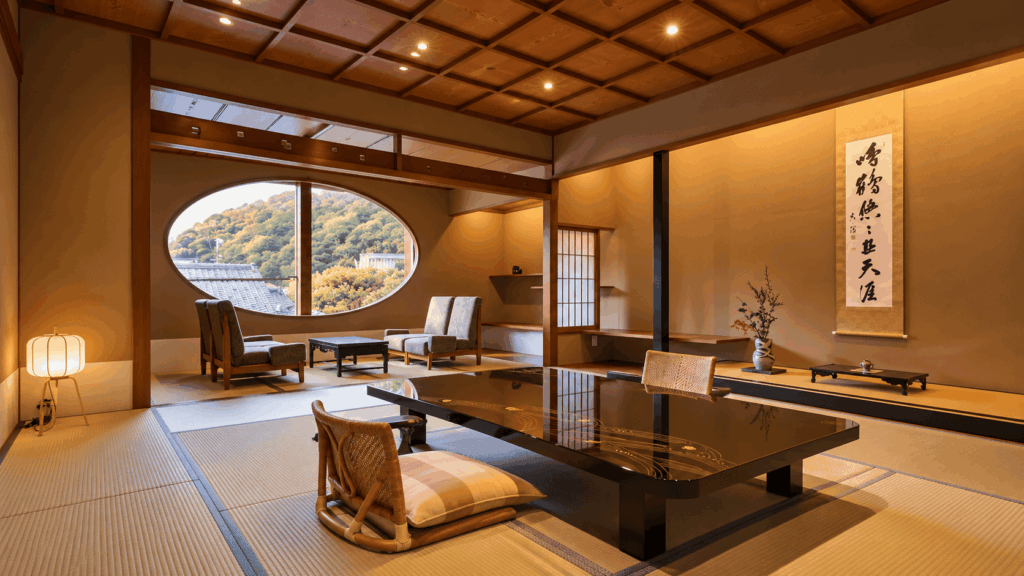
Kai’s tip: When guests tell me they need a real bed, my default advice has long been Shogetsutei — and for most travelers it still is, because the Western and Japanese-Western categories are sold as standard room types. But since the 2026 renovation, Honkan has a small number of Japanese-Western rooms too. If your heart is set on Honkan’s atmosphere, it is now worth checking its room inventory for your dates before you assume beds are unavailable. The catch is that these rooms are few, so they tend to book out earlier than the tatami rooms.
Onsen and Spa: Shogetsutei Has More Facilities, but Honkan Has One Useful Trick
Both properties sit on genuine Kinosaki hot-spring water, and both give guests free entry to the town’s public baths. The difference is scale and choice. Honkan’s in-house baths (Kichino-yu, Fukuno-yu and Shouno-yu) are refined and quiet, but modest — which matters less when the town’s bathhouses are a short walk away. Shogetsutei’s communal baths are the property’s centerpiece: large gender-separated areas with open-air sections, dry saunas, cold plunges, and a refreshment lounge with complimentary drinks. Bath hours run until 24:30, which suits travelers who like a very late soak.
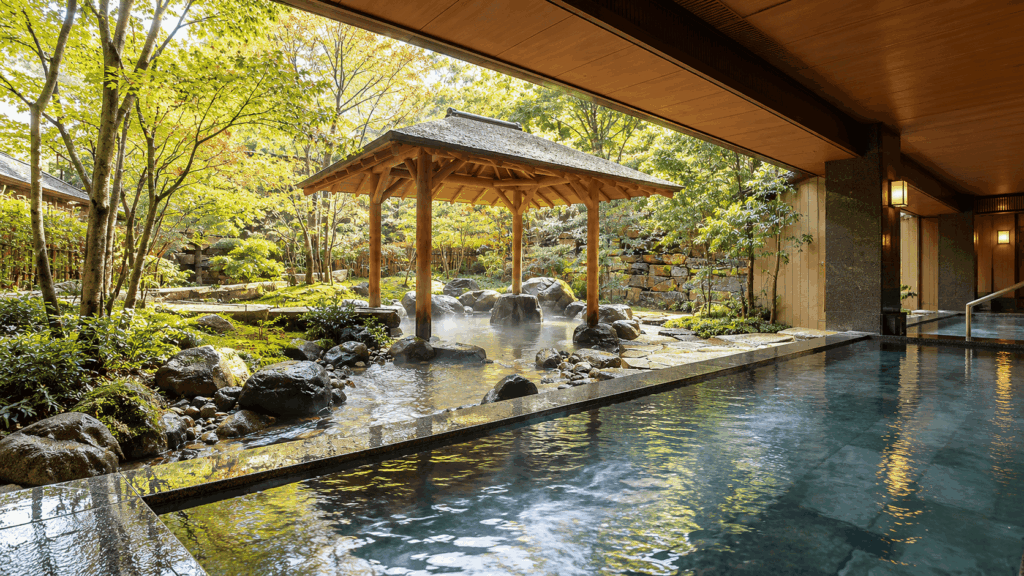
On a weekend visit I found Shogetsutei’s sauna area noticeably busy in the early evening — a large group had the same idea I did. It was a timing thing rather than a flaw, and the late hours give you an easy way around it if you prefer a quieter soak.
Shogetsutei also has the private onsen option that most couples are really asking about: the Private Onsen Spa, a set of three rental baths in the forest — Gingetsu (Japanese style), FU-RO (Balinese style) and Rinsen (Chinese style). Each has its own lounge, and the private baths allow mixed bathing, which the communal baths do not. Current pricing is 8,800 yen (tax included) for 70 minutes for up to four guests, with a small per-person surcharge up to a maximum of six. Bath towels, sauna towels, mineral water and sparkling wine are included. Availability is limited and reservations are strongly recommended.
Here is the trick that most comparison articles miss: you do not have to stay at Shogetsutei to use its private spa. The spa is bookable by guests staying at either Nishimuraya property — Honkan included — and Honkan’s front desk will arrange it for you in advance. The two properties are about a 10-minute walk apart, or a short free shuttle ride. So the choice between them does not have to be a choice between a town location and a private hot-spring bath.
A private bath in your room does not always mean private onsen
This is the booking mistake I see most often from overseas guests, so read the room description carefully before you pay for an upgrade. A “private open-air bath” attached to your room is not the same as a private onsen fed by natural hot-spring water.
At both Nishimuraya properties, the official room pages state that the water in in-room open-air baths is regular heated water, not natural hot-spring water — at Shogetsutei this is described as a town-wide regulation in Kinosaki. This applies to Honkan’s top suites such as Honjin and Horai, and to Shogetsutei’s Keigetsu Suite and open-air-bath rooms. The real hot-spring water is in the communal baths, the town’s public bathhouses, and the paid Private Onsen Spa.
Kai’s tip: The question I hear constantly is “does the open-air bath in the room use onsen water?” — and the honest answer at both Nishimuraya properties is usually no. Decide in advance which matters more: having a bath steps from your bed (in which case a heated-water room bath is perfectly pleasant), or soaking in genuine hot-spring water in private (in which case skip the room-bath upgrade and book the Private Onsen Spa instead). If you choose Honkan for the town location, you can still book the spa at Shogetsutei as a separate reservation — I did exactly that with the Balinese-style FU-RO bath, and the 70-minute session with sparkling wine afterwards was one of the most memorable parts of the stay.
Food: Honkan Feels More Intimate, While Shogetsutei Offers More Choice
The two properties share the same head chef and the same pride in Tajima-region ingredients — Tajima beef (the breed behind Kobe beef), seasonal Matsuba crab from the Sea of Japan, local seafood and Tajima rice. So the food comparison is not about which kitchen is better; it is about how you want to eat.
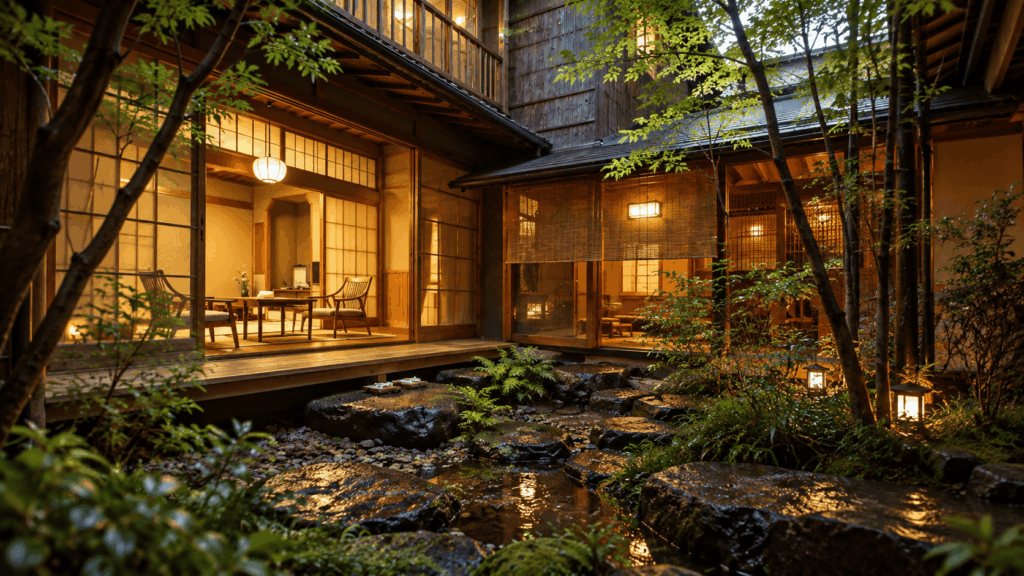
Honkan serves its kaiseki dinner in the classic ryokan style: course by course, in your room. Dinner at my own pace, with the garden and quiet around us, was exactly the unhurried experience I would want for a special meal — the Tajima beef course was a genuine highlight. Breakfast is served in the Senrei dining hall, a historic, light-filled room with an open kitchen that is itself a registered cultural property. Some plans use private dining rooms instead of in-room service, so confirm the format when you book.
Shogetsutei offers more flexibility. Its kaiseki dinner can be served in your room or in a private dining room (note: in-room dining is not available for Western-style rooms), and the property adds formats Honkan does not have — an on-site Western-style restaurant (Ricca) and a late-night noodle shop. The breakfast is a buffet with more than 30 Japanese and Western dishes, which families with children tend to find far easier than a formal multi-course breakfast.
One honest personal note: I found Shogetsutei’s dinner genuinely lavish, but its breakfast buffet leaned closer to a polished hotel buffet than a strongly regional meal — the local character I love at Honkan’s Senrei breakfast felt quieter here. That is a personal impression, not a judgment on quality: the buffet is popular, and for travelers who want choice and speed in the morning, it is arguably the better format anyway.
Is Nishimuraya Honkan Worth It?
This is the question behind the whole comparison, so let me answer it directly. Honkan is worth the premium if what you are paying extra for is location, atmosphere, intimacy and a traditional Kinosaki ryokan experience. It is probably not worth it if you mainly want the largest bath facilities, guaranteed Western beds, family flexibility or modern hotel-style convenience — because those are exactly the things the premium does not buy.
What the premium pays for:
- Location. Being inside the bath-hopping circuit, with Mandara-yu two minutes from the door, changes how freely you experience the town.
- A historic, intimate setting. A 165-year-old property with sukiya architecture and a real Japanese garden is something a larger hotel cannot reproduce.
- An adult-focused quiet. The minimum age of 10 shapes the atmosphere; during my own stay I found it notably calm.
- The meal experience. Kaiseki in your room at your own pace, breakfast in a historic dining hall.
What the premium does not buy:
- A larger range of facilities — Shogetsutei simply has more baths, saunas, restaurants and amenities.
- Access for children under 10 — Honkan does not accept them at any price.
- Guaranteed modern fittings — the 2026 renovation helped, but this remains a historic building.
- Natural hot-spring water in a room bath — the in-room open-air baths at both properties use heated water.
When guests ask me whether the higher price is justified, my answer for most adult travelers is yes — if they came to Kinosaki for the town, the baths and the quiet rhythm of a traditional ryokan. For families, bed-dependent sleepers and anyone who will spend most of their time inside the property, the honest answer is usually no: that money is better spent at Shogetsutei, or on a top room there. Check the price difference for your exact dates — same dates, same number of guests, dinner and breakfast included, and as comparable a room grade as possible — before you commit.
If you fall into the first camp — the town, the baths and the traditional ryokan atmosphere are what justify the trip — Honkan is the stronger fit.
Why I’d book this one
- Recent guests consistently highlight the traditional atmosphere, attentive service and quiet garden setting rather than treating it as just another hotel stay.
- The location supports the experience you are paying for: easy public-bath hopping, an unhurried evening in town and a return to a smaller, quieter property.
- The booking page lets you compare current room inventory and meal-plan options for your exact dates before deciding whether the premium is worthwhile.
See current Nishimuraya Honkan room availability, rates and recent guest reviews for your dates.
The downside of Honkan: historic charm can come with trade-offs
I want to be straight about this because too many reviews are pure praise. Honkan is old, and old feels different from new. During my stay I was aware of the building’s age — wooden corridors that creak underfoot, fittings that carry decades of use, and a general atmosphere closer to a well-kept historic house than a modern hotel. If you are sensitive to noise or expect flawless modern soundproofing, a historic ryokan like this may not be the right match, and that is worth knowing before you pay the premium.
One important update: Honkan closed from 24 June to 28 August 2026 for a major guest-room renovation, converting six rooms to Japanese-Western style and installing individual air conditioning throughout the property. The property reopened at the end of August 2026, so some aspects of earlier stays — including some of what I noticed — may no longer apply to every room today. If the age of the building concerns you, ask the property directly which room type best fits your comfort level.
Which Nishimuraya Should You Choose for Your Trip?
If you are still weighing the two, use this decision table first, then read the notes below for the nuances.
| Traveler type | Pick | Why |
|---|---|---|
| Couples and honeymooners | Honkan | Quieter, adults-focused atmosphere, in-room dinner, and the town’s evening yukata walks at your doorstep |
| Families with children under 10 | Shogetsutei | Honkan’s minimum age is 10; Shogetsutei accepts children and offers bedded rooms, a buffet and a summer pool |
| First-time ryokan guests who want the classic experience | Honkan | Historic architecture, garden views, tatami rooms and an in-room kaiseki dinner deliver the full picture |
| Travelers who hate sleeping on futons | Shogetsutei (check Honkan too) | Western and Japanese-Western categories are standard; Honkan’s few renovated bedded rooms sell out early |
| Serious public-bath hoppers | Honkan | Main bathhouses are 2–8 minutes on foot; no shuttle planning around your evening circuit |
| Travelers who want to stay mostly inside the hotel | Shogetsutei | Large baths, saunas, private spa, restaurants, lounges, forest grounds — enough for a full day on site |
| Travelers paying for a special occasion | Honkan if budget allows | Location, intimacy and history create the occasion; choose Shogetsutei if you prefer a large modern suite |
Couples and honeymooners — Honkan
For a romantic stay, Honkan’s combination is hard to beat: a quiet garden property, dinner served privately in your room, and an evening stroll in yukata to a nearby bathhouse. The minimum-age policy also keeps the atmosphere calm in a way couples notice.
Families with children under 10 — Shogetsutei
This is not a preference question but a policy one: Honkan cannot accept children aged 0–9. At Shogetsutei, children are welcome, the room range is more practical, and the buffet breakfast plus summer pool make the stay noticeably easier.
If younger children, easier bedded room options or larger on-site facilities are the deciding factors, check Nishimuraya Hotel Shogetsutei’s current room types and availability for your dates.
Travelers who need a Western bed — usually Shogetsutei
Shogetsutei sells Western and Japanese-Western rooms as standard categories, so booking a bed is straightforward. Honkan now has a few renovated Japanese-Western rooms, but they are limited — treat them as a bonus to check, not a plan to rely on.
First-time Kinosaki visitors who want the classic experience — Honkan
If this may be your only ryokan stay in Japan, and Kinosaki’s public baths, yukata culture and traditional atmosphere are why you came, Honkan delivers that picture in one night. Budget-permitting, it is the version of Kinosaki you will remember.
Travelers who want to relax without going out much — Shogetsutei
Rainy weather, tired legs, young children, or simply a trip where the hotel is the destination: Shogetsutei gives you the most to do without leaving the property, and you will not feel you wasted the difference in price.
A Third Option: Stay at Honkan and Book Shogetsutei’s Private Onsen Spa
You do not have to force a choice between the town and the private bath. Because the Private Onsen Spa at Shogetsutei is open to guests of either Nishimuraya property, you can stay at Honkan for its location and atmosphere, then reserve a 70-minute session at Gingetsu, FU-RO or Rinsen — genuine hot-spring water, in private, with a lounge and sparkling wine included. This works best for couples who want both the classic ryokan evening in town and one unhurried private soak.
Plan ahead: spa availability is limited, reservations are strongly recommended, and the spa is only bookable by staying guests of the two properties. The easiest route is to mention it when you book Honkan — the front desk can arrange the reservation for you. If this hybrid plan sounds like your trip, check Nishimuraya Honkan availability for your dates and ask about the private spa at the same time.
Final Verdict: Honkan for the Kinosaki Experience, Shogetsutei for the Easier Stay
After all the comparisons, the decision comes back to one question: where do you want your Kinosaki experience to happen — in the town, or inside your ryokan?
Choose Nishimuraya Honkan if Kinosaki’s streets, public baths, quiet atmosphere and traditional ryokan character are the reason you are making the trip. You are paying for location you can feel with every bath-house visit, an intimate historic setting, and a meal experience that unfolds at your own pace. The premium makes sense for couples, special occasions and anyone who wants the classic picture of Kinosaki.
Choose Nishimuraya Hotel Shogetsutei if comfort, beds, younger children, larger facilities and an easier stay matter more. You trade the town at your doorstep for a free shuttle ride, and in return you get a property that can absorb a full day of relaxation without ever leaving the grounds. For families, bed-dependent sleepers and stay-in travelers, it is not the compromise option — it is the right one.
Neither property is simply “better.” Honkan is better for the traveler who came for the town; Shogetsutei is better for the traveler who came to switch off. My one piece of advice for a friend booking a single night (or deciding how long to stay in Kinosaki): count how many times you will really walk out to the baths — then let that answer choose for you.
To finish the decision, check Nishimuraya Honkan rates for your dates and check Nishimuraya Shogetsutei rates for your dates side by side — same dates, same number of guests, same meal plan. The gap between them varies by season and room type, and only your dates will tell you whether Honkan’s premium fits your budget.
FAQ
Which is better, Nishimuraya Honkan or Shogetsutei?
Neither is universally better — it depends on your trip. Choose Honkan if you came to Kinosaki for the town itself: the public baths, yukata walks and a quieter, more traditional ryokan stay. Choose Shogetsutei if you prioritize room choice, Western beds, traveling with children under 10, larger baths and saunas, or staying mostly inside the property. The biggest difference is location: Honkan sits in the middle of the bath-hopping circuit, while Shogetsutei is set in forest on the town’s edge with a free shuttle.
Is Nishimuraya Honkan worth the extra money?
Yes for travelers who value location, historic atmosphere, intimacy and a traditional meal experience — the things Honkan’s premium actually buys. Probably not for travelers who mainly want the largest facilities, guaranteed beds, family flexibility or modern hotel convenience, since those are exactly what the premium does not add. The price gap varies by date and room, so compare the two properties for your exact dates before deciding.
Can children stay at Nishimuraya Honkan?
Children aged 0–9 cannot stay at Honkan; the minimum age is 10. Families with younger children should book Shogetsutei instead, which accepts children and offers more flexible rooms and meal formats.
Can Nishimuraya Honkan guests use Shogetsutei’s private onsen?
Yes. The Private Onsen Spa at Shogetsutei — Gingetsu, FU-RO and Rinsen — can be reserved by guests staying at either Nishimuraya property, Honkan included. Availability is limited and advance reservation is recommended; the easiest way is to ask Honkan’s front desk to arrange it when you book. Current pricing is 8,800 yen (tax included) for 70 minutes for up to four guests, with mineral water and sparkling wine included.
Does a room with a private open-air bath at Nishimuraya use natural hot-spring water?
In most cases, no. At both properties, the official room pages state that in-room open-air baths use regular heated water, not natural hot-spring water — including Honkan’s Honjin and Horai suites and Shogetsutei’s Keigetsu Suite. Natural hot-spring water is found in the communal baths, the town’s public bathhouses and the bookable Private Onsen Spa. Always check the specific room description before booking an upgrade.
Hi, I’m Kai. I’m a Tokyo-based travel writer, tourism industry insider, and the author of a published guidebook for international visitors to Japan. With over 10 years of professional experience at a leading Japanese tourism company, my mission is to help you skip the tourist traps and navigate Japan’s best destinations like a local. I believe the perfect day trip is like a traditional kaiseki meal: a beautiful balance of precise planning and unforgettable seasonal discovery. When I’m not out conducting field research, you’ll usually find me drafting new itineraries with one of my favorite fountain pens!