
Tajima Beef and Kobe Beef are not two separate breeds, and Kobe Beef is not a step above Tajima Beef in the way many travelers assume. Kobe Beef is Tajima Beef that has passed additional certification standards in Hyogo Prefecture. In short: all Kobe Beef is Tajima Beef, but not all Tajima Beef qualifies as Kobe Beef.
For your trip, that changes the question. If you are already staying at Kinosaki Onsen in the Tajima region of northern Hyogo, eating clearly identified Tajima Beef locally is a very sensible choice, not a compromise. Choose Kobe Beef when the official certification and the Kobe dining experience itself are part of what you want to pay for. If you are simply looking for the cheapest beef meal in Japan, neither fits, so this guide is not aimed at that search.
The question I hear most often from overseas visitors travelling with me in this part of Japan is whether Tajima Beef and Kobe Beef are actually the same thing. The confusion makes sense: the names look like rival brands, the price gap is real, and few menus explain the relationship. This guide separates the breed, the regional certification, and the dining decision, so you know exactly what you are paying for in each town.
If the certified Kobe name is the experience you want — rather than simply eating excellent Tajima Beef in Kinosaki — a guided Kobe food experience can remove the restaurant and ordering guesswork. Check live availability, start times, and recent traveler reviews for this Kobe Beef and sake culinary tour.
Tajima Beef vs Kobe Beef: The Short Answer
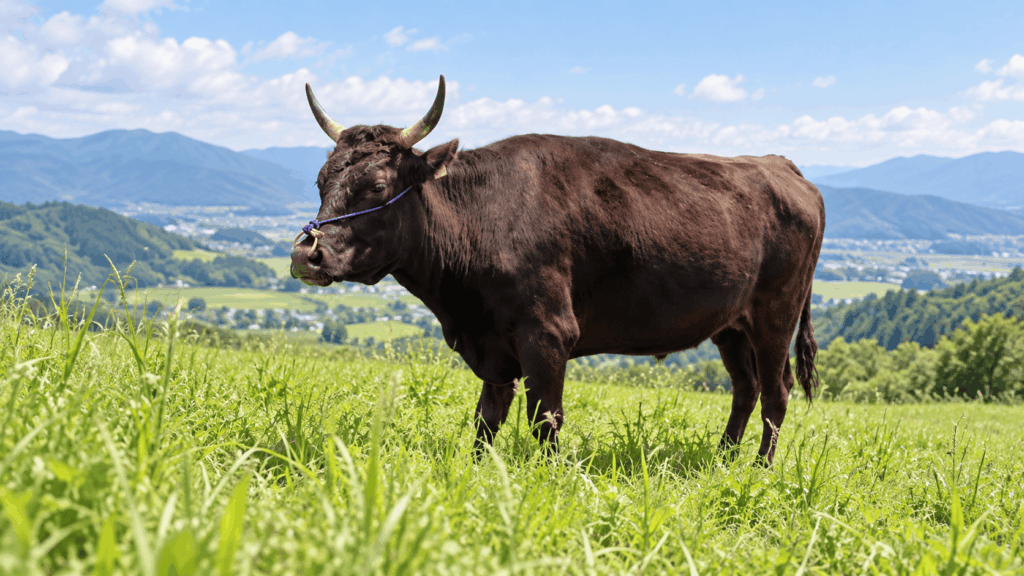
Tajima Beef (但馬牛, Tajima-gyu) is a certified regional brand of beef from Tajima-lineage cattle that are born, raised, and processed in Hyogo Prefecture under rules set by the Kobe Beef Marketing & Distribution Promotion Association. Kobe Beef is selected from certified Tajima Beef carcasses that meet stricter grading conditions. It is a subset, not a separate category.
All Kobe Beef is Tajima Beef, but not all Tajima Beef qualifies as Kobe Beef.
- Breed and lineage: both come from Tajima cattle, a strain of Japanese Black (Kuroge Washu) cattle raised in Hyogo.
- Certification: Kobe Beef must clear a higher bar for marbling and meat quality, as well as specific carcass-weight conditions; both Tajima Beef and Kobe Beef require yield grade A or B.
- Travel takeaway: a stricter certificate means a stricter grading threshold, not a guarantee that every Kobe Beef meal will taste better to you than every Tajima Beef meal.
| Tajima Beef | Kobe Beef | |
|---|---|---|
| What it is | A certified regional brand of beef from Tajima cattle raised and processed in Hyogo Prefecture | A certified subset of Tajima Beef that passes additional, stricter carcass standards |
| Cattle lineage | Tajima cattle (Tajima strain of Japanese Black) | The same Tajima lineage, born and raised in Hyogo |
| Production area | Registered breeding and fattening farms in Hyogo Prefecture; processed at Hyogo slaughterhouses | Identical production area requirement, since it is selected from certified Tajima Beef |
| Certification relationship | The wider, underlying certification | Selected from certified Tajima Beef carcasses under the association’s bylaws |
| Meat quality requirement | Meets the association’s base carcass standard for Tajima Beef | Meat quality score of 4 or above |
| Marbling (BMS) requirement | No separate BMS threshold in the official Tajima Beef definition | BMS (Beef Marbling Standard) No. 6 or higher |
| Yield grade | A or B | A or B |
| Typical price positioning | Varies widely by cut, restaurant, and brand; premium but with more entry-level options | Generally commands a brand premium due to certification, prestige, and limited supply |
| Best for | Travelers in the Tajima region who want local provenance and the roots of Kobe Beef | Travelers who want the officially certified Kobe name as part of the experience |
| Key takeaway | The source category | The stricter, smaller certified category inside it |
How Tajima Beef Becomes Kobe Beef
Two layers matter here: the animal’s lineage and the meat’s certification. The lineage layer answers “where does this cattle family come from?” The certification layer answers “which carcasses may carry which name?” Mixing the two is where most of the confusion starts.
What Counts as Tajima Beef
Tajima Beef is not simply “any beef from cattle raised in Hyogo.” Under the association’s bylaws, Tajima Beef must come from Hyogo-produced Tajima cattle registered through the lineage system, bred and fattened by association-registered farms in Hyogo Prefecture, and processed at slaughterhouses in Hyogo. The cattle must be a steer or a cow raised for roughly 28 to 60 months, and the carcass must meet a base standard to be sold and labeled as Tajima Beef.
The practical point for diners: when a restaurant identifies its beef as Tajima Beef, it is pointing to a defined certification, not just a vague regional claim. That is why producer and brand transparency matters, a point we return to in the Kinosaki dining section below.
What Kobe Beef Adds
The association’s bylaws state plainly that Kobe Beef “should be selected from Tajima Beef” and that the cattle must be a heifer (virgin female) or a steer. Kobe Beef then has to satisfy the following certification conditions, with tighter thresholds for meat quality and marbling plus specific carcass-weight limits:
- Meat quality score of 4 or above (on the Japanese 1–5 scale, so effectively grade 4 or 5)
- BMS No. 6 or higher — the Beef Marbling Standard, a 12-point scale for marbling
- Yield score A or B — the same yield-grade categories required for certified Tajima Beef
- Carcass weight conditions — roughly 270–499.9 kg for heifers and 300–499.9 kg for steers, plus fine meat texture and firmness
Because these conditions sit on top of the Tajima Beef definition, every Kobe Beef carcass is by definition Tajima Beef, while many Tajima Beef carcasses never reach Kobe status. Certified Kobe Beef also carries the association’s chrysanthemum seal, and designated shops display a small bronze Tajima cattle statuette, both useful authenticity checks covered later in this guide.
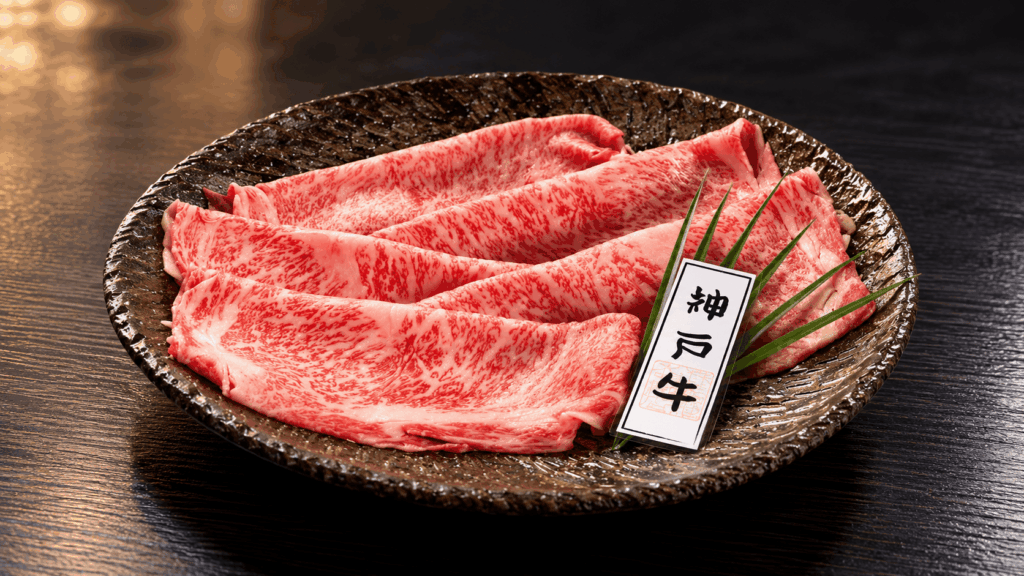
Where Kobe Beef Really Comes From
Despite the name, the story of Kobe Beef does not begin in Kobe. The brand name comes from the port city where the meat was historically traded and consumed, but the cattle lineage at the center of it comes from the Tajima region in northern Hyogo, hours away from Kobe.
The key figure is Tajiri-go, a Tajima bull born in 1939 in the Ojiro district of what is now Kami Town (香美町), deep in the mountains of northern Hyogo. Tajiri-go is widely cited as the ancestor of the vast majority of today’s Japanese Black cattle, the breed behind Japan’s major wagyu brands. In other words, the genetic foundation of Kobe Beef, and of much of Japan’s premium beef, traces back to this corner of the Tajima region, not to the city of Kobe itself.
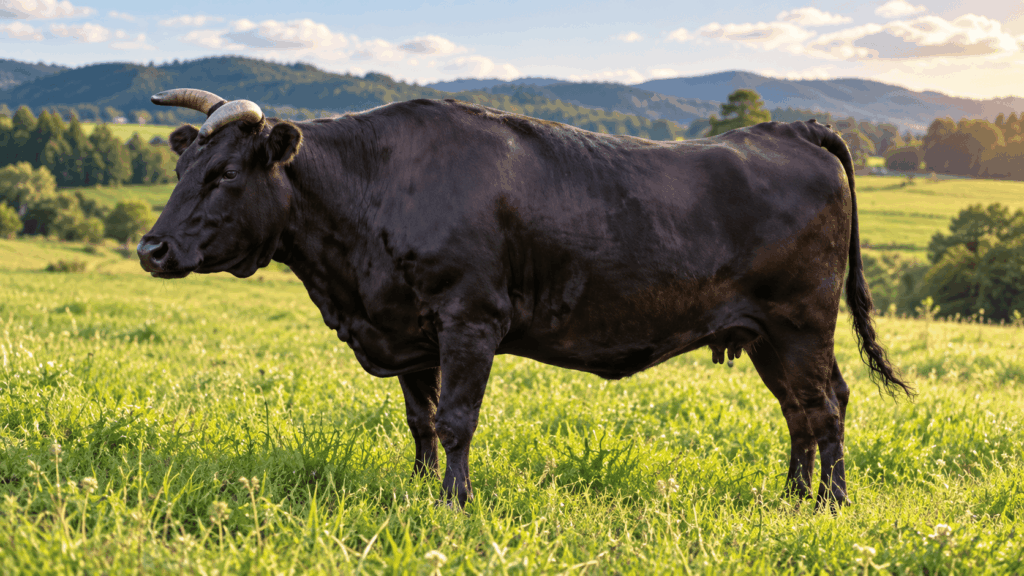
This is why the geography matters for travelers. Kinosaki Onsen sits in Toyooka City, inside the Tajima region, close to the farming areas where this lineage is still raised. Kobe, by contrast, is the branding and dining capital in the south of the prefecture, roughly two and a half hours away by limited express train. Understanding that split is what makes eating Tajima Beef in Kinosaki feel like the origin story rather than a substitute.
When I explain this background to visitors, the usual reaction is that ordering Tajima Beef in the Tajima region suddenly makes sense as its own experience. The Kobe name is not the destination; the cattle family is. Knowing that does not make Kobe Beef less worth eating — it just means the two names are not competing on the same level.
Is Kobe Beef Better Than Tajima Beef?
On certification, yes: Kobe Beef clears stricter thresholds for marbling (BMS No. 6 or higher), meat quality score (4 or above), and carcass weight while retaining the A-or-B yield requirement that also applies to Tajima Beef. But “stricter certification” is not the same as “a better meal for every diner.” Satisfaction at the table depends on the cut, the cooking, the individual animal, and your own preference for richness — not only on the certificate.
Take the brand I tried in Kinosaki. Tajima Gen (但馬玄, pronounced Tajimaguro) is a Tajima beef brand raised by Ueda Livestock in Kami Town. Its producer describes the fat as having a low melting point, similar to tuna belly, and that matched what I found when I tasted it: the fat seemed to dissolve quickly rather than coat the mouth, and a touch of wasabi brought out the sweetness of the meat. That is one brand, one meal, one palate — I would not generalize it to all Tajima Beef, let alone claim it “beats” Kobe Beef.
Reviews of high-end wagyu meals in both Kobe and Kinosaki show a consistent pattern: the higher the price, the higher the expectation, and diners who choose purely by brand name are the ones most likely to feel the value did not match the bill. The more useful question is not “which beef is objectively best?” but “what am I actually paying for?” With Kobe Beef you are paying partly for the certification and prestige. With Tajima Beef in the Tajima region, you are paying for local provenance and a direct link to the origin of the lineage.
Which Should You Choose: Tajima Beef or Kobe Beef?
Run your situation through this table instead of comparing price tags in the abstract.
| Your priority | Better fit | Why |
|---|---|---|
| I want the official Kobe name | Kobe Beef | The certification itself is part of the experience, and no local Tajima Beef carries the Kobe label |
| I am already staying in Kinosaki | Local Tajima Beef | You eat the origin lineage in its home region and avoid a roughly 2.5-hour detour to Kobe and back |
| I want the highest certification threshold | Kobe Beef | Kobe certification adds stricter marbling and meat-quality thresholds plus specific carcass-weight limits |
| I care more about local provenance than prestige | Tajima Beef at a transparent restaurant | Look for a menu that names the producer or brand, such as Ueda Livestock’s Tajima Gen at Irori Dining Mikuni |
| I want a lower-cost introduction to premium Tajima beef | Tajima Beef lunch options | Lunch sets in Kinosaki, including a limited beef cutlet set, sit well below typical Kobe dinner pricing |
| I want a guided food experience in Kobe | A small-group Kobe food tour | A guide handles restaurant choice, ordering, and authenticity concerns in one afternoon |
Choose Kobe Beef if:
- eating officially certified Kobe Beef is on your Japan bucket list
- the prestige and certification are part of the experience you want
- you are visiting Kobe anyway, so there is no extra journey
- price is secondary to ticking the box
Choose Tajima Beef if:
- you are visiting Kinosaki Onsen or northern Hyogo
- local provenance matters more to you than the Kobe label
- you want to understand where Kobe Beef actually comes from
- you can find a restaurant that clearly identifies the producer or the beef brand
When I am in Kinosaki with overseas visitors, I recommend eating Tajima Beef locally rather than treating it as a second-best substitute for Kobe Beef. That is not a judgment against Kobe Beef; it is a judgment about where you already are and what the local meal adds to the trip.
Where to Eat Tajima Beef in Kinosaki: Irori Dining Mikuni
If you want to eat clearly identified Tajima Beef in Kinosaki, the most concrete option is Irori Dining Mikuni (但馬牛いろりダイニング三國), which is promoted as the town’s Tajima beef specialty restaurant. Mikuni buys whole Tajima Gen cattle from Ueda Livestock, a Kami Town producer whose beef is available only in limited quantities. The restaurant’s current information says Tajima Gen production is around ten head per month. The restaurant is on the second floor of a building about a three-minute walk from Kinosaki Onsen Station.
Kai’s tip: When you scan menus for Tajima Beef in Kinosaki, the sign of a confident restaurant is transparency: the menu should tell you who raised the cattle, or at least name the brand. A generic “wagyu” or “A5 beef” label tells you almost nothing, because those terms describe grades, not origin. Mikuni naming Ueda Livestock and Tajima Gen on its menu is exactly the level of detail I would look for anywhere in this region.
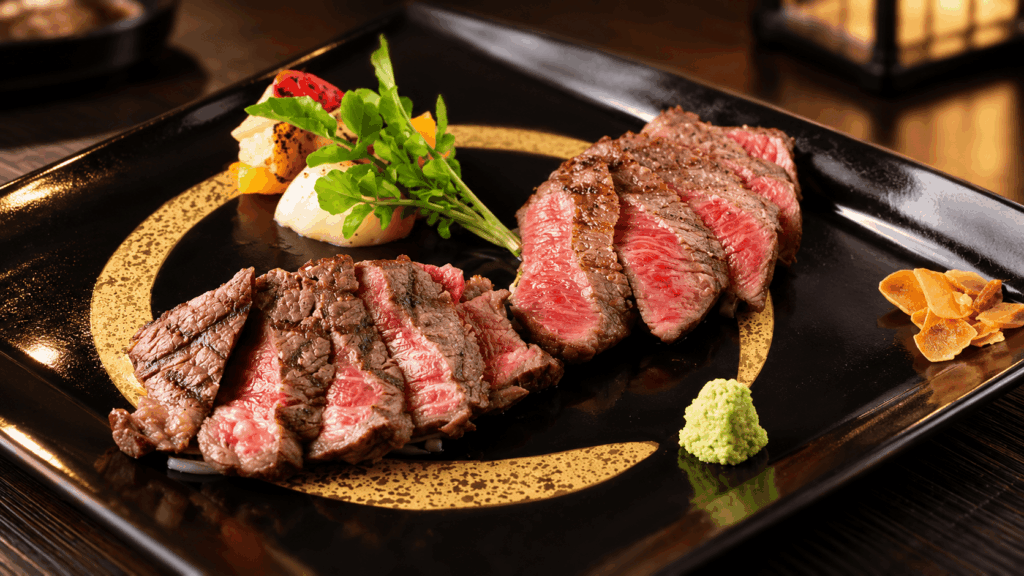
Steak or Beef Cutlet: What Should You Order?
Mikuni’s lunch menu splits into two practical paths: the steak sets and the limited beef cutlet set. On my visit with overseas guests, we arrived just after 11:00; my companion ordered the steak while I chose the cutlet, so I can describe both from that lunch.
- Tajima Gen Beef Cutlet Set (¥3,900, tax included; 20 servings a day): a crispy cutlet with the beef cooked rare-to-medium inside, served with salad, rice, and soup. The coating stays crunchy while the Tajima Gen fat does its thing underneath. This is the lower-cost way to taste the brand, though it is not a cheap lunch by ordinary standards — it is a budget relative to the steak, not a bargain meal.
- Tajima Gen Steak Sets: the prime rib (loin) steak set starts at about ¥7,500 for 100 g, with tenderloin and chateaubriand climbing well above that. If you want the beef itself front and center with nothing between you and the meat, this is the order. The fat is the point here, and it shows.
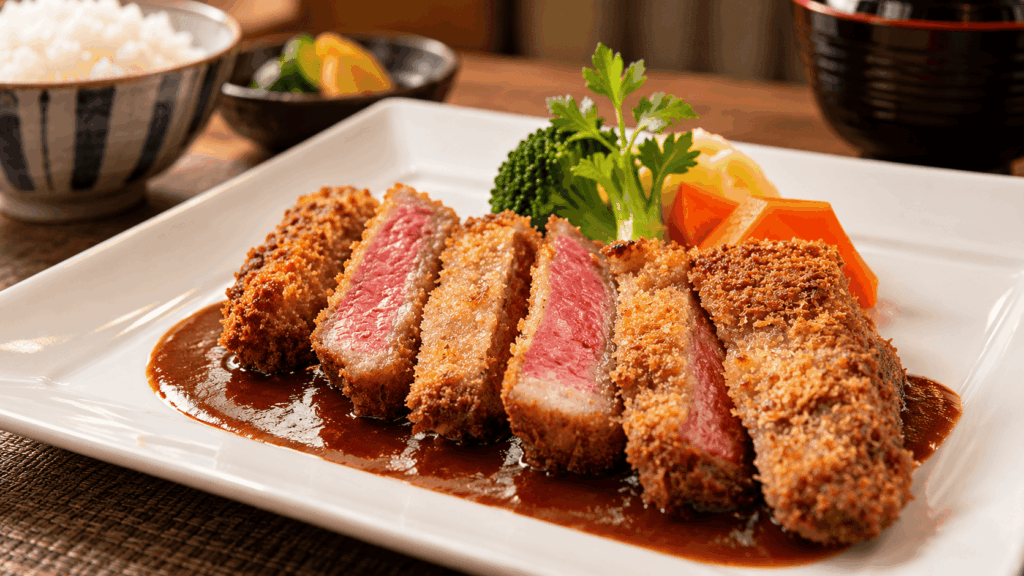
Between the two, the steak rewards diners who want the pure beef-and-fat experience, while the cutlet works well for a first taste of high-grade Tajima beef without committing to the most expensive plate. Both are served at lunch, so plan around the 11:00–14:00 window. As with any menu in Japan, prices and availability change, so check the official page before your visit.
When to Go and What to Know About Reservations
The catch with Mikuni’s lunch is the reservation policy. On weekends, national holidays, and peak periods — November through March, August, Golden Week, and Obon — lunch reservations are not accepted. Winter matters twice here: November to March is both the crab season that fills Kinosaki and the period when Mikuni stops taking lunch reservations. That leaves walk-in timing as the main strategy, which makes the opening hour your friend.
I have seen a queue forming before noon at Mikuni on a busy day, so I would not plan on casually walking in at 12:30 and being seated quickly. In practice, arriving just after the 11:00 opening has worked well for me, and the restaurant tends to be calm enough to feel like a proper break after a morning of walking the onsen town. Reviewers report the same two realities: the restaurant is popular and can be full, and some diners find the experience expensive relative to their expectations. Both can be true at once, which is exactly why arriving early and knowing the menu beforehand matters.
Kai’s tip: Treat the first 30 minutes after the 11:00 opening as your realistic walk-in window on no-reservation days, especially from November to March. If you arrive closer to noon, expect the possibility of a wait — and if a queue is already forming, decide before you commit whether the 20-serving cutlet is still likely to be available, because it sells out on busy days.
The Cafe Downstairs
One small detail that makes Mikuni convenient: the ground floor of the same building is CAFE & BAR 3RD, a cafe and bar run by the same group. On my visit, settling the bill included a discount coupon for the cafe downstairs, and I used it for a coffee after lunch — though I would not assume that coupon is still offered today. Even without it, the setup is handy if you need to sit out the midday crowd or wait for a train after a big lunch.
Is Tajima Beef in Kinosaki Worth Choosing Over Kobe Beef?
For many Kinosaki visitors, yes. Choosing Tajima Beef here is not “settling for a lesser brand.” The Tajima region is the home of the cattle lineage behind Kobe Beef, and eating a clearly identified Tajima brand in that region carries its own travel value: you are tasting the source rather than the marketing. I would not tell a Kinosaki visitor that Tajima Beef is the consolation prize.
The exception is clear: if the certified Kobe name itself is a bucket-list item for you, then no amount of local provenance in Kinosaki will substitute for it, and you should plan a Kobe meal. For travelers in that camp who also want to remove the guesswork around which restaurant is legitimate and what to order, a small-group culinary experience in Kobe handles the research, reservations, and authenticity checks in one guided afternoon. For everyone else already based in Kinosaki, the local Tajima Beef lunch is the more sensible use of your day.
If you fall into that camp — the certified Kobe name matters, but you would rather not research restaurants and navigate the meal on your own — this is the strongest one-booking option to compare.
Why I’d book this one
- The four-hour experience combines an English-speaking guide, a Nada sake stop, local context, and a teppanyaki Kobe Beef lunch rather than selling a restaurant reservation alone.
- Recent travelers consistently mention the guides’ explanations and translation support, with the food experience itself also standing out in the feedback.
- Free cancellation up to 24 hours in advance and reserve-now-pay-later make it relatively low-commitment while you finalise the rest of your itinerary.
How to Make Sure You Are Actually Eating Kobe Beef
Because Kobe Beef carries a price premium, authenticity anxiety is common — and justified. The most important fact to remember is that “wagyu” and “A5” are not the same as Kobe Beef. Wagyu is a broad cattle category, and A5 is a national carcass grade applied to many brands across Japan. Neither term guarantees the Kobe certification.
When you want certified Kobe Beef specifically, check for three things:
- The chrysanthemum seal used on officially certified Kobe Beef, together with the Kobe Beef certificate of authenticity.
- The bronze statuette displayed at designated retail stores and restaurants that are officially permitted to buy and sell Kobe Beef.
- The restaurant’s own claim: a serious Kobe Beef restaurant should state the certification plainly and, in many cases, name the producer — the same transparency test that applies to Tajima Beef in Kinosaki.
The association publishes details of its certification system, so when in doubt, checking the official Kobe Beef site before you book is the fastest way to confirm whether a restaurant is a registered seller. Reviews show that most disappointment comes from places that blur the line between “wagyu-style” and “certified Kobe” — a label check takes seconds and prevents an expensive mistake.
FAQ: Tajima Beef vs Kobe Beef
Is Tajima Beef the same as Kobe Beef?
Not exactly — it is more of a parent-and-child relationship. Tajima Beef is a certified regional brand of beef from Tajima-lineage cattle raised and processed in Hyogo Prefecture. Kobe Beef is the smaller category inside it: Tajima Beef carcasses that also clear stricter standards for marbling and meat quality plus specific weight limits. Every Kobe Beef is Tajima Beef, but only a portion of Tajima Beef ever becomes Kobe Beef.
Is all Tajima Beef Kobe Beef?
No — the relationship works the other way. Under the Kobe Beef Marketing & Distribution Promotion Association’s bylaws, Kobe Beef is selected from certified Tajima Beef and must satisfy the Kobe certification conditions: a meat quality score of 4 or above, BMS No. 6 or higher, yield score A or B, and specific carcass weight limits. Tajima Beef that does not meet those Kobe thresholds is still legitimate, certified Tajima Beef.
Is Kobe Beef better than Tajima Beef?
On certification thresholds, Kobe Beef is stricter, and that is verifiable. But certification is not the same as taste: the cut, the cooking, the individual animal, and your own preference for richness decide how good the meal actually is. A Tajima Beef lunch with clear provenance in the Tajima region can be a more meaningful food experience for many travelers than a Kobe-branded meal chosen blindly by name alone.
Where can you eat Tajima Beef in Kinosaki?
Irori Dining Mikuni (但馬牛いろりダイニング三國) is the most concrete choice: it specializes in Tajima beef and serves Tajima Gen from Ueda Livestock, about a three-minute walk from Kinosaki Onsen Station. Lunch runs 11:00–14:00, with a 20-serving Tajima Gen cutlet set at ¥3,900 and prime-rib steak sets from ¥7,500 for 100 g. On weekends, holidays, and peak periods including November–March, lunch is walk-in only, so arriving near opening is the reliable strategy.
Is Tajima Beef cheaper than Kobe Beef?
On average, Tajima Beef has cheaper entry points — the cutlet set at Mikuni is a clear example — and Kobe Beef generally carries a brand premium. But there is no fixed price gap, and premium Tajima Beef cuts can cost as much as Kobe Beef. Rather than assuming one is cheaper, compare actual menu prices for the cut and meal you want.
Final Verdict: Tajima or Kobe?
Choose Kobe Beef if the officially certified name is part of your Japan bucket list, you are visiting Kobe anyway, and price is secondary. In that case, a small-group culinary experience in Kobe makes sense: it solves the restaurant choice, the ordering, and the authenticity questions in one go.
Choose Tajima Beef if you are staying in Kinosaki Onsen or traveling through northern Hyogo, and you care more about where the beef comes from than what the label says. At Irori Dining Mikuni, that means Tajima Gen from Ueda Livestock, with the producer’s name printed right on the menu.
- For first-time visitors to Kinosaki: build the Tajima Beef lunch into your onsen day rather than a separate Kobe excursion. Go for the 11:00 opening, and if the 20-serving cutlet set is the goal, treat the early window as part of the plan.
- For travelers on a tight schedule: do not burn a half-day detour to Kobe just for the name. The lineage you would be chasing is from this region anyway. If certified Kobe Beef is essential and time is short, a guided Kobe experience concentrates the whole visit into one afternoon.
- For repeat visitors or food-focused travelers: skip the entry-level order and compare cuts — the steak sets at Mikuni let the Tajima Gen fat do the talking, and the tasting set (食べ比べ) shows how different parts of the same animal behave.
- For budget-conscious diners: the cutlet set is the realistic introduction, but understand that ¥3,900 is still a proper lunch, not a cheap one.
Same lineage, different certification level. Kobe Beef is the stricter certified subset of Tajima Beef, and Tajima Beef is not inferior by definition. When overseas visitors ask me the same question at the end of a trip, my answer is consistent: if you are already in Kinosaki, eat the Tajima Beef here and read the menu carefully — you are eating the source, not a substitute. Save the Kobe name for the trip where Kobe itself is the point.

Hi, I’m Kai. I’m a Tokyo-based travel writer, tourism industry insider, and the author of a published guidebook for international visitors to Japan. With over 10 years of professional experience at a leading Japanese tourism company, my mission is to help you skip the tourist traps and navigate Japan’s best destinations like a local. I believe the perfect day trip is like a traditional kaiseki meal: a beautiful balance of precise planning and unforgettable seasonal discovery. When I’m not out conducting field research, you’ll usually find me drafting new itineraries with one of my favorite fountain pens!