
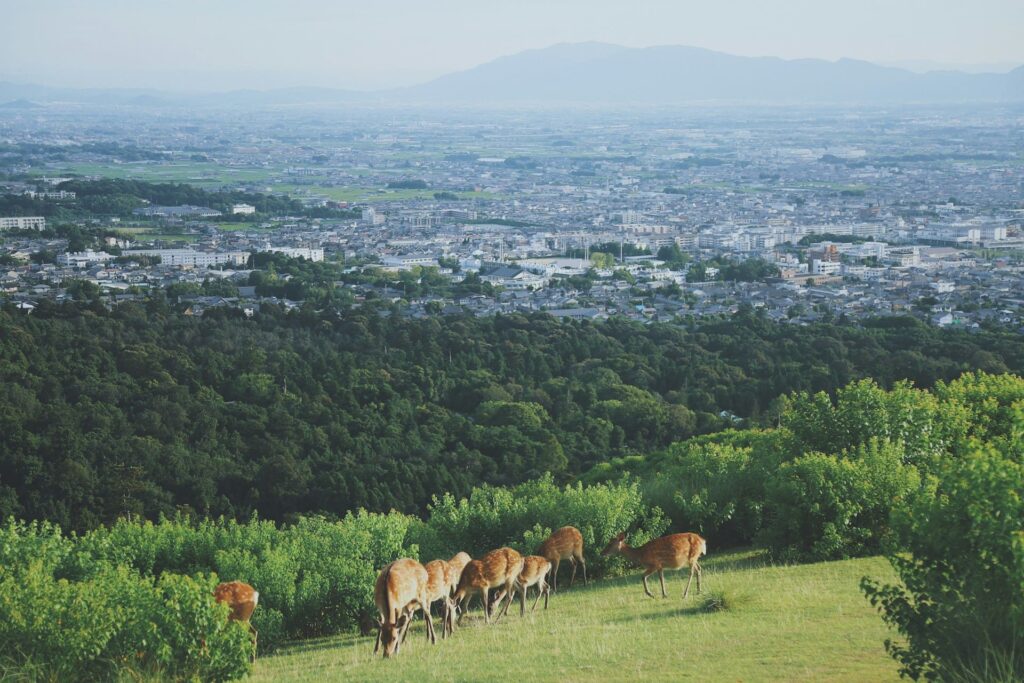
Mount Wakakusa is one of the easiest short hikes in Nara, with open grass-covered slopes, wide views over the city, and a trail that works well even for casual walkers. It is especially popular for late-afternoon views, but timing matters more than many visitors expect.
Quick Answer: The Mount Wakakusa hike is a short but steadily uphill walk from the edge of Nara Park. Allow roughly 20 minutes to the first tier (270 m) or 30–40 minutes to the third-tier summit (342 m), plus time for photographs and the descent. The walking route has a small admission fee and seasonal gate hours. For a quick panorama, stop at the first tier; for the widest views, continue through the second tier to the summit. Sunset requires more careful planning: the North and South Gates have different posted hours, a separate exit-only gate operates after 5 PM, and the summit can also be reached by road. Choose your route based on daylight, not sunset time alone.
Check availability for the Mount Wakakusa guided hike on GetYourGuide
Mount Wakakusa Hike at a Glance
- Location: Eastern edge of Nara Park, close to Todaiji Temple and Kasuga Taisha Shrine
- Summit elevation: 342 m (third tier); first tier 270 m; second tier 305 m
- Walking time: Roughly 20 minutes to the first tier, or 30–40 minutes to the summit, one way from the foot of the mountain; allow extra time for stops and the descent
- Difficulty: Easy to moderate for most regular walkers; steep sections and stairs make it unsuitable for strollers or wheelchairs on the standard trail
- Trail surface: Steps, firm dirt and grass-covered stretches; slippery when wet
- Walking-route admission: Adults (junior-high-school age and above) ¥150; children age 3 and older ¥80, according to Nara Prefecture’s park guide
- Posted North Gate hours: 9:00 AM–4:30 PM
- Posted South Gate hours: 9:00 AM–5:00 PM; the official map also marks an exit-only gate for departures after 5:00 PM
- Walking season: Normally the third Saturday of March through the second Sunday of December (March 21–December 13 in 2026), subject to special restrictions
- Other ways up: Direct hilltop bus (seasonal service), taxi or vehicle via Shin-Wakakusayama Driveway
Best for a quick view: The first tier, reached after a short but uphill walk.
Best for the full hike: The third-tier summit and its views across Nara.
Best sunset strategy: Check the date’s sunset time, choose a feasible viewpoint, and plan the descent or a road-access visit before leaving the city.
Common mistake: Treating the whole mountain as a freely accessible, 24-hour viewpoint or assuming the two hiking gates close at the same time.
Official references: Nara Prefecture’s visitor information and the official Mount Wakakusa walking map (PDF).
First, Second or Third Tier: How Far Should You Hike?
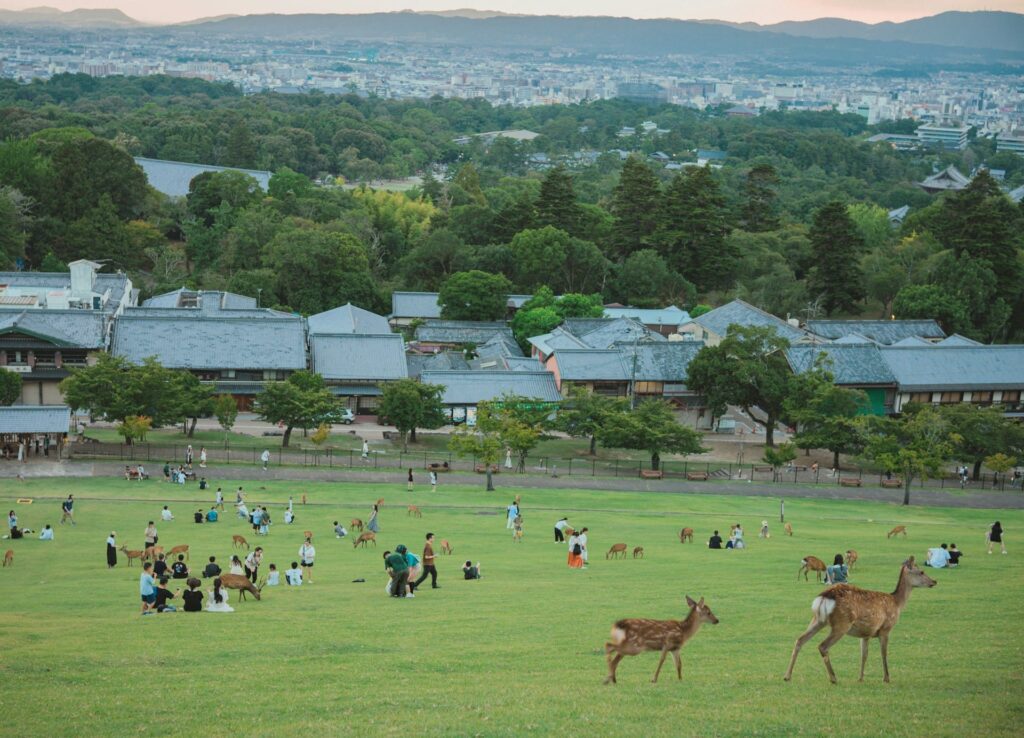
You do not need to hike all the way to the summit to enjoy Mount Wakakusa. One of the best things about this trail is that you can choose between a short, rewarding climb and a longer walk with a broader view.
Mount Wakakusa has three grassy tiers rather than a single viewpoint. The first tier is 270 m, the second 305 m and the summit (third tier) 342 m above sea level. These elevations are not the amount you climb: the trail starts well above sea level at the edge of Nara Park.
| Stop | Approximate one-way time from the base | Best reason to stop | What to consider |
|---|---|---|---|
| First tier (270 m) | About 20 minutes | Open grass and a rewarding city view with the shortest climb | Still uphill, with steps; sensible for families with walkers and tight schedules |
| Second tier (305 m) | Between first-tier and summit timings; allow extra time | An intermediate panorama and a chance to decide whether to continue | Less useful as a fixed time target; conditions and pace matter |
| Third tier summit (342 m) | About 30–40 minutes | The complete three-tier walk, a broad view of Nara and the Uguisuzuka burial-mound area | Requires additional uphill effort and enough daylight for the return |
Stop at the first tier if: you mainly want a beautiful viewpoint, have limited time, or need to preserve energy for more temple sightseeing.
Continue to the summit if: the weather is good, you have enough daylight and you want to experience the whole mountain rather than just its most accessible terrace.
What Is the Actual Walking Route?
From either foot-of-mountain entrance, follow the marked trail toward the first tier. The official map shows approximately 500 m from the South Gate to the first tier and 560 m from the North Gate to the first tier. From there, the path rises toward the second tier and then the third-tier summit. The official walking map is the best reference for the path junctions and protected areas: view the Mount Wakakusa hiking map (PDF).
Expect a sustained uphill stretch rather than a long mountain trek. The outward trip can feel short, but the descent is where loose dirt, steps, wet grass or tired knees become more noticeable. Do not run downhill or slide on the grass; the official map specifically prohibits sliding.
At the Summit: Uguisuzuka Kofun and the Wider View
Near the third tier is Uguisuzuka Kofun, a historic burial mound associated with the fifth century, according to Nara Prefecture. The hilltop opens out toward Nara City and the distant ridgelines. The view includes the broad Nara Park landscape and, when visibility is good, the city and Mt. Ikoma beyond it. Stay on permitted paths around the mound and protected sections.
Guided-hike option: The route is straightforward enough to do independently, but a guided Mount Wakakusa walk may suit visitors who would value interpretation of the scenery, local history and deer etiquette. Compare the actual meeting point, itinerary, entry-fee policy and schedule before booking.
When a guided hike is worth considering
- It matches the search intent: you are still hiking Mount Wakakusa, not simply being dropped at the summit.
- It reduces the small but real timing stress: a guide can help you manage the route, pace, and where to stop before the afternoon gets too late.
- Check the actual itinerary: verify whether the product includes all three tiers, whether entry fees are included and what happens if weather or closing times affect the hike.
Check availability for the Mount Wakakusa guided hike on GetYourGuide
| Option | Best for | What to check before booking |
|---|---|---|
| Guided Mount Wakakusa hike | Travelers who want to walk the trail with local context, deer etiquette, and help choosing the right pace | Start time, meeting point, group size, cancellation policy, and current price |
| Wakakusa Hilltop Bus | Travelers who want the summit view with less uphill effort, especially families or visitors saving energy | Operating dates, seat availability, departure station, return timing, and current price |
Can You See Sunset from Mount Wakakusa?
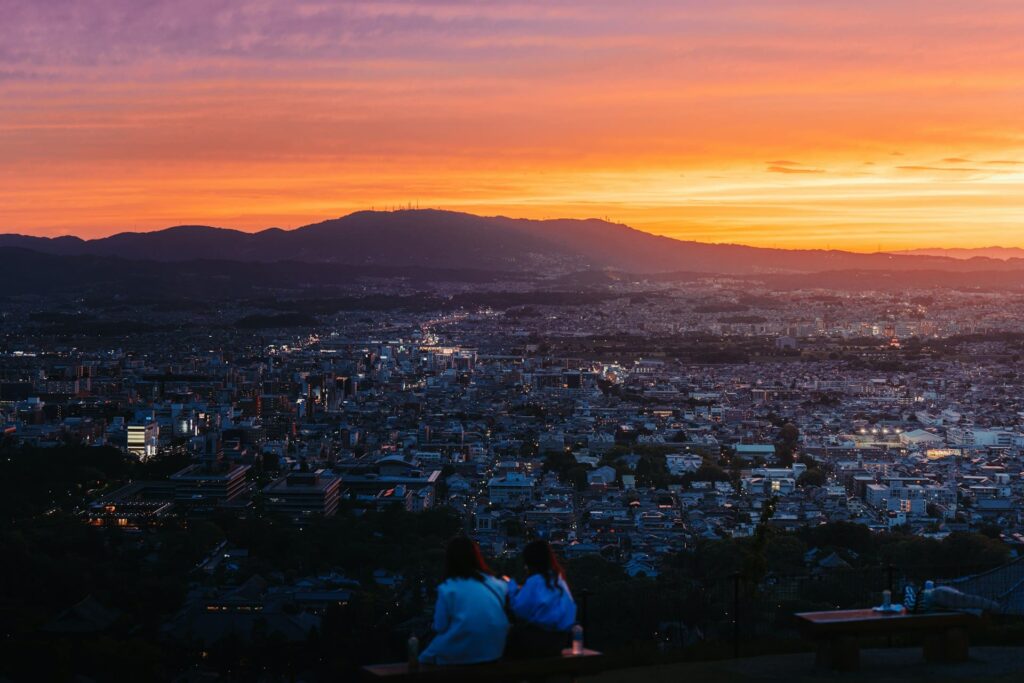
Yes—but the safest plan depends on how you reach the viewpoint and how you will leave. A great view of the western sky is possible from Mount Wakakusa, yet the walking trail and the road-access summit have different access arrangements.
Gate times are not identical: Nara Prefecture’s official walking map lists North Gate 9:00 AM–4:30 PM and South Gate 9:00 AM–5:00 PM. It also shows a separate exit-only gate and states that hikers can leave through it after 5:00 PM. That does not mean the walking trail is an unrestricted night hike, nor does it establish a guaranteed latest departure time. Follow the current signs and staff instructions when you visit.
That distinction matters because sunset varies considerably during the open season. On many spring and summer dates sunset is later than the posted opening hours, whereas in late autumn it occurs much earlier. Check the sunset time for Nara on your exact travel date and work backward from the full descent—not just the outward climb.
| What you want | Practical approach | Main limitation |
|---|---|---|
| Golden-hour city photos | Choose the first tier and aim to return while the path is clearly visible | Allow about 20 minutes uphill plus photo and descent time |
| A relaxed late-afternoon look | Consider the lower-slope sunset viewing point marked on the official map | It is a different experience from standing at the summit |
| Sunset from the summit | Consider a car or taxi via the Shin-Wakakusayama Driveway, subject to road access and weather | Driving has its own toll and operating rules; arrange the return journey |
| Full hike plus sunset | Enter early, reach your chosen tier with ample daylight, and confirm the exit arrangements locally | Do not improvise a steep, unlit downhill walk after dark |
Timing example: If you expect 20 minutes uphill, 20 minutes for photographs and at least another 20 minutes to descend, you already need roughly an hour at the mountain. For the summit, budget longer and leave a buffer for slow sections, crowds and deer on the path. These are planning allowances, not official gate deadlines.
Special Twilight and Night-View Bus (Autumn 2026)
For autumn 2026 only, the Nara City Tourism Association is running a separate, reservation-required Mount Wakakusa Twilight and Night-View Bus on October 31 and November 7, 14, 21 and 28, 2026. It departs JR Nara Station (East Exit, stop 4) at 4:10 PM and Kintetsu Nara Station (Nara Kotsu sightseeing-bus stop) at 4:15 PM. The published return fare is ¥2,000 per adult and ¥1,000 per child; advance booking is required. This is designed for the hilltop’s changing evening views and is not the ordinary daily Hilltop Bus.
On those same Saturdays, the regular Hilltop Bus fourth departure is suspended. Do not confuse the two schedules or assume a similar twilight service will run on other dates or in future years. Check the official autumn 2026 bus announcement and current booking status; cloudy or wet weather can limit the view, and severe weather can cancel the service.
Practical tip: A weather app’s sunset time is not the same as mountain access time. If you arrive late, do not rush the stairs to reach the summit. Choose a lower viewpoint, switch to road access when appropriate, or return earlier on another day.
Check before you go: Nara Prefecture’s official map for the gate and exit locations, and the driveway operator for road hours and tolls.
What to Expect on the Mount Wakakusa Hike
Unlike a forest trail, Mount Wakakusa is mostly open and grassy, so the route feels bright and scenic almost the entire way. The trail is well maintained and does not require special hiking gear, but the uphill sections and stairs can still feel tiring if you are wearing the wrong shoes.
- Wear sneakers or comfortable walking shoes: The path is easy to follow, but sandals are not ideal on the steeper sections.
- Expect a mix of surfaces: You will see paved walkways, dirt paths, and wooden stairs.
- Bring water in warmer months: The trail is exposed, and there is not much shade on the slope.
- Do not underestimate the climb: It is short, but it still feels like a real uphill walk.
Practical tip: Treat Mount Wakakusa as a short hike, not just a viewpoint stroll. The scenery opens quickly, but stairs and exposed slopes add up. Comfortable shoes with grip matter more than specialized hiking gear.
What to Pack, and What Facilities Are Available?
For most visitors, comfortable walking shoes, water, weather protection and a charged phone are enough. The broad grass slope has limited shade, so take heat and sun exposure seriously in summer. After rain, allow extra time on steps and dirt. If you are arriving late, bring a light but do not rely on a phone flashlight as a reason to plan a nighttime descent.
The official route map marks toilets around the foot-of-mountain gate area, while the Shin-Wakakusayama Driveway operator confirms that the summit car park has toilets and a drinks vending machine. These are not facilities at each hiking tier: use the toilet before starting and carry water for the climb rather than counting on a vending machine along the trail. Keep snacks secured around the deer.
Is the Hike Suitable for Children, Older Travelers or Strollers?
Children who are comfortable climbing steps may enjoy the first tier with frequent breaks. Older travelers should judge the trail by balance and knee comfort, not its modest distance alone. The standard hillside trail includes steps and uneven surfaces and is not stroller- or wheelchair-accessible. Travelers who need to minimize climbing should consider a hilltop bus or road-access vehicle instead. From the road-access summit car park, the driveway operator describes a roughly 300 m sloped walkway to the viewpoint that can be used with strollers and wheelchairs. This is distinct from the staircase hiking trail; visitors should still assess their own mobility needs, ground conditions and available assistance.
Deer on the Mountain
Yes, you may see deer on Mount Wakakusa too. Seeing them on the grassy hillside is one of the most memorable parts of the hike, but they remain wild animals and their behavior is not predictable. Give them space, do not block the trail, and avoid approaching too closely for photos, keeping the same safety and feeding rules in mind as you would down in the main park.
The deer are part of what makes the walk feel different from other short city hikes in Japan, but they are still wild animals. Do not wave food near your face, tease them with snacks, or stand between a deer and other walkers on the trail. Nara Prefecture specifically advises visitors not to chase or provoke deer and not to feed them anything other than approved deer crackers. Give animals room even if they approach you.
How to Get to Mount Wakakusa
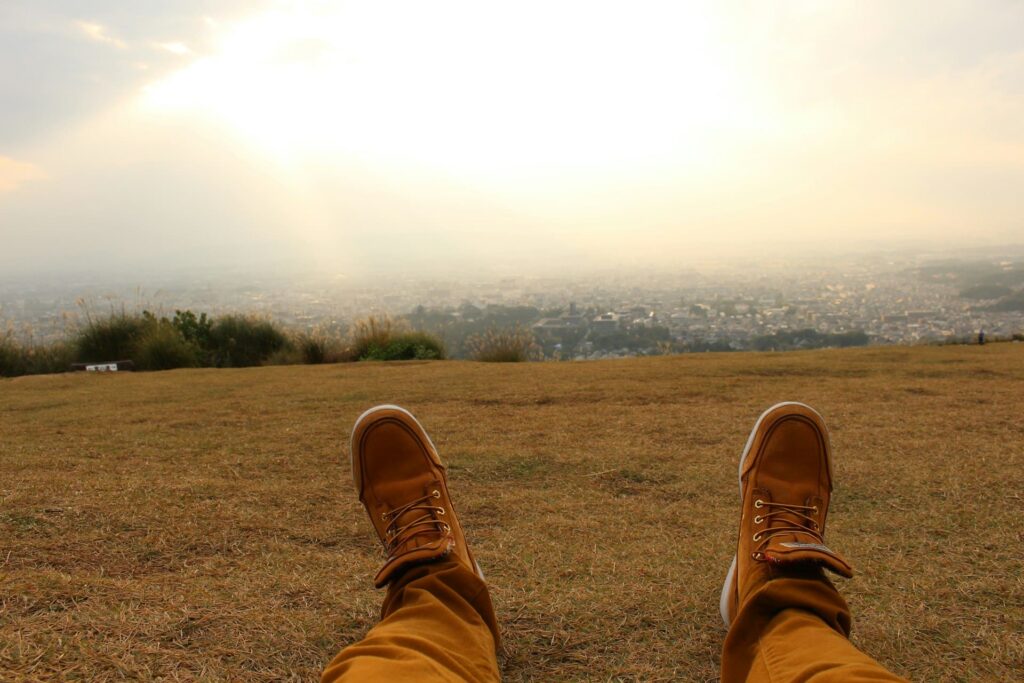
Mount Wakakusa is easy to add to a day in Nara because it sits close to the main sightseeing area around Nara Park. If you are already visiting Todaiji Temple or Kasuga Taisha Shrine, reaching the trailhead is straightforward on foot.
The mountain has two entrance gates, commonly referred to as the North Gate and South Gate. They are approximately 300 m apart at the base, according to Nara Prefecture. These are walking-trail entrances; they are not the parking-area entrance for the hilltop road.
From Kintetsu Nara Station or JR Nara Station
- From Kintetsu Nara Station: Approximately 30 minutes on foot to the base according to Nara Prefecture, depending on the route and sightseeing stops.
- From JR Nara Station: Take a local bus toward Nara Park, or allow a longer walk through central Nara. JR Nara is farther away than Kintetsu Nara; do not assume the same walk time.
- Useful local-bus stop: Todaiji Daibutsuden/Kasuga Taisha-mae (the English stop naming can vary). Nara Prefecture estimates around 10–15 minutes on foot from the bus stop to the foot of the mountain.
- Kasuga Taisha-bound bus: If a suitable service is running, its terminal can put you closer to the southern side; confirm the route and current stops first.
North Gate vs. South Gate
| Entrance | Better starting point for | Official map detail |
|---|---|---|
| North Gate | Visitors approaching from the Todaiji/Nigatsu-do side | About 560 m to the first tier; posted gate hours 9:00–16:30 |
| South Gate | Visitors approaching from the Kasuga Taisha side | About 500 m to the first tier; posted gate hours 9:00–17:00 |
Choose whichever gate works with your walking route through Nara Park. Do not walk to the North Gate late in the day expecting it to follow the South Gate’s schedule. If the day is busy, allow time to find the gate and buy admission.
Practical tip: Plan Mount Wakakusa after the major temple stops if you want soft afternoon light—but only when you can finish the hike safely before your chosen departure time.
If you are building a one-day Nara itinerary, Mount Wakakusa is easiest as the final major stop of the day—provided you arrive with enough time for both the ascent and descent. For updated access options, consult Nara Prefecture and Nara Kotsu.
Fees, Opening Hours, and Seasonal Closure
Before you go, make sure you check the basic entry rules. Mount Wakakusa is not an always-open public hill in the same way as the wider Nara Park area. Its paid walking slopes have a defined entry season and gate hours, while the vehicle-access summit has separate road rules.
- Walking admission (individual visitors): ¥150 for junior-high-school age and above; ¥80 for children age 3 and older. Nara Prefecture is the basis for these age groups; verify unusual concessions locally.
- North Gate: 9:00 AM–4:30 PM.
- South Gate: 9:00 AM–5:00 PM.
- Exit after 5:00 PM: The official map identifies an exit-only gate; observe on-site instructions and do not interpret this as permission for unrestricted nighttime hiking.
- Regular hiking season: Third Saturday of March to second Sunday of December, normally. For 2026 this calendar window is March 21–December 13.
- Outside the season: Do not assume you can enter through the paid hillside walking gates. The summit may still be accessible by the toll road depending on the road’s actual conditions and operating hours.
Road-access summit: Shin-Wakakusayama Driveway currently lists the Shin-Wakakusayama course as 5:00 AM–11:00 PM and the ordinary passenger-car toll as ¥700. The operator also notes that the exit gate closes at 1:00 AM. These are road hours and charges, not hillside hiking-gate hours or admission fees. From the car park, the driveway operator describes a roughly 300 m sloped walkway to the viewpoint and says strollers and wheelchairs can use it. It also lists toilets and a drinks vending machine at the parking area. This is a road-access option, not an indication that the paid hillside steps are accessible. Check for road closures, event restrictions or dangerous weather before traveling.
Season-edge warning: If you visit in March, December or around the January Wakakusa Yamayaki festival, check the current operational notices. The annual ceremonial burning of the hill does not mean the regular winter walking trail is open.
Official sources: Nara Prefecture admission and access, official gate map, and Shin-Wakakusayama Driveway hours and charges.
What Is the Best Season to Hike?
Spring: Fresh greenery and cherry blossoms in the greater Nara Park area make it a beautiful time to combine the hill with temples. The walking season normally begins in late March, so check the opening date before planning an early-March visit.
Summer: The open grass gives excellent views but little shade. Start earlier and bring plenty of water; daytime heat and late sunsets make a relaxed midday or rushed late-day summit attempt less attractive.
Autumn: Cooler temperatures, changing foliage and pampas grass make this a particularly comfortable season for a climb. Daylight shortens quickly, so allow more time for the descent than you think you need.
Winter: The normal paid hillside route closes for the off-season, but the road-access summit may remain an option if the operator permits access that day. Check snow, ice and temporary restrictions first.
How to Plan Mount Wakakusa into a Nara Day Trip
If you are putting together a Nara day trip itinerary, the easiest approach is to explore the main cultural sights first and save Mount Wakakusa for later in the afternoon. That gives you time to enjoy the temples, the park, and the shrine area before heading uphill for the view.
A simple order looks like this:
- Start with Nara Park and the deer area
- Visit Todaiji Temple
- Continue toward Kasuga Taisha Shrine
- Head to Mount Wakakusa in the late afternoon
- Enter before closing time and choose the first viewpoint or the summit based on your energy
This sequence is especially useful if you want to avoid rushing. It also helps if your main goal is to enjoy Mount Wakakusa as a scenic final stop rather than squeezing it in between larger attractions.
How Much Time Should You Allow?
| Time available at the mountain | Realistic plan |
|---|---|
| About 30 minutes | Enjoy the grass-covered base and nearby scenery; a first-tier round trip may feel rushed |
| About 60 minutes | Walk to the first tier, take photos and descend at a comfortable pace |
| About 90 minutes | Hike to the summit and return with modest photo stops if you keep a steady pace |
| Two hours or more | Explore the three tiers slowly, take a break at the summit and keep a comfortable safety margin |
The times above begin at the mountain entrance and exclude travel from the rail stations. They are flexible planning examples rather than promises; children, wet trails and frequent photographs add time.
Sample Nara Day Trip with Mount Wakakusa
Spend the morning exploring Nara Park and Todaiji, have lunch around the park, visit Kasuga Taisha in the early afternoon and then walk to the mountain entrance. If you are short on time, make the first tier your stopping point. On a day when you want the summit, trim another sightseeing stop or arrive earlier. Check the gate schedule before committing to a late-afternoon plan.
If the hiking gates have already closed, do not try to enter through a different route unofficially; consider the summit by road or save the trail for another day.
For a more structured day, it can make sense to cover the major temple and deer park sightseeing with a guide first, then keep the late afternoon flexible for Mount Wakakusa.
Helpful option: For fewer moving parts, compare an English guided bus option that includes Nara Park, Todaiji, Kasuga Taisha, and Mt. Wakakusa before finalising your route. This is better for travelers who want a packaged sightseeing day rather than a mountain-focused hike.
Should You Hike Independently, Join a Guided Hike, or Take the Bus?
There is no single best choice for every traveler. The right option depends on whether your priority is the walk, the view, or a low-stress Nara sightseeing day. The most useful new choice is a direct summit bus followed by a walk downhill, so you can enjoy some hiking without the full ascent.
| Choice | Best for | Considerations |
|---|---|---|
| Independent hike | Travelers who enjoy walking and want the lowest-cost, most flexible route | Pay hillside admission; allow daylight and time for both directions |
| Guided Mount Wakakusa hike | Travelers wanting local interpretation, route context and a set meeting point | Check route coverage, start time, included fees and return arrangements |
| Direct hilltop bus, return by bus | Families, non-hikers, travelers saving energy | Approximately 45 minutes at the summit; must catch the designated return bus |
| Hilltop bus up, walk down | Visitors who want the scenery and a downhill mountain walk but not the climb | The paid hillside descent requires separate admission (¥150 adult / ¥80 child); check trail opening, exit arrangements and daylight. The bus ticket is not discounted if you skip the return ride |
| Taxi or car via driveway | Flexible summit timing, road-access sunsets or visits outside the paid walking season | Toll-road fees, operator hours, parking and potential closures |
2026 Wakakusa Hilltop Bus: Dates, Fare and Booking
Nara Kotsu launched its regular 2026 Wakakusa Hilltop Bus service on April 1. The published season runs through December 12, 2026, normally with four daily departures from JR Nara Station (East Exit, stop 4) and the Kintetsu Nara Station sightseeing-bus stop. The 2026 fare is ¥2,000 for ages 12+ and ¥1,000 for ages 6–11. It is sold as a round-trip excursion even if you choose to get off at the summit and walk down.
The scheduled summit stay is about 45 minutes. JR Nara departures are listed at 10:05, 12:05, 14:05 and 16:05, with Kintetsu departures five minutes later. Importantly, the fourth service is suspended on Saturdays from October 31 through November 28, 2026. The 2026 service calendar is not a promise for future years.
Walking down from the summit: Nara Kotsu expressly states that entering the hillside hiking trails requires a separate ¥150 adult / ¥80 child admission fee, in addition to the Hilltop Bus fare. Make sure the trail is open and that you can descend safely within the access arrangements; the bus booking does not override the walking gates or seasonal closure.
Passengers who choose to hike down can use an included local-bus ticket for the journey from the Todaiji Daibutsuden/National Museum area to the Nara stations; check the conditions at booking. Reservations are generally recommended, with walk-up seats possible if available. If you miss the specified bus back from the summit, do not assume a later one will accept you. See the official English Hilltop Bus details.
Drive or Take a Taxi to the Summit
If you only want the summit panorama rather than the trail, the Shin-Wakakusayama Driveway is the other main approach. Nara Prefecture describes a short walk of about five minutes from the summit car park. At the time of this update, the driveway operator lists ¥700 for an ordinary passenger car on the Shin-Wakakusayama course and hours of 5:00 AM–11:00 PM, subject to change and special closures. A return taxi must be arranged with the driver or operator; do not assume taxis will be waiting at the viewpoint.
Choosing between paid options: If you specifically want local interpretation during the walk, a guided hike is worth comparing. If you mainly want the summit panorama with less uphill effort, the hilltop bus or a taxi is more relevant. The standard independent hike remains an excellent choice for most reasonably mobile visitors.
Check the latest time, price, and availability for the Mount Wakakusa guided hike on GetYourGuide
Frequently Asked Questions
How hard is the Mount Wakakusa hike?
The hike is easy to moderate. The trail is short and well maintained, but it still includes uphill sections and stairs. Many casual walkers can reach the first tier, but the steep portions and downhill steps can be challenging for people with knee pain or balance issues.
How long does the Mount Wakakusa hike take?
Nara Prefecture estimates about 30–40 minutes from a base gate to the summit, and the official map suggests about 20 minutes to the first tier. Allow additional time for photos, rest stops and descending; a comfortable summit visit can take about 90 minutes or more in total.
Can you hike Mount Wakakusa in winter?
The regular paid hillside hiking route is generally closed outside the third-Saturday-in-March to second-Sunday-in-December season. The road-access summit is a separate option and may still be accessible by vehicle, depending on weather, event restrictions and the driveway operator. Do not assume winter walking-gate access.
Do you have to pay to hike Mount Wakakusa?
Yes. There is a small fee for the paid hillside walking route: Nara Prefecture lists ¥150 for junior-high-school age and older and ¥80 for children age three and up. Vehicle access to the hilltop instead uses a separately charged toll road; do not confuse the two.
Is the first viewpoint enough, or should you go to the summit?
For many travelers, the first tier is enough. It offers open city views after a shorter climb; the second tier is an intermediate stop, and the 342 m third tier is best for the complete mountain walk and broadest viewpoint. Your remaining daylight matters more than trying to reach every marker.
Is Mount Wakakusa worth it if you only have one day in Nara?
Yes, as long as you plan your timing well. It is one of the easiest scenic add-ons to a Nara itinerary because it sits close to the main sightseeing area. The key is not leaving it too late if you want to enter before closing time.
Can you see deer on Mount Wakakusa?
Yes, deer often appear on and around Mount Wakakusa, although sightings are never guaranteed. Keep a respectful distance, avoid crowding them for photos, and follow the same basic deer safety rules you would use in Nara Park.
Can you stay on Mount Wakakusa after 5 PM for sunset?
The official map identifies an exit-only gate that can be used after 5 PM. It does not make the paid walking area an unrestricted nighttime trail. Confirm on-site instructions and make your own safe descent plan; the North and South Gates have different posted hours.
Can you reach the summit without hiking?
Yes. The direct Wakakusa Hilltop Bus serves the summit during its published operating season, and a car or taxi can use the toll driveway. The bus service has specific departure dates and return arrangements; a taxi needs a confirmed return plan.
Is Mount Wakakusa suitable for strollers or wheelchairs?
The usual paid hiking route has stairs and uneven ground and is not suitable for strollers or wheelchairs. However, the driveway operator says the approximately 300 m sloped route from the summit parking area to the viewpoint can be used with strollers and wheelchairs. Check on-site conditions and your own mobility needs; that statement does not apply to the stepped hiking trail.
Is there a toilet or a place to buy water on the hike?
The official map shows facilities near the base, and the driveway operator confirms toilets and a drinks vending machine at the summit parking area. Neither is a guarantee of water or toilets on each hillside tier. Carry enough water for the walk.
Which gate is closer to Todaiji or Kasuga Taisha?
The North Gate is generally more convenient when approaching from Todaiji and Nigatsu-do, while the South Gate suits the Kasuga Taisha side. They are about 300 m apart at the foot of the hill, and their posted closing times differ.
Final Verdict
The Mount Wakakusa hike is one of the best short outdoor experiences in Nara for travelers who want a view without committing to a long or technical mountain trail. It is easy to reach, rewarding even if you only go partway, and especially appealing if you want a peaceful break from the busiest areas of Nara Park.
If you are short on time, head to the first viewpoint. If you want the full experience, continue to the summit. If your goal is a Wakakusa sunset, choose your viewing spot and exit plan first: the North and South Gates have different hours, an exit-only gate is marked for departures after 5 PM, and the summit is also accessible by road.
For most travelers who enjoy walking, an independent hike is the simplest and least expensive way to experience the slopes. A guided hike can add local context; the hilltop bus or a road-access visit is preferable when the viewpoint matters more than the climb.
See current availability for the Mount Wakakusa guided hike on GetYourGuide
Once you finish, it is a quick walk back down toward the city center to grab dinner or explore the area at night.

Hi, I’m Kai. I’m a Tokyo-based travel writer, tourism industry insider, and the author of a published guidebook for international visitors to Japan. With over 10 years of professional experience at a leading Japanese tourism company, my mission is to help you skip the tourist traps and navigate Japan’s best destinations like a local. I believe the perfect day trip is like a traditional kaiseki meal: a beautiful balance of precise planning and unforgettable seasonal discovery. When I’m not out conducting field research, you’ll usually find me drafting new itineraries with one of my favorite fountain pens!