
Cycling in Nara is one of the easiest ways to cover more ground in less time, especially if you want to move between the station area, Nara Park, Todaiji, and Kasuga Taisha without relying on crowded buses.
Quick Answer: For most visitors, cycling in Nara is worth it, but an E-bike is the better choice if you plan to go beyond the flat central area. Choose a DIY bike rental if you want the cheapest option and do not mind navigating on your own. Choose a guided E-bike tour if you want the easiest half-day experience with no parking stress, no route planning, and more local insight.
- Best for budget travelers: DIY bike rental
- Best for convenience: Guided E-bike tour
- Best bike type for most visitors: E-bike
- Biggest DIY drawback: Finding legal bicycle parking at each stop
- Time needed for the main highlights: About 3.5 to 4 hours by bike
Short on time? Book the E-Bike Nara Highlights Tour if you want an English-speaking guide, an included E-bike, and a smoother way to visit Nara’s top sights without dealing with navigation or parking.
Bike Rental vs. Guided E-Bike Tour in Nara
If you are deciding how to explore Nara by bike, the real question is not whether cycling is enjoyable. It is which option fits your time, budget, and tolerance for logistics.
| Feature | DIY Bike Rental | Guided E-Bike Tour |
|---|---|---|
| Typical cost | Approx. 1,000-2,000 JPY per day | Approx. 13,500 JPY for 3.5 hours |
| E-bike availability | Not always guaranteed | Yes |
| Navigation | You plan your own route | The guide leads the way |
| Bike parking | You must find legal parking yourself | The guide handles the stops and logistics |
| Cultural context | Minimal unless you research in advance | Included through the guide and curated stops |
| Best for | Independent travelers on a budget | Visitors who want the easiest and most informative option |
Choose a DIY rental if: you want the lowest cost, feel comfortable using maps, and do not mind spending extra time on parking and route planning.
Choose a guided E-bike tour if: you want a smoother half-day, guaranteed electric assist, and a more relaxed way to see Nara’s highlights.
Why an E-Bike Makes a Big Difference in Nara
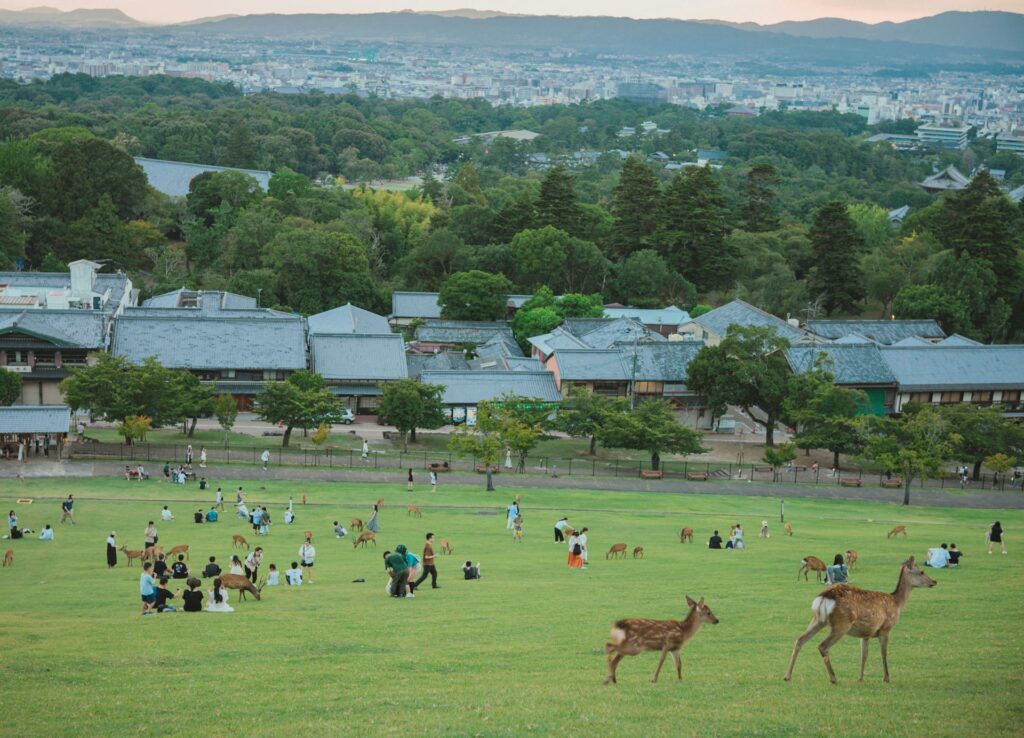
Nara often looks flat on the map, and the area near Kintetsu Nara Station, JR Nara Station, and the approach toward Todaiji can feel easy enough on a standard city bike.
However, the route becomes more tiring as you continue east toward Kasuga Taisha Shrine and the area around Mount Wakakusa, a popular spot to hike for sunset views. The climb is not dramatic, but it is a long and steady incline that can wear you down faster than many first-time visitors expect.
That is why an E-bike is highly recommended for most travelers. It turns a ride that can feel sweaty and slow on a regular bike into a much easier sightseeing day, especially in warmer weather or on a tight schedule.
Is Cycling in Nara Worth It?
Yes. Nara is compact enough for cycling to feel practical, but spread out enough that walking between major sights can become tiring. A bike helps you move faster between the station area and the main attractions while giving you more flexibility than a bus.
It is also a good way to explore at your own pace. You can stop when you want, take quieter side streets, and avoid some of the crowding that often builds up on public transport heading toward the same famous spots.
Option 1: DIY Bike Rental
If you prefer complete independence and want to keep costs low, renting a bike in Nara on your own is the most straightforward option. Rental shops are easy to find around Kintetsu Nara Station and JR Nara Station.
- Standard city bikes: Usually around 1,000 JPY for the day
- E-bikes: Usually around 1,500-2,000 JPY per day, depending on availability
- Bike share: You can also use the Docomo Bike Share system, which uses red electric bikes and requires app registration
The biggest advantage is price. The biggest drawback is logistics. If you rent on your own, you will need to check routes, watch the terrain, and find designated bicycle parking each time you stop near a major attraction.
Best for: Budget travelers, confident navigators, and visitors with flexible schedules.
Less ideal for: Travelers on a short day trip, anyone who wants guaranteed E-bike availability, or visitors who do not want to think about parking rules throughout the day.
Option 2: Guided E-Bike Tour
If your goal is to see the highlights efficiently without worrying about navigation, parking, or whether a rental shop still has E-bikes left, a guided tour is the easier choice.
The E-Bike Nara Highlights Tour combines cycling with local context, so the experience feels more like a well-planned half-day outing than a self-managed transport solution. Over roughly 3.5 hours, you can cover key sights such as Nara Park, Todaiji Temple, and Kasuga Taisha Shrine while following a more efficient route.
Another advantage is that the tour adds experiences independent travelers often miss, including cultural stops that make the day feel more distinctive than simply riding between landmarks.
Best for: Travelers who want a stress-free half-day, guaranteed electric assist, and more historical and cultural context along the way.
Less ideal for: Travelers whose main priority is spending as little as possible.
➔ Check Availability for the E-Bike Nara Highlights Tour
Practical Tips for Cycling in Nara: Parking, Rules, and Deer
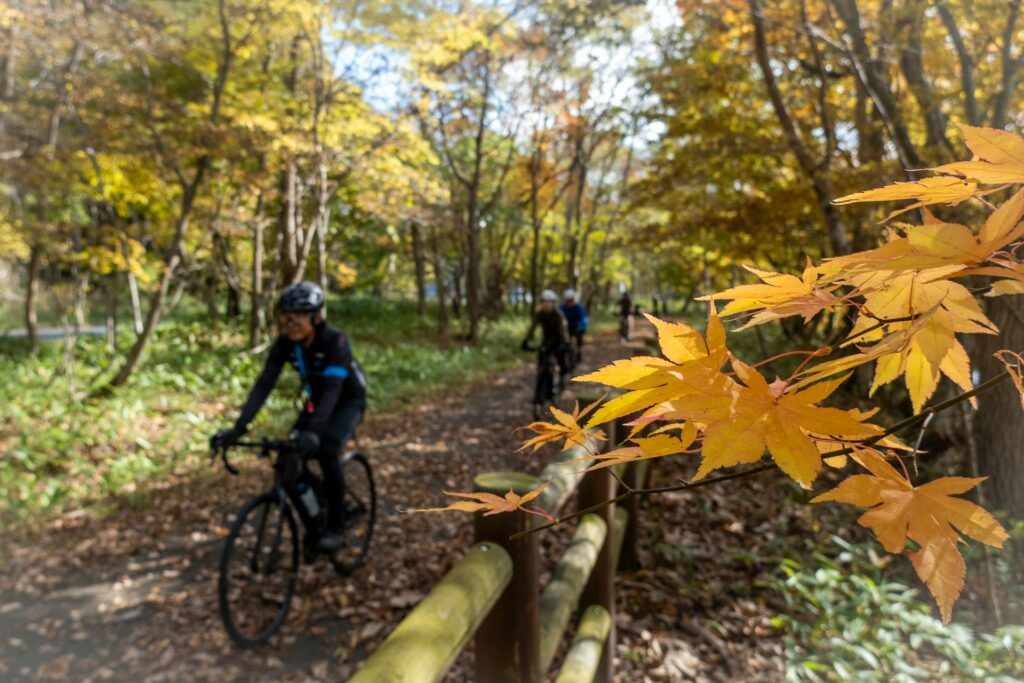
If you choose a DIY bike rental, the most important thing to understand is that bike parking in Nara is not casual. You cannot simply leave your bike near a temple gate, on a sidewalk, or against a fence and assume it will be fine.
- Use designated bicycle parking only: Look for marked bicycle parking areas near major sights. This is especially important around popular places such as Todaiji Temple, Kasuga Taisha Shrine, and station areas.
- Do not leave your bike outside historic sites: Even if it seems convenient, parking in the wrong place can create problems and waste time.
- Ride on the left: In Japan, bicycles follow the same left-side traffic flow as other vehicles.
- Yield to pedestrians: On shared or permitted sidewalks, people on foot always have priority.
- Watch for deer at all times: Deer in Nara Park move unpredictably and may suddenly cross paths or stop in front of you. Be sure to check the rules for safely feeding and interacting with them before you go.
A guided E-bike tour removes most of this friction. That is one reason it appeals to visitors who want to enjoy cycling in Nara without constantly checking maps, signs, and parking locations.
How Long Does It Take to Cycle Around Nara?
For most first-time visitors, 3.5 to 4 hours is enough to cover the main highlights by bike at a relaxed pace. That usually includes the station area, Nara Park, the area around Todaiji Temple, and Kasuga Taisha Shrine.
If you also want to explore more slowly, stop for lunch, or continue into the Naramachi district, it is better to allow a full day. (For a step-by-step route and planning tips, see our Nara day trip itinerary.)
A typical route feels most manageable in this order:
- Start near Kintetsu Nara Station or JR Nara Station
- Cycle toward Nara Park
- Visit the Todaiji area
- Continue toward Kasuga Taisha Shrine
- Return via the park or extend the ride toward Naramachi
This is also why electric assist helps so much. The route is not extreme, but it becomes noticeably easier once you go beyond the flattest central area.
Frequently Asked Questions
Is Nara flat enough for a regular bike?
Not completely. The central area around the stations is fairly easy, but the ride becomes more tiring as you head farther east. A regular bike can work, but an E-bike is the more comfortable choice for most visitors.
Can you cycle inside Nara Park?
You can ride on public paved paths in and around Nara Park, but you must slow down, watch for pedestrians, and be extremely careful around deer. At major temple and shrine areas, you will usually need to park your bike and continue on foot.
Is a guided E-bike tour worth it in Nara?
Yes, especially if you are visiting on a short schedule or want a simpler experience. It costs more than renting a bike yourself, but it saves time on navigation, reduces parking stress, and adds local context that independent travelers often miss.
Where should I rent a bike in Nara?
Most visitors rent near Kintetsu Nara Station or JR Nara Station. Those areas are the most convenient starting points for reaching Nara Park and the main sightseeing route.
What is the biggest downside of renting a bike yourself?
The main downside is not the riding itself. It is the extra effort involved in navigation, checking where you can legally park, and making sure you do not lose time at each stop.
Final Choice: Should You Rent a Bike or Book a Tour?
Choose a DIY bike rental if you want the cheapest way to go cycling in Nara, are comfortable navigating on your own, and do not mind handling parking and route decisions throughout the day.
Choose a guided E-bike tour if you want the easiest and most efficient half-day option, especially if this is your first visit, you want guaranteed electric assist, or you would rather focus on the experience than the logistics.
For many travelers, that convenience is what makes the difference. Instead of treating the bike as something you need to manage, a guided tour lets you use it as the easiest way to enjoy Nara’s main sights.
Want the smoothest way to explore Nara by bike?
➔ Book the E-Bike Nara Highlights Tour here

Hi, I’m Kai. I’m a Tokyo-based travel writer, tourism industry insider, and the author of a published guidebook for international visitors to Japan. With over 10 years of professional experience at a leading Japanese tourism company, my mission is to help you skip the tourist traps and navigate Japan’s best destinations like a local. I believe the perfect day trip is like a traditional kaiseki meal: a beautiful balance of precise planning and unforgettable seasonal discovery. When I’m not out conducting field research, you’ll usually find me drafting new itineraries with one of my favorite fountain pens!