
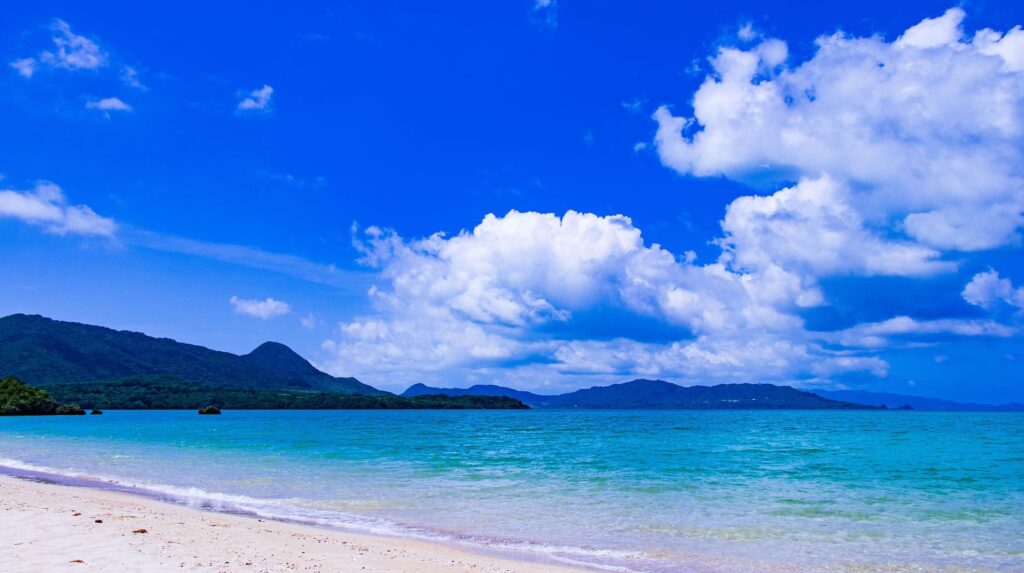
Getting from Tokyo to Ishigaki Island is one flight — but the decisions that actually catch travelers out happen after you land. This guide covers the whole route in one place: choosing between Haneda, Narita, and a Naha connection; getting from New Ishigaki Airport to the ferry terminal; and whether you can realistically hop to Taketomi or Iriomote on the same day.
If you’re staying on Ishigaki: If you want to avoid piecing together a rental car, taxis, and sightseeing after you land, check current pickup details, start times, and recent traveler reviews for this private English-guided Ishigaki tour. Airport or accommodation pickup can make it especially relevant on arrival day.
How to Get to Ishigaki Island: The Short Answer
From Tokyo, a direct flight to New Ishigaki Airport (Painushima Ishigaki Airport, ISG) is the easiest option — no connection through Naha required. Haneda is usually the most convenient departure point, with JAL and ANA flying direct in around 3 hours. Narita also has direct flights on Peach, though they are seasonal. Connecting through Naha makes sense mainly when the direct flights don’t fit your budget or schedule.
After landing, don’t choose your airport transfer on price alone. The bus (¥550 one way, as of August 2026) is perfectly reasonable if you’re traveling light. With a large suitcase, several travelers, or a tight ferry connection, the direct bus or a taxi is worth the extra convenience.
- Fly: Haneda direct (JAL or ANA, around 3 hours) is the simplest choice for most travelers. Narita direct flights on Peach are seasonal. Connecting through Naha is the third option, useful mainly when direct flights don’t fit your budget or dates.
- Get from the airport: Buses to the city and ferry terminal cost ¥550 one way (as of August 2026); a taxi runs around ¥3,500 and takes about 25 minutes.
- Connect to another island: For a same-day ferry to Taketomi (about 15 minutes) or Iriomote (40–50 minutes), leave at least two hours between landing and the ferry departure.
First, Clear Up a Geography Misconception: Ishigaki Is Not Near Naha
Ishigaki Island sits about 400 km (250 mi) southwest of Naha on Okinawa’s main island. It’s part of the Yaeyama Islands, the southernmost populated corner of Japan — and there is no passenger ferry linking mainland Japan or Okinawa’s main island to Ishigaki. Flying is the only realistic option for visitors coming from Tokyo.
The one exception worth knowing about is Yaima Line, an international passenger ferry between Keelung in Taiwan and Ishigaki that began service in May 2026. It sails overnight, roughly a few times a month, and is aimed at travelers coming from Taiwan — so for most readers of this article it won’t change your plan, but it’s why you may see “ferry to Ishigaki” mentioned online.
The mistake I see most often in travel forums is people assuming Ishigaki is a short hop from Naha, the way Miyako or the Kerama Islands are. It isn’t: the flight from Naha takes about an hour, and for most visitors from Tokyo, flying straight to Ishigaki beats routing through Okinawa’s main island.
Flying to Ishigaki: Your Flight Options from Tokyo
Haneda (HND) Direct Flights: JAL and ANA
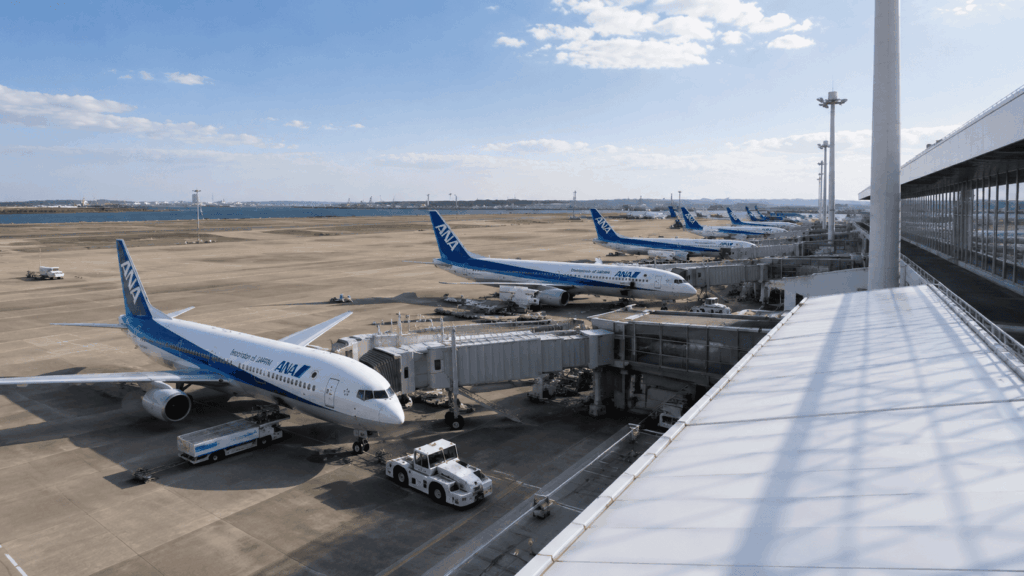
JAL and ANA both operate direct flights between Tokyo’s Haneda Airport and New Ishigaki Airport. The flight takes around 3 hours, and there are typically 3–4 departures a day, with the first leaving in the early morning (from around 6 a.m.) and the last in the early afternoon. Schedules vary by season, so confirm the current timetable when you book.
Haneda is usually the most convenient departure point from Tokyo: it’s close to central Tokyo, and the direct flight means no connection to worry about. Fares vary a lot by season and how far ahead you book, so I won’t quote a number here — just don’t assume the direct flight is automatically expensive.
Narita (NRT) Direct Flights: Peach
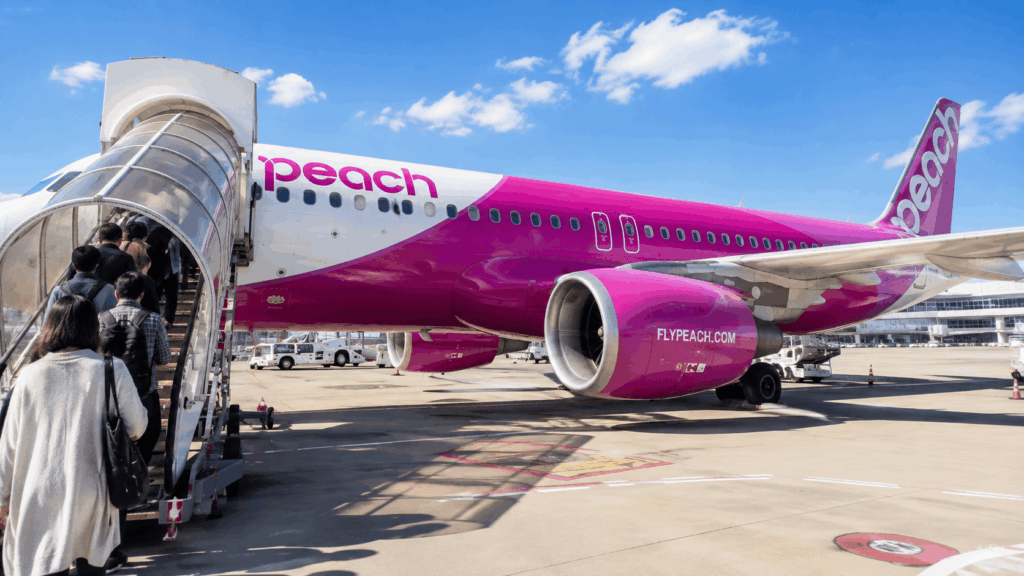
Peach flies direct from Narita to Ishigaki, taking around 3 hours 20–35 minutes. These flights are seasonal rather than year-round — the winter schedule (late October 2026 to late March 2027) includes them, but departure days vary by season.
Because Peach is a low-cost carrier, compare the total cost rather than the base fare: baggage fees, seat selection, and payment method all add up. If the all-in fare is significantly cheaper than the Haneda options, the Narita direct flight can make sense — just add up the extras before you compare.
Connecting Through Naha (OKA): When It Makes Sense
You can also fly from Tokyo to Naha and connect to Ishigaki on JTA, RAC, ANA, or Solaseed Air. This adds at least a couple of hours and a second flight to your day, so treat it as the third option — useful when direct flights don’t fit your budget or your dates, not as the default.
| Route | Airlines | Flight time | Frequency | Best for |
|---|---|---|---|---|
| Haneda → Ishigaki (direct) | JAL, ANA | Around 3 hours | Roughly 3–4 daily, varies by season | Most travelers; the simplest option from Tokyo |
| Narita → Ishigaki (direct) | Peach | Around 3h20–3h35 | Seasonal; departure days vary | Budget-conscious travelers when the all-in fare beats Haneda |
| Tokyo → Naha → Ishigaki (connection) | JTA, RAC, ANA, Solaseed Air | 5+ hours total | Multiple daily options | When direct flights don’t fit your budget or dates |
One thing I’d flag from years of watching travelers plan Yaeyama trips: seats on the direct flights to Ishigaki go faster than people expect, especially in summer and around Japanese holidays. Once your dates are firm, booking early beats hunting for a last-minute deal.
Arriving at New Ishigaki Airport (Painushima Ishigaki Airport)

New Ishigaki Airport is a single small terminal, and the arrivals hall is straightforward: luggage carousels on one side, the exit straight ahead. The bus stops and taxi stand are both directly outside the terminal. From here you have three realistic ways into town or to the ferry terminal — and the choice is less about price than you might think.
The Two Airport Buses: Azuma Bus vs Karry Kanko
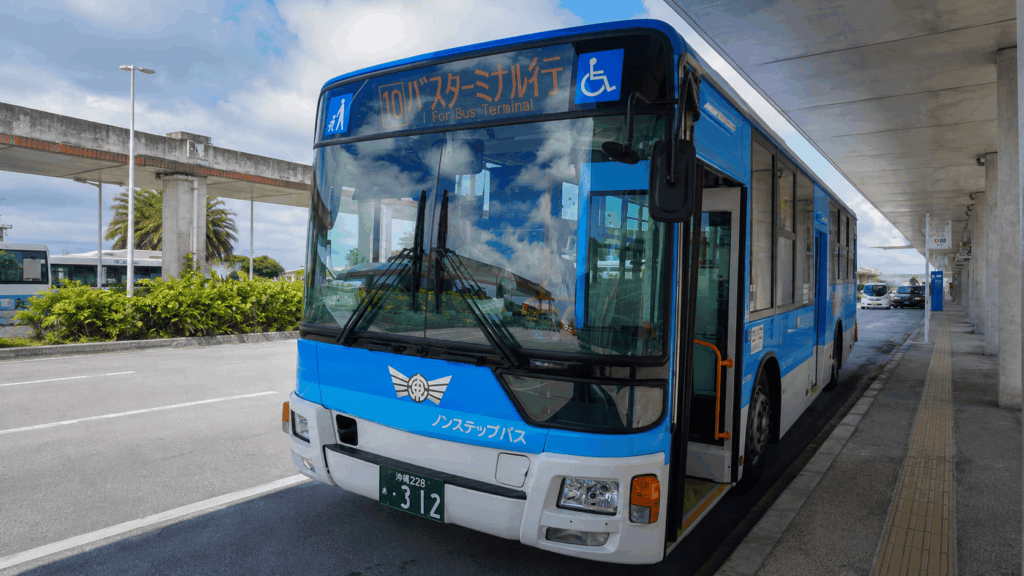
Two companies run buses from the airport to the city and the port, and both cost ¥550 per adult one way (as of August 2026).
- Azuma Bus runs several airport routes. For ferry travelers, the key one is Route 14, which goes to the Bus Terminal and passes the Ferry Terminal. Other Azuma routes (such as Route 4) serve different parts of the city, so check the destination before boarding.
- Karry Kanko operates Route 55, the “direct bus”, which runs between the airport and the ferry terminal with fewer stops.
The older advice you’ll still see online — “Azuma is the slow local bus, Karry is the direct one” — is no longer accurate. Azuma’s Route 14 also reaches the ferry terminal directly, and both companies charge the same fare. In practice, the difference comes down to which departure time fits your flight and how many stops the specific route makes, not to one company being meaningfully faster than the other. Journey time for either is roughly 30–40 minutes depending on the route and traffic.
Kai’s tip: If you’re traveling with a large suitcase, the airport bus is workable — I’ve done it with two big bags — but you’ll be holding your luggage in the aisle and stepping around it every time the bus stops. When I brought guests to Ishigaki with heavy luggage, I found myself wishing we’d taken the direct bus or a taxi instead. My rule now: if a full-size suitcase is coming with me, I look for the direct route or a taxi before the cheapest option.
Taxi: When It’s Worth the Extra Cost
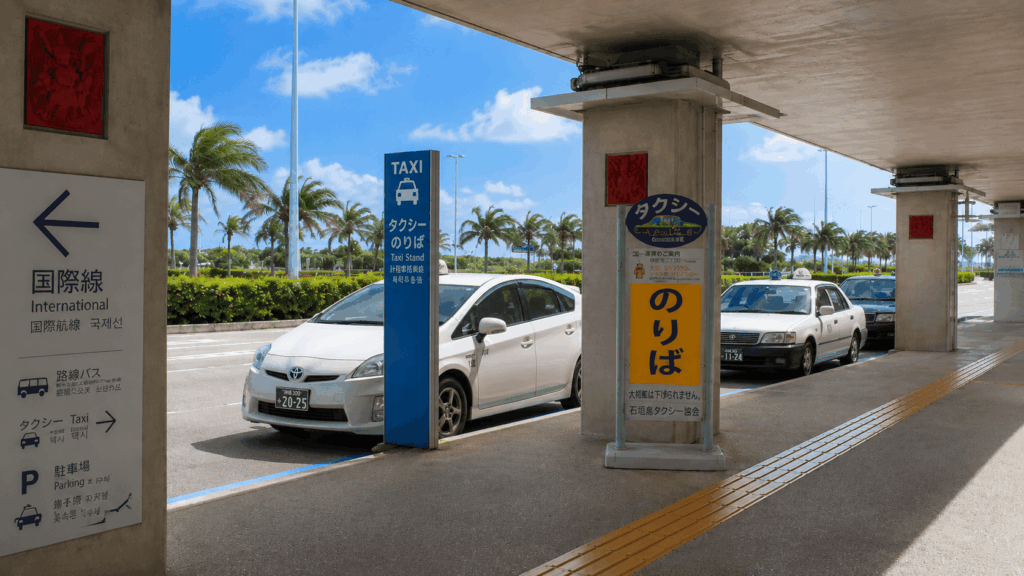
Taxis wait directly outside the terminal, and the ride to the ferry terminal or downtown takes about 25 minutes and costs around ¥3,500 (metered; expect a 20% surcharge late at night). For one or two people traveling light, that’s roughly six times the bus fare — hard to justify. For a group of three or four, the cost per person drops to near the bus price, and the taxi becomes genuinely competitive when you add up the convenience.
| Option | Cost (per adult) | Time to ferry terminal | Best for |
|---|---|---|---|
| Azuma Bus (Route 14) | ¥550 (as of Aug 2026) | Roughly 30–40 min | Traveling light, not rushing for a ferry |
| Karry Kanko direct bus (Route 55) | ¥550 (as of Aug 2026) | Roughly 30–40 min | Traveling light with a tighter connection |
| Taxi | Around ¥3,500 | About 25 min | Groups of 3–4, large luggage, late arrivals, tight ferry connections |
Reaching the Ferry Terminal: Euglena Ishigaki Port Remote Island Terminal
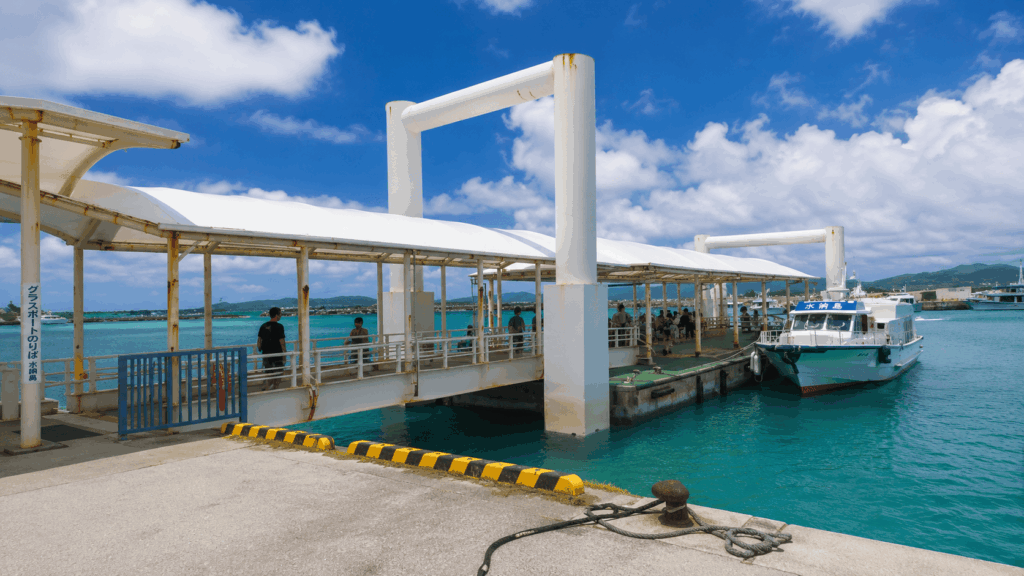
Buses and taxis drop you at Euglena Ishigaki Port Remote Island Terminal (Misaki-cho 1), the departure point for all ferries to Taketomi, Iriomote, Kohama, Kuroshima, Hatoma, and Hateruma. It’s a single terminal building: ferry company counters on the left as you enter, the departure gate for the high-speed boats through the back, and everything you need to wait comfortably around you.
- Opening hours: The terminal is open 7:00–21:00, but the shops and ferry company counters close at 18:00.
- Payment: Both ferry companies — Anei Kanko and Yaeyama Kanko Ferry — accept credit cards and contactless payment (as of 2024), so you don’t need a large cash buffer for tickets.
- Seats: High-speed boats have no reserved seating. If a boat is full, you may end up sitting apart from your group.
- Facilities: Coin lockers, an ATM, a small food court (Yaeyama soba, taco rice), a planetarium, and an observation deck upstairs. There’s also a statue of boxer Yoko Gushiken, a local hero, which is a popular photo spot while you wait.
If you arrive with time to spare, the terminal shop Nanapito Honpo sells Mariya Shake, a thick milk shake made with local Mariya dairy milk (small ¥500, medium ¥600, large ¥900; shake counter closes at 17:00, shop open 6:30–18:00). It’s a good way to pass a waiting window, though check availability on the day — and the terminal has also sold onisasa (a local rice ball with fried chicken fillet) at times, so it’s worth a look if you haven’t tried it yet.
Same-Day Ferry Connections: How Much Buffer Do You Need?
Yes, you can usually reach another island the same day you land — the islands are close, and ferries run through the afternoon. But the buffer is tighter than most first-time visitors expect, and the two mistakes I see most often are booking a ferry that’s too close to your landing time, and assuming all the islands are equally quick to reach. They aren’t:
- Taketomi: about 15 minutes
- Kohama and Kuroshima: about 25–30 minutes
- Iriomote (Ohara port): about 40–45 minutes; Iriomote (Uehara port): about 45–50 minutes
- Hateruma: about 60–80 minutes, depending on the boat and sea conditions
For a same-day connection, plan for at least two hours between your flight landing and the ferry departure: 30–40 minutes to get from the airport to the terminal by bus, time to collect luggage and buy tickets, and a margin for delays. If you’re heading to Hateruma, which is a longer crossing, I’d add another hour rather than cutting it fine — that boat schedule is thinner, and a missed departure can cost you most of a day.
Kai’s tip: Don’t plan Taketomi and Hateruma with the same expectations. I’ve taken both crossings, and on a day when the short Taketomi run felt smooth, the Hateruma crossing was a noticeably rougher ride — an hour or more of open water instead of a 15-minute hop. If you’re prone to seasickness, Taketomi is the safer first island; save Hateruma for a calmer sea day.
Kai’s tip: Early-morning ferries to Taketomi and Iriomote are the ones that fill up with day-trippers — the boats I’ve seen pack out are almost always the first departures of the day. If you’re catching a morning boat, arrive at the terminal 20–30 minutes before departure (the terminal recommends this anyway) and you’ll avoid the stress of finding a seat apart from your group.
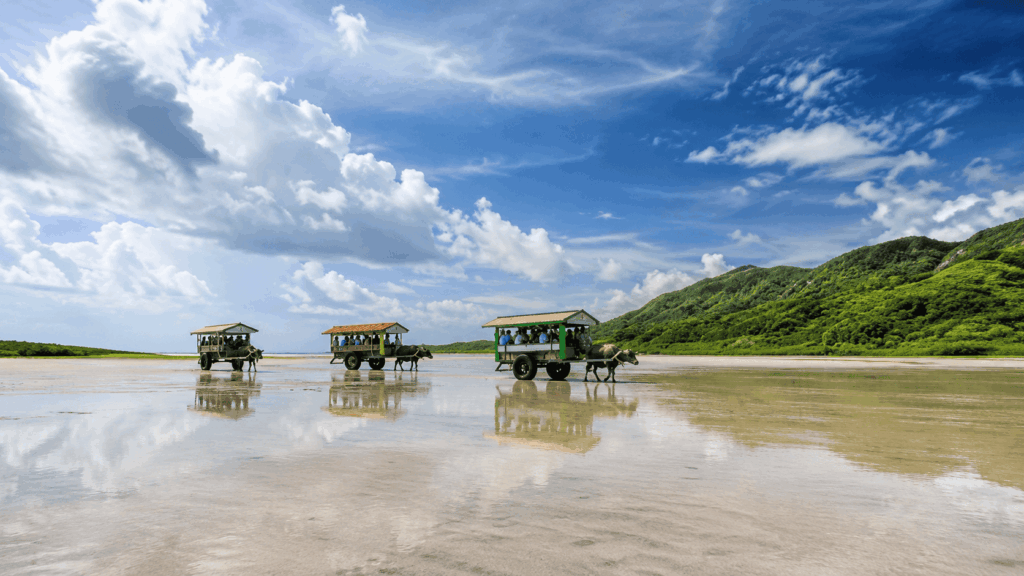
If you plan to see Taketomi’s water buffalo carts along with your ferry ride, you can check the current details for the Taketomi round-trip ferry + water buffalo cart sightseeing package on Klook. It bundles the round-trip high-speed ferry with the cart ride, takes around 3 hours total, and lets you skip lining up for tickets on the day. It suits travelers who want the day sorted before they arrive; if you prefer flexibility, you can simply buy ferry tickets at the terminal and arrange the cart on Taketomi itself.
Is It Worth Staying in Ishigaki First?
Often, yes. Staying one night on Ishigaki before crossing to another island gives you a relaxed morning ferry, a chance to store heavy luggage in your hotel, and a buffer against weather delays (if you need help choosing a base, our guide on the best areas to stay in Ishigaki compares the options). It’s the safer choice if you’re landing on a late-afternoon flight, if you’re carrying a large suitcase (hotel storage beats dragging it onto a boat), or if typhoon season (roughly June–October) makes same-day connections risky. If your only goal is Taketomi and your flight lands before noon, a same-day crossing is realistic — just don’t book the last ferry of the day.
If you’re using Ishigaki as a base and want to explore the island without adding a rental car or another round of transport planning, this is the higher-comfort option worth comparing.
Why I’d book this one
- Flexible private itinerary: Recent travelers consistently mention that the route can be adjusted around their interests rather than following a rigid group schedule.
- Smoother logistics: Traveler feedback frequently highlights clear communication and straightforward pickup, which can reduce the number of transfers you need to coordinate yourself.
- English-language context: Recent reviews regularly praise the guide’s local knowledge and ability to explain Ishigaki’s sights, culture, and everyday life in English.
The Realistic Step-by-Step: A Same-Day Connection That Works
Here’s a concrete example of how a same-day connection actually fits together. Say your direct flight from Haneda lands at Ishigaki around 11:20 a.m. You collect luggage, take the bus (or taxi) to Euglena Ishigaki Port, and arrive at the terminal around 12:00–12:20. You buy ferry tickets and board the 1:00 p.m. boat to Taketomi, arriving about 15 minutes later. That gives you roughly 40 minutes of margin after the airport transfer — comfortable for a mid-morning arrival, tight for anything later. (For what to do once you arrive, see our day trip guide to Taketomi Island.)
The Morning-Ferry Trap
What catches people out isn’t the ferry itself — it’s everything around it. Morning boats are busiest with day-trippers, the terminal shops don’t all open before 6:30, and if your flight is delayed by weather, a tight connection simply disappears. The pattern I’ve seen play out most often: travelers book the earliest possible ferry to maximize island time, then watch their buffer evaporate in the airport-to-terminal transfer. Booking the second or third departure of the day costs little and removes most of the risk.
What About Getting There by Ferry?
There is no passenger ferry from mainland Japan or Okinawa’s main island to Ishigaki — flights are the only option for domestic travelers. The single exception is Yaima Line, an international overnight ferry from Keelung, Taiwan, which started in May 2026 and sails a few times a month. Unless you’re coming from Taiwan, plan on flying.
Seasonal and Weather Considerations
Typhoon season runs roughly from June to October, and the Yaeyama Islands sit directly in the path of many storms. A typhoon can cancel flights, shut down ferries for a day or more, and leave you stranded on an island longer than planned — or on Ishigaki waiting for the weather to clear. (For a breakdown of weather by month, see our guide on the best time to visit Ishigaki.) The islands are small and flights fill fast in summer, so if you’re traveling in this window, keep your itinerary flexible, allow an extra day before international connections, and consider travel insurance that covers weather disruptions.
Outside typhoon season, the main weather risk to ferries is strong wind and rough seas — Hateruma in particular is a longer crossing that gets cancelled or delayed more readily than the short Taketomi run. If your schedule is tight, that’s another reason to favor a morning ferry and keep a plan B.
Common Mistakes Travelers Make Getting to Ishigaki
- Choosing airport transfer on price alone. The ¥550 bus is a great deal until you’re standing in the aisle holding a full-size suitcase. Add your luggage, group size, and ferry timing to the math.
- Booking a ferry from Google Maps times. The flight-to-ferry buffer is about transfers and ticket queues, not just the drive between airport and port. Give yourself two hours minimum on the landing day.
- Assuming direct flights are expensive. Haneda direct fares are often competitive once you add the cost and time of a Naha connection — compare the total, not the base fare.
- Routing through Naha “to save money.” It can work, but only when the direct flights genuinely don’t fit. A connection costs you hours and a second flight’s worth of weather risk.
- Underestimating the islands’ distance from each other. Taketomi is a 15-minute hop; Hateruma is a 60–80 minute crossing on open water. Plan each island as its own day.
FAQ
How long is the flight from Tokyo to Ishigaki?
From Haneda, direct flights with JAL or ANA take around 3 hours. From Narita, Peach’s direct flights take around 3 hours 20–35 minutes. Connecting through Naha adds at least a couple of hours on top of that, so most travelers from Tokyo prefer the direct options.
Can you take a ferry from Naha or mainland Japan to Ishigaki?
No. There is no passenger ferry between mainland Japan or Okinawa’s main island and Ishigaki — flying is the only option for domestic travelers. The one exception is Yaima Line, an international overnight ferry from Keelung, Taiwan, that started in May 2026 and sails a few times a month; it’s aimed at travelers coming from Taiwan.
How do I get from Ishigaki Airport to the ferry terminal?
Azuma Bus Route 14 and Karry Kanko’s direct bus (Route 55) both run from New Ishigaki Airport to the ferry terminal, costing ¥550 per adult one way (as of August 2026) and taking roughly 30–40 minutes. Taxis wait outside the terminal and take about 25 minutes at around ¥3,500 — worth it for groups of three or four, large luggage, or a tight ferry connection.
Can I visit Taketomi on the same day I land?
Usually yes, if your flight lands before early afternoon. The ferry to Taketomi takes only about 15 minutes. Give yourself at least two hours between landing and the ferry departure to cover luggage collection, the airport-to-port transfer, and ticket buying — and avoid the last ferry of the day as your only option.
Do I need to book ferry tickets in advance?
Not usually. High-speed boats to the islands have no reserved seating — you buy tickets at the terminal (Anei Kanko or Yaeyama Kanko Ferry counters) and board on a first-come basis. On busy mornings, arriving 20–30 minutes before departure is recommended. If you want the whole Taketomi day arranged ahead — ferry plus water buffalo cart — a combined package through a site like Klook lets you skip the ticket line, though you’ll pay a small premium for that convenience.
Is the direct flight from Narita year-round?
No. Peach’s Narita–Ishigaki route is seasonal. The winter schedule (late October 2026 to late March 2027) includes it, but departure days vary by season, so check the schedule for your travel dates. Haneda’s direct flights with JAL and ANA operate year-round, with 3–4 departures a day varying by season.
Final Verdict
What I’d tell a friend visiting for the first time: fly direct to New Ishigaki Airport, keep the airport-to-port transfer simple, and don’t let the ¥550 bus fare trick you into carrying a full-size suitcase through the aisle. The route itself is easy — it’s the decisions around it that catch people out.
- For most first-time visitors from Tokyo: Haneda direct on JAL or ANA, then the bus if you’re traveling light or the direct bus/taxi if you have a large suitcase. If your flight lands after about 2 p.m., stay the night in Ishigaki and cross to the islands the next morning.
- For budget-focused travelers: Compare the all-in Peach fare from Narita against the Haneda direct options before assuming one is cheaper. On the ground, both airport buses cost the same ¥550, so the saving is in the air, not on the road.
- For families: Take the direct bus or a taxi — the standard route bus with kids and luggage is doable but cramped. Add an extra half hour of buffer before any ferry, and pick Taketomi (15 minutes) over Hateruma (60–80 minutes) if anyone is prone to seasickness.
- For travelers on a tight schedule: Take a taxi to the port and aim for the second ferry of the day rather than the first — you keep most of the island time and lose most of the risk. If you’re headed to Hateruma, don’t attempt a same-day connection at all unless your flight lands by late morning.
- For repeat visitors and island-hoppers: The math changes — you know your luggage and your tolerance for risk. Go straight to the port, grab a Mariya Shake while you wait, and pick the morning ferry that matches the island you’re actually visiting.

Hi, I’m Kai. I’m a Tokyo-based travel writer, tourism industry insider, and the author of a published guidebook for international visitors to Japan. With over 10 years of professional experience at a leading Japanese tourism company, my mission is to help you skip the tourist traps and navigate Japan’s best destinations like a local. I believe the perfect day trip is like a traditional kaiseki meal: a beautiful balance of precise planning and unforgettable seasonal discovery. When I’m not out conducting field research, you’ll usually find me drafting new itineraries with one of my favorite fountain pens!