
Is the Tokyo Subway Ticket worth it? Yes — if you will take about 4 or more Tokyo Metro or Toei Subway rides per day. No — if your itinerary leans on JR lines, airports, Odaiba, Disney, or day trips. That is the entire decision in one line, and this guide exists to help you check which side you are on before you pay.
The Tokyo Subway Ticket gives short-term visitors unlimited rides on Tokyo Metro and Toei Subway lines for 24, 48, or 72 hours. As of June 2026, adult tickets cost ¥1,000 for 24 hours, ¥1,500 for 48 hours, and ¥2,000 for 72 hours — cheap enough that one packed sightseeing day can pay it back.
I’m Kai Tanaka, a Tokyo-based travel writer who helps inbound travelers plan realistic city routes, and my rule is simple: buy this pass when your Tokyo days are subway-heavy, and skip it when they are not. Below you will find the break-even math, what is and is not covered, QR redemption steps, and the activation timing that decides whether this pass feels like a bargain or a waste.
If your real question is whether to get this pass or just use an IC card, that decision has its own dedicated guide: Tokyo Subway Ticket vs Suica: Which Should First-Time Visitors Use?. This page focuses on whether the pass itself is worth your money and how to use it well.
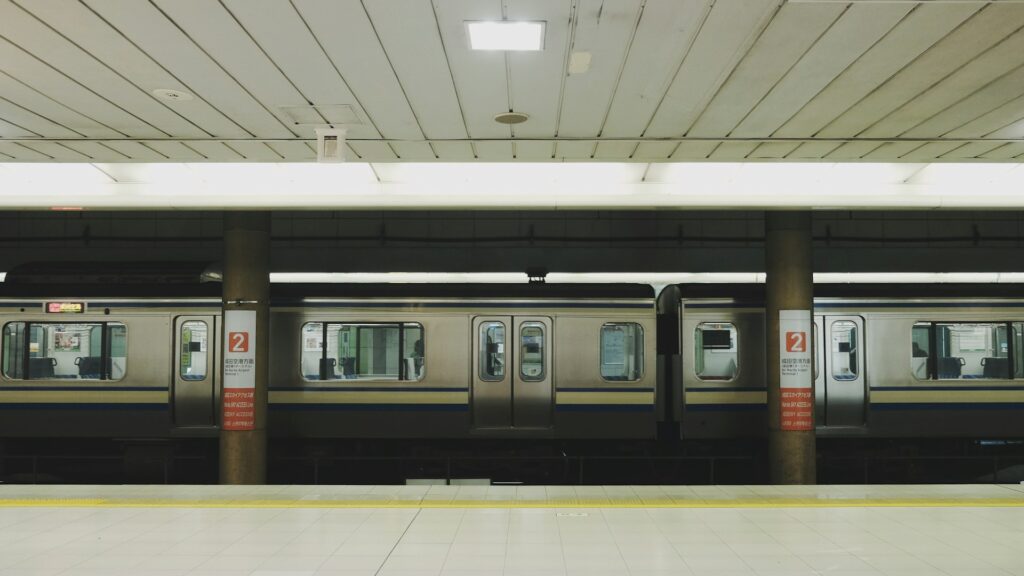
Quick Verdict: Is the Tokyo Subway Ticket Worth It?
| Your Situation | Verdict |
|---|---|
| 2–3 consecutive sightseeing days across central Tokyo (Asakusa, Ueno, Ginza, Roppongi, Tsukiji…) | Worth it. The 72-hour ticket is the best value at about ¥667 per day |
| One packed day with 5–6 covered subway rides | Worth it — the 24-hour ticket, but only if the day is genuinely busy |
| Hotel next to a JR station, plans built around the Yamanote Line | Not worth it. Use an IC card instead |
| Days at Odaiba, Tokyo Disney Resort, Yokohama, Kamakura, or airport-heavy plans | Not worth it. None of those routes are covered |
| One or two neighborhoods per day, mostly walking | Not worth it. You will not take enough rides |
The key point behind every row: the ticket is valid by operator, not by whether a train feels like a “subway.” It covers Tokyo Metro and Toei Subway. It does not cover JR lines, the Yurikamome to Odaiba, private railways, airport express trains, buses, shops, lockers, or vending machines.
Check current Tokyo Subway Ticket prices, availability, and 24/48/72-hour options
Tokyo Subway Ticket Prices in 2026
As of June 2026, the official Tokyo Subway Ticket prices are:
- 24-hour Tokyo Subway Ticket: ¥1,000 adult / ¥500 child
- 48-hour Tokyo Subway Ticket: ¥1,500 adult / ¥750 child
- 72-hour Tokyo Subway Ticket: ¥2,000 adult / ¥1,000 child
Always check the latest official Tokyo Metro ticket page before buying, because prices, purchase methods, eligibility rules, QR ticket conditions, and sales locations can change.
The detail most travelers miss: these tickets run on hours from first use, not calendar days. Activate a 24-hour ticket at 3:00 PM on Tuesday and it stays valid until 3:00 PM on Wednesday. A 72-hour ticket activated at 10:00 AM on Monday works until 10:00 AM on Thursday. This is a real advantage over calendar-day passes — if you use it well, which we cover in the activation section below.
The Break-Even Math: How Many Rides Make It Worth It?
Tokyo subway fares are distance-based. Many central short rides sit in the lower fare bands of ¥180–¥210, while longer rides cost more. The exact break-even point depends on your routes, but this rough math works for most sightseeing plans:
| Ticket | Price | Cost Per Day | Practical Break-Even | Verdict |
|---|---|---|---|---|
| 24-hour | ¥1,000 | ¥1,000 | About 5 to 6 short covered subway rides | Useful for one packed subway-heavy day, but the easiest version to overbuy |
| 48-hour | ¥1,500 | ¥750 | About 8 to 9 covered rides total | Good for two active sightseeing days |
| 72-hour | ¥2,000 | About ¥667 | About 10 to 12 covered rides total — roughly 4 per day | Best overall value for active visitors |
What does “4 rides per day” look like in practice? A normal subway-focused sightseeing day, not an extreme one:
- Hotel to Asakusa
- Asakusa to Ueno
- Ueno to Ginza
- Ginza to Roppongi
- Roppongi back to your hotel
Five rides, all plausibly on Tokyo Metro or Toei Subway lines — that single day nearly pays for a 48-hour ticket by itself. If your days look like this, the pass is worth it. If your route keeps pulling you onto JR lines, private railways, or buses, those parts are not covered, and the math collapses.
Kai’s tip: Do not calculate this to the last yen. If your plan lands near the break-even zone, the pass is usually still worth it for one reason reviewers mention again and again: you stop hesitating. Unlimited rides mean you hop on the subway for one extra stop instead of walking 15 minutes in summer heat, and you can duck into a wrong-direction train and reverse without paying twice. That freedom is worth a few hundred yen on its own.
Who Should Buy It — and Who Should Skip It
Good Fit
- First-time visitors spending two or three full days sightseeing in central Tokyo
- Travelers visiting three or more neighborhoods in a single day
- Anyone staying near a Tokyo Metro or Toei Subway station
- Travelers who want to cap part of their transport budget in advance
- People comfortable checking whether a route uses Tokyo Metro, Toei Subway, JR, or a private railway
Bad Fit
- Travelers who prefer one or two areas per day and walk between them
- Anyone staying beside a major JR station and relying mostly on the JR Yamanote Line
- Visitors whose plans focus on Odaiba, Tokyo Disney Resort, Yokohama, Kamakura, Hakone, or airport transfers
- Travelers who do not want to think about train operators at all
- Anyone who values maximum flexibility more than small transport savings
Kai’s tip: The mistake I see travelers make is choosing the pass before checking their hotel station. Look up your nearest station name, then check whether it is Tokyo Metro, Toei Subway, JR, or a private railway. A hotel near a subway station makes this ticket much easier to use; a hotel beside a JR-only station quietly kills its value. If you are still deciding where to stay in Tokyo for your first visit, this is worth checking before you book either the room or the pass.
What Does the Tokyo Subway Ticket Cover?
The pass covers unlimited rides on all 13 subway lines during the valid period.
Tokyo Metro Lines
- Ginza Line
- Marunouchi Line
- Hibiya Line
- Tozai Line
- Chiyoda Line
- Yurakucho Line
- Hanzomon Line
- Namboku Line
- Fukutoshin Line
Toei Subway Lines
- Asakusa Line
- Mita Line
- Shinjuku Line
- Oedo Line
These 13 lines connect many major sightseeing areas, including Asakusa, Ueno, Ginza, Roppongi, Nihombashi, Akasaka, Omotesando, Tsukiji, and parts of Shinjuku and Shibuya.
What Is Not Covered?
This is where many travelers get confused — and where most bad reviews of this pass actually come from. The Tokyo Subway Ticket does not cover every train in Tokyo.
- JR lines: including the JR Yamanote Line, Chuo Line, Sobu Line, Keiyo Line, and Narita Express
- Airport trains: including Keisei Skyliner, Narita Express, Tokyo Monorail, and many airport access routes by themselves
- Private railways: such as Odakyu, Keio, Tokyu, Tobu, Seibu, Keisei, and Keikyu lines
- Odaiba access: the Yurikamome and Rinkai Line are not covered
- Tokyo Disney Resort access: JR routes to Maihama are not covered
- Buses, shops, lockers, and vending machines: the pass is not electronic money
For everything on this list, you will pay separately — most travelers use an IC card such as Suica or PASMO for those rides and keep the subway ticket for covered routes. How to combine the two, and when an IC card alone is the smarter choice, is covered in the full Tokyo Subway Ticket vs Suica comparison.
The Through-Service Trap
Some Tokyo Metro and Toei Subway trains continue beyond their own tracks onto private railway lines. For example, some subway services may continue onto Keikyu, Keisei, Tokyu, Tobu, or Seibu lines. If you stay on the train beyond the covered subway section, the Tokyo Subway Ticket may not cover your full ride.
If this happens, do not panic. Use a staffed gate and ask how to pay the additional fare. Carrying an IC card and some cash as backup makes this painless.
Kai’s tip: What catches people out is not the train color — it is the operator boundary. Before you enter the gate, check the route details in your map app and look for the operator name, not just the destination. If the route says JR, Keisei, Keikyu, Tokyu, Tobu, Seibu, Odakyu, Keio, Yurikamome, or Rinkai, assume you need a separate fare unless the current ticket instructions clearly say otherwise. Google Maps does not know you have a pass — it suggests the fastest route, which may use JR even when a subway route exists. Sometimes paying that separate fare is still better than forcing a slower subway-only route.
When Should You Activate the Pass?
The clock starts from your first use, so timing decides a big part of the value.
| Situation | Best Move | Why |
|---|---|---|
| Arriving in Tokyo at night | Pay that first ride separately | Save the subway ticket for a full sightseeing day |
| Starting sightseeing in the morning | Activate before your first covered subway ride | You use most of the valid period efficiently |
| Only visiting one neighborhood today | Do not activate yet | You may not take enough rides to justify it |
| Planning three active Tokyo days | Use the 72-hour ticket from the first full day | The cost per day is low if your route is subway-heavy |
Kai’s tip: I always tell readers not to start the clock for one late-night ride after arrival. Pay that single ride separately, sleep, then activate the subway ticket before your first proper sightseeing ride the next morning. That one decision can turn a weak 24-hour ticket into a useful one.
How to Buy and Use the Tokyo Subway Ticket
You can buy the Tokyo Subway Ticket online before your trip, or in person at selected airports, stations, hotels, and sales locations in Japan. The exact process depends on where you buy it, so always follow the latest instructions from the official ticket page or your booking platform.
Option 1: Buy Online or Use a QR-Based Product
Some Tokyo Subway Ticket products are QR-based, while others involve a voucher or a redemption step. Reviewers generally like the value once the ticket is issued, but several comments point to the same practical issue: finding the correct QR-compatible machine or redemption point can take a little attention. Treat the QR step as part of the setup, not something to solve while rushing for a train.
A safe general process:
- Choose your ticket: Select the 24-hour, 48-hour, or 72-hour version based on your itinerary.
- Read the product instructions: Check whether you receive a QR ticket, voucher code, or other redemption method.
- Check where it can be used or redeemed: Some QR or voucher products require a supported ticket machine or station office.
- Issue or redeem the ticket before trying to travel: Do not assume every QR code can be scanned directly at every gate.
- Enter through the gate correctly after receiving the ticket: If staff help you issue the ticket, make sure your first ride is properly started so you can exit smoothly.
- Keep a backup payment method: An IC card or cash covers routes outside the pass.
For the most current details, check the official Tokyo Subway Ticket QR guidance before your trip.
Option 2: Buy in Japan
- Bring your passport: The Tokyo Subway Ticket is designed for short-term visitors, and eligibility may need to be checked.
- Do not assume every station sells it: Some stations only handle certain ticket types or redemption methods.
- Ask staff if unsure: Station staff can direct you to the correct machine, counter, or nearby station office.
Check current Tokyo Subway Ticket options and redemption instructions
24 vs 48 vs 72 Hours: Which Version Should You Buy?
If your break-even math points toward two or three active sightseeing days, compare the 72-hour Tokyo Subway Ticket first. It has the lowest cost per day, gives you room for spontaneous short rides, and does not require perfectly packed days — just repeated subway use.
| Choice | Best For | My Take |
|---|---|---|
| 72-hour | Three active central Tokyo sightseeing days | Best overall value if your routes are subway-heavy |
| 48-hour | Two full sightseeing days | Good when your Tokyo stay is short but busy |
| 24-hour | One packed day with many covered subway rides | Useful, but the easiest to overbuy |
Which Other Tokyo Transport Passes Should You Compare?
The Tokyo Subway Ticket is not the only transport pass in Tokyo, and some similar-looking products have different rules. Make sure you are buying the right one.
| Pass or Option | Covers | Main Limitation |
|---|---|---|
| Tokyo Subway Ticket 24/48/72-hour | Tokyo Metro + Toei Subway | No JR, private railways, buses, Odaiba routes, or airport trains |
| Tokyo Metro 24-hour Ticket | Tokyo Metro only | Does not cover Toei Subway — a different, smaller product |
| Common One-day Ticket for Tokyo Metro and Toei Subway | Tokyo Metro + Toei Subway | Day-based, not a 24-hour countdown from first use |
| Tokyo Combination Ticket | Tokyo Metro, Toei transport, and some JR lines within central Tokyo | Costs more, so it only makes sense for one unusually transit-heavy day |
| IC card only (Suica / PASMO) | Most trains, buses, and shops, pay as you go | No unlimited ride discount — see the full comparison |
If your itinerary is mostly Tokyo Metro only, the Tokyo Metro 24-hour Ticket may be cheaper for a single day. For most first-time visitors who want broader subway coverage over multiple days, the Tokyo Subway Ticket is the easier product.
Sample Itineraries: Where the Pass Wins and Loses
Strong 72-Hour Use Case
- Day 1: Asakusa, Ueno, Ginza
- Day 2: Tsukiji, Roppongi, Akasaka, Omotesando
- Day 3: Nihombashi, Tokyo Station area, Shinjuku by subway route
This kind of itinerary naturally creates 4–5 covered rides per day. The 72-hour ticket clearly pays off here.
Weak Use Case
- Day 1: Shinjuku and Shibuya by JR
- Day 2: Tokyo Disney Resort
- Day 3: Yokohama or Kamakura
A fun trip — and a terrible Tokyo Subway Ticket itinerary. Almost none of it is covered. If your plan looks like this, skip the pass entirely and use an IC card. Even for JR-heavy hubs, learning how to navigate Shinjuku Station will save you more stress than any pass.
Frequently Asked Questions About the Tokyo Subway Ticket
Is the 72-hour Tokyo Subway Ticket worth it?
Yes, for many active first-time visitors. The 72-hour pass has the lowest cost per day at about ¥667, so it pays off naturally if you take about 3 to 4 Tokyo Metro or Toei Subway rides per day. It becomes clear value around 10 to 12 covered rides total.
Is the 24-hour Tokyo Subway Ticket worth it?
Sometimes, but it is the hardest version to justify. It is worth considering if you have a packed sightseeing day with about 5 to 6 covered subway rides. If you only visit one or two areas, pay per ride instead.
Is the 48-hour Tokyo Subway Ticket worth it?
Yes, if you have exactly two busy central Tokyo days. At ¥750 per day it breaks even at about 8 to 9 covered rides total, which two active sightseeing days can reach without forcing anything.
Can I use the Tokyo Subway Ticket on the JR Yamanote Line?
No. The Tokyo Subway Ticket does not cover the JR Yamanote Line or any other JR line. Those rides need a separate fare or an IC card.
Does the 24-hour ticket expire at midnight?
No. The ticket works on a 24-hour, 48-hour, or 72-hour countdown from first use. If you activate a 24-hour ticket at 6:00 PM, it remains valid until 6:00 PM the next day.
Can I use a Tokyo Subway Ticket QR code directly at the gate?
It depends on the product type and purchase route. Some QR-based or voucher products require a redemption or issue step at a supported ticket machine or station office. Always follow the current instructions from the official ticket page or your booking platform.
What happens if my train continues beyond Tokyo Metro or Toei lines?
Some subway trains run through to private railway lines. If you stay on the train beyond the covered subway section, your ticket may not cover the full ride. Use a staffed gate and ask how to pay the additional fare.
Can I use the Tokyo Subway Ticket from Haneda or Narita Airport?
Not by itself for most airport routes. Airport access usually involves private railways, JR lines, or airport services that are not covered. Plan a separate fare or airport ticket for that leg.
Can I use the Tokyo Subway Ticket for Odaiba or Tokyo Disney Resort?
Not fully for Odaiba — the Yurikamome and Rinkai Line are not covered, so you will usually pay a separate fare for the final connection. Not at all for Tokyo Disney Resort, which is reached via JR Maihama Station.
Final Verdict: Should You Buy the Tokyo Subway Ticket?
The Tokyo Subway Ticket is worth buying if you plan to explore several Tokyo neighborhoods over consecutive days and your routes mostly use Tokyo Metro or Toei Subway. The 72-hour ticket is the best overall value for most active visitors, the 48-hour version suits two busy days, and the 24-hour version only makes sense for one genuinely packed day.
It is not worth buying if your itinerary depends on JR lines, airport trains, Odaiba, Disney, Yokohama, Kamakura, or day trips outside central Tokyo — and if you are torn between this pass and simply tapping an IC card everywhere, read the dedicated comparison: Tokyo Subway Ticket vs Suica: Which Should First-Time Visitors Use?
If your travel dates are already fixed, compare the latest 24-hour, 48-hour, and 72-hour options, including QR ticket conditions, redemption instructions, eligibility notes, and cancellation rules, before your trip:
Check current Tokyo Subway Ticket availability, QR details, and 24/48/72-hour options
Prices, ticket rules, purchase methods, QR redemption steps, sales locations, transport schedules, and pass conditions can change. Always check official sources and your selected booking page before finalizing your trip.

Hi, I’m Kai. I’m a Tokyo-based travel writer, tourism industry insider, and the author of a published guidebook for international visitors to Japan. With over 10 years of professional experience at a leading Japanese tourism company, my mission is to help you skip the tourist traps and navigate Japan’s best destinations like a local. I believe the perfect day trip is like a traditional kaiseki meal: a beautiful balance of precise planning and unforgettable seasonal discovery. When I’m not out conducting field research, you’ll usually find me drafting new itineraries with one of my favorite fountain pens!