
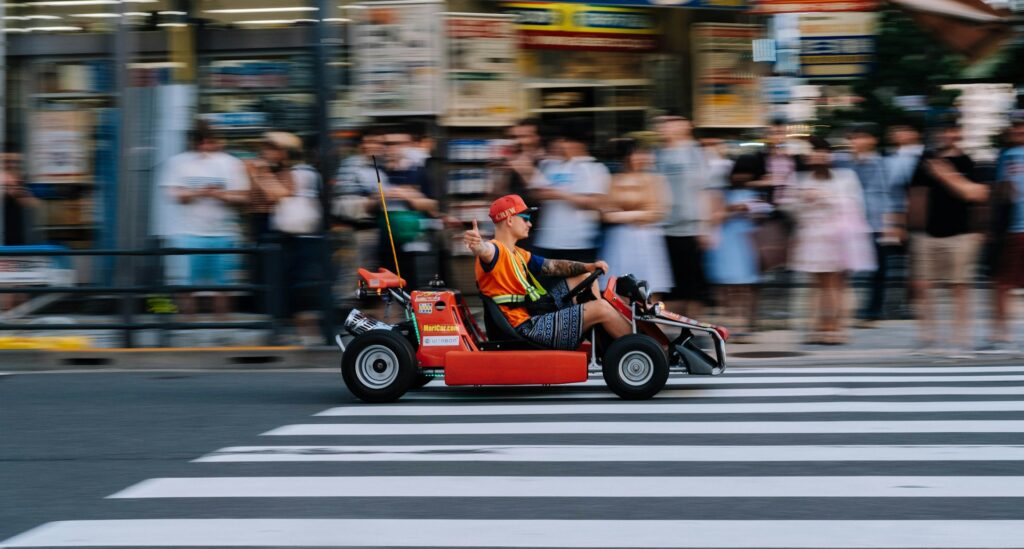
Can You Go Karting in Tokyo as a Tourist?
Yes, tourists can go karting in Tokyo on public roads, but only if they have the correct physical driving documents. This is not an indoor amusement ride or a closed-track race. You drive a small motorized vehicle on real city streets alongside buses, taxis, cyclists, pedestrians, and regular traffic.
The most important rule is simple: do not book until you have confirmed that your driver’s license documents allow you to drive legally in Japan. If your documents are wrong, expired, digital-only, copied, or missing on the day of the tour, you may be refused participation without a refund.
For most foreign visitors, the key document is an International Driving Permit issued under the 1949 Geneva Convention, carried together with your original home country driver’s license and passport. Some travelers from specific countries or regions can use their home license with an approved Japanese translation instead.
Tokyo Go Karting Quick Guide
| Question | Quick Answer |
|---|---|
| Can tourists drive go-karts in Tokyo? | Yes, if they have valid physical driving documents accepted in Japan. |
| Do you need an IDP? | Most visitors need a 1949 Geneva Convention IDP, plus their original license and passport. |
| Typical cost | Often around ¥9,000–¥22,000 per person, depending on route, duration, operator, platform, and time slot. |
| Typical duration | About 45 minutes to 2 hours. |
| Popular routes | Shibuya, Shinjuku, Tokyo Tower / Roppongi, Tokyo Bay, and Asakusa / Skytree. |
| Best first-time route | Shibuya, if you want the classic Tokyo street-kart photo experience. |
| Biggest mistake | Booking first and checking your IDP or license documents later. |
What Documents Do You Need Before Booking?
Before you pay for a Tokyo go-kart tour, check the document rules carefully. Operators are strict because these tours take place on public roads, not on a private track.
Most foreign visitors need one of the following:
- An International Driving Permit issued under the 1949 Geneva Convention, plus your original physical home country driver’s license and passport.
- A driver’s license from Switzerland, Germany, France, Belgium, Monaco, or Taiwan, plus an official Japanese translation issued by an approved authority such as JAF or a relevant embassy or consulate.
- A valid Japanese driver’s license, or a SOFA license for eligible US military personnel.
Important: IDPs issued under the 1968 Vienna Convention are not accepted for driving in Japan. Digital IDPs, card-style IDPs, screenshots, photocopies, and photos on your phone are not enough. In most cases, you must arrange the correct IDP or translation through an authorized issuer before arriving in Japan.
| Item | What You Need | Why It Matters |
|---|---|---|
| Passport | Your original physical passport | Used to verify your identity and visitor status. |
| Home driver’s license | Your original physical license from your home country | Your IDP is not valid by itself without your original license. |
| IDP or approved translation | A 1949 Geneva Convention IDP, or an approved Japanese translation for eligible licenses | This usually determines whether you can legally drive in Japan. |
| Booking confirmation | Your reservation details, operator name, and meeting point information | Tour offices can be small, and time slots are strict. |
If you are unsure whether your documents are valid, contact the operator before booking. Do not rely on a social media post, an old blog comment, or a booking screenshot as proof that you can drive.
How Much Does Go Karting in Tokyo Cost in 2026?
As of 2026, many Tokyo public-road go-kart tours fall roughly between ¥9,000 and ¥22,000 per person. The final price depends on the route, duration, operator, platform, time slot, review discounts, optional insurance, and what is included.
| Tour Type | Typical Duration | Usual Price Pattern | Best For |
|---|---|---|---|
| Short city route | About 45–60 minutes | Usually the cheapest option | Travelers fitting the experience into a packed 1-day Tokyo itinerary. |
| Mid-length Shibuya or Shinjuku route | About 75–90 minutes | Often mid-range | First-timers who want a strong Tokyo street experience without committing to a long ride. |
| Longer landmark route | About 90–120 minutes | Usually more expensive | Travelers who want Tokyo Tower, Roppongi, Tokyo Bay, or more varied scenery. |
Most tours include the kart rental, fuel, a lead guide, and basic insurance. Some include costume rental or photos, while others treat them as extras. Always check the latest price, cancellation policy, insurance terms, and license requirements on the booking page before reserving.
If you are leaning toward a longer landmark route that includes areas such as Tokyo Tower and Shibuya Crossing, check the current duration, reviews, route details, and license requirements before comparing it with a shorter Shibuya-only option: see the Tokyo Tower and Shibuya Crossing go-kart tour details.
What About Insurance and Damage Fees?
Most Tokyo go-kart operators include some form of basic insurance, but the details vary. Do not assume every tour has the same coverage, deductible, or damage policy.
Some operators publish a basic insurance plan and also warn that kart damage may lead to a per-vehicle deductible. For example, a damaged kart may result in an additional charge even if basic insurance is included. Other operators may offer optional upgraded coverage for an extra fee.
Before booking, check:
- whether basic insurance is included;
- whether there is a deductible if you damage the kart;
- whether optional full coverage is available;
- what happens if you hit another vehicle, object, curb, or barrier;
- whether phone use, unsafe driving, or rule violations can void coverage.
If you are not confident driving in city traffic, upgraded insurance may be worth considering. Treat it as part of the real cost of the activity, not as an afterthought.
Which Tokyo Go-Kart Route Should You Choose?
The best Tokyo go-kart route depends on what you want from the experience. Shibuya is the classic first-time choice, Shinjuku has a stronger neon-and-skyscraper feel, Tokyo Tower and Roppongi routes offer more landmark variety, and Tokyo Bay or Asakusa routes can work well for repeat visitors.
| Route | Best For | Main Highlights | Things to Consider |
|---|---|---|---|
| Shibuya | First-timers who want the classic Tokyo street-kart photo experience | Shibuya Scramble Crossing, Harajuku, Omotesando | Very busy and highly visible. Not ideal if you dislike attention from crowds. |
| Shinjuku | Travelers who want neon, nightlife energy, and skyscraper scenery | Kabukicho, Shinjuku Station area, Yoyogi | Traffic can feel intense, and the atmosphere is more urban and edgy. |
| Tokyo Tower / Roppongi | Visitors who want a longer route with major landmarks | Tokyo Tower, Roppongi, central Tokyo avenues | Usually more expensive and more dependent on traffic, route changes, and weather. |
| Tokyo Bay | Travelers who want a longer ride, waterfront scenery, and wider-feeling roads | Rainbow Bridge, Odaiba, Tokyo Bay skyline | Less focused on dense neon streets. Conditions and routes can vary by operator. |
| Asakusa / Skytree | Travelers who want a mix of traditional and modern Tokyo scenery | Senso-ji area, Tokyo Skytree, Sumida River area | Less nightlife-focused than Shibuya or Shinjuku. |
If you are still deciding between Shibuya, Shinjuku, Tokyo Tower, and other route styles, compare current route options and time slots before booking: compare Tokyo go-kart route options on Klook.
Is the Shibuya Route Worth It?
For most first-time visitors, the Shibuya route is the easiest route to recommend. It gives you the version of go karting Tokyo that many travelers imagine: bright lights, dense crowds, and the surreal feeling of driving through one of the most famous intersections in the world.
The biggest highlight is usually Shibuya Scramble Crossing. Being low to the ground in an open-air kart while pedestrians cross around you feels completely different from seeing the crossing from a cafe, hotel window, or observation deck.
Many Shibuya-area tours also pass through Harajuku and Omotesando, which makes the route easy to combine with the Harajuku to Shibuya walking route before or after your drive.
Choose Shibuya if you want the most recognizable Tokyo backdrop. Choose Shinjuku if you prefer skyscrapers, Kabukicho neon, and a slightly moodier city atmosphere. If you plan to explore Kabukicho on foot later, read this Shinjuku Kabukicho safety guide before you go.
What Is a Shibuya Go-Kart Tour Like?
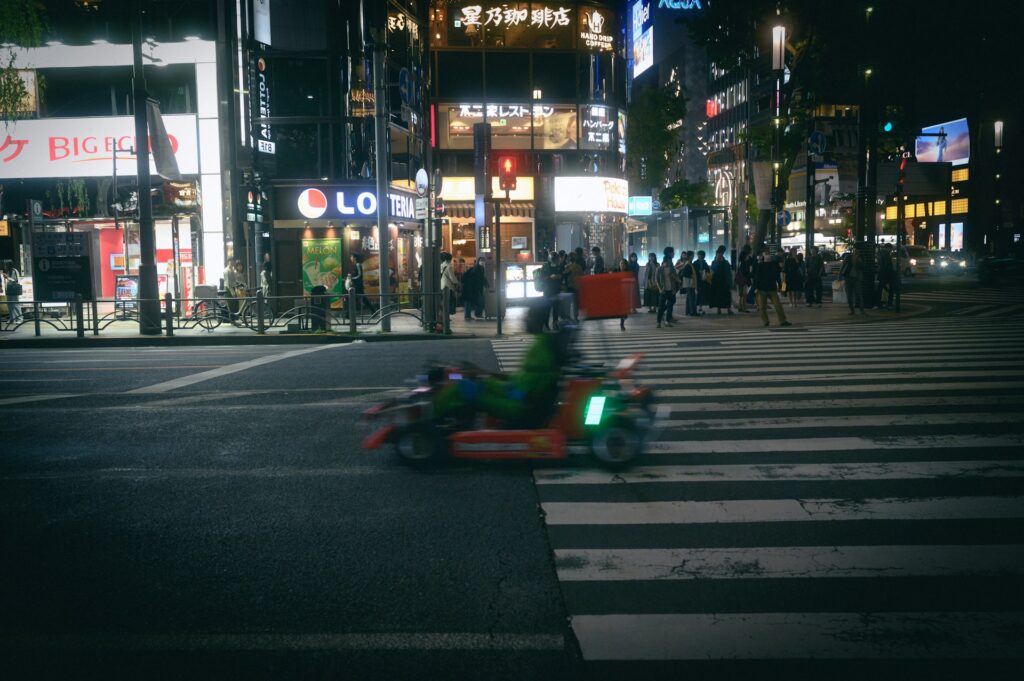
A guided Shibuya go-kart tour is usually the simplest option for visitors because you do not need to navigate Tokyo’s road system alone. You drive in a convoy behind a guide, follow traffic laws, and stay with the group throughout the route.
Based on current tour listings and operator requirements, you can typically expect:
- A guided convoy: An English-speaking guide leads the group and helps manage lanes, turns, traffic lights, and route timing.
- Photos only when safe: You should not use your phone while driving. Some guides take photos when the group is safely stopped, but this varies by operator.
- Optional costumes: Some operators include costume rental, although availability and themes vary. Treat costumes as a fun extra, not the main reason to book.
- Strict document checks: Your passport, home driver’s license, and IDP or approved translation may be checked before you are allowed to drive.
- Public-road driving: This is a sightseeing drive, not a race. Overtaking, drifting, weaving, and aggressive driving are not allowed.
Best Time to Go: Day, Sunset, or Night?
The time of day changes the experience. Choose based on visibility, photo style, traffic comfort, and the kind of Tokyo atmosphere you want.
| Time | Best For | Photo Conditions | Things to Consider |
|---|---|---|---|
| Daytime | First-time drivers who want better visibility | Clearer views of buildings, streets, and landmarks | Less dramatic than night, but easier if you are nervous in traffic. |
| Late afternoon / early evening | Balanced photos and changing city lights | Often the best mix of natural light and neon starting to glow | Traffic can be heavier around commuting hours. |
| Night | Neon signs, nightlife scenery, and a more cinematic atmosphere | Dramatic lights, but harder phone photos | Visibility is lower, so it may feel more intense for nervous drivers. |
For photos, late afternoon or early evening is often the most balanced choice. For comfort and visibility, daytime is easier. For neon, choose a night slot, but only if you are comfortable driving in real city traffic after dark.
Who Should Book This Tour — and Who Should Skip It?
| Book It If… | Skip It If… |
|---|---|
| You already have the correct physical driving documents for Japan. | You do not have a valid IDP, approved translation, Japanese license, or required original documents. |
| You want a highly visual Tokyo experience that feels different from normal sightseeing. | You are looking for a competitive race or closed-track driving experience. |
| You are comfortable driving in real traffic while following a guide. | You feel nervous around buses, taxis, cyclists, pedestrians, and busy city roads. |
| You do not mind being noticed by pedestrians and other travelers. | You dislike attention, photos, or people waving from the sidewalk. |
| You can wear safe, practical clothing and closed-toe shoes. | You are traveling with young children or anyone who cannot legally drive. |
What Rules Should You Know Before Driving?
Tokyo go-kart tours operate on public roads, so the rules are closer to driving a small car than riding an amusement-park kart. You must follow Japanese traffic laws, stay with the guide, and drive safely from start to finish.
- Bring original documents: Your passport, home driver’s license, and IDP or approved Japanese translation must be physical originals. Screenshots and photocopies are not enough.
- Wear closed-toe shoes: Sneakers are best. High heels, sandals, flip-flops, and loose footwear may not be allowed.
- Avoid loose clothing: Long skirts, dangling accessories, and very loose items can be unsafe around the kart.
- Do not use your phone while moving: Photos and videos should be left to the guide or taken only when the group is safely stopped and permitted to do so.
- Do not race: These are sightseeing tours, not races. Overtaking, drifting, weaving, and aggressive driving are not allowed.
- Follow the guide’s signals: The guide controls the route, pace, lane position, and stops. Stay alert even when traffic feels slow.
- Arrive early: Leave enough time for document checks, safety instructions, and finding the shop.
What Happens If It Rains?
Rain policies vary by operator, so do not assume every Tokyo go-kart tour is automatically canceled in bad weather. Some tours may continue in light rain, while severe weather can lead to delays, route changes, rescheduling, or cancellation.
This matters because wet roads can make the drive feel colder, reduce visibility, and make photos less clear. In winter, wind and rain can feel especially harsh because the karts are open-air and low to the ground.
Before booking, check the exact cancellation policy on the tour page. Look for details about weather cancellations, late arrivals, document issues, refunds, and whether you can reschedule. Booking this activity earlier in your Tokyo trip gives you more flexibility if the operator offers a date change.
What Should You Wear for a Tokyo Go-Kart Tour?
Wear practical clothes that let you sit, steer, and move comfortably. The safest choice is a casual outfit with pants or shorts and closed-toe sneakers.
- Best footwear: sneakers or secure flat shoes.
- Avoid: sandals, flip-flops, heels, long skirts, and very loose clothing.
- In summer: wear breathable clothes and consider sunscreen before the tour.
- In winter: bring a warm layer, as wind can feel stronger in an open kart.
- In rain: choose clothes that can handle getting damp, and confirm whether the operator provides rain gear.
3 Common Mistakes to Avoid
- Booking before checking your IDP. This is the most expensive mistake. If your IDP was issued under the wrong convention, has expired, is digital-only, or is not accepted in Japan, you may be refused participation without a refund.
- Assuming the route name and meeting point are the same place. A “Shibuya” or “Tokyo Tower” route does not always mean the shop is next to that landmark. Check the exact address in your booking confirmation.
- Trying to take photos while driving. Using your phone while moving is unsafe and may violate tour rules. If photos matter to you, confirm whether the guide takes pictures when the group is safely stopped.
How to Get to the Meeting Point
Tokyo go-kart operators usually have small offices or garages near train stations or major roads, but the exact location varies by operator and route.
Do not assume a route name tells you the meeting point. A “Shibuya” route may not start directly beside Shibuya Station, and a “Tokyo Tower” route may begin somewhere else before passing the landmark. Always use the exact address from your booking confirmation.
Before your tour:
- save the meeting point in Google Maps before leaving your hotel;
- check the station exit listed by the operator;
- allow extra time if the office is inside a small building, side street, or upper floor;
- arrive early enough for document checks and safety instructions;
- contact the operator immediately if you think you will be late.
Late arrival rules can be strict. If you miss the safety briefing or document check window, you may lose your time slot.
How Should You Book a Tokyo Go-Kart Tour?
The safest order is to check your documents first, compare the route second, and book third. Do not reserve a tour just because the time slot looks convenient if you have not confirmed that your license documents are valid in Japan.
- Check your license eligibility: Confirm whether you need a 1949 Geneva Convention IDP, an approved Japanese translation, a Japanese license, or another accepted document.
- Confirm the route: Choose Shibuya for the classic crossing experience, Shinjuku for neon and skyscrapers, Tokyo Tower or Roppongi for landmarks, Tokyo Bay for waterfront scenery, or Asakusa / Skytree for a different city backdrop.
- Check the real meeting point: Save the exact shop address, not just the route name.
- Read the cancellation policy: Pay attention to weather, late arrival, no-show, and document-related cancellation rules.
- Check what is included: Look for guide language, insurance details, photos, costumes, route length, and meeting point details.
- Arrive early: Leave time for document checks, safety instructions, and finding the shop.
Frequently Asked Questions
Do I need an International Driving Permit for go karting in Tokyo?
Most foreign visitors need an International Driving Permit issued under the 1949 Geneva Convention, along with their physical home country driver’s license and passport. Some visitors from Switzerland, Germany, France, Belgium, Monaco, and Taiwan may use their home license with an approved Japanese translation instead. Always check the operator’s rules before booking.
Can I go karting in Tokyo without a driver’s license?
No. These karts are driven on public roads, so you need valid documents that allow you to drive in Japan. If you do not have the correct documents, you will not be allowed to drive.
Can I use a digital IDP or a photo of my license?
No. Bring the original physical documents. Digital IDPs, screenshots, photocopies, and photos on your phone are not enough for public-road driving tours in Japan.
Is go karting in Tokyo safe?
It can be safe if you follow the rules, stay with the guide, and remain focused. However, you are driving in real traffic, so it is not risk-free. Choose this activity only if you are comfortable driving near taxis, buses, cyclists, pedestrians, and other city traffic.
Is Shibuya or Shinjuku better for go karting in Tokyo?
Shibuya is usually better for first-time visitors who want the most recognizable Tokyo scenery, especially Shibuya Scramble Crossing. Shinjuku is better if you prefer neon streets, skyscrapers, Kabukicho, and a more intense nightlife atmosphere.
Is the Tokyo Tower route worth it?
A Tokyo Tower or Roppongi route can be worth it if you want a longer drive and more varied scenery. It may cost more than a shorter Shibuya-only route, but it can feel more complete if you want landmarks beyond the crossing.
Is the Tokyo Bay route worth it?
Tokyo Bay can be worth it if you want a longer ride, waterfront views, and a different side of the city from Shibuya or Shinjuku. Check the exact route, duration, and meeting point before booking, because Tokyo Bay tours can feel quite different from dense city-center routes.
What happens if I forget my IDP or passport?
You may be refused participation, and you may not receive a refund. This is one of the most common and costly mistakes travelers can make, so prepare your documents before you leave for Japan and bring the originals on the day of the tour.
Can children join a Tokyo go-kart tour?
Children cannot drive unless they meet the legal age and license requirements. Most public-road go-kart tours are designed for licensed adult drivers, not families with young children.
Should I book go karting early in my Tokyo trip?
Yes, booking early in your trip is usually smarter. If the weather changes or the operator offers a reschedule, you will have more flexibility than if you book on your final day in Tokyo.
Do I need extra insurance for go karting in Tokyo?
Basic insurance may be included, but coverage, deductibles, and optional upgrades vary by operator. Check whether kart damage has a deductible and whether extra coverage is available before you book.
Can I wear a Mario costume?
Do not assume official Mario-themed costumes are available. Many operators now use generic character, animal, superhero-style, or other themed costumes instead. If costumes matter to you, check your specific operator’s current costume policy before the tour.
Final Verdict: Is Go Karting in Tokyo Worth It?
Go karting in Tokyo is worth it if you want a high-energy sightseeing experience and you already have the correct driving documents. Shibuya is the best choice for a first-time, photo-heavy route, while Shinjuku is better if you want neon streets, nightlife scenery, and a more intense urban feel. Tokyo Tower, Tokyo Bay, and Asakusa routes can be good alternatives if you want more variety.
Book it if:
- you already have a valid 1949 Geneva Convention IDP, approved translation, Japanese license, or other accepted document;
- you want a visual Tokyo experience that feels different from normal sightseeing;
- you are comfortable driving in real traffic while following a guide;
- you do not mind being noticed by pedestrians and other travelers.
Skip it if:
- you are unsure whether your license documents are valid in Japan;
- you want a racing experience rather than a sightseeing drive;
- you are nervous around buses, taxis, cyclists, and pedestrians;
- you dislike attention or are traveling with young children.
The biggest mistake is paying first and checking the license rules later. Confirm your documents, check the cancellation policy, understand the insurance terms, and choose a route that matches your comfort level.
If your documents are ready and you want the classic Shibuya route, check the latest time slots, license rules, route details, and cancellation terms before booking: compare Shibuya go-kart time slots and requirements on Klook.
Check availability and current details for a Shibuya go-kart tour
Prices, opening hours, route details, meeting points, transport schedules, license rules, insurance terms, payment methods, weather policies, and tour inclusions can change. Always check official sources and your selected booking page before finalizing your trip.

Hi, I’m Kai. I’m a Tokyo-based travel writer, tourism industry insider, and the author of a published guidebook for international visitors to Japan. With over 10 years of professional experience at a leading Japanese tourism company, my mission is to help you skip the tourist traps and navigate Japan’s best destinations like a local. I believe the perfect day trip is like a traditional kaiseki meal: a beautiful balance of precise planning and unforgettable seasonal discovery. When I’m not out conducting field research, you’ll usually find me drafting new itineraries with one of my favorite fountain pens!