
Most temples in Kyoto close between 5:00 PM and 6:00 PM, but that does not mean your day has to end after dinner. Kyoto at night feels quieter, more atmospheric, and in some places even more magical than it does during the day. A few famous shrines stay open 24 hours, seasonal illuminations run on selected dates, and the traditional entertainment districts around Gion and Pontocho come alive after sunset.
This guide covers the best things to do in Kyoto after dark, including free night walks, seasonal light-ups, traditional districts, modern nightlife, rainy-night ideas, and practical safety tips for getting home.
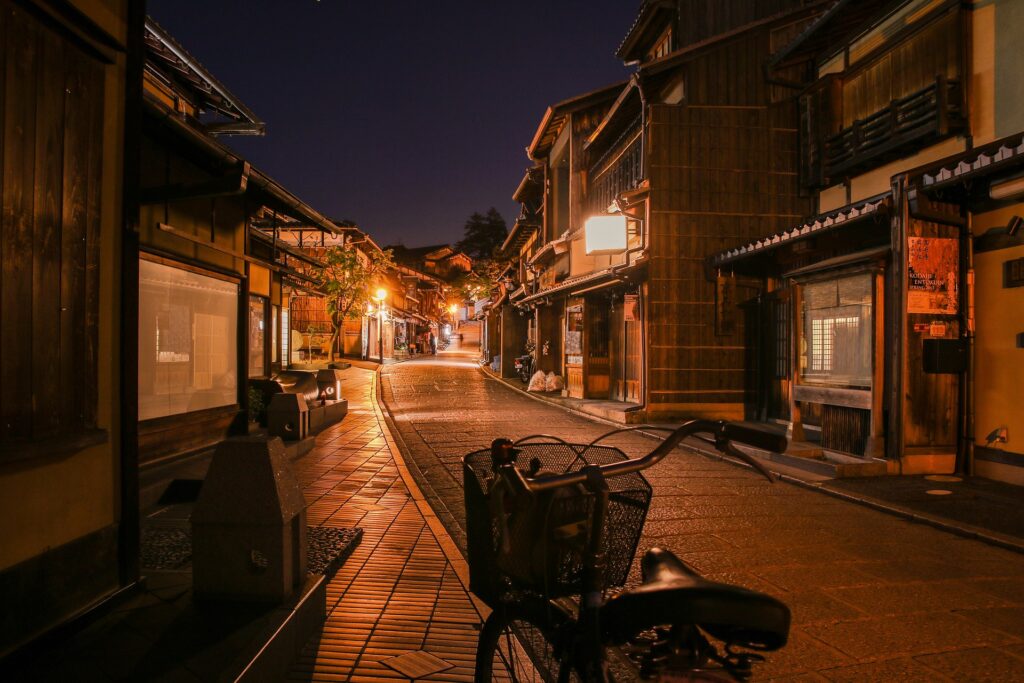
Quick Answer: What to Expect from Kyoto at Night
- Most temples close early: Expect many major temples to close around 5:00 PM or 6:00 PM unless a special night-viewing event is running.
- Some shrines are open all night: Fushimi Inari Taisha and Yasaka Shrine are accessible 24 hours and are among the easiest free things to do in Kyoto at night.
- Gion, Pontocho, and Kiyamachi are the main evening areas: These districts are best for traditional streets, dinner, drinks, and relaxed nightlife.
- Seasonal illuminations are limited: Kiyomizu-dera, Kodai-ji, Eikando, and other temples usually open at night only during selected spring, summer, or autumn periods.
- Gion etiquette matters: Do not follow, stop, touch, or photograph geiko or maiko without permission. Stay on public streets and follow posted signs.
- Plan your return: Trains and buses do not run all night in Kyoto. Check your final connection or budget for a taxi if you plan to stay out late.
24/7 Shrines and Free Night Walks
1. Fushimi Inari Taisha — Walk the Torii Gates Without the Crowds
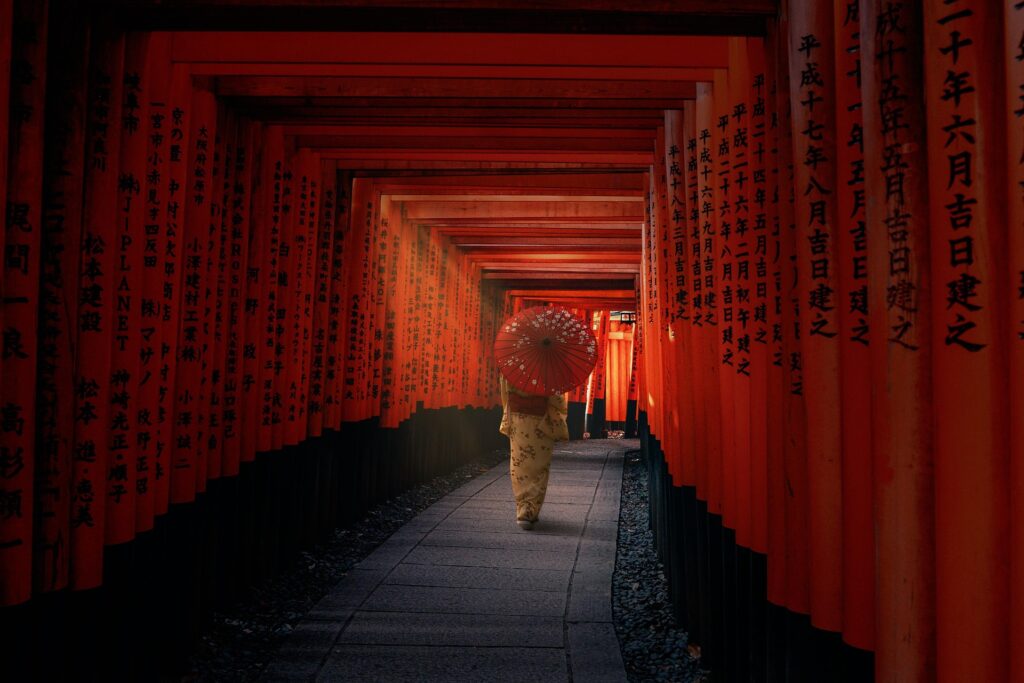
Visiting Fushimi Inari at night is one of the most memorable ways to experience Kyoto’s most famous shrine. During the day, the torii gate paths can be packed with visitors. After dark, the crowds thin out, the lanterns glow, and the lower trails feel calm and atmospheric.
- Hours: Open 24 hours
- Admission: Free
- Best for: Photographers, repeat visitors, and travelers who want a free after-dinner activity
- How long to spend: 45–90 minutes for the lower shrine and torii gate paths; longer if you continue up the mountain
- What to know: The lower sections are lit, but the trail becomes much darker as you climb. Bring a flashlight or make sure your phone battery is full. Wild boars are occasionally seen on the mountain, so keep your distance if you encounter one.
For a detailed route map and daytime planning tips, see our complete Fushimi Inari guide.
2. Yasaka Shrine — A Lantern-Lit Gateway to Gion
Yasaka Shrine sits at the eastern end of Gion and is one of the easiest shrines to visit after dark. The grounds are open 24 hours, and the illuminated lanterns create a warm, classic Kyoto atmosphere. It also works perfectly as the starting point for an evening walk through Maruyama Park, Hanamikoji Street, or the wider Gion area.
- Hours: Shrine grounds open 24 hours; shrine offices have limited daytime hours
- Admission: Free
- Best for: A short, easy evening stop before or after dinner in Gion
- Location: Beside Maruyama Park and within walking distance of Hanamikoji Street
- Photo tip: From the main gate area, you can look west down Shijo-dori toward the Minamiza Kabuki Theater.
Seasonal Illuminations Worth Planning Around
3. Kiyomizu-dera Night Viewing — Seasonal Only
A common mistake is assuming that Kiyomizu-dera Temple is open every night. It is not. On normal days, the temple usually closes in the early evening. Night viewing is only offered during selected special periods, usually around cherry blossoms, summer prayer events, and autumn leaves.
- 2026 night-viewing periods: Spring night viewing has already passed. The remaining 2026 periods are scheduled for August 14–16 and November 21–30.
- Night hours during special periods: Usually until 9:30 PM, with last entry around 9:00 PM
- Regular hours: Usually closes around 6:00 PM on normal days
- Admission: The regular temple admission fee applies. Check the official website before visiting, as fees and special-viewing details can change.
- What to know: The illuminated wooden stage is spectacular, but the limited dates attract heavy crowds. Arrive before sunset if you want to see the transition from golden hour to night.
For ticket details and sunset photo spots, see our Kiyomizu-dera guide. You can also check the official Kiyomizu-dera night viewing page before planning your visit.
4. Kodai-ji Temple — Night Gardens and Projection Mapping
Kodai-ji Temple, located in the Higashiyama area not far from Kiyomizu-dera, is one of Kyoto’s most atmospheric night temples when special evening openings are running. The temple is known for illuminated gardens, reflective ponds, bamboo paths, and seasonal projection mapping.
- Best seasons: Spring and autumn are usually the main night-viewing seasons
- 2026 note: The spring 2026 night event has already ended. Check the official Kodai-ji website for later 2026 special openings.
- Best for: Travelers who want a quieter, more design-focused night garden experience than the busiest major temples
- Suggested route: Combine Kodai-ji, Ninenzaka, Sannenzaka, and the Kiyomizu-dera area if your dates overlap with night openings.
Because night-viewing dates and themes change by season, confirm the latest information on the official Kodai-ji website before building your evening around it.
5. Kimono Forest Night Illumination in Arashiyama
If you are spending the late afternoon in Arashiyama, stay a little longer for the Kimono Forest illumination at Randen Arashiyama Station. This small but photogenic installation features hundreds of pillars decorated with colorful Kyo-yuzen textile patterns. After sunset, the pillars glow softly and create a very different mood from the daytime bamboo grove.
- Location: Randen Arashiyama Station
- Hours: Usually illuminated from sunset until around 9:00 PM
- Admission: Free
- Best for: A short photo stop after Arashiyama Bamboo Grove, Togetsukyo Bridge, or dinner nearby
- What to know: It is not a huge attraction, but it is easy, free, and beautiful at night. Do not miss the small “Pond of the Dragon” water feature near the end of the path.
Traditional Evening Walks
6. Pontocho Alley and Gion — Kyoto’s Classic Night Atmosphere
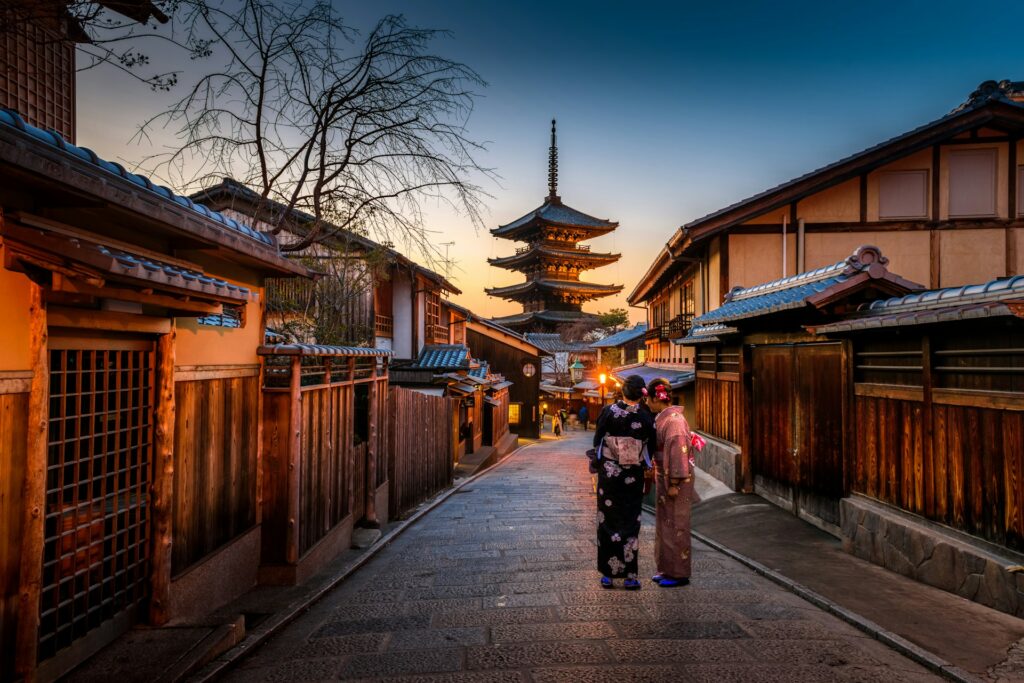
For a traditional Kyoto evening that does not revolve around clubs, head to Pontocho and Gion. These two neighboring districts are among the best places to walk after dark, especially if you want lanterns, wooden architecture, restaurants, and a more atmospheric side of the city.
Pontocho Alley runs beside the Kamo River and is lined with restaurants and bars, from casual yakitori spots to higher-end dining. In warmer months, some riverside restaurants offer kawadoko terrace seating over the river.
Across the river, Gion is Kyoto’s most famous geiko district. Hanamikoji Street and the surrounding public lanes are especially beautiful at night, with traditional machiya buildings and soft lighting. You may see a geiko or maiko on the way to an appointment, but they are working professionals, not tourist attractions.
Important Gion etiquette:
- Stay on public streets and do not enter private alleys or private property.
- Do not follow, stop, touch, or block geiko or maiko.
- Do not photograph geiko or maiko without explicit permission.
- Do not block roads, doorways, taxis, or local residents while taking photos.
- Follow posted signs, especially in narrow private lanes around Gion.
You can still enjoy beautiful night photography in Gion by focusing on the architecture, lanterns, shopfronts, and public streets.
7. Kamo River — A Relaxed Evening Break
If you want a free, low-pressure way to enjoy Kyoto at night, walk to the Kamo River. The stretch between Sanjo and Shijo is especially popular in the evening, with locals, couples, travelers, street musicians, and people relaxing by the water.
- Best section: Between Sanjo Bridge and Shijo Bridge
- Best for: A relaxed break between dinner, Gion, Pontocho, and Kiyamachi
- What to do: Grab a drink from a convenience store, sit by the river, and watch the lights from Pontocho reflect on the water.
- Photo tip: The view from Sanjo Bridge toward Pontocho is one of the easiest night photo spots in central Kyoto.
- Season note: Spring and early summer evenings are especially pleasant, but bring a jacket in cooler months.
Modern Kyoto Nightlife
8. Kiyamachi Bars and Izakayas — Kyoto After Dinner
If you want a more modern night out, head to Kiyamachi, the nightlife strip running along the Takase River near Pontocho. Kyoto is not as loud or club-focused as Tokyo or Osaka, but it has a strong bar scene with izakayas, craft beer spots, whisky bars, and small cocktail lounges.
- Best for: Casual drinks, late dinner, bar hopping, and a more local-feeling night out
- What to expect: Narrow buildings, small upstairs bars, izakayas with shared plates, and a mix of local and international visitors
- Payment tip: Credit cards are common at modern bars, but smaller izakayas may still prefer cash. Carry cash as a backup.
- Cover charges: Some bars and izakayas may charge a small seating or table fee, often with a small appetizer.
- Getting home: Check your last train or bus before ordering another round.
9. Kyoto Tower — Easy Rain-Friendly Night View
If it is raining, too cold, or you simply want a straightforward indoor night view, Kyoto Tower is one of the easiest options. It is located directly across from Kyoto Station, so it is simple to reach at the end of the day and convenient if your hotel is nearby.
- Best for: Rainy nights, families, first-time visitors, and travelers staying near Kyoto Station
- Typical hours: The observation deck usually stays open into the evening, but closing times and last entry can change.
- What to know: It is not as atmospheric as Gion or Fushimi Inari, but it is easy, sheltered, and practical when the weather is bad.
- Tip: Check the official Kyoto Tower hours and ticket information before going.
10. Teramachi and Shinkyogoku Arcades — Covered Evening Shopping
For a simple rainy-night option, head to the Teramachi and Shinkyogoku shopping arcades near Kawaramachi. These covered streets are not a deep cultural experience, but they are useful when the weather is bad and you still want to walk, shop, snack, or browse souvenirs after dark.
- Best for: Rainy evenings, casual shopping, souvenirs, snacks, and families
- What to expect: Covered arcades with shops, cafes, casual restaurants, game centers, and souvenir stores
- Timing: Many shops close earlier than bars and restaurants, so go before late evening if shopping is your goal.
- Pair with: Nishiki Market during the day, then Teramachi, Shinkyogoku, Pontocho, or Kiyamachi in the evening.
DIY vs. Guided Gion Night Tour — Which Is Right for You?
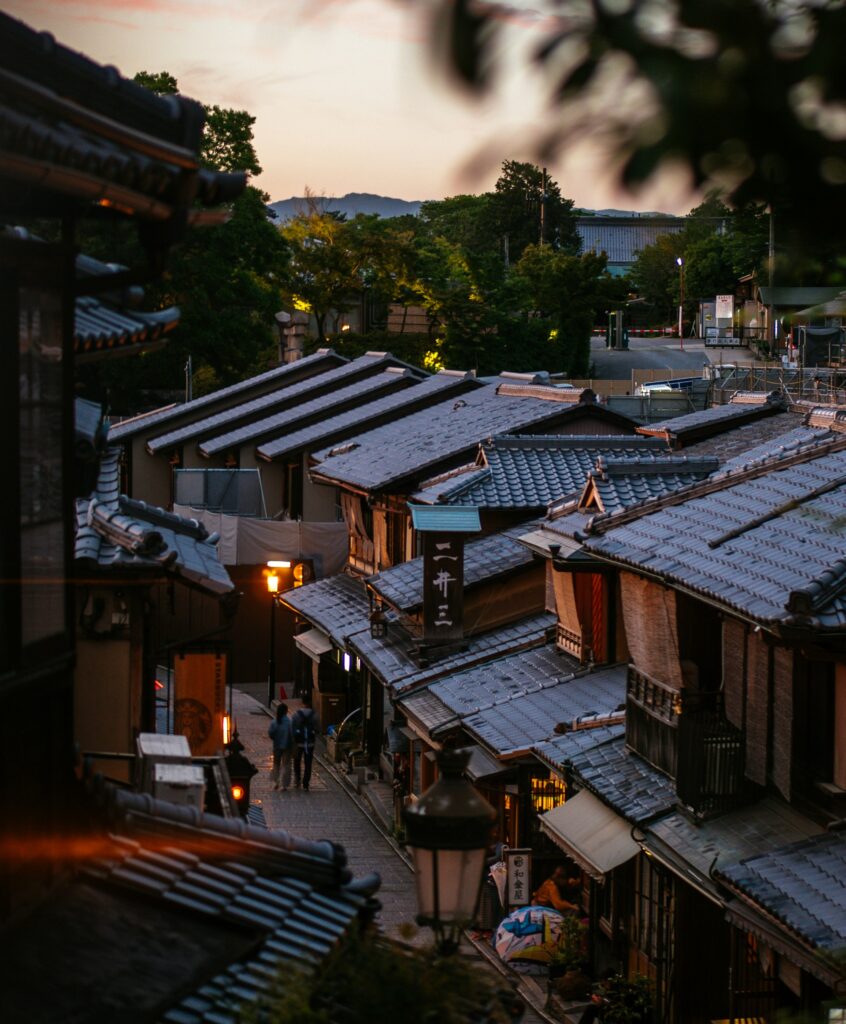
Gion is beautiful at night, but it can also be confusing. The streets are narrow, some alleys are private, and much of the cultural context is easy to miss if you are walking without a guide. If you are wondering whether a geisha walking tour is worth it, here is a practical comparison.
| Feature | Self-Guided | Guided Night Tour |
|---|---|---|
| Cost | Free, aside from your own food and drinks | Often around the low-$20s to $30s, depending on date and availability |
| Time Required | Flexible, but easy to lose time navigating | Usually around 100 minutes on a structured route |
| Cultural Context | Limited unless you have researched in advance | Strong. A guide can explain geiko and maiko culture, architecture, etiquette, and local history. |
| Etiquette Confidence | You need to watch signs and avoid private areas yourself | A guide can help you stay on appropriate public routes and avoid common mistakes. |
| Geiko or Maiko Sightings | Possible, but never guaranteed | Possible, but still never guaranteed. A respectful tour should not chase or disturb them. |
| Best For | Budget travelers, photographers, repeat visitors, and people who prefer total flexibility | First-time visitors, solo travelers, culture-focused travelers, and anyone nervous about local rules |
Choose self-guided if you are mainly interested in photography, you already know the area, or you want to move at your own pace.
Choose a guided tour if you want a more structured, respectful, and informative way to understand Gion after dark. It is especially useful if you have only one evening in Kyoto or if you are worried about accidentally entering private lanes or missing the cultural background.
If a guided walk sounds like a better fit, check the latest availability, start times, reviews, and meeting point details for the Kyoto Gion Magical Night Walking Tour.
Kyoto at Night by Season
Kyoto’s best night experiences change depending on the season. Use this as a planning shortcut, but always confirm official dates for special events before finalizing your itinerary.
| Season | Best Night Experience | Good Alternative | Planning Note |
|---|---|---|---|
| Spring | Cherry blossom illuminations at selected temples | Kamo River evening stroll | Spring 2026 temple light-ups have already passed. Check next year’s dates if planning ahead. |
| Summer | Kiyomizu-dera summer night viewing if your dates overlap | Pontocho riverside dining and Kamo River walks | Evenings are humid. Choose lighter walks and keep water with you. |
| Autumn | Kiyomizu-dera, Kodai-ji, Eikando, and other autumn leaf illuminations | Gion, Yasaka Shrine, and Pontocho | This is one of Kyoto’s busiest night-viewing seasons. Expect crowds and queues. |
| Winter | Kimono Forest and quiet shrine walks | Kyoto Tower or covered shopping arcades | Evenings can feel very cold. Bring a coat, gloves, and warm layers. |
Last Train, Buses, and Getting Home Safely
Kyoto is not a 24-hour transport city. If you are staying out late in Gion, Pontocho, or Kiyamachi, check your return route before the final train or bus.
- Trains and subway: Last services are generally around late evening to midnight, depending on the line and destination.
- Buses: Many city bus routes finish earlier than trains, and schedules vary by route.
- Taxis: Taxis are available late at night in central areas, especially around stations, hotels, and busy nightlife districts.
- Walking: Some central areas are walkable, but check the distance carefully. Kyoto blocks can feel longer at night after a full day of sightseeing.
- Safety tip: Save your hotel name and address in Japanese, especially if you plan to take a taxi.
Frequently Asked Questions About Kyoto at Night
Are temples open at night in Kyoto?
Most major temples in Kyoto close around 5:00 PM or 6:00 PM. The main exceptions are special seasonal night-viewing events, usually during cherry blossom, summer prayer, or autumn foliage periods. Shrines such as Fushimi Inari Taisha and Yasaka Shrine are open 24 hours.
Is Fushimi Inari safe at night?
Yes, Fushimi Inari is generally safe at night, especially around the lower shrine and main torii gate paths. However, the mountain trail becomes much darker as you climb. Bring a flashlight or keep your phone charged, and do not approach wildlife if you see any.
Can I take photos of geisha in Gion?
Do not photograph geiko or maiko without explicit permission. Also avoid following, stopping, touching, or blocking them. In Gion, some lanes are private, and posted rules must be followed. Focus your photos on public streets, lanterns, architecture, and shopfronts instead.
What is the best free thing to do in Kyoto at night?
Fushimi Inari, Yasaka Shrine, Gion, Pontocho, and the Kamo River are all excellent free or low-cost night options. For first-time visitors, Yasaka Shrine plus a Gion and Pontocho walk is the easiest free evening route.
What should I do in Kyoto at night if it rains?
For rainy nights, consider Kyoto Tower, the Teramachi and Shinkyogoku shopping arcades, a restaurant in Pontocho or Kiyamachi, or a short guided walk if the route can be adjusted. If the rain is heavy, choose indoor or covered options rather than long shrine walks.
Is Kyoto nightlife family-friendly?
Yes, many Kyoto night activities are family-friendly if you keep the evening realistic. Yasaka Shrine, Gion’s public streets, the Kamo River, Kyoto Tower, and seasonal illuminations can work well with children. Late-night bars and crowded temple light-ups may be less comfortable for younger kids.
Is a guided Gion night tour worth it?
It can be worth it if you want cultural context, a structured route, and help understanding Gion etiquette. It is less necessary if you only want to take photos, wander independently, or keep costs as low as possible. Geiko or maiko sightings should never be treated as guaranteed.
Final Verdict: Best Kyoto Night Experience for You
Choose Fushimi Inari at night if you want a free, iconic, crowd-light Kyoto experience and are comfortable walking in low light.
Choose Yasaka Shrine plus Gion if you want an easy, atmospheric evening route without traveling far from central Kyoto.
Choose Kiyomizu-dera or Kodai-ji night viewing if your dates overlap with special seasonal openings and you are willing to handle crowds for a memorable illuminated temple experience.
Choose Pontocho and Kiyamachi if your priority is dinner, drinks, izakayas, and relaxed Kyoto nightlife.
Choose Kyoto Tower or the shopping arcades if it is raining, you are traveling with family, or you want an easy indoor evening option.
Choose a guided Gion walking tour if you are a first-time visitor, want deeper cultural context, or prefer a more structured way to explore the geiko district respectfully.
If you are still deciding and want help making the most of one evening in Gion, check the current availability, start times, reviews, and included details for the Kyoto Gion Magical Night Walking Tour.
Prices, opening hours, transport schedules, special night-viewing dates, tour inclusions, payment methods, and seasonal operations can change. Always check official sources and your selected booking page before finalizing your trip.

Hi, I’m Kai. I’m a Tokyo-based travel writer, tourism industry insider, and the author of a published guidebook for international visitors to Japan. With over 10 years of professional experience at a leading Japanese tourism company, my mission is to help you skip the tourist traps and navigate Japan’s best destinations like a local. I believe the perfect day trip is like a traditional kaiseki meal: a beautiful balance of precise planning and unforgettable seasonal discovery. When I’m not out conducting field research, you’ll usually find me drafting new itineraries with one of my favorite fountain pens!