
Exciting Day Trips from Tokyo: Your Ultimate 2026 Guide
Planning a day trip from Tokyo can feel overwhelming—but this guide makes everything simple. Here you’ll find the best day trips from Tokyo, how to reach each destination by train, sample itineraries, and practical tips for choosing the perfect route for your travel style.
Tokyo is electric: neon canyons, late-night ramen, and endless energy. It is one of the most exciting cities on earth. But the real secret most travelers miss is this: Tokyo is a gateway.
Within one to two hours by train, you can step into a cedar forest around a thousand-year-old shrine, soak in volcanic hot springs with a view of Mt. Fuji, wander old merchant streets lined with wooden warehouses, or stand on a wild coastline facing the open Pacific. Samurai capitals, sacred mountains, flower parks, and port cities are all waiting just outside the city.
The problem? Leaving Tokyo feels daunting. The train maps look like circuit boards, the language barrier feels higher once you leave the Yamanote Line, and questions pile up: “Which pass do I buy?” “Is this day trip realistic?” “Will I get lost?” Too often, these doubts keep people inside the city—and they miss the heart of Japan.
This Tokyo day trips guide is your answer. Instead of a vague list of “top 10 day trips,” we focus on twelve carefully selected routes you can actually copy and use. Think of this page as your cockpit: a place to compare destinations, choose the right one for your mood, and get the essentials you need to travel with confidence.
Prefer a complete, ready-to-use guide? Our Tokyo day trip ebook bundles all twelve routes into one detailed resource you can save to your phone.
Quick Picks: The Best Day Trips from Tokyo at a Glance
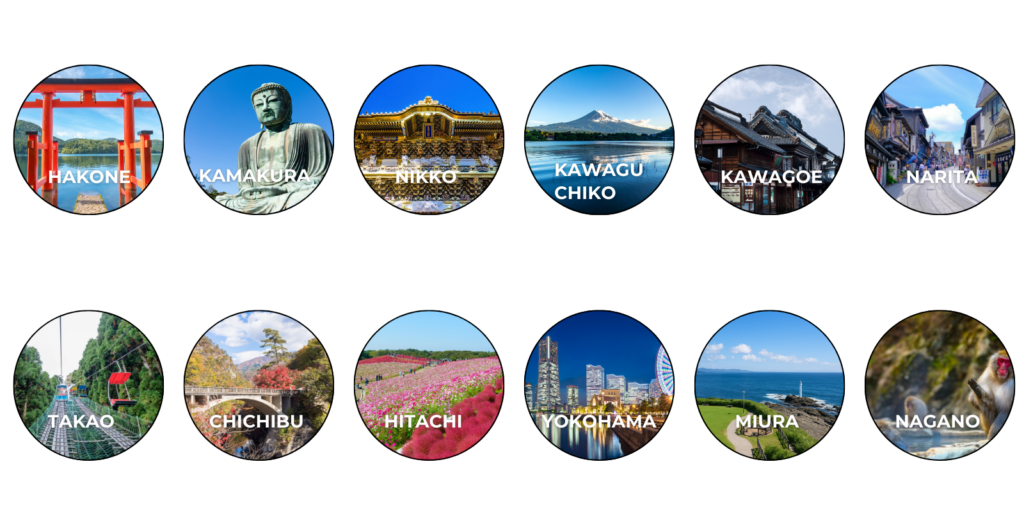
If you’re deciding where to go for your first day trip from Tokyo, this quick comparison highlights the most popular destinations, travel times, and what each place is best known for.
| Destination | Approx. Travel Time (One Way) | Main Vibe | Best For |
| Hakone | Approx. 80–90 min (Romancecar or Odakyu Line) | Onsen, Mt. Fuji views, art museums | First-time visitors, onsen lovers, relaxed couples |
| Kamakura & Enoshima | Approx. 60 min | Temples, coastal views, small-town streets | First-timers, culture lovers, casual walkers |
| Nikko | Approx. 2 hours | Shrines in deep forest, waterfalls, cool mountain air | History fans, autumn foliage trips, summer escape |
| Lake Kawaguchiko | Approx. 2 hours | Mt. Fuji views, lakeside walks, photo spots | Photographers, couples, slow-paced travelers |
| Kawagoe | Approx. 30–45 min | “Little Edo” warehouse streets, sweet shops | First-timers, foodies, half-day explorers |
| Narita | Approx. 70–90 min | Grand temple complex, old pilgrimage town | Transit stopovers, temple lovers, slow walkers |
| Mt. Takao | Approx. 50–60 min | Forest hiking, cable car, city views | Hikers, families, budget travelers |
| Chichibu & Nagatoro | Approx. 80–100 min | Rivers, valleys, seasonal flowers | Outdoor lovers, festival fans, repeat visitors |
| Hitachi Seaside Park | Approx. 90 min train + bus | Vast flower fields, coastal breezes | Spring and autumn flower hunters, families |
| Yokohama | Approx. 30 min | Harbor views, Chinatown, modern cityscape | Foodies, families, light walkers |
| Miura Peninsula | Approx. 70–90 min | Fishing ports, seaside walks, fresh tuna | Seafood lovers, coastal walkers, slow travelers |
| Nagano (Snow Monkeys) | Approx. 90 min Shinkansen + local travel | Snowy landscapes, hot-spring-bathing monkeys | Winter trips, photographers, bucket-list travelers |
Where to Go: 12 Essential Day Trips from Tokyo
All twelve of these destinations are reachable from Tokyo as a day trip by train. Below you’ll find a short overview of each place: what it feels like, why it’s worth the effort, and who will enjoy it most. Detailed, step-by-step itineraries live inside the guidebook and in future individual articles.
Hakone: Onsen, Art & Fuji Views
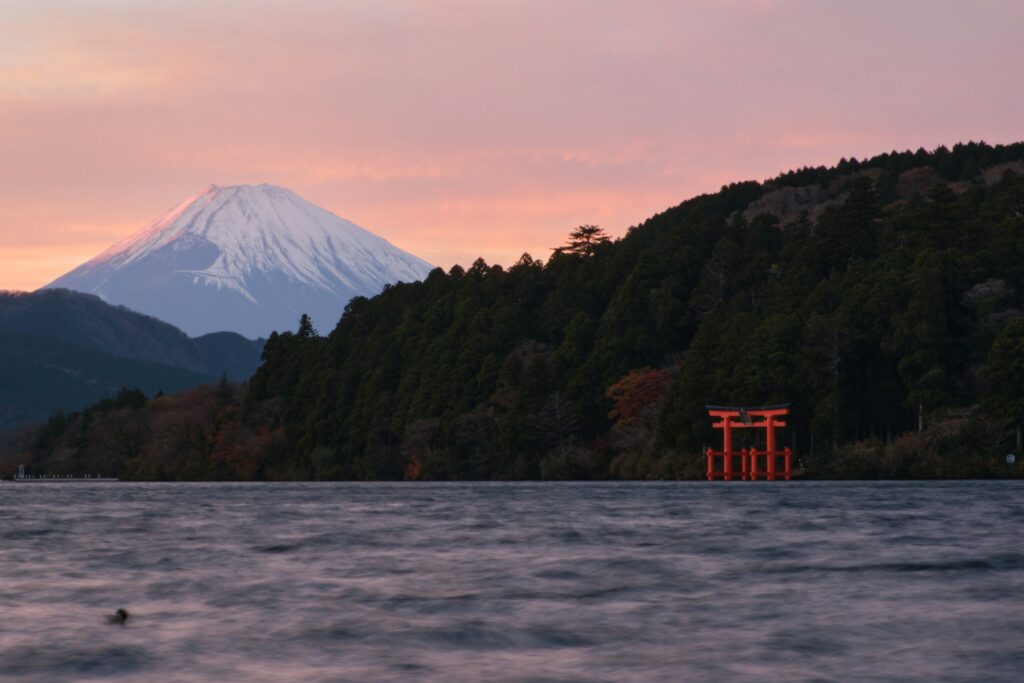
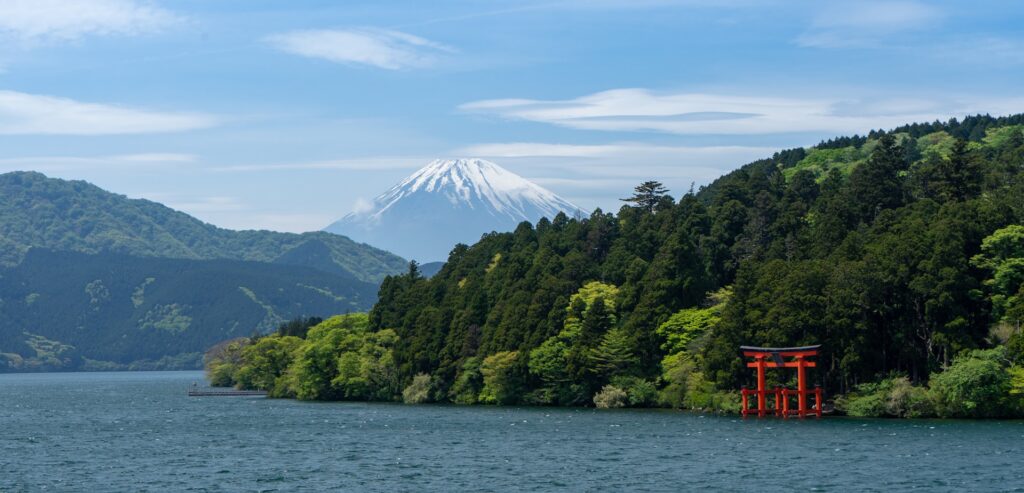
Hakone is the classic Tokyo day trip: hot springs, mountain views, and a chance to glimpse Mt. Fuji over a lake. It feels like a compact introduction to Japan’s love of onsen and scenic routes. The Hakone loop connects trains, cable cars, ropeways, and even a pirate-style cruise ship across Lake Ashi, turning the journey itself into part of the fun. On clear days, the view of Mt. Fuji rising behind the lake is unforgettable.
Beyond the famous loop, Hakone offers quiet forest paths, small museums, and refined food. You can soak in an outdoor bath while breathing cool mountain air, visit the Hakone Open-Air Museum to see sculptures scattered across a hillside, or wander cedar-lined avenues once walked by Edo-era travelers. It can be as busy or as calm as you design it to be.
Hakone is ideal if you want a “best of Japan” sampler in one day: a little bit of nature, culture, onsen, and views—without needing to stay overnight.
Detailed Hakone day trip guide coming soon.
Kamakura & Enoshima: Temples, Sea Breezes & Old Streets
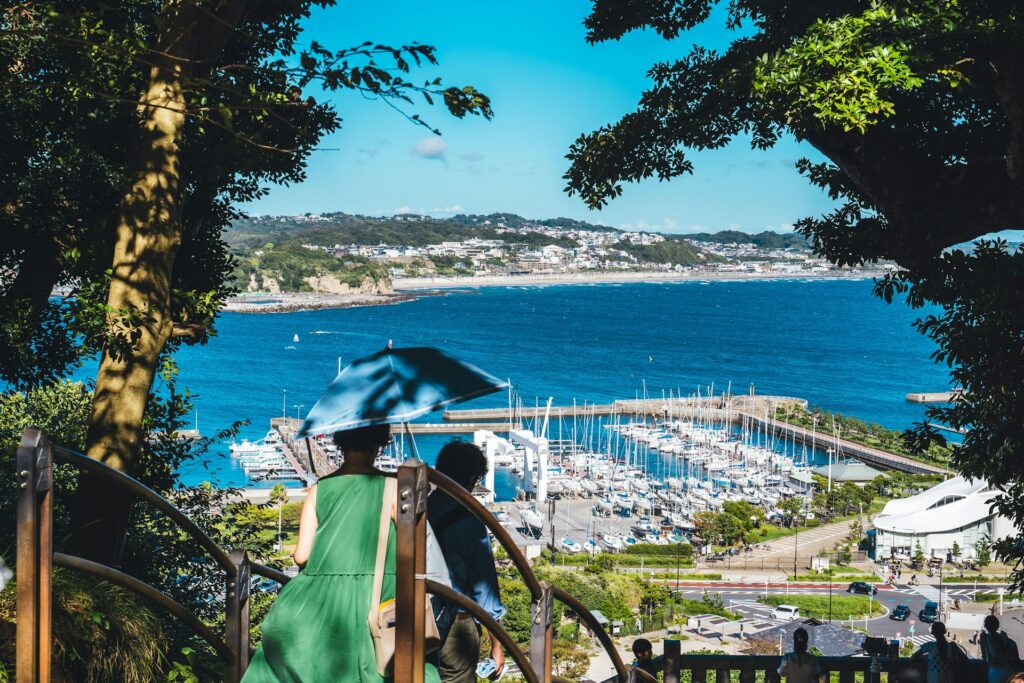
Kamakura and nearby Enoshima offer a rare mix for a Tokyo day trip: historic temples, coastal views, and relaxed small-town streets. Once a samurai capital, Kamakura is filled with atmospheric temples and shrines, stone lanterns, and mossy paths that feel a world away from Shinjuku. The Great Buddha, bamboo groves, and hillside viewpoints create a calm, contemplative mood.
Down by the water, Enoshima brings a more playful energy. You can walk across the causeway to the island, explore caves, visit viewpoints, and watch the sun set behind Mt. Fuji on clear days. In the rainy season, hydrangeas spill down the hillsides; in summer, the sea breeze is a welcome escape from Tokyo’s heat.
Kamakura & Enoshima are perfect if you want a softer, slower day: temples in the morning, seaside strolls and cafes in the afternoon, and an easy train ride home.
Detailed Kamakura & Enoshima day trip guide coming soon.
Nikko: Forest Shrines, Waterfalls & Cool Mountain Air
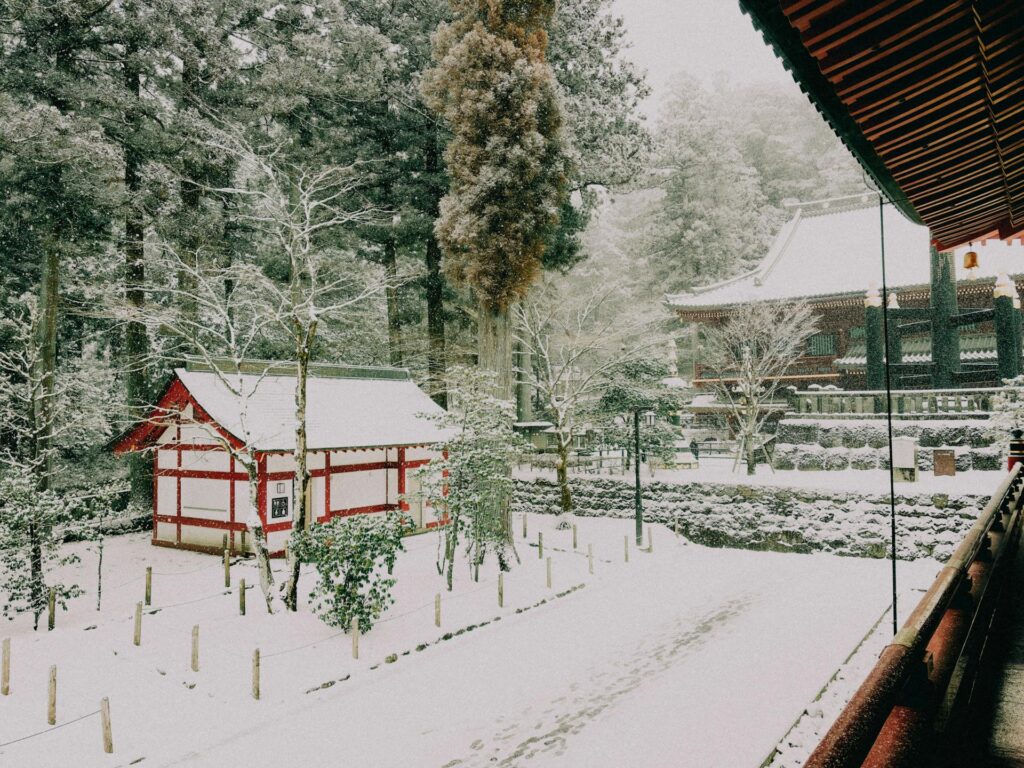
Nikko feels like a pilgrimage. The journey north from Tokyo leads you into cooler air, tall cedar forests, and a cluster of richly decorated shrines and temples that are unlike anywhere else in Japan. The famous Toshogu Shrine is a riot of carved wood, gold leaf, and color, set among ancient trees and stone lanterns. Even with crowds, the setting has a powerful, almost theatrical atmosphere.
Beyond the shrine complex, Nikko opens into a wider mountain landscape. Lake Chuzenji and Kegon Falls sit at higher elevation, often several degrees cooler than Tokyo in summer. In autumn, the whole area explodes in red and gold foliage, making it one of Japan’s most spectacular koyo destinations. Walking trails, viewpoints, and lakeside paths offer space and silence.
Nikko is best for travelers who don’t mind an early start and want a big payoff: deep history, strong seasonal beauty, and a feeling of having truly left the city behind.
Detailed Nikko day trip guide coming soon.
Lake Kawaguchiko: Mt. Fuji Reflections & Lakeside Walks
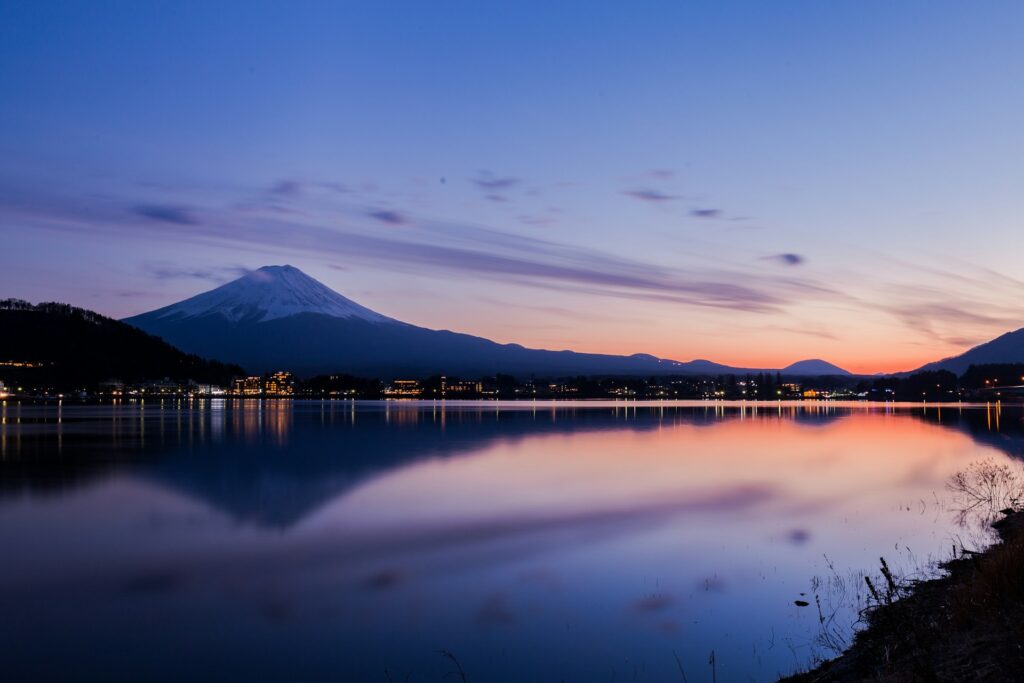
Lake Kawaguchiko is the classic Mt. Fuji day trip: a calm lake, a ring of small towns and viewpoints, and the mountain rising behind it all when the weather cooperates. On clear days, you can see Fuji reflected in the water at dawn, framed by cherry blossoms in spring or red maples in autumn. Even when the summit is shy, the lake area still feels open, quiet, and refreshing after Tokyo.
This is a place to slow down. You can stroll along the lakeside promenade, ride the ropeway up to viewpoints, relax in cafes with big windows, or visit small museums and onsen with Fuji-facing baths. The pace is gentle, and the walking is mostly easy and flat.
Lake Kawaguchiko is best for travelers who want “the Mt. Fuji experience” without rushing. Plan for an early start, check the weather, and treat the day as a Fuji-area escape rather than a guaranteed postcard view.
Detailed Lake Kawaguchiko day trip guide coming soon.
Kawagoe: “Little Edo” Streets & Sweet Shops
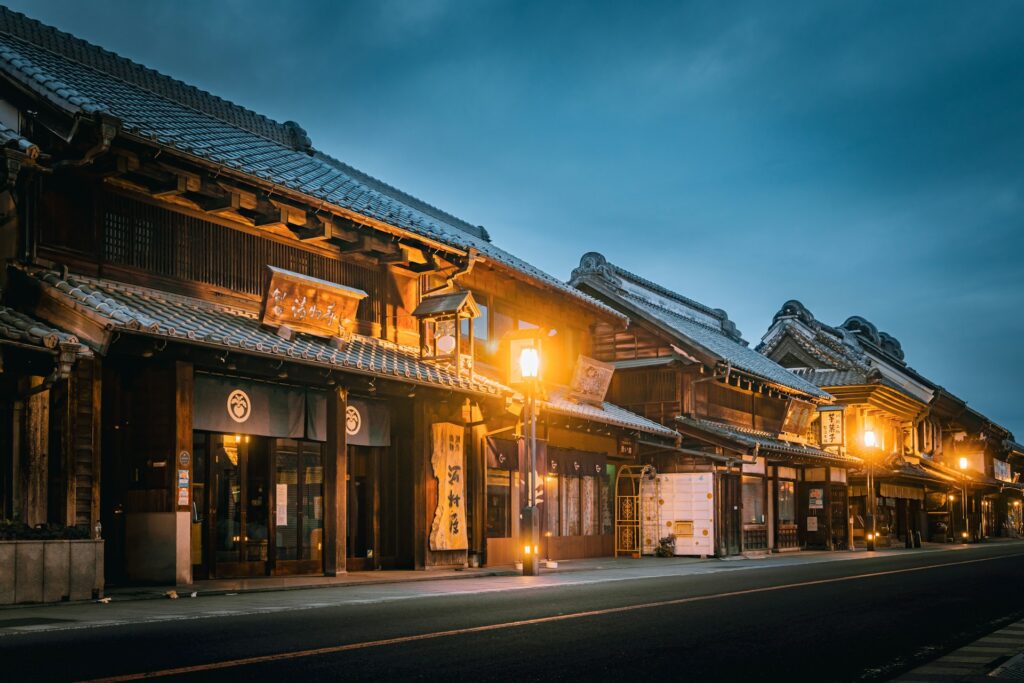
Kawagoe is often called “Little Edo” for a reason. Just half an hour from Tokyo, you step into streets lined with dark wooden warehouse buildings, tiled roofs, and a famous bell tower that chimes over the town. It feels like a compact time slip to the merchant culture of old Japan, without the crowds of more famous historic districts.
The main joy here is wandering. You can drift between candy shops, sweet potato snacks, soy sauce breweries, and small temples, stopping whenever something catches your eye. It’s an easy walking town, mostly flat, with plenty of benches and cafes for breaks. Kawagoe is also one of the best places to buy nostalgic, edible souvenirs.
Kawagoe is perfect for a relaxed, low-stress day: minimal planning, short travel time, and lots of small discoveries. It works well as either a full day or a generous half-day from central Tokyo.
Detailed Kawagoe day trip guide coming soon.
Narita: Temple Town & Old Pilgrimage Atmosphere
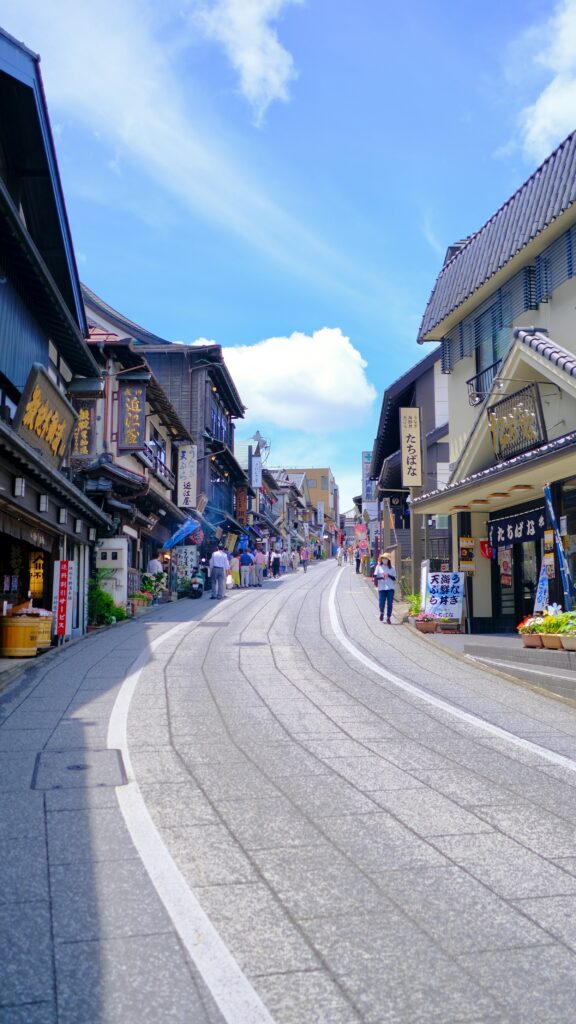
Narita is far more than just an airport stop. The true heart of the area is Naritasan Shinshoji, a large, active temple complex set in a park of ponds, pagodas, and seasonal gardens. Incense smoke, temple bells, and chanting create a living spiritual atmosphere that many visitors find more tangible and less crowded than central Tokyo’s big-name temples.
The approach road to the temple, Omotesando Street, is a classic pilgrimage town street. Wooden shopfronts sell traditional sweets, crafts, and especially unagi (grilled eel), a local specialty. Walking slowly from the station to the temple and back becomes a complete experience: eat, pray, stroll, and shop, all at an unhurried pace.
Narita is ideal if you want a gentle, cultural day with minimal logistics, or if you have a spare day before or after a flight. It’s also a great choice for travelers who prefer atmosphere over long hikes.
Detailed Narita day trip guide coming soon.
Mt. Takao: Forest Trails & City Views
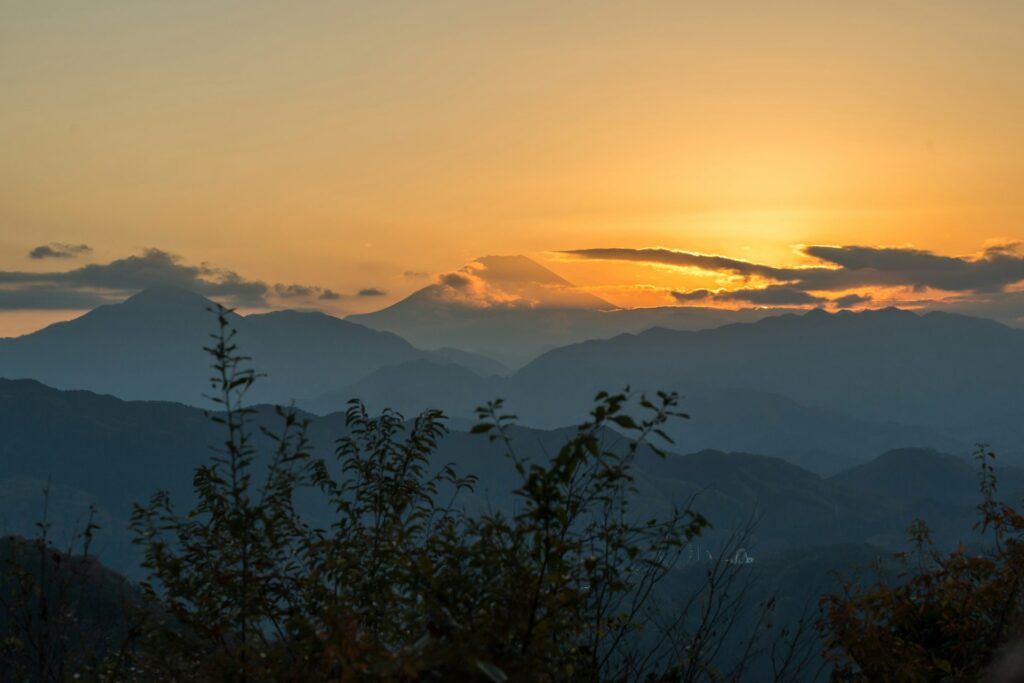
Mt. Takao offers one of the easiest ways to swap concrete for cedar trees. Less than an hour from central Tokyo, you can ride a cable car or chairlift up the mountain, then follow shaded trails to a temple, viewpoints, and the summit. On clear days, you’ll see the Tokyo skyline in one direction and distant mountains in the other—and occasionally Mt. Fuji.
The mountain has multiple routes, from wide, paved paths to more rugged forest trails, so you can choose your own level of challenge. Along the way, you’ll pass small shrines, statues, and tea houses. In summer, the forest provides deep shade; in autumn, the leaves turn rich gold and red. In the evening, Beer Mount, a seasonal beer garden with night views, is a popular reward.
Mt. Takao is perfect for hikers, families, and budget travelers who want a big dose of nature without complicated planning or long train rides.
Detailed Mt. Takao day trip guide coming soon.
Chichibu & Nagatoro: Rivers, Valleys & Seasonal Flowers
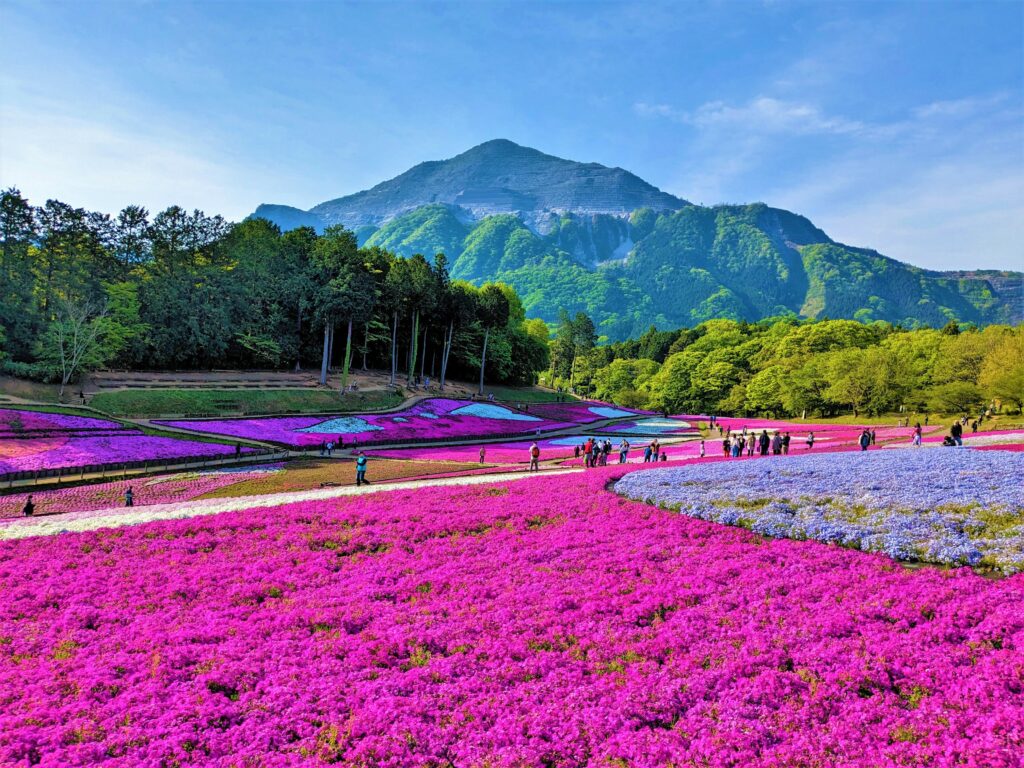
Chichibu and nearby Nagatoro feel like a pocket-sized mountain region, complete with rivers, valleys, and strong seasonal color. The Arakawa River cuts through layered rock formations, and small boats and rafts glide over its surface in the warmer months. Hills and low mountains rise all around, creating a feeling of being far from the city, even though you arrived by train.
This area is especially famous for seasonal scenery. In spring, shibazakura (moss phlox) creates bright pink carpets beneath rugged peaks; in autumn, the valleys glow with koyo foliage. Small shrines, local festivals, and rustic food—like miso-potato skewers and hearty soba—give the trip a distinctly local flavor.
Chichibu & Nagatoro are best for repeat visitors to Tokyo, outdoor lovers, and anyone who wants a “countryside day” with a slightly adventurous edge. Expect more walking and hills than in a simple temple town, but also more space and quiet.
Detailed Chichibu & Nagatoro day trip guide coming soon.
Hitachi Seaside Park: Ocean of Flowers by the Sea
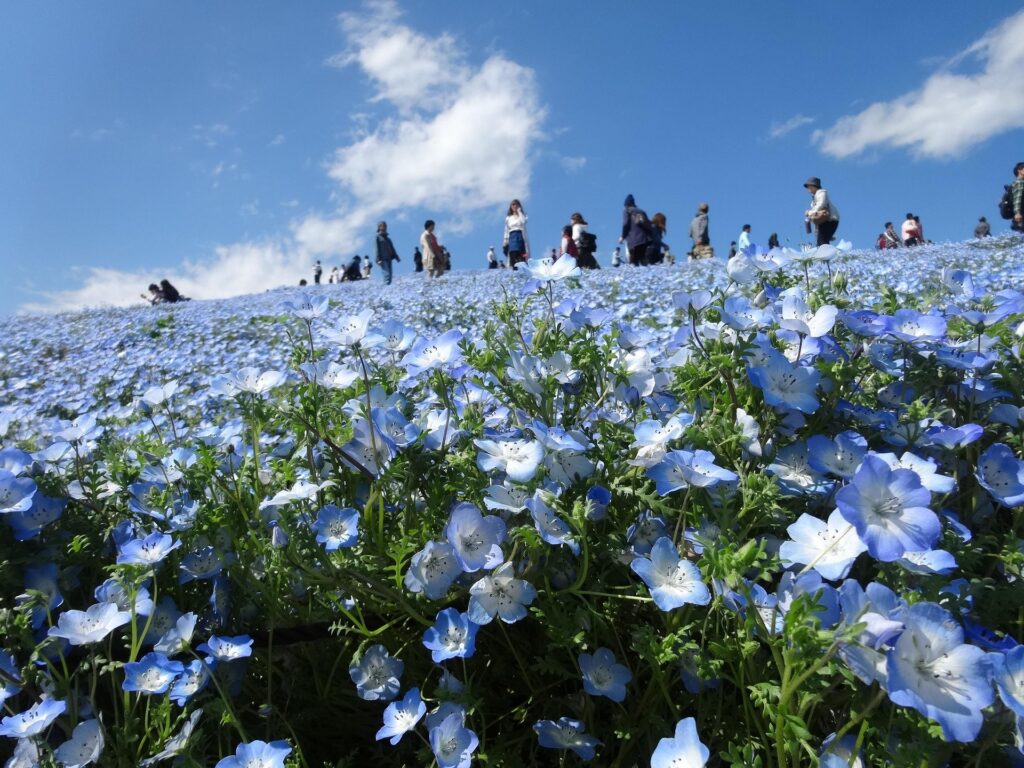
Hitachi Seaside Park is a day trip built around one idea: vast, cinematic fields of flowers. In spring, Miharashi-no-Oka hill becomes a blue universe as millions of nemophila bloom, merging land, sky, and sea. In autumn, the same hill turns fiery red with kochia bushes, creating another surreal, otherworldly landscape.
Beyond the famous hills, the park covers a huge area with cycling paths, open lawns, woodlands, and a small amusement zone for children. The sea is never far away, and coastal breezes keep the air moving even on warm days. It’s an easy place to spend hours just walking, picnicking, and taking photos without a rigid schedule.
Hitachi Seaside Park is best for travelers who are timing their trip to spring or autumn and want a single, unforgettable seasonal sight. It does require a longer journey and bus transfer, but the payoff is a truly world-class flower experience.
Detailed Hitachi Seaside Park day trip guide coming soon.
Yokohama: Harbor Lights, Chinatown & City Views
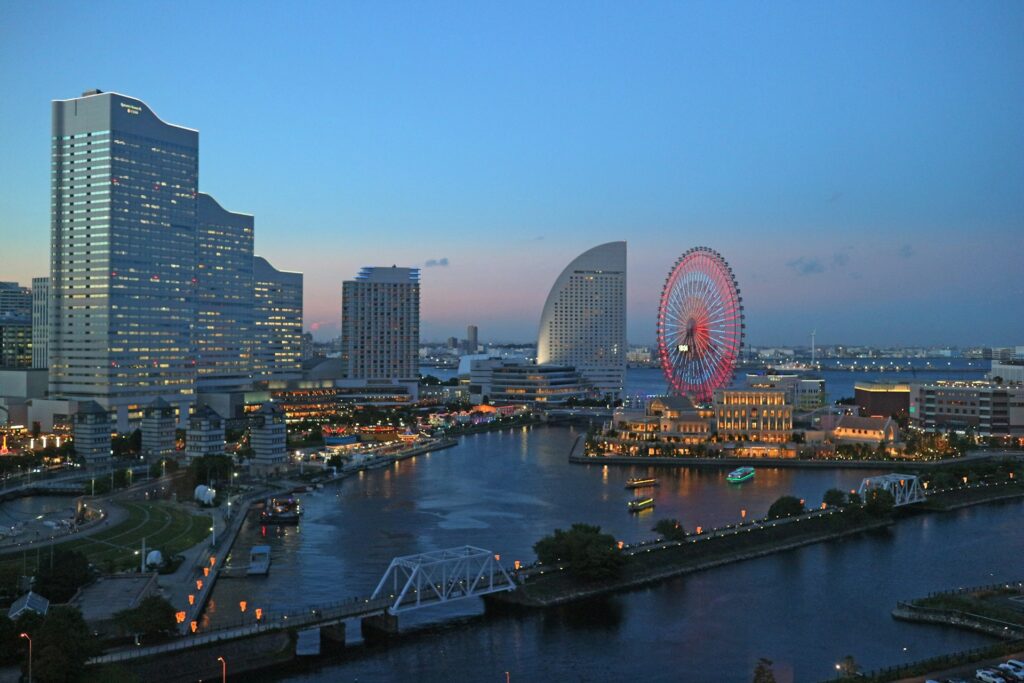
Yokohama is Tokyo’s easy neighbor—close enough for a casual evening, but with a distinctly different personality. The harbor area around Minato Mirai is full of wide promenades, modern architecture, and big-sky views. At night, the Ferris wheel lights and towers reflect in the water, making it one of the most photogenic cityscapes near Tokyo.
Just inland, you’ll find one of the largest Chinatowns in the world, packed with restaurants, street food stalls, and colorful gates. Further up the hill, Yamate and Motomachi preserve traces of Yokohama’s early international communities, with Western-style houses, churches, and stylish shopping streets. It’s a mix of port city, modern mall, and old hillside neighborhood.
Yokohama is ideal if you want a flexible, low-effort day or evening: easy access, plenty of food options, child-friendly attractions, and no strict schedule. It also works perfectly as a “Plan B” if the weather makes longer trips less appealing.
Detailed Yokohama day trip guide coming soon.
Miura Peninsula: Coastal Walks & Fresh Tuna
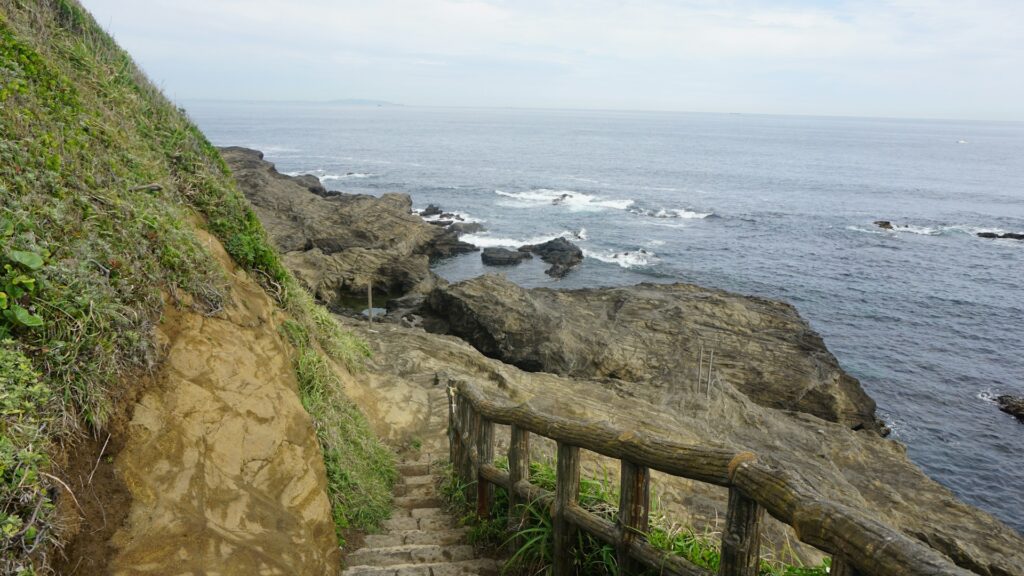
The Miura Peninsula feels like Tokyo’s back garden by the sea. Fishing ports, quiet beaches, rocky capes, and low headlands line the coast, connected by local trains and buses. Compared to more famous coastal areas, it’s calmer and more everyday, with fishing activity and neighborhood life still very visible.
One of the main draws is fresh seafood, especially tuna. Towns like Misaki are known for maguro dishes, from generously cut sashimi to grilled jaw meat and hearty stews. After eating, you can walk out to capes and lighthouses, explore islands like Jogashima with its dramatic rock formations, or simply follow coastal paths with ocean views and seabirds.
The Miura Peninsula is best for travelers who want a laid-back, food-forward seaside day with plenty of walking but no need to rush. It’s especially rewarding in clear weather, when the sea and sky feel impossibly wide after central Tokyo.
Detailed Miura Peninsula day trip guide coming soon.
Nagano (Snow Monkeys): Winter Landscapes & Onsen Magic
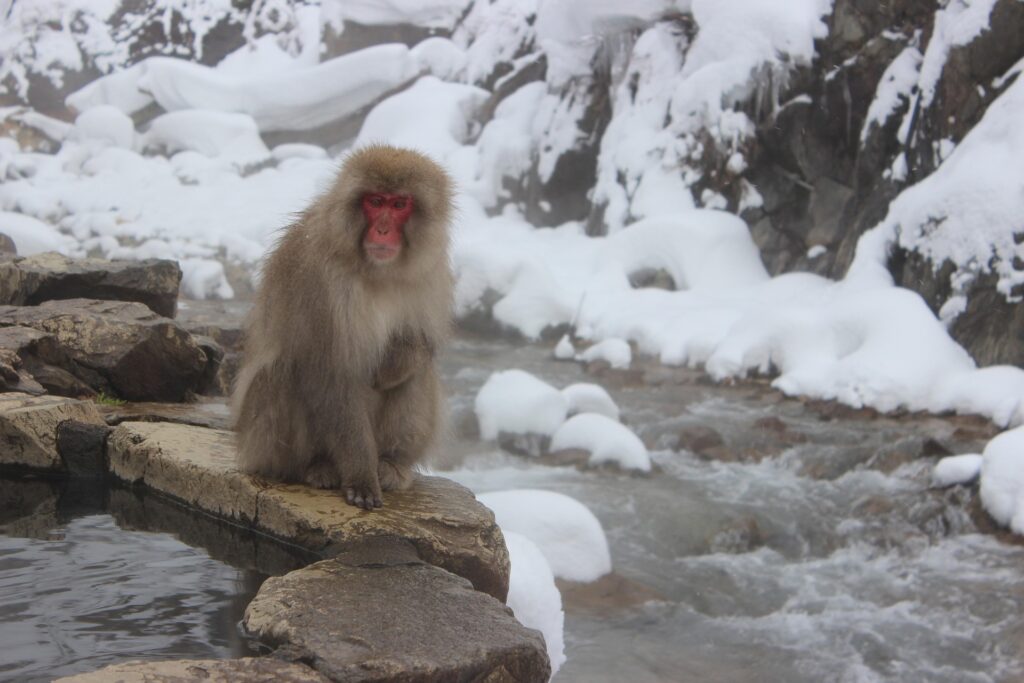
Nagano’s snow monkey trip is a winter story. The journey takes you out of Tokyo on the Shinkansen and into a colder, quieter landscape of mountains, orchards, and hot spring villages. The highlight is Jigokudani, where wild Japanese macaques descend to soak in a natural onsen, steam rising around them as snow falls.
Reaching the monkey park involves a walk through a forested valley that feels wonderfully far from city life, especially when the path is lined with snow. Nearby onsen towns offer their own charm: narrow streets, traditional inns, and outdoor baths where you can experience yukimi-buro—bathing while watching snowflakes drift down.
Nagano (Snow Monkeys) is a bigger, more expensive day trip that shines in winter and early spring. It’s best for travelers willing to invest in a long day with early trains, but the memories—both of the monkeys and the winter onsen atmosphere—are hard to beat.
Detailed Nagano snow monkey day trip guide coming soon.
How to Choose Your Day Trip from Tokyo
Choosing the right day trip from Tokyo depends on four factors: travel time, budget, season, and the overall vibe you want. Use the guide below to match your interests with the destination that offers the best experience.
Choose by Time: How Far Do You Want to Go?
First, decide how far you’re willing to travel one way. All of these trips are realistic in a single day, but the feel of your day changes a lot between a 30-minute hop and a 2-hour expedition.
The Quick Hop (Under 60 Minutes)
- Yokohama (approx. 30 min)
- Kawagoe (approx. 30–45 min)
- Mt. Takao (approx. 50–60 min)
Perfect if you want a late start or an easy half-day that still feels different from Tokyo.
The Standard Journey (60–90 Minutes)
- Kamakura & Enoshima (approx. 60 min)
- Hakone (approx. 90 min via Romancecar)
- Miura Peninsula (approx. 70–90 min)
- Chichibu (approx. 80 min via Limited Express)
The sweet spot for many travelers: far enough to feel like an escape, close enough to stay relaxed.
The Full Expedition (90+ Minutes)
- Nikko (approx. 2 hours)
- Lake Kawaguchiko (approx. 2 hours)
- Hitachi Seaside Park (approx. 90 min train + bus)
- Nagano (Snow Monkeys) (approx. 90 min Shinkansen + local travel)
Plan an early start and a full day. These trips are big experiences with big rewards.
Choose by Budget: How Much Do You Want to Spend?
Day trips from Tokyo can be surprisingly affordable—or wonderfully indulgent. Here’s what a typical day looks like at three budget levels, including trains, food, and a main activity.
The Smart Saver (around ¥7,000 per day)
- Transport: Local and express trains, often combined with a smart-value area pass.
- Food: Convenience store breakfast, street food or simple noodles for lunch, and a snack for the train home.
- Activities: Free shrines, parks, viewpoints, and hiking.
Best for: Kawagoe, Mt. Takao, Narita, Kamakura & Enoshima (with careful choices).
The Classic Day (around ¥12,000 per day)
- Transport: A Limited Express seat for comfort plus an area pass.
- Food: A proper sit-down lunch at a signature local restaurant and at least one good cafe stop.
- Activities: Main paid attractions such as ropeways, museums, and temple complexes.
Best for: Hakone, Nikko, Lake Kawaguchiko, Yokohama, Chichibu & Nagatoro, Miura Peninsula.
The Splurge (¥20,000+ per day)
- Transport: Shinkansen (bullet train) or Green Car (first-class) seats.
- Food: A multi-course kaiseki lunch or a high-end ryokan meal.
- Activities: Private onsen, guided tours, or premium seasonal experiences.
Best for: Nagano (Snow Monkeys) and luxury-focused Hakone or Nikko days.
Choose by Season: When Are You Visiting?
Japan’s seasons are powerful. The same day trip can feel completely different in April, August, or November. Use the seasonal highlights below to match your trip dates with the right destination.
Spring: A World in Bloom
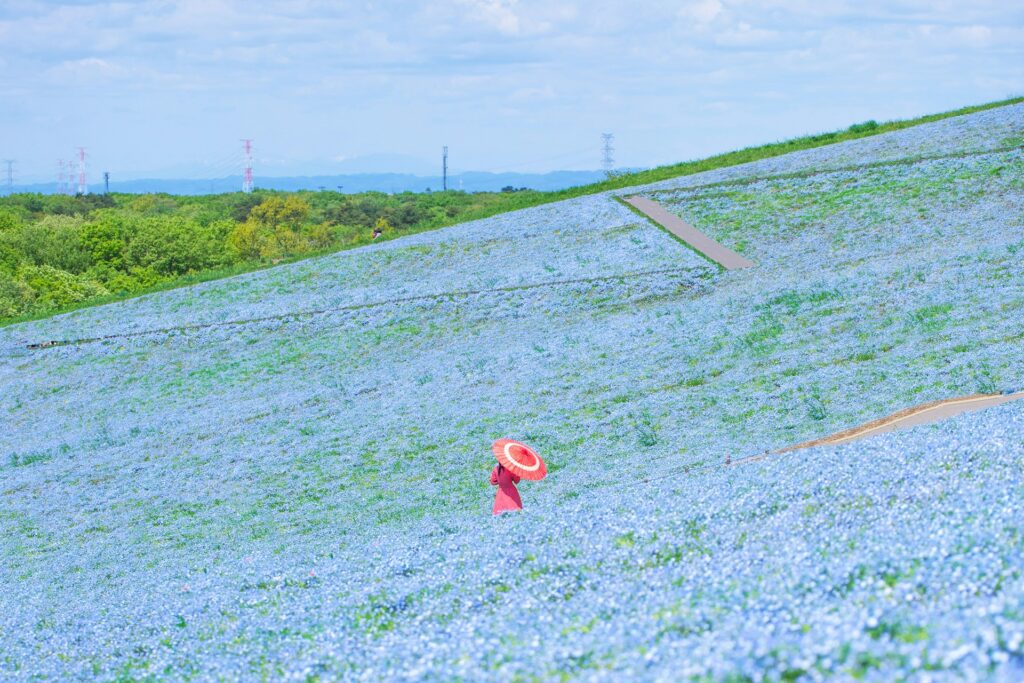
After the quiet of winter, spring doesn’t just arrive in Japan—it explodes. Sakura (cherry blossoms) are the signal, but the real show includes fresh green mountains, flower carpets, and mild air that makes walking a joy.
Top Spring Picks:
- Hitachi Seaside Park – for the surreal “blue carpet” of millions of nemophila flowers.
- Kamakura & Enoshima – for temple paths framed in cherry blossoms and coastal light.
- Chichibu & Nagatoro – for pink shibazakura (moss phlox) beneath rugged mountains.
Summer: Cool Escapes & Festive Nights
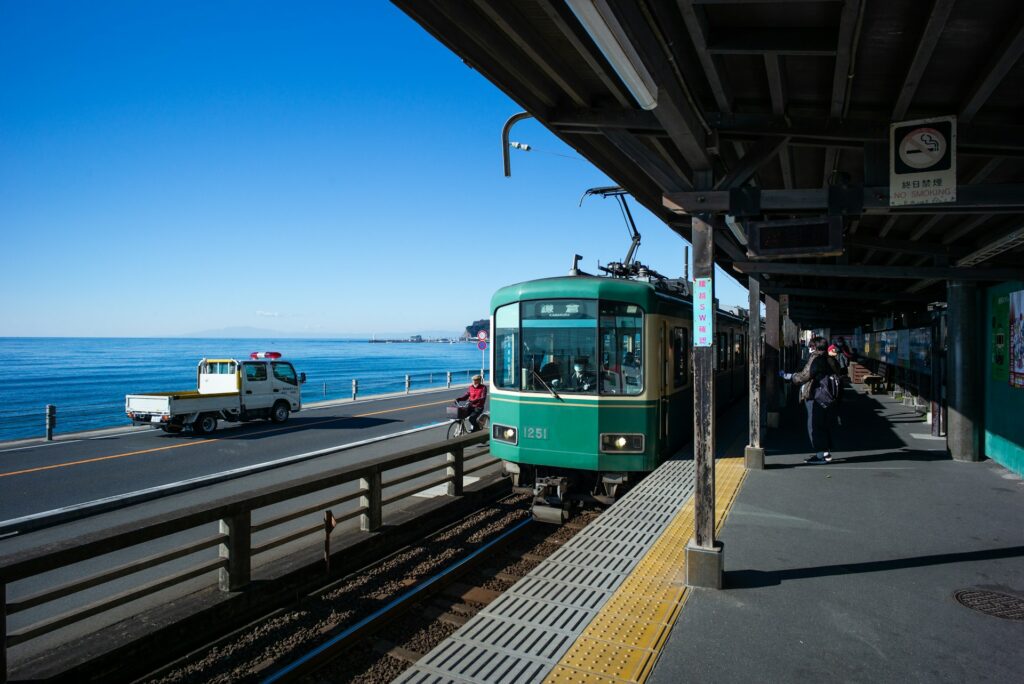
Tokyo in summer can feel like a wall of heat and humidity. Day trips become a search for ryo (涼)—coolness. Think mountain mist, forest shade, rivers, and the sea breeze at dusk, plus fireworks and local festivals after dark.
Top Summer Picks:
- Nikko – cooler air around Lake Chuzenji and Kegon Falls, plus deep green forests.
- Kamakura & Enoshima – hydrangea temples in June and breezy seaside cafes.
- Mt. Takao – shaded hiking trails and the famous Beer Mount with night views.
Autumn: The Season of Red & Gold
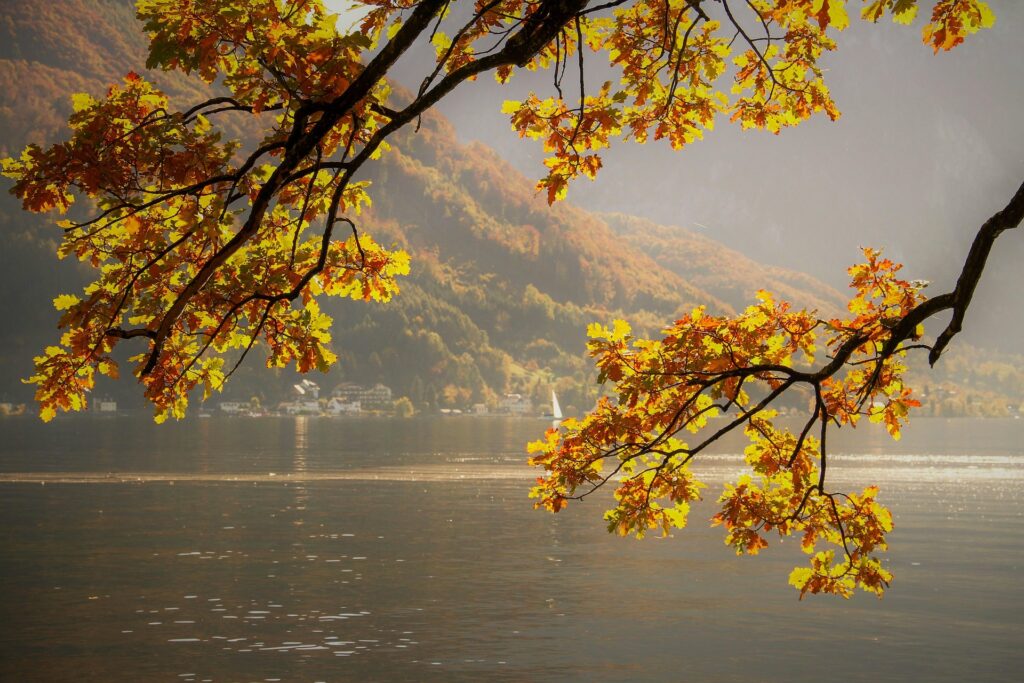
If sakura is a quiet spring poem, autumn foliage is a full opera. The air turns crisp, the skies clear, and mountains begin to burn with red, orange, and gold. This is momiji-gari—going out specifically to “hunt” autumn leaves.
Top Autumn Picks:
- Nikko – a heavyweight champion of koyo, from Shinkyo Bridge to mountain passes.
- Hakone – for varied foliage along ropeways, museums, and the pampas grass fields.
- Lake Kawaguchiko – for iconic Fuji views framed by fiery maple leaves.
Winter: Onsen Steam & Sacred Stillness
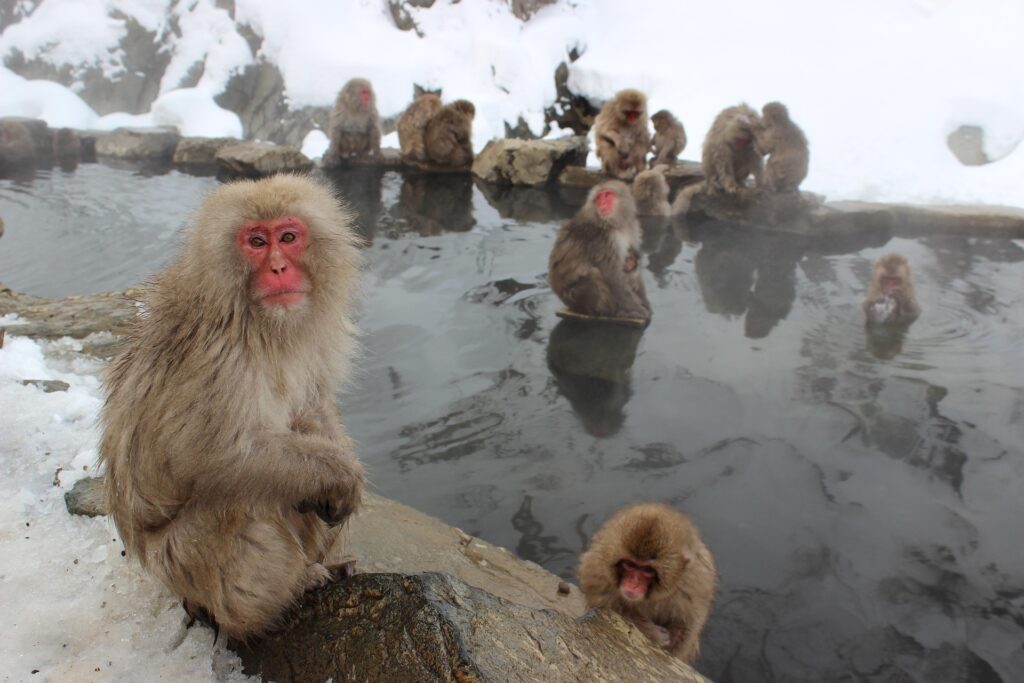
Winter strips the landscape down to essentials: sharp air, clear skies, and deep onsen steam. Crowds thin out, making famous spots feel calmer and more intimate. It’s also the best season for crisp Mt. Fuji views.
Top Winter Picks:
- Nagano (Snow Monkeys) – watch monkeys soak in natural hot springs surrounded by snow.
- Hakone – for yukimi-buro: outdoor onsen while snow falls around you.
- Kawagoe – for New Year shrine visits and nostalgic old streets in clear winter light.
Choose by Vibe: What Kind of Experience Do You Want?
Still undecided? Use the vibe-first method. Ask “What is the main feeling I want from this day?” and work backward. Here are some quick matches based on nature, culture, onsen, food, and family-friendliness.
- For big nature and scenery: Nikko, Lake Kawaguchiko, Chichibu & Nagatoro, Nagano
- For temples, shrines and old streets: Kamakura & Enoshima, Kawagoe, Narita
- For onsen and deep relaxation: Hakone, Mt. Takao (nearby onsen), Miura Peninsula, Nagano
- For food, cafes and city vibes: Yokohama, Kawagoe, Miura Peninsula (tuna), Kamakura
- For easy family days: Yokohama, Mt. Takao, Hitachi Seaside Park, Hakone
Trains, Passes & Money: Essentials Before You Go
Your Magic Key: IC Cards (Suica, PASMO, ICOCA)
Before you take a single train, get an IC card such as Suica, PASMO, or ICOCA. These tap-and-go cards work on almost all trains, subways, and buses in Japan’s major cities, and they can also be used at many convenience stores, vending machines, and shops.
You can buy an IC card at JR or private railway stations—look for ticket machines or service counters with “Suica,” “PASMO,” “ICOCA,” or “IC Card” signs. A standard card usually costs around ¥2,000 total: a ¥500 refundable deposit plus around ¥1,500 in stored credit. Some tourist-only cards have no deposit but expire after a set period.
How to use it:
- Tap in: Touch the card to the reader at the ticket gate until it beeps.
- Ride: Take your train or bus as normal.
- Tap out: Tap again when you exit; the exact fare is deducted automatically.
Pro tips:
- Keep at least ¥2,000 on the card to avoid recharging during tight transfers.
- If you forget to tap in or out, speak to staff at the fare adjustment window.
Area Passes: Your “Golden Ticket” for Day Trips
For most of the day trips on this page, the smartest move is to buy an area-specific pass, such as the Hakone Freepass or Nikko Pass. These passes are created by the private railway companies that serve major tourist areas.
Why they’re powerful:
- They usually bundle a discounted round-trip from Tokyo with the private railway.
- They include unlimited local transport in the area—buses, trains, and sometimes ropeways or boats.
- They often provide discounts at museums, restaurants, and hot springs, which add up over a full day.
In short: an area pass acts as your “golden ticket,” simplifying both cost and logistics. For most travelers, it is cheaper, easier, and more flexible than buying separate tickets for every leg of the journey.
Is the Japan Rail Pass Worth It for Day Trips from Tokyo?
Is the Japan Rail Pass Worth It for Day Trips from Tokyo?
- Coverage: Many of the best day trip destinations (Hakone, Nikko via Tobu, Kawagoe, Mt. Takao, Chichibu) are easiest by private railways, which the JRP does not fully cover.
- Cost: The JRP is designed to pay off over several days of Shinkansen travel. Using it for one short trip is like using a bazooka to open a letter.
The main exception is Nagano (Snow Monkeys), which does involve the Shinkansen. If your Nagano day trip is part of a longer, rail-heavy Japan itinerary, the JRP can make sense. Otherwise, buy the specific area pass for your chosen destination—it’s cheaper and closer to what you’ll actually use.
FAQ: Day Trips from Tokyo
Below are the most common questions travelers ask when planning day trips from Tokyo — from transport and passes to weather, crowds, and timing. These quick answers help eliminate confusion and make your planning faster.
Q1. What are the absolute best day trips from Tokyo for first-time visitors?
A: If it’s your first time in Japan, start with Hakone, Kamakura & Enoshima, or Nikko. Hakone gives you onsen, Fuji views, and museums; Kamakura & Enoshima mix temples with the sea; Nikko delivers deep history and mountain scenery in one big, unforgettable day.
Q2. Can I really do these trips as a day trip, or should I stay overnight?
A: All twelve routes on this page are realistic as day trips if you start early and choose a clear focus. That said, Hakone, Nikko, Lake Kawaguchiko, and Nagano also make excellent overnight stays if you want a slower pace or extra onsen time.
Q3. Do I need to speak Japanese to do a day trip from Tokyo by train?
A: No. Most key stations have English signs, and ticket machines offer English. An IC card plus an area pass will handle 90% of your transport. It does help to download offline maps and keep key station names written down, but you can absolutely do these trips without Japanese.
Q4. Which day trips are best with kids or older travelers?
A: Yokohama, Hakone, Hitachi Seaside Park, and Mt. Takao are especially good. They offer short walks, clear landmarks, frequent rest spots, and flexible transport options. Avoid stacking too many steep slopes or long hikes into a single day.
Q5. Is a Mt. Fuji day trip from Tokyo worth it?
A: Yes—if you treat it as a “Fuji area” day rather than a guarantee of a perfect view. Lake Kawaguchiko offers the best balance of transport, photo spots, cafes, and walking paths. Visit on a clear day, start early, and remember that Fuji is shy: some days the mountain hides behind clouds.
Q6. How many day trips from Tokyo should I plan in a one-week stay?
A: For a 7-day Tokyo-based trip, one or two day trips is the sweet spot. That gives you time to enjoy the city itself and still experience a very different side of Japan—mountains, lakes, coasts, or old streets—without burning out.
Q7. Where can I find detailed itineraries for each destination?
A: This page is your overview. For step-by-step, hour-by-hour plans, check our Tokyo day trips guidebook and upcoming individual articles, which break each destination into a realistic route you can follow without guesswork.
Want All 12 Itineraries in One Place?
Our digital guidebook “Curated Day Trips from Tokyo” gives you 12 fully planned itineraries,
train instructions, budget breakdowns, and Google Maps links for each route. It’s designed so you can simply copy a plan and go.