
Okinawa in December is one of those destinations that suffers from a reputation problem. People book it expecting a tropical beach holiday and arrive to find 21°C afternoons, a stiff wind off the East China Sea, and sunset before six. Others write it off as “too cold” and miss a month that is genuinely comfortable for sightseeing, driving and eating.
This guide is about the second group. It covers Okinawa Main Island specifically — Naha, Chatan, Onna, Motobu and Kouri — not Ishigaki or Miyakojima, which have their own weather patterns and their own travel decisions.
If you want to explore Okinawa’s northern coast without renting a car — but still want flexibility when December weather changes — a private English-guided tour is worth comparing. See the available private-tour lengths, pickup options, and dates before planning your route.
Is Okinawa Worth Visiting in December?
Yes, if what you want is mild weather, coastal scenery, a road trip, an aquarium, and winter evenings with lights and food. No, if what you want is a classic beach holiday where the pool and the sea are the whole point.
In Naha, December averages 19.0°C (66°F), with an average high of 21.5°C (71°F) and an average low of 16.8°C (62°F). That is mild by Japanese winter standards, and noticeably warmer than Tokyo or Kyoto in the same month. It is not tropical. A sunny afternoon in the city can feel like a warm spring day; the same afternoon on an exposed cape can feel like late autumn.
On one December drive north with friends, the temperature sat close to 24°C, and people around Naha were in short sleeves. At Cape Manzamo, twenty minutes of standing in the wind made a jacket feel necessary. That was one day, not a monthly average — but it is the pattern worth planning around.
Okinawa in December at a Glance
| Question | December reality (Naha, Main Island) | What it means for you |
|---|---|---|
| Average daytime high | 21.5°C / about 71°F | A light layer is usually enough in town at midday |
| Average low | 16.8°C / about 62°F | Evenings and early mornings need a real jacket |
| Average temperature | 19.0°C / about 66°F | Mild, not hot. Think spring in a cooler climate |
| Rain and cloud | Around 110 mm for the month, but only about 107 hours of sunshine | Rain is rarely the problem. Grey skies and wind are |
| Sea temperature | Around 23°C / about 73°F | Cold for a long swim, workable in a wetsuit |
| Swimming | Most managed beaches close at the end of October | Do not build the trip around casual beach swimming |
| Best for | Sightseeing, scenic drives, aquariums, winter lights, food | December rewards a road-trip style trip, not a resort stay |
| Not ideal for | Beach-first holidays, guaranteed sunsets, travellers who want heat | If sun and sea are the whole point, pick another season |
| What to wear | T-shirt, plus a hoodie or sweater, plus a windproof layer | You will use all three in a single day |
| Driving | The most flexible way to see the north | Left-hand traffic, but roads outside Naha are calm |
| Seasonal highlights | Illuminations, Christmas atmosphere, late-December whale watching | The season adds something summer does not have |
If you are staying in Naha and would rather not rent a car, a full-day north Okinawa tour covers several of the same stops described below, including Churaumi Aquarium, Kouri Island and Cape Manzamo. That is a reasonable fallback rather than a substitute for the whole trip.
What December Weather in Okinawa Actually Feels Like
The monthly average is a useful starting point and a misleading finishing point. Two things drive how December actually feels: wind and exposure.
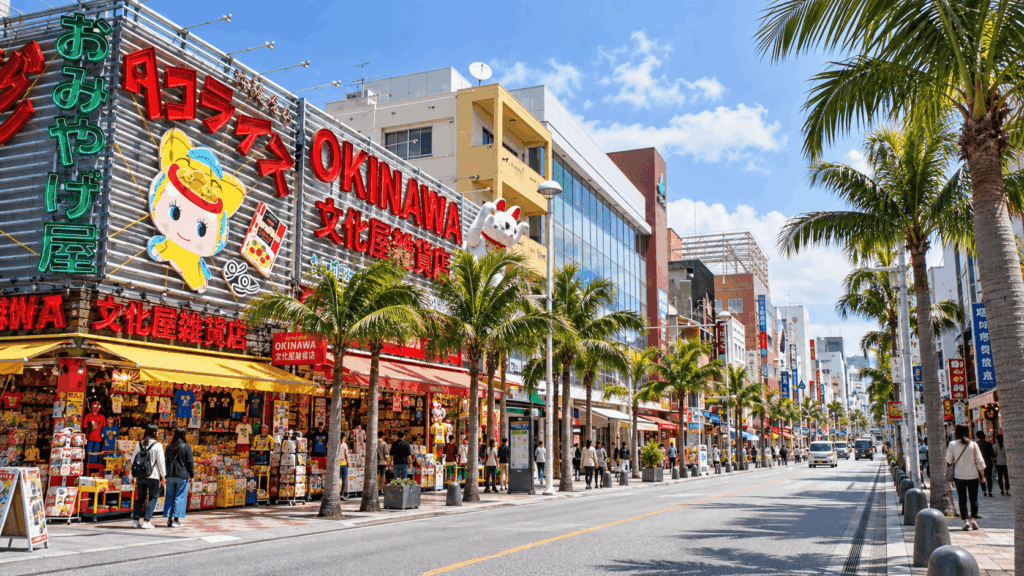
Naha’s December normals include average wind speeds around 5 m/s, and the prefecture’s own tourism board notes that the wind is relatively strong on many days, making the temperature feel cooler than the number suggests. On a still, sunny afternoon on Kokusai Street you may well be comfortable in a T-shirt. Ten kilometres of coastline later, on a headland with nothing between you and the sea, the same air temperature feels several degrees lower.
The other surprise is the light. December is a relatively dry month in Okinawa — around 110 mm of rain — but it is also one of the least sunny, at roughly 107 hours of sunshine across the whole month. In practice that means many days are bright-but-hazy or fully overcast rather than rainy. Locals treat this as normal winter. Visitors who came for turquoise water sometimes read it as bad luck.
Travelers who visit in winter repeatedly mention the same three things in reviews: that it is windier than they expected, that the coast feels colder than the city, and that layers were the single most useful thing they packed. That matches what the numbers say.
Kai’s tip: The number on the thermometer is not the number you feel on the coast. I plan December outfits around wind speed and how long I will be standing still outdoors, not around the forecast high. A 21°C day with a 6 m/s wind on a cape is a jacket day; the same 21°C in a sheltered street is a shirt-sleeve day.
Early December vs Late December
December is not one block of weather. The Japan Meteorological Agency’s ten-day normals for Naha show a clear slide:
| Period | Average temp | Average high | Average low |
|---|---|---|---|
| 1–10 December | 20.1°C | 22.6°C | 17.9°C |
| 11–20 December | 19.0°C | 21.4°C | 16.8°C |
| 21–31 December | 18.1°C | 20.6°C | 15.7°C |
Roughly a two-degree drop from the start of the month to the end. That is not dramatic, but it changes what you can comfortably do. Early December is the better bet if you want long hours outdoors, coastal walks and outdoor dining without much layering. Late December trades a little warmth for atmosphere: illuminations are in full swing, Christmas and New Year crowds arrive, and whale-watching boats start running.
If your dates are flexible and warmth matters more than festive lights, aim for the first half of the month. If you want the lights and the year-end mood, the second half delivers them — just pack the warmer layer.
Wind, Cloud and Why 21°C Can Feel Colder Than You Expect
Okinawa’s winter wind comes from the north, and the island’s most photogenic places are exactly the places most exposed to it: Cape Manzamo, the Kouri Bridge approach, any beach with an open horizon. This is not a reason to skip them. It is a reason to visit them with the right outer layer and to think about timing.
Cloud is the second factor, and it matters more for photography than for comfort. What I’d tell a friend planning their first December trip is that grey does not mean cancelled: the sea can still read blue-green from a distance, but the contrast flattens and the sunset is gone. If a specific view is the reason for your trip, build in a second chance rather than pinning everything on one evening.
Two smaller practical points that catch people out: daylight ends early (sunset in Naha runs from about 17:38 on 1 December to 17:49 on 31 December), so an afternoon plan that would work in June finishes in the dark here. And indoor attractions get busy on the wettest days, so a rainy forecast is the moment to book aquarium tickets online rather than queue.
Can You Swim in Okinawa in December?
This is the question that decides a lot of trips, so it is worth being precise.
You can physically enter the water. You cannot count on a normal beach-swimming experience.
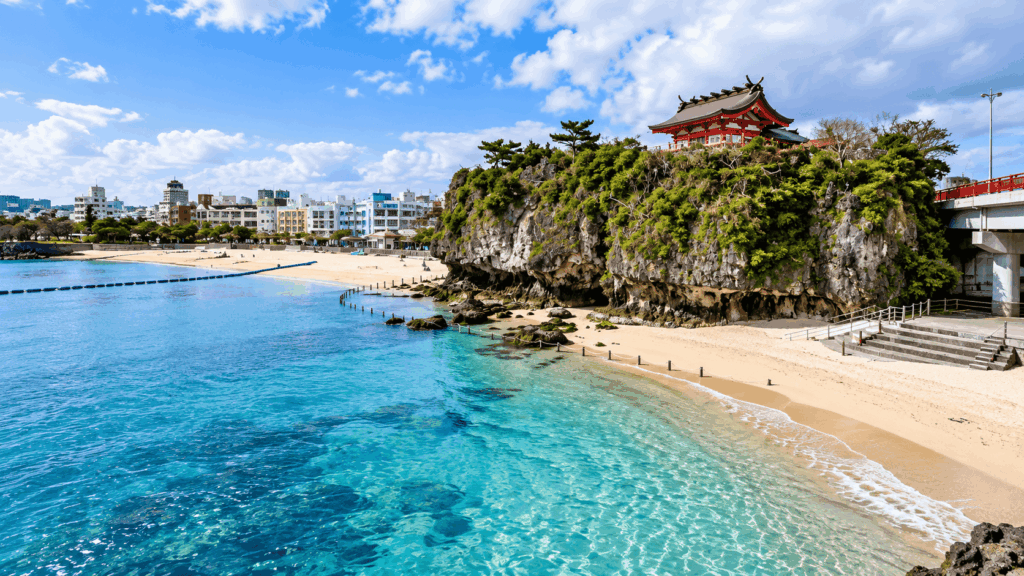
The sea around Okinawa stays around 23°C (73°F) in December. That is cold enough that most people find a long casual swim uncomfortable, though it is perfectly workable in a wetsuit. The bigger issue is infrastructure: managed beaches operate on a season, and the season typically ends in October. Emerald Beach at Ocean Expo Park, for example, lists a swimming season of 1 April to 31 October. Outside that window the beach is still walkable, but there are no swimming nets or lifeguards on duty.
This is where a lot of travel writing goes wrong. “The sea is 23°C, so you can swim” conflates two different things:
- Casual beach swimming — you, a towel, a managed beach with nets and lifeguards. Mostly a summer activity in Okinawa.
- Guided snorkelling or diving with a wetsuit — an organised activity with an operator, equipment and a boat or shore entry. Runs year-round in Okinawa, weather permitting.
If you want to be in the water in December, book the second category. If you want to lie on a beach and swim casually, December will disappoint you — and no amount of average sea temperature will change that.
One clarification from personal experience: the sea can look wonderful in December. On that same December drive, the water around Kouri Bridge was a strong, clear blue. That is a reason to drive the coast and stop for photographs. It is not evidence that swimming is comfortable, and I would not present it as such.
What to Wear in Okinawa in December
The short answer is layers, and the slightly longer answer is that you should dress for the coldest place you will stand, not the warmest.
Most December days in Naha sit in a range where a T-shirt plus a mid-layer is comfortable at midday and insufficient after dark. Add wind and you need a third layer that blocks it. The mistake I see most often is packing for the average and then spending the evening uncomfortable.
| Where you are | What actually works |
|---|---|
| City street, midday, sunny | T-shirt or light long-sleeve top. You will see locals in short sleeves |
| Coastal viewpoint or cape | Add a windproof jacket. A hoodie alone does not stop the wind |
| Evening, outdoor dining or illuminations | Hoodie or sweater plus jacket. This is the coldest you will be |
| Boat or whale-watching trip | Windproof outer layer, warm mid-layer, something for your neck |
A practical packing list for a three-to-five-day December trip: two or three T-shirts or light long-sleeve tops, one hoodie or sweater, one light wind-resistant jacket, comfortable walking shoes, a compact rain shell, and one warmer layer for evenings. A heavy winter coat is overkill unless you are also visiting mainland Japan on the same trip.
Kai’s tip: Dress for the windiest place you will stand, not the warmest. On that December day, short sleeves were fine in town and a jacket was necessary at Cape Manzamo; by evening in Chatan, a thick hoodie was the right call. If I had packed only for the daytime high, the evening would have been miserable. One extra windproof layer solves most of December.
Best Things to Do in Okinawa in December
The useful way to sort December activities is not by popularity but by how much they depend on the weather. Coastal viewpoints are high-reward and high-risk. Aquariums, markets and illumination displays are close to weather-proof. A good December trip mixes both, so a grey day costs you a view rather than a whole day.
Below are the places that genuinely suit the season, roughly in the order a northbound drive would reach them.
Cape Manzamo — Coastal Drama With a Cold Wind
Cape Manzamo sits on the west coast of Onna, about an hour’s drive from Naha. The draw is a limestone headland whose most photographed rock formation is known as Elephant Rock, plus a wide view along coastline. There is a small viewing fee — around ¥100, with children under elementary school age free — and the surrounding facility is open 8:00–20:00 from March to October and 8:00–19:00 from November to February, with the viewing route itself open until sunset.
It is a short stop, maybe thirty to forty minutes including the walk and a coffee, which makes it easy to slot into a drive. The trade-off is exposure. This is the windiest kind of place in December: an open headland with nothing to break the north wind, and spray coming off waves that hit the rocks below. That is part of the appeal, but it is not a place to arrive in a T-shirt and sandals.
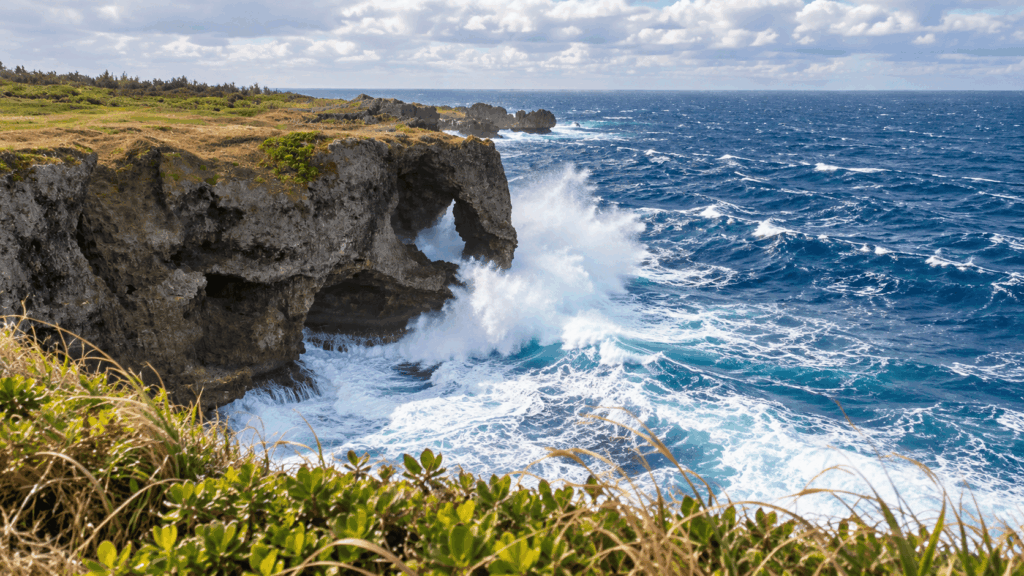
On the December visit that shaped this guide, the wind was strong enough to make a jacket necessary despite a warm afternoon, and the waves hitting the rock formation were the most memorable part of the stop. Whether you get that drama depends on the sea state that day, not on the calendar.
Kouri Island — Winter Water Can Still Look Blue
Kouri Island connects to the main island by the Kouri Bridge, a nearly two-kilometre crossing with water on both sides. In summer it is a beach destination. In December it is a scenic driving stop, and a good one.
The common assumption is that winter turns Okinawa’s water grey. Sometimes it does. But on a clear December day the sea around the bridge can be a strong, saturated blue-green, and the drive across is worth the detour even if you never touch the water. Treat the colour as a bonus rather than a guarantee — a cloudy day will give you a flatter, greyer sea, and the bridge is still a pleasant crossing.
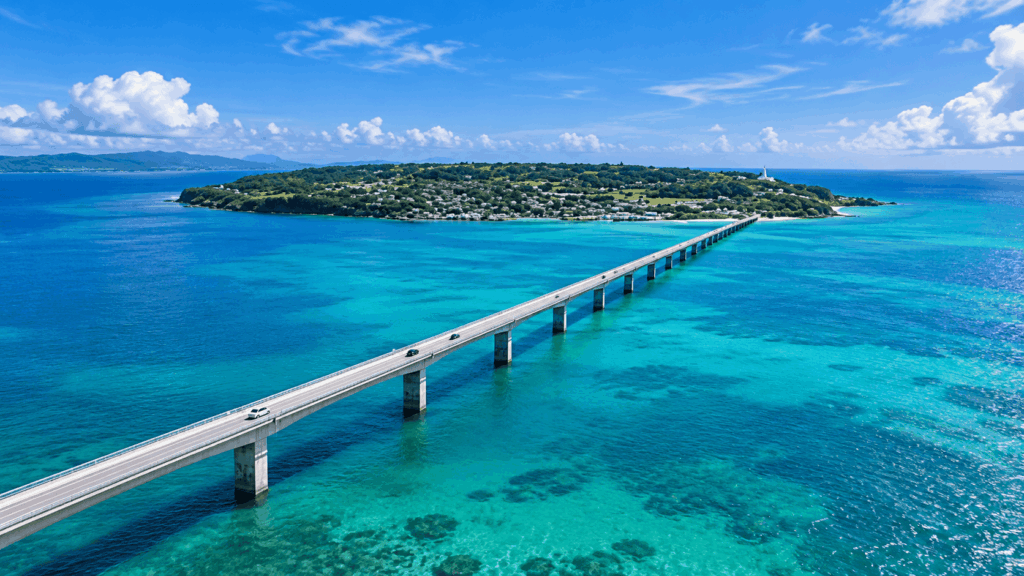
At the island end, Kouri Island Station Sorahashi is a convenient pause: a market and food stop open 9:00–19:00 year-round, with parking and souvenirs. On the December trip, a short stop here for something to eat and a few gifts worked well as a break between coastal viewpoints — the kind of unglamorous logistics that make a drive day actually pleasant.
Okinawa Churaumi Aquarium — Your Bad-Weather Anchor
If December gives you one wet or windy day, this is where to spend it. Churaumi, inside Ocean Expo Park in Motobu, is the strongest indoor anchor in the north and the reason a cloudy forecast does not have to cancel a northern drive.
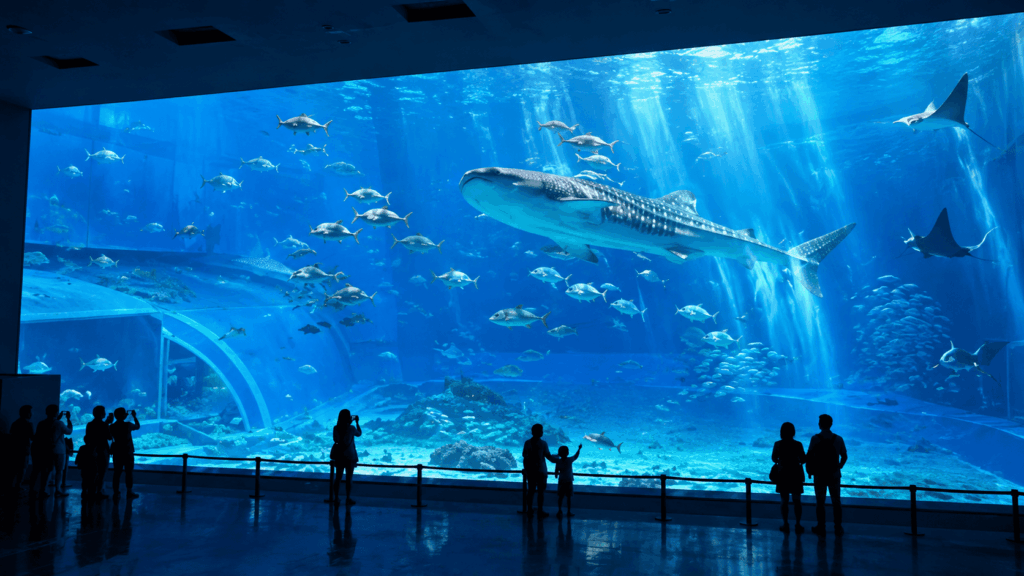
Current official details: the aquarium is open 8:30–18:30 with last admission at 17:30, adult admission is ¥2,180, and there are no scheduled closing days through 31 March 2027. It also stays open over the New Year holidays. That last point matters because a lot of older travel content still repeats a “closed on the first Wednesday of December” rule that no longer applies — check the official site rather than a decade-old blog.
One genuinely useful quirk: during a trial period running from 1 July 2026 to 31 March 2027, Ocean Expo Park opens only partially on Wednesdays. The aquarium, the dolphin lagoon, the sea turtle and manatee pools, Emerald Beach and the main parking areas stay open, but facilities including the Tropical Dream Center botanical garden, the Marine Culture Museum and the Okinawan folk village are closed. If your plan for the park is “aquarium plus gardens”, do not put it on a Wednesday.
Exploring the north by rental car? If Churaumi is your rainy-day backup, check current Klook aquarium e-ticket prices, validity, and mobile entry details. Check the cancellation terms before purchasing.
Budget two to three hours for the aquarium itself, more if you are travelling with children, and note that the park is large — the walk from parking to the entrance takes longer than people expect. I have not visited Churaumi on a December trip myself, so treat this section as facility information rather than personal observation; what I can say from traveler feedback is that it is consistently the plan people fall back on when the north turns grey, and that it gets busy on exactly those days.
American Village at Night — A Plan That Doesn’t Depend on Sunset
Mihama American Village in Chatan is a shopping and dining district built around a grid of low buildings, with Depot Island at its centre. It is loud, commercial and unsubtle, and in December it is also one of the most reliable evening plans on the island.
That is the real argument for it: not that it is the best place in Okinawa, but that it works regardless of what the sky does. Shopping, restaurants, bars, illuminated streets and a seafront walk are all within a few minutes of each other, so a failed sunset costs you nothing.
On the December visit, the Christmas illuminations were the highlight — dense, bright and clearly built for photographs. Tacos and a pork-and-egg rice ball (po-tama) eaten while walking were a better use of the evening than a sit-down dinner would have been. The sunset, which was the original plan, never appeared; it was cloudy. Later in the evening, fireworks went up over the water by chance, which was a nice ending but not something to plan around.
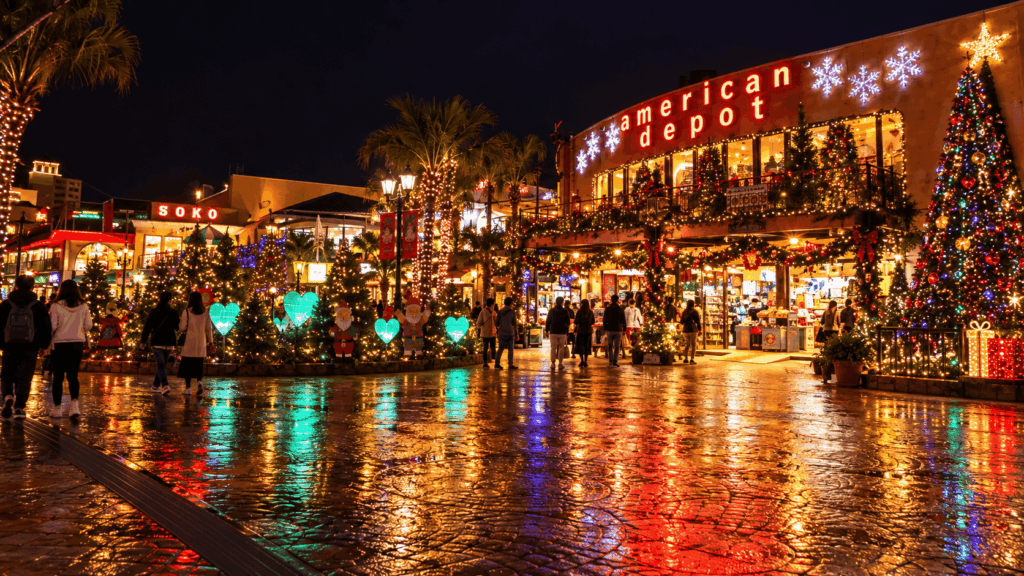
Two honest caveats. First, the area is genuinely lively — plenty of pubs and bars — so if you want a quiet dinner, this is not the place; there are quieter options along the coast. Second, illumination schedules change every year. American Village has hosted winter illuminations in past seasons, with the 2025–26 display running from mid-November into February, but the 2026–27 dates had not been announced at the time of writing. Check the official American Village site before you build an evening around it.
Whale Watching — A Late-December Bonus
Humpback whale watching is one of Okinawa’s winter attractions, with boats running mainly out of Naha and the Kerama area. The season generally runs from late December into early April, with January to March the most reliable window. For 2026–27, at least one Naha operator lists departures starting 19 December 2026.
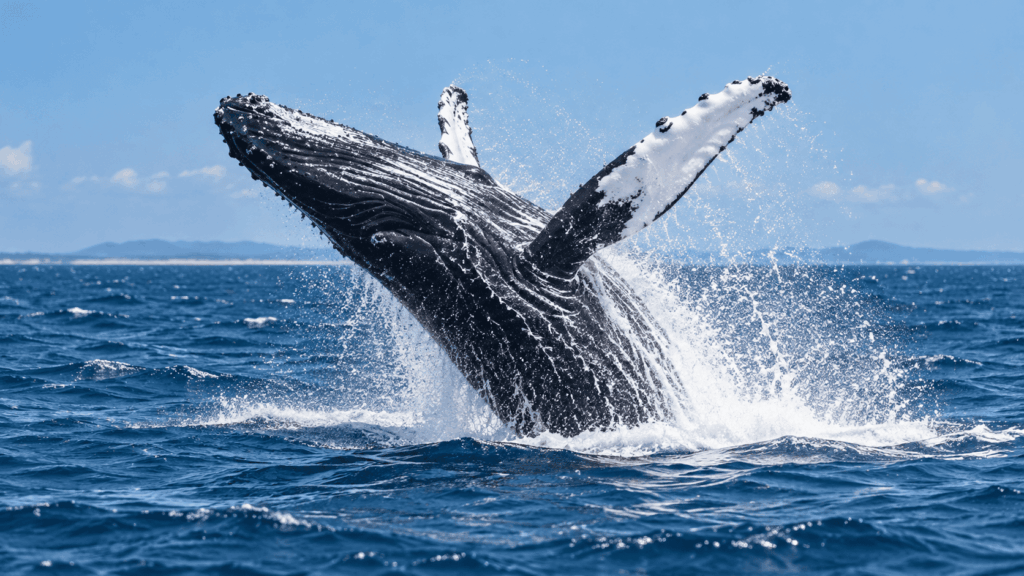
That word “late” is doing real work. If you are travelling in the first half of December, do not count on whale watching being available, and certainly do not book a trip around it. If you are there in the last ten days of the month, it becomes a reasonable addition — with the standard caveats that sea conditions can cancel a sailing and that the boats go out into open water, so seasickness is a genuine consideration.
A December Itinerary That Survives Bad Weather
Most December itineraries fail for the same reason: they are built around a fixed time and a fixed view. “Sunset at Cape Manzamo on day two” is a fragile plan in a month with this much cloud.
The more robust structure is three layers: a coastal plan for good weather, an indoor-heavy plan for bad weather, and an evening plan that does not depend on either.
| Condition | What to do | Why it works |
|---|---|---|
| Clear, low wind | Cape Manzamo, Kouri Bridge, coastal stops, outdoor lunch | This is the day the scenery pays off; use it |
| Cloudy, windy, occasional rain | Shift weight to Churaumi Aquarium and Ocean Expo Park | Indoor, warm, and close to the same northern route |
| Any weather, after dark | American Village or another illumination district | Shopping, food and lights do not need a sunset |
Kai’s tip: Don’t make sunset the success condition. On that December trip the plan was a coastal sunset, and the cloud never broke. If the evening had ended there, the day would have felt like a failure. It didn’t, because we had already decided the backup was Chatan: lights, food, a walk. Decide in advance what “good enough” looks like when the sky does not cooperate, and a grey afternoon stops being a loss.
An Example North-Island Loop (and How to Bend It)
A workable shape for a northern day from Naha or Chatan:
- Naha or Chatan — leave in the morning; the drive north takes roughly 60–90 minutes depending on traffic and stops.
- Cape Manzamo — a short coastal stop, best done while you still have daylight and energy.
- Churaumi Aquarium / Ocean Expo Park — the long indoor block, and the natural place to absorb a weather change.
- Kouri Island via Kouri Bridge — a scenic crossing and a break at Sorahashi.
- Evening — back south to Chatan or Naha for food and lights.
Three things bend this loop. Daylight: sunset is before 18:00 all month, so the coastal stops belong in the morning and early afternoon. Opening hours: the aquarium’s last admission is 17:30, which effectively ends the northern sightseeing day. And where you sleep: if you are staying in Naha, the return drive is long enough that you should not leave the north too late.
If the forecast turns, invert the order rather than cancelling: aquarium first while it rains, coast afterwards if it clears. That flexibility is the main argument for driving yourself, and it is covered in the next section.
December vs January vs February
All three months are winter and none of them is a beach season. The differences are smaller than the internet suggests, but they are real.
| December | January | February | |
|---|---|---|---|
| Average high | 21.5°C | 19.8°C | 20.2°C |
| Average low | 16.8°C | 14.9°C | 15.1°C |
| Average temperature | 19.0°C | 17.3°C | 17.5°C |
| Wind and chill | Windy, especially on the coast | The coldest-feeling month overall | Still cool, with early signs of spring |
| Seasonal appeal | Illuminations, Christmas atmosphere | Whale watching at its most reliable; quietest sightseeing | Whale watching, cherry blossoms begin late in the month |
| Whale watching | Late December only | Strong | Strong |
| Best for | Mildest winter temperatures plus festive atmosphere | Whale watching and low crowds | Whale watching plus early blossoms |
The honest summary: December is marginally the warmest of the three and the only one with a Christmas season. January and February are better if whales matter to you, and slightly better if you want the island to yourself. If festive lights and year-end timing are irrelevant to you, there is no strong reason to insist on December over January.
For a full comparison of the whole winter season, including how the months differ for drivers, families and first-time visitors, a dedicated winter guide is the better read — this article stays focused on December decisions.
Should You Rent a Car or Take a Tour?
Driving is the more flexible option, and in December flexibility is worth real money. The northern sights are spread out, public transport between them is thin, and the weather changes fast enough that being able to swap the order of your day matters.
What driving actually involves: left-hand traffic, which most visitors adjust to within an hour; a Japanese or international driving permit depending on your country; toll roads on the expressway; and parking that is generally easy outside Naha but tight around Chatan at night. Roads in the north are calm and well signed, with English on major routes.
An organised day tour makes sense for a specific set of travelers: people staying in Naha who do not want to drive in a foreign country, people who would rather not navigate and park, and people who want the main northern stops handled in a single day. The trade-off is fixed time at each stop and no ability to reorder the day when the weather shifts.
| Rental car | Organised north Okinawa tour | |
|---|---|---|
| Flexibility | High — change the plan mid-day | Low — fixed route and timing |
| Driving required | Yes, including left-hand traffic | No |
| Time at each stop | Whatever you want | Set by the itinerary; often shorter than you would choose |
| Weather flexibility | Strong — chase the clear sky | Limited |
| Best for | Confident drivers, photographers, repeat visitors | Naha-based travelers who would rather not drive |
| Main drawback | Navigation, parking, and one person can’t fully relax | Fixed stops, group pace, early start |
For the tour option, the product that matches this route most closely is the full-day “Naha: North Okinawa Sightseeing Tour & Churaumi Aquarium” on GetYourGuide. Current listings show a duration of roughly 10.5 hours, departure from Naha with pickup available, and stops at Churaumi Aquarium, Kouri Island, Cape Manzamo and Nago Pineapple Park, with admission to the main stops generally included. Details like price, exact departure time, stop order and cancellation terms change, so confirm them on the booking page rather than relying on a description here.
Choose the tour for convenience, not because it is objectively better than driving. If you can drive and you care about timing your coastal stops around the light, a car will give you a better December day. If driving in Japan is the thing that would stress you out, the tour removes that stress and still gets you to the same coastline.
There is also a third option worth considering: a private English-guided tour. If you want the convenience of someone else handling the driving without committing to a fixed group itinerary, this is the option that most directly addresses December’s unpredictable weather.
Why I’d book this one
- A route you can discuss and customize. The Okinawa Private Tour: Full Island Experience & Hidden Gems offers flexible itinerary options, so you can discuss priorities such as Cape Manzamo, Kouri Island and Churaumi Aquarium with your guide. Confirm your preferred stops and tour duration before booking; changes on the day still depend on conditions and availability.
- English-speaking local guidance. Recent travelers frequently highlight clear communication, local knowledge and personalized stops. That is useful when you want more than a drive between landmarks but do not want to organize every detail yourself.
- Less logistical work. Private transport and hotel pickup remove the need to navigate unfamiliar roads, find parking or assign someone in your group to drive. Attraction admission fees are generally separate, so check what your selected option includes.
See live availability, tour lengths, itinerary options, inclusions and recent traveler reviews for the Okinawa Private Tour on GetYourGuide. Compare the available options against your December dates, especially if Churaumi and Kouri Island are priorities.
Practical December Tips Before You Book
A few date-specific things worth checking before you lock in an itinerary.
- 6 December 2026 is NAHA Marathon day. The 40th edition starts at 9:00 from Onoyama Park and runs through Kokusai Street. Expect road closures and heavy traffic in central Naha through the middle of the day; if you are driving north, leave early or route around the city.
- Illuminations are not all on the same schedule. Okinawa Tropical Illumination at Southeast Botanical Gardens in Okinawa City runs from 23 October 2026 to 23 May 2027, 17:00–22:00 with last entry at 21:30 — long enough to be reliable. American Village’s 2026–27 dates were still unannounced at the time of writing, so verify before planning an evening around it.
- Year-end hours vary by facility. The Churaumi Aquarium stays open over New Year, but smaller restaurants and shops often close for a few days around 1 January. Check anything you are counting on.
- Wednesdays at Ocean Expo Park. Until 31 March 2027, parts of the park close on Wednesdays while the aquarium remains open. Plan garden visits on another day.
- Late December gets busier. Early and mid-December sit outside Japan’s peak travel windows and are comparatively relaxed. From roughly 29 December, domestic holiday travel picks up and prices and queues follow.
- Book the aquarium in advance if rain is forecast. It is the default rainy-day plan for the whole north, and it fills accordingly.
Frequently Asked Questions
Is December a good time to visit Okinawa?
For sightseeing, coastal drives, the aquarium, food and winter illuminations, yes. December is mild, generally dry, and outside the main Japanese holiday peaks until the very end of the month. For a classic beach holiday it is a poor fit: the sea is around 23°C, managed beaches have closed for the season, and the wind makes the coast feel colder than the thermometer suggests. The month rewards travelers who treat Okinawa as a road-trip and sightseeing destination rather than a resort.
Can you swim in Okinawa in December?
You can enter the water, but you should not expect normal beach swimming. Most managed beaches operate a season ending on 31 October — Emerald Beach at Ocean Expo Park, for example, lists 1 April to 31 October — and outside that window there are no swimming nets or lifeguards. The sea stays around 23°C, which is workable in a wetsuit but uncomfortable for most people in swimwear. Guided snorkelling and diving do run through winter with wetsuits, and that is the realistic way to get in the water in December.
Is Okinawa warm in December?
Mild rather than warm. Naha averages 19.0°C across the month, with highs around 21.5°C and lows around 16.8°C. That is comfortable for walking and sightseeing, and noticeably warmer than Tokyo or Kyoto. But the coast is exposed to a steady north wind, and the same temperature feels several degrees cooler on a headland than in a sheltered street. Evenings cool down quickly once the sun is gone, which is before 18:00 all month.
What should I wear in Okinawa in December?
Plan on three layers: a T-shirt or light long-sleeve top, a hoodie or sweater, and a light wind-resistant jacket. Add comfortable walking shoes and a compact rain shell. The jacket matters more than the thickness of the sweater, because wind is what makes December feel cold here. You will likely wear all three layers on the same day — short sleeves in town at midday, a jacket at a coastal viewpoint, and the warm layer again in the evening.
Does it rain a lot in Okinawa in December?
Not especially. December brings around 110 mm of rain across the month, which is on the lower side for Okinawa. The more noticeable feature is the lack of sunshine: roughly 107 hours across the entire month, one of the lowest totals of the year. In practice, many days are overcast or hazy rather than wet. Check the forecast a few days ahead and keep one indoor option per day rather than planning around rainfall totals.
Do you need a car in Okinawa in December?
For the northern sights — Cape Manzamo, Churaumi Aquarium, Kouri Island — a car is by far the most practical option, and in December it also lets you reorder the day when the weather changes. If you are staying in Naha and not leaving the city, you do not need one. If you want the north without driving, a full-day organised tour from Naha covers the same main stops, with the trade-off of fixed time at each place.
Final Verdict: Who Should Book December — and Who Shouldn’t
December works when you treat Okinawa as a mild-weather sightseeing island rather than a tropical beach. The travelers who enjoy it most are the ones who build the trip around driving, views, food and winter evenings — and who accept that a grey day is part of the deal rather than a failed holiday.
Choose December if…
- You want a road trip. The Naha–Onna–Motobu–Kouri loop is the core of a December trip, and Cape Manzamo and Kouri Bridge deliver even when the water is too cold to swim.
- You want winter atmosphere without winter weather. Illuminations, Christmas decorations and comparatively mild evenings are a combination you cannot get in Tokyo in the same month.
- You are adding Okinawa to a longer Japan trip. Coming from a cold Kyoto or Tokyo, 21°C afternoons register as genuinely pleasant.
- You are travelling as a couple or with friends who like driving, food and photography more than lying on a beach.
Choose another season if…
- The sea is the point. If your mental image of Okinawa involves swimming, snorkelling from the shore and long beach days, come between June and October instead.
- You need guaranteed sunsets. Cloud is common in December, and a plan built around one specific view at one specific time will fail some of the time.
- You want whales. Whale watching mostly starts in late December, so January to March is the stronger choice if that is a priority.
- You cannot drive and do not want a tour. Without a car or an organised day trip, the northern highlights become difficult to reach.
By traveler type
First-time visitors: December is a good introduction if you accept the beach limitation. Base yourself in Naha or Chatan, give the north one full day — Cape Manzamo, Churaumi, Kouri — and keep American Village as your evening default. Three nights is enough for that shape; four is comfortable.
Families: The aquarium is the anchor, and it is close to weather-proof, warm and genuinely interesting for children. Pair it with the Emerald Beach esplanade for a walk, and avoid planning a beach day. Note the Wednesday partial closures at Ocean Expo Park if the botanical garden is on your list.
Travelers on a tight schedule: If you only have two days, do not try to see the whole island. One northern day and one Naha day is a better use of December than a rushed circuit — the drive times are longer than the map suggests, and daylight ends early.
Repeat visitors: This is where December quietly shines. If you have already done the summer beach version, the winter version — empty coastal roads, low sun, illuminations, a table at a restaurant you could not get into in August — is a different island.
Photographers: December gives you soft light and long shadows, but not reliable colour. Build two chances into the itinerary for any coastal shot, and treat Kouri Bridge and Cape Manzamo as morning-to-early-afternoon subjects rather than sunset ones.
The short version: book December for the drive, the aquarium, the food and the lights. Do not book it for the beach, and do not book it if a single grey afternoon would ruin the trip.

Hi, I’m Kai. I’m a Tokyo-based travel writer, tourism industry insider, and the author of a published guidebook for international visitors to Japan. With over 10 years of professional experience at a leading Japanese tourism company, my mission is to help you skip the tourist traps and navigate Japan’s best destinations like a local. I believe the perfect day trip is like a traditional kaiseki meal: a beautiful balance of precise planning and unforgettable seasonal discovery. When I’m not out conducting field research, you’ll usually find me drafting new itineraries with one of my favorite fountain pens!