
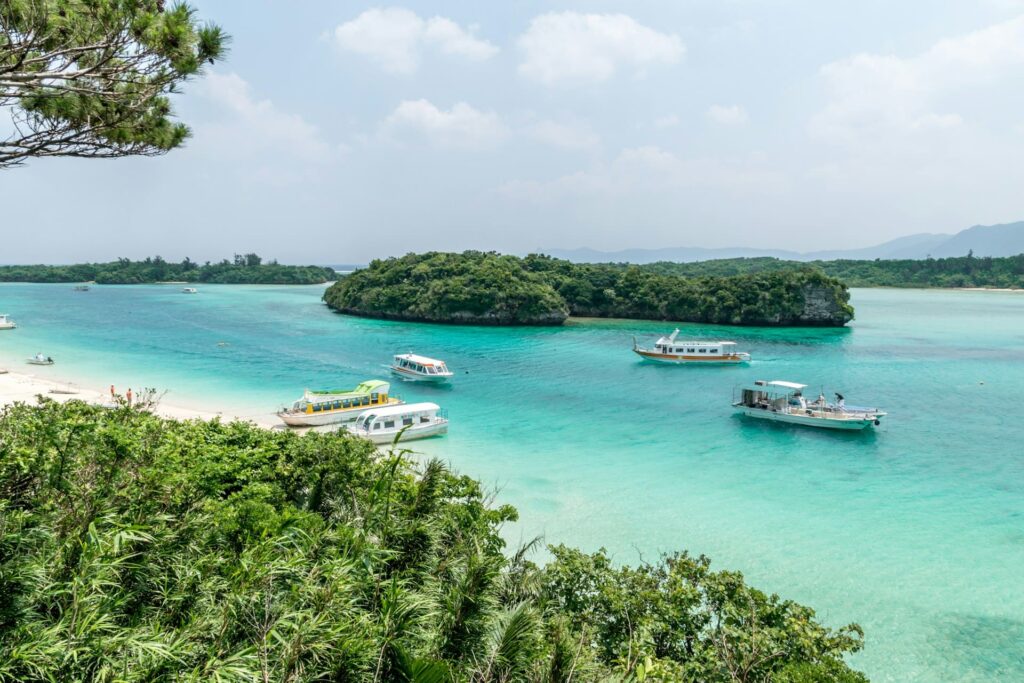
Quick Answer: What Okinawa Food Should You Try First?
If it is your first trip to Okinawa, start with these five foods: Okinawa soba, goya champuru, taco rice, umibudo, and pork tamago onigiri. In Naha, the easiest food route runs between Kokusai Dori, Makishi Public Market, the covered arcades, and Tsuboya. You can try most of the classics on foot without renting a car.
Okinawan cuisine is built on pork, bonito broth, wheat noodles, tropical vegetables, island tofu, and postwar American influences like SPAM and taco rice. For lunch, it is easy to go self-guided. For your first night, especially if you want izakayas, local dishes, and awamori without guessing at Japanese menus, I would strongly consider a guided Naha bar hopping tour.
The casual price ranges below are only rough planning references. Menus, exchange rates, opening hours, and tour inclusions change, so always confirm current details on the restaurant or booking page before you go.
If you visit during typhoon season, which usually runs from around May to October and often peaks in late summer, check restaurant hours on the day of your meal. Small izakayas, market stalls, and independent restaurants may close or shorten hours with little notice.
| Dish | Best For | Typical Casual Range | Pork or Fish Broth Risk | Easy in Naha? |
|---|---|---|---|---|
| Okinawa Soba | Your first local meal | Check current menu | High (pork + bonito broth) | Very easy |
| Goya Champuru | Home-style Okinawan cooking | Check current menu | High (pork, SPAM, bonito) | Easy |
| Taco Rice | A quick casual lunch | Check current menu | Medium (check meat & toppings) | Easy |
| Umibudo | A light seafood snack | Check current menu | Low | Medium |
| Pork Tamago Onigiri | Breakfast or fast snack | Check current menu | High (SPAM + egg) | Very easy |
What Makes Okinawan Cuisine Different from Mainland Japanese Food?
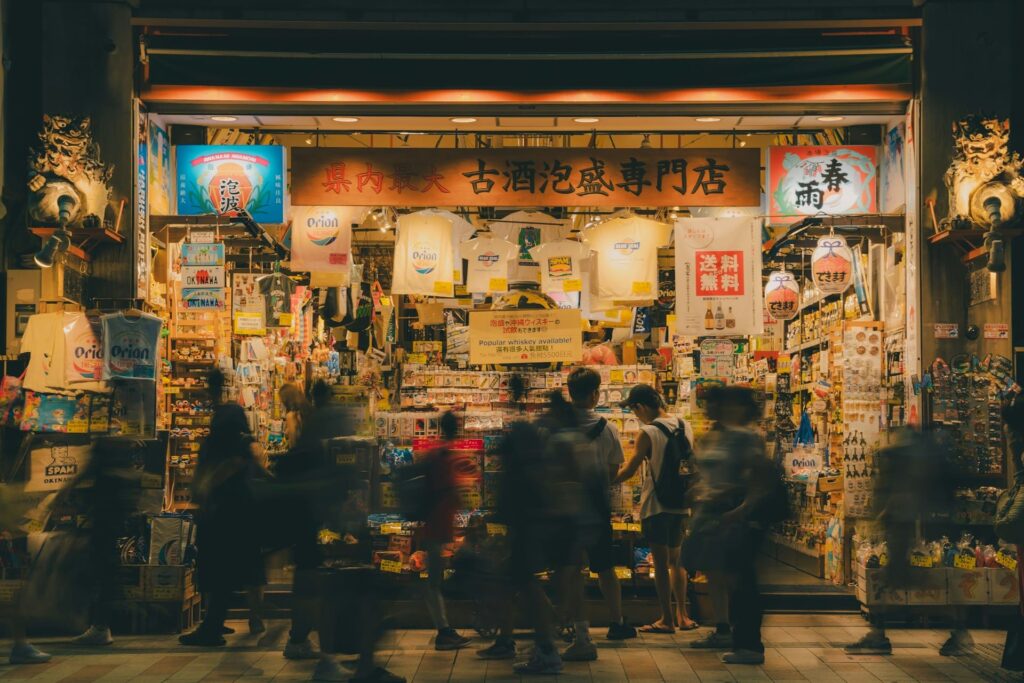
Mainland Japanese cuisine often leans toward delicate seafood, soy-based sauces, seasonal vegetables, and light dashi. Okinawa is a different story. The food here uses more pork, wheat-based noodles instead of buckwheat soba, firm island tofu called shima tofu, bitter melon, purple sweet potato, and postwar ingredients like SPAM.
That does not mean Okinawan food is heavy all the time. A good day of eating in Naha can move from a bowl of soba to fresh sea grapes, peanut tofu, fried fish, taco rice, and small izakaya plates. The key is knowing which dishes are pork-heavy, which are lighter, and which look vegetarian but are not.
| Category | Mainland Japan | Okinawa |
|---|---|---|
| Base Broth | Kombu, bonito, fish, or soy-based broths | Pork bone, bonito, and richer savory broths |
| Main Meat | Seafood, beef, chicken, and pork | Pork belly, ribs, feet, and SPAM are especially common |
| Noodles | Buckwheat soba or wheat ramen and udon | Wheat-based Okinawa soba noodles |
| Tofu | Often soft and silky | Firm, dense shima tofu |
| Flavor Profile | Often delicate, seasonal, and seafood-forward | Rich, hearty, tropical, and influenced by several cultures |
11 Must-Try Okinawa Dishes for First-Timers

If you are short on time, focus on the dishes that best capture what makes Okinawan food different from mainland Japanese food. These are the first 11 foods I would put on a first-time Naha eating list.
1. Okinawa Soba — The Bowl You Can’t Skip
Okinawa soba is the island’s most iconic noodle dish. Unlike mainland soba, the noodles are made from wheat, so they are thicker, firmer, and chewier. The broth is usually a savory combination of pork and bonito, and the bowl is commonly topped with braised pork belly or spare ribs, scallions, and fish cake.
Typical cost: Check the current menu before you go
Where to find it: Soba shops around Tsuboya, Kokusai Dori, and residential side streets. Okinawa Soba EIBUN in the Tsuboya area is a popular option, but always confirm current hours and reservation rules before visiting.
Dietary note: Traditional Okinawa soba is not vegetarian or halal-friendly due to the pork-and-bonito broth and meat toppings.
2. Goya Champuru — Bitter Melon Stir-Fry
Goya champuru is the classic home-style Okinawan stir-fry. It combines bitter melon (goya), firm Okinawan tofu, egg, and usually pork or SPAM. The word champuru means “mixed together,” and the bitterness of the melon balances the saltiness of the meat and tofu.
Typical cost: Check the current menu
Best for: Lunch or dinner at a casual izakaya
Dietary note: Even if the dish looks vegetable-heavy, ask whether it contains pork, SPAM, bonito flakes, or lard.
3. Taco Rice — Okinawa’s Tex-Mex Soul Food
Taco rice is one of Okinawa’s most famous postwar comfort foods. It usually layers seasoned ground meat, shredded lettuce, cheese, salsa, and tomatoes over rice. It is casual, filling, and one of the easiest dishes to find in Naha.
Typical cost: Check the current menu
Where to find it: Cafés and casual restaurants around Kokusai Dori, American-style diners, and some food courts
Dietary note: Check the meat, sauce, and toppings if you avoid pork, beef, dairy, or alcohol-based seasonings.
4. Umibudo (Sea Grapes) — Ocean Pop Candy
Umibudo is a type of seaweed with tiny green bubbles that burst in your mouth. The flavor is fresh, salty, and clean, which makes it a good counterpoint to richer pork dishes. It is usually served cold with ponzu or soy-based dipping sauce.
Typical cost: Check the current menu
Best for: A light, photogenic starter before a heavier meal
Dietary note: Naturally vegan and gluten-free in many preparations, but confirm the dipping sauce ingredients.
5. Pork Tamago Onigiri — The Perfect Portable Snack
This Okinawan-style rice sandwich wraps SPAM and egg, and sometimes extra fillings such as bitter melon, shrimp, or fried items, in crisp seaweed. It is one of the easiest breakfasts near Makishi Market and a practical airport snack before leaving Okinawa.
Typical cost: Check the current menu
Where to find it: Pork tamago specialty shops around Makishi and Naha Airport. Confirm current branch hours before you go.
Dietary note: Contains SPAM and egg in its standard form. Not vegetarian or halal-friendly unless a shop clearly offers a suitable alternative.
6. Rafute — Slow-Braised Pork Belly
Rafute is thick-cut pork belly simmered until tender in a sweet-savory sauce often made with soy, awamori, and sugar. It is one of the best representations of Okinawa’s slow-cooking tradition and is usually served as a small but rich izakaya dish.
Typical cost: Check the current menu
Best for: Dinner at an izakaya, especially if you want one deeply Okinawan pork dish
Dietary note: Contains pork and may use alcohol-based seasoning. Not suitable for halal, vegetarian, or pork-free diets.
7. Soki — Tender Pork Ribs
Soki means Okinawan-style pork spare ribs, simmered until tender and seasoned with soy sauce, brown sugar, and often awamori. You may see it as a standalone dish or as a topping on Okinawa soba, where it becomes soki soba.
Typical cost: Check the current menu
Best for: A richer dinner dish or a more filling soba bowl
Dietary note: Contains pork. Not suitable for halal, vegetarian, or pork-free diets.
8. Sata Andagi — Okinawan Doughnuts
Sata andagi are deep-fried dough balls made from flour, sugar, and eggs. They are crisp on the outside and dense-fluffy inside, closer to an old-fashioned doughnut than a soft pastry. They are common around markets, souvenir shops, and small bakeries.
Typical cost: Check the current stall or shop price
Where to find it: Street-style stalls near Makishi Public Market, Kokusai Dori, and covered arcades
Dietary note: Usually contains egg and wheat. Most versions are not vegan.
9. Jimami Tofu — Peanut Tofu
Despite the name, jimami tofu is not made from soybeans. It is a pudding-like dish made from peanut milk and starch, often served chilled with a soy-based sauce. The texture is smooth and springy, and the flavor is mildly nutty.
Typical cost: Check the current menu
Best for: A light appetizer or a unique food souvenir
Dietary note: Often vegan-friendly in the base recipe, but confirm the sauce because some versions may include fish-based ingredients.
10. Gurukun — Okinawa’s Prefectural Fish
Gurukun, also called takasago or double-lined fusilier, is closely associated with Okinawa and is commonly served fried, salt-grilled, or as sashimi. The texture is firm and the flavor is mild, making it an easy local seafood choice for first-timers.
Typical cost: Check the current menu
Best for: Lunch or dinner at a casual seafood restaurant or izakaya
Dietary note: Suitable for many pescatarian travelers, but confirm cooking oil and seasoning if you have strict requirements.
11. Awamori — The Local Spirit You Should Try Carefully
Awamori is Okinawa’s traditional distilled rice liquor, typically stronger than sake and often served on the rocks, with water, or in cocktails. Some bottles are aged for a smoother, deeper flavor. If you usually drink beer or sake, start slowly.
Typical cost: Check the current bar or bottle price
Best for: An evening drink at an izakaya or a souvenir if you enjoy spirits
Dietary note: High alcohol content. Not suitable for halal diets. Check customs rules before bringing bottles home.
Where to Eat in Naha: Best Areas & Restaurants
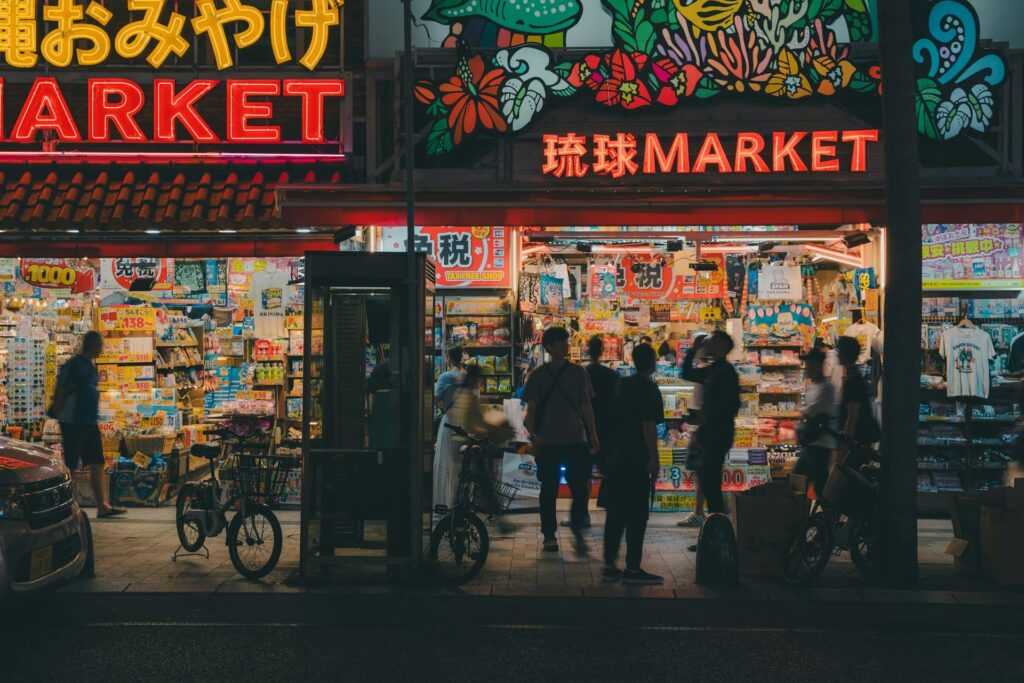
Naha is the most practical base for a first Okinawa food trip. It has the best public transport access, the highest concentration of restaurants, and the widest range of English-menu or tourist-friendly options. If you are choosing where to stay, check our Okinawa hotel area guide for tips on staying near Kokusai Dori without a car.
Kokusai Dori & The Covered Arcades
Kokusai Dori is Naha’s main tourist strip. It is not always the most local-feeling area, but it is extremely useful for first-timers because you can find Okinawa soba, taco rice, izakayas, dessert shops, souvenir snacks, and English menus within a compact area.
The better food wandering often starts when you step off the main street into the covered arcades, especially around Heiwa Dori and Ichibangai. These arcades are more shaded, less exposed to rain, and filled with small food stalls, spice shops, casual eateries, and market-style counters.
Kai’s tip: The mistake I see travelers make is treating Kokusai Dori as one straight shopping street. Use it as your spine, then duck into the side arcades when you want smaller shops and a slower pace. If a place looks cash-only or has no English menu, decide what you want before you sit down so you do not feel rushed.
English menus: Common along Kokusai Dori. Less common in side arcades, so use a translation app for smaller shops.
Payment: Many restaurants along Kokusai Dori accept credit cards, but smaller arcade shops may still be cash-only.
Makishi Public Market
Makishi Public Market is the heart of Naha’s food scene. The ground floor is packed with seafood, pork cuts, island vegetables, seaweed, and local ingredients. Upstairs dining areas may cook your market selections for a separate preparation fee.
Best for: A casual food walk, takeaway snacks, seafood browsing, and ingredient spotting
Opening hours: Individual stall hours vary. Go earlier in the day for better selection, and confirm current hours before visiting.
Payment: Many stalls may prefer cash. Bring yen.
Preparation fee: Confirm the cooking cost, method, and seasoning before ordering upstairs.
Kai’s tip: At markets, I always tell readers to ask three things before committing: how much the item costs, how much cooking costs, and how it will be seasoned. This matters if you avoid pork, alcohol, or fish broth, because the ingredient itself may be fine but the preparation may not be.
Tsuboya (Yachimun Street) Area
The Tsuboya pottery district offers a quieter, more local-feeling dining experience. It is a good area for pairing a bowl of Okinawa soba with a pottery walk, especially if you want to escape the busiest section of Kokusai Dori. Okinawa Soba EIBUN is one popular soba stop in this area, but check current hours, reservation options, and queue conditions before planning around it.
Recommended Restaurants at a Glance
| Place | Best For | Good to Know |
|---|---|---|
| Yunangi | Classic Okinawan dishes | Popular and often busy. Confirm current service hours before going. |
| Okinawa Soba EIBUN | Okinawa soba in the Tsuboya area | Well-known soba option. Check current hours and reservation rules. |
| Pork Tamago Onigiri Honten | Pork tamago onigiri near Makishi Market | Useful for breakfast or takeaway. Confirm branch hours and closures. |
| Makishi Public Market | Seafood, market browsing, casual eating | Bring cash and ask about preparation fees before ordering. |
| Ukishima Garden | Plant-based Okinawan-inspired dishes | Near Kokusai Dori. A practical option for vegan travelers. |
Is Okinawa Food Halal, Vegetarian, or Vegan-Friendly?

The honest answer: Traditional Okinawan cuisine is not naturally halal, vegetarian, or vegan-friendly. Pork appears in broths, toppings, cooking fats, and seasonings. Bonito flakes, SPAM, and alcohol-based seasonings such as mirin or awamori are also common. You can still eat well, but you need to plan rather than assume.
Why Okinawan Cuisine Is Challenging for Restricted Diets
The main issue is hidden animal ingredients. Okinawa soba broth commonly uses both pork and bonito. Goya champuru often includes pork, SPAM, egg, or bonito flakes. Even a tofu dish may be simmered in meat-based stock or topped with fish flakes.
For strict halal travelers, sauces and seasonings matter too. Some Okinawan dishes use awamori or mirin, and most local restaurants are not halal-certified unless they clearly state it.
Kai’s tip: What catches people out in Okinawa is not the obvious pork belly on top of a dish. It is the broth, the bonito flakes, the SPAM in a stir-fry, or the alcohol-based seasoning in a sauce. If your restriction is strict, ask about stock and seasoning, not only the visible ingredients.
Best Bets for Halal, Vegan & Pork-Free Travelers
- Ukishima Garden — A well-known plant-based restaurant near Kokusai Dori serving Okinawan-inspired vegan dishes. It is not the cheapest option, but it is more reliable for restricted diets.
- Makishi Public Market seafood — Choose simple preparations like sashimi, grilled fish, or steamed seafood. Confirm no pork broth, lard, or alcohol-based seasoning is used.
- Umibudo and jimami tofu — These are naturally plant-based in many preparations. Always confirm the dipping sauce.
- Curry and Okinawan-style cafés — Some casual cafés offer vegetarian curry, salads, and rice bowls that are easier to customize than traditional izakaya food.
Useful Japanese Phrases for Ordering
If you are dining at a non-tourist restaurant, use these questions to check ingredients:
- Does this contain pork? — “Buta niku wa haitte imasu ka?”
- Does this contain pork broth? — “Buta no dashi wa haitte imasu ka?”
- Does this contain fish broth or bonito flakes? — “Sakana no dashi ya katsuobushi wa haitte imasu ka?”
- Does this contain alcohol or mirin? — “Osake ya mirin wa haitte imasu ka?”
- Can you make it without meat? — “Niku nashi ni dekimasu ka?”
For the safest experience, eat at restaurants that clearly advertise vegan, vegetarian, or halal-friendly options rather than trying to customize a traditional Okinawan menu during a busy meal period.
Okinawa Food at Night: Izakayas & Bar Hopping
Okinawan food becomes even more enjoyable at night. Local izakayas serve small sharing plates such as rafute, soki, fried gurukun, jimami tofu, and umibudo alongside awamori and Orion beer. Some venues also feature live sanshin, the Okinawan three-stringed instrument.
The challenge is that the best night often happens away from the easiest English-menu restaurants. Small izakayas may have handwritten menus, table charges, smoking rules, limited card payment, and hidden pork or fish broth in dishes that look simple. If you are worried about the language barrier, read our Okinawa nightlife guide for tips on navigating local bars without Japanese.
What to Expect at a Local Izakaya
- Otoshi (table charge): Many izakayas charge a small cover fee per person, usually with a small appetizer. Confirm if you are unsure.
- Smoking: Some smaller izakayas may still permit smoking inside. Check recent reviews or choose a larger non-smoking venue if this matters to you.
- Language: Smaller izakayas may have Japanese-only menus. Use a translation app or point-and-order strategy.
- Payment: Cash is still common at traditional izakayas. Ask before ordering if you are unsure.
- Age rules: Bar-focused tours and venues may have age limits, so confirm before booking if you travel with teenagers or children.
Self-Guided vs. Guided Bar Hopping
| Option | Best For | Possible Drawback |
|---|---|---|
| Self-guided izakaya night | Flexible travelers comfortable with Japanese menus | You may miss local dishes or struggle with ingredient questions |
| Guided Naha bar hopping tour | Solo travelers, couples, and first-time visitors who want local food without menu stress | Less flexible than choosing every stop yourself |
| Kokusai Dori dinner | Convenience and easy access | Can feel more tourist-oriented |
| Market-area food walk | Casual snacks and local atmosphere | Opening hours vary by shop |
My Recommended First-Night Food Experience in Naha
If you have only one or two nights in Naha, this is the point where I would stop researching individual izakayas and book a guided bar hopping tour instead. You can still explore on your own later, but your first night is when a guide makes the biggest difference: ordering, explaining dishes, handling the flow between venues, and getting you off the most obvious tourist path.
Why I’d book this one
- It solves the language-barrier problem at the exact moment it matters. Izakaya menus can be handwritten, seasonal, and heavy on local words. A guide helps you understand what you are eating instead of guessing.
- It is food-focused enough to count as dinner. The current tour page describes several local dishes, multiple drinks, and visits to three izakaya or bar-style venues, so it fits naturally into this Okinawa food itinerary.
- Traveler feedback points to the right strengths. Recent reviewers consistently mention local-feeling venues, welcoming guides, good Okinawan dishes and drinks, and the live music element at the final stop. That is exactly the kind of experience that is hard to recreate from a map search alone.
| Choice | Better If You Want… | Cost Style | My Take |
|---|---|---|---|
| Guided Naha bar hopping tour | Local izakayas, English explanation, food + drinks, and less ordering stress | Check latest tour price | Best for your first night, solo travelers, and short stays |
| Self-guided izakaya night | Maximum flexibility and full control over every stop | Pay as you go | Better after you already understand the area and menu style |
Quick 1-Day Naha Food Itinerary
If you have only one day for food in Naha, use this as a practical route rather than a fixed schedule. Confirm current opening hours before you set out.
- Morning: Start with a pork tamago onigiri near Makishi Market or at another convenient branch. It is filling enough for breakfast but quick enough to keep moving.
- Late morning: Browse Makishi Public Market. Try umibudo or jimami tofu as a light snack, and look for sata andagi in the surrounding arcades.
- Lunch: Head toward Tsuboya for Okinawa soba or soki soba. Try to eat before the main lunch rush if you are visiting a popular shop.
- Afternoon: Walk along Kokusai Dori and the covered arcades. Add taco rice at a casual café, or save room for dinner if you are planning an izakaya night.
- Evening: Join a guided bar hopping tour or explore izakayas on your own around Makishi, Tsuboya, and Kokusai Dori. Look for rafute, gurukun, jimami tofu, umibudo, awamori, and Okinawan music if available.
Practical Tips for Eating in Naha
- Carry cash: Many small restaurants, market stalls, and izakayas still prefer cash. Do not rely only on cards or mobile payment.
- Use translation apps, but keep questions simple: Ingredient questions work best when they are direct: pork, fish broth, alcohol, egg, dairy, or gluten.
- Eat earlier with children: Families usually have an easier time at casual restaurants and izakayas earlier in the evening. Later hours can become smokier, louder, and more drink-focused.
- Check hours twice: Restaurant hours change frequently in Okinawa. Check Google Maps, the restaurant’s own site, and recent social media posts when possible, especially on holidays and during typhoon season.
- No tipping: Tipping is not practiced in Okinawa or anywhere in Japan. Good service is included in the price.
- If you are bringing habu sake home: Check US customs rules for habu sake before packing it.
Kai’s tip: If I had one day in Naha, I would not schedule every meal as a sit-down restaurant. Okinawa food works best when you mix one proper bowl of soba, one market wander, one snack stop, and one relaxed night meal. That gives you more variety without spending the whole day waiting for tables.
Frequently Asked Questions
Is Okinawa food different from Japanese food?
Yes. Okinawan cuisine uses more pork, wheat-based noodles, bitter melon, firm island tofu, and American-influenced ingredients like SPAM and taco rice. The flavor is generally richer and heartier than many mainland Japanese dishes.
What is the most famous Okinawa food?
Okinawa soba is the most iconic dish for first-timers. Goya champuru, taco rice, rafute, umibudo, pork tamago onigiri, and awamori are also classic Okinawan foods and drinks to try.
Is Okinawa soba vegetarian or halal?
Traditional Okinawa soba is usually not vegetarian or halal-friendly. The broth commonly contains pork and bonito, and the toppings often include pork belly or ribs. Look for specialized restaurants or ask specific ingredient questions before ordering.
Where is the best place to try Okinawa food in Naha?
Kokusai Dori, Makishi Public Market, the covered arcades, and the Tsuboya area are the easiest places to start. They offer a convenient mix of soba shops, casual restaurants, market food, izakayas, and snack stalls.
Do I need to tip at restaurants in Okinawa?
No. Tipping is not customary in Okinawa or anywhere in Japan. Some izakayas may charge an otoshi, which is a small table charge that usually comes with an appetizer.
Where can I find street food in Naha?
The areas around Makishi Public Market, Kokusai Dori, and the covered arcades are the easiest places for street-style snacks. Look for sata andagi, pork tamago onigiri, fresh fruit, and small takeaway items.
Is a Naha bar hopping tour worth it?
It can be worth it if it is your first night in Naha, you are traveling solo, or you want to try local izakayas without guessing at Japanese menus. A guided tour is less flexible than self-guided eating, but it reduces ordering stress and helps you understand the dishes.
What should I check before eating out in Okinawa?
Check opening hours, payment options, recent reviews, age rules for bar-focused venues, and ingredient details if you have dietary restrictions. Small restaurants may close or change hours with little notice.
Final Verdict
Choose this guide if…
- It is your first trip to Okinawa and you want a clear food starting point.
- You are staying in Naha and prefer to walk between food spots.
- You want to try local dishes without renting a car.
- You have dietary restrictions and need practical, honest warnings before ordering.
Consider a different approach if…
- You are traveling mainly to Miyako, Ishigaki, or the remote islands. This guide focuses on Naha, and local specialties differ by island.
- You have very strict halal or vegan requirements. Options exist, but Okinawa is not an easy destination for restricted diets, so contact restaurants in advance.
- You prefer fine dining. This guide focuses on casual, street-level, market, and izakaya-style eating.
For families: Aim for early dinner hours at casual restaurants or larger izakayas. Okinawa soba and taco rice are usually kid-friendly options, while bar hopping tours and late-night izakayas may have age limits or adult-focused atmospheres.
For first-time solo travelers: I would book the guided Naha bar hopping tour for your first night, then use what you learn to explore independently afterward. It is the most efficient way to understand local dishes, drinks, izakaya etiquette, and the backstreets around Kokusai Dori.
For short-stay visitors (1–2 days): Follow the 1-day itinerary above. It covers the biggest range of dishes without wasting time on transport.
For travelers with dietary restrictions: Prioritize Ukishima Garden, simple seafood at Makishi Public Market, umibudo, and jimami tofu. Use the Japanese phrase list before ordering anywhere else.

Hi, I’m Kai. I’m a Tokyo-based travel writer, tourism industry insider, and the author of a published guidebook for international visitors to Japan. With over 10 years of professional experience at a leading Japanese tourism company, my mission is to help you skip the tourist traps and navigate Japan’s best destinations like a local. I believe the perfect day trip is like a traditional kaiseki meal: a beautiful balance of precise planning and unforgettable seasonal discovery. When I’m not out conducting field research, you’ll usually find me drafting new itineraries with one of my favorite fountain pens!