
Osaka in winter is a city trip, not a snow trip. That single distinction decides most of the questions travelers ask before booking: whether to come in December, January or February, how cold it will actually feel, and whether it is worth packing a heavy coat.
The short answer: yes, Osaka works well in winter for food, illuminations, indoor attractions, and a compact city that is easy to walk when the weather turns. No, it is not a place to book if seeing snow is the point of the trip. And the three winter months are not interchangeable. December is the most atmospheric, January is the coldest and the most culturally interesting, and February is the quietest of the three with the first signs of spring.
For a winter day beyond Osaka, a guided trip to Kobe, Arima Onsen, and Mt. Rokko offers mountain scenery and hot-spring culture without complicated transport planning. Check the guided day trip’s itinerary, available dates, and recent traveler reviews to see whether it fits your plans. This is a scenery-and-onsen experience rather than a dedicated snow-play trip.
Is Osaka Worth Visiting in Winter?
Quick answer: Osaka is worth visiting in winter if you want a cool-weather city break with good food, walkable neighborhoods, seasonal lights, and easy indoor escapes. It is a poor choice if your main goal is reliable snow, long daylight hours, or warm-weather sightseeing.
- Yes, come in winter if you are happy to mix outdoor walks with cafés, department stores, aquariums, and covered shopping streets, and you want the city without summer heat and humidity.
- Choose another season if snow is a priority, you dislike cold evenings, or you are mainly traveling for cherry blossoms and long days outside.
- December is the strongest month for atmosphere. January is the coldest and requires the most planning around New Year. February stays cold but adds plum blossoms and a calmer pace.
- USJ and the Osaka Bay waterfront feel noticeably colder than the city center on the same day, because you spend longer outside and the wind is harder to escape.
What makes Osaka manageable in winter is not the temperature itself but the density of the city. In the center, a cold walk is rarely a commitment. You can step into a department store, a café, a subway station, or a covered arcade within a few minutes almost anywhere between Umeda and Namba. That matters more than a two-degree difference on a weather app.
The mistake I see first-time visitors make is treating winter as a low season across the board. Parts of Osaka are quieter in January, but Shinsaibashi and Dotonbori still fill up on weekends, and the New Year period is one of the busiest times of the year around major shrines. Winter changes the weather, not the popularity of the most famous streets.
December vs January vs February at a Glance
| December | January | February | |
|---|---|---|---|
| Typical temperatures | Around 12°C daytime, 5°C at night | Around 10°C daytime, 3°C at night | Around 11°C daytime, 3°C at night |
| Best for | Festive atmosphere and winter lights | New Year culture and winter food | Late-winter scenery and fewer crowds |
| Main seasonal appeal | Midosuji Illumination, holiday dining, Christmas events | Hatsumode at Sumiyoshi Taisha, USJ Countdown, cold-season food | Plum blossoms at Osaka Castle Park, quieter streets |
| Snow expectation | Very low; snow is rare and rarely settles | Low, but January and February see the most snow days | Low; an occasional light dusting is possible |
| Crowd caveat | Weekends and December 29–January 3 are busy | January 1–3 is busy at shrines and USJ; mid-January is calmer | Weekends in Shinsaibashi remain busy |
| Main drawback | Holiday closures and higher demand in the last week | Coldest feel plus New Year schedule disruptions | Cold, with fewer headline events than December |
| Best traveler type | First-timers who want the city at its most decorative | Culture-focused travelers who can plan around holidays | Repeat visitors, photographers, and slower travelers |
Osaka in December vs January vs February: Which Month Is Best?
There is no single best month. The right choice depends on what you want the trip to feel like, and how much tolerance you have for holiday crowds and closures.
December gives you the version of Osaka that looks most like a winter postcard: lights along the main avenue, Christmas menus, and a city that stays out late. January gives you the deepest winter and the most distinctive cultural experience, but it also brings the year’s least predictable opening hours. February is the compromise: still cold, noticeably calmer after the New Year rush, and with the first plum blossoms appearing.
If you have no other constraints, December is the easiest recommendation for a first visit, and February is the easiest for a second visit. January is excellent if you actively want New Year culture and are willing to check schedules day by day.
Osaka in December — Best for Winter Lights and Festive Atmosphere
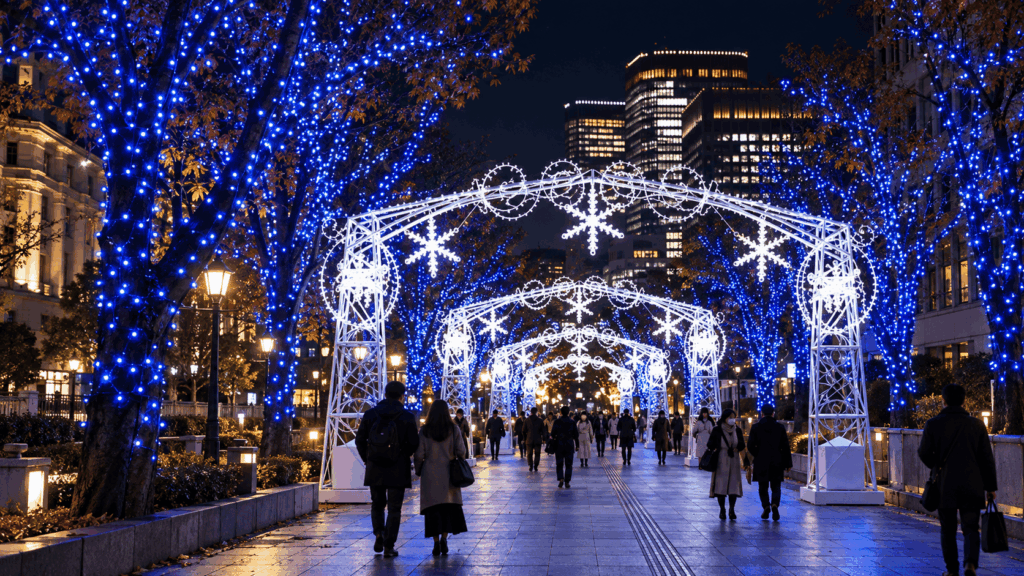
December is the month when Osaka most rewards staying out after dark. The Midosuji Illumination runs from November 3 to December 31 in the 2026–27 season, with lights on from around 17:00 to 25:00 along Midosuji from the Hanshin-mae intersection in Umeda to the Namba West Exit intersection. It is free to walk, and it is the single most useful winter experience in the city because it does not require a ticket, a reservation, or a fixed time slot.
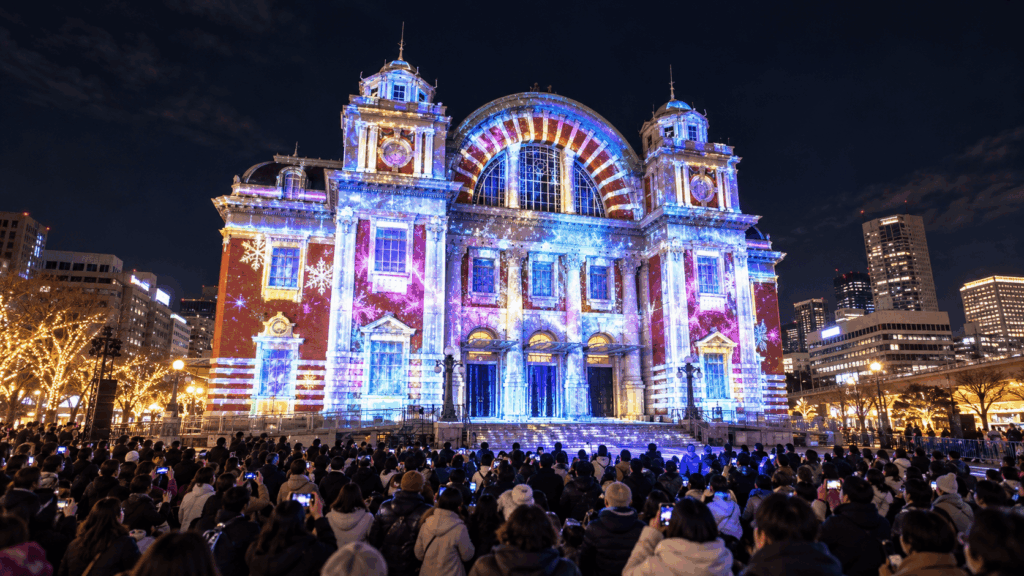
In Nakanoshima, OSAKA Hikari Renaissance is scheduled for December 11–25 in 2026, with light art around the City Hall area and Nakanoshima Park. The wider Festival of the Lights program runs into late January, so early January visitors still catch some installations even after the main Christmas period ends.
What I notice when guiding people along Midosuji in winter is that the lights compete with the traffic. Car headlights, shop windows, and the illuminated facades blend into one continuous band of color, which is part of the appeal but also why the avenue feels more like a city street than a light show. In past years the color scheme has changed block by block, with pink and blue sections in some seasons; treat any specific color as a seasonal design choice rather than a permanent feature.
The practical advantage of this route is escape. If the cold gets uncomfortable, there are department stores, cafés, and subway entrances along almost every block between Umeda and Namba. You can walk twenty minutes, warm up, and continue, which is not true of a waterfront promenade or a theme park.
Two caveats matter in December. First, the last week of the month overlaps with the New Year travel period, when trains are crowded, some restaurants change their hours, and hotel prices rise. Second, weekends in Shinsaibashi stay busy even in cold weather; the lights draw locals as well as visitors. If you want a quieter walk, a weekday evening in early or mid-December is the better choice.
Osaka in January — Best for New Year Culture, but Plan Carefully
January is the coldest month in Osaka, with an average temperature of 6.2°C and average overnight lows around 3°C. It is also the month with the most cultural texture, provided you separate the first three days from the rest of the month.
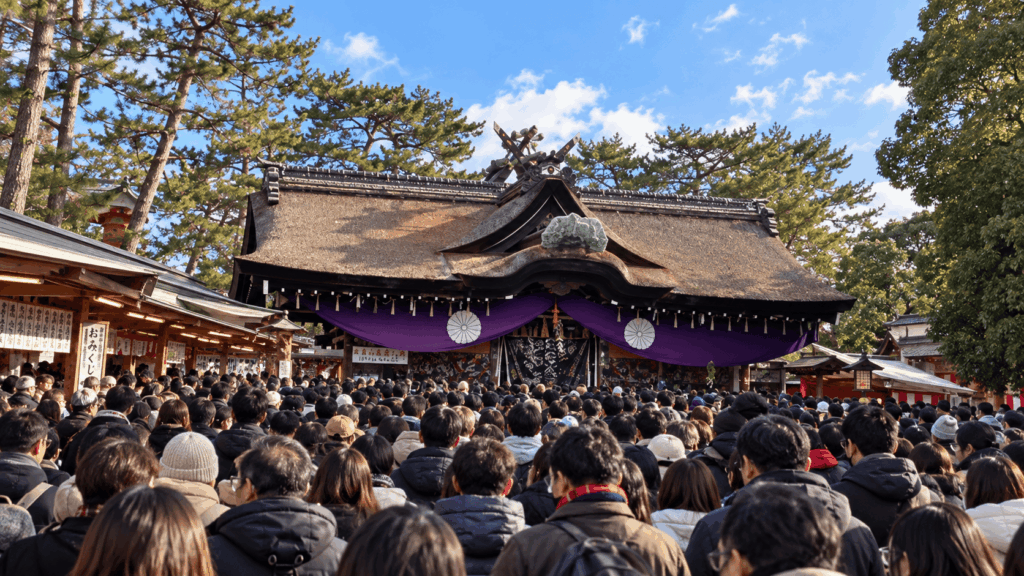
Sumiyoshi Taisha is one of the most important shrines in the region and draws a large hatsumode crowd in the first days of the year. The shrine typically opens from the evening of December 31 through January 1, with shorter hours on January 2–3 and traffic restrictions around the approach roads. Exact hours and restrictions change each year, so check the shrine’s official New Year notice before you go, especially if you are traveling with luggage or a stroller.
Universal Studios Japan runs a separate New Year event, NO LIMIT! Countdown 2027, from 19:00 on December 31, 2026 to 21:00 on January 1, 2027. The park closes between 17:00 and 19:00 on December 31, and the countdown requires a dedicated ticket. This is not a normal park day, and it should not be used as a benchmark for how busy USJ will be in mid-January.
What surprised me on a January visit to USJ was how much the sea wind changed the day. I was wearing a thick down jacket and still used hand warmers, and the cold was most obvious in the open areas rather than in queues tucked between buildings. That is a personal impression, not a rule: wait times and closing hours vary enormously by date, and I have also experienced an early closing and a ride closure on the same trip. Check the official park calendar and the temporary closure list for your specific date rather than assuming winter means short queues or a fixed closing time.
After January 3, the city settles into a quieter rhythm. Mid-to-late January is a good window for travelers who want low-friction sightseeing, winter food, and indoor attractions, as long as they accept short daylight and cold evenings.
Osaka in February — Best for Late-Winter Scenery
February is still winter, and you will still want a proper coat, but it is the month when the season starts to show an exit. The clearest example is the Osaka Castle Park Plum Grove, a roughly 1.7-hectare garden with about 1,245 plum trees of 105 varieties. It is free to enter, and the bloom unfolds in stages: early varieties usually open from mid-January, with the main display from mid-February to early March.
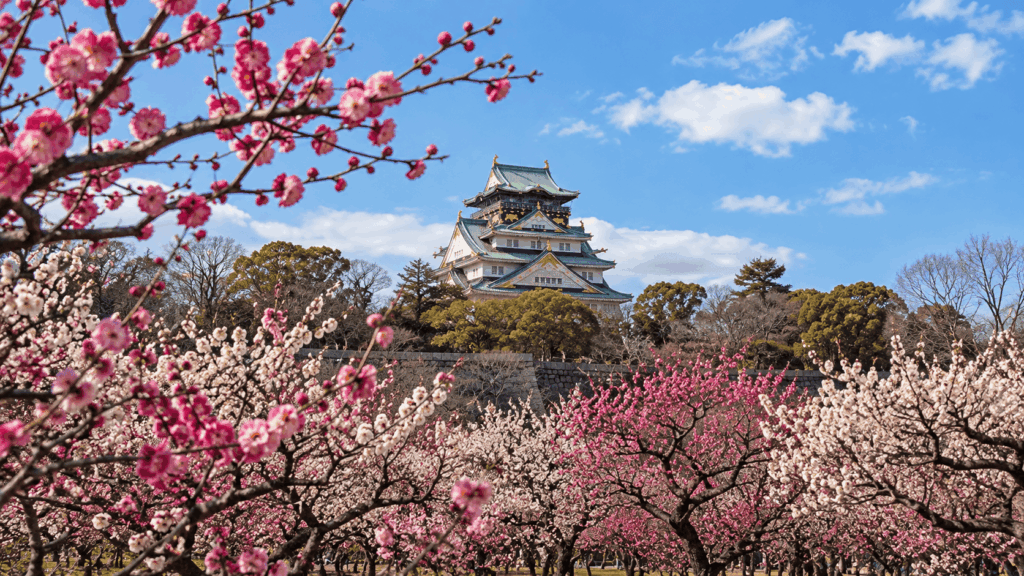
That timing is the reason February appeals to repeat visitors. The castle grounds are less crowded than during cherry blossom season, the plum viewing is spread over weeks rather than days, and the combination of red and white blossoms against the castle walls is a distinctly late-winter image. It is not a substitute for cherry blossoms, and the exact peak shifts every year with the weather.
February also has fewer headline events than December. If you need a packed calendar of illuminations and holiday menus, December is stronger. If you prefer space to walk, easier restaurant bookings, and a chance to see seasonal scenery without standing in a long line, February is the better fit.
How Cold Is Osaka in Winter?
Osaka is cold in winter, but it is not an extreme-winter destination. Daytime temperatures usually sit around 10–12°C, and nights hover near freezing or slightly above. Snow and ice are uncommon in the city center, and the wind is more of a factor than the thermometer suggests.
| Osaka (1991–2020 normals) | December | January | February |
|---|---|---|---|
| Average temperature | 8.7°C | 6.2°C | 6.6°C |
| Average high | 12.3°C | 9.7°C | 10.5°C |
| Average low | 5.3°C | 3.0°C | 3.2°C |
| Precipitation | 55.5 mm | 47.0 mm | 60.5 mm |
| Days with snowfall observed | 1.8 | 4.7 | 5.5 |
| Normal maximum snow depth | 0 cm | 0 cm | 1 cm |
Source: Japan Meteorological Agency, Osaka station, 1991–2020 climate normals.
Compared with the other two cities most travelers pair with Osaka, it is slightly milder. The January average is 6.2°C in Osaka, 4.8°C in Kyoto, and 5.4°C in Tokyo. Osaka also sees less snow accumulation than either: the normal January snow depth is 0 cm in Osaka, 5 cm in Kyoto, and 4 cm in Tokyo. If you are moving between the three cities in winter, Osaka is usually the gentlest of the three, while Kyoto’s basin location makes mornings and evenings feel sharper.
Those numbers explain the climate, not the experience. A 10°C afternoon in a sheltered street between buildings feels different from a 10°C afternoon on an exposed pier, and that difference is what most weather summaries leave out.
Why the Temperature Alone Doesn’t Tell You How Cold It Feels
Three winter days in Osaka at the same temperature can feel completely different depending on where you spend them. The variable that matters most is not the air temperature but how long you are outside, how exposed you are to wind, and how easily you can get back indoors.
| Central Osaka (Umeda–Namba) | Universal Studios Japan | Osaka Bay / Tempozan | |
|---|---|---|---|
| Wind exposure | Low to moderate; buildings break the wind | High in open plazas and along the waterfront | High on decks, piers, and the promenade |
| Continuous time outdoors | Short blocks of 10–20 minutes | Long; queues, shows, and walking between areas add up | Medium to long, depending on the cruise and waterfront walk |
| Access to indoor warmth | Very easy; department stores, cafés, stations everywhere | Limited and crowded when the park is busy | Kaiyukan and the adjacent mall help; the ship interior is limited |
| What to wear | Normal winter layers | Windproof outer layer plus hand warmers | Windproof outer layer, scarf, and a hat that stays on |
Kai’s tip: On a cold evening, I would rather walk Midosuji than the Tempozan promenade. The avenue is colder than it looks on a map, but a department store or café is never more than a block away, so the cold is broken into short pieces. At USJ and around Osaka Bay, the wind is uninterrupted and the nearest warm space can be a ten-minute walk. Plan the exposed day for the better weather window, not the other way around.
This is why I treat “how cold is Osaka?” as the wrong question for itinerary planning. The better question is “how long will I be outside without a break?” A 20-minute walk between Umeda and Yodoyabashi is a different experience from four hours in an open theme park or a 45-minute harbor cruise.
Does It Snow in Osaka?
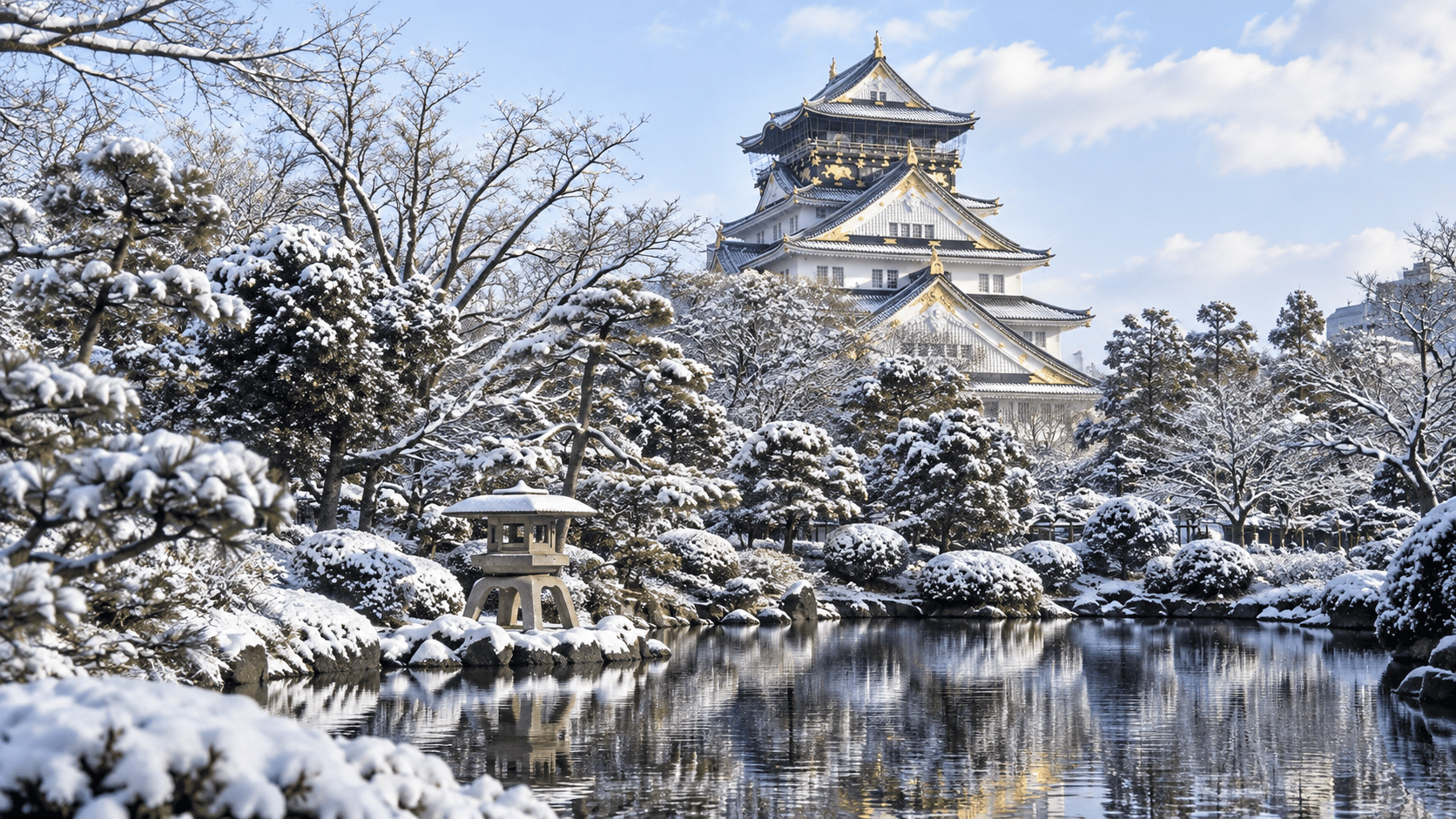
Yes, snow can fall in Osaka. No, it usually does not settle. Those two facts are often blurred together, and the blur is what leads travelers to book a winter trip expecting a snowy city.
Japan Meteorological Agency normals show snowfall observed on about 1.8 days in December, 4.7 days in January, and 5.5 days in February. But the same data shows a normal maximum snow depth of 0 cm in December, 0 cm in January, and 1 cm in February. In other words, flakes in the air are a real possibility, especially in January and February, while a white city is not.
The first snow in Osaka falls around December 26 on average, and the last snow around March 8. Measurable snow cover of 1 cm or more is much rarer: across the 30-year normals period, it was recorded in only nine years, with an average first date of January 29. A dusting can happen, and it can look beautiful for a few hours, but it is not something to build a trip around.
| Question | Practical answer |
|---|---|
| Can it snow in Osaka? | Yes, most often in January and February, sometimes mixed with rain. |
| Does snow usually settle? | No. A light dusting is possible; a lasting snow scene in the city center is rare. |
| Which month has the best chance? | February has the highest normal snow depth, but January and February both see snow days. |
| Should I plan a snow day in Osaka city? | No. Plan normal winter sightseeing and treat snow as a bonus if it happens. |
| Where should I go if seeing snow matters? | Head for the mountains above Kobe, such as the Mt. Rokko area, or further inland. |
If snow is important to you, the honest advice is to leave the city. Waiting for a snowfall in central Osaka is not a plan; it is a hope. A day trip toward Mt. Rokko or Arima Onsen gives you a much higher chance of winter scenery, and it also gives you something to do if the weather turns out to be clear and cold instead.
Where to See Snow Near Osaka Instead
The most practical option is the Mt. Rokko area above Kobe, roughly 1 to 1.5 hours from central Osaka depending on your route and transfers. Rokkosan Snow Park is scheduled to open for the 2026–27 season from December 5, 2026 to March 7, 2027, with a snow play area open 9:00–17:00 and longer hours on weekends and holidays. It is a managed snow facility, not a natural snowfield, so do not expect a wilderness scene or guaranteed fresh powder.
Arima Onsen, on the far side of the mountain, is one of Japan’s oldest hot spring towns and pairs naturally with a Rokko day. The combination works because it gives you two different winter experiences in one day: cold, open mountain air and a hot bath afterward. What it does not give you is a guarantee of snow.
| Waiting for snow in Osaka city | Planned snow day at Mt. Rokko | |
|---|---|---|
| Reliability | Low; depends on the weather | Higher for snow play, though still weather-dependent |
| Travel time | None | Roughly 1–1.5 hours each way by train and cable car |
| Cost | Free | Transport plus facility admission; a guided day tour costs more but removes the planning |
| Experience | A few hours of novelty at best | Snow play, mountain views, and an onsen town in one day |
| Planning required | None, but no control over the outcome | Check season dates, lift and snow park hours, and transport connections |
If you would rather not assemble the trains, cable cars, and onsen stop yourself, a coach day trip from Osaka is the lower-effort version. The current GetYourGuide product, Osaka: Kobe Day Trip with Arima Onsen & Mt. Rokko Night View, runs about nine hours, departs from Nipponbashi Exit 2 at 10:30 between November 16 and March 31, and includes round-trip transport with an English-, Chinese-, and Japanese-speaking guide. Lunch, onsen admission, and Mt. Rokko fees are generally extra, and the tour does not include Rokkosan Snow Park. Treat it as a winter scenery and onsen day, not a snow tour.
If you want to explore beyond Osaka without coordinating several transport connections, this guided day trip is worth comparing with a DIY visit. It is particularly relevant if mountain views, Kobe sightseeing, and an onsen town appeal more than spending the day at a snow-play facility.
Why I’d book this one
- Simpler transport: Round-trip transport brings Kobe, Arima Onsen, and Mt. Rokko into one organized day, reducing the need to plan individual transfers and connections.
- Guide and driver support: Some recent travelers appreciate the practical assistance and sightseeing pace, although feedback is mixed. Check the latest reviews for comments on guiding and time at each stop.
- Clearer planning: The booking page lets you check the current itinerary, departure details, additional costs, and cancellation conditions before committing to a date.
Keep the distinction clear: this is a winter scenery and onsen outing, not a Rokkosan Snow Park excursion. If snow play is your main goal, plan a separate visit to the snow park instead.
For travelers who want to compare other options, the wider question of where to find snow around Kansai, and which day trips make sense from Osaka, is worth checking before you commit a full day.
What to Wear in Osaka in Winter
Most travelers need normal winter clothing, not expedition gear. The useful formula is a warm outer layer plus removable middle layers, because Osaka’s indoor spaces are much warmer than the street. Trains, department stores, museums, and restaurants are heated to the point where a heavy sweater becomes uncomfortable within ten minutes.
That is also the most common packing mistake I see: one extremely heavy outfit that cannot be adjusted. A waterproof or windproof coat, a light down or fleece mid-layer, and a normal shirt will handle almost every winter day in the city. Add gloves, a scarf, and warm socks for evenings.
| Situation | Recommended layers | Extra item |
|---|---|---|
| Downtown sightseeing | Shirt, light mid-layer, normal winter coat | Comfortable walking shoes |
| Evening Midosuji walk | Shirt, mid-layer, coat, scarf | Gloves; a tote or small bag for layers you remove indoors |
| Universal Studios Japan | Thermal base, mid-layer, windproof coat | Hand warmers, hat, warm socks, a small waterproof layer |
| Osaka Bay and Santa Maria | Thermal base, mid-layer, windproof outer layer | Scarf, hat, gloves; avoid loose items that blow away on deck |
| Indoor-heavy day | Shirt, light sweater, coat you can carry | Bag large enough for the coat |
Kai’s tip: Pack for two different climates in one day. Central Osaka is a layering game: you will take a layer off in a department store and put it back on at the street corner. USJ and the bay are a wind game: the cold finds the gaps at your neck, wrists, and ankles. On those days I wear a windproof outer layer and use hand warmers even with a down jacket, which sounds excessive until you have spent an hour in an open queue.
Footwear matters more than most packing lists admit. You will walk more than you expect, and the ground is often damp rather than snowy. Water-resistant shoes with a warm sock are more useful than heavy snow boots, which become uncomfortable indoors.
Best Things to Do in Osaka in Winter
Winter does not create a completely different Osaka. It shifts the value of what is already there: lights become the main evening attraction, indoor spaces become more appealing, and seasonal food and blossoms give the trip a time marker. These are the experiences worth planning around, with the month and the trade-offs made explicit.
Walk Midosuji After Dark
Best for: first-time visitors, couples, and anyone who wants a winter experience without a ticket. When: December, ideally a weekday evening. Cost: free.
Midosuji is Osaka’s main north–south avenue, running from Umeda through Yodoyabashi, Hommachi, and Shinsaibashi to Namba. During the illumination season, the trees along the route are lit from around 17:00 to 25:00, and the effect is strongest after dinner when the sky is fully dark.
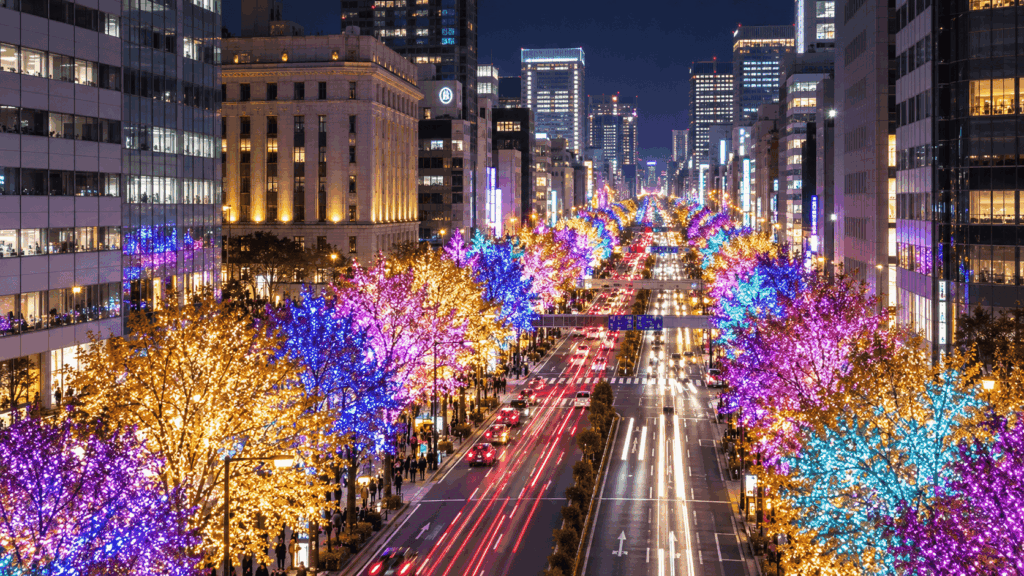
You do not need to walk the whole route. A common and practical version is to start at Umeda, walk south for 20–30 minutes, and stop when you reach an area you like. Hommachi and Shinsaibashi are both good exit points, and the subway runs underneath the avenue for the entire length. I often build this into an evening after dinner because it is easy to shorten: if the wind picks up, you step into a department store or a café and wait it out.
The trade-off is crowds. Shinsaibashi on a weekend evening can be slow going, with groups stopping to take photos and the sidewalk crowded around the illuminated trees. If you want space, go on a weekday or walk the Yodoyabashi–Hommachi stretch, which is quieter than the shopping districts at either end.
Visit Universal Studios Japan — but Prepare for the Wind
Best for: families, theme park fans, and travelers who want one high-energy day. When: any winter month, with date-specific checks. Cost: a full-day ticket plus food and extras.
USJ works in winter, and the holiday program, Universal Holiday Wonders, runs from November 13, 2026 to January 17, 2027 with Christmas shows, food, and decorations. The park is also one of the most exposed places in Osaka: much of the day is spent outdoors, and the waterfront location means wind that you do not feel in the city center.
On a January visit, I wore a thick down jacket and still used hand warmers. The Harry Potter area was the coldest part of the day, and a hot Butterbeer was less about the flavor than about holding something warm; my impression was a sweet drink with ginger and cinnamon notes, and I would not call it subtle. Menus change by season, so check what is actually available on your date rather than planning around a specific item.
The bigger caution is scheduling. On that trip the park closed earlier than I expected and one attraction was down for maintenance. I also had relatively short wait times, but that was my date, not a winter rule. Park hours, temporary closures, and crowd levels vary enormously across December, January, and February, and the New Year countdown period is a separate event with its own ticket. Check the official calendar for your specific day before you decide whether USJ fits and whether a USJ Express Pass is worth buying.
Use Kaiyukan and Osaka Bay as an Indoor-Outdoor Combo
Best for: families, cold or rainy days, and travelers who want a half-day change of pace. When: any winter month. Cost: aquarium admission plus cruise ticket.
Kaiyukan is the anchor of the Tempozan Harbor Village area, and its indoor exhibits make it the most reliable winter activity in the bay area. The aquarium is large enough to fill two to three hours, and the surrounding mall gives you food and warmth without going back into the wind.
The Santa Maria harbor cruise leaves from the same area for a 45-minute loop of Osaka Bay, with departures roughly hourly from 11:00 to 16:00. The view back toward the port, with container cranes and the USJ skyline, is the reason to go. The deck is also the coldest place in this article: on my trip, the wind made a long stay on deck uncomfortable, and the warm indoor seating filled up early. I would board early and claim a seat inside, then move out to the deck in short bursts.
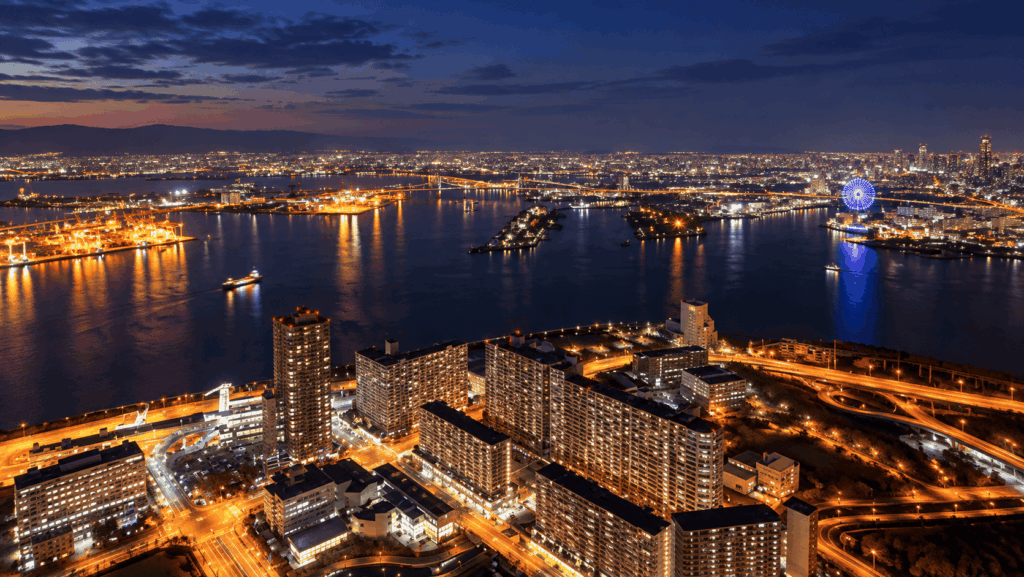
Winter maintenance is a real risk. The Santa Maria has had a multi-week suspension in midwinter in recent years, including a January–February window in 2026, so check the Osaka Water Bus calendar before building a day around it. The illumination in front of Kaiyukan usually runs from mid-November to early March, but the current season’s dates should be confirmed officially before you treat it as a fixed part of your evening.
See Plum Blossoms at Osaka Castle Park
Best for: repeat visitors, photographers, and anyone traveling in late February. When: mid-February to early March, weather permitting. Cost: free.
The plum grove inside Osaka Castle Park holds about 1,245 trees of 105 varieties, and it blooms in sequence rather than all at once. Early varieties open from mid-January, the main show usually arrives in mid-February, and late varieties extend the season into March. Because the viewing window is long, February visitors have a reasonable chance of seeing something even if the peak shifts.
This is a different experience from cherry blossom season. There are fewer visitors, the atmosphere is calmer, and the castle walls make a strong backdrop for red and white blossoms. If you are also deciding whether going inside Osaka Castle is worth your time and ticket price, combining the museum with a stroll through the plum grove makes a complete half-day trip. It is also a good example of why February deserves more credit than it gets: the city is still cold, but it is no longer only about lights and indoor attractions.
What to Know About New Year in Osaka
The New Year period in Japan is not a normal low-season week. From around December 29 to January 3, transport patterns, opening hours, and crowd concentrations all change, and the changes are specific to each facility rather than citywide.
Sumiyoshi Taisha is the classic hatsumode destination in Osaka. In recent years the shrine has opened on the evening of December 31 and stayed open through January 1, with shorter hours on January 2–3, and traffic restrictions have been in place around the approach roads for the first three days. Expect large crowds, limited parking, and a slower walk from the nearest station. If you want the atmosphere without the crush, visit after January 3.
USJ runs its countdown event on December 31 from 19:00 to January 1 at 21:00, with the park closed from 17:00 to 19:00 and a dedicated ticket required. This is a completely different operating day from a normal winter visit, and it also affects how January 1 feels in the park.
Restaurants and shops are mixed. Convenience stores and chain restaurants generally stay open, while some independent restaurants close for several days and department stores may run holiday hours or close on January 1. Do not assume either “everything is closed” or “everything is open”; check the specific places you care about.
Kai’s tip: Do not treat January 1–3 and mid-January as the same month. I plan New Year trips around shrine visits and food, with almost nothing scheduled in the first three days, and save the museum, aquarium, and shopping days for after January 3. That single split avoids most of the disappointment people describe when they say Osaka was “closed” during their trip.
Is Winter a Less Crowded Time to Visit Osaka?
Sometimes, but not everywhere and not every week. Winter reduces crowds in some places and changes nothing in others.
The pattern depends on three variables: weekday versus weekend, the specific dates around New Year, and whether the attraction is a street or a ticketed venue. Shinsaibashi and Dotonbori remain busy on weekends throughout the winter, because they serve locals as much as visitors. USJ crowd levels swing with school holidays, events, and the date, not with the season alone. Sumiyoshi Taisha is extremely busy in the first three days of January and quiet later in the month.
The trap is booking a winter trip specifically to avoid queues. On one winter weekend I found Shinsaibashi crowded enough that walking was slow, while USJ on a different date had short waits. The season did not determine either experience; the date and the place did. If low crowds are your priority, aim for a weekday in mid-January or early February, and check the Japanese school holiday calendar and event schedules rather than the season.
Who Should Visit Osaka in Winter — and Who Should Choose Another Season?
Winter suits:
- Travelers who prefer cool weather and dislike the humidity of June–September.
- Anyone building a trip around food, shopping, cafés, aquariums, and indoor attractions.
- First-time visitors who want illuminations and a festive city atmosphere in December.
- Travelers willing to prepare for wind and cold at USJ or on the bay.
- Visitors who want to add an onsen or mountain day trip to a city break.
Another season may suit you better if:
- Cherry blossoms are the main reason for your trip.
- You dislike cold evenings and short daylight hours.
- You expect reliable snow in the city.
- You want long, warm days for walking and outdoor sightseeing.
- You are traveling with someone who feels the cold easily and will not enjoy layered clothing and heated indoor spaces.
The common thread across the three winter environments in this guide is simple: Osaka’s winter temperature tells you very little about how comfortable a day will feel. The city center is easy to manage because you can always step inside. USJ and the bay demand more preparation because you cannot. Plan the exposed days deliberately, and winter becomes a practical season rather than a compromise.
Frequently Asked Questions
Does it snow in Osaka in winter?
Snow can fall in Osaka, most often in January and February, but it rarely settles in the city center. Climate normals show snowfall observed on about five days in January and February, while the normal maximum snow depth is 0 cm in January and 1 cm in February. Measurable snow cover of 1 cm or more has occurred in only about nine of the last thirty years. Treat snow as a bonus, not a reason to book.
What is the coldest month in Osaka?
January is the coldest month on average, at 6.2°C, compared with 6.6°C in February and 8.7°C in December. Daytime highs in January average around 9.7°C and overnight lows around 3°C, so mornings and evenings feel sharp. Wind, rain, and how long you stay outdoors matter more than the monthly average when you are actually walking around.
Is December a good time to visit Osaka?
Yes, especially if you want winter lights and a festive atmosphere. The Midosuji Illumination usually runs from early November to December 31, and OSAKA Hikari Renaissance lights up Nakanoshima in mid-December. The main caveat is the last week of the year, when holiday travel, changing restaurant hours, and higher demand make the city busier and less predictable than early December.
What should I wear in Osaka in winter?
Bring a warm coat, a light mid-layer, and a shirt you can wear indoors, rather than one extremely heavy outfit. Osaka’s trains, shops, and restaurants are well heated, so removable layers are more useful than a single thick sweater. Add gloves, a scarf, and warm socks for evenings, and upgrade to a windproof outer layer for USJ or an Osaka Bay cruise.
Is Universal Studios Japan worth visiting in winter?
It can be, if you prepare for the wind and check the date-specific schedule. The park is exposed and feels colder than central Osaka, and its opening hours, attraction closures, and crowd levels vary through December, January, and February. Winter does not automatically mean short queues or an early closing time. The New Year countdown is a separate ticketed event and should not be used as a guide to normal winter crowds.
Is Osaka warmer than Kyoto or Tokyo in winter?
Osaka is slightly milder than both. The January average is 6.2°C in Osaka, 4.8°C in Kyoto, and 5.4°C in Tokyo, and Osaka also sees less snow accumulation. Kyoto’s basin setting makes mornings and evenings feel colder, while Tokyo’s snow events are somewhat more frequent. If you are combining cities, Osaka is usually the gentlest of the three in winter.
Should I visit Osaka in January or February?
Choose January if you want New Year culture and do not mind planning around holiday hours and shrine crowds. Choose February if you prefer a calmer trip with a chance to see plum blossoms at Osaka Castle Park, and you are comfortable with cold but quieter days. Mid-to-late January is a good middle ground for low-friction sightseeing after the New Year period ends.
Final Verdict: Which Winter Month Fits Your Trip?
Osaka in winter works best when you choose the month for the experience you actually want, rather than treating December, January, and February as one season.
- For first-time visitors: December. The Midosuji Illumination, holiday menus, and long evenings give you the most memorable version of the city, and the cold is easy to escape in the Umeda–Namba core.
- For travelers who want New Year culture: January, ideally arriving after January 3. Build the trip around Sumiyoshi Taisha and winter food, and keep the first days loose because shrine crowds and holiday hours will shape the schedule.
- For repeat visitors and photographers: February. Osaka Castle Park’s plum grove, quieter streets, and easier restaurant bookings make it the most comfortable month for slow travel.
- For families with children: December or late January, with USJ as the anchor day. Check park hours and attraction closures for your exact date, dress for wind, and keep the following day indoor-heavy at Kaiyukan.
- For travelers on a tight schedule: December for a two-night city stop, or February if your dates are flexible (see our guide on how many days you need in Osaka to build your itinerary). Avoid December 29–January 3 unless New Year is the point of the trip.
- For travelers who want snow: none of the three months in Osaka city. Book a day toward Mt. Rokko and Rokkosan Snow Park, or an Arima Onsen day trip, and treat the city as a base rather than the destination for winter scenery.
If you are still undecided, the safest default is December for atmosphere and February for calm. January is the most rewarding month for culture and the least forgiving for anyone who dislikes planning around crowds and closures. None of them require heavy expedition clothing, and all of them reward the same habit: check the specific date, not just the season.
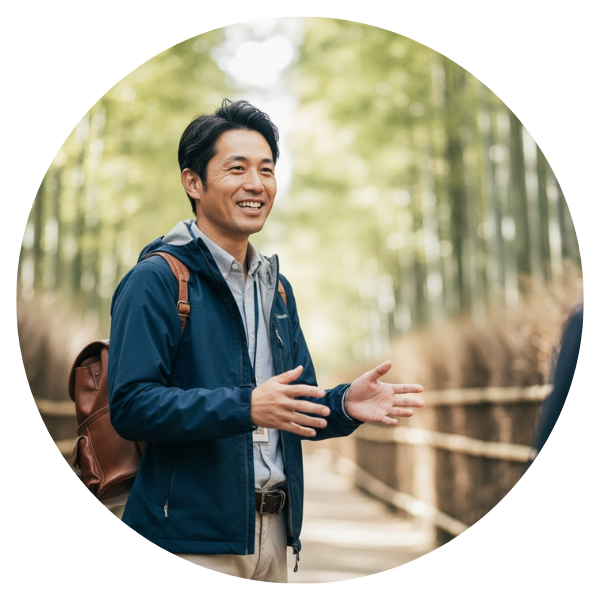
Hi, I’m Kai. I’m a Tokyo-based travel writer, tourism industry insider, and the author of a published guidebook for international visitors to Japan. With over 10 years of professional experience at a leading Japanese tourism company, my mission is to help you skip the tourist traps and navigate Japan’s best destinations like a local. I believe the perfect day trip is like a traditional kaiseki meal: a beautiful balance of precise planning and unforgettable seasonal discovery. When I’m not out conducting field research, you’ll usually find me drafting new itineraries with one of my favorite fountain pens!