
Kinosaki Onsen is one of Japan’s most atmospheric hot-spring towns — a 1,300-year-old resort of willow-lined streets, wooden bathhouses and ryokan tucked against the Sea of Japan coast. It also happens to sit about three hours by train from Osaka. So is a day trip realistic, or a mistake?
The honest answer: yes, Kinosaki Onsen can be worth a day trip from Osaka — but only if you treat the town itself, not just the baths, as the experience. If your only goal is soaking in mineral water, closer options such as Arima Onsen make better use of your day. If you want the full ryokan-and-kaiseki ritual, stay overnight. But if you can leave early, you are happy on a train for a few hours, and two or three baths plus a slow walk along the river sounds like a good day, this is one of the most rewarding long day trips in Kansai.
If Kinosaki sounds worth the trip but the long rail journey, reserved-seat planning and early station start are the parts giving you pause, there is also a private Osaka departure option. Check the current itinerary, pickup details and availability for the Kinosaki Onsen & Sasayama Castle day trip before deciding whether the extra convenience is worth it for your group.
Is Kinosaki Onsen Worth a Day Trip from Osaka?
Plan on roughly three hours each way by limited express, which means a 5.5–6 hour round trip before you even start walking. That is a real cost, and it explains why day-trippers split into two camps: recent visitors who found the journey too long, and those who say a few hours on the ground was enough to enjoy the baths and the town. In my experience the difference is rarely the train ride itself — it is what you expect to do once you arrive.
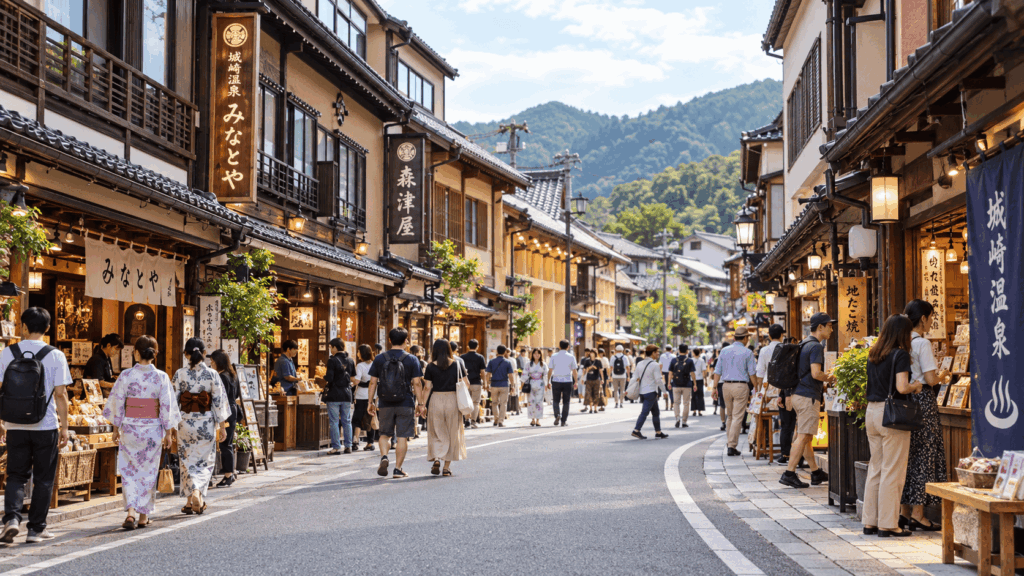
Kinosaki is not a single sight you check off. It is a compact hot-spring town built around the Otani River, where visitors move between public bathhouses in yukata, stop at riverside cafes and food stalls, and let the streetscape set the pace. On the day trip I guided from Osaka, we arrived before 11:00 on the Limited Express Kounotori, and with two baths, lunch, the willow-lined river and an unhurried late afternoon, the day felt complete rather than rushed. We were not trying to do everything — and that was the point.
| Day trip is a good fit if… | Stay overnight instead if… | |
|---|---|---|
| Available time | You can leave Osaka early and accept a 5.5–6 hour round trip | You have a free evening and want the town at its quietest |
| Main goal | Bath-hopping plus streetscape, lunch and a riverside stroll | A slow soak, a kaiseki dinner and a morning bath |
| Ryokan experience | Sleeping in a ryokan is not essential to this trip | You want yukata, tatami and a multi-course dinner in the evening |
| Train tolerance | Long trains do not bother you | Spending hours on trains would ruin the day for you |
| Baths | Two or three public baths are plenty | You want to try every open bath at a relaxed pace |
| Atmosphere | Late afternoon along the river is enough for you | The empty streets after dark and the early-morning steam are the point |
| Budget / hotels | You want to keep one Osaka hotel for the whole trip | You are willing to switch hotels and pay for a ryokan night |
If your Kansai itinerary includes several long JR trips beyond Kinosaki, it is worth comparing the Kansai WIDE Area Pass against individual fares — we break down the numbers later in this guide.
Who Should Do Kinosaki as a Day Trip?
You are a good candidate for the day trip if you can honestly check most of these:
- You can be at Osaka Station in time for a morning limited express (around 7:00–8:30 departures get you to Kinosaki before midday).
- You are comfortable treating the train itself as part of the experience — window scenery, coffee, a bento.
- Two or three baths, each with time to actually soak, sounds better than rushing through more.
- Ryokan dinner is not a must-have for this trip.
- You would rather keep one Osaka hotel than pack up and move for one night.
The travelers I see enjoy this day trip most are the ones who accept one trade-off: less time in the water, more time in the town. Because Kinosaki is small and walkable, that trade-off does not feel like a loss the way it would at a bigger destination.
Who Should Stay Overnight Instead?
Be honest about this one, because Kinosaki’s two most distinctive moments are an evening stroll in yukata and a bath in the early morning — and both disappear on a day trip.
- You want a ryokan dinner (kaiseki), usually built around local crab in winter and Tajima beef year-round.
- You want to wear the yukata your ryokan provides and walk the streets in it after dark, when the town is at its most atmospheric.
- You want a morning bath before the day-trippers arrive.
- You want to move slowly: rest between baths, linger over lunch, do nothing for an hour.
- You want a private bath. Day visitors cannot reserve the private baths at Kinosaki accommodations; these are available to staying guests.
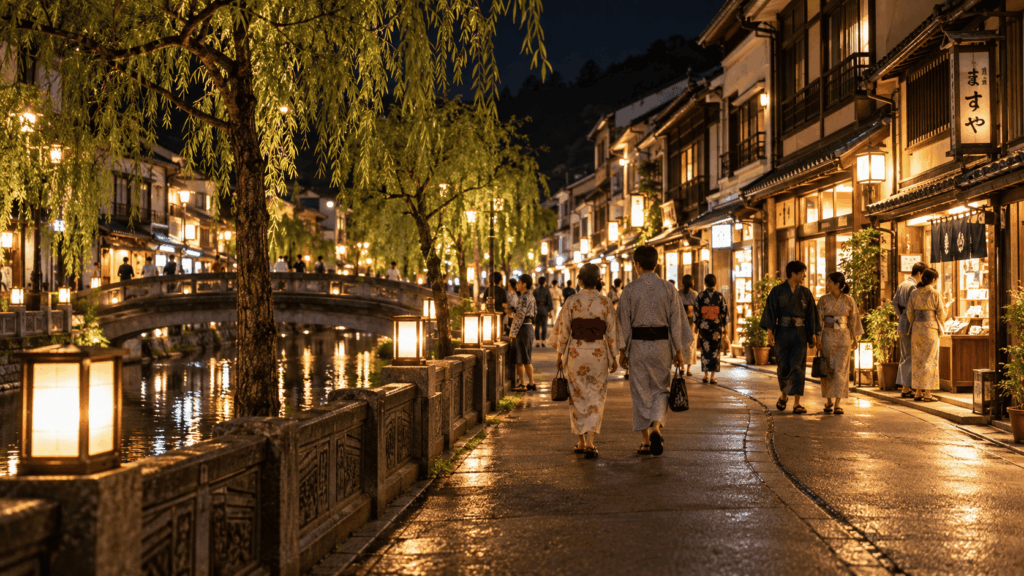
Staying guests usually receive the Yumepa bath pass at check-in, so if you do stay, the public baths are included in your night. The trade-off is cost and logistics: a ryokan night in Kinosaki is a meaningful line in any budget, and you will move hotels to do it.
If the day trip suits you but managing an early station departure, reserved seats and the return journey is the part you would rather remove, a private Osaka departure is the alternative worth comparing.
Why I’d book this one
- Hotel-area pickup and drop-off can remove the station-transfer step at both ends of an already long day.
- The booking is designed for a private group, making it more suitable for families or small groups that value a simpler door-to-door plan over managing the rail journey themselves.
- Because itinerary details, pickup arrangements and language support can vary by booking, the product page is the right place to confirm exactly what is included for your date.
How to Get from Osaka to Kinosaki Onsen
Direct services from Osaka to Kinosaki Onsen are operated by JR West limited expresses, so the trip is covered by eligible JR passes — including the Kansai WIDE Area Pass — without a transfer when you choose a train running all the way to Kinosaki.
- Limited Express Kounotori — the more frequent option. It runs from Shin-Osaka through Osaka Station, Takarazuka, Fukuchiyama and Toyooka toward Kinosaki Onsen. Several direct services reach Kinosaki each day, while other Kounotori trains end at Fukuchiyama or Toyooka, so check the train’s final destination before boarding.
- Limited Express Hamakaze — runs from Osaka through Sannomiya, Kobe and Himeji, then turns inland toward Kinosaki Onsen (with some services continuing farther along the San’in coast). Useful if you are coming from the Kobe side, but departures are much less frequent than Kounotori.
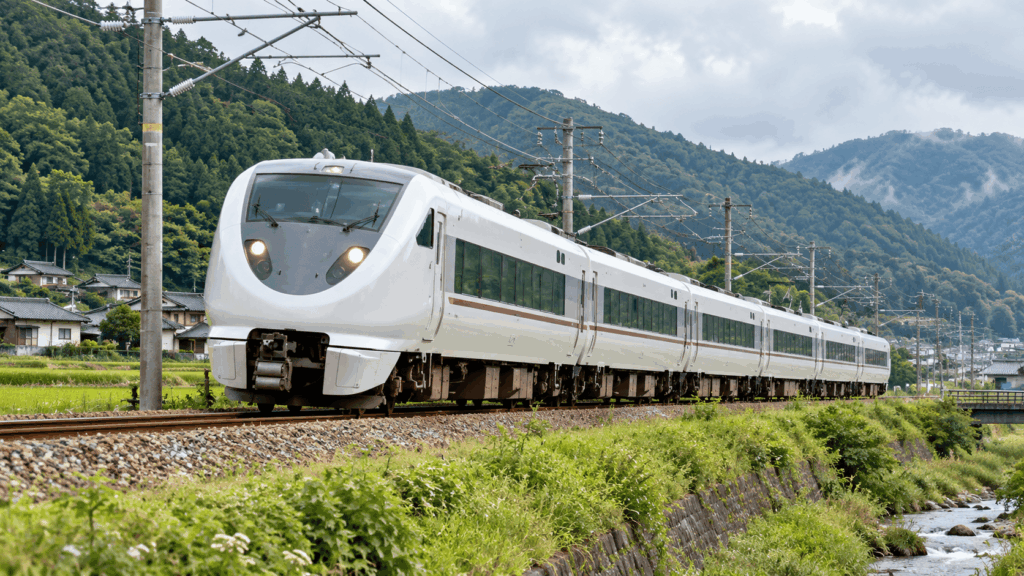
Both trains are all-reserved: you need a reserved-seat ticket before boarding, not just an IC card or a base fare. Seat reservations generally open one month ahead at 10:00 JST via JR West’s online reservation service (e5489), and tickets are also sold at station ticket offices and Midori-no-madoguchi counters. On peak dates — winter weekends, holidays, crab season — seats on morning trains can fill, so book once your dates are fixed.
One-way ordinary reserved-seat fares from Osaka to Kinosaki Onsen are roughly ¥6,140 in regular season (peak-season fares can cost more). Exact fares and timetables change with JR timetable revisions, so confirm the fare and train for your date on the JR West website.
Kounotori vs Hamakaze: Which Train Should You Take?
For a day trip, the answer is usually simple: take whichever train gets you to Kinosaki earliest on your date. Both take a similar amount of time, but their schedules are very different, and an hour of extra town time matters far more than the difference in seat comfort.
| Limited Express Kounotori | Limited Express Hamakaze | |
|---|---|---|
| Route | Shin-Osaka → Osaka → Takarazuka → Fukuchiyama → Toyooka → Kinosaki Onsen | Osaka → Sannomiya → Kobe → Himeji → Wadayama → Toyooka → Kinosaki Onsen |
| Direct to Kinosaki | Yes, but some services end at Toyooka or Fukuchiyama | Yes, with only a few services a day |
| Typical journey time | About 2h40–2h55 from Osaka | About 2h45–3h from Osaka |
| Frequency | Several direct services a day, plus other trains terminating before Kinosaki | A handful of services a day |
| Direction change | None | Reverses direction at Himeji, where the crew rotates the seats |
| Best for | Most day-trippers — more departure choices and direct morning runs | Travelers starting from the Kobe/Sannomiya side, or whose dates match its timetable |
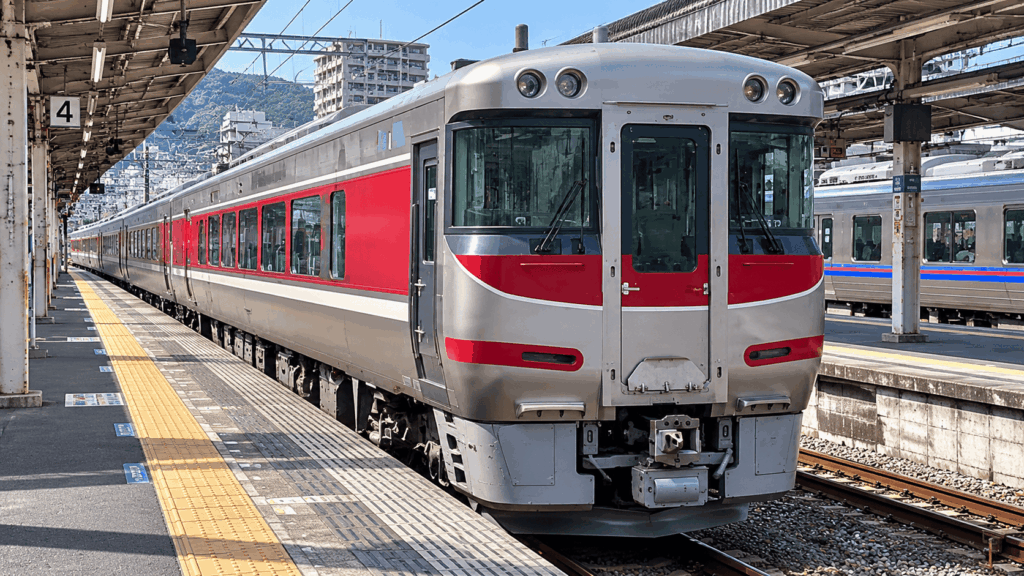
Kai’s tip: Choose the timetable first and comfort second. On the day trip I guided, we took the Kounotori — about 2 hours 50 minutes — and arrived before 11:00, which left room for three baths, lunch and the riverside. On an earlier Hamakaze ride the train reversed direction at Himeji and the crew turned every seat around: a small chore, and I personally found the Kounotori the more relaxing of the two. But if a Hamakaze departure reaches Kinosaki earlier on your date, take it — on a day trip, arrival time beats seat orientation.
How Long Is the Train from Osaka to Kinosaki?
Allow roughly 2 hours 45 minutes to 3 hours each way from Osaka Station to Kinosaki Onsen Station by limited express. On the Kounotori, expect about 2 hours 40 minutes to 2 hours 55 minutes depending on the service — the trip I guided took about 2 hours 50 minutes. Hamakaze services run a similar or slightly longer time because of the inland route via Himeji.
Timetables change seasonally and with JR timetable revisions, so for your exact date, check departure and arrival times on the JR West website before booking. And remember the round trip: about 5.5–6 hours on trains is the real cost of this day trip, so plan the rest of your day around it.
A Realistic Kinosaki Onsen Day Trip Itinerary from Osaka
The itinerary below is built around one idea: remove friction, then slow down. The travelers who struggle on this day trip are usually the ones trying to pack in more, not fewer, stops. Once you accept that the goal is two or three baths plus the town, the timing works comfortably.
| Approx. time | What to do | Why |
|---|---|---|
| Early morning | Leave Osaka on an early limited express (around 7:00–8:30 departures) | Arriving before midday is what makes the day trip work |
| Before 11:00 | Arrive at Kinosaki Onsen Station and store your luggage first | Hands-free town walking saves time all day |
| Late morning | First bath at a 7:00-opening bathhouse | Morning baths are quieter and give you plenty of time for the rest of town |
| Lunch | Eat in town — seafood, Tajima beef or soba | A proper sit-down meal is part of the onsen-town rhythm |
| Early afternoon | Second bath, or a slow walk along the Otani River | Choose by the day’s crowd situation and your energy |
| Mid-afternoon | Optional third bath (15:00-opening baths), the ropeway, or a cafe | Keep this window flexible rather than pre-booked |
| Late afternoon | Walk the willow-lined streets and rest by the river | The town’s atmosphere peaks as the light softens |
| Evening | Take the limited express back to Osaka | Return services run through the afternoon and evening |
Return timetables change through the year, so check the JR West website for your date — and book your return seat at the same time as your outbound, since popular evening trains fill up on weekends.
Step 1 — Store Your Luggage Before You Do Anything Else
Ten minutes of fiddling with a suitcase does not sound like much, but on a day trip the small losses stack up. Make the station your first and only logistics stop: leave anything you do not need for the day before you walk into the town.
- SOZORO Tourist Information Center, directly in front of Kinosaki Onsen Station (open 9:30–17:45, English-speaking staff), takes luggage for a fee. Note that SOZORO stores bags but does not forward them to accommodations.
- Coin lockers are also available around the station for smaller bags.
- If you are staying overnight, the Kinosaki Onsen Ryokan Service Center (also in front of the station) can hold luggage or, when available, send it to your ryokan for a fee — useful if you arrive before check-in time.
Kai’s tip: I treat luggage storage as the first step of any Kinosaki day trip, not an errand to do later. When I guided a group from Osaka, we stored everyone’s bags before doing anything else, and it changed the pace of the whole day — no one was carrying anything by the time we reached the first bath. Decide between SOZORO and a locker before you leave the station square, and do not go back for your bag until you are heading home.
Step 2 — Buy the Yumepa Pass and Pick 2 or 3 Baths
The Yumepa is Kinosaki’s one-day bath pass: ¥1,500 for adults, ¥750 for children through middle school, bought at the reception of any open bathhouse. With it you can enter the public baths as many times as you like during the day. If you are only planning one soak, you can pay per bath instead — but on a day trip, two to three short soaks are the sweet spot, and the pass makes that feel effortless.
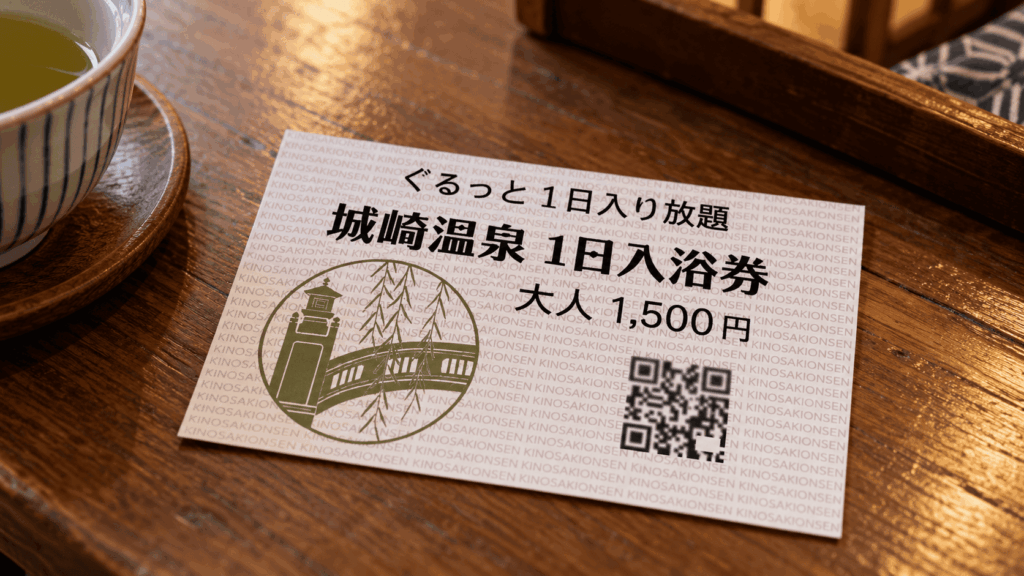
Here is the most important advice in this guide: do not try to visit every open bath on a day trip. Bath-hopping sounds romantic and turns into clock-watching. Two or three baths, each with time to actually relax, beats a rushed sweep of the town. Recent visitors who tried the full circuit tend to describe the same feeling: they spent more time drying off and changing than soaking.
At the time of writing, five of the seven public baths are operating (renovation schedules change, so confirm before you go):
| Bath | Hours | Weekly closing day |
|---|---|---|
| Ichino-yu | 7:00–23:00 | Wednesday |
| Goshono-yu | 7:00–23:00 | Thursday |
| Jizo-yu | 7:00–23:00 | Monday |
| Mandara-yu | 15:00–23:00 | Wednesday |
| Yanagi-yu | 15:00–23:00 | Thursday |
| Satono-yu | Closed for reconstruction since April 2024 (indefinite) | |
| Kono-yu | Closed for renovation 11 May – 30 October 2026 | |
Two details matter for a day trip. First, only three currently operating baths open at 7:00 — Ichino-yu, Goshono-yu and Jizo-yu — so your first soak should come from that group, minus whichever is closed that day. Second, Mandara-yu and Yanagi-yu do not open until 15:00, which makes them natural choices for a late-afternoon third bath rather than a morning one.
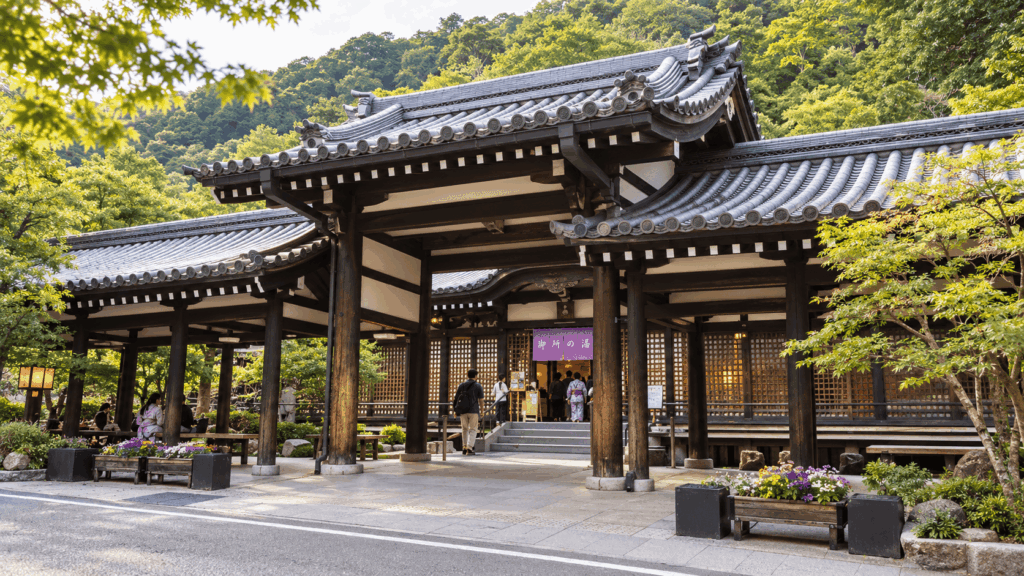
Kai found the water here noticeably warm — the town’s baths sit at around 42°C — and preferred shorter soaks of roughly 10–15 minutes before moving on. That is one person’s style, not a rule; the point is that you do not need long sessions to enjoy several baths.
Step 3 — Leave Time for Lunch and the Riverside Streets
This is the step that answers the “is it too far just for a bath?” question. Kinosaki’s day-trip value lives as much on the streets as in the water: the willow trees along the Otani River, the wooden bathhouse facades, the small shops selling rice crackers and soft cream, the ryokan guests padding past in yukata and geta.
Plan a proper lunch rather than a rushed snack. Winter visitors come for crab (roughly November to March); Tajima beef, fresh seafood and local soba are year-round staples. If you want the full experience, several shops near the station rent yukata for the day — including IROHA — and changing into one immediately changes how the town feels. You are not a tourist passing through; you are doing what everyone else in Kinosaki is doing.
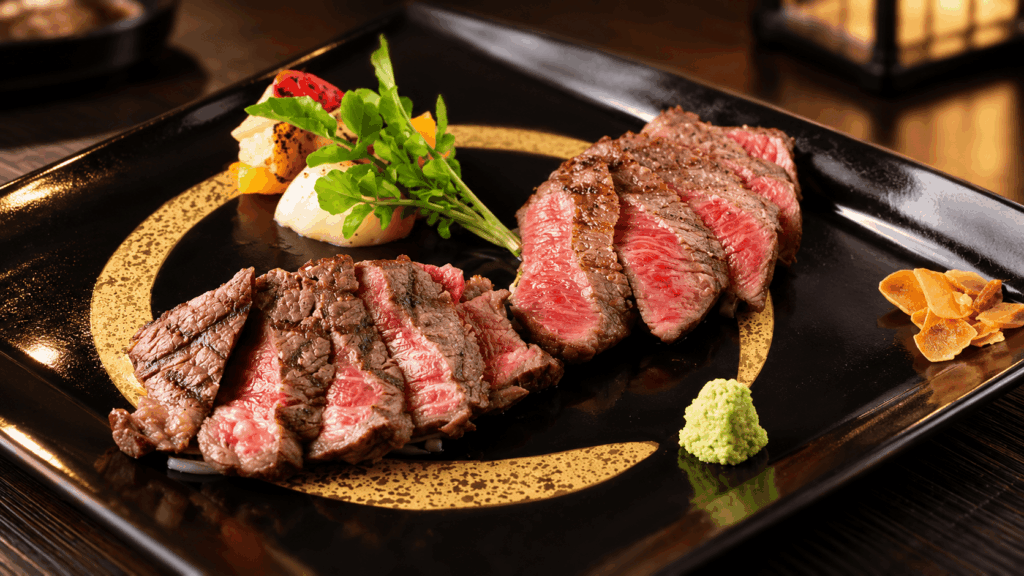
On the day trip I guided, the moment the group talked about most was not a bath — it was sitting on a bench in the willow area, in yukata, with a local craft beer, watching the town slow down around them.
Step 4 — Stay Until Late Afternoon If Your Train Allows
Many day-trippers instinctively book the earliest reasonable return train to “get home.” If your schedule allows a later one, resist that instinct at least once.
In summer, I found the middle of the day genuinely hot — hot enough that even shaved ice did not stop the sweating — but the riverside became noticeably more comfortable in the late afternoon, and the town looked its best in the soft evening light. I am not promising every evening is cool or every sunset is golden; I am saying the late afternoon is when Kinosaki’s atmosphere is at its most relaxed, and leaving at 15:00 means missing exactly the part that makes the long trip feel worthwhile.
Which Kinosaki Baths Should You Choose on a Day Trip?
There is no fixed “best bath” ranking that survives contact with reality, because the right choice on your day depends on three things: what time it is, what day it is, and how busy the baths are. For a detailed breakdown of each bathhouse’s unique features, check our complete guide to the best onsen in Kinosaki.
- Start with the day of the week. Check your date against the closing-day table above before you plan anything — travelers regularly show up to find their target bath shut for its weekly closure.
- Match the bath to the hour. Morning arrivals should choose from the 7:00-opening group; the 15:00-opening baths are better slotted after lunch.
- Check the live crowd status. Visit Kinosaki publishes a bathhouse crowd status page, and SOZORO staff can tell you what is quiet. On busy weekends, small baths like Yanagi-yu can feel cramped — several recent visitors mention this — so be ready to swap your second choice if the first is packed.
- Mix the experience and keep a backup. Pair a larger, well-known bath with a smaller, more local-feeling one rather than two similar baths. Have two candidates in mind for each soak and take whichever has space.
Osaka or Kyoto: Which Is Better for a Kinosaki Day Trip?
If you have a genuine choice of base city, Kyoto saves you about 20–30 minutes each way. Direct Limited Express Kinosaki services run from Kyoto Station to Kinosaki Onsen in roughly 2 hours 20–35 minutes, with a regular-season ordinary reserved-seat fare of about ¥5,370 one way. Other connections may involve a transfer at Fukuchiyama, so check your specific train. From Osaka, a direct Kounotori typically takes about 2 hours 40–55 minutes and costs around ¥6,140 in regular season.
That said, the difference is not big enough to restructure a trip around. If you are staying in Osaka, do not move hotels or add a Kyoto night just to shave half an hour off this one day — the day trip works perfectly well from Osaka, and changing bases costs you more time than the train saves. Choose whichever city you are already staying in; pick Kyoto over Osaka only if both are genuinely open options in your itinerary.
Day Trip vs Overnight Stay in Kinosaki
Think of it this way: a day trip samples Kinosaki; an overnight stay lives its rhythm. Both are valid — they are simply different experiences.
A day trip gives you: no hotel change, a lower total cost, two to three baths, and the town between late morning and early evening. You trade away the evening and morning, which is exactly when Kinosaki is most itself.
An overnight stay adds: a kaiseki dinner at your ryokan (crab in winter), an evening walk in yukata when the day-trippers are gone, a private bath if your ryokan offers one, and a quiet morning soak before the trains arrive. The cost is real — a ryokan night with meals is usually the single biggest line item of the trip — and you will move hotels to do it.
Reviewers who say “stay overnight” are almost always describing the evening atmosphere, not the baths themselves. If your budget or schedule rules out a ryokan, a day trip is still a genuine Kinosaki experience — just a shorter one. Choose the day trip when the alternative is skipping Kinosaki altogether.
Is the Kansai WIDE Area Pass Worth It for Kinosaki?
This is worth doing the math on, because Kinosaki sits inside the Kansai WIDE Area Pass coverage and the pass covers limited express trains such as the Kounotori, including ordinary-car reserved seats.
- Individual tickets: roughly ¥6,140 each way in regular season for an ordinary reserved seat, so about ¥12,280 for the round trip.
- Kansai WIDE Area Pass: ¥12,000 for adults, valid for 5 consecutive days of unlimited travel across the covered JR area.
In regular season, a Kinosaki round trip alone costs almost exactly what the pass does — the pass is slightly cheaper even before you add another journey. During peak seasons, when individual reserved-seat fares rise, the fixed pass price can look better still.
The catch is structure, not price. The pass only makes sense if five consecutive days of JR travel fit your itinerary — for example, Kinosaki plus other long JR trips such as Himeji, Okayama, Amanohashidate or Shirahama. If Kinosaki is your only long JR journey and you cannot use the other days, the savings are too small to bother with the pass’s conditions. The 5-day Kansai WIDE Area Pass is available to eligible overseas visitors with a non-Japanese passport and Temporary Visitor status. Prices and conditions change, so compare the current pass price with individual fares for your full itinerary before booking.
If that five-day window matches the rest of your Kansai plans, check the current Kansai WIDE Area Pass price, eligibility and redemption details before comparing it with individual tickets.
Seasonal Tips for a Kinosaki Day Trip
Summer and winter are the two seasons that change the shape of this day trip. Spring and autumn are comparatively forgiving — pack for normal walking weather and follow the same itinerary.
Winter — Crowds, Crab Season and Wet Footwear
Winter is Kinosaki’s crab season (roughly November to March) and its busiest period, especially weekends, when day-trippers and ryokan guests converge on the same small streets. If you go on a winter weekend, add buffer time to everything: morning trains fill up, and the popular baths get genuinely crowded. See our full guide on what to expect in Kinosaki Onsen in December for more details.
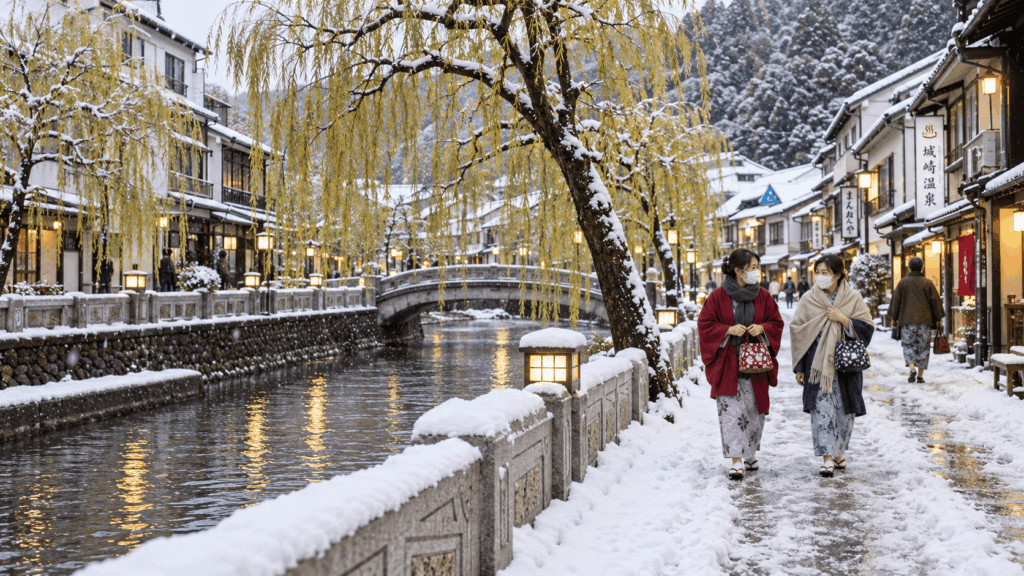
Snow itself is rarely the problem on a day trip — the bigger issue is what the snow does when it melts. On the winter weekend I guided, the streets around the baths were wet slush, and I watched more than one visitor ruin a good day by wearing shoes that were never going to survive it.
Kai’s tip: Bring waterproof footwear in winter, full stop. Snowmelt keeps the streets and bathhouse entrances wet all day, and you will be walking between baths with wet feet — regular sneakers stay damp for hours. And if you are traveling as a pair or group with different changing-room routines, agree on a meeting point outside the bath rather than waiting at the entrance, where the crowds and steam make it easy to miss each other.
Summer — The Middle of the Day Can Feel Much Hotter Than Expected
Kinosaki is on the Sea of Japan side of Honshu, where summer heat is intense and humid. The middle of the day can feel much hotter than you expect for a “seaside” town, so do not plan a long midday walk as your main activity.
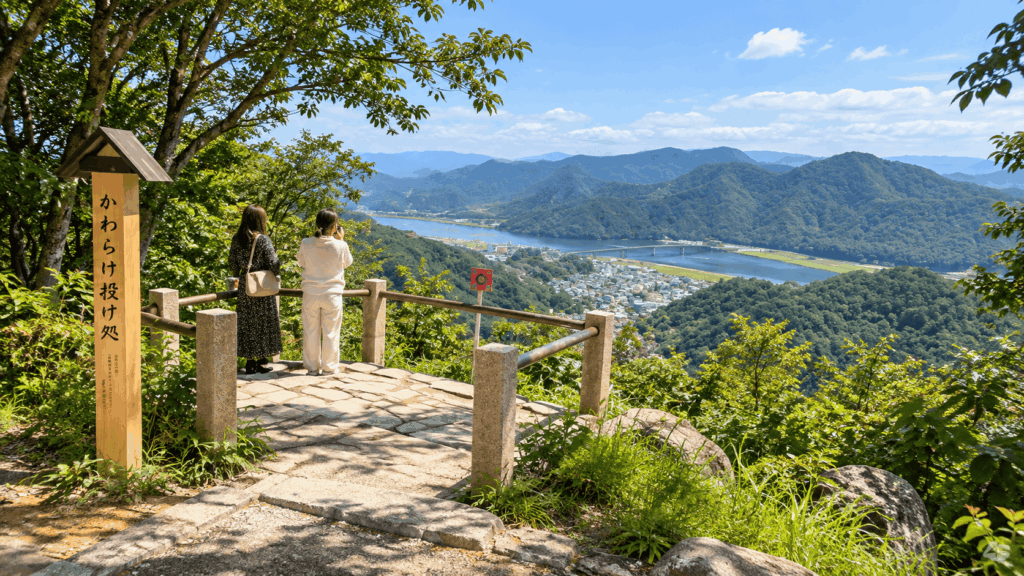
Build the day in reverse of the sun: baths and indoor lunch during the hottest hours, the riverside stroll for late afternoon. Summer is also the season when the 15:00-opening baths — Mandara-yu and Yanagi-yu — are a genuinely pleasant way to cool down after the heat peaks. If you want a view break instead of a third bath, the ropeway up Mount Daishi from the far end of town costs about ¥1,200 for an adult round trip to the summit and stops at Onsenji Temple on the way; it normally closes on the second and fourth Thursday of the month, so check the current schedule before planning around it.
FAQ
Is Kinosaki Onsen worth a day trip from Osaka?
Yes, for the right traveler. Kinosaki works as a day trip when your goal is two or three public baths plus the onsen-town atmosphere — the willow-lined river, lunch, a yukata stroll. If you want a ryokan dinner, a morning bath, or a slow attempt at every open bath, stay overnight instead. Expect roughly three hours each way by train.
How long is the train from Osaka to Kinosaki Onsen?
About 2 hours 45 minutes to 3 hours each way from Osaka Station to Kinosaki Onsen Station by limited express. Direct Kounotori services typically take around 2 hours 40–55 minutes; Hamakaze services run a similar or slightly longer time. Timetables change with each JR revision, so check your date on the JR West website.
Which is better for Kinosaki, Kounotori or Hamakaze?
For a day trip, take whichever gets you there earlier on your date — arrival time matters more than comfort. The Kounotori has more departures and is the more convenient choice for most travelers; the Hamakaze is useful if you are coming from the Kobe side or its schedule suits you better. Both are all-reserved limited expresses with similar one-way fares from Osaka.
Can you visit Kinosaki Onsen from Kyoto in one day?
Yes. Direct Limited Express Kinosaki services run from Kyoto Station in roughly 2 hours 20–35 minutes, which is around 20–30 minutes shorter than the usual direct journey from Osaka. A regular-season reserved-seat fare is about ¥5,370 one way. If both cities are genuine options in your itinerary, Kyoto saves time — but it is not worth moving hotels over.
How many baths can you visit on a Kinosaki day trip?
Physically, more than you should. With roughly six to seven hours in town, two or three baths — each with time to actually soak — is the realistic and more enjoyable target. Only three of the five currently operating baths open at 7:00, so your first soak depends on arrival time and the day’s closing schedule.
Final Verdict: Should You Go to Kinosaki from Osaka for Just One Day?
Choose the day trip if you want to experience a classic Japanese onsen town, can leave Osaka early, and are happy with two to three baths plus a slow riverside afternoon. Stay overnight instead if the baths are your only reason to go, long train rides frustrate you, or you want the ryokan dinner, evening yukata walk and morning soak that a day trip cannot give you.
- For first-time visitors to a Japanese onsen town: the day trip is a gentle, low-pressure introduction — no ryokan etiquette to navigate, no big hotel bill. Pair it with an early train and the 7:00-opening bath group.
- For families: doable but long; children up to age 10 may join the opposite-gender parent in the baths when necessary, and the compact, walkable town is easy to explore on foot. Keep the plan to two baths and bring cash, since bathhouses and small shops are often cash-only.
- For travelers on a tight schedule: the day trip only works with an early start and a late return. If you cannot leave Osaka until mid-morning, skip the day trip — you would arrive too late for it to be worth the ride.
- For repeat visitors to Japan who already know onsen manners: this is one of the most rewarding long day trips in Kansai, especially if you stay until the late-afternoon light along the Otani River.
For the right traveler, Kinosaki is not too far for a day trip from Osaka — but the key is doing less once you get there.

Hi, I’m Kai. I’m a Tokyo-based travel writer, tourism industry insider, and the author of a published guidebook for international visitors to Japan. With over 10 years of professional experience at a leading Japanese tourism company, my mission is to help you skip the tourist traps and navigate Japan’s best destinations like a local. I believe the perfect day trip is like a traditional kaiseki meal: a beautiful balance of precise planning and unforgettable seasonal discovery. When I’m not out conducting field research, you’ll usually find me drafting new itineraries with one of my favorite fountain pens!