
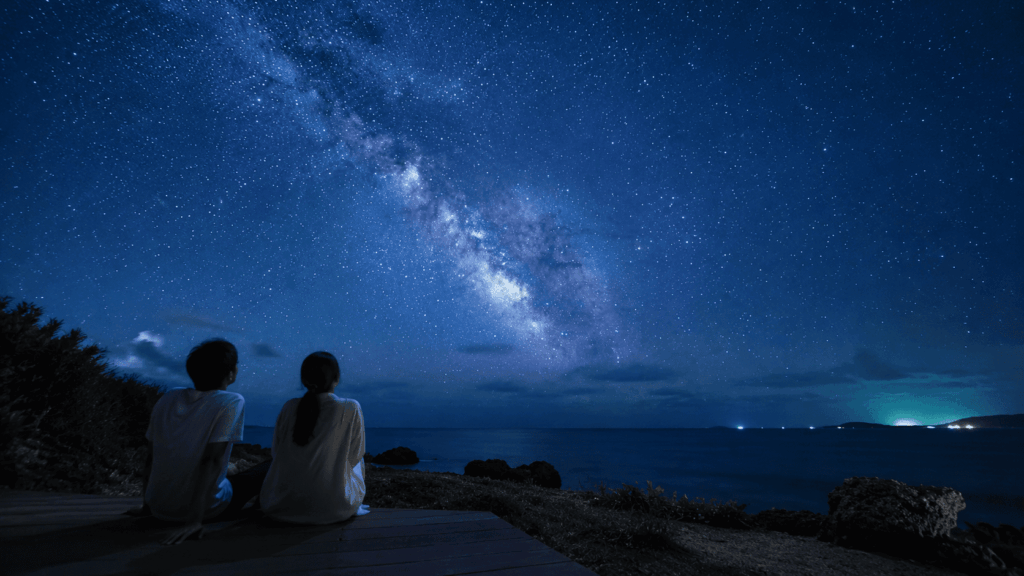
Yes, Ishigaki has nightlife — it’s just not the nightlife you’d find in Tokyo or Naha. There are no neon tower blocks or 200-person clubs here. What the island does well after dark is the kind of evening that only makes sense on a subtropical island: drinking and eating around the compact downtown of Misakicho, watching a live sanshin performance in a packed izakaya, walking a dark jungle trail with a flashlight, or lying under one of Japan’s most famous night skies.
If you’re picturing big-city clubs, adjust your expectations before you arrive — but don’t write off the night. The mistake I see first-time visitors make is assuming that a quiet island means a boring evening. It doesn’t. It just means you need to pick the right kind of night for your travel style, and that decision is what this guide is for.
Already leaning toward a nature night? If you’d rather avoid driving unfamiliar roads after dark, a private Kabira stargazing tour combines transfer, English-language guidance, and night-sky photography in one booking. Check current availability, start times, pickup details, and recent traveler reviews for the Private Stargazing Photography Tour in Kabira Bay.
Is Ishigaki Good for Nightlife?
It depends on what you mean by nightlife. If “”nightlife”” means loud bars open until 3 a.m., DJ sets, and a crowd of strangers — no, Ishigaki doesn’t have that in any meaningful way, and you shouldn’t plan your trip around it.
If “”nightlife”” means a memorable evening that fits the place you’re in — yes, genuinely. Ishigaki’s nights fall into three broad categories, and most travelers end up enjoying one or two of them:
- A downtown night in Misakicho — small bars, izakaya, and casual restaurants clustered around the 730 Crossing and the Euglena Ishigaki Port Remote Island Terminal. Everything is walkable, and the atmosphere is local rather than flashy.
- A sanshin live-music izakaya — Okinawan folk songs played on the three-stringed sanshin while you eat island dishes and drink awamori. This is the closest thing Ishigaki has to a signature night out.
- A nature night — stargazing or a guided jungle night safari, both of which lean on the island’s lack of light pollution. This is the best option for non-drinkers, couples, and families.
My honest read after covering the island for years: the travelers who say Ishigaki was “”dead at night”” are usually the ones who expected downtown-style clubs. The travelers who loved their nights chose one of the three experiences above — ideally booked or planned before dinner.
The 3 Best Ways to Spend a Night in Ishigaki
Here’s the short version before we go deeper. Read the table, find the row that matches your travel style, then jump to that section.
| Experience | Best for | Atmosphere | Alcohol? | Weather dependent? | Getting there | Main drawback |
|---|---|---|---|---|---|---|
| Downtown night out in Misakicho | First-time visitors, solo travelers, groups who want casual drinks and food | Local, low-key, walkable | Central | No | Walk from downtown hotels; taxi or DiDi from elsewhere | Few venues stay open very late; bars close earlier than in big cities |
| Sanshin live izakaya (e.g. Usagiya) | Anyone who wants a cultural, not just culinary, night out | Lively, loud, communal | Yes | No | Walkable from downtown; reservation recommended | Small and packed; not a place for a quiet conversation |
| Stargazing tour | Non-drinkers, couples, photographers | Quiet, open sky, minimal light | No | Yes — clouds and rain affect it | Tour transfer from the ferry terminal or your hotel | Stars are never guaranteed; you may need to rebook |
| Jungle night safari | Adventurous families, wildlife lovers, travelers who want something unusual | Dark, humid, exciting | No | Partly — light rain usually OK, storms cancel | Tour transfer from the ferry terminal | Wildlife sightings are never guaranteed |
If you don’t drink, don’t worry — the two nature options below are the reason many travelers say their best Ishigaki evening didn’t involve a bar at all.
Start in Downtown Ishigaki: Misakicho and the 730 Crossing
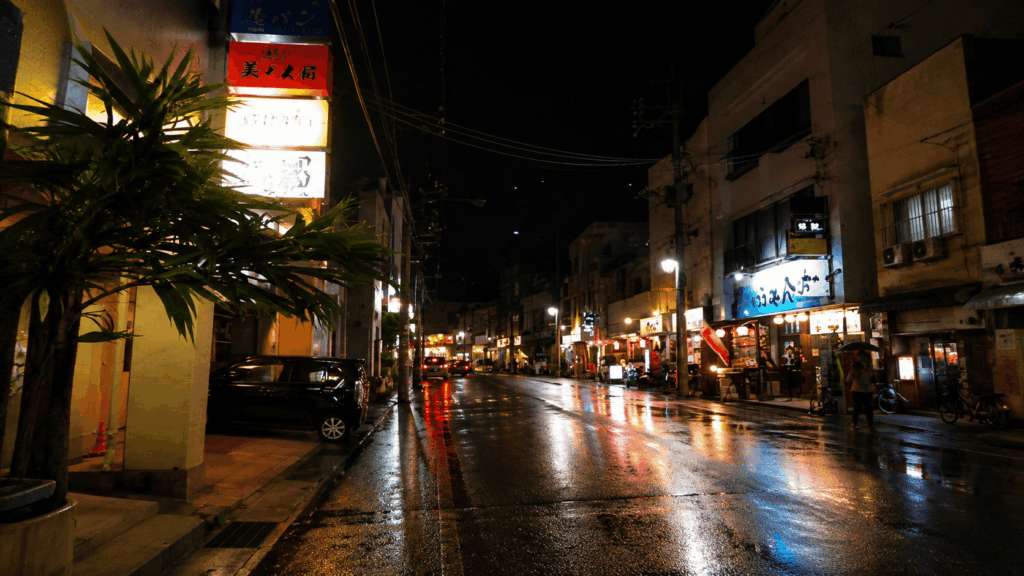
Downtown Ishigaki is small enough that you can walk from one end to the other in about 15 minutes. The practical center of the night scene is Misakicho, the district around the 730 Crossing — the island’s busiest intersection, marked by a small monument and a pair of shisa statues — and the Euglena Ishigaki Port Remote Island Terminal, the ferry terminal at the edge of the port.
If you stay in a hotel near the terminal or the 730 Crossing, your entire night out is on foot: dinner, a live-music izakaya, a bar for a final drink, and a walk back. That’s the biggest practical advantage of staying downtown on Ishigaki, and it’s worth factoring into your hotel choice before you book somewhere far out.
Where to look: walk along the main streets of Misakicho after 6 p.m. and you’ll see the traditional noren curtains and lanterns of izakaya and small bars. Don’t over-plan this part — the pleasure of a downtown night on Ishigaki is deciding on the spot.
Best for: casual drinkers, solo travelers, and anyone who likes to end a travel day with local food and a relaxed bar rather than a late club.
Usagiya: Best for a Lively Sanshin Night, Not a Quiet Dinner
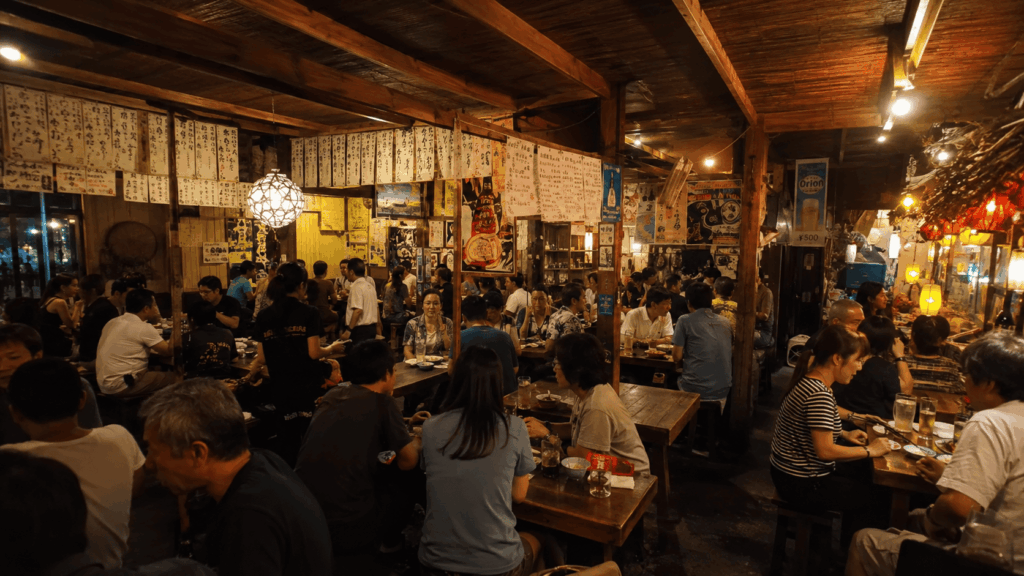
If you want the one night out that Ishigaki does better than anywhere else, book a table at Usagiya Ishigaki Honten (usagiya-ishigaki.com, 0980-88-5014, Ishigaki 1-1, a 5-minute walk from the ferry terminal). This is the island’s best-known sanshin live izakaya, and it runs two live performances every night — one from 7 p.m., one from 9 p.m. — mixing classical Ryukyuan folk songs with Okinawan pop. Expect awamori, local seafood like maguro sashimi, and a room where nearly everyone is clapping along by the second song.
Let me be honest about the trade-off, because it matters: the room is small and genuinely packed. Tables are close together, and the live show is loud. Recent visitors consistently describe the same pattern — the music and energy are the highlight, while the space is cramped and the food is solid rather than the star. Go for the live atmosphere, not for a slow, quiet dinner. If you want an intimate meal with conversation, this is not the place.
Best for: travelers who want a cultural night out — first-timers, couples, and small groups who don’t mind close quarters and a lively room.
Who should skip it: anyone seeking a quiet meal, or travelers who are sensitive to loud, crowded spaces.
Kai’s tip: Usagiya fills up fast, and I’ve watched walk-in guests get turned away on busy evenings. My habit is to reserve a week or two ahead when my dates are fixed — and to plan around the live shows rather than the dinner service. If you sit down after the performance starts, you’ll spend the meal squeezed onto a shared table with the show going on right next to you. Book a slot that lets you order first, then enjoy the music with your food in front of you.
What About Bars and Clubs?
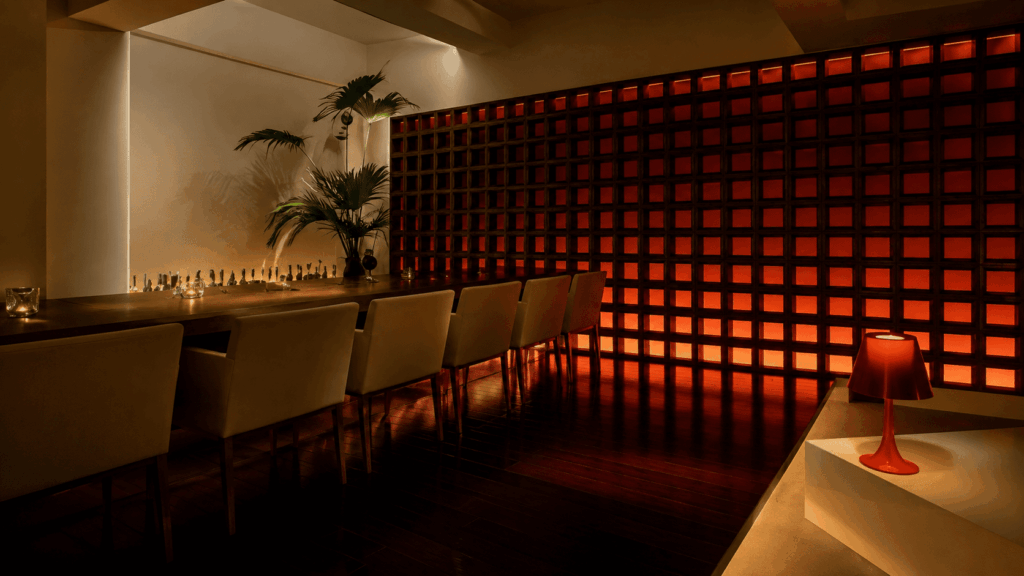
There isn’t a club district on Ishigaki, and you shouldn’t hunt for one — but there is a small, friendly bar scene in Misakicho, and it’s worth one drink even if you’re not a bar person. The style here is intimate: counter seats, a handful of tables, and a bartender who wants to talk. Most places close around midnight or earlier, which still feels early compared with mainland Japan’s big cities.
For an easy entry point, look for cocktail bars around Misakicho that advertise an English menu — BAR NOBU (Misakicho 12-8) is a long-running example, with fruit cocktails and a quiet counter, though hours vary by day, so check before you walk over. There are also small DJ bars and live venues scattered around downtown, but they’re modest in scale — think “”neighborhood bar with music”” rather than “”club.””
Where to look: the side streets around the 730 Crossing, plus the blocks between the crossing and the ferry terminal. If a place looks full and friendly from the street, that’s a good sign on Ishigaki — the island’s best evenings are improvised.
Best for: a final drink after dinner, or travelers who want to meet a local bartender rather than dance until late. If a big club night is essential to your trip, Ishigaki is the wrong island — consider staying a night or two in Naha instead.
Stargazing: The Best Ishigaki Nightlife for Non-Drinkers and Couples
If you don’t drink — or if you’re traveling with someone who doesn’t — Ishigaki’s nightlife starts where the bars end. The island sits inside the Iriomote-Ishigaki National Park, which was certified as an International Dark Sky Park in 2018, the first in Japan. To be precise, the certification applies to the national park area rather than the whole island, and parts of the island near downtown still carry light from streetlamps and signs. But even a short drive into the interior is enough to notice the difference: the sky goes from washed-out to layered, and on clear, moonless nights the Milky Way is visible to the naked eye.
Before you book anything, understand the two variables that decide whether a stargazing night works:
- Weather — clouds and rain block the view, and tropical weather changes fast (which is why choosing the best time to visit Ishigaki matters). A forecast of “”sunny”” in the afternoon says little about 9 p.m.
- The moon — the week around the full moon is the worst time for stargazing. The sky is still beautiful, but you lose the Milky Way. If star density is the goal, plan around the lunar calendar rather than the date you happen to be there.
Neither of these is a reason to skip stargazing — it’s a reason to keep expectations flexible and, if you book a tour, to choose one with a sensible cancellation policy. Recent visitors to guided stargazing tours consistently report that the transfer, the guide’s explanations, and the location matter more than the telescope — most tours here are naked-eye and binocular experiences rather than observatory-style viewing, which is exactly right for a dark-sky island.
Best for: non-drinkers, couples, photographers, and families with older kids who can stay awake past sunset.
Should You Drive Yourself or Book a Stargazing Tour?
You can absolutely drive yourself to a dark spot — the island’s interior roads are quiet at night, and there are beaches and hill viewpoints with open sky. But “”drive yourself”” comes with a catch that I don’t think most visitors anticipate, and it’s worth being honest about before you decide.
Kai’s tip: The darker the spot, the darker the road to get there. On my first stargazing night on Ishigaki I rented a car and drove inland in near-total darkness — no streetlights, no landmarks, just high beams and the occasional wild pig on the shoulder. The sky was incredible, but I spent the whole drive tense, and I remember the stress more than the stars. On later trips I switched to a tour with transfer included, and the difference was huge: I got to watch the sky instead of watching the road. If you’re a confident night driver on unfamiliar mountain roads, going solo can work. If the idea of driving on pitch-black roads in a rental car makes you hesitate, that hesitation is your answer — take the transfer.
| Drive yourself | Guided tour with transfer | |
|---|---|---|
| Freedom | Full — leave and stay as long as you like | Fixed schedule, usually around 2 hours |
| Driving stress | High — dark, narrow, unfamiliar roads | None — transfer included from a central meeting point |
| Drinking | No alcohol — you’re driving | No alcohol either, but no driving responsibility |
| Finding the best spot | Research required; you may end up in a lit area | Guide knows the dark-sky locations and checks conditions |
| Knowledge | You get what you know | Guide points out constellations, planets, and satellites |
| Cost | Rental car cost spread across your whole trip | From around US$30–50 per person, tour-dependent |
| Weather risk | You decide on the night — no refund if it clouds over | Most tours allow free cancellation up to 24 hours before |
For most first-time visitors, the tour is the better bet: it removes the two biggest failure points — driving and finding a genuinely dark spot — and the cost is modest compared with the rental-car stress it saves. If you’re staying in downtown Ishigaki and already have a car for daytime exploring, going solo is more reasonable; just check the moon phase and the evening forecast before you commit.
If the dark-road part is what makes you hesitate, the private Kabira option removes that problem and gives you a guided night-sky experience without having to navigate the island after dark.
Why I’d book this one
- Transfer is included, so you can focus on the sky rather than unfamiliar roads at night.
- Recent travelers consistently mention the guide’s constellation knowledge, photography, and helpful communication around changing conditions.
- The booking terms include flexibility that is useful for a weather-dependent experience, so it is worth checking the current cancellation conditions for your date.
One practical note on how these tours work: many of the well-reviewed stargazing and night-walk tours on Ishigaki meet at the Euglena Ishigaki Port Remote Island Terminal — the ferry terminal at the edge of downtown — rather than picking you up from your hotel. From there you ride to the viewing area in the tour vehicle, which keeps costs down and makes the meeting point easy to find. Check the meeting details on the specific tour page before booking, because they vary by operator.
Night Safari: Coconut Crabs, Jungle Trails and a Very Different Night Out
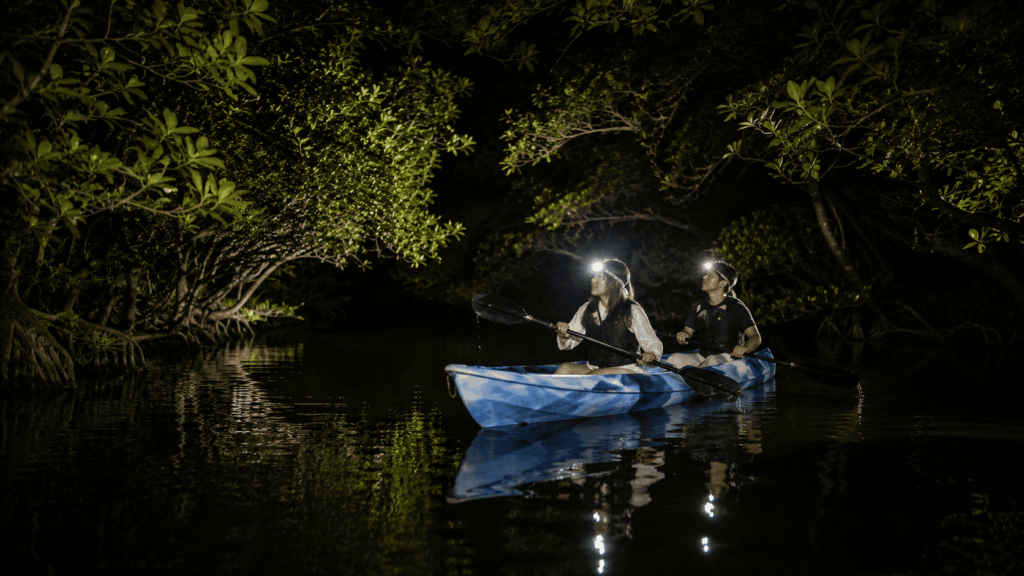
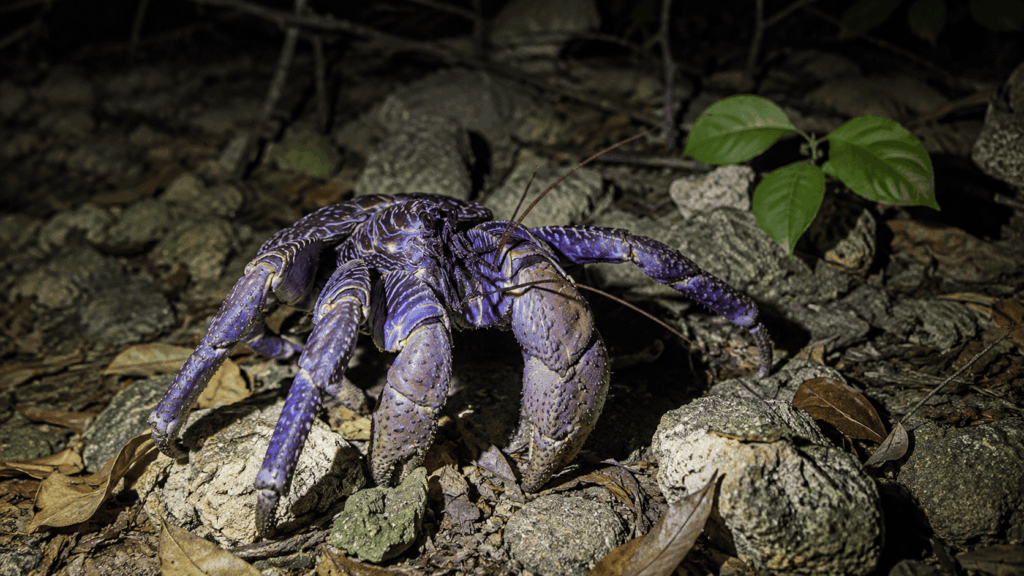
The second nature option is the one travelers rarely know about before they arrive: a guided night walk through Ishigaki’s subtropical jungle in search of nocturnal wildlife. On a good night you’ll see coconut crabs — the world’s largest land-living crustacean, which can reach the size of a dinner plate — plus hermit crabs, frogs, and sometimes the glint of eyes in the undergrowth. You explore with flashlights and a guide who knows where the animals actually are, which makes the difference between a walk in the dark and a genuine wildlife encounter.
This is the night I’d steer adventurous families toward: older kids tend to be riveted by coconut crabs in a way no bar could match, and the guides are experienced at keeping the pace right for younger walkers.
Best for: wildlife lovers, adventurous families, travelers who want an unusual story from their trip — and anyone who’s already done the stargazing thing on another island.
Who should skip it: travelers who are strongly bothered by insects or uneven trails in the dark, and anyone with mobility concerns, since the walk is on jungle paths rather than paved roads.
One well-reviewed option is the Ishigaki: Jungle Walk and Stargazing Night Tour run by ISHIGAKI ADVENTURE PiPi — a roughly two-hour evening program that combines a night walk in search of coconut crabs with stargazing at a dark-sky spot, including transfer from the ferry terminal. Recent reviews consistently highlight the guide’s knowledge and the convenience of the transfer; as with all wildlife tours, sightings are never guaranteed. The tour is typically limited to participants aged 3 to 65, so it’s not suitable for very young children or older adults — check the age and health requirements on the booking page before you commit.
What Happens if It Rains or the Sky Is Cloudy?
This is the question I hear most often from travelers who are deciding whether to book a night tour, and the honest answer is: it depends on the tour. Stargazing is weather-dependent by definition, and no operator on Ishigaki will promise you a clear sky. The wildlife portion of a night walk is more forgiving — light rain usually doesn’t stop the animals, and most tours run in light conditions but cancel or reschedule when storms or heavy rain make the jungle unsafe.
What this means in practice: choose a tour with free cancellation up to 24 hours before, watch the forecast on the day, and don’t book a nature night as your only evening on the island. I’ve had cloudy stargazing nights that still ended up being fun walks — and I’ve rescheduled one myself when the sky simply wasn’t going to cooperate. Building in a backup evening is the single most effective way to protect your Ishigaki night from the weather.
What to Wear for an Ishigaki Night Tour
Ishigaki is a subtropical island, so it’s tempting to dress for daytime heat — and that’s exactly the mistake that ruins night tours for people.
Kai’s tip: I joined my first jungle night walk in a short-sleeve shirt and spent the second half of it cold, distracted, and slapping at mosquitoes instead of looking at coconut crabs. Nights on Ishigaki cool down more than the daytime forecast suggests, especially in winter, and jungle trails are bug territory no matter the season. Wear long sleeves, long pants, and closed shoes you don’t mind getting damp; bring insect repellent and, in the cooler months, a light layer on top. If you’ve booked a tour, follow the operator’s own gear list first — but if you remember nothing else, remember the repellent.
Best for: any traveler who has booked a night tour — this section applies to stargazing trips too, since you’ll be standing still on a hilltop where the wind finds you.
The Hidden Problem With Ishigaki Nightlife: Getting Back to Your Hotel
Downtown Ishigaki is walkable, and that solves the return trip for anyone staying in the city area. The problem starts the moment you stay somewhere else — and a lot of first-time visitors do, because the island’s famous resorts are elsewhere.
The big resort concentration is at Kabira, on the northwest coast, about a 30-minute drive from downtown. Other hotels are scattered along the coast and in the interior. What that means at night:
- Walking is not an option. Distances are measured in kilometers of unlit road, not in blocks.
- Buses mostly don’t help at night. If you are getting around Ishigaki without a car, be aware that the island’s operator, Azuma Bus, runs a daytime-oriented schedule, and evening services are limited. Don’t plan a night out around the last bus — you’ll be watching the clock all evening.
- Taxis and the DiDi ride-hailing app exist but are limited after dark. There are cabs on Ishigaki, and DiDi works with local taxi companies, but the fleet is small — on a busy evening you may wait, and drivers are harder to find late. Booking a taxi for a set pickup time at the end of your evening is more reliable than hailing one on the street.
This is the quiet reason why staying downtown makes sense for nightlife-focused travelers: you eliminate the entire return-trip problem and gain the freedom to linger. If you’re set on a Kabira-area resort — and they are lovely — plan your nights as deliberate outings with a reserved return, not as spontaneous strolls. And if your evening is a nature tour with transfer, the ride back to the terminal is included, which solves the late return before it starts.
Where to look: when comparing hotels in our guide to the best areas to stay in Ishigaki, check the map distance to the 730 Crossing rather than the “”downtown”” label — a few hotels use it loosely. If you can walk to the crossing in under 15 minutes, your nights will be easy.
Best for: this section applies to everyone, but it matters most for couples and groups who plan to drink — deciding your return before you leave the hotel is the difference between a great night and a stressful one.
FAQ: Ishigaki Nightlife
Does Ishigaki have good nightlife?
Yes, but it’s not big-city nightlife. Ishigaki has no club district and most bars close around midnight. What it does well after dark is local: izakaya and small bars around Misakicho and the 730 Crossing, live sanshin performances, and nature-based evenings — stargazing and jungle night walks — that use the island’s famously dark skies. Travelers who enjoy Ishigaki nights are usually the ones who chose one of these three styles rather than expecting a Tokyo-style scene.
Where is the main nightlife area in Ishigaki?
Downtown Ishigaki, specifically the Misakicho district around the 730 Crossing and the Euglena Ishigaki Port Remote Island Terminal. The area is compact enough to walk end to end in about 15 minutes, and most izakaya, bars, and the famous live-music spot Usagiya sit within that radius. If you stay within a 15-minute walk of the 730 Crossing, your whole night out — including the return — is on foot.
What can you do in Ishigaki at night without drinking?
Plenty — and this is where the island shines. The two standout options are stargazing and a guided jungle night safari, both of which work best with a tour because they take you to genuinely dark, wild locations with a transfer. The Iriomote-Ishigaki National Park is a certified International Dark Sky Park, and night walks turn up coconut crabs and other nocturnal wildlife. A sanshin live izakaya like Usagiya is also fine for non-drinkers — soft drinks are served, and the live show is the main event.
Is it safe or easy to drive around Ishigaki at night?
Safe in the sense that roads are quiet and locals drive cautiously, but “”easy”” is another matter. Outside downtown there are no streetlights on many roads, and you’ll be navigating unlit mountain and coastal roads in a rental car. I drove myself on my first stargazing night and found the tension of the drive undercut the experience — on later trips I booked tours with transfer instead. If you do drive, stick to well-known routes, watch for wildlife on the shoulder, and never combine night driving with alcohol.
Can you see the Milky Way every night in Ishigaki?
No — the Milky Way depends on two things you can’t control: weather and moon phase. Cloudy or rainy nights block the view, and the week around the full moon washes out the Milky Way even on clear nights. The best windows are moonless, clear nights, which is why the standard advice is to check the lunar calendar and the evening forecast before booking stargazing, and to choose a tour with free cancellation up to 24 hours before.
Which Ishigaki Night Experience Should You Choose?
Here’s the decision, without the polite hedging. The right night for you depends on one question: what kind of evening do you actually want?
- Choose a downtown night in Misakicho if you want casual drinks, local food, and the freedom to improvise — and you’re staying within walking distance of the 730 Crossing. It’s the easiest, most flexible night on the island, and the default for first-time visitors.
- Choose Usagiya if you want the one evening that feels unmistakably Okinawan — a packed room, live sanshin, and island food. Book a week or two ahead, aim for the 7 p.m. show, and go for the atmosphere rather than a quiet dinner.
- Choose a stargazing tour if you don’t drink, you’re traveling as a couple, or you’ve always wanted to see a truly dark sky. Take the transfer option, check the moon phase, and keep a backup evening in case the weather doesn’t cooperate.
- Choose a jungle night safari if you’re traveling with adventurous kids or you want a story your friends back home won’t believe — coconut crabs the size of dinner plates are hard to top. The Jungle Walk and Stargazing combination tour covers both nature options in one evening.
And the honest “”don’ts,”” because they’ll save you money and disappointment:
- Don’t choose Ishigaki for a club night. There isn’t one, and you’ll spend your evenings searching. If clubbing is essential, add a night in Naha instead.
- Don’t book a nature tour as your only evening if you’re only on the island for a night or two — weather can cancel it, and you’ll have nothing left.
- Don’t stay far from downtown and assume you can get back easily. Kabira-area resorts are beautiful, but the 30-minute unlit drive back shapes your whole evening. Decide your return before you leave the hotel, or book a tour with transfer included.
What I’d tell a friend visiting Ishigaki for the first time is simple: do one downtown evening — dinner and a bar crawl around Misakicho, ideally with a sanshin show — and one nature evening — a stargazing or night-walk tour with transfer. That combination gives you both sides of the island’s night, and it’s the version of Ishigaki nightlife that locals actually live.

Hi, I’m Kai. I’m a Tokyo-based travel writer, tourism industry insider, and the author of a published guidebook for international visitors to Japan. With over 10 years of professional experience at a leading Japanese tourism company, my mission is to help you skip the tourist traps and navigate Japan’s best destinations like a local. I believe the perfect day trip is like a traditional kaiseki meal: a beautiful balance of precise planning and unforgettable seasonal discovery. When I’m not out conducting field research, you’ll usually find me drafting new itineraries with one of my favorite fountain pens!