
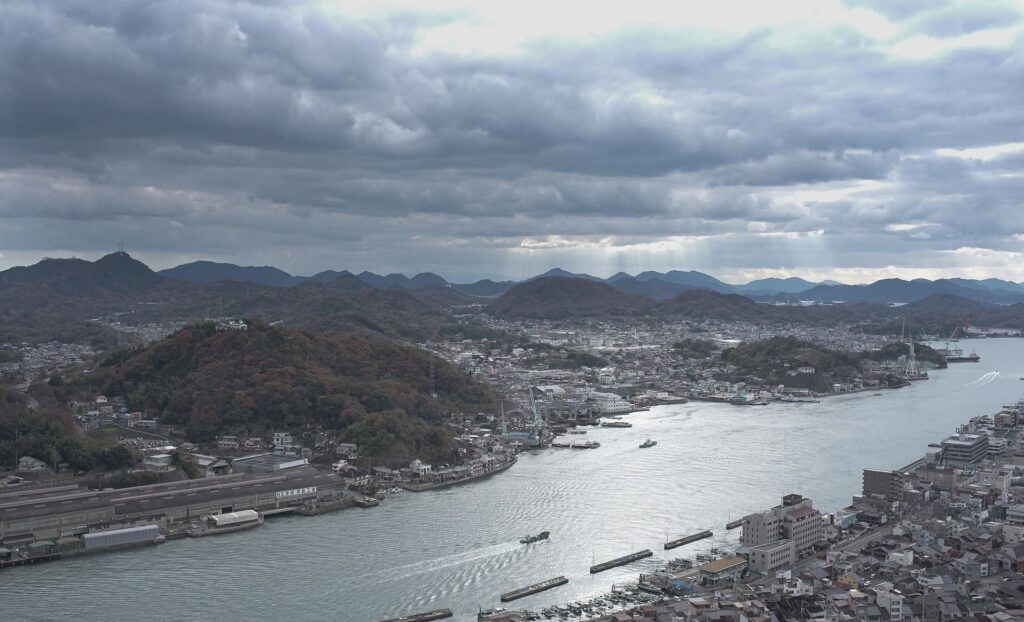
Onomichi in winter is worth visiting — for the right traveler, with the right plan. Winter trades spring’s cherry blossoms and autumn’s foliage for something fewer guides talk about: some of the clearest, calmest views of the Seto Inland Sea you’ll get all year. The town is quieter, the light sits lower and longer, and the hillside temples feel like they belong to you alone — until the wind reminds you otherwise.
What makes or breaks a winter visit comes down to three things: understanding how cold the summit wind actually feels, checking the Senkoji Ropeway schedule before you book anything (it closes for maintenance for part of December), and following a route that lets you ride up once and walk down through the sights instead of climbing back up.
This guide is the winter-specific answer, not a general Onomichi overview. If you’re weighing a half-day or full day here as part of a Hiroshima, Miyajima, Okayama or Kurashiki itinerary, you’ll get a clear verdict, the weather reality, the one-way route that saves the hardest climbing, and the practical details that catch first-time visitors out. (If you haven’t sorted your transit yet, see our guide on how to get to Onomichi.)
If you’d rather not work out the ropeway timing and the hillside lanes yourself, a private English-speaking tour covers the ropeway, Senkoji Temple and Cat Alley in about two hours — more on how that compares with exploring on your own later in this guide.
If a fixed highlights tour sounds too restrictive and you’d rather shape the visit around your own pace and interests, there is also a longer private licensed-guide option that can be tailored around Onomichi’s main sights. See current availability and duration options for the customizable private Onomichi tour before you finalise the day.
Is Onomichi Worth Visiting in Winter?
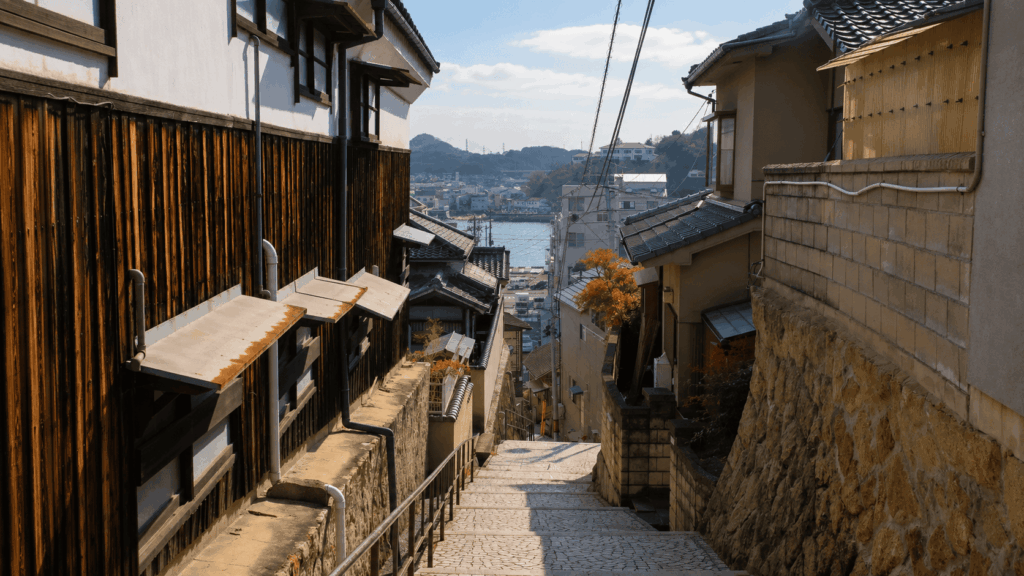
Yes — for most first-time visitors, with three caveats: you dress for wind, you check the December ropeway closure dates, and you accept that winter Onomichi is a different place from the postcard version, not a lesser one.
The mistake I see travelers make is expecting a smaller, greyer version of spring or autumn. Winter Onomichi is its own season: the deciduous trees go bare, which opens up sightlines the rest of the year hides, and the colder, drier air sharpens the islands on the horizon. On clear days the Seto Inland Sea looks closer and more defined than it does in summer haze. In exchange, you get cold hands, early sunsets, and the possibility of rain — but the walking is comfortable, the crowds are thinner, and the town’s cafes and ramen shops become genuinely appealing destinations rather than afterthoughts.
| Factor | Winter in Onomichi | What it means for you |
|---|---|---|
| Views | Clear, crisp panorama over the Seto Inland Sea; bare trees open sightlines | Best visibility of the year on clear days, but colours are muted |
| Weather | Averages around 5–7°C; windy at the summit and waterfront | Layers and wind protection matter more than one thick coat |
| Crowds | Quieter than spring and autumn, but weekends and holidays still pull visitors | “Off-season” is relative; weekday mornings are the calmest |
| Walking | Hillside paths are steep but cool rather than hot and humid | You’ll sweat on the way up and chill the moment you stop |
| Ropeway | Runs daily except annual December maintenance | Check the closure dates before finalising your plans |
| Food | Onomichi Ramen suits a cold day perfectly | Hot soup after a hillside walk is the winter payoff |
| Photography | Low winter sun and long shadows in clear air | Great golden-hour light; keep photo stops brief in the wind |
What Is Onomichi Weather Like in Winter?
Onomichi doesn’t have its own official weather station, so the most reliable long-term averages come from Fukuyama, roughly 30 km down the coast — close enough to be a fair picture of what Onomichi feels like. Based on the Japan Meteorological Agency’s 1991–2020 normals:
- December: average 6.8°C — daily highs around 12.1°C, lows around 2.1°C
- January: average 4.6°C — daily highs around 9.8°C, lows around 0.0°C
- February: average 5.2°C — daily highs around 10.5°C, lows around 0.4°C
Those numbers understate how cold it feels, for one reason: the wind. Onomichi faces the Seto Inland Sea on one side and climbs into hills on the other, so the streets are sheltered in places and fully exposed in others. The summit observatory and the waterfront take the brunt of it. On a mid-winter visit I was surprised at how quickly my hands and ears went numb standing still at the top — the air was only a few degrees above freezing, but the wind made it feel like a different season. Rain is usually light and brief, and serious snowfall is rare at sea level, but frost on the stone steps in the early morning is worth taking seriously.
What to Wear in Onomichi in Winter
- Wind-resistant outer layer — the single most important item; the summit wind is the real enemy, not the air temperature
- Warm mid-layer (fleece or merino) — you’ll be glad of it on the hillside and at the observatory
- Beanie and gloves — thin gloves you can still use a phone with are ideal
- Walking shoes with grip — stone steps and slopes get slick with frost or light rain
- A small daypack — you’ll sweat climbing and freeze standing, so you need somewhere to stash the layers you shed
Kai’s tip: The hillside walk warms you up faster than you’d think — I’ve watched travelers in heavy coats start sweating on the stone steps — but the moment you stop at the observatory, the wind strips that warmth away. Dress in layers you can shed and put back on: a thermal base, a fleece and a windproof shell beats one thick coat. And keep your gloves in your pocket until you reach the top; you’ll want them at PEAK even when you didn’t need them in the streets below.
The Best Winter Route: Ropeway Up, Walk Down
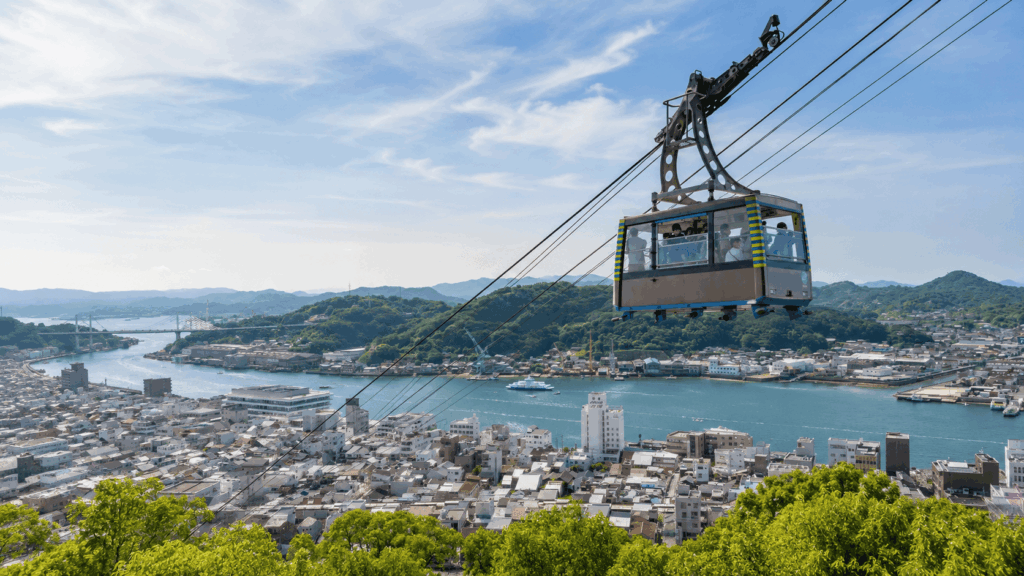
Here’s the route that works best in winter — and it happens to be the one the temple’s own official model course recommends: ride the ropeway up once, then walk downhill through the hillside sights, finishing at street level. You climb exactly once, and that climb is a three-minute cable ride instead of a steep slog.
- Mt. Senkoji Ropeway — the base station is about a 15-minute walk east of JR Onomichi Station; the ride takes about 3 minutes
- Senkoji PEAK Observatory — 2 minutes’ walk from the summit station; a 63-metre deck over the Onomichi Channel
- Path of Literature — a wooded walk lined with 25 inscribed stones; roughly 10 minutes downhill to Senkoji Temple
- Senkoji Temple — the hillside temple with the famous view; the hall is open roughly 9:00–17:00
- Tenneiji Temple Three-Storied Pagoda — a national important cultural property dating from 1367, with a classic Onomichi view framed through it
- Neko no Hosomichi (Cat Alley) — a narrow 200-metre lane of “lucky cat” stone art and converted machiya shops
- Hondori Shopping Arcade / JR Onomichi Station — street level, where the ramen shops are
This order matters in winter. Climbing in cold air makes you sweat without warning, and every photo stop at altitude costs body heat. By keeping the route downhill after the ropeway, you avoid the worst of both: you’re never fighting gravity in the cold, and you finish the walk at street level with a hot bowl of ramen within reach.
| Ticket | Cost (as of 2026) | Best for | What you get |
|---|---|---|---|
| One-way up | ¥500 | Most visitors | Ride up, then a downhill walk through the temples and lanes to street level |
| Round trip | ¥700 | Travelers with mobility concerns, or anyone who wants the option to ride back | Two rides and the same views twice — but you must climb back up from Senkoji to the summit station |
Kai’s tip: What caught me out on my first visit was assuming the round-trip ticket was the sensible default. It isn’t — Senkoji Temple sits halfway down the mountain, not at the summit, so with a round-trip ticket you’d have to climb back up to the top station after visiting it. A one-way ticket forces the natural route: up by ropeway, down through the temple, the pagoda and Cat Alley, and straight to street level. That’s the difference between a route that flows and one that doubles back on itself.
Why I Recommend Buying a One-Way Ropeway Ticket
The price difference is small — ¥200 — but the route difference is large. The temple’s official model course makes the same call, recommending a one-way ticket up and a walk down. You’ll pass Senkoji Temple, the pagoda and Cat Alley on the descent, which means a round-trip ticket mainly buys you the option of riding back down — an option you’ll probably skip anyway once you’re enjoying the walk.
There are legitimate reasons to buy round-trip: limited mobility, very cold or wet weather, or a plan to stay at the summit for sunset and ride down in the dark.
What the Senkoji Ropeway Is Like in Winter
- Hours: 9:00–17:15, every 15 minutes (subject to weather)
- Ride time: about 3 minutes
- Fares (as of 2026): adults ¥500 one-way / ¥700 round trip; children ¥250 one-way / ¥350 round trip
One thing winter doesn’t guarantee is an empty cabin. On a winter visit I was surprised to find the car packed — Onomichi still pulls solid crowds on weekends and during the winter school and New Year holidays. If you want the quietest ride, aim for a weekday morning near opening time; by mid-morning the summit can be busy regardless of season.
Weather is the other variable. The ropeway can suspend service in strong wind or heavy rain even outside the official maintenance period, so if you’re arriving on a stormy day, check the operator’s website or the notice at the base station before committing to the walk up.
Important: The Ropeway May Close for Maintenance in December
This is the detail that quietly ruins winter plans: the Senkoji Ropeway closes for annual maintenance every December, and the dates change from year to year. For 2026, the closure is December 7–25 (the 2025 closure was December 15–19, which shows how much the schedule shifts). Check the official ropeway website before you finalise any itinerary that depends on riding it.
If you’re visiting during a closure, you’re not locked out of the summit: the walking path up and down takes about 30 minutes each way, and the PEAK observatory itself stays open 24 hours. The climb is steep but doable — the kind of effort that’s genuinely hard to enjoy in strong wind, so pick a calm morning if you can.
Why Senkoji PEAK Is Especially Good in Winter
The Senkoji PEAK Observatory is a 63-metre deck that opened in 2022, and in winter it does something the summer version can’t: it shows you how far the Seto Inland Sea really reaches. Cold, dry air holds less haze than humid summer air, so on a clear day the islands across the Onomichi Channel — Mukaishima, Innoshima and the rest of the Geiyo archipelago — sit sharp and close on the horizon. This is the view people mean when they say winter is the best season for photography here.
PEAK is a two-minute walk from the ropeway summit station and stays open 24 hours. On a clear winter visit I found myself looking down the eastern curve of the bay, where the Sanyo Main Line runs along the shore before bending inland — and at the right moment, a local train rounds that curve in full view from above. It’s a small detail the brochures skip, and it’s one of the reasons the summit holds your attention in every season.
Kai’s tip: The classic winter mistake here isn’t missing the view — it’s staying in it too long. I stood at the rail for what felt like ten minutes watching the islands and the trains below, and by the time I turned to leave, my hands were stiff and the cold had got under my collar. Take your photos early in the stop, keep the visit to fifteen minutes or so when the wind is up, and save the long stare for a sheltered spot on the way down. Your gloves will thank you.
Walking Down Through Senkoji and the Hillside Streets
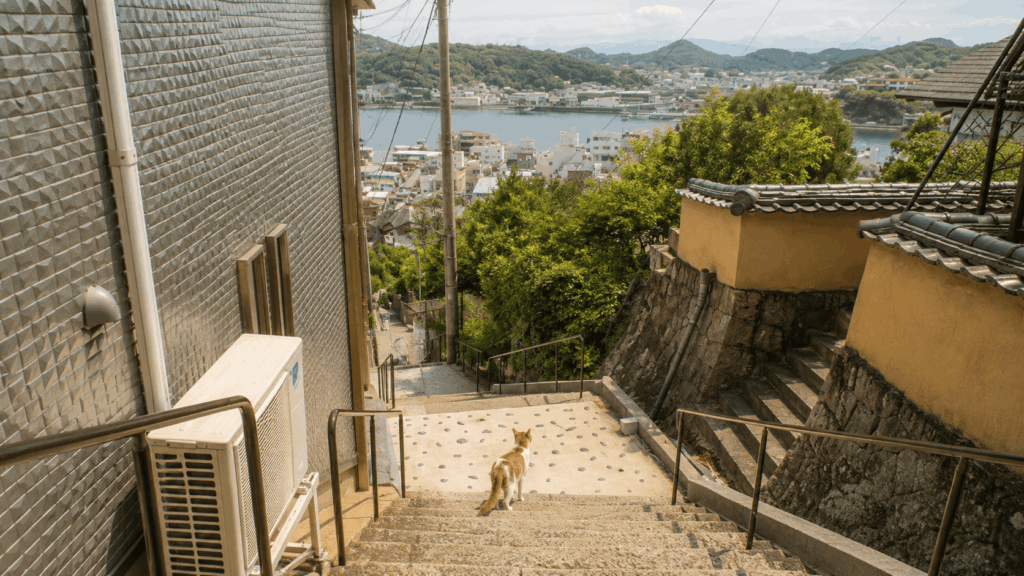
The ropeway is not the destination; it’s the start of the downhill walk. From PEAK, the Path of Literature threads through the wooded hillside past 25 stones inscribed with poems and prose by writers connected to Onomichi — the town has a long literary history, and the path is one of its quietest pleasures in winter, when the bare trees open views between the inscriptions.
About ten minutes down, you reach Senkoji Temple, the hillside temple that gives the mountain its name. Founded in 806, it sits at the halfway point of the descent — which is exactly why the one-way ticket works: you visit it on the way down rather than climbing back up to it. The main hall is open roughly 9:00–17:00, and the terrace view over the town and channel is one of Onomichi’s classic photo angles.
Keep descending and you’ll pass the Tenneiji Temple Three-Storied Pagoda, a national important cultural property built in 1367, then reach Neko no Hosomichi (Cat Alley) — a narrow, roughly 200-metre lane lined with converted machiya houses and the stone “lucky cat” figures that give the alley its name. One honest note from the reviews: the alley is about the cat-themed art and the old-town atmosphere, not a guarantee of live cats. Come for the lane itself and you won’t be disappointed.
Recent visitors consistently mention two things about this descent: the slopes and steps are more tiring than the maps suggest, and the reward at the bottom — the covered Hondori shopping arcade, with its cafes, bakeries and ramen shops — arrives just when you want it. The walk from the summit to street level typically takes 45 minutes to an hour at a relaxed pace, including temple stops.
Warm Up With Onomichi Ramen After the Walk
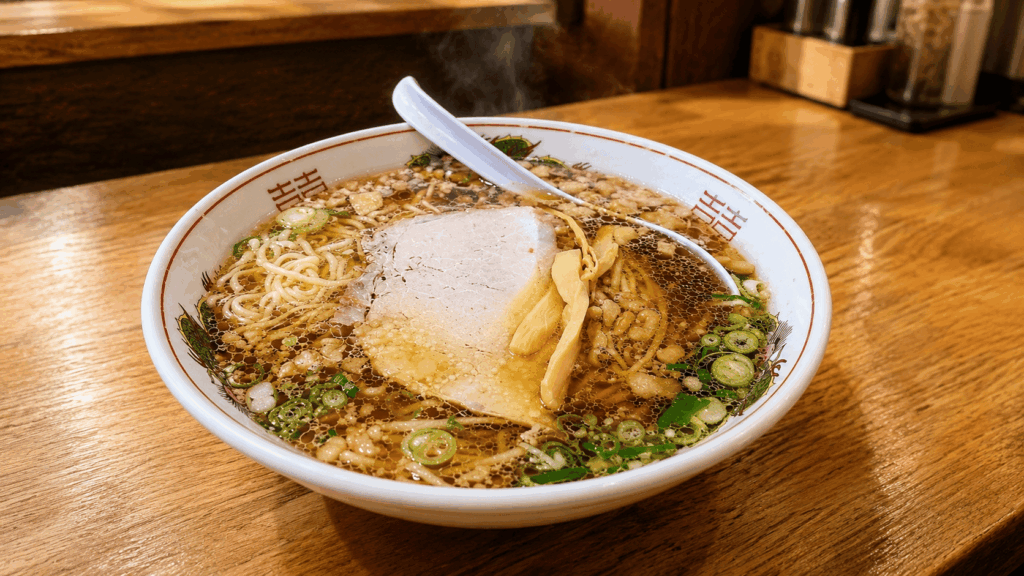
No winter route through Onomichi feels complete without closing it with a bowl of Onomichi Ramen, and the timing is the point: it’s the heat you’ve been walking toward. The style is a clear soy-sauce broth built on small dried fish (niboshi), served with medium-thin flat noodles and a slick of pork back-fat (seabura) floating on top. The look is rich, but the broth drinks lighter than it appears.
What surprised me — and what I’d tell anyone expecting a heavy pork-bone bowl — is how clean the soy-and-fish base tastes despite the glossy fat. On a cold afternoon, after the wind at PEAK and the stone steps below it, that contrast is exactly right: warm, savoury, and gone in ten satisfying minutes. Shops cluster in the Hondori arcade and along the streets near the station; most are small, counter-style places where you order at a ticket machine, and English menus are limited but the process is straightforward.
One practical note for winter: ramen shops keep their own hours, and some close early or take irregular days off around the New Year holidays, so have a backup in mind if you arrive late in the day. (For other local specialties, check out our guide on what to eat in Onomichi.)
How Much Time Do You Need in Onomichi in Winter?
For the core winter experience — ropeway up, PEAK, Senkoji, the descent and ramen — plan on about 3 to 4 hours, which fits neatly into a half-day from Hiroshima or Okayama. A full day adds the unhurried extras: Cat Alley browsing, the Hondori arcade, a cafe stop, the waterfront promenade, and the quieter hillside lanes away from the main path. (For exactly how to structure a full day without backtracking, see our realistic one-day itinerary.)
One winter-specific factor is daylight. The sun sets well before 5:30 pm in December, and the summit light fades fast, so do the ropeway and PEAK early in your visit and leave the street-level wandering for later. On a weekday you can comfortably do the whole loop and still catch an afternoon train onward.
Half-Day Plan (3–4 hours)
- JR Onomichi Station → walk east to the ropeway base station (about 15 minutes)
- Ropeway up (~3-minute ride) → PEAK Observatory (keep it brief in wind)
- Path of Literature → Senkoji Temple (roughly 10 minutes down)
- Continue down past the Tenneiji pagoda and through Cat Alley
- Hondori arcade → Onomichi Ramen for lunch or an early dinner
Full-Day Plan (6–8 hours)
- Everything in the half-day plan, at a slower pace
- Lunch in the Hondori arcade rather than a quick bowl
- Afternoon: waterfront promenade, retro cafes, and the hillside lanes east of the main route
- Late afternoon: back to street level for a second ramen or coffee stop before the train
If you have a full day, resist the urge to overpack it — the town’s appeal in winter is partly its unhurried rhythm, and the hillsides reward a slow pace far more than a checklist.
December vs January vs February in Onomichi
| Month | Average temperature (Fukuyama normals) | What to watch for |
|---|---|---|
| December | 6.8°C (highs ~12.1°C, lows ~2.1°C) | Mildest of the three, but the ropeway’s annual maintenance usually falls this month — check dates before booking. Shops may close around the New Year holidays |
| January | 4.6°C (highs ~9.8°C, lows ~0.0°C) | Typically the coldest month; morning frost on the stone steps is possible. Dress for the summit wind |
| February | 5.2°C (highs ~10.5°C, lows ~0.4°C) | Still cold, but the days lengthen and clear spells feel brighter. Weekend crowds pick up as the plum blossoms approach |
All three months share the same essentials: wind protection, a one-way ropeway plan, and a ramen finish. December adds a schedule check, January adds a colder forecast, and February adds a little more daylight — none of them changes the fundamental verdict.
Who Should Skip Onomichi in Winter?
Being honest about who shouldn’t go makes the guide more useful for everyone else. Skip Onomichi in winter if any of these fit:
- Cold wind genuinely bothers you. The summit and waterfront exposure is the real weather, and no amount of scenery fixes frozen hands
- Steep slopes and stone steps are a concern. The downhill route is easier than the uphill, but it’s still an hour of steps and inclines
- You’re coming for flowers or green foliage. Winter is bare-branch season; the plum blossoms arrive in late February, but the full bloom landscape is a spring game
- Your only dates fall inside the December maintenance period and you don’t want to climb on foot
- Shimanami Kaido cycling is your main reason to visit the area. That’s a different trip, with its own season and equipment considerations
If none of those apply, the trade you’re making is simple: you give up warmth and colour, and you get clarity of air, quiet hillsides and the town to yourself. For most travelers that trade is a good one.
Should You Book a Tour or Explore Onomichi on Your Own?
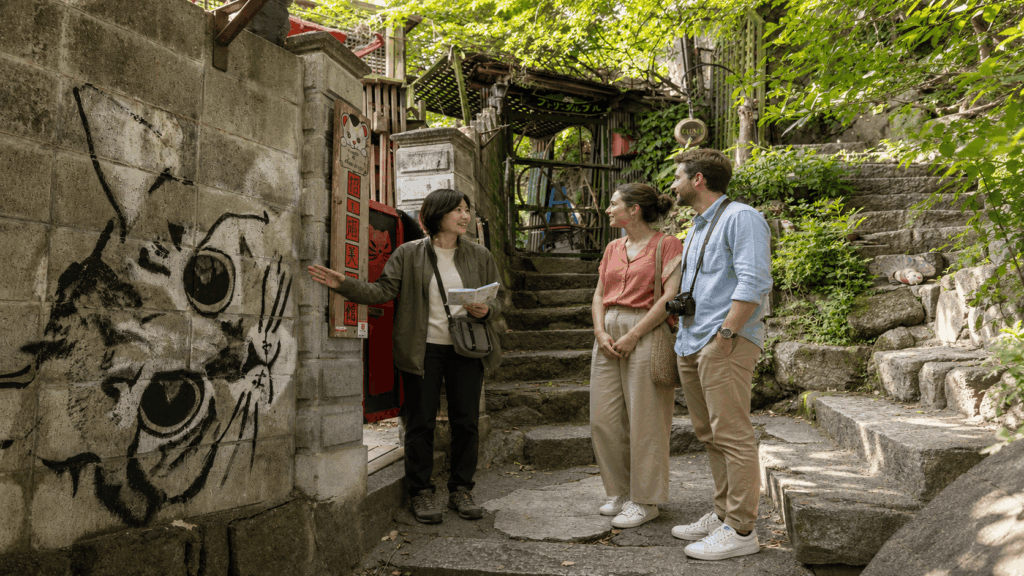
Onomichi is entirely manageable on your own — the ropeway is simple to use, the downhill route is well signposted, and the town rewards wandering. For many visitors, self-guided is the right call, and this guide gives you the route to do it.
There are two honest reasons to consider a guided option instead: you’d rather not plan the ropeway timing and the hillside route yourself, or you want the history and local context that the lanes don’t explain on their own. A private English-speaking option like the Hiroshima: A Must See Onomichi 2 Hour Private Tour on GetYourGuide covers the ropeway ride, Senkoji Temple and Cat Alley with a local guide, for groups of up to about 10 people. Prices start around $110 per person — check the listing for current availability, inclusions and cancellation terms, and confirm how the tour handles ropeway maintenance dates if you’re travelling in December.
| Factor | Self-guided | Private tour |
|---|---|---|
| Flexibility | Full — stop, linger or skip as you like | Good, but you follow the guide’s schedule for 2 hours |
| Local context | Limited to signs and your own research | History, literature and local stories explained in English |
| Planning effort | You handle ropeway schedule, route and timing | Minimal — the route and tickets are arranged for you |
| Time | 3–4 hours for the full loop at your own pace | About 2 hours for the core sights |
| Cost | Ropeway ¥500 one-way plus food | From around $110 per person (check the listing) |
My honest read: if your priority is a relaxed, unhurried half-day with a ramen finish, explore on your own — the route above is exactly what a local would suggest. If you’re short on time, want the stories behind the temples and the literary path, or want someone else to handle the December ropeway logistics, a private tour is the better trade.
If you want the local context but also want more control over the pace than a fixed two-hour highlights tour gives you, the longer customizable private tour is the guided option worth comparing with DIY.
Why I’d book this one
- More control over the day: the private licensed-guide format offers longer duration options and lets the itinerary focus on the parts of Onomichi that matter most to you.
- Useful local context: recent verified travelers repeatedly mention knowledgeable guides, thoughtful personalization and attentive pacing.
- Easy to evaluate before committing: you can check current availability, duration choices, recent reviews and cancellation terms before deciding; transport, entrance fees and food may be separate, so review the inclusions carefully.
FAQ: Onomichi in Winter
Is Onomichi worth visiting in winter?
Yes, for most travelers — if you go for the right reasons. Winter trades flowers and foliage for clear, low-haze views of the Seto Inland Sea, quieter hillsides, and a town that feels genuinely calm. The three conditions that make it work: dress for the wind (it feels colder than the temperature suggests), check the December ropeway maintenance dates before you plan around the ride, and use the one-way-up, walk-down route so the steepest climbing happens on the cable car, not your legs.
Does the Senkoji Ropeway run in winter?
Yes, normally every day from 9:00 to 17:15, with departures about every 15 minutes, unless weather suspends service. The exception is the annual maintenance closure, which falls in December every year — for 2026 it’s December 7–25. The dates change each year, so check the official ropeway website before finalising a winter itinerary. During the closure you can still walk up to the summit in about 30 minutes, and the PEAK observatory stays open 24 hours.
Should I buy a one-way or round-trip ropeway ticket?
For most visitors, a one-way ticket up is the smarter choice. Senkoji Temple sits halfway down the mountain, so the natural route is to ride up, then walk down through the temple, the Tenneiji pagoda and Cat Alley to street level — which is also the temple’s own official model course. A round-trip ticket only makes sense if you have mobility concerns, want to stay at the summit past the last ride down, or the weather turns bad and you’d rather not walk the descent. The price difference is ¥200.
How cold does Onomichi get in winter, and what should I wear?
Based on the nearest long-term averages (Fukuyama, about 30 km away), December averages 6.8°C, January 4.6°C and February 5.2°C. The wind at the PEAK observatory and the waterfront makes it feel colder, so the most important item is a wind-resistant outer layer, over a warm mid-layer, with gloves, a beanie and grippy walking shoes for the stone steps. Serious snowfall at sea level is rare, but morning frost on the steps is possible.
Is a half-day enough for Onomichi in winter?
Yes — the core loop of ropeway up, PEAK, Senkoji Temple, the downhill walk through Cat Alley and a bowl of Onomichi Ramen takes about 3 to 4 hours, which fits a half-day from Hiroshima or Okayama. A full day lets you slow down, browse the Hondori arcade, visit cafes and explore the quieter hillside lanes. Just remember the sun sets before 5:30 pm in December, so do the summit early and leave the street-level exploring for later.
Should I do the Shimanami Kaido in winter too?
If cycling is your main reason to be in the area, treat the Shimanami Kaido as a separate trip with its own weather and equipment considerations — it’s a different decision from whether Onomichi itself is worth a winter visit. Onomichi’s hillside route, temples and ramen work perfectly well on their own in winter, with no cycling involved.
Final Verdict: Is Winter a Good Time to Visit Onomichi?
Winter is a good time to visit Onomichi — for the traveler who goes in with the right expectations. The version of the town you get in December, January and February is quieter, sharper and windier than the postcard version, and it rewards exactly the things this guide is built around: a clear morning at the PEAK observatory, a downhill walk that costs you nothing you didn’t choose, and a hot bowl of Onomichi Ramen waiting at street level.
Choose Onomichi in winter if you value clear views of the Seto Inland Sea more than flowers, you’re happy to dress in layers for the wind, and you’re flexible enough to check the December ropeway schedule before you commit. The one-way-up, walk-down route makes the hillsides manageable for most reasonably fit travelers, and the quiet season is the whole point.
Choose another season — or another destination — if you’re coming mainly for spring blossoms or autumn foliage, cold wind genuinely saps your enjoyment, steep stone steps are a real concern, or your only available dates fall inside the ropeway maintenance period and you don’t want to walk up.
For first-time visitors: make the ropeway your first move of the day, not your last. Ride up, take the PEAK view in short bursts, then let the descent deliver Senkoji Temple, the pagoda and Cat Alley in sequence, with ramen as the finish. That order is the whole secret.
For families: the downhill route is kinder than it looks, but pace it for younger legs, carry water, and plan for the cold at the summit — a brief PEAK stop beats a long one. Check the ropeway maintenance dates first if you’re travelling in December, and have a warm indoor backup like the Hondori arcade for a rainy day.
For travelers on a tight schedule: the half-day loop is realistic and worth it — roughly 3 to 4 hours from station to ramen. Buy the one-way ticket, keep the summit stop short when the wind is up, and you’ll still make an afternoon train onward.
For repeat visitors: winter is the season that shows you the town the postcards don’t — the bare-tree sightlines from the literary path, the low sun on the channel, and the unhurried rhythm of the arcade on a weekday. Come for a clear forecast, and bring a proper camera; the light is the best argument for a return trip.
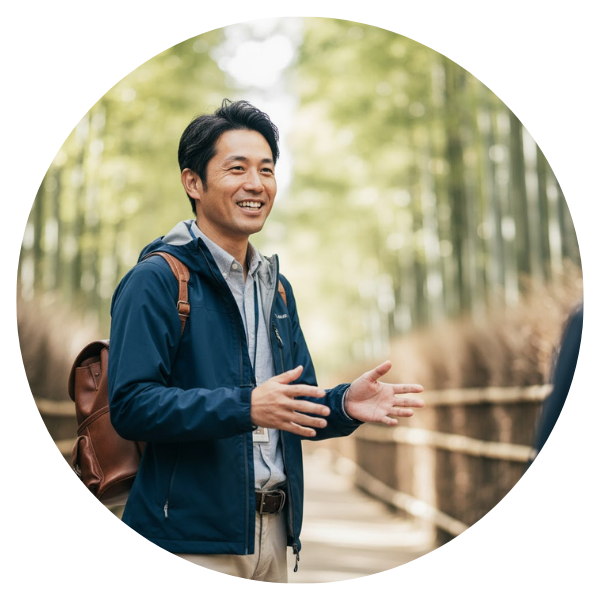
Hi, I’m Kai. I’m a Tokyo-based travel writer, tourism industry insider, and the author of a published guidebook for international visitors to Japan. With over 10 years of professional experience at a leading Japanese tourism company, my mission is to help you skip the tourist traps and navigate Japan’s best destinations like a local. I believe the perfect day trip is like a traditional kaiseki meal: a beautiful balance of precise planning and unforgettable seasonal discovery. When I’m not out conducting field research, you’ll usually find me drafting new itineraries with one of my favorite fountain pens!