
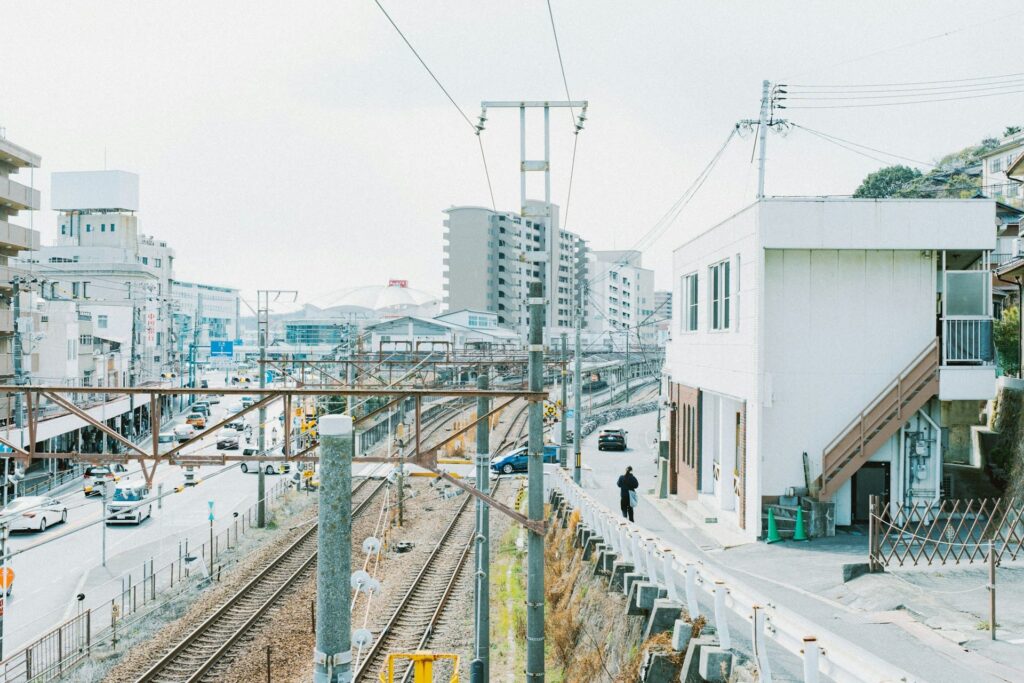
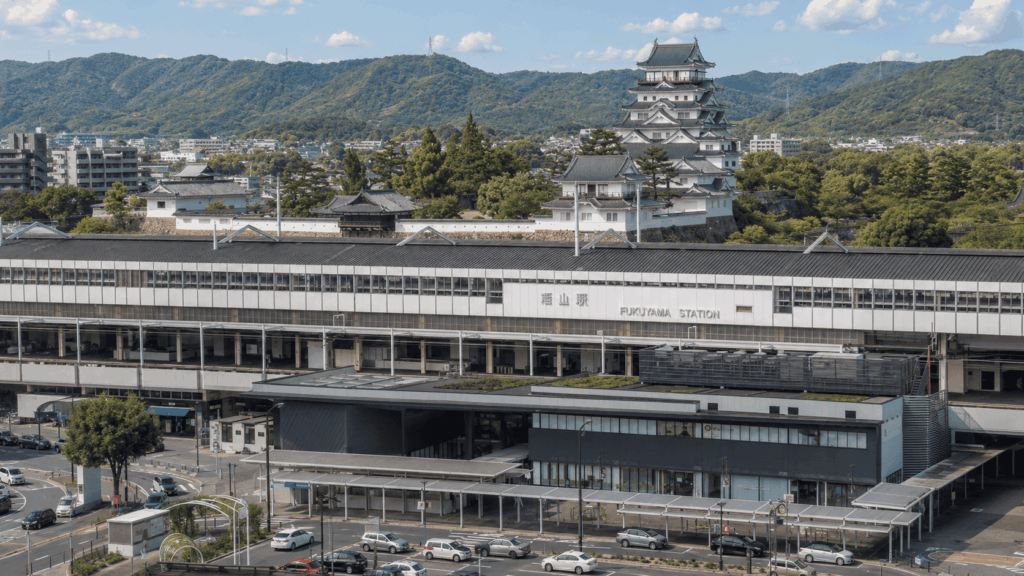
If you’re planning a trip from Tokyo or Osaka to Onomichi, there’s one decision that shapes everything after it: which station to aim for. Most first-time visitors should head for JR Onomichi Station — the local station at the western end of downtown — and not Shin-Onomichi Station, the shinkansen stop about 3 km north of the sightseeing area. From both Tokyo and Osaka, the smoothest route is to ride the shinkansen to Fukuyama Station, change to the JR Sanyo Main Line, and arrive at JR Onomichi Station around 20 minutes later.
Shin-Onomichi isn’t a “wrong” station, but it adds a bus or taxi ride before sightseeing can begin — and, contrary to what its name suggests, it rarely saves you a transfer anyway. Most through shinkansen services don’t stop there, so Tokyo and Osaka travelers usually need to change at Fukuyama or Okayama either way. The sections below compare the two stations and walk through the Tokyo and Osaka routes step by step, including what to do the moment you step off the train. If you’re coming from Osaka and just want the short version: the direct shinkansen one-way ticket for visitors is worth checking against a regular ticket before you book.
Want fewer moving parts after you arrive? If you’d rather have a licensed local guide take over the sightseeing plan once you reach Onomichi, check the current start times, meeting details, and recent traveler reviews for the Onomichi Customized Private Tour with Licensed Guide.
Which Onomichi Station Should You Use?
Onomichi has two stations that sound almost identical, and mapping apps often make the difference look trivial. In practice, they put you in very different situations when you arrive. The table below is the comparison I use when helping travelers decide.
| JR Onomichi Station | Shin-Onomichi Station | |
|---|---|---|
| Train services | Local JR trains (Sanyo Main Line) | Sanyo Shinkansen — mainly Kodama services; most Nozomi, Hikari and Mizuho trains pass through without stopping |
| Where it sits | Western end of downtown, close to the waterfront | About 3 km north of downtown, in a residential area |
| Start of sightseeing | Hondori Shopping Street and the Mt. Senkoji Ropeway base are within walking distance | Not walkable to the main sights — you need a bus or taxi into town |
| Extra hop after arrival | None — you’re already where the town is | Bus roughly 15 minutes (from about ¥190, running every 15–30 minutes) or taxi about 10 minutes (roughly ¥1,400–1,800) |
| Best for | First-time sightseers, travelers with luggage, anyone on a day trip | Travelers who specifically need the shinkansen stop itself, or who are continuing onward by shinkansen the same day |
| Main drawback | Requires a local-train transfer at Fukuyama from the shinkansen | Limited train services plus an extra ride into town — usually more friction, not less |
JR Onomichi Station: Where Sightseeing Actually Starts
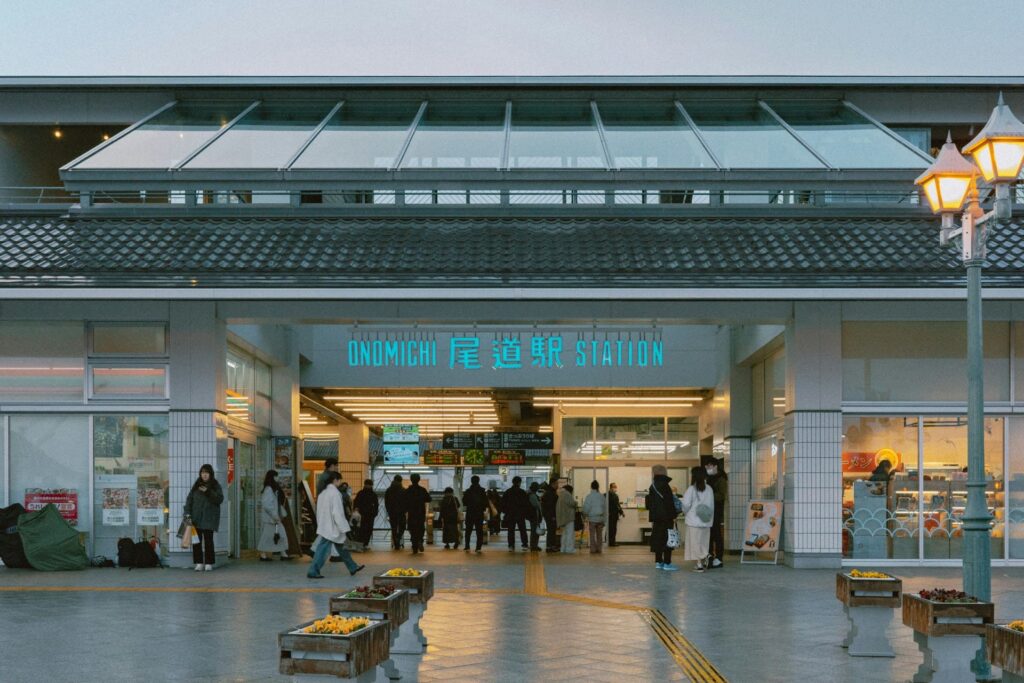
JR Onomichi Station sits at the western edge of the old town, with the waterfront a short walk south and the start of the shopping street close by. From the station, you can walk to the Mt. Senkoji Ropeway base station in about 15 minutes, passing the covered Hondori Shopping Street along the way. If you’re carrying luggage, the station area also has coin lockers, and the Shimanami Kaido cycling terminals are about 150 meters away near the waterfront — useful if you’re starting the bike route the next morning.
This is the station to choose if your goal is to see the town: temples, viewpoints, the harbor, and the famous hillside lanes are all on foot from here. For most first-time visitors, the single transfer at Fukuyama is a small price for arriving exactly where the day should begin.
Shin-Onomichi Station: A Shinkansen Stop, Not a Destination
Shin-Onomichi Station is a real shinkansen station, but it’s a minor stop: most Nozomi, Hikari and Mizuho services pass through without stopping, so it’s served mainly by Kodama trains that stop at every station. From Tokyo or Osaka, that usually means you’d transfer at Fukuyama or Okayama anyway — the same transfer you’d make to reach JR Onomichi Station. After arriving at Shin-Onomichi, you then face a second leg into town by bus (roughly 15 minutes, from about ¥190) or taxi (about 10 minutes, roughly ¥1,400–1,800) before sightseeing can start.
Kai’s tip: If you do use Shin-Onomichi, budget for the wait, not just the ride. The bus into town runs every 15–30 minutes and isn’t timed to shinkansen arrivals, so a “15-minute bus ride” can easily become 30–40 minutes from the platform to the town center. When I plan this hop for travelers, I always count the full gap between trains and buses — that’s where the time actually goes.
When Shin-Onomichi Makes Sense
There are two situations where Shin-Onomichi is a reasonable choice. The first is when you’re arriving on a Kodama train and a bus happens to be waiting — rare, but it happens. The second is when your itinerary is shinkansen-centered: for example, if you’re arriving late, staying near the station, and departing onward by shinkansen the next morning. For everyone else — especially anyone with a suitcase or a day-trip schedule — JR Onomichi Station is the more forgiving destination.
How to Get from Tokyo to Onomichi
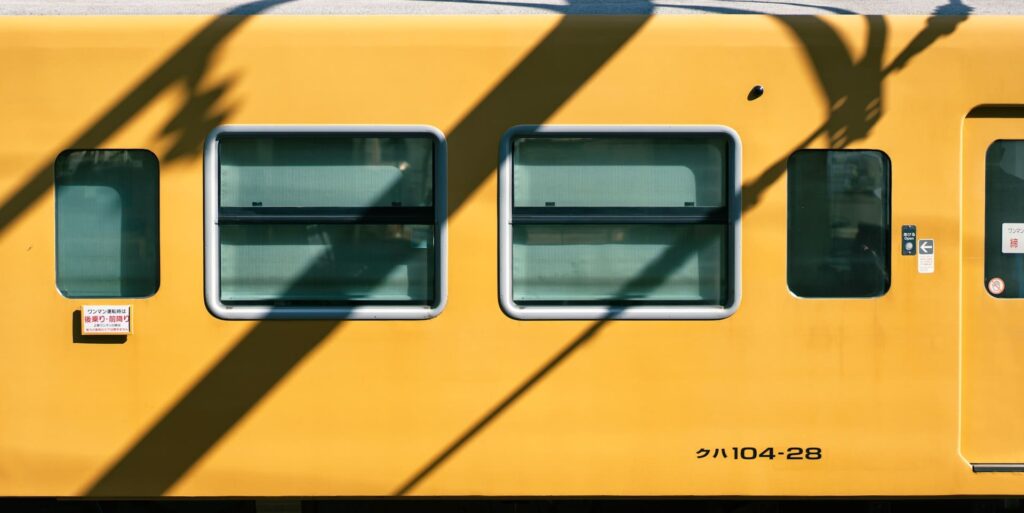
When I walk first-time visitors through the Tokyo–Onomichi leg, the question I hear most is: “Why not just take the shinkansen to Shin-Onomichi?” The answer usually surprises people — on most days, the shinkansen doesn’t even stop there. From Tokyo, the practical route has always been the same: bullet train to Fukuyama, then a short local train ride into town.
The Route I Recommend: Tokyo → Fukuyama → Onomichi Station
- Tokyo Station → Fukuyama Station by Tokaido/Sanyo Shinkansen. Nozomi services take roughly 3.5 hours; Hikari services run a bit slower (around 4 hours or a little more depending on stops).
- Change at Fukuyama to the JR Sanyo Main Line. The local train takes about 20 minutes and runs roughly every 30 minutes.
- Arrive at JR Onomichi Station — you’re now at the western edge of the old town, with sightseeing on foot from the exit.
Door-to-station, the whole journey is roughly 4 hours by Nozomi or around 5 hours by Hikari, with a one-way fare in the region of ¥18,000 (as of mid-2026). If you’re using a Japan Rail Pass, Hikari and Kodama trains are covered; Nozomi requires a small additional special ticket that you buy at the station. If you’re traveling with a large suitcase (total dimensions over 160 cm), reserve a seat with an oversized-baggage space when booking the shinkansen — the Tokaido and Sanyo lines require it.
The Shin-Onomichi Option: More Transfers, Not Fewer
The alternative — Tokyo → Fukuyama → Shin-Onomichi — looks like it skips the local train, but it doesn’t. Because most through services pass Shin-Onomichi by, you’d change at Fukuyama anyway, then ride a Kodama one stop north, then take a bus or taxi back south into town. That’s an extra vehicle and an extra wait compared with simply riding the local train from Fukuyama to JR Onomichi Station. The only real advantage is if you’re staying near Shin-Onomichi itself or need the shinkansen again shortly after arriving.
One practical note from guiding travelers on this route: the Fukuyama transfer is a single platform change inside the station — shinkansen gates and the Sanyo Main Line tracks are in the same building, and signs are bilingual. It’s far less intimidating than it looks on a route map, and the 20-minute local ride gives you a first view of the harbor before you’re dropped at the center of town.
How to Get from Osaka to Onomichi
Osaka to Onomichi is a straightforward day trip if you plan the transfer correctly (see our realistic 1-day itinerary for how to structure your time once you arrive). The route mirrors the Tokyo version but is much shorter: shinkansen from Shin-Osaka Station to Fukuyama, then the JR Sanyo Main Line local train for about 20 minutes into JR Onomichi Station.
Osaka → Fukuyama → Onomichi Station, Step by Step
- Shin-Osaka Station → Fukuyama Station by Sanyo Shinkansen. Nozomi services take roughly 1 hour; Hikari services add a little time depending on stops.
- Change at Fukuyama to the JR Sanyo Main Line. The local train takes about 20 minutes and runs roughly every 30 minutes.
- Arrive at JR Onomichi Station, at the western edge of the old town. Sightseeing starts on foot from the exit.
With the fastest Nozomi connection, you can be standing in front of Hondori Shopping Street about 2 hours after leaving Shin-Osaka. A one-way fare is roughly ¥8,500 (as of mid-2026), or covered by a Japan Rail Pass (Hikari and Kodama) with a small supplement for Nozomi.
Is the Sanyo Shinkansen One-Way Ticket Worth Using?
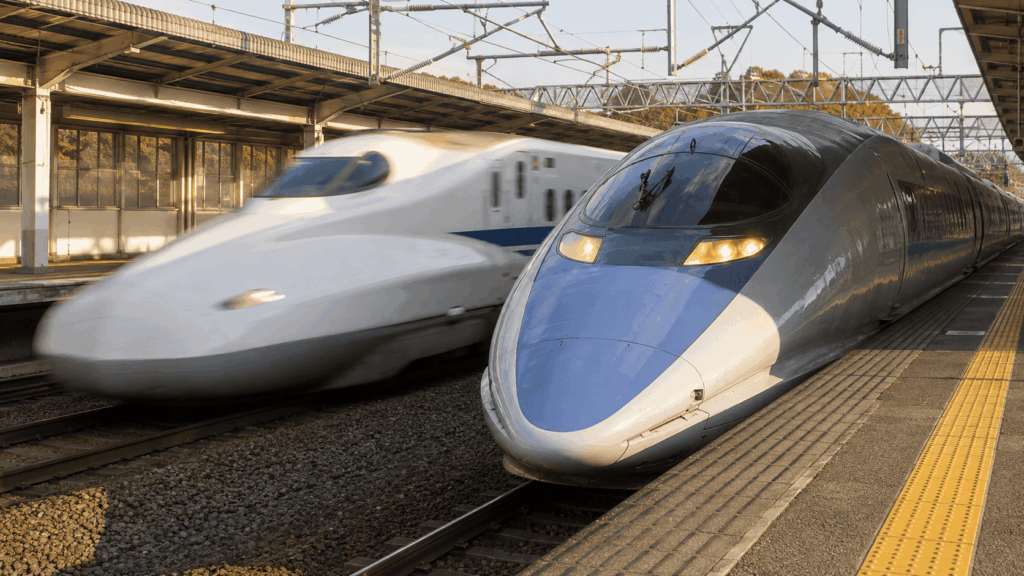
For travelers coming from Osaka without a JR Pass, there’s a visitor-only alternative to buying a regular ticket: the One-Way Bullet Train Ticket for the Sanyo Shinkansen, sold through platforms like GetYourGuide. It covers Shin-Osaka to Onomichi (including Shin-Onomichi) or Fukuyama in a single one-way trip, and includes a seat in the Green Car — the first-class cabin — which can make the difference on a day trip. Pricing starts from around $16 per person, though the final cost depends on the exact route and date you select.
How does it compare with the alternatives? If you’re taking a single round trip Osaka–Onomichi, the one-way ticket plus a return regular ticket can work out cheaper than two standard tickets, especially if you value the reserved Green Car seat. If you’re planning several long-distance legs (Kyoto, Hiroshima, beyond), a JR Pass usually makes more sense. If you already hold a JR Pass, this ticket is redundant — your pass covers the same route with a small Nozomi supplement.
Two practical caveats if you go this route: the ticket is non-refundable, and redemption is done at major stations (Shin-Osaka, Osaka, Kyoto, Kansai Airport, and others in the network) by presenting your e-ticket and a non-Japanese passport. Check the current redemption list and terms before booking, and allow extra time at the station for the exchange.
Who it’s for: Osaka-based travelers doing a single one-way trip to Onomichi who want a reserved Green Car seat without juggling a pass. Who should skip it: anyone with a JR Pass, anyone booking far in advance and wanting flexibility, and travelers who prefer the lowest possible fare over comfort.
Fukuyama or Shin-Onomichi: Which Transfer Is Actually Easier?
Once you know both stations, the comparison comes down to one question: where do you want the friction to happen — on the train, or after you arrive? Here’s how the recommended routes from Tokyo and Osaka stack up when you measure the whole journey to the start of sightseeing, not just the time on the rails.
| From | Recommended route | Approx. travel pattern | Transfers | Best for | Watch out for |
|---|---|---|---|---|---|
| Tokyo | Tokyo → Fukuyama (Nozomi, ~3.5 hr) → JR Onomichi Station (local, ~20 min) | ~4 hours door-to-station | 1 (Fukuyama) | First-time visitors; travelers with luggage; anyone starting sightseeing immediately | Book shinkansen seats ahead on busy weekends; Nozomi needs a supplement with a JR Pass |
| Tokyo via Shin-Onomichi | Tokyo → Fukuyama (Nozomi) → Shin-Onomichi (Kodama) → bus/taxi into town | ~4 hours plus an extra 30–40 min with the bus wait | 2–3 (Fukuyama, plus the hop from Shin-Onomichi) | Travelers staying near Shin-Onomichi or continuing by shinkansen soon after | Bus not timed to trains; extra luggage handling; slower than it looks |
| Osaka | Shin-Osaka → Fukuyama (Nozomi, ~1 hr) → JR Onomichi Station (local, ~20 min) | ~2 hours door-to-station | 1 (Fukuyama) | Day-trippers from Osaka or Kyoto; anyone without a JR Pass (visitor one-way ticket option) | Late trains from Shin-Osaka mean fewer onward locals; check the last Sanyo Main Line departure |
The pattern holds for both cities: the “shinkansen to Shin-Onomichi” route doesn’t remove the Fukuyama transfer — it adds a Kodama ride and a bus ride on top of it. Once you include the wait, Shin-Onomichi rarely wins on time and never wins on simplicity.
Arriving at JR Onomichi Station: How to Start Sightseeing Without Wasting Time
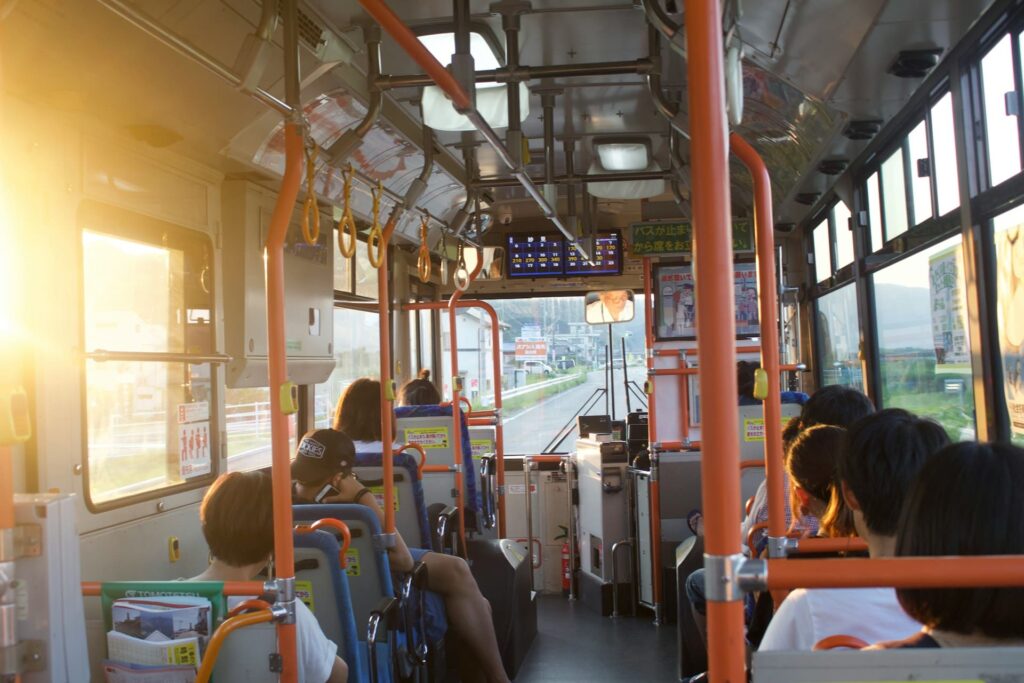
Getting to Onomichi is only half the job — the town’s layout has one quirk that trips up first-time visitors: the main sights climb the hillside behind town, but the station sits at the western end of the flat waterfront. If you step off the train and head straight for the hills on the map, you can walk a long way around before you ever reach the good stuff.
Kai’s tip: Before you start walking, take 30 seconds to get your bearings from the waterfront. From JR Onomichi Station, the harbor is a short walk south, and the town stretches east along the water: the covered Hondori Shopping Street runs parallel to the coast, and the Mt. Senkoji Ropeway base is beyond it to the east. When I guide travelers here, I tell them to fix the harbor line in their head first — every main sight sits north of it, and every wrong turn I see comes from people trying to shortcut straight up the hill from the station. Walk east along the waterfront, pick up Hondori for shopping and covered walkways, and save your uphill energy for Senkoji.
From the station, the natural arrival route is: head east along the waterfront, turn up into the covered Hondori Shopping Street, and continue east until you reach the Mt. Senkoji Ropeway base station — roughly 15 minutes on foot. You’ll pass the main shopping street, the harbor, and small lanes on the way, so the walk is part of the sightseeing, not a commute to it. If you’re starting the Shimanami Kaido the next day, the cycling terminals are close to the station on the waterfront — pick up maps and check bike availability while you’re there.
If you want to see the hillside temples, viewpoints, and backstreets without spending part of your limited time deciding what to prioritize as you go, a private guide is the alternative worth comparing with the self-guided route above.
Why I’d book this one
- Recent travelers consistently mention knowledgeable and attentive guides who adapt the sightseeing plan around individual interests.
- The tour can be customized around Onomichi’s temples, hillside lanes, viewpoints, and other stops rather than locking you into a fixed group itinerary.
- Because pickup details and booking terms can affect how smoothly the day fits around your train, you can check the current arrangements before finalising your itinerary.
The Easiest Way to Reach Senkoji: Ride Up, Walk Down
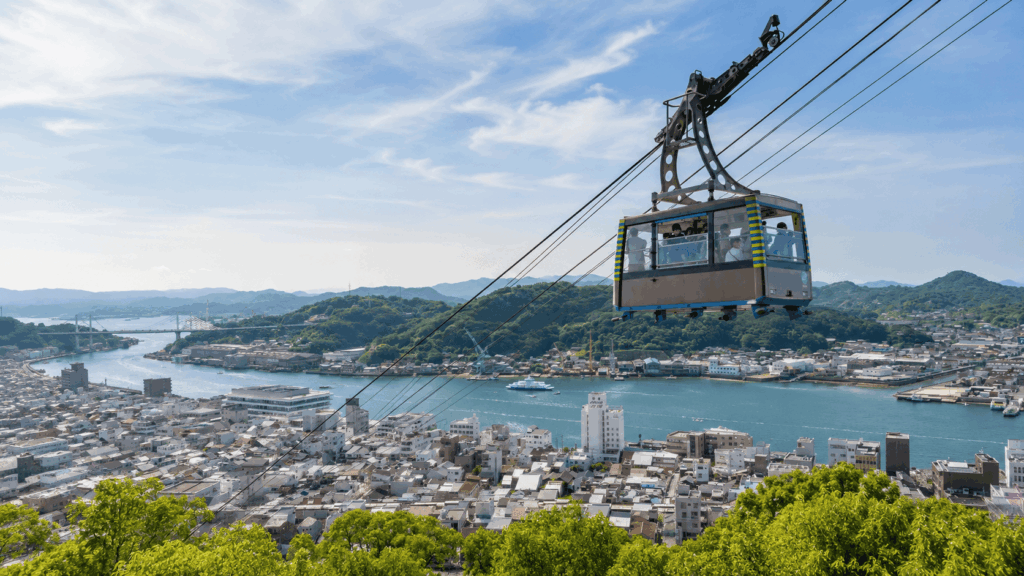
The centerpiece of any first visit is the view from Senkoji Park, reached by the Mt. Senkoji Ropeway. The mountain is the one place where I consistently see travelers misjudge the effort — Onomichi’s hills look gentle on a map and are steep in reality.
Kai’s tip: Take the ropeway up and walk down — but plan for the descent, not just the climb. The ropeway (one-way ¥500, round trip ¥700 for adults, running roughly every 15 minutes from around 9:00–17:15, about 3 minutes up) delivers you to the park viewpoint with energy intact. Walking down from Senkoji Park is genuinely lovely — the stone lanes, the Tenneiji Temple and its three-story pagoda, and the narrow Neko no Hosomichi cat alley near Ushitora Shrine — but the slope is steep and the paving is old stone. When I send travelers down this way, the ones who struggle are wearing shoes they’d wear on flat city streets. Sneakers with grip make the descent comfortable; if you’re on a tight schedule or have mobility concerns, the round-trip ropeway ticket is the sensible choice and still lets you see the park.
After the descent, you’ll come out near the eastern end of town, close to the waterfront and the Tenneiji area. From there it’s a flat walk back west along the harbor to JR Onomichi Station — a loop that takes in the viewpoint, the temple, the alley, and the waterfront without retracing your steps. For a first visit, this ride-up/walk-down loop is the most efficient way to see Onomichi’s famous skyline in the time most day-trippers have.
Tickets, JR Passes, and Luggage: What You Need to Know
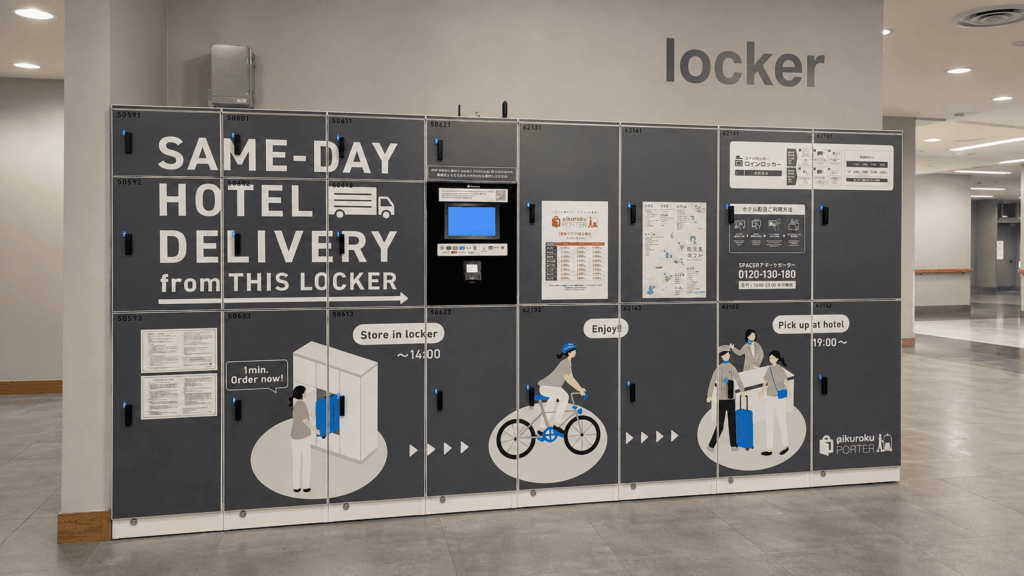
A few practical details decide whether the journey is smooth or stressful, so it’s worth settling them before you leave home.
Japan Rail Pass: Does It Work on This Route?
Yes — and the route is a good fit for it. The Tokyo–Fukuyama and Osaka–Fukuyama shinkansen legs are covered by the Japan Rail Pass on Hikari and Kodama services, and the Fukuyama–Onomichi local train is covered too. Nozomi and Mizuho services require a small additional special ticket, bought at the station, if you want to ride them with a pass. The pass doesn’t cover the Shin-Onomichi–town bus, so if you choose that station you’ll pay for that leg separately.
What About Large Suitcases?
If your suitcase’s total dimensions exceed 160 cm, you need to reserve a seat with an oversized-baggage space when booking the Tokaido or Sanyo shinkansen — this applies on the Tokyo–Fukuyama and Shin-Osaka–Fukuyama legs. Standard-size luggage fits in the overhead racks above the seats. The Fukuyama–Onomichi local train has no luggage restrictions, so the only awkward moment is the platform change at Fukuyama, which is a short walk inside the same station building. If you’re staying in Onomichi, most hotels and guesthouses near JR Onomichi Station are a short walk from the exit; if you’re arriving via Shin-Onomichi, factor the bus ride with a suitcase into your decision.
Cash, Coins, and Getting Around Town
The town bus from Shin-Onomichi and the local trains take IC cards, but keep small cash for anything ticket-based; the ropeway ticket counter and some small shops and cafes in the old town are cash-friendly. If you’re using the bus from Shin-Onomichi, the fare is around ¥190 and paid on boarding. Most station staff speak limited English, so having your destination written in Japanese — Onomichi Station (尾道駅) — speeds up any question at the ticket window.
Quick Recommendation: Which Route Should You Take?
- From Tokyo, first visit: Nozomi to Fukuyama, then the local train to JR Onomichi Station. One transfer, no extra bus, sightseeing starts at the exit.
- From Osaka, no JR Pass, single trip: Nozomi to Fukuyama, local to JR Onomichi Station. Compare the Sanyo Shinkansen one-way visitor ticket against a regular fare before booking.
- From Osaka or Tokyo with a JR Pass: Same route on Hikari/Kodama with a small Nozomi supplement if you need the speed. Avoid Shin-Onomichi unless you’re staying there.
- Continuing onward by shinkansen the same day: Shin-Onomichi can work if it saves you a backtrack — but check whether the Kodama connection and the bus into town actually save time before committing.
FAQ
Is Shin-Onomichi Station the same as Onomichi Station?
No — they’re two separate stations about 3 km apart. Shin-Onomichi Station is the shinkansen stop north of town, served mainly by Kodama trains; JR Onomichi Station is the local station at the western end of downtown, close to the waterfront and walking distance from the main sights. Aim for JR Onomichi Station unless you specifically need the shinkansen stop itself.
How long does it take to get from Tokyo to Onomichi?
Roughly 4 hours by Nozomi shinkansen to Fukuyama (about 3.5 hours) plus the 20-minute local train into Onomichi. Hikari services take longer — around 5 hours total. The one-way fare is in the region of ¥18,000 (as of mid-2026).
How long does it take to get from Osaka to Onomichi?
About 2 hours door-to-station: roughly 1 hour by Nozomi from Shin-Osaka to Fukuyama, then about 20 minutes on the local train to JR Onomichi Station. A one-way fare is roughly ¥8,500 (as of mid-2026).
Do I need to transfer at Fukuyama to reach Onomichi?
For the recommended route, yes — one transfer. The shinkansen stops at Fukuyama, and you change there to the JR Sanyo Main Line local train, which reaches JR Onomichi Station in about 20 minutes. The transfer is a short walk inside the same station building with bilingual signs.
Does the Japan Rail Pass cover the Tokyo or Osaka to Onomichi route?
Yes, on Hikari and Kodama services: the shinkansen legs to Fukuyama and the local train to Onomichi are covered. Nozomi and Mizuho require a small additional special ticket, bought at the station. The pass doesn’t cover the town bus from Shin-Onomichi.
Can I take a large suitcase on the shinkansen to Onomichi?
Yes, with one rule: if the total dimensions exceed 160 cm, reserve a seat with an oversized-baggage space on the Tokaido or Sanyo shinkansen. Standard-size luggage fits in the overhead racks. The local train from Fukuyama has no luggage restrictions, and the platform change at Fukuyama is short.
Which is easier for a first-time visitor: Fukuyama transfer or Shin-Onomichi?
For almost everyone, the Fukuyama transfer to JR Onomichi Station. The Shin-Onomichi route doesn’t remove the Fukuyama change (most shinkansen trains pass Shin-Onomichi by), and it adds a Kodama ride plus a bus or taxi into town. If you’re staying near Shin-Onomichi or continuing by shinkansen the same day, it can make sense — otherwise it’s extra friction for no gain.
Final Verdict: Choose Your Route by Traveler Type
Choose JR Onomichi Station via Fukuyama if you’re visiting Onomichi to see the town — the temples, the harbor, the hillside lanes. One transfer, no extra bus, and sightseeing begins at the station exit. This is the route I recommend to almost every first-time visitor, and it holds for both Tokyo and Osaka departures.
Choose Shin-Onomichi only if you’re staying near that station or continuing onward by shinkansen the same day. Otherwise the “shinkansen stop” advantage disappears: most services pass it by, and you’ll still transfer at Fukuyama, then add a bus or taxi into town.
For first-time visitors: take the Nozomi to Fukuyama from Tokyo or Osaka, change to the JR Sanyo Main Line, and arrive at JR Onomichi Station. If you’re coming from Osaka without a JR Pass, compare the Sanyo Shinkansen one-way visitor ticket against a regular fare before you book — on a single trip it can save you money and give you a reserved Green Car seat.
For travelers with a JR Pass: the same route works on Hikari or Kodama with a small Nozomi supplement if you need the speed. You’ll save the most by treating Onomichi as one leg of a longer San’yo itinerary rather than a standalone return trip.
For families and travelers with luggage: the Fukuyama transfer is the friendliest option — one platform change inside one building, no bus with a suitcase. Reserve oversized-baggage seats if your bags exceed 160 cm, and book shinkansen seats ahead on weekends and holidays.
For repeat visitors or Shimanami Kaido starters: you already know the town — use JR Onomichi Station for the cycling terminals near the waterfront, and consider Shin-Onomichi only if your next train is a shinkansen and the connection genuinely saves time.

Hi, I’m Kai. I’m a Tokyo-based travel writer, tourism industry insider, and the author of a published guidebook for international visitors to Japan. With over 10 years of professional experience at a leading Japanese tourism company, my mission is to help you skip the tourist traps and navigate Japan’s best destinations like a local. I believe the perfect day trip is like a traditional kaiseki meal: a beautiful balance of precise planning and unforgettable seasonal discovery. When I’m not out conducting field research, you’ll usually find me drafting new itineraries with one of my favorite fountain pens!