
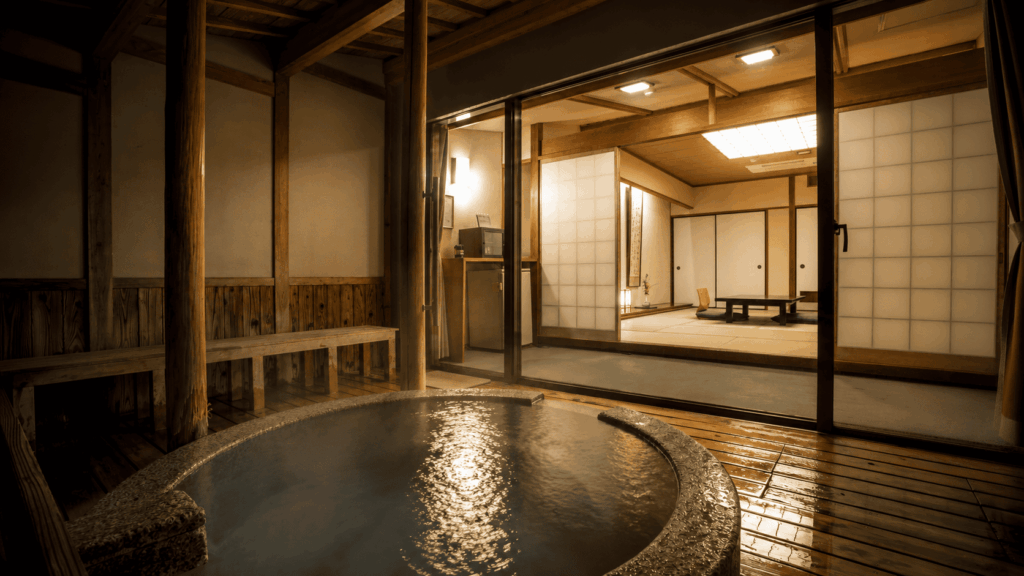
Amanohashidate does have onsen — several good ones, in fact. But it is not an onsen-hopping town like Kinosaki. It is a place where you do the sightseeing first and add one genuinely good soak. The short version: Chie-no-Yu is the cheap, local day-use bath; Amanohashidate Hotel is the convenient one with luggage storage and a view; Hotel Kitanoya is the strongest choice when privacy, couples, families, or tattoos are part of the decision.
If a private onsen is the reason you are considering Amanohashidate, Hotel Kitanoya is the property to compare before you lock in a day trip. See current Hotel Kitanoya room options, available dates, and recent guest reviews to decide whether an overnight stay makes more sense for your trip.
Amanohashidate Onsen: The Quick Answer
Yes, you can enjoy an onsen in Amanohashidate without staying overnight, and the choice comes down to three clear options:
- Chie-no-Yu — the town’s public bathhouse, right next to Amanohashidate Station. Best for budget travelers who want a simple, local soak. Adult entry is ¥800 (as of August 2026). No luggage storage, no tattoos, closed Wednesdays and Thursdays.
- Amanohashidate Hotel — a one-minute walk from the station and directly in front of the highway bus stop. Best if you have luggage, want to soak with a view of the sandbar, or need to use the bath right before your train. Day-use bathing is ¥1,500 including towels (as of August 2026), and the front desk stores luggage.
- Hotel Kitanoya — the best private option. Its reservable open-air bath Genbu-no-Yu costs ¥4,400 for 50 minutes (up to 4 people, as of August 2026), and some rooms have private baths filled with real onsen water. This is also the option to check first if you have tattoos, since the public bath does not accept them and the hotel itself recommends its private bath instead.
I have guided overseas visitors around Amanohashidate for years, and the practical differences between these three baths matter much more than they first appear — luggage, footwear, timing, and tattoos change which one you should actually choose. That is what this guide sorts out.
Prefer a private onsen instead of a shared public bath? Hotel Kitanoya’s private baths are reservable without staying overnight, so it is the option to look at first if privacy is part of your decision.
Best Amanohashidate Onsen Options Compared
There is no single “best” onsen in Amanohashidate — the right pick depends on your luggage, your comfort with shared bathing, and whether you want a quick soak or a private one. The table below is the fastest way to decide.
| Onsen | Best for | Day use | Private bath | Tattoo consideration | Distance & access | Luggage convenience | Approx. adult price (Aug 2026) | Main drawback |
|---|---|---|---|---|---|---|---|---|
| Chie-no-Yu | Budget travelers; a simple, local soak | Yes — hours vary with reduced-hour operation, so check the current month | Yes — 40-minute private rental from ¥5,000, booked through the local tourism association | Not permitted (stated on the official page) | Next to Amanohashidate Station | No — no carry-on luggage or storage | ¥800 | Small facility, no parking, no luggage |
| Amanohashidate Hotel | Convenience, luggage, and a scenic soak | Yes — 11:30–20:30, from 16:00 on Tuesdays | No rental bath; some room types have private baths (not onsen water — see below) | Not stated officially — check directly before relying on it | 1 min from station; 0 from the highway bus stop | Yes — front desk luggage storage | ¥1,500 (towels included) | Costs roughly twice Chie-no-Yu |
| Hotel Kitanoya | Couples, families, privacy, and travelers with tattoos | Yes — public bath 15:00–20:00 (¥1,200) and private bath with reservation | Yes — Genbu-no-Yu, 50 min, ¥4,400, up to 4 people, reservation required | Public bath does not accept tattoos; the hotel recommends its private bath | ~7 min walk from the station; free shuttle 14:30–18:00 | Best to confirm luggage arrangements when booking | ¥1,200 public bath; ¥4,400 private bath | Reservation needed; closed Wednesdays plus irregular days |
Prices and hours above were checked in August 2026 and can change, so confirm on the official pages before you build your day around them. In practice, the pattern I see on the ground is simple: Chie-no-Yu wins on price, Amanohashidate Hotel wins on friction-free logistics, and Kitanoya wins the moment privacy or tattoos enter the conversation.
Chie-no-Yu — Best for a Cheap, Local Day-Use Onsen
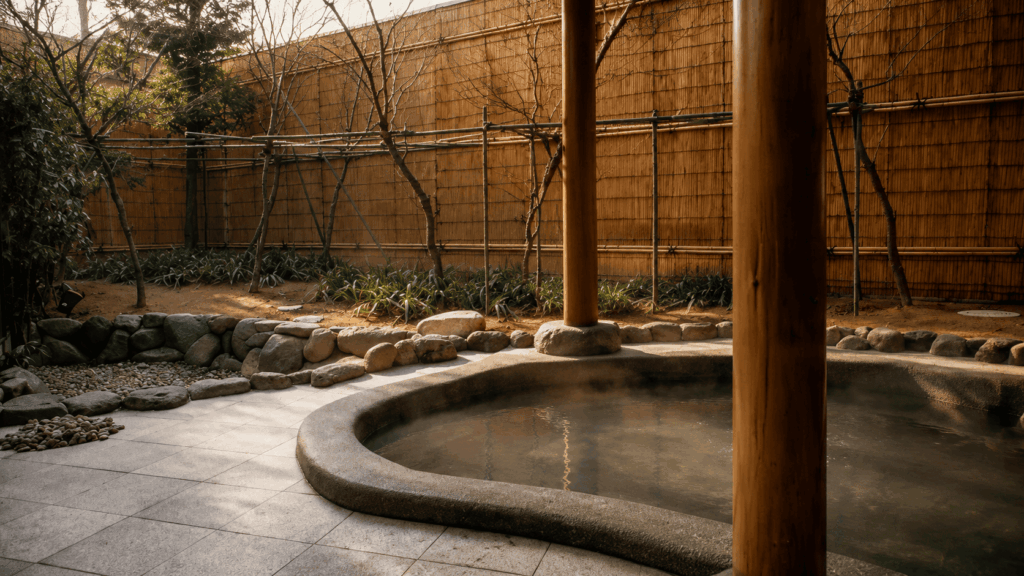
Amanohashidate Onsen Chie-no-Yu is the town’s public bathhouse, and its position could not be better: it sits right beside Amanohashidate Station on the Kyoto Tango Railway, about a minute’s walk from the platforms (if you are arriving by rail, see our guide to traveling from Kyoto by train). The water is a sodium chloride spring — the area’s classic “beauty water” type — and the bathhouse keeps things deliberately simple.
On my own visit I arrived around midday, rented a towel at the reception counter, and found the place almost empty. It felt like a proper local bathhouse rather than a tourist facility: small changing rooms, a couple of indoor baths, an outdoor bath, and water with a slightly salty, mineral feel. I parked nearby and walked over, because there is no dedicated parking lot. Two things to plan around: the bathhouse does not accept carry-on luggage or offer storage, and it closes on Wednesdays and Thursdays. It also runs reduced hours at times, so check the current month’s schedule rather than assuming a fixed 12:00–21:00 window.
Best for: budget travelers and anyone who wants an unfiltered, local onsen experience without paying hotel prices. If you are traveling light and arriving by train, this is the easiest and cheapest soak in town.
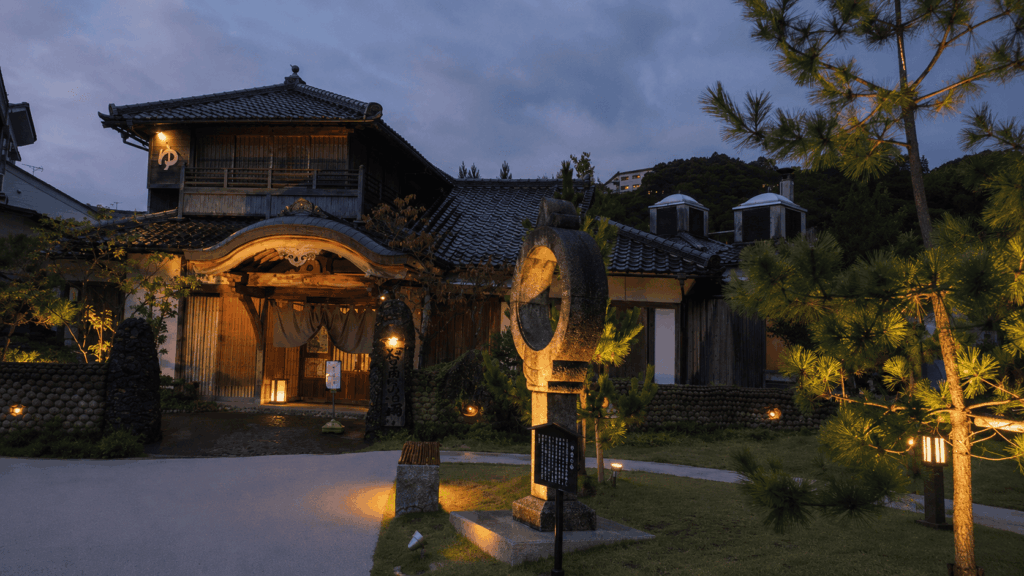
Who should skip it: travelers with suitcases (no storage), anyone with tattoos (the official policy does not permit entry), and couples or families hoping to bathe together — Chie-no-Yu enforces the local ordinance that separates genders from age seven, and entry in a swimsuit is not allowed.
If you want a private version of this same bathhouse, Chie-no-Yu now offers a 40-minute private rental from ¥5,000 (two-bath use from ¥7,000), booked through the Amanohashidate Tourism Association rather than directly at the bathhouse. It is a useful middle ground between the public bath and a hotel private bath, though for most private-bath seekers the hotel option below is the better-known route.
When to Visit Chie-no-Yu
Chie-no-Yu is a small facility, and that is the one thing to plan around. Recent visitors consistently describe it as convenient but compact, which means it does not take many extra bathers to change the feel of the place — and on weekends or late afternoons it can get busy.
Kai’s tip: aim for a weekday late-morning to early-afternoon soak. On my visit I had the bath almost to myself around midday, so I would not book anything else over that window. I would not count on the bathhouse being open late either — reduced-hour operation has been in place at times, so check the current month’s opening hours before you schedule your train around it. The classic mistake is arriving late in the day and discovering the bath is closing early or is busier than expected, neither of which is a good way to end a day of sightseeing.
Amanohashidate Hotel — Best for Convenience, Luggage and Views
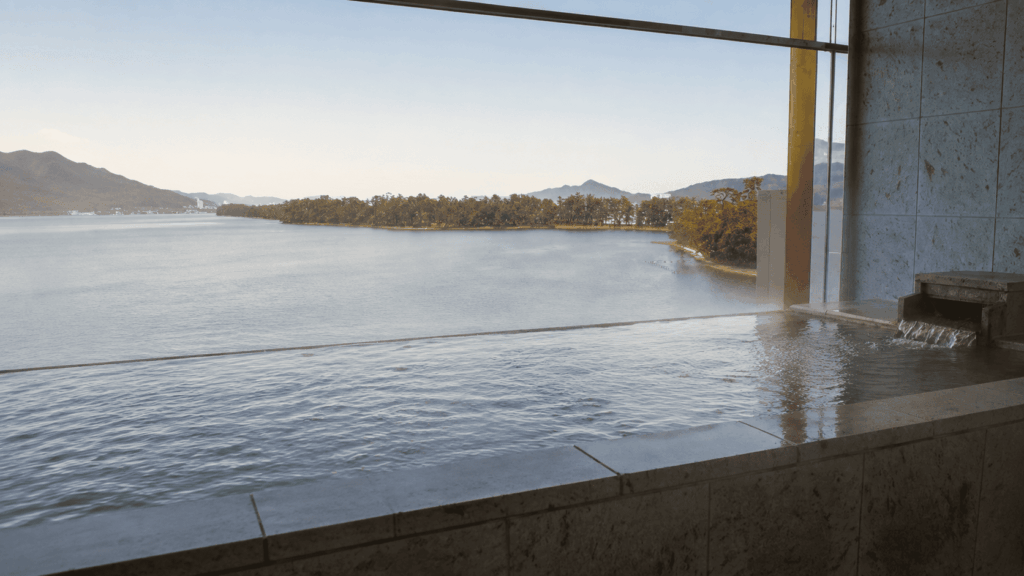
Amanohashidate Hotel is the practical choice, and I do not mean that as a small compliment. When I guided an overseas group here, the logistics simply worked: the hotel is about a one-minute walk from Amanohashidate Station and directly in front of the highway bus stop, and the front desk took our large bags before sightseeing and had them ready when we came back. For travelers arriving with suitcases on the Kyoto Tango Railway or the highway bus, that alone is worth the higher price.
Day-use bathing runs 11:30 to 20:30 (last entry), with one quirk: on Tuesdays, the baths open from 16:00 because of routine maintenance. Adult entry is ¥1,500 including both a face towel and a bath towel — a real convenience, because Chie-no-Yu’s towel rental works differently and smaller facilities may not include one. The bath area includes an outdoor bath looking out over the Aso Sea toward the Amanohashidate sandbar, indoor baths, a lounging bath, two saunas, and a free foot bath by the entrance (roughly 7:00–22:00) that works well as a quick stop if you are only passing through.
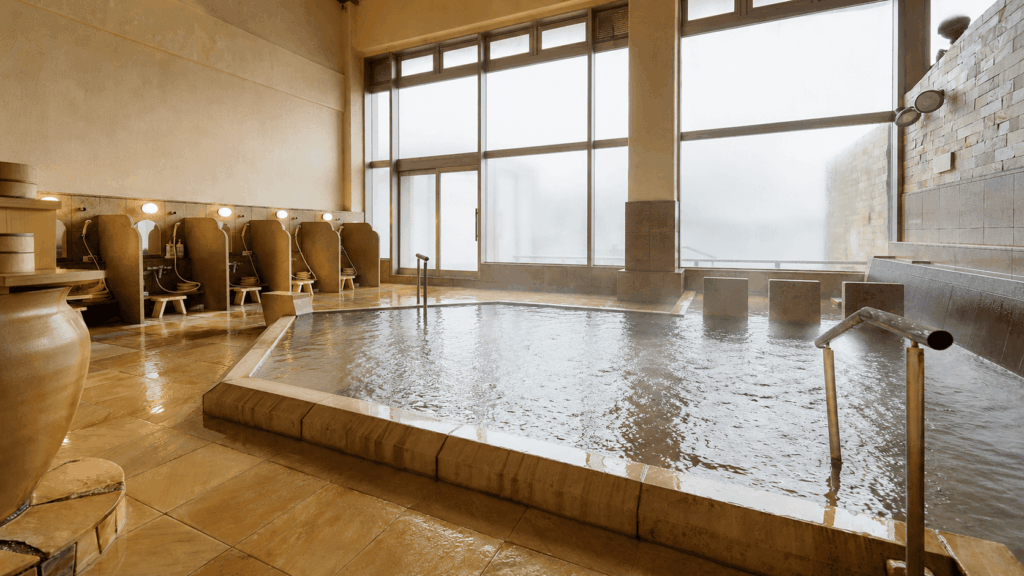
Best for: travelers with luggage, anyone arriving by highway bus, and people who want to soak with a view of the sandbar rather than just a clean bath. If your train or bus leaves within an hour or two, this is the bath to choose — you can store your bags, soak, dry off, and walk to the platform.
Who should skip it: strict budget travelers (it costs roughly twice Chie-no-Yu) and anyone who specifically wants a private bathing experience, because the hotel does not rent private baths on a day-use basis.
One Small Cultural Detail Foreign Visitors May Miss
During that visit, I noticed our guests moving around the hotel in the traditional setta-style footwear the ryokan provides, and several of them found it awkward to walk in at first — which is normal, because the straps take a little getting used to. The detail worth knowing before you arrive: in Japanese bathhouses, the footwear changes are the signal for where the rules begin. You leave your outdoor shoes at the entrance, switch to indoor slippers or setta for the corridors, and then leave those at the edge of the dressing room. You do not wear any footwear into the bathing area itself, and you do not step from the changing room into the bath with shoes on.
The confusion I have seen with first-time visitors is not that they do not know the etiquette — it is that nobody tells them where the boundary is. If you see a step or a change in flooring between the dressing room and the bath, that is the line: leave slippers on the dry side and go barefoot into the bathing area.
Hotel Kitanoya — Best Private Onsen Option
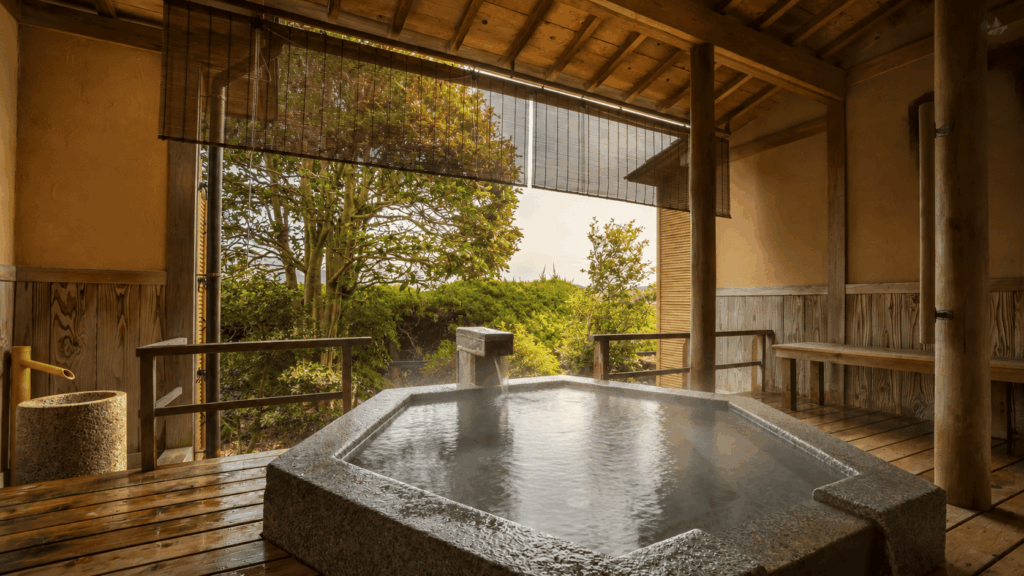
If sharing a public bath is not for you — because of tattoos, because you want to bathe as a couple or family, or simply because you would rather not be naked among strangers — Hotel Kitanoya is the clearest option in Amanohashidate. I have not stayed there myself, so this section is based on the hotel’s current official information rather than my own visit.
Kitanoya runs a public bath (15:00–24:00 and 6:00–9:00) with a day-use window from 15:00 at ¥1,200 for adults, but its real draw for overseas visitors is the reservable open-air private bath Genbu-no-Yu: 50 minutes, ¥4,400, up to four people, with reservations taken from the top of each hour. It can be booked for day use without an overnight stay, which makes it one of the few genuinely private onsen experiences you can have in Amanohashidate without checking in. A private sauna is also available (90 minutes, ¥8,800, swimwear required).
Two things to know before you rely on it: the private bath requires a reservation, and the hotel closes every Wednesday plus irregular dates through the year, on which days the private bath is unavailable too. Check the current month’s calendar rather than assuming it is open on the day you plan to visit.
Best for: couples and small groups who want to bathe together, travelers with tattoos, and anyone whose main goal is privacy rather than a cheap soak.
Who should skip it: budget day-trippers who only want a quick bath (Chie-no-Yu or the hotel bath above are cheaper) and travelers who dislike planning — the reservation requirement is the one real friction point.
Want the onsen experience without sharing a public bath? Hotel Kitanoya’s private bath is reservable by the hour, and its guest rooms with private onsen baths are the fuller version of the same idea.
Private Bath vs a Room with a Private Natural Onsen
This is the distinction that confuses most people searching for a private onsen in Amanohashidate, so let me be precise: a “private bath” and a “room with a private natural onsen” are not the same thing, and the difference is whether the water is actually onsen water.
- Hotel Kitanoya — some guest rooms have private open-air baths filled with Amanohashidate onsen water around the clock. If you book one of these, your in-room bath is a genuine hot spring, not tap water.
- Amanohashidate Hotel — its special rooms with open-air baths and some rooms with view baths are explicitly described by the hotel as not onsen water. You get a private bath with a view, but the water is not the hot spring. The hotel’s public and outdoor baths are the onsen.
- Amanohashidate Rikyu Hoshi no Oto — the luxury end of this idea: seven rooms, each with a private outdoor gold-spring bath and indoor silver-spring bath plus a private pool, from roughly ¥61,000 for two people per night. Mentioned here as the high-end alternative; for most readers Kitanoya is the practical match.
Before booking any “private bath” room, check what the hotel actually says about the water. In Amanohashidate, the phrase on booking sites does not guarantee onsen water — the official descriptions do.
If privacy is the deciding factor — and a shared public bath is not going to work for your trip — Kitanoya is the one property worth checking before you decide to keep Amanohashidate as a day trip.
Why I’d book this one
- The current listing lets you compare room types and stay dates, which matters because the level of privacy depends on the room you choose.
- Recent travelers frequently mention the onsen experience, comfortable rooms, and helpful service.
- Staying overnight also removes the need to fit a fixed private-bath reservation around your sightseeing and return transport.
See live Hotel Kitanoya availability, current room options, and recent traveler reviews before deciding between a day-use soak and an overnight stay.
Which Amanohashidate Onsen Is Best for You?
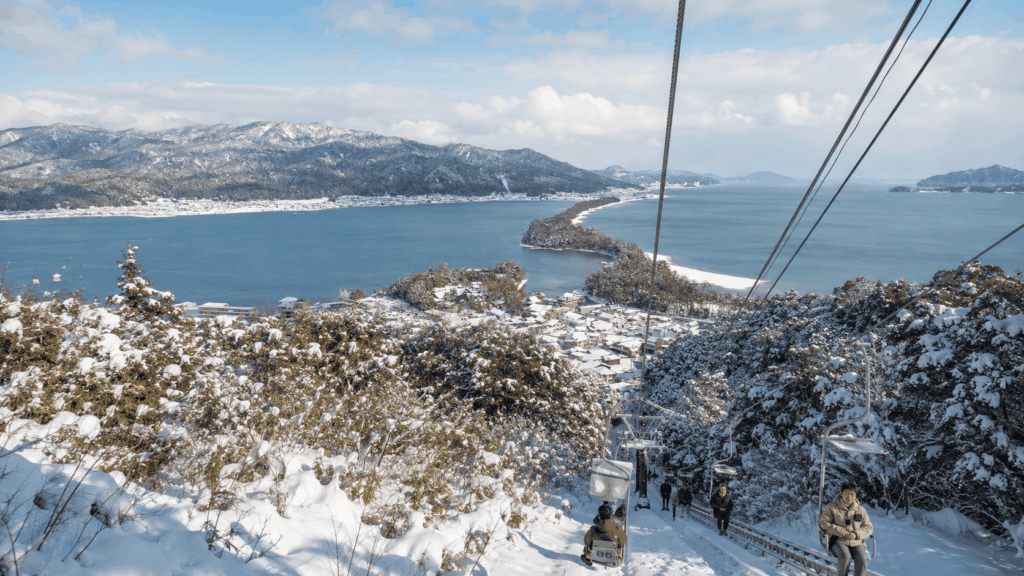
If you are still weighing options, pick your situation and take the recommendation that matches it:
| Traveler | Recommended | Why |
|---|---|---|
| Cheapest option | Chie-no-Yu | ¥800 and right next to the station, if you travel light. |
| Couple wanting privacy | Hotel Kitanoya private bath | Reservable, up to four people, no public nudity involved. |
| Traveler with tattoos | Hotel Kitanoya private bath | The hotel itself recommends the private bath for tattooed guests; confirm current conditions when reserving. |
| Large luggage | Amanohashidate Hotel | Front-desk storage, one minute from the station, zero from the bus stop — this made sightseeing with bags genuinely easy in my experience. |
| Best view | Amanohashidate Hotel | Outdoor bath overlooking the Aso Sea and the sandbar. |
| Staying overnight | Hotel Kitanoya onsen room | The only mainstream rooms here with private baths filled with real onsen water. |
| Very limited time | Amanohashidate Hotel | Walk in, store bags, soak, walk to the train — the whole loop is minutes from the platform. |
| Onsen-hopping as the trip itself | Consider Kinosaki Onsen instead | Amanohashidate is not a seven-bath town; Kinosaki is the better fit for that specific plan. |
Practical Onsen Tips for Foreign Visitors
You do not need a lecture on Japanese onsen culture — you need the few details that actually go wrong in Amanohashidate. These are the ones I have seen catch people out.
Leave Footwear Outside the Bathing Area
As described above, the changing-room floor is the boundary. Outdoor shoes stop at the entrance, slippers or setta stop at the dressing room, and the bathing area is barefoot. I once saw a guest start to walk from the changing room toward the bath still wearing slippers — not because they ignored the rules, but because nothing in the room layout told them the rule had started. If the floor changes under your feet, stop and leave the footwear behind.
Do Not Arrive in a Swimsuit or Covered in Sand
In summer, Amanohashidate’s beaches sit right next to its baths, and visitors sometimes try to combine the two. Chie-no-Yu’s official rules are clear: entry in a swimsuit is not permitted, and in practice I have seen staff turn away guests who tried to use the bath still sandy from the beach. After swimming, change fully, rinse off, and get the sand off before you head to any bathhouse — sand in a bath is unpleasant for everyone and the rules are enforced at the entrance.
Warm Up Indoors Before Using an Outdoor Bath in Cold or Windy Weather
The outdoor baths here sit close to the sea, and on windy days I have sometimes found the open-air water noticeably cooler than the indoor baths — the wind takes the heat off your shoulders faster than you expect. On cold or breezy days, take a few minutes in the indoor bath first, then step outside. You get the view and the open-air feeling without spending the first two minutes shivering.
Kai’s tip: this is the single most practical adjustment I can offer for the seaside baths here. Warm up inside, enjoy the outdoor bath in short bursts, and go back in if you feel cold — nobody is timing you, and the indoor-outdoor cycle is exactly how locals use these baths on windy days. A related mistake I see is planning the outdoor bath as the finale on a cold day and then skipping it entirely; doing it the other way around — indoors first, then outside — is far more comfortable.
How to Fit an Onsen Into an Amanohashidate Day Trip
Amanohashidate’s sightseeing — the View Land cable car and observation deck, Chionji temple, and the sandbar walk — is spread out enough that the bath is best placed at the end of the day, not the beginning. The default flow that works well:
- Sightseeing first: View Land / Chionji / the sandbar, in whatever order suits the weather.
- Onsen second: walk in, soak, dry off properly.
- Move on: back to the station or your accommodation, dry and relaxed.
Kai’s tip: if you are carrying luggage, do the onsen first or drop the bags first, not the sightseeing first. When I guided a group with large suitcases, we stored everything at Amanohashidate Hotel before heading out, then soaked on the way back — the bags waited for us and nobody dragged luggage around the sandbar. If you arrive by train or highway bus, treat luggage storage as step one and the bath as step two or three, and you will not have to choose between sightseeing and a soak.
If you are booking Kitanoya’s private bath, the timing works in reverse: the reservation is fixed, so plan the sightseeing around the bath time rather than the other way around, and add a buffer in case the walk or bus runs late.
For a fuller day plan around the sandbar, temples, and viewpoints — including how the onsen fits in without rushing — see our Amanohashidate itinerary guide. And if you are still deciding between a day trip and a stay, the next section is the honest version of that question.
Is It Worth Staying Overnight in Amanohashidate for the Onsen?
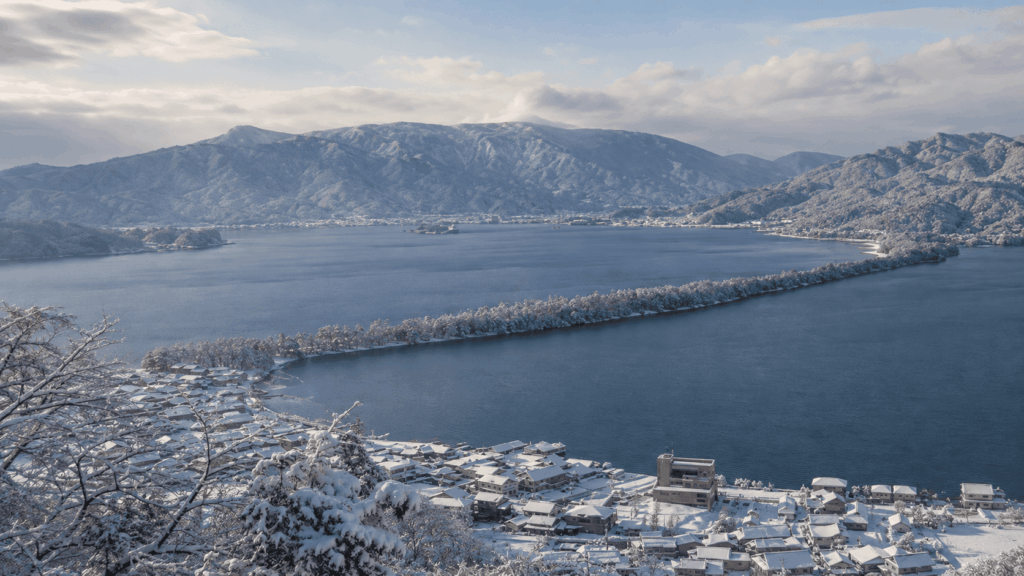
Honestly: if your only goal is a bath, no — a day trip is enough, and Chie-no-Yu or Amanohashidate Hotel will cover you. The case for staying overnight is different, and it is worth separating the two.
Staying makes sense when one of these is true:
- You want a private natural onsen in your room. Hotel Kitanoya’s onsen rooms are the mainstream option; Hoshi no Oto is the luxury version. No day-use bath can give you this.
- You want the view and the town after the day-trippers leave. Amanohashidate is noticeably quieter in the evening and early morning, and the sandbar looks different at sunrise than it does at noon (for the best spots, see our Amanohashidate sunset guide).
- You do not want to rush the soak to catch a train. The day-use hotels close their baths mid-evening, so a late soak means staying.
If the onsen is part of the experience rather than just a quick soak, staying overnight makes much more sense — and if a private natural onsen in your room is the deciding factor, compare the current private-onsen room rates before settling on a day trip.
The one case where I would point you away from Amanohashidate entirely: if your trip is defined by bathing — multiple outdoor baths, a full onsen town experience — then Kinosaki Onsen is the better destination, and it is worth the extra travel time. Amanohashidate is a sightseeing town with excellent onsen attached; Kinosaki is an onsen town. Both are good; they answer different questions.
FAQ
Can you visit an onsen in Amanohashidate without staying overnight?
Yes. Chie-no-Yu is a public bathhouse right beside the station (¥800, no luggage storage), Amanohashidate Hotel offers day-use bathing with towels and luggage storage (¥1,500, from 16:00 on Tuesdays), and Hotel Kitanoya’s reservable private bath can be used as a day guest with advance booking. All of these are day-use options, but hours and reduced-operation schedules change, so check the current month’s official information before you plan around them.
Is there a private onsen in Amanohashidate for couples?
Yes. Hotel Kitanoya’s reservable open-air bath Genbu-no-Yu is the main option: 50 minutes, ¥4,400, up to four people, bookable for day use without staying overnight. Chie-no-Yu also offers a 40-minute private rental from ¥5,000, booked through the local tourism association. If you want a private bath in your own room with real onsen water rather than a rental bath, Kitanoya’s onsen guest rooms are the option to look at.
Can I use an Amanohashidate onsen with tattoos?
It depends on the facility. Chie-no-Yu does not permit entry with tattoos. Hotel Kitanoya’s public bath also does not accept tattoos, but the hotel itself recommends its private bath for tattooed guests — reserve it in advance and confirm the current policy when booking. Amanohashidate Hotel does not state a tattoo policy publicly, so contact them directly before relying on it.
Which Amanohashidate onsen is closest to the station?
Chie-no-Yu is directly beside Amanohashidate Station, about a minute from the platforms. Amanohashidate Hotel is also roughly a one-minute walk from the station and directly in front of the highway bus stop. Hotel Kitanoya is about a seven-minute walk, with a free shuttle in the late afternoon. All three are walkable; the first two are essentially at the station.
Is Amanohashidate or Kinosaki better for onsen?
For sightseeing plus one good soak, Amanohashidate is the better fit — it is compact, convenient, and you can add a bath to a day trip without planning a whole itinerary around it. For onsen-hopping itself — several outdoor baths, an evening in a full onsen town — Kinosaki is the better destination. Amanohashidate is a sightseeing town with excellent onsen attached; Kinosaki is an onsen town. They answer different questions.
Final Verdict
Here is the honest summary, without the ranking gloss: Amanohashidate is not where you go for a bath-centered trip, and it is exactly where you go for a sightseeing day that ends in a genuinely good soak. Choose based on your friction points, not on which bath looks best in photos.
Choose Chie-no-Yu if you are traveling light, arriving by train, and want the cheapest local bath in town — ¥800, next to the platform, no frills. Choose something else if you have a suitcase, a car you need to park, or tattoos.
Choose Amanohashidate Hotel if you have luggage, you arrived by highway bus, or you want to soak with the sandbar in view and still catch your train. It costs more, but the luggage storage and the station-bus-stop position remove the two biggest logistical frictions of a day trip — this is the one I found myself recommending most often when guiding groups with bags.
Choose Hotel Kitanoya if privacy, couples, families, or tattoos are part of the decision. The reservable private bath is the clearest path to a private onsen in Amanohashidate without staying overnight, and if you do stay, its onsen-water guest rooms are the mainstream way to get a private natural onsen — which no day-use bath in town can offer.
For first-time visitors: keep it simple. Sightsee first, soak at the end of the day at Chie-no-Yu if you are light, or at Amanohashidate Hotel if you have bags — and check the current opening hours, because reduced-hour operation has been in place at times.
For families and couples: go straight to Hotel Kitanoya’s private bath and book it in advance. A 50-minute slot for up to four people removes the gender-separated, strangers-in-the-bath problem entirely, and the current-month calendar matters because the hotel closes on Wednesdays plus irregular dates.
For travelers with tattoos: do not rely on any public bath in Amanohashidate. Chie-no-Yu states it does not permit entry, and Kitanoya’s public bath does not either — its private bath is the recommended route, with current policy confirmed at booking time.
For travelers on a tight schedule: Amanohashidate Hotel is the whole loop in minutes — store bags, soak, dry off, walk to the platform. On Tuesdays, plan for the 16:00 opening, and on every other day, keep the bath before your train departure, not after.
For repeat visitors or onsen purists: if the trip itself is about bathing — multiple baths, a full onsen town evening — be honest about what Amanohashidate is not and consider Kinosaki Onsen instead. There is nothing wrong with choosing a different town for a different question.
Hi, I’m Kai. I’m a Tokyo-based travel writer, tourism industry insider, and the author of a published guidebook for international visitors to Japan. With over 10 years of professional experience at a leading Japanese tourism company, my mission is to help you skip the tourist traps and navigate Japan’s best destinations like a local. I believe the perfect day trip is like a traditional kaiseki meal: a beautiful balance of precise planning and unforgettable seasonal discovery. When I’m not out conducting field research, you’ll usually find me drafting new itineraries with one of my favorite fountain pens!