
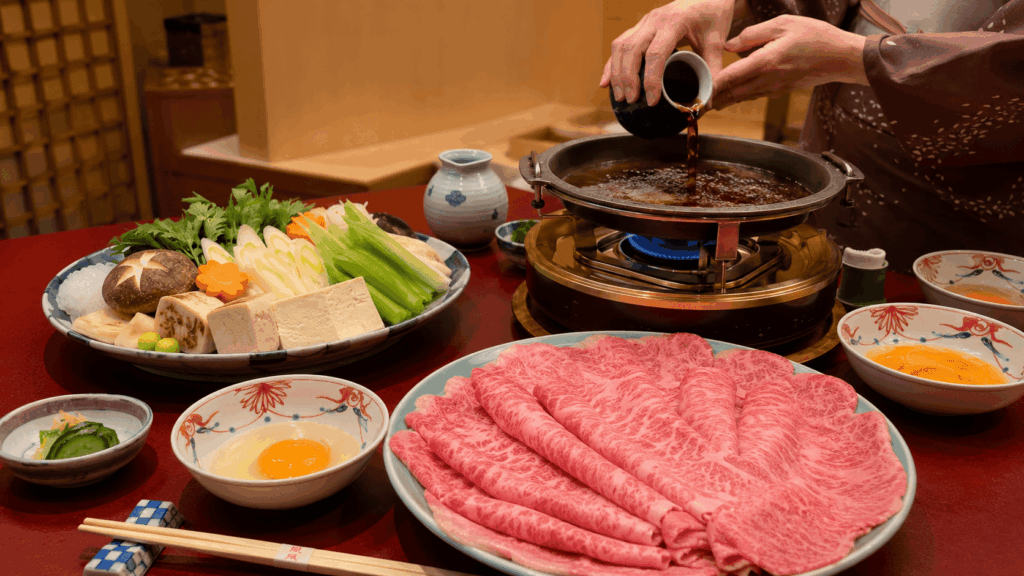
If you’re visiting Tokyo and want to eat sukiyaki — one of Japan’s great beef dishes — you’re making a smart choice. But with dinner prices at famous restaurants easily clearing ¥15,000 per person, and dozens of options from century-old institutions to casual chains, the hard part is knowing which restaurant is actually worth it for you.
This guide breaks down the best sukiyaki in Tokyo by budget, experience, and practical reality — who accepts reservations, who speaks English, who only takes cash, and who gives you the real deal without the tourist markup. Whether you’re a first-timer worried about raw egg or a seasoned visitor chasing value in a ¥3,000 bowl of history, you’ll find your answer here.
Quick picks: Choose Asakusa Imahan for a polished classic, Yonekyu Honten for old-school value, GOKU for solo dining, Ginza Rangetsu for a premium Ginza meal, and MO-MO-PARADISE for an easy all-you-can-eat group dinner. If sukiyaki history is your priority, Chinya is also worth comparing in Asakusa.
Quick booking note: If your Tokyo dates are fixed and you want a premium sukiyaki dinner in Ginza, Ginza Rangetsu is an easy high-end option to check first. You can see current start times, course options, and availability for the Ginza Rangetsu sukiyaki experience and compare them with direct booking before choosing.
What Is Sukiyaki? (And Should You Pick It Over Shabu-Shabu or Yakiniku?)
Before we get to the restaurants, let’s settle the question that shows up in every search: what makes sukiyaki different from shabu-shabu and yakiniku, and is it worth spending your one meal on?
| Dish | How It’s Cooked | Flavor Profile | Best For |
|---|---|---|---|
| Sukiyaki | Beef & vegetables simmered in warishita (soy sauce, sugar, mirin, sake) — a sweet-savory broth made from scratch | Rich, sweet, deeply umami | First-timers wanting a full-flavored beef experience; cold-weather comfort |
| Shabu-Shabu | Thin beef swished in a light kombu dashi broth, dipped in citrus ponzu or sesame sauce | Clean, delicate, lighter | Warmer months; those who prefer subtle flavors or lighter meals |
| Yakiniku | Beef grilled over charcoal or gas at your table, dipped in tare sauce | Smoky, savory, customizable | Social groups; those who want control over doneness |
Sukiyaki is the one to pick if: you want the beef’s richness amplified by a sweet-savory sauce that clings to every slice. It’s less about the purity of the meat (that’s shabu-shabu) and more about the marriage of beef, sauce, and that final dip in raw egg. The mistake I see first-time visitors make is assuming it’s “just a hot pot” — it’s actually one of Japan’s most technically precise tabletop dishes, and when done right, it’s unforgettable.
How Is Sukiyaki Served in Tokyo? (Kanto Style, Raw Egg & What to Expect)
If you’ve read about sukiyaki before, you may have heard there are two regional styles. Here’s what matters for your meal in Tokyo:
- Kanto style (Tokyo) — The warishita sauce is prepared in the kitchen and poured into the pot first. Beef, vegetables, and tofu simmer together in the pre-made broth. This is the dominant style in Tokyo restaurants.
- Kansai style (Osaka/Kyoto) — The pot is greased with beef fat first, slices are seared, and sugar & soy sauce are added directly. The meat is cooked before the broth goes in.
Most high-end sukiyaki restaurants in Tokyo serve Kanto style, though some (especially older establishments) blend elements of both.
What Actually Happens at the Table
Here’s a typical sequence so nothing surprises you:
- The server brings a pot with hot warishita broth already in it.
- They cook the first slice for you. In many traditional sukiyaki restaurants, a staff member will place the first piece of beef in the pot, let it cook in the bubbling sauce, and show you the timing for that cut.
- You dip the cooked beef into a small bowl of raw beaten egg before eating. The egg cools the beef slightly and adds a silky, rich coating.
- After the meat course, vegetables, tofu, and noodles go into the pot to soak up the remaining broth.
Kai’s tip: The raw egg is optional. If you’re not comfortable with it, simply skip it — the beef is delicious on its own. What surprises most travelers is that many high-end restaurants will happily serve the egg on the side. Also, in Kanto-style sukiyaki, the restaurant usually handles the first round of cooking themselves, so you don’t need to worry about ruining expensive wagyu on your first try. Just watch, learn, and take over when you’re ready.
Best Sukiyaki in Tokyo: By Budget, Experience & Practical Reality
The restaurants below are grouped into three price tiers. Each section tells you who it’s best for, who should skip it, and the practical details that make or break the experience for foreign visitors.
💰 Premium & Heritage (¥8,000–¥25,000+ per person for dinner)
This is where sukiyaki becomes an event — private tatami rooms, generations of craft, and wagyu that melts at the touch of chopsticks.
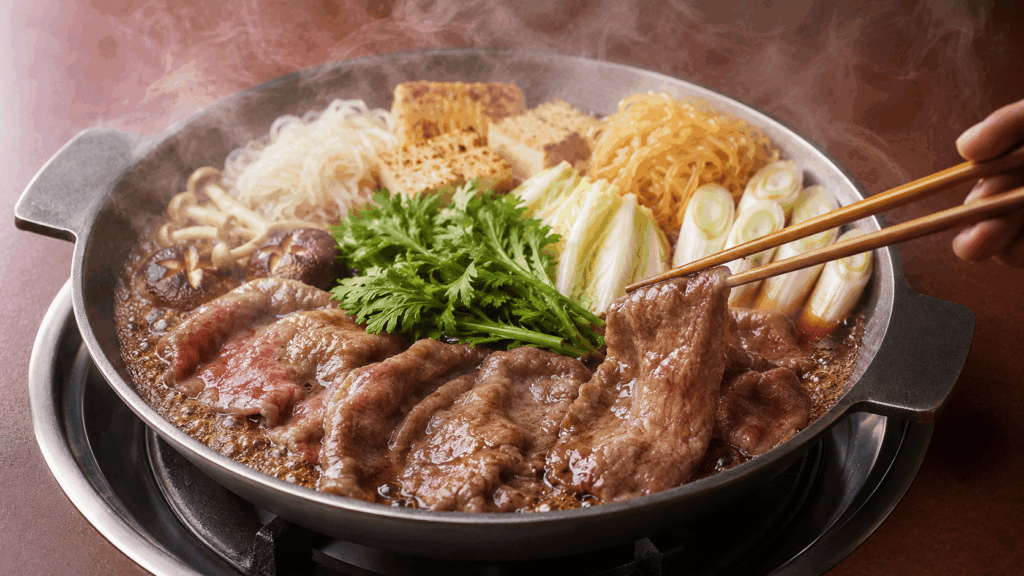
Asakusa Imahan (浅草今半) — Kokusai Street Head Restaurant
Area: Asakusa (next to Tsukuba Express Asakusa Station A2; about 10 min from Tobu Asakusa Station)
Style: Kanto-style sukiyaki, traditional Japanese interior
Lunch: Sukiyaki lunch ¥5,390; lunch kaiseki ¥8,250 / Grand-menu sukiyaki: from ¥9,680
English: English menu available / Reservation: Lunch menu = walk-in only; reservations available for qualifying grand-menu orders
Cards: Accepted
Service charge: 10% when spending more than ¥5,500 per person
Children: Guests under junior-high-school age are seated on the 1st floor rather than in private or special rooms
Asakusa Imahan is the grand dame of Tokyo sukiyaki. Founded in the Meiji era, this flagship restaurant on Kokusai Street serves impeccably marbled wagyu in elegant private rooms. The staff cooks the first slice tableside, explaining the process as they go — which makes it an excellent choice for first-timers who want the full experience without guesswork.
Best for: Travelers who want the classic “special occasion” sukiyaki experience near Senso-ji (perfect to pair with our perfect Asakusa half-day itinerary), with the option of a much more affordable lunch.
Skip if: You’re on a tight budget or prefer modern/casual settings.
Kai’s tip: The lunch set here is still the smartest move if you want the flagship experience for less. Lunch-menu reservations are not accepted, so arrive with some flexibility rather than planning around a fixed reservation time.
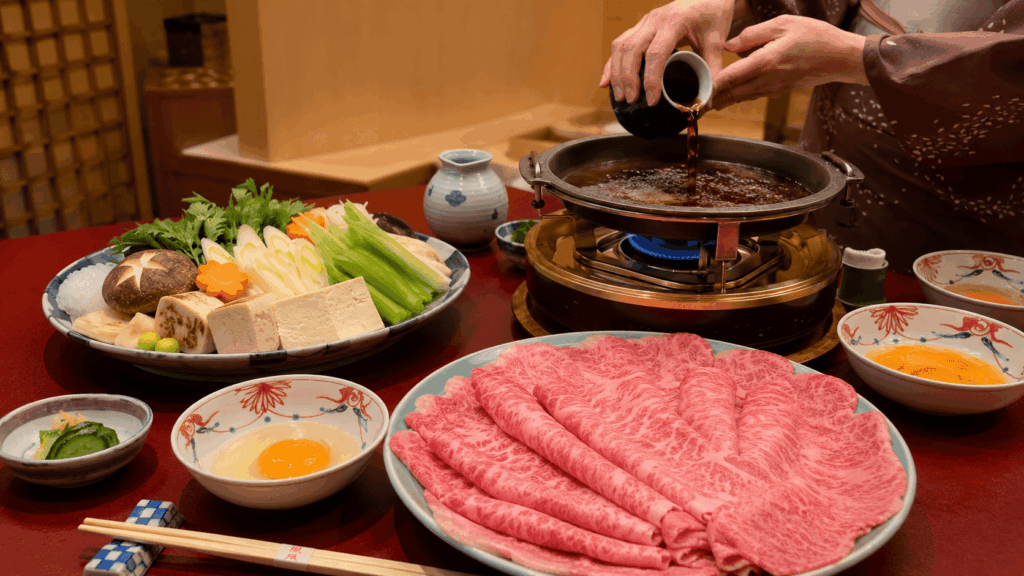
Ningyocho Imahan (人形町今半) — A Different Company, Multiple Locations
Area: Shinjuku Takashimaya 14F, Ginza, Yurakucho, Ningyocho, and others
Style: Kanto-style sukiyaki, modern to traditional settings depending on branch
Shinjuku Takashimaya example: Mini sukiyaki lunch ¥3,300 / Full sukiyaki from ¥9,900
English: English menu available at most branches / Reservation: Recommended (online via TableCheck)
Cards: Accepted
Service charge: 10% all day at the Shinjuku Takashimaya branch
Here’s the catch that trips up many visitors: Ningyocho Imahan is a completely separate company from Asakusa Imahan. Both trace roots to the same Meiji-era butcher tradition, but they’ve been independent for decades. Ningyocho Imahan operates numerous branches across central Tokyo, including a spectacular 14th-floor location inside Shinjuku Takashimaya Times Square with city views.
The quality is consistently high across branches, and their online reservation system (TableCheck) makes booking straightforward for English speakers.
Best for: Travelers staying in Shinjuku or Ginza who want reliable quality with easy online booking.
Skip if: You specifically want the historic, standalone flagship atmosphere of Asakusa Imahan.
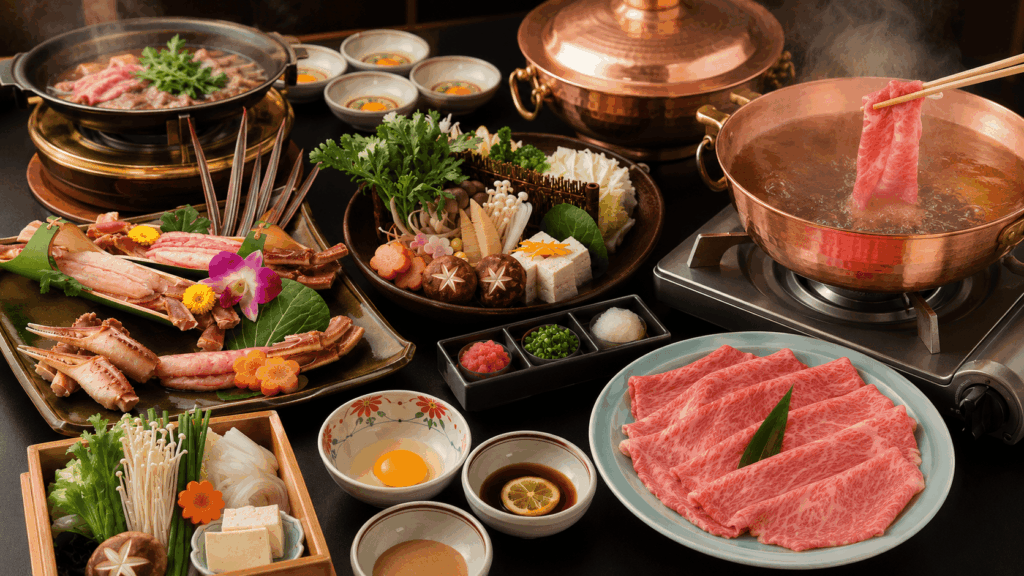
Ginza Rangetsu (銀座らん月) — English-Friendly Premium Option
Area: Ginza
Style: Premium sukiyaki & shabu-shabu
Lunch: Sukiyaki from ¥6,300 / Dinner: Sukiyaki from ¥10,000; set menus from ¥15,000
English: English menu and online booking available / Reservation: Direct online reservation available; GetYourGuide is an additional packaged-booking option
Cards: Accepted
Service charge: 10%
Ginza Rangetsu has been serving A5-grade wagyu since 1946, purchasing whole heifers to ensure consistent quality across all cuts. What makes this a standout option for international visitors is that the restaurant now provides an English menu and direct online booking, while reservation-inclusive packages remain available if you prefer to compare everything in English on one page.
Best for: Travelers who want a premium sukiyaki experience with the convenience of English booking and service.
Skip if: You’re looking for a historic, century-old atmosphere (Rangetsu is refined but not as heritage-focused as Imahan).
Chinya (ちんや) — Historic Asakusa Alternative
Area: Asakusa
Style: Historic sukiyaki restaurant, established in 1880
Price: Sukiyaki courses from ¥10,800
Reservation: Online reservation available
Service charge: 10% / Private room: +¥4,000 per room
Chinya describes itself as the oldest wagyu sukiyaki restaurant in Asakusa. Its signature teki-sashi approach favors moderately marbled aged wagyu rather than simply chasing the fattiest possible beef, which gives it a distinct reason to choose it over the other premium options here.
Best for: Travelers who care about sukiyaki history and want a refined Asakusa alternative to Imahan.
Skip if: You’re mainly looking for a budget lunch.
🥩 Traditional Gyunabe (¥3,000–¥5,000 per person)
This tier is Tokyo’s best-kept secret. Gyunabe (牛鍋) is the direct ancestor of modern sukiyaki — beef simmered in a soy-based sauce, born in the late 19th century when Japan opened to Western meat-eating culture. These restaurants have been running for over a century and serve a no-frills, deeply satisfying meal at a fraction of the premium-tier price.
Yonekyu Honten (米久本店) — Asakusa’s 1886 Gyunabe Legend
Area: Asakusa, Hisago-dori (about 3 min from Tsukuba Express Asakusa Station; about 9 min from Tokyo Metro/Tobu Asakusa)
Style: Traditional gyunabe (Kanto-style precursor to modern sukiyaki)
Price: Beef gyunabe ¥3,160 / Premium gyunabe ¥3,790
Hours: 12:00–21:00 (L.O. 20:00)
English: Limited (picture menu) / Reservation: Walk-in is the normal approach for individual travelers
Closed: Wednesdays
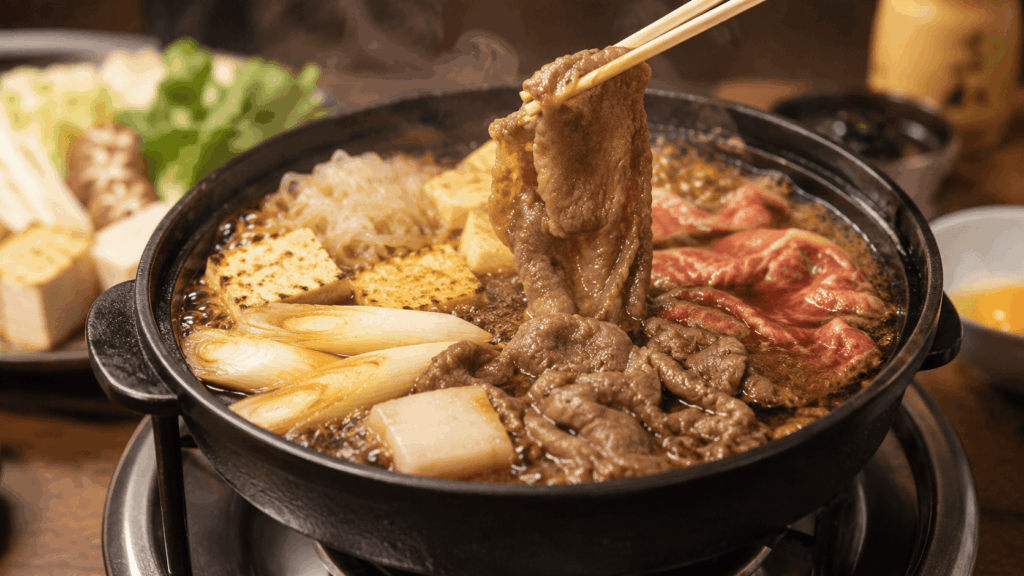
Walking into Yonekyu Honten is like stepping into a Meiji-era time capsule. The entrance is unassuming — just a noren curtain on a quiet street near Senso-ji. But the moment you step through, a staff member strikes a large taiko drum announcing your arrival. Every single guest gets the drum. It’s disarming, theatrical, and unforgettable.
The menu has exactly two main beef choices: regular gyunabe or the more heavily marbled premium gyunabe. The beef arrives in a cast-iron pot with bubbling warishita, alongside leeks, tofu, shirataki noodles, and a raw egg. A staff member shows you how to cook the first slice — just like the high-end places, but without the formal ritual and price tag.
Best for: Travelers who want authentic history, a fair price, and a memorable experience without formalities.
Skip if: You want a quiet, elegant atmosphere (it’s lively and rustic).
Kai’s tip: If you are mainly here for the beef, the standard option is still the simple order. Rice, miso soup, and pickles are ¥320 each, so you can add only what you actually want. The shop opens at noon, and queues can form before opening on busy days.
Sukiyaki Jyuniten (すき焼き 十二天) — Premium Sukiyaki Near Tokyo Station
Area: Marunouchi Brick Square (5-min walk from Tokyo Station)
Style: Modern Kanto-style sukiyaki
Lunch: Jyuniten lunch course ¥8,800 / Dinner: 15% service charge applies
English: English website available / Reservation: Online booking available; course reservations require at least 2 diners
Cards: Accepted
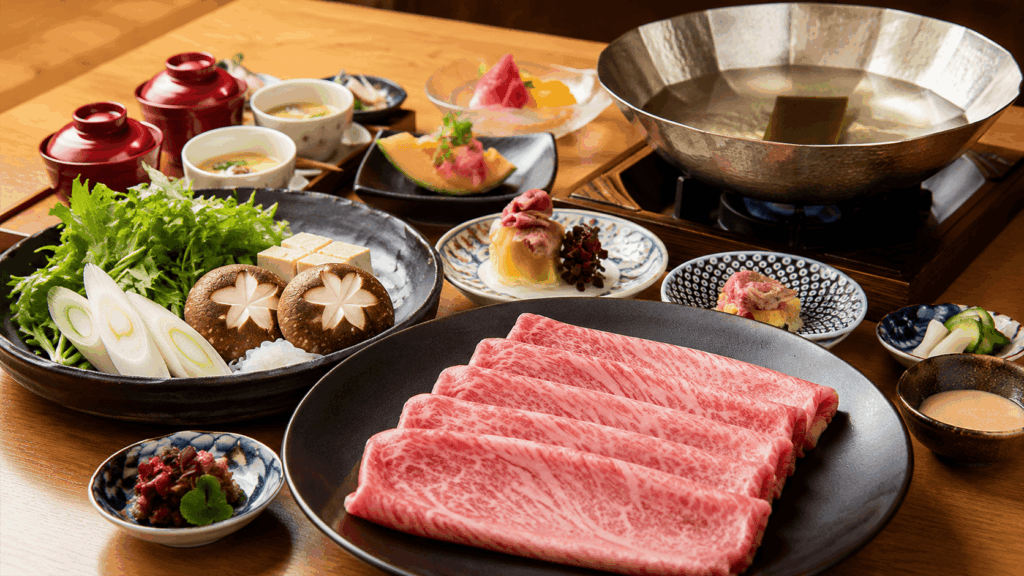
A lesser-known gem just steps from Tokyo Station, Jyuniten serves A5 wagyu sukiyaki in a calm, modern setting. Its sukiyaki and shabu-shabu courses require at least two diners, and the pot is shared rather than provided individually to each guest. Dinner also carries a 15% service charge. Private rooms cost ¥1,100 for 2–4 people, ¥3,300 for 4–6, or ¥5,500 for 8–12. (If you are stopping by during a transit layover with heavy bags, checking our Tokyo Station luggage storage guide beforehand will make your walk much easier).
Best for: Couples or groups with a layover or staying near Tokyo Station who want quality wagyu sukiyaki without the travel.
Skip if: You are dining solo, looking for a bargain lunch, or specifically want the atmosphere of a century-old restaurant.
Wagyu Sukiyaki GOKU (極) — Solo-Friendly Wagyu Across Tokyo
Area: Multiple Tokyo locations, including Ginza, Tsukiji, Asakusa, Shinjuku, Shibuya, Ueno, and Ikebukuro
Style: Modern counter-style sukiyaki, designed for solo diners
Price: 100g A5 wagyu set ¥4,600 / 150g ¥5,400 (rice, miso soup, egg included, free refills)
English: English menu available / Reservation: Walk-in friendly (reservations accepted)
Cards: Accepted
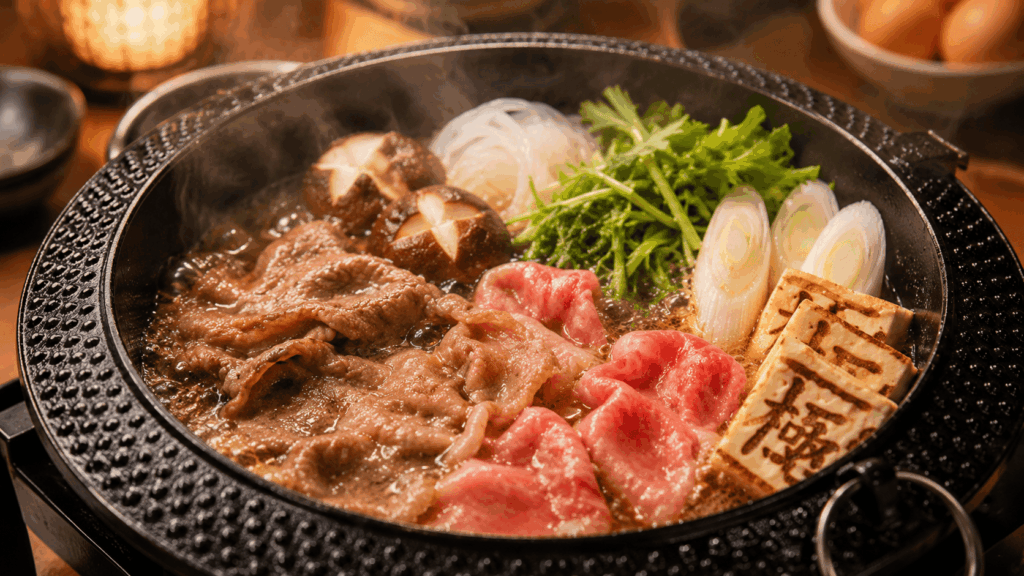
GOKU is a relatively recent addition to Tokyo’s sukiyaki scene, purpose-built for travelers dining alone or in pairs. Each seat has its own induction burner, and the set meal arrives with everything pre-portioned — no waiting, no complicated ordering. The 100g set includes A5 wagyu, vegetables, an egg with free refills, and unlimited rice and miso soup. For the quality-to-price ratio, it’s hard to beat.
Best for: Solo travelers, couples, or anyone who wants premium wagyu in a quick, casual format.
Skip if: You want the full traditional experience with tableside service and tatami rooms.
🍲 Casual & All-You-Can-Eat (prices vary by branch and meat grade)
Budget-friendly, family-friendly, and ideal for first-timers who want to try sukiyaki without committing to a high-end meal.
MO-MO-PARADISE — All-You-Can-Eat Chain (Formerly Nabezo at Many Tokyo Locations)
Area: Multiple locations (Shinjuku, Shibuya, Ikebukuro, Asakusa, Akihabara, etc.)
Style: All-you-can-eat sukiyaki & shabu-shabu
Price: At Shibuya Center-Gai, 100-minute all-you-can-eat courses currently run from ¥4,950 to ¥9,680 including tax; prices vary by branch and meat grade
English: English menu available / Reservation: Online reservations available; walk-in may be possible depending on branch
Cards: Accepted at most locations
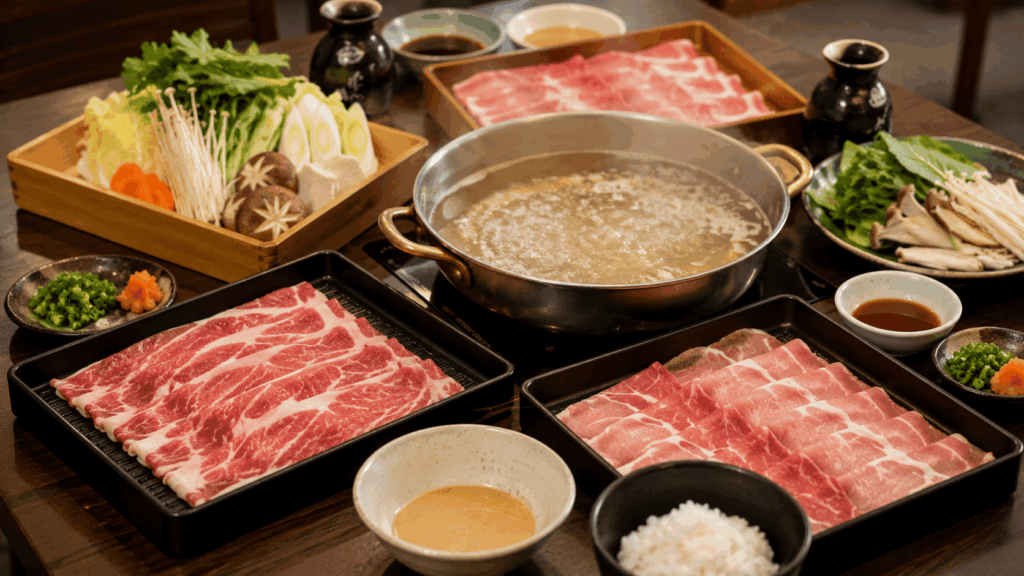
MO-MO-PARADISE is one of the most accessible entry points into sukiyaki for visitors who want a casual group meal. Current courses use a 100-minute all-you-can-eat format with meat plus a buffet of vegetables, noodles, rice, and desserts; higher tiers can include Japanese beef or A5 wagyu. The experience is easygoing and especially useful for groups.
Best for: Families, large groups, budget travelers, or anyone who wants to try sukiyaki casually.
Skip if: You’re specifically seeking premium wagyu or a traditional dining atmosphere.
Sukiyaki Restaurant Comparison Table
Use this table to find your perfect match at a glance.
| Restaurant | Area | Price (per person) | Style | English | Reservation | Cash Only? | Best For |
|---|---|---|---|---|---|---|---|
| Asakusa Imahan | Asakusa | Lunch sukiyaki ¥5,390 Grand-menu sukiyaki from ¥9,680 |
Premium heritage | ✅ Menu | Dinner recommended Lunch = walk-in |
❌ Cards OK | Special occasion near Senso-ji |
| Ningyocho Imahan | Shinjuku / Ginza / multiple | Shinjuku: mini lunch ¥3,300 Full sukiyaki from ¥9,900 |
Premium chain | ✅ Menu (most branches) | ✅ Online (TableCheck) | ❌ Cards OK | Easy booking, central locations |
| Ginza Rangetsu | Ginza | Lunch from ¥6,300 Dinner from ¥10,000 |
Premium wagyu | ✅ Staff | ✅ Online available | ❌ Cards OK | English service, Ginza location |
| Chinya | Asakusa | Courses from ¥10,800 | Premium heritage | ✅ Menu | ✅ Online | ⚠️ Check latest payment options | Sukiyaki history in Asakusa |
| Yonekyu Honten | Asakusa | ¥3,160–¥3,790 | Traditional gyunabe | ⚠️ Picture menu | ❌ Walk-in only | ✅ Cash only | History & budget near Senso-ji |
| Sukiyaki Jyuniten | Tokyo Station | Lunch course ¥8,800 | Premium convenience | ✅ Menu | ✅ Recommended | ❌ Cards OK | Tokyo Station area |
| Wagyu GOKU | Multiple Tokyo locations | ¥4,600–¥5,400 | Solo-friendly wagyu | ✅ Menu | Walk-in OK | ❌ Cards OK | Solo diners, quick meal |
| MO-MO-PARADISE | Multiple (Shinjuku, Shibuya, etc.) | Shibuya Center-Gai from ¥4,950 Varies by branch |
All-you-can-eat | ✅ Menu | Walk-in OK | ❌ Cards OK | Budget, groups, families |
Booking, English & Cash-Only: What You Need to Know
The practical details often make or break the experience for international visitors. Here’s the honest breakdown:
Reservations — Who Needs One and Who Doesn’t
- Asakusa Imahan (dinner) — Reserve ahead, especially for evenings and weekends.
- Asakusa Imahan (lunch) — Walk-in only. Arrive by 11:30 to avoid a long wait.
- Ningyocho Imahan — Reserve via TableCheck (English-friendly online system).
- Ginza Rangetsu — Direct online reservations are available; GetYourGuide is another option if you prefer a packaged booking in English.
- Yonekyu Honten — Walk-in is the normal approach for individual travelers. Arrive early at busy times.
- GOKU / Jyuniten / MO-MO-PARADISE — GOKU reservation availability varies by branch; Jyuniten and MO-MO-PARADISE offer online booking.
For more insider tactics on securing tables across the city without the headache, check out our guide to beating Tokyo restaurant reservation stress.
English Menus & English-Speaking Staff
All restaurants listed in this guide have at minimum an English menu — but the level of spoken English varies significantly. At Yonekyu Honten, expect limited English conversation (ordering is simple with the picture menu). At Ginza Rangetsu, English-speaking staff are available. At most other listed restaurants, the staff can handle basic ordering and allergy questions in English.
Cash-Only Trap
This is the most practical payment trap in this guide. Current listings show Yonekyu Honten does not accept cards, e-money, or QR payments. Convenience-store ATMs are available around Asakusa, so withdraw cash before arriving. The other main restaurants in this guide accept major credit cards.
Kai’s tip: For online booking, Ningyocho Imahan uses TableCheck, Ginza Rangetsu now offers direct online reservations as well as GetYourGuide packages, and Jyuniten offers online booking. GOKU availability varies by branch, while Yonekyu is still simplest as a walk-in.
Dietary Notes: Halal Sukiyaki & Other Restrictions
Standard sukiyaki uses soy sauce, mirin, sake, and sugar — it is not halal-certified at most restaurants because the sake (alcohol) content and sourcing of the beef are not guaranteed. However, halal-friendly options do exist:
- HALAL Diyafa (Shibakoen / Tokyo Tower area) — Uses halal wagyu plus halal-only ingredients and seasonings; a private prayer room and Wudu facilities are available. The lunch sukiyaki course is ¥12,000; sukiyaki sets are ¥13,000 for 120g, ¥15,000 for 150g, and ¥17,000 for 180g, with tax and service charge included.
- Some food tour operators also offer halal sukiyaki experiences with a guide.
If you have celiac disease or gluten intolerance, note that standard warishita contains soy sauce, which commonly contains wheat. Contact the specific restaurant before booking rather than assuming it can prepare a gluten-free version.
Common Questions About Sukiyaki in Tokyo (FAQ)
Is the raw egg safe to eat in Japan?
Raw egg is commonly served with sukiyaki in Japan, but it is not risk-free. Tokyo food-safety guidance advises pregnant people, very young children, older adults, and people with weakened immune systems to avoid raw egg; if you are uncomfortable with it, you can simply leave it on the side.
Can I eat sukiyaki alone as a solo traveler?
Yes, and some restaurants are specifically designed for solo diners. Wagyu Sukiyaki GOKU now has multiple Tokyo locations and uses counter-style seating with individual burners, making it one of the easiest options for one person. At traditional places like Yonekyu Honten or Asakusa Imahan, solo diners are also welcome, though the atmosphere may feel more group-oriented.
Is sukiyaki gluten-free?
Standard warishita broth usually contains soy sauce, and conventional Japanese soy sauce commonly contains wheat — so sukiyaki is generally not gluten-free. If you need strict gluten avoidance, contact the specific restaurant before booking rather than assuming a substitution is possible.
How much does sukiyaki cost in Tokyo?
You can still eat sukiyaki in Tokyo for roughly ¥3,000–¥4,000 at an old-school gyunabe restaurant, while premium heritage meals can run well above ¥20,000 per person. Casual wagyu sets and premium lunch options generally sit between those extremes; always check whether a quoted price is a compact lunch, a full sukiyaki meal, or a multi-course dinner.
What should I wear to a sukiyaki restaurant?
For traditional places like Asakusa Imahan, smart casual is fine — no need for a jacket or formal wear. Avoid strong perfume or cologne (it interferes with the aroma of the beef). At Yonekyu or casual chains, regular tourist clothes are completely fine. Many high-end sukiyaki restaurants in Tokyo require you to remove shoes before entering (tatami rules), so wear socks without holes.
Is there a vegetarian or vegan version of sukiyaki?
No, sukiyaki is fundamentally a beef dish. While some restaurants offer sukiyaki-style hot pots with pork or chicken, the traditional dish is defined by thin-sliced beef cooked in warishita. For plant-based travelers, we highly recommend browsing our complete Tokyo vegan and vegetarian guide to find dedicated dining options instead.
Final Verdict: Which Sukiyaki Experience Should You Choose?
There’s no single “best” sukiyaki in Tokyo — only the best one for your budget, companions, and comfort level. Here’s how to decide:
Whichever you choose, sukiyaki is one of those meals that stays with you — not just the taste of the beef in that sweet-savory broth, but the rhythm of cooking it yourself, the dip in egg, and the moment you realize this is what Japanese comfort food tastes like at its best.
Hi, I’m Kai. I’m a Tokyo-based travel writer, tourism industry insider, and the author of a published guidebook for international visitors to Japan. With over 10 years of professional experience at a leading Japanese tourism company, my mission is to help you skip the tourist traps and navigate Japan’s best destinations like a local. I believe the perfect day trip is like a traditional kaiseki meal: a beautiful balance of precise planning and unforgettable seasonal discovery. When I’m not out conducting field research, you’ll usually find me drafting new itineraries with one of my favorite fountain pens!