
A realistic one-day Takachiho Gorge itinerary is the gorge and Takachiho Shrine, with Amanoiwato and Amanoyasukawara added if you have a car and enough daylight. Stay overnight for the evening Kagura performance, an early boat slot or a dawn visit to Kunimigaoka. Aso and Takachiho together need a separate, longer plan.
The mistake I see most first-time visitors make is treating Takachiho like a convenient pit stop. It’s not. Getting there takes deliberate planning, and the difference between a great day and a frustrating one comes down to two decisions you need to make before you leave home: how you will travel, and whether you will stay the night.
Want Aso and Takachiho in one day without driving?
Compare this Kumamoto-based private tour if you want the long transfers and English guiding arranged together. Check your party size, pickup and boat arrangements before choosing a date.
This guide contains affiliate links. One Day Away may earn a commission if you book through them, at no extra cost to you.
Plan your visit: Quick verdict · Choose your plan · One day by car · Without a car · Guided tour comparison · Stay overnight · Boat reservations · Gorge walk · Seasons · FAQ
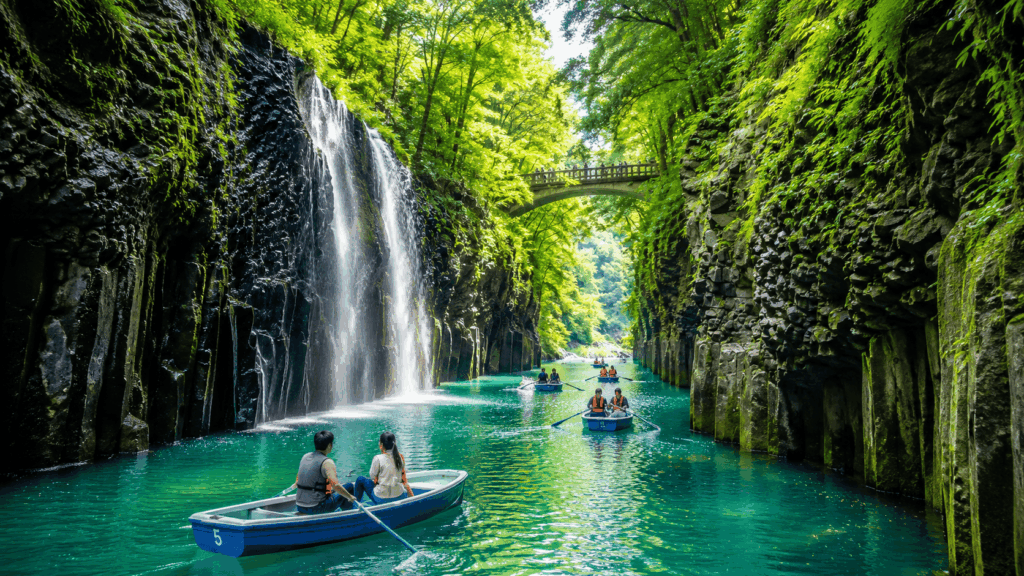
Takachiho Gorge at a Glance: Is It Worth the Trip?
Yes, if the journey fits the rest of your Kyushu itinerary. Manai Falls drops about 17 meters into a narrow gorge framed by dark basalt columns. You can see the waterfall from land without boarding a boat; rowing beneath the cliffs is an additional experience, rather than the entrance ticket to the whole destination.
Takachiho is in the mountains of northern Miyazaki. There is no passenger railway bringing you into town, and the sightseeing railway is an attraction, not an arrival route. The gorge, shrines and viewpoints are separate stops. That geography matters more to your day than the length of the boat ride.
- Best for: travelers interested in landscape, Japanese mythology, photography and a slower rural stop between Kyushu’s larger cities.
- Allow: roughly two to three hours around the gorge for walking, photographs and a reserved boat ride, with extra time for parking, meals or queues. A fuller local sightseeing day needs more.
- One day works: with a focused route and a confirmed way back. Public-bus visitors should choose fewer sights than drivers.
- One night adds: an evening performance, dinner without a return-bus deadline and the possibility of an early start the next morning.
- Check carefully: stairs, slopes, boat access and walking surfaces if anyone in your group has limited mobility. A vehicle does not remove the final walking at each stop.
If you are still deciding whether the detour belongs in your trip at all, start with our honest assessment of whether Takachiho Gorge is worth it. This page concentrates on making the visit work once you have decided to go.
Two Decisions Before You Build Your Takachiho Itinerary
Decision 1: Day Trip or Overnight?
Choose a day trip if the gorge is your main goal and you are comfortable leaving other sights for another visit. Choose an overnight stay if the evening Kagura or dawn at Kunimigaoka is important. Those experiences happen outside the useful sightseeing window of the intercity return buses.
You do not have to do every attraction for the journey to be worthwhile. A relaxed gorge visit, lunch and a shrine can make a better day than racing through four places while worrying about a boat time or the last bus.
Decision 2: Drive, Use Public Buses or Join a Tour?
| Plan | What it suits | Main limitation |
|---|---|---|
| Car, local sightseeing day | Gorge, Takachiho Shrine and an afternoon around Amanoiwato; optional viewpoint | Parking, mountain roads, walking and a realistic return time remain your responsibility |
| Public bus | Gorge and town-center sights on a smaller budget | The actual arrival and return services decide your usable time |
| Kumamoto-based Aso–Takachiho tour | Two regions in one day, English explanation and transport arranged together | It follows its own route; it is not the local shrines itinerary below |
| Overnight in Takachiho | Kagura, an early gorge visit and a possible dawn viewpoint outing | You still need to arrange travel between the scattered sights |
For drivers, think in terms of a substantial mountain excursion from Kumamoto and a longer outing from Fukuoka. Check a live route from your actual hotel to the parking area, add stops and congestion, and work backward from your desired arrival. Neither a city name nor a short straight-line distance tells you the door-to-door driving time.
Do the same with the return. A route that looks comfortable before breakfast may feel very different after walking, a long lunch and several shrine stops. If an early boat appointment is essential, collecting a rental car that same morning may be too late.
Option A: A Realistic One-Day Takachiho Itinerary by Car
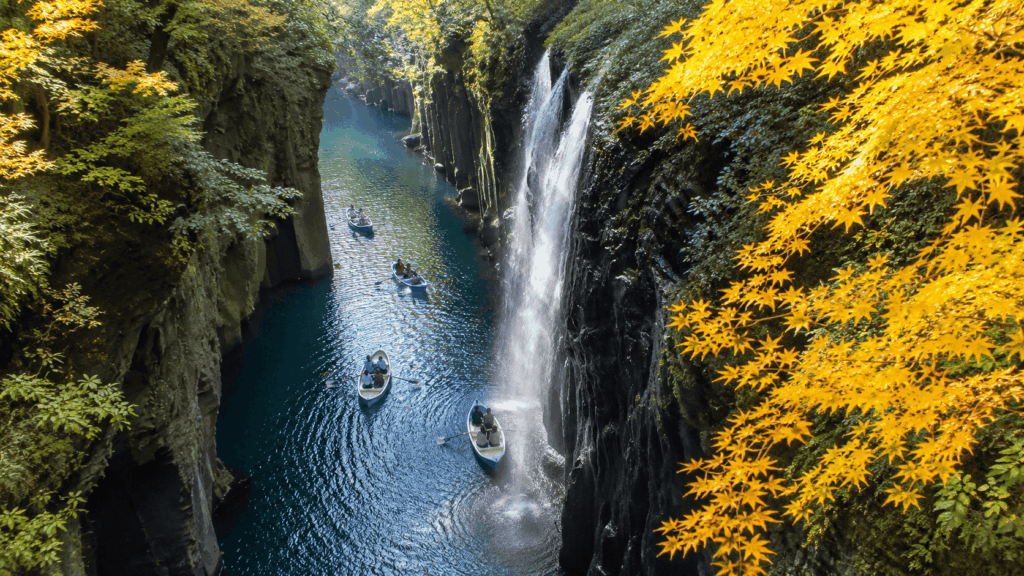
This is a local Takachiho sightseeing plan, not a promise that every stop fits any departure city. Aim to be in the gorge area around 9:00–9:30, or earlier if your confirmed boat appointment requires it. Travelers already staying nearby have a clear advantage over people collecting a car in a distant city that morning.
| Approximate time | Plan | Keep flexible |
|---|---|---|
| 9:00–11:30 | Park, walk to the gorge, check in for a reserved boat and explore the open paths | The 30-minute ride does not include parking, reaching reception or boarding |
| 11:30–12:30 | Lunch near the gorge or in town | Choose a quicker meal if there is a queue |
| 12:30–13:15 | Takachiho Shrine | Allow time to return to the car, not just time in the grounds |
| 13:30–15:15 | Amanoiwato Shrine and the walk to Amanoyasukawara | Guidance times, walking pace and wet steps can lengthen the stop |
| After 15:15 | Optional Kunimigaoka viewpoint, or begin the return journey | Skip the viewpoint if visibility, daylight or your energy is poor |
These are planning allowances, not opening hours or guaranteed transfer times. A late arrival should shrink the route. Do not keep every afternoon stop and sacrifice the return-drive margin to compensate.
Morning: The Gorge and a Reserved Boat Ride
Start with the task that has a fixed appointment. If you have a boat reservation, leave enough time to find parking, reach reception and meet the arrival instructions in your confirmation. If you have no reservation, check the official same-day notice before heading for the ticket desk.
The boat reception is in the P1 Oshioi parking area; the boat landing is a separate stage of the visit. A boat reservation does not reserve a parking space. When attendants direct you to another lot, the extra walk is part of the schedule.
| Parking area | Published charge | What to allow for |
|---|---|---|
| P1 Oshioi | ¥1,000 | Boat reception is here; spaces are not reserved for boat customers |
| P2 Araragi | ¥1,000 | Official guidance gives about 15 minutes on foot to the boats |
| P3 Ohashi | ¥800, with the first 60 minutes free | About 20 minutes on foot to the boats; do not treat it as free parking for a full visit |
| P4 Oshikata | ¥500, with the first 60 minutes free | About 25 minutes on foot to the boats |
The published paid period for P3 and P4 is 8:00–17:00. Walking estimates are not an accessibility guarantee and do not include crowds, rests or any diversion. Check the official parking information and follow local directions rather than circulating endlessly for the closest space.
The rowboat outing lasts 30 minutes. Prices are shown on a date-specific calendar, so use your actual day rather than an old weekday-versus-weekend formula. Treat the ride as one part of the morning, with time left to enjoy the waterfall from above.
Kai’s tip: If you booked a morning slot (ideally the first one around 8:30), you’ll arrive at the waterfall before the logjam of boats forms. Most people show up around 10:00–11:00 and queue for their turn, which means the area directly in front of the falls becomes a congested knot of rowboats jostling for photos. Ride early, or time your slot for 12:00–13:00 when half the crowd breaks for lunch — the waterfall clears out noticeably.
That is a preference about timing, not a guarantee of an empty gorge. If your trip involves a long drive, a comfortable arrival for a later confirmed slot is better than an unrealistic dash for the first boat.
After the ride, explore the signed open walking route. The land view reveals the basalt walls and the shape of the gorge in a way that is different from the water. You can enjoy that view even if the boats are full or not operating.
Kai’s tip: Most people walk as far as the waterfall viewpoint, snap a photo, and turn back. Keep going past that point. Within two minutes the path empties almost completely, and the gorge opens into a quieter, more contemplative stretch. This is where you feel the scale of the place without the crowd noise — and honestly, this section is what makes the walk worth doing even if you’ve already been on the water.
Apply that advice only to paths that are open to visitors. Follow barriers and current route notices; a quieter-looking section beyond a closure is not an invitation to continue.
Lunch: Nagashi Somen and Local Specialties
Nagashi somen is the playful option: thin wheat noodles travel along a bamboo channel and you catch them with chopsticks. It is especially appealing in warm weather, but it is not simply a May–September attraction. Chiho no Ie’s current official page lists year-round operation, subject to weather-related changes.
The listed hours for its somen restaurant are 10:00–16:00, with last orders at 15:30, and customers are served in arrival order rather than by advance restaurant reservation. A popular lunch stop can still involve a queue. If the rest of your afternoon matters more than the noodle experience, choose a quicker meal.
Other choices include Takachiho beef, chicken nanban, noodles and local set meals. Beef dishes and full restaurant meals can cost considerably more than a simple lunch, so check the actual menu rather than treating every option as the same budget. Our Takachiho food guide explains the dishes and meal choices in more detail.
For a substantial lunch, look for a beef rice bowl or a set meal; chicken nanban offers fried chicken with a tangy dressing and tartar sauce. A noodle meal can leave more time for the afternoon walk. With dietary restrictions, ask about broth and sauces as well as the main ingredient, rather than assuming a plain-looking dish suits every diet.
Bring water and keep a small snack for delays, especially with children. Eat in an appropriate rest or dining area, take litter away and leave shrine approaches and the boat queue clear.
Afternoon: Takachiho Shrine, Amanoiwato and a Viewpoint
Takachiho Shrine is a worthwhile first stop after the gorge. Its cedar-filled grounds and the Meoto Sugi, or Married Couple Cedars, make a quieter change of pace. This is also the location of the regular evening Kagura performance, but a daytime shrine visit does not include an evening seat.
Amanoiwato Shrine and Amanoyasukawara deserve a proper block of the afternoon. The sacred Amanoiwato cave lies across the valley from the West Shrine, and a shrine-led explanation takes visitors to the viewing area. It is a view toward the sacred cave, not a tour inside it. Follow the shrine’s photography instructions.
The story behind the landscape is the legend of the sun goddess Amaterasu retreating into a cave, leaving the world in darkness. Amanoyasukawara is associated with the gathering of the gods to discuss bringing her out again. Knowing that connection gives the shrine and the riverside walk more meaning than treating them as two unrelated photo stops.
Amanoyasukawara is a separate riverside cave sanctuary reached on foot from the West Shrine area. Do not confuse the two caves or assume a car can take you to the sanctuary entrance. The official shrine guidance warns of steps, slippery sections and no streetlights; this is a daylight outing and is not a wheelchair or stroller route.
Use the shrine parking and the signed approach. A navigation pin at a nearby shop does not establish a lawful parking place or a shortcut down to the river. Allow for the return walk, not just the walk to the sanctuary.
Kunimigaoka is the optional last stop, rather than an obligation. The 513-meter viewpoint looks over the Takachiho basin and surrounding mountains. In ordinary afternoon light it is a landscape stop; the famous sea of clouds is a different, weather-dependent dawn experience.
One mistake I see drivers make: they rush through the shrine stops to “save time,” then end up with an extra hour at the end with nothing planned. Give the places you actually want to visit enough time, and drop an extra stop if parking or lunch runs long. Finishing Amanoiwato in daylight and driving back without pressure is more useful than completing a checklist.
If You Have Extra Time: Amaterasu Railway or Mount Aso
Amaterasu Railway works best as a replacement for one afternoon stop. Its open-air Grand Super Cart crosses the high railway bridge on a roughly 30-minute round trip. Add ticketing and waiting time; the ride itself is not an hour, but the overall visit can take longer than half an hour.
The operator currently sells tickets on the day and does not accept advance reservations for the cart. Strong wind or rain can change or cancel the outing. Check the railway’s official visitor information before making a particular departure the hinge of your day. It is a sightseeing attraction, not a train connection to the rest of Kyushu.
Mount Aso needs a different itinerary. Do not finish the gorge, visit all the local shrines and then treat Kusasenri and the crater as a quick 30–40-minute add-on. The Aso area is large; the exact destination, mountain-road conditions and stops determine the journey.
If you want both regions in one day, prioritize Aso and the gorge, reduce the local shrine circuit and accept that crater access can change. A car or a suitable combined tour offers more control over the long transfers. The tour comparison below is for that combined day, not for fitting every attraction on this page into one booking.
Before Booking a Rental Car
For the local plan above, a car is valuable because it connects scattered stops and lets you change the route. Compare the total for your group: rental, fuel, any tolls, parking, insurance choices and a realistic return time. Check the supplier’s required driving documents and branch hours before paying.
Kumamoto is a useful pickup base for this article’s driving plan. A Kumamoto city search is not a guarantee of pickup at your hotel, Kumamoto Station or the airport: select the actual branch. If you need an early start, consider collecting the car the previous day.
Prefer to follow the local route at your own pace? Compare Kumamoto pickup locations, branch hours and the total rental price before fixing your departure.
In cold weather, ask about winter equipment for your route rather than assuming a Kyushu rental includes it. If you are uncomfortable with mountain roads or possible ice, choosing a driver or reducing the route is more sensible than building an ambitious winter drive.
Option B: One Day in Takachiho Without a Car
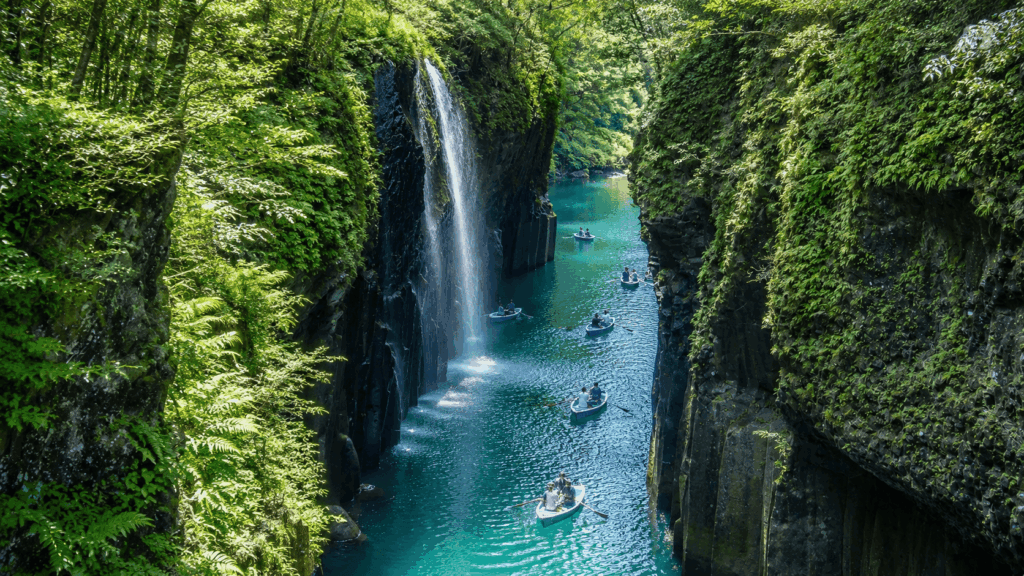
A carless visit is possible. The practical limit is the timetable, not a lack of things to do. Start with your arrival and reserved return, subtract the walk or taxi to the gorge, and only then decide which sights fit. Our Takachiho bus guide is the companion page for transport planning.
Do not plan a loose chain of local buses between the gorge, Amanoiwato and Kunimigaoka without checking every connection. A taxi can help, but a taxi waiting when you need it, a fixed fare and an instant return pickup are not guaranteed. If it is essential, arrange it in advance.
Sample Bus Itinerary from Kumamoto
The operator’s currently published direct timetable shows Kumamoto Station 9:11 → Takachiho Bus Center 12:19, with the return 16:57 → Kumamoto Station 19:58. Those times give 4 hours 38 minutes between arrival and departure, before walking, lunch and a boarding buffer.
The adult one-way fare from Kumamoto Station to Takachiho is ¥3,100 from November 1, 2026, or ¥6,200 for two one-way journeys. Boat rental, meals and any local taxi are separate. Confirm the current direct-bus timetable and fare table and reserve the required journeys for your date.
| Time | Suggested use |
|---|---|
| 12:19 | Arrive at the Bus Center, use facilities and check the return boarding point |
| Around 12:25–13:05 | Reach the gorge; allow roughly 30–40 minutes on foot, or use a taxi you have arranged |
| Around 13:05–14:30 | Gorge views and walking; a boat only if its confirmed slot and check-in instructions fit |
| Around 14:30–15:15 | Lunch, or a shorter snack if the boat schedule has used the buffer |
| After 15:15 | Return toward town; include Takachiho Shrine only if walking pace and time allow |
| By about 16:30 | Be back at the Bus Center with margin for the 16:57 departure |
The sightseeing blocks are editorial allowances, not a reserved sequence. Walking back uphill can take longer than walking down. If the bus arrives late, shorten lunch or skip the shrine; do not make the final connection depend on an immediate taxi.
Do not reserve a boat at the same time your intercity bus reaches town. Arrival at the Bus Center is not arrival at boat reception. If the ride is the non-negotiable part of the trip, an overnight stay offers more breathing room than a tightly timed bus afternoon.
Sample Bus Itinerary from Fukuoka
The published Gokase service offers a useful example: Hakata Bus Terminal 8:25 → Takachiho Bus Center 11:41. Returning at 16:37 gives about 4 hours 56 minutes in town and reaches Hakata at 19:51; the later 18:37 return gives about 6 hours 56 minutes and reaches Hakata at 21:51.
Confirm these against the operator’s current Gokase timetable and booking page. Fares vary by travel date, and both the outward and return seats matter. This is roughly six and a half hours on intercity buses for the round trip, plus your local walking and waits.
- Late morning: arrive, then make your way to the gorge rather than adding a distant shrine first.
- Midday: walk the gorge and have lunch. Include a boat only when the booked slot fits the arrival allowance.
- Afternoon: see Takachiho Shrine. Choose the earlier return if that is enough; the later one provides a larger sightseeing buffer.
- Before dusk: return from the gorge and any unlit riverside path. A later intercity bus does not make those paths an evening sightseeing route.
The later return is still before the regular 20:00 Kagura performance, so it does not turn the performance into a public-bus day trip. Also check how you will reach your Fukuoka hotel after the bus arrives; do not add a tight flight connection to the end of this day.
What About the Bus Between Aso and Takachiho?
There is an Asochiho bus link; it is inaccurate to say no direct bus connects the areas. The timetable introduced on October 1, 2026 includes Aso Station 9:05 → Takachiho 11:13 and a last published return from Takachiho at 15:29, reaching Aso Station at 17:39.
That is a possible focused Takachiho outing from an Aso base, not an easy way to add leisurely sightseeing around Aso, a crater visit, a boat and all the Takachiho shrines in one day from Kumamoto. Check the Asochiho timetable and every onward train or bus. Fewer changes or a night in one of the destinations may give you a better trip.
When a Guided Tour Is the Better Choice
A guided trip is most useful when you want more than the public-bus window comfortably allows, and the actual advertised route matches your priorities. The Kumamoto-based option here combines Aso, the gorge and other stops on its own itinerary. It should not be sold as the car plan above with a driver added.
The linked GetYourGuide product is From Kumamoto: Aso & Takachiho Private All-inclusive Tour. At the November 2026 check, the page listed a ten-hour day, English guiding and Kumamoto pickup, with transport, an Akaushi beef lunch and Aso Volcano Museum admission included. Personal expenses and tips were excluded.
There are two important checks before comparing its price. First, select your real party size: the listing’s participant field showed a two-person limit, so a larger family should ask about a suitable option rather than assume one booking covers everyone. Second, read the boat arrangement. The description discusses boating, but the inclusion list alone does not settle who reserves the slot, whether its fee is included or what happens if the boats cannot run.
Also distinguish Kamishikimi Kumanoimasu Shrine, mentioned in this combined route, from Amanoiwato Shrine in the local Takachiho plan. They are different destinations. Do not expect Amanoiwato, Amanoyasukawara or Kunimigaoka to be included unless the provider confirms them for the selected itinerary.
| Your priority | More suitable starting point | Check before committing |
|---|---|---|
| Gorge and town-center shrine, lowest transport spend | Public bus and a focused walk | Return seats, walking time and a boat slot that fits |
| Amanoiwato and several local stops at your pace | Car or a specifically confirmed local private arrangement | Driver, parking, daylight and any booked activities |
| Aso and Takachiho in one organized day | The Kumamoto combined guided trip | Party size, pickup, included stops, boat terms and cancellation deadline |
| Evening Kagura and an early viewpoint | Overnight locally, with separate transport planning | Accommodation, evening meal and dawn transport |
Do not compare a displayed per-person tour price with the cost of an entire rental car as though they use the same unit. Enter your group size, add the car’s extra costs and consider what guiding and an included meal are worth to you.
Kai’s tip: If you’re going without a car and want to see more than just the gorge, budget for a tour. Price the actual tour against your whole group’s car and travel costs, rather than assuming every tour costs about the same as a day’s rental. Confirm who arranges the boat, whether its fee is included, and what happens if boats cannot operate.
For a combined Aso–Takachiho day, with transport arranged
If the long transfers are the part you want to hand over, compare this option against the two-bus plan and the total cost of driving.
- One coordinated route: the advertised day combines Aso and Takachiho rather than requiring you to assemble each transfer.
- English explanation: a guide can add context to the landscape and mythology.
- Included meal and museum: an Akaushi beef lunch and Aso Volcano Museum admission are listed in the package.
Before booking, select your actual party and confirm pickup, boat terms, walking requirements and the cancellation deadline.
The booking page’s cancellation deadline may be less flexible than another tour’s: at the November 13, 2026 check it showed a five-day cutoff for a full refund. Confirm your selected terms, especially if you intend to decide only after seeing a close-range weather forecast. A tour also cannot guarantee crater access, a clear mountain view or operating boats.
A Shared-Tour Alternative
If the private option does not suit your budget or party, the existing Klook listing offers a Kumamoto-departure group format. Read the selected package carefully: the current page labels Chinese-language guiding, so an English-language website is not proof of English narration. Boat arrangements, railway stops and other inclusions vary by package.
If English explanation is essential, confirm it explicitly rather than treating the group listing as an equivalent substitute. If your priority is simply a slower gorge visit, the public-bus or overnight options remain valid.
Day Trip vs Overnight: When Staying Is Worth It
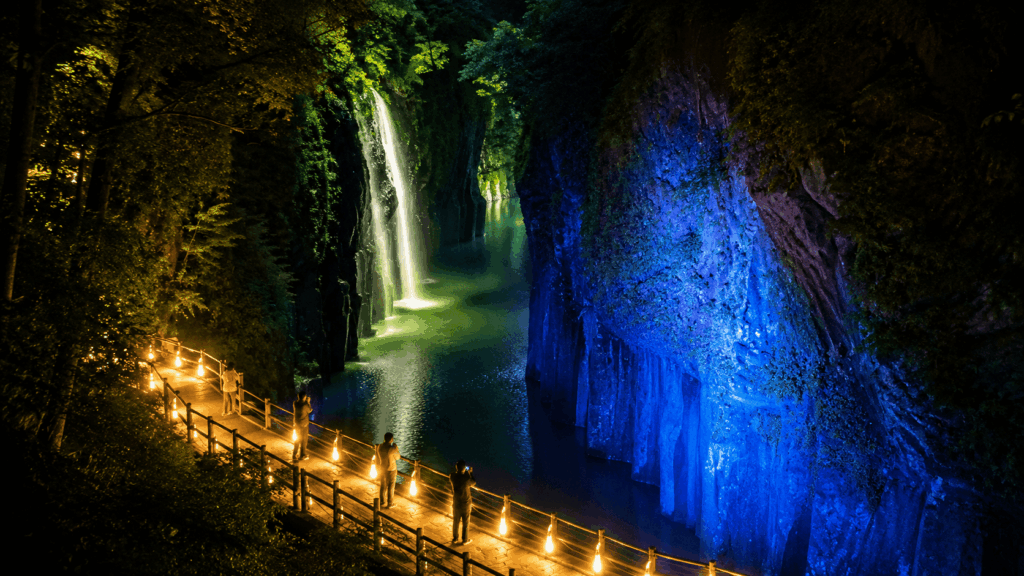
Check current lighting dates and evening access before planning a night visit.
When a Day Trip Works
A day trip is enough when the gorge is your main goal, you can book the transport you need, and you are happy to choose between extra sights. Having a car adds flexibility; it does not make distant Kyushu cities equally close or put an entire region within a guaranteed two-hour radius.
The strongest day is usually one main landscape stop, a meal and one or two secondary interests. Families may prefer the railway over a longer sanctuary walk. Photographers may spend more time at the gorge and skip the viewpoint. Neither choice is a lesser version of the trip.
When You Should Stay the Night
For the evening performance: the regular Takachiho Kagura presentation at Takachiho Shrine is normally 20:00–21:00. It presents four dances; the all-night village Yokagura traditions are a separate seasonal experience, not the same one-hour ticket.
The official regular-performance page currently gives ¥1,000 per person, with elementary-school children and younger free. Online reservations open 30 days ahead at 10:00 and close at 17:00 on the performance day. Check the official performance and booking information for dates, admission and reception instructions. Some holidays and festival dates replace or suspend the regular presentation.
Kai’s tip: Every season I get messages from travelers who assumed they could “figure out the return bus later” after seeing the Yokagura. The buses don’t run late in Takachiho — this isn’t Tokyo. If Kagura is on your bucket list, book accommodation the same day you book your bus or tour. The decision to stay isn’t a luxury; it’s a logistical necessity. Make it early.
For Kunimigaoka at dawn: the best-known sea-of-clouds period extends from late September into early December, when conditions cooperate. It is not limited by the calendar to autumn alone, and an overnight stay does not guarantee clouds. Arrange an early drive or taxi before bedtime; morning intercity arrival is not a dawn plan.
For a calmer gorge morning: staying locally removes the long drive before your first activity. It still does not replace a boat reservation or guarantee a particular opening time. Check the schedule and leave enough time to reach reception.
For dinner: book or identify a meal before the day starts, especially if you want to attend the performance. A small town does not offer the same late-night fallback choices as Fukuoka or Kumamoto.
Where to Stay and How to Use the Extra Morning
Solest Takachiho is a hotel option to compare for a town-based stay. Ryokan Shinsen is a more elaborate ryokan-style option with room-specific private baths and dining plans. Do not assume every private bath is a natural onsen, that meals are included in every room rate or that either property offers an effortless walk down to the gorge.
Choose the accommodation around your evening and morning plans: meal time, shrine access, parking, luggage and how you will reach Kunimigaoka. Ask about transport rather than assuming a dawn hotel shuttle exists.
- Day 1 afternoon: see Amanoiwato or the gorge at a comfortable pace, then check in.
- Evening: have dinner early enough for the confirmed Kagura reception and performance, if operating.
- Day 2 dawn: choose Kunimigaoka only if conditions and arranged transport make it worthwhile.
- Day 2 morning: use your confirmed boat appointment or enjoy another land view, then leave time for checkout and onward travel.
A dawn viewpoint, hotel breakfast and the first boat slot can compete for the same hour. Pick an order that actually fits; do not book all three independently and hope they line up.
What to Do with Your Luggage
For a round trip, leaving large bags with your hotel is usually the simplest choice. Carry a small day bag: large luggage is not permitted on the rowboats, and dragging a suitcase down to the gorge creates an unnecessary uphill return.
If hotel storage is unavailable and you will return to the same city, compare a station locker or a bookable storage location in your departure base. Kumamoto has Bounce listings. For an early start, a previous-evening deposit can be an option when the selected shop and booking support overnight storage. Check both the drop-off and collection times: a late-closing shop is useful only if you can reach it before leaving, too.
The link opens a general search, so enter your city and travel times. For an early departure, you may need a suitable locker, hotel storage or an explicitly bookable previous-evening deposit. Include any extra storage day in the price comparison. Do not leave bags in Kumamoto if you are continuing elsewhere and cannot return to collect them.
How to Secure a Boat at Takachiho Gorge
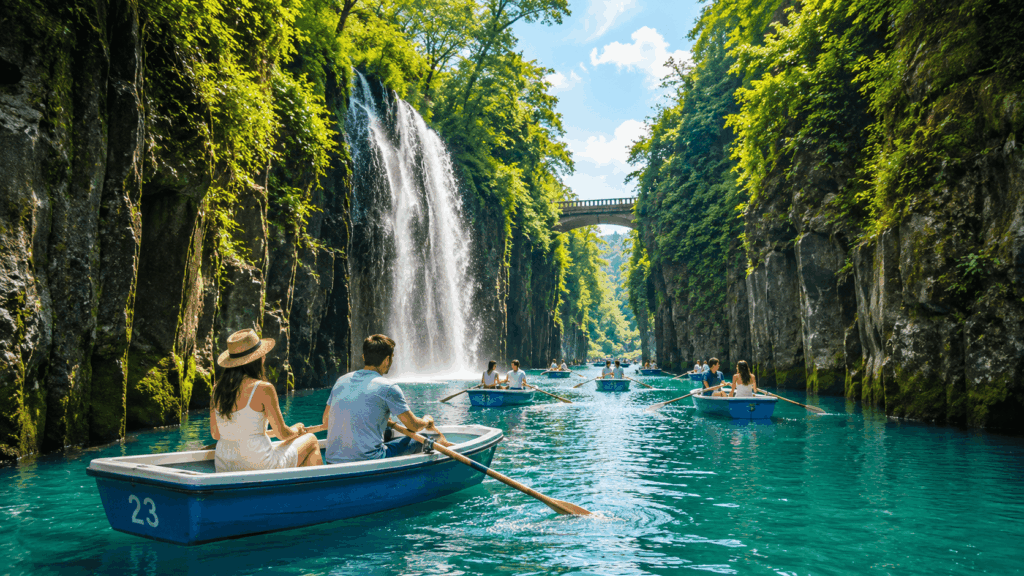
Separate the boat reservation from the rest of the day. A ticket does not reserve your parking, provide intercity transport or keep the river open after rain. Our detailed Takachiho Gorge booking guide covers the reservation decision in depth.
The Reservation System
- Use the official date calendar. Online reservations run from 9:00 Japan time 14 days before the visit until 9:00 two days before it. Follow the reservation link on the official tourism page.
- Choose a slot you can reach. Include the road journey, parking, walk and the check-in lead time specified in your confirmation.
- Read that date’s price and cancellation terms. Prices are per boat and appear on the current calendar; do not reuse an old fixed weekday price or assume cancellation remains free until two days before.
- Check the day’s operating notice. Weather, river conditions and inspections can stop the boats, even when you hold a reservation.
Kai’s tip: If you’re visiting in October–November, plan around the boat reservation opening rather than assuming you can pick up a ticket after you arrive. Set a reminder for 9:00 AM JST on the day your date becomes bookable. If you miss it, check the official same-day notice and keep a gorge-walk plan; a cancellation waiting list is not a backup.
Same-Day Tickets: A Conditional Backup
Do not travel expecting a fixed release of 50–70 boats or a cancellation waiting list. Same-day availability depends on the reservation situation, and fully reserved dates can have no walk-up tickets. The official operator says it does not run a cancellation waiting list.
Check the official boat calendar and operating notice before deciding that an early queue is worthwhile. If there are no same-day tickets for your date, use the land-view plan rather than spending the limited bus window waiting for a ticket that is not being sold.
No Boat, No Problem: The Gorge Views Are Still Worth Seeing
The boat and the walking view are different experiences. From land, you can look down on the boats, see the waterfall against the columnar cliffs and choose your own photography pace. If rowing is unavailable but the paths are open, the trip can still have its main landscape experience.
That does not mean walking is always a substitute during severe weather. A river closure and a path closure are separate decisions, and conditions affecting the whole gorge should change the day more substantially. Keep a town-based or onward-travel alternative.
Walking the Gorge Beyond the Waterfall Viewpoint
The promoted gorge walk is about a kilometer, but a visit is not simply a flat, step-free circuit. The approach from each parking area differs, some sections have steps or slopes, and the return to town climbs back up. Use a current local map rather than assuming every path visible on an older itinerary is available.
Start with the waterfall viewpoint and explore further along the signed open route if time and footing allow. You can notice more of the basalt walls, changing water color and quieter details when you step away from the busiest photograph point. Conditions vary, so take your time and enjoy whichever open sections suit your walking ability.
The cliffs connect the two landscapes that draw many visitors to this part of Kyushu. Ancient volcanic flows from Aso cooled, and erosion by the river helped shape the gorge you see today. The vertical columns and the narrow waterway are easier to appreciate when you pause to look along the rock walls, rather than concentrating only on the waterfall.
Listen for the water echoing between the walls and look at how the light changes the color of the river. These are good reasons to leave a little unallocated time in the visit. The memorable part can be standing still for a few minutes after the photograph, instead of immediately hurrying back to the car.
For a brief visit, concentrate on a useful land view and leave enough time to get back. If you have a boat booking as well, allow substantially more than the half-hour ride. Good footwear, water and a willingness to drop an optional stop make this a much easier day.
Consult current tourism notices and the signs on site for access changes, then choose the open route that suits your time and walking ability.
Seasonal Tips for Your Takachiho Visit
| Season | What to plan for | What to book or check |
|---|---|---|
| Spring | Fresh greenery, possible blossoms and busier holiday dates; exact timing changes each year | Boat availability and transport seats, especially around major holidays |
| Summer | Heat, humidity, popular somen lunches and possible rain or typhoon disruption | River operation, forecast, drinking water and lunch queues |
| Autumn | Foliage, popular weekends and dawn sea-of-clouds interest | Boat, accommodation and a route that finishes unlit walks before dark |
| Winter and early spring | Cold mornings, possible road ice and shorter usable daylight | Road conditions, vehicle equipment, boat inspections and current event dates |
No season makes a boat reservation unnecessary if rowing matters to you. A quiet-looking weekday can still have limited capacity, an inspection or no suitable slot. For a fuller comparison of weather, crowds and what to pack, use our season-by-season Takachiho guide.
Night Lighting and the KAI Festival
Keep evening events separate from the daytime itinerary. The confirmed 2026 TAKACHIHO LIGHTS FESTIVAL “KAI” ran February 14–March 22, 2026. Those are past-event dates, not a standing promise of the same festival in February or March 2027.
Before choosing an overnight stay for lighting, check the dated festival announcement and current notices for your visit. Confirm evening access and the return journey separately from daytime sightseeing.
Winter equipment and a realistic departure time matter on mountain roads. After a performance or lighting visit, an overnight stay can be preferable to starting a long unfamiliar drive in darkness. With alcohol, arrange transport that does not require you to drive.
FAQ: Planning a Takachiho Gorge Day Trip
Can I See the Gorge, Amanoiwato and Kunimigaoka in One Day?
With a car and a local start, it can work if you prioritize and keep enough daylight. The gorge and shrine circuit should come first; Kunimigaoka is optional unless you are planning a separate dawn visit. With an intercity-bus arrival, choose the gorge and nearby shrine rather than assuming every distant stop fits.
Is It Worth Going Without a Car?
Yes, for a focused visit. Judge the day by actual time in Takachiho after local travel, not the number of buses shown on a route page. Public transport suits a smaller sightseeing plan; a combined guided trip suits people who want Aso too, while an overnight stay suits evening and early-morning interests.
How Far Ahead Should I Book the Boat?
The online window opens 14 days ahead at 9:00 Japan time and closes two days ahead at 9:00. Set your reminder if the ride is important, choose a reachable slot and check the confirmation. A reservation secures the booking under its terms, not guaranteed boat operation whatever the river conditions.
Can I Watch the Evening Kagura and Return by Intercity Bus?
The published daytime return services used in the examples leave before the regular 20:00–21:00 presentation. Plan local accommodation or separately arranged transport if you want to watch it. Do not confuse a bus arriving in Takachiho in the evening with a bus taking you home after the performance.
Is Takachiho Still Worth It if the Boat Is Sold Out or Canceled?
Yes, if the land-view routes are open and those views interest you. The waterfall and cliff scenery can be enjoyed without rowing. If your only goal is a particular boat photograph, recognize that cancellation could leave you disappointed and consider how much extra travel you are willing to commit.
How Do I Combine Takachiho Gorge and Mount Aso?
Make them the two main priorities of the day and reduce other stops. Check the actual driving route or the combined tour itinerary; Aso is not a single point a short drive away. The Asochiho bus links the regions, but its sparse timetable and onward connections still limit a multi-stop day. Overnight or two separate days is often more comfortable.
What Is the Best Season to Visit?
Autumn is attractive for foliage and dawn cloud-viewing interest, spring for fresh greenery, and summer for the contrast of water and forest. Winter can suit a quieter visit when conditions cooperate, but not a guaranteed festival or snow-free drive. Choose the season you enjoy, then check the specific operating and reservation conditions.
Is Takachiho Suitable for Families with Young Children?
It can be, but plan around the youngest child’s walking and meal needs. A boat normally carries three people; an exception allows up to four when preschool children are included. Check your exact group arrangement with the operator rather than putting four adults or older children in one boat. Take the steps, boarding and return climb into account, and keep the railway as an optional substitute for a longer walk.
Is the Gorge Walk Wheelchair- or Stroller-Friendly?
Do not describe the whole outing that way. Confirm a suitable viewpoint, parking approach and path with the tourism office for your needs. Boat access and the Amanoyasukawara sanctuary walk involve their own constraints. A shorter accessible viewing plan may be preferable to excluding the entire destination or assuming every section is easy.
Final Verdict: Which Takachiho Plan Fits Your Trip?
Choose the Car Day Trip If…
- You want the gorge and local shrines at your own pace.
- You can arrive with enough margin for a boat appointment and parking.
- You are comfortable with the route and conditions, and your return day has room for delays.
Choose the Public-Bus Day Trip If…
- You are happy to concentrate on the gorge and nearby town sights.
- You can secure a workable outward and return service.
- You prefer lower transport spending to extra stops, and can leave a time buffer.
Choose a Guided Tour If…
- The actual route matches your priorities, especially a combined Aso–Takachiho day.
- You value arranged transfers and explanation enough to justify the total for your party.
- You have confirmed group size, language, boat arrangements and cancellation terms.
Stay Overnight If…
- You want the evening Kagura without a long drive afterward.
- You want a realistic chance to visit Kunimigaoka at dawn in the appropriate season.
- You prefer a local start for a boat reservation, breakfast and a slower gorge visit.
Skip or Simplify the Detour If…
- The journey would dominate the day and the landscape is only a minor interest.
- Your available time relies on every connection, parking space and activity working perfectly.
- The walking or road conditions do not suit your group and a suitable alternative has not been confirmed.
What I’d tell a friend: choose the version of Takachiho you actually want. For the gorge and local shrines, drive with time to spare or stay overnight. For a smaller budget, plan around the real bus window. For Aso as well, compare an itinerary built for both regions. Reserve what matters, leave room for the river and weather, and let the landscape be the point of the day.

Hi, I’m Kai. I’m a Tokyo-based travel writer, tourism industry insider, and the author of a published guidebook for international visitors to Japan. With over 10 years of professional experience at a leading Japanese tourism company, my mission is to help you skip the tourist traps and navigate Japan’s best destinations like a local. I believe the perfect day trip is like a traditional kaiseki meal: a beautiful balance of precise planning and unforgettable seasonal discovery. When I’m not out conducting field research, you’ll usually find me drafting new itineraries with one of my favorite fountain pens!