
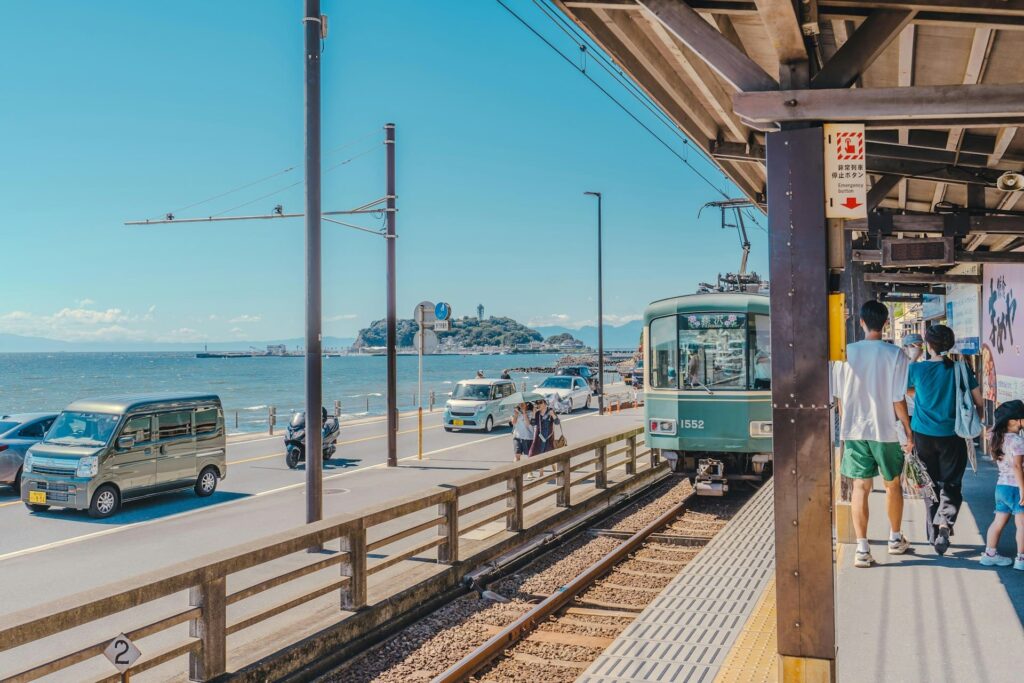
The Kamakura Slam Dunk location is the railroad crossing right outside Kamakurakokomae Station on the Enoden Line in Kanagawa Prefecture. It is one of the most recognizable anime pilgrimage spots in Japan, but it is also a working road crossing in a residential neighborhood, so knowing the route, timing, and local etiquette before you go makes a real difference.
This guide shows you exactly where the crossing is, how to get to Kamakurakokomae Station from Tokyo, what fares and travel times to expect, how to take photos respectfully, and whether this stop is worth adding to your Kamakura or Enoshima itinerary.
Quick Answer: Kamakura Slam Dunk Location
- Exact location: The railroad crossing right outside Kamakurakokomae Station on the Enoden Line.
- How to get there: Take JR to Kamakura Station or Fujisawa Station, then transfer to the Enoden Line.
- Travel time from Tokyo: Usually about 60 to 90 minutes depending on your starting point and transfer time.
- Enoden ride from Kamakura Station: About 18 minutes, ¥260 one way.
- Enoden ride from Fujisawa Station: About 16 minutes, ¥260 one way.
- Best time to visit: Early morning is usually the easiest time for fewer crowds and cleaner photos.
- What to expect: A short photo stop unless you combine it with nearby coastal spots such as Shichirigahama Beach or Enoshima.
- Photo etiquette: Stay off the road, do not block traffic, follow posted signs and staff instructions, and respect nearby homes and private property.
Good to know: Kamakura City has strengthened crowd-management measures around Kamakurakokomae Station, including visitor guidance, AI-camera-based monitoring, and foreign-language etiquette campaigns. Exact on-site staffing and rules can change, so always follow current signs and staff instructions when you arrive.
If you want to see the crossing as part of a smoother anime pilgrimage route without managing every transfer yourself, compare current tour details before deciding.
Where Is the Kamakura Slam Dunk Location?
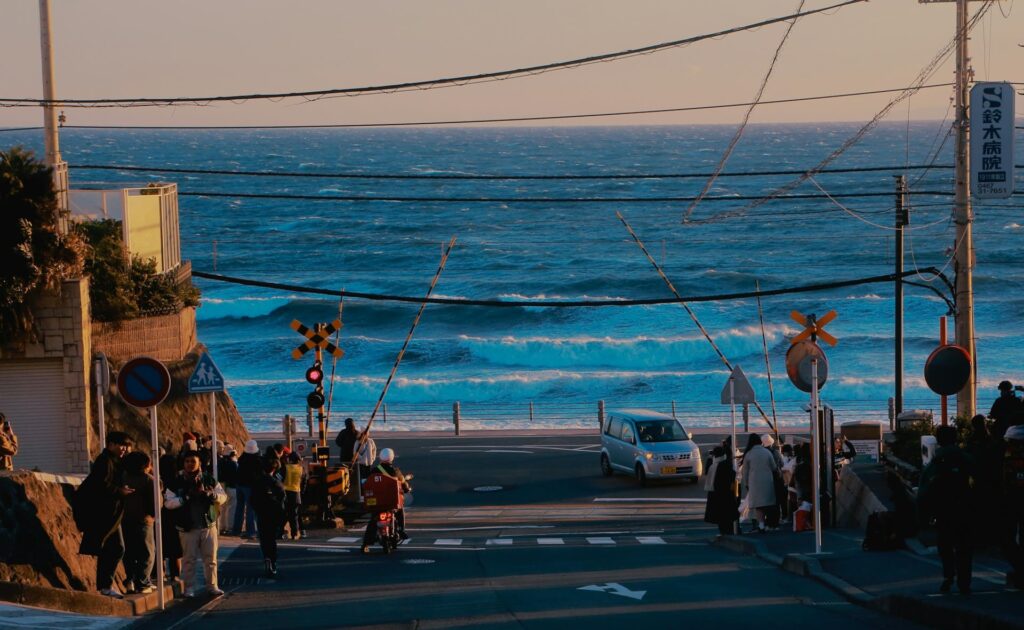
The Famous Crossing Next to Kamakurakokomae Station
The iconic crossing from the Slam Dunk anime opening is located beside Kamakurakokomae Station (鎌倉高校前駅) in Kanagawa Prefecture. This is the real-life spot most fans mean when they search for the Kamakura Slam Dunk location. When the Enoden train passes with the ocean behind it, the scene feels instantly recognizable.
Once you exit the station, the crossing is only a short walk away. It is easy to find, but the area is small and can become very crowded, especially on weekends, national holidays, and clear-weather afternoons.
What You Will Actually See
This is not a large attraction or a theme-park-style anime site. It is a real railway crossing on a local road with ocean views beyond the tracks. Most visitors stay for a short time, take photos, watch a train pass, and then continue on to other Shonan coast spots.
During busy times, you may spend longer waiting for a safe chance to take photos without people, cars, or bicycles in the frame. That is why this location works best as part of a wider Kamakura day trip rather than as a full standalone destination.
How to Get to Kamakurakokomae Station from Tokyo
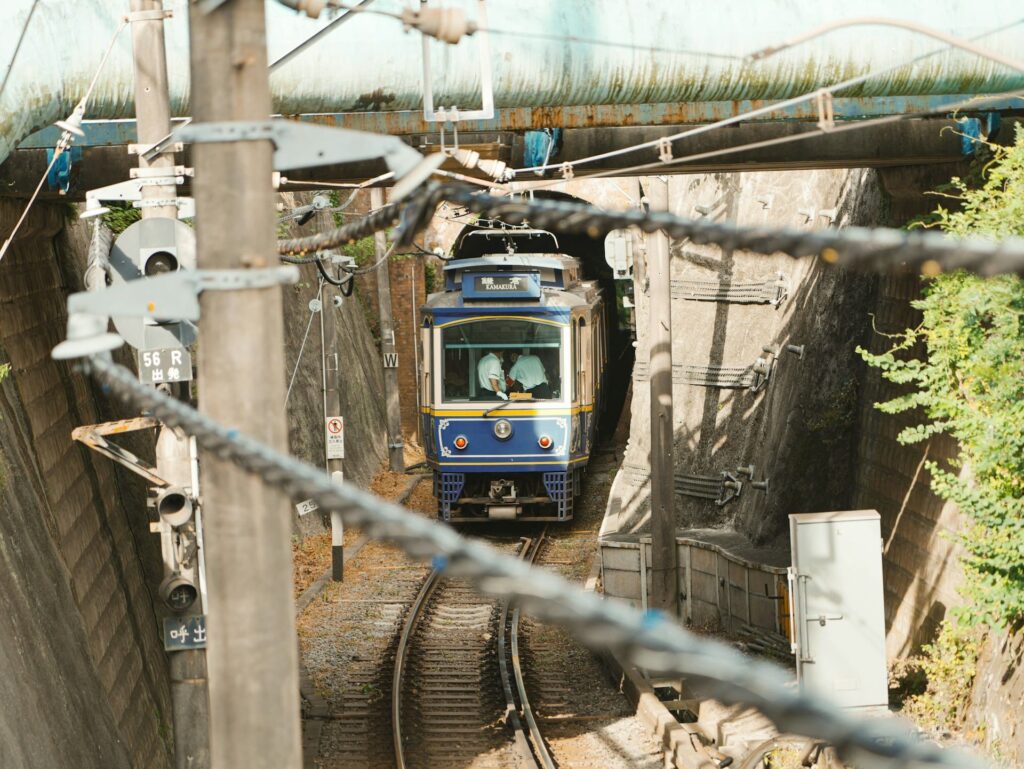
Getting to the Kamakura Slam Dunk location is straightforward once you know the transfer. You cannot reach the crossing directly on JR alone, so the trip usually has two parts: a JR ride from Tokyo, then a short Enoden ride along the coast.
Step 1: Take JR to Kamakura or Fujisawa
Your first goal is to reach either JR Kamakura Station or JR Fujisawa Station.
- From Shinjuku or Shibuya: The JR Shonan-Shinjuku Line is one of the easiest options to Kamakura.
- From Tokyo or Shinagawa: The JR Yokosuka Line is a convenient direct route to Kamakura.
- Alternative route: You can also go to Fujisawa first and board the Enoden there.
If you are using a Japan Rail Pass, the JR portion is typically the part it can cover, as long as you use eligible JR trains. The Enoden portion is separate.
Step 2: Transfer to the Enoden Line
After arriving at Kamakura or Fujisawa, transfer to the Enoden, also known as the Enoshima Electric Railway. This small local line runs along the coast and stops at Kamakurakokomae Station.
- From Kamakura Station, take the Enoden bound for Fujisawa.
- Ride to Kamakurakokomae Station, which takes about 18 minutes.
- After exiting the station, walk a short distance to the crossing.
Important: The Enoden is not covered by the Japan Rail Pass. Use an IC card such as Suica or PASMO, or buy a separate ticket.
At-a-Glance Access Summary
| Route | Typical Use | Enoden Ride | Fare | Notes |
|---|---|---|---|---|
| Tokyo/Shinagawa → Kamakura → Enoden | Simple route from central Tokyo | About 18 min to Kamakurakokomae | ¥260 one way | Good option if you also want to explore central Kamakura |
| Shinjuku/Shibuya → Kamakura → Enoden | Convenient from west Tokyo | About 18 min to Kamakurakokomae | ¥260 one way | Direct JR access is often easy for visitors staying on the west side of Tokyo |
| Tokyo area → Fujisawa → Enoden | Useful alternative | About 16 min to Kamakurakokomae | ¥260 one way | Works well if you want to continue toward Enoshima after the crossing |
Enoden Fare & Day Pass Options
If you are only going to the crossing and back, a single ticket or IC card payment is enough. The Enoden fare between Kamakura Station and Kamakurakokomae Station is ¥260 one way, based on official Enoden fare information checked in June 2026.
If you plan to hop on and off at multiple stops along the coast, consider the Enoden 1-Day Pass “Noriorikun”:
- Adult: ¥800
- Child: ¥400
- What it covers: Unlimited rides on the entire Enoden Line for one day
A Kamakura Free Pass may also be worth comparing depending on your starting point and planned stops.
Photo Tips and Current Etiquette
The crossing is famous, but it is also a place where locals live, drive, cycle, and commute. If you want a good visit, the most important thing is not just getting the shot, but doing it safely and respectfully.
- Do not step into the road to recreate the scene or get a cleaner angle.
- Do not block cars, bicycles, or pedestrians.
- Do not enter private property or stand in restricted areas.
- Follow posted signs and staff guidance at all times.
- Keep your stop short during busy times so other visitors and local residents can move through comfortably.
Because this spot has seen heavy visitor traffic, conditions may be more controlled than many fans expect. The safest mindset is to treat it as a real neighborhood crossing first and an anime photo spot second.
Current Crowd-Management Notes
Kamakura City has taken the crowding around Kamakurakokomae Station seriously. Measures have included visitor guidance, efforts to move people away from narrow roadside areas, AI-camera-based congestion monitoring, and multilingual awareness campaigns for visitor etiquette.
However, specific staffing hours, crowd-control layouts, and local instructions can change. Do not rely on an old social media post or a previous visitor’s report as the final rule. When you arrive, follow the signs, barriers, and any instructions from local staff.
Best Time to Visit for Photos
If your priority is a cleaner photo with fewer people in the frame, go early in the morning. Weekdays and cloudy days are usually calmer than sunny weekends and national holidays. Late afternoon light can be beautiful, but it often comes with larger crowds.
Early morning does not mean the area is rule-free. Stay out of the road, keep moving if asked, avoid blocking the sidewalk, and respect nearby residents even when the crossing looks quiet.
If your travel schedule is already fixed, check recent visitor reports and tour availability before you go so you can set realistic expectations for crowds.
👉 See current tour options, reviews, and availability for the Kamakura Anime Pilgrimage Tour
Is the Kamakura Slam Dunk Location Worth Visiting?
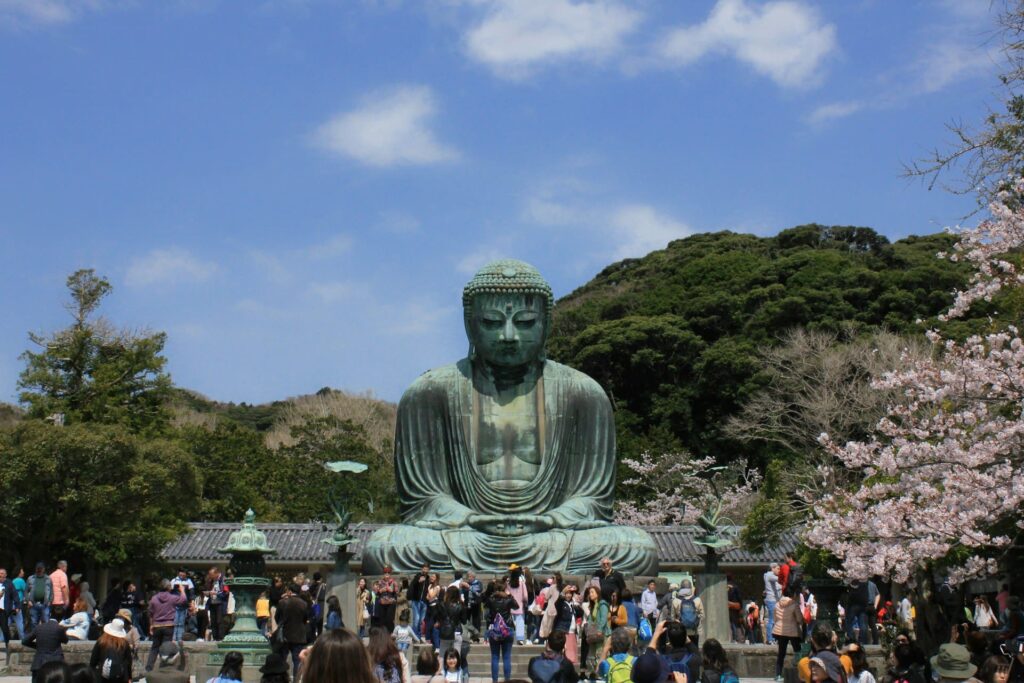
For anime fans, yes. Seeing the real-life crossing beside the ocean is genuinely memorable, and it is one of the easiest anime pilgrimage spots to recognize instantly. That said, it is usually a short stop rather than a half-day attraction by itself.
If you are already planning to visit Kamakura, Enoshima, or the Shonan coast, this crossing is absolutely worth adding. If you are traveling from Tokyo just for this one photo, it can still be worth it for dedicated fans, but it is best paired with nearby sightseeing so the trip feels more complete.
Best For
- Fans of Slam Dunk who want to see the real anime location in person
- Travelers already visiting Kamakura or Enoshima
- Visitors who enjoy coastal train scenery and short photo stops
Less Ideal For
- Travelers expecting a large attraction with lots to do on-site
- People who strongly dislike crowds or waiting for photo opportunities
- Visitors with a very tight schedule who are not interested in the anime connection
DIY vs. Guided Tour: Which Is Better?
You can absolutely visit the crossing on your own, and many travelers do. But whether that is the best choice depends on how comfortable you are with train transfers, crowded sightseeing spots, and quick on-the-spot decisions about where to stand and when to move on.
| Feature | DIY (Self-Guided) | Guided Local Tour |
|---|---|---|
| Navigation | You handle the JR and Enoden transfer yourself. | Your guide helps manage the route and timing. |
| Photo Planning | You choose when to arrive and where to wait. | A guide may help you time the stop more smoothly. |
| Local Etiquette | You need to watch signs and judge the situation yourself. | A guide can help you avoid common mistakes in busy periods. |
| Flexibility | Best if you want to add your own Kamakura or Enoshima stops. | Best if you want a simpler, more structured visit. |
| Stress Level | Fine for confident independent travelers. | Better if you want an easier experience, especially during peak seasons. |
If you want the simplest option, especially during a busy season or if navigating train transfers feels overwhelming, a local guided experience can reduce the stress of the visit. It does not guarantee empty photos or perfect weather, but it can make the day easier to organize.
What Else to See Nearby
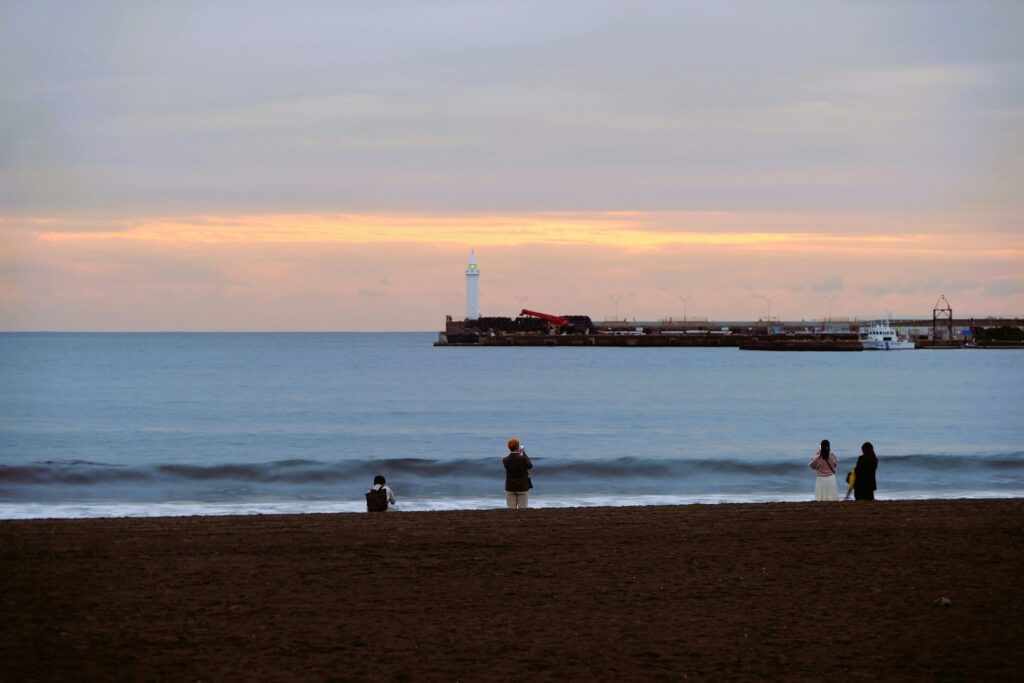
The crossing is the highlight for many fans, but it is even better when combined with other stops along the Shonan coast. If you have extra time, turn your visit into a half-day outing instead of treating it as a quick photo stop only.
Shichirigahama Beach
Shichirigahama Beach is one of the easiest add-ons after visiting Kamakurakokomae Station. The beach is known for its open coastal views, relaxed atmosphere, and long shoreline walks. For many visitors, this is the best place to slow down after the crowded crossing and enjoy the same ocean scenery that makes this area so memorable.
It is close enough to add naturally after your photo stop, either by walking along the coast when conditions are comfortable or by taking the Enoden one stop. If your main goal is to experience the mood of the Shonan coast rather than only recreate one anime shot, Shichirigahama is well worth your time.
Kamakura Seaside Park, Sakanoshita District
Kamakura Seaside Park in the Sakanoshita district is often mentioned by Slam Dunk fans as another coastal location connected with the series. Treat it as a separate add-on rather than a quick walk from the crossing. The area is closer to the Hase and Gokurakuji side of Kamakura than to Kamakurakokomae Station.
This stop works best if you are also planning to explore Hase, Yuigahama, or the western side of central Kamakura. If your schedule is tight, Shichirigahama and Enoshima are easier add-ons from Kamakurakokomae Station.
Enoshima
Enoshima is the most natural next stop if you want to expand your trip beyond the crossing. You can continue on the Enoden Line and spend time exploring the island, shrines, sea views, shops, and food spots. This works especially well if you want your Kamakura Slam Dunk location visit to feel like part of a full day out rather than a single-purpose detour.
For many travelers, the best plan is simple: visit the crossing, ride the Enoden along the coast, then continue to Enoshima for a more complete day trip itinerary.
A Simple Half-Day Plan
- Start early and visit Kamakurakokomae Station before the largest crowds build up.
- Take your photos quickly and respectfully at the crossing.
- Walk or ride one stop to Shichirigahama for coastal views and a more relaxed pace.
- Continue to Enoshima if you want food, sightseeing, and a longer afternoon outing.
How Long Should You Spend at the Crossing?
Most visitors do not need very long at the crossing itself. If you arrive, wait for a train, take a few photos, and enjoy the view, your stop may only last 15 to 30 minutes. During busy times, you may spend longer simply waiting for a safe chance to take photos without people, cars, or bicycles in the frame.
Budget around 20 to 40 minutes including waiting time, then use the rest of your day for the nearby beaches, Enoshima, or central Kamakura. The crossing is memorable, but it is best treated as one stop within a wider Kamakura or Shonan coast plan.
Practical Tips Before You Go
- Use the restroom before arriving: Kamakurakokomae Station is small and does not have restroom facilities.
- Do not bring large luggage: The station is small and unmanned, and there are no coin lockers at Kamakurakokomae Station.
- Store bags at larger stations: If you have luggage, use coin lockers or luggage services around larger stations such as Kamakura or Fujisawa before taking the Enoden.
- Carry cash as a backup: IC cards are convenient, but a little cash is useful in case you need a paper ticket or visit smaller shops along the coast.
- Check the weather: The ocean backdrop is part of the appeal, but views and comfort can change quickly with rain, wind, or strong summer sun.
Frequently Asked Questions
What is the exact Kamakura Slam Dunk location?
It is the railroad crossing next to Kamakurakokomae Station on the Enoden Line in Kanagawa Prefecture.
Can I get there directly from Tokyo?
Not directly on a single train line. Most visitors first take JR to Kamakura Station or Fujisawa Station, then transfer to the Enoden Line for Kamakurakokomae Station.
How much does it cost to get to Kamakurakokomae Station from Tokyo?
The JR portion from central Tokyo usually costs around ¥500–¥1,000 depending on your starting station and route. The Enoden portion from Kamakura Station to Kamakurakokomae Station is ¥260 one way, based on official fare information checked in June 2026. A Japan Rail Pass can cover the JR part if you use eligible JR trains, but it does not cover the Enoden segment.
How long is the Enoden ride from Kamakura Station to Kamakurakokomae Station?
It takes about 18 minutes one way from Kamakura Station. From Fujisawa Station, it takes about 16 minutes.
Is the Japan Rail Pass valid for the whole trip?
No. The Japan Rail Pass can cover the JR part of the journey if you use eligible JR trains, but the Enoden is a separate railway. You need a separate ticket or an IC card such as Suica or PASMO for the Enoden section.
When is the best time to visit?
Early morning is usually the best time for fewer crowds and an easier photo experience. Weekends, national holidays, and sunny afternoons are often much busier. Even when the area is quiet, stay out of the road and follow all current signs and local guidance.
Are there rules for taking photos?
Yes. Stay out of the road, avoid blocking cars, bicycles, and pedestrians, do not enter private property, and follow posted signs or staff instructions. The area is a real neighborhood crossing, not a photo set.
Is there a place to store luggage near the crossing?
Kamakurakokomae Station is a small, unmanned station without coin lockers. If you have luggage, store it at a larger station such as Kamakura Station or Fujisawa Station before taking the Enoden. Availability can vary, especially during busy travel periods.
Are there restrooms at Kamakurakokomae Station?
No. Kamakurakokomae Station does not have restroom facilities, so use the restroom at a larger station or nearby sightseeing area before you arrive.
Is it worth visiting if I am not a huge Slam Dunk fan?
If you already plan to visit Kamakura or Enoshima, it is an easy and scenic stop. If you are not especially interested in the anime, it may feel too brief to justify a separate trip on its own.
Final Verdict
The Kamakura Slam Dunk location is one of the most recognizable anime pilgrimage spots in Japan, and for fans, seeing the crossing in person is absolutely worth it. The view is iconic, the train line is charming, and the stop is easy to combine with some of the best coastal scenery near Tokyo.
The key is to visit with the right expectations. This is a real neighborhood crossing, not a large attraction, so the experience is best when you arrive early, keep your stop short, follow local etiquette, and pair it with nearby places such as Shichirigahama or Enoshima.
Choose DIY if: you are comfortable with train transfers, prefer flexibility, and want to build your own Kamakura day plan.
Choose a guided tour if: you want an easier route, less stress during busy times, and help fitting the crossing into a smoother anime pilgrimage itinerary.
Want to keep the trip simple and focus on enjoying the experience instead of handling the logistics yourself?
Prices, transport schedules, pass conditions, station facilities, crowd-management measures, tour inclusions, payment methods, and local rules can change. Always check official sources and your selected booking page before finalizing your trip.

Hi, I’m Kai. I’m a Tokyo-based travel writer, tourism industry insider, and the author of a published guidebook for international visitors to Japan. With over 10 years of professional experience at a leading Japanese tourism company, my mission is to help you skip the tourist traps and navigate Japan’s best destinations like a local. I believe the perfect day trip is like a traditional kaiseki meal: a beautiful balance of precise planning and unforgettable seasonal discovery. When I’m not out conducting field research, you’ll usually find me drafting new itineraries with one of my favorite fountain pens!