

Ine Fishing Village looks simple at first: a single row of wooden boathouses along a calm bay. But what you do here — and the order you do it in — changes what you take away from the visit. In this guide, I’ll walk you through the best things to do in Ine Fishing Village, starting with the three experiences that make the trip worthwhile, then the boats, the walking, and the practical details that catch people out on the day.
If the part you want to skip is the long transport day from Kyoto or Osaka, a private Amanohashidate–Ine trip keeps the coastal itinerary while taking the driving and connections off your plate. Check live availability, pickup options, and recent traveler reviews for this private Amanohashidate and Ine day trip.
Quick Verdict: The Best Things to Do in Ine Fishing Village

For a first visit, build your day around three views of the same place: see the funaya (boathouses) from above, see them from the water, and see them from street level. That is the whole of Ine, and honestly, it is enough.
- From above: start at Roadside Station Funaya-no-Sato Ine (道の駅 舟屋の里伊根) for the classic overview of the bay. Free parking, no ticket, 10–15 minutes.
- From the water: take the Ine Bay sightseeing boat or a sea taxi for a 25-minute cruise along the boathouse row.
- From street level: walk the waterfront at your own pace, then add one deeper experience if you have time — a local walking tour, a funaya house tour, or a stop at Mukai Brewery.
When I bring guests here, this is the order I use every time, and it is also the most practical one: you arrive at the top, park for free, take in the panorama, then work your way down to the water and the boats. If you only have two hours, do those first three things and you have seen Ine properly.
If getting to Ine from Kyoto or Osaka feels like too much logistics to handle yourself, a day tour that combines Amanohashidate and Ine is a reasonable shortcut — but if you want to linger in the village itself, a tour’s fixed schedule can feel rushed, so self-guided is often the better fit. I’ll compare the options later in this guide.
The 7 Best Things to Do in Ine Fishing Village
- Start at Roadside Station Funaya-no-Sato Ine — the high viewpoint and free parking hub.
- See the funaya from the water on the sightseeing boat or a sea taxi.
- Walk the waterfront between the boathouses and the bay.
- Join a local walking tour if you want to understand Ine, not just photograph it.
- Step inside a funaya at one of the two open house tours.
- Stop at Mukai Brewery for a taste of Ine’s sake-making side.
- Slow down for seafood, coffee, or an overnight stay.
Items 1–3 are the core of any visit. Items 4–6 are worth adding if you have half a day or more. Number 7 is the reward for staying past the last boat.
1. Start at Roadside Station Funaya-no-Sato Ine for the Best Overview
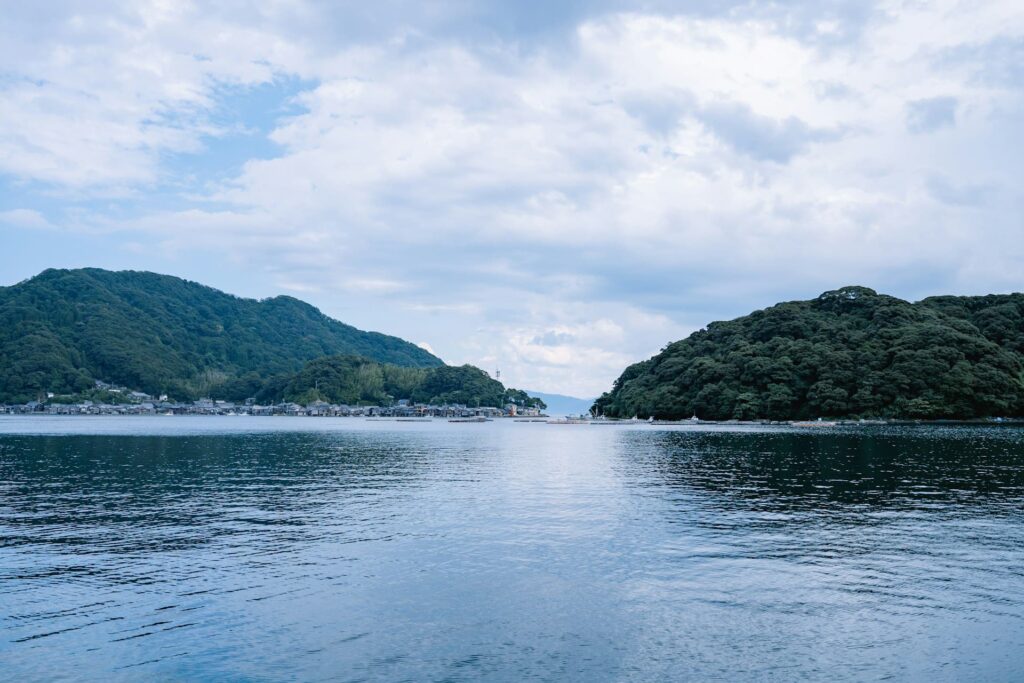
Almost every sensible visit to Ine begins at Roadside Station Funaya-no-Sato Ine (道の駅 舟屋の里伊根), the michinoeki perched on the hillside above the bay. From its observation terrace you get the postcard view of Ine Bay: roughly 230 funaya lined up along about 5 km of shoreline, with the sea in front and mountains behind. It is also the easiest place in Ine to park — the lot holds around 138 cars and is free and open 24 hours, which matters more than you might expect (more on parking below).
The station itself has a small market, a restaurant, and a shop selling local specialties, and it is open roughly 9:00–17:00 with Tuesdays as the usual closing day. The terrace and parking, however, are accessible around the clock, so an early-morning stop works even if the building is closed.
Best for: first-time visitors who want the full context of the village before going down to the water, and drivers who want free parking. Where to look: walk to the seaward edge of the terrace, not the middle — the best angle on the boathouse row is from the eastern end.
Kai’s tip: On busy weekends, I have sometimes waited more than 20 minutes for a space in the waterfront lots down below, while the roadside station lot usually still has room. If you are driving, aim for the station first and treat the walk downhill as part of the visit — just remember the walk back up at the end of the day, and wear shoes you are happy to climb in.
Should You Walk Down From the Roadside Station?
From the station, a road winds down to the central waterfront — the area around Ineura and the Tourist Information Center — where the boats leave. Walking takes around 15 minutes downhill, a little more if you stop at the viewpoints along the way, and you can do it at your own pace. The return climb is noticeably steeper than it looks, and I’ve found it tiring on hot summer days, so the practical question is whether you want to do the loop twice.
For most visitors, here is the cleanest plan: park at the station, enjoy the overview, drive down to the boat dock area afterward, and save your walking for the flat waterfront itself. You lose the scenic descent, but you save the uphill return and keep your energy for the parts of Ine that reward walking — the bay path and the back lanes. If you are on a tour bus or arriving by public transport, ignore this entirely: walk down from the station, take the boat, and walk or ride back.
Best for: drivers and anyone short on time or energy. Who should skip the walk down: anyone with mobility concerns, or visitors on a tight schedule who would rather not climb back up.
2. See the Funaya From the Water

The single best thing to do in Ine Fishing Village is to get on the water. From the street, the funaya read as a wall of wooden facades; from the bay, you finally see what they are: two-storey boathouses with the boat garage on the ground floor opening directly onto the sea and the family home above. That structure is the whole point of Ine, and it only makes sense from the water. Two options take you out onto the bay:
- Ine Bay sightseeing boat (伊根湾めぐり遊覧船) — the large, stable ferry run by Tango Kairiku Kotsu. Departures every 30 minutes from 9:00–16:00, roughly 25 minutes per loop, no reservation needed for individuals.
- Sea taxi (海上タクシー) — small boats (up to about 12 passengers) skippered by local fishermen who act as guides. Roughly 25 minutes, leaving from the Shichimensan parking area.
Both are good, and the choice is not about which is “better” but which matches what you want from the ride. The comparison below is the decision you actually need to make.
Ine Bay Sightseeing Boat or Sea Taxi: Which Is Better?
| Ine Bay Sightseeing Boat (large ferry) | Sea Taxi (small boat) | |
|---|---|---|
| Capacity | Large (around 150 passengers) | Up to about 12 passengers |
| Duration | About 25 minutes | About 20–30 minutes |
| Price (adult) | Around ¥1,000–1,200 | About ¥1,000 (children ¥500) |
| Reservations | Not needed for individuals (groups of 15+ must book) | Usually not needed for small groups (up to ~5); call the skipper directly |
| Guide | Recorded/limited commentary, or none | Local skipper explains the village as you go |
| Boarding point | Hide Boat Dock (日出桟橋) | Shichimensan parking area (七面山駐車場) |
| Seabird feeding | Yes — a big part of the experience | Possible, depending on the skipper and season |
| Feel | Stable, easy, good for families and anyone unsure on the water | Closer to the boathouses, more personal, more weather-dependent |
Choose the large sightseeing boat if you want the dependable, family-friendly ride with guaranteed departures and the famous seabird feeding, or if you are short on time and want to board without any phone calls. Choose the sea taxi if you are a smaller group, you want a local fisherman’s commentary, or you want to get closer to the boathouses for photos. Who should be careful with the sea taxi: some boats have no roof, so a rainy-day plan is worth having, and skippers are individual operators whose schedules vary — check the day’s operating status in advance.
Kai’s tip: The seabirds are the crowd-pleaser, and on the large boat I’ve watched plenty of guests have the time of their lives feeding them. But the birds are also the reason some photos come out blurry — they swarm right in front of you exactly when you want a clear shot of the funaya. If photography is your priority, sit on the lower deck or choose the sea taxi, where birds are less likely to dominate the frame. Neither boat is guaranteed quiet; it just shifts the odds.
Note: fares, operating hours, and boat availability change with the season and the weather. The operator’s own page is the most reliable place to check current prices and today’s sailing status before you go.
3. Walk the Waterfront and Look Beyond the Postcard View
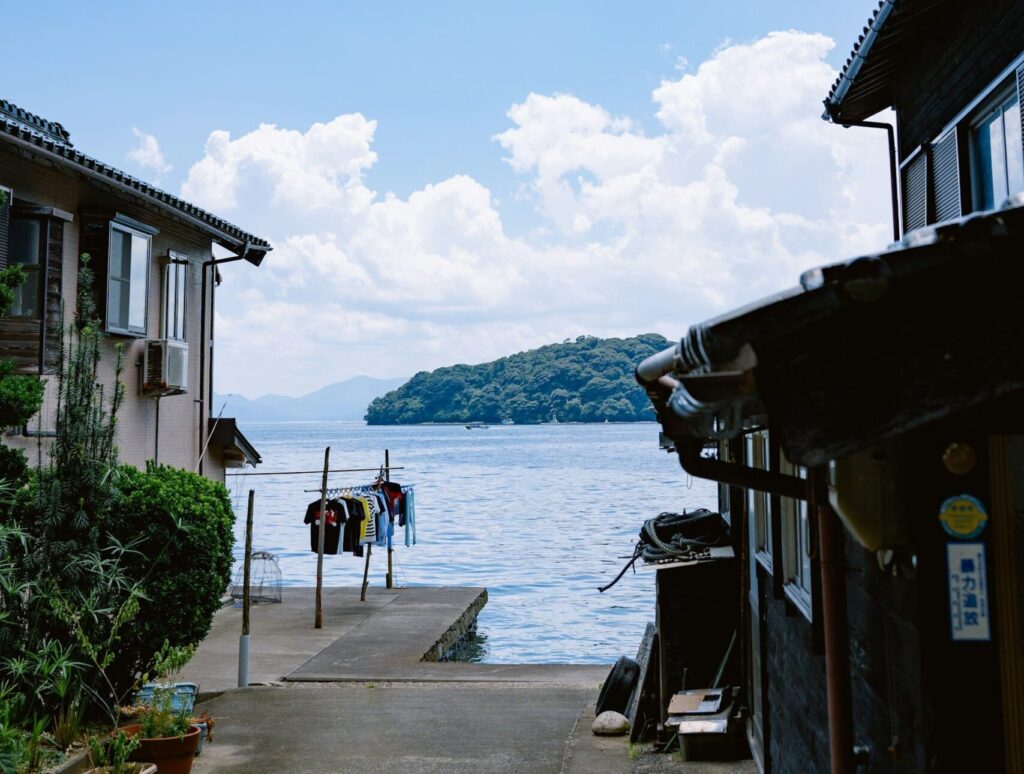
After the boat, spend at least 30–45 minutes on foot along the waterfront between the Hide boat dock and Ineura. This is the part of Ine most visitors rush past, and it is where the village stops being a photo backdrop and starts being a place people live. Look for the details you missed from the boat: nets hung to dry, small vegetable patches, boats tied up at private slips, and the narrow lanes that run between the boathouses and the houses behind them.
The waterfront path passes Ineura Park, a small green space with benches, and continues past the Tourist Information Center toward the village core. There is no fixed route, and that is the point — this is a place to wander, not a checklist. If the weather is clear, the light on the bay in the late afternoon is noticeably better than midday for photos along this stretch.
Best for: photographers, slow travelers, and anyone who wants to see daily life in Ine rather than just the famous view. Where to look: the back lanes behind the waterfront, where washing lines, fishing gear, and family life make the village feel real.
Remember That the Funaya Are Private Homes
One thing I tell every visitor: the funaya along the water are private residences, not an open-air museum. The ground floor may look like a boat garage, but people live above, and many families dry laundry on the seaward side. Treat the waterfront the way you would any residential street — keep noise down, don’t block driveways or boat slips, and photograph from the public path rather than stepping onto private land. Unauthorized entry is not allowed, and the Ine Tourist Association makes the same point in its own guidance.
If you want to see inside a boathouse, there are two proper ways to do it (see below) — both of which support the people who keep Ine alive.
4. Join a Local Walking Tour if You Want to Understand Ine

The waterfront and the boat give you the picture of Ine; a local guide gives you the story. Two guided options are offered through the village’s official tourism setup, and both meet at the Ine Tourist Information Center (伊根町観光案内所), next to the waterfront in the village core.
| Ine Walking & Cruising Tour | Beyond the Postcard Walk | |
|---|---|---|
| Duration | About 2 hours | About 90 minutes |
| Guide | English-speaking guide, private to your group | Resident of Ine, private to your group |
| What’s included | Waterfront walk, sea taxi ride (20–30 min), funaya interior visit, mondori experience, Mukai Brewery stop | Village walk, mondori experience, private funaya visit |
| Price | About ¥20,000 for two people (+¥5,000 per extra adult; under 12 free, ages 12–18 ¥2,000) | About ¥12,000 for up to two people (+¥3,000 per extra adult) |
| Booking | Reserve ahead (around 3 days in advance), cash only | Reserve ahead; confirm the latest details at the Tourist Information Center |
| Ends at | Village area | Ineura Park |
Both tours are priced for small groups, so they make sense for two to four people who want depth, not for budget solo travelers. What you’re paying for is access: a private funaya visit, a resident’s stories, and the mondori.
The mondori is a good example of what a guide adds. It’s the traditional basket-trap system residents still use along the shore to catch fish for the family dinner — a detail I only really understood on a guided walk, when a local showed me how the baskets are set and checked. Walking the same lanes on your own, you would walk straight past it. If your goal in Ine is photographs and a boat ride, you don’t need a tour. If your goal is to leave knowing how the village works, this is the single best way to spend the money.
Best for: small groups and couples who want a personal, unhurried look at how Ine actually functions. Who should skip: solo travelers on a budget, anyone short on time, and visitors happy with the self-guided version of the village.
5. Step Inside a Funaya Instead of Only Photographing One
Most people photograph the funaya from the outside and never see the inside. Two boathouses in the village are open for visits, and they answer the question you’ll have after the boat ride: what does it actually feel like to live in a room above a boat garage?
| Tomobutoya (友坊屋) | Kouyomaru (幸洋丸) | |
|---|---|---|
| What it is | A working funaya more than 80 years old | A funaya open for interior visits |
| Price | About ¥300 for viewing, ¥700 with gelato | About ¥200 adults, ¥100 children |
| Hours | Weekdays 10:00–16:00; weekends & holidays 9:00–17:00; closed Fridays | Weekdays 11:00–16:00; weekends & holidays 10:00–17:00; closed Wednesdays |
| Payment | Cash | Check on arrival |
Both are small, family-run places, and the experience takes 20–30 minutes including a short explanation. They are not museums with dioramas — you’re stepping into rooms that are still part of a living building, which is exactly what makes them worth the stop. Hours and closing days change, so check the latest before you plan around one.
Best for: architecture and culture curious visitors who want to understand the funaya beyond the facade. Who should skip: visitors on a tight two-hour schedule — the boat and the waterfront matter more on a short visit.
6. Stop at Mukai Brewery for a Very Different Side of Ine
Mukai Brewery (向井酒造) is a sake brewery run by master brewer Kuniko Mukai, one of the few female toji (head brewers) in Japan. Its signature is Ine Mankai (伊根満開), a sake brewed from ancient red rice that gives the drink a soft pink tint — a bottle that looks like nothing else you’ll see in a Japanese liquor store, and one that makes a memorable souvenir from a village with almost no souvenir shopping.
The brewery sits tucked into the lanes of the village, close enough to the waterfront to fit into the same walk as the house tours. A visit is short — a look at the brewery, a taste if you’re not driving, and a purchase if you like what you tried. It’s a stop I build into my own touring routes in the village, because it shows a side of Ine that has nothing to do with the postcard view: a working craft business that has kept the village economy alive.
One practical warning: if you’re driving, remember that sake tasting and driving don’t mix. Plan the brewery for the end of your visit, or make sure a non-drinker in your group is behind the wheel.
Best for: sake lovers, and anyone who wants a souvenir with a story. Who should skip: visitors on a tight schedule, or anyone not interested in alcohol — the detour is short but not essential.
Note: opening hours and tasting availability vary by season and by day, and the brewery closes on some weekdays. Check the latest opening days before you go.
7. Slow Down for Seafood, Coffee, or an Overnight Stay
Ine is a working fishing village, which means the food is better than a place this small has any right to serve. The waterfront has a handful of seafood restaurants where the day’s catch lands on your table a few hours after it comes in — the kind of lunch that makes the trip feel complete.
If you want a coffee break instead, INE CAFE, inside the converted funaya inn Funaya Biyori (舟屋日和), serves coffee and sweets in a boathouse setting, roughly 10:30–17:00 with slightly longer hours on weekends (last orders around 16:30). Cafe hours are famously changeable in Ine, so treat those as a guide, not a promise.
And if you can stay overnight, staying in a converted funaya is a completely different Ine from the day-tripper version: the day boats leave, the light goes soft, and the village turns back into a fishing town. Funaya stays book out well in advance, especially in summer and around holidays, so plan early if this is your plan.
Best for: travelers who want local seafood, coffee with a view, or the quiet version of Ine after dark. Who should skip: visitors who need to get back to Kyoto or Osaka the same day — the overnight version is a luxury of time, not a necessity.
How Long Do You Need in Ine Fishing Village?
Honest answer: two hours covers the core; half a day covers Ine properly; a full day or overnight covers it completely. Here’s what each looks like:
- 2 hours: viewpoint from Roadside Station Funaya-no-Sato Ine, one boat ride (25 minutes), and a 30-minute waterfront walk. You’ve seen Ine — the three views are done.
- Half a day (4–5 hours): everything above, plus a seafood lunch and one deeper experience — a house tour, Mukai Brewery, or a guided walk.
- Full day / overnight: the walking tour, both house tours, the brewery, a slow lunch, and the evening light on the bay. This is the version of Ine that changes how you remember it.
The mistake I see first-time visitors make is treating Ine as a 45-minute photo stop squeezed between Amanohashidate and the drive back — you end up with the picture and none of the place. If you’re already making the trip from Kyoto or Osaka, the extra hour is the difference between having seen Ine and having visited it.
If you’re coming from Kyoto or Osaka and the logistics of trains and buses are what’s holding you back, a day tour that bundles Amanohashidate, the Ine bay cruise, and a funaya walk is a reasonable shortcut — the transport is handled and you don’t need to think about connections. But the trade-off is real: tours run on a fixed clock, and Ine rewards lingering. If your main goal is to walk the lanes and take your time, sorting out your own transport and skipping the tour is usually the better fit.
Can you combine Ine and Amanohashidate in one day? Yes — the two are around 40 minutes apart by car (a little longer by bus), and combining them is the standard day-trip shape from Kyoto or Osaka. Just don’t try to add a third destination; the day fills up fast.
My Recommended First-Time Ine Itinerary
This is the shape of the day I use when I bring first-time visitors, with timings as approximations:
- 9:30–10:00 — Arrive and see from above. Park at Roadside Station Funaya-no-Sato Ine (free), take in the bay from the terrace, and if the shop is open, grab a coffee. Allow 20–30 minutes.
- 10:30 — See from the water. Drive down to the Hide boat dock area for the sightseeing boat, or to the Shichimensan parking area for a sea taxi. The ride takes about 25 minutes.
- 11:15 — See from street level. Walk the waterfront from the dock toward Ineura Park, then have lunch at a seafood restaurant along the way. Allow an hour including lunch.
- 13:00 — Go deeper (choose one). Either the 20–30 minute funaya house tour plus Mukai Brewery, or, if you booked ahead, a 2-hour guided walk.
- 15:00–15:30 — Leave. Back to the car; if you parked at the station, end with one last look from the terrace before you drive off.
If you’re arriving by public transport, start at the Tourist Information Center instead, walk to the Hide dock for the boat, and use the same afternoon shape. The sightseeing boat runs every 30 minutes from around 9:00–16:00, so you can slot the ride in whenever you arrive.
If you like this itinerary but do not want to manage the long round trip, parking, and timing yourself, a private day trip is the tour format that fits this guide best.
Why I’d book this one
- It is private and customizable, which makes it a better fit for Ine’s slower pace than a tightly timed large-group bus tour.
- Recent travelers mention comfortable transport, smooth organization, and a pace that does not feel overly rushed.
- The booking page lets you check current pickup details, cancellation terms, and payment flexibility before committing.
Practical Tips Before Visiting Ine
Driving and Parking
Parking is the detail that most changes how your day goes, because the lots are small and the village is built on a slope. Your realistic options:
| Lot | Size & cost | Why you’d use it |
|---|---|---|
| Roadside Station Funaya-no-Sato Ine (道の駅 舟屋の里伊根) | Around 138 spaces, free, open 24 hours | The high viewpoint, the terrace, and the safest bet for finding a space |
| Ineura Park lot (伊根浦公園駐車場) | Small (around 22 spaces), paid | Closest to the waterfront walk and the village core |
| Shichimensan lot (七面山駐車場) | Around 57 spaces, paid | Boarding point for the sea taxis |
| Onishi lot (大西駐車場) | Around 37 spaces, paid | Backup option near the waterfront |
Rates at the paid lots have changed several times in recent years, so I won’t quote exact numbers here — check the current fees at the lot or the Ine Tourist Association’s page. The strategic point is simpler: park at the roadside station for free and start from the top, or pay for the convenience of being near the boats. On busy weekends, the small waterfront lots fill early and queues form; the station lot is your best insurance against circling the village.
On very busy weekends in recent years, the town has also run an experimental park-and-ride service — free parking with a shuttle into the village. Whether it’s operating on your date changes from season to season, so it’s worth asking the Tourist Information Center or checking the town’s announcements before you set out.
Wear Shoes You Can Actually Walk In
Kai’s tip: The walking in Ine is easy but constant — the slope from the roadside station down to the waterfront, the flat bay path, and the narrow back lanes add up to more ground than the village looks like it has. What catches people out here is doing it in shoes chosen for a museum day in the city. If I had one piece of advice for the packing list, it’s comfortable, non-slip shoes you don’t mind getting damp near the docks — the difference between an easy afternoon and a tired one is mostly in your feet.
Check the Boat Status Before You Go
Both boat options depend on the sea and the day. The large sightseeing boat generally sails in most conditions but can suspend service in rough weather, and the sea taxis are individual operators — some have no roof, so rain is a real consideration, and each skipper runs their own schedule. On the day of your visit, ask at the Ine Tourist Information Center or check the operator’s own page for today’s sailing status before you commit your plan. If the water is off, the fallback is a longer waterfront walk and the house tours, which run in almost any weather.
And carry cash as a backup: several small operators, the house tours, and some restaurants are cash-only, and card acceptance in the village is patchy.
Is Ine Fishing Village Worth Visiting?
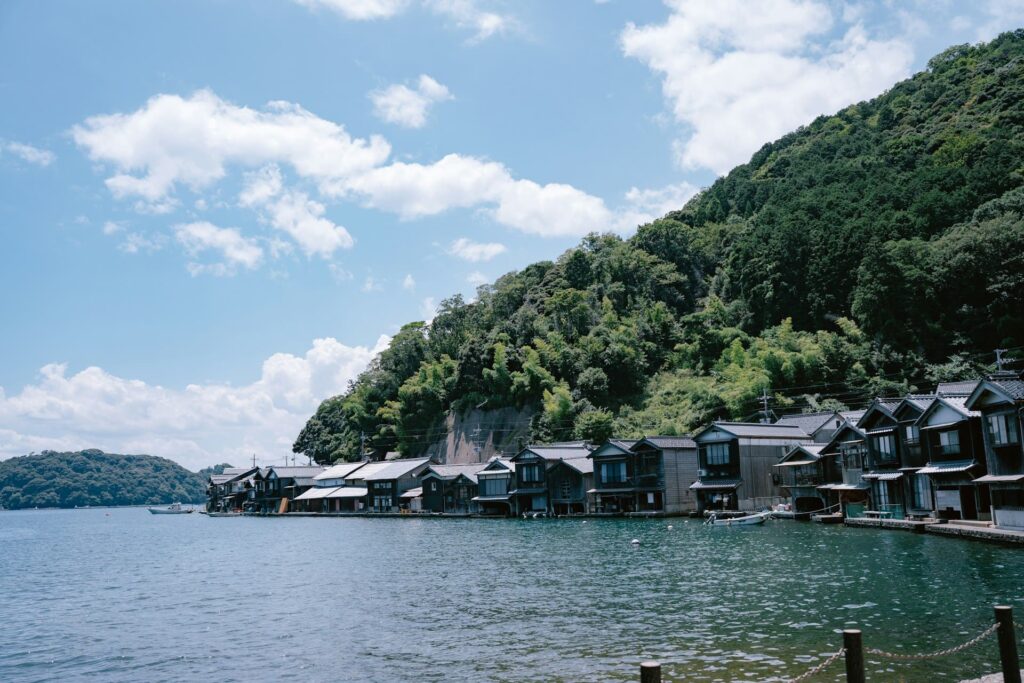
For most first-time visitors to northern Kyoto, yes — but it’s worth being honest about what Ine is. It is not a collection of attractions; it’s one village, seen well. If you go expecting the density of a city sightseeing day, you’ll find it quiet. If you go expecting to understand a place that exists nowhere else in Japan — boathouses facing the sea, a working fishing town that has held its shape for generations — it delivers more than almost anywhere I take visitors.
My honest advice: come with modest expectations and a slow pace, and let the three views do the work. Ine doesn’t perform for you; it just is, and that’s the point of coming.
If the only thing standing between you and this trip is the logistics of getting here from Kyoto or Osaka, a day tour that handles the transport is a reasonable middle ground. If the hesitation is about the village itself — whether one quiet fishing town justifies the journey — a tour won’t change that answer. That one, only the bay can decide for you.
FAQ
How long do you need in Ine Fishing Village?
Two hours covers the essential three views — the viewpoint at Roadside Station Funaya-no-Sato Ine, one boat ride, and a waterfront walk. Half a day (four to five hours) lets you add lunch and one deeper stop such as a funaya house tour, Mukai Brewery, or a guided walk. A full day or an overnight stay is the version where Ine really gets under your skin, but it is not required to have a good visit.
Which is better: the Ine Bay sightseeing boat or a sea taxi?
Both ride the same bay for about 25 minutes, so the choice is about the experience you want. The large sightseeing boat is stable, runs on a fixed schedule every 30 minutes or so, needs no reservation for individuals, and is the best bet for families and for the famous seabird feeding. The sea taxis are small boats with local skippers who talk you around the village; they get you closer to the boathouses and are great for small groups, but some have no roof and each skipper runs their own schedule. For photography, the sea taxi or the lower deck of the large boat tends to give you cleaner shots of the boathouses.
Can you visit Ine and Amanohashidate on the same day?
Yes. The two are roughly 40 minutes apart by car (a little longer by bus), and combining them is the standard day-trip shape from Kyoto or Osaka. Do Ine first or last depending on your transport, but don’t add a third destination — the day fills up fast and Ine deserves more than a photo stop.
Do you need a guided tour in Ine, or can you explore on your own?
You do not need a guide. The three core views — the viewpoint, the boat, and the waterfront walk — are entirely self-guided, and that is a complete visit. A local walking tour adds what you cannot get on your own: a private funaya visit, a resident’s stories, and the mondori basket-fishing system explained in front of you. The tours are priced for small groups, so they are worth it if you want depth and are travelling as two to four people, and unnecessary if you are happy with the self-guided version.
Can you go inside a funaya?
Yes, at two boathouses that are open for visits: Tomobutoya (around ¥300 for viewing) and Kouyomaru (around ¥200), both family-run and open on most days except one closing day each. The vast majority of funaya are private homes, so the open houses are the proper way to see the inside without intruding on anyone’s life.
Final Verdict
Choose Ine if you want to see a way of life that exists nowhere else in Japan, and you’re willing to trade attraction-counting for three views of one extraordinary village. Choose another destination if you want a packed sightseeing day or you need guaranteed, weather-proof activities — Ine is quiet, outdoor, and unhurried by design.
- For first-time visitors: do the three views in order — the terrace at Roadside Station Funaya-no-Sato Ine, one boat ride, then the waterfront walk. Two hours, and you have genuinely seen Ine.
- For families: take the large sightseeing boat and let the seabirds be the entertainment; keep the waterfront walk short and stop at Ineura Park for a breather. The roadside station’s free lot makes the car logistics painless.
- For travelers on a tight schedule: skip the house tours and the brewery, do the three views, and leave. Coming all this way for only the photo stop is the one outcome I’d try to avoid — the extra hour is what makes the trip feel real.
- For repeat visitors or curious travelers: book one of the guided walks (the Ine Walking & Cruising Tour or the resident-led Beyond the Postcard walk), step inside Tomobutoya or Kouyomaru, and end at Mukai Brewery. That is the version of Ine most people never see.
What I’d tell a friend visiting for the first time is simple: don’t rush Ine, and don’t expect it to perform. Come down the hill slowly, take the boat, walk the waterline, and let the village do what it has done for centuries. That is the whole of it — and that is enough.

Hi, I’m Kai. I’m a Tokyo-based travel writer, tourism industry insider, and the author of a published guidebook for international visitors to Japan. With over 10 years of professional experience at a leading Japanese tourism company, my mission is to help you skip the tourist traps and navigate Japan’s best destinations like a local. I believe the perfect day trip is like a traditional kaiseki meal: a beautiful balance of precise planning and unforgettable seasonal discovery. When I’m not out conducting field research, you’ll usually find me drafting new itineraries with one of my favorite fountain pens!