
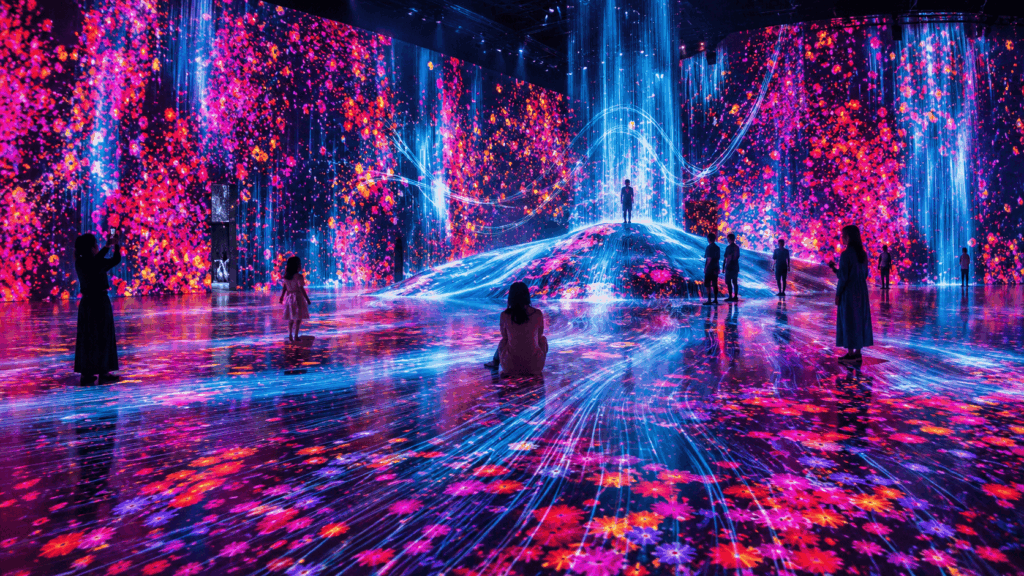
If you are planning a trip to Tokyo, choosing between teamLab Planets vs Borderless is one of the easiest places to make a booking mistake. Both are immersive digital art museums in Tokyo, but they are not interchangeable experiences.
The simplest difference is this: teamLab Planets in Toyosu is physical, barefoot, watery and more structured, while teamLab Borderless in Azabudai Hills is dry, maze-like, visual and more exploratory.
This guide compares the two Tokyo teamLab museums by experience style, location, time needed, ticket price, kids, strollers, wheelchair access and itinerary fit, so you can decide which one to book before your Tokyo dates fill up.
Information note: Practical details in this comparison are based on current visitor information available for 2026. Ticket prices, opening hours, artwork access and entry rules can change, so always check your ticket seller and the official museum information before you go.
Which Tokyo teamLab Should You Choose?
If you want the fastest answer, choose based on the kind of experience you want rather than which museum sounds more famous.
- Choose teamLab Planets if you want a barefoot, hands-on experience with water, soft floors, flowers and more physical interaction. It is usually the better choice for families, active travelers and first-time visitors who want a clear route to follow.
- Choose teamLab Borderless if you want a dry, visually intense, no-map art experience where you wander through dark rooms and discover artworks at your own pace. It is usually the better choice for adults, couples, photography-focused visitors and travelers staying around central Tokyo.
- If you are still unsure, choose Planets for a more playful “I can only do this in Japan” experience, or Borderless for a more atmospheric, artistic and flexible museum visit.
There are also a few practical deal-breakers. At Planets, you remove your shoes and socks and walk through water that can rise up to around adult knee height. At Borderless, you keep your shoes on and stay dry, but you should be comfortable exploring a dark, map-free space.
How Do teamLab Planets and Borderless Compare Before You Book?
| Decision Point | teamLab Planets | teamLab Borderless |
|---|---|---|
| Best for | Families, active travelers, first-time visitors and people who want a physical experience | Adults, couples, art lovers, photographers and people who enjoy exploring freely |
| Avoid if | You dislike walking barefoot, getting your feet wet or planning clothes around mirrored floors | You dislike dark maze-like spaces, visual overstimulation or not having a fixed route |
| Location | Toyosu, near Toyosu Market and the Tokyo Bay area | Azabudai Hills, near Tokyo Tower and Roppongi |
| Route style | Mostly linear, with a clearer route from one area to the next | Non-linear, with no museum map and more free wandering |
| Water and shoes | Water areas, barefoot required, socks and tights removed | No water walking, shoes stay on |
| Clothing risk | Higher. Avoid short skirts, wide-hemmed skirts and pants that cannot be rolled up | Lower. Comfortable walking shoes are the main concern |
| Time needed | Usually around 2 to 3 hours | Usually around 3 to 4 hours if you explore slowly |
| Kids | Often the stronger choice for children who enjoy movement and interactive spaces | Better for older children, teens and families comfortable with darker, less structured spaces |
| Strollers | Not allowed inside the exhibition; stroller parking is available outside the building | Not allowed inside the exhibition; strollers must be left in the luggage area |
| Wheelchair notes | Wheelchair access is available, but some works require detours, special routes or limited viewing | Wheelchair access is available and generally easier than Planets, but some works may still be inaccessible |
| Adult ticket price | From JPY 3,600 for adults, as of May 2026 | From JPY 3,600 for adults, as of May 2026; adult tickets use dynamic pricing |
| Best itinerary pairing | Toyosu Market, Odaiba, Ginza or Tokyo Bay | Azabudai Hills, Tokyo Tower, Roppongi or central Tokyo plans |
For most travelers, the biggest deciding factor is not the art quality. It is whether you want a barefoot water-based experience or a dry no-map visual experience. Once you decide that, the better museum for your trip usually becomes obvious.
What Is teamLab Planets Like?
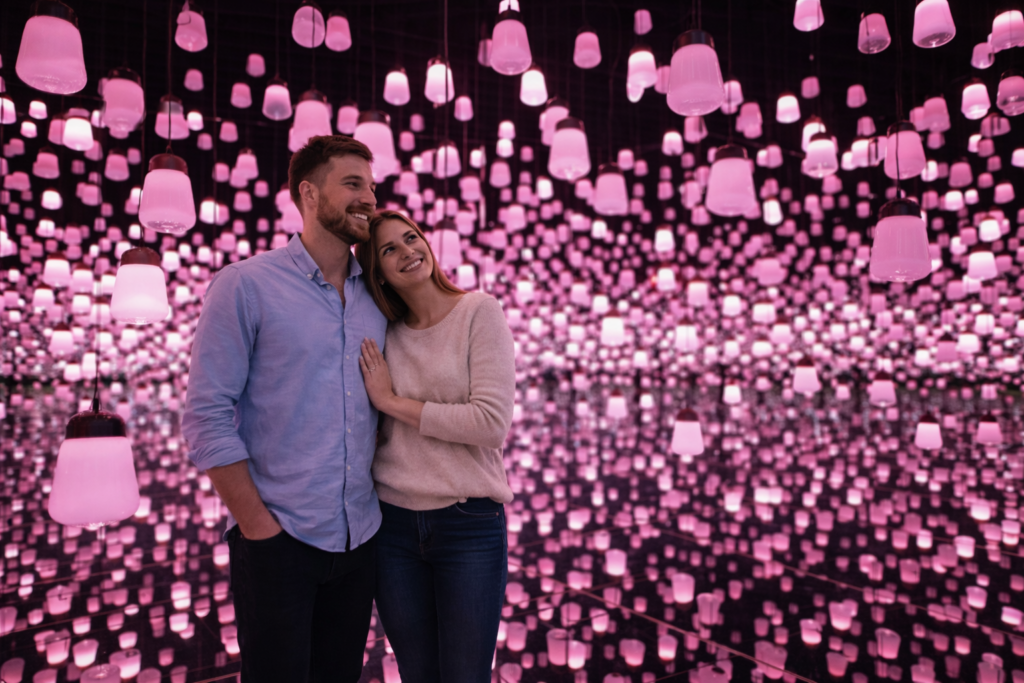
teamLab Planets is located in Toyosu, close to Toyosu Market and the Tokyo Bay area. It is the more physical of the two Tokyo teamLab museums, and its identity is built around using your whole body rather than simply looking at digital art.
The key thing to know before booking is that you will remove your shoes and socks. Some artworks involve walking barefoot through water, and water levels can rise high enough that your lower legs may get wet. Other spaces include mirrored floors, soft surfaces, dark areas and large-scale digital rooms that respond to movement.
Who Is teamLab Planets Best For?
Planets is the better fit if you want an active and tactile experience. It feels more like moving through a sequence of immersive environments than visiting a traditional museum.
It is especially good for travelers who want:
- A clear route instead of a maze-like museum
- A more playful experience for kids or active adults
- Water, flowers, lights and physical interaction
- A Tokyo Bay itinerary with Toyosu Market, Odaiba or Ginza
- A visit that usually feels easier to complete in a shorter schedule than Borderless
For families, Planets can be the more memorable choice because children usually understand the appeal quickly: take off your shoes, walk through water, move through lights and interact with the space. That said, parents should be ready for dark areas, wet clothing risk and the need to keep children close.
What Should You Wear to teamLab Planets?
Clothing matters much more at Planets than at Borderless. Avoid short skirts, wide-hemmed skirts or anything that may reflect in mirrored floors. Also avoid tight pants that cannot be rolled up, because some water areas may reach around adult knee height.
Free rental shorts may be available, but it is better to arrive prepared. Lightweight pants that roll up easily are usually the safest choice. If you are visiting with children, bringing a change of clothes can also be useful because the water areas are not designed for swimming, but kids may still get wet.
What Should You Know About Access at teamLab Planets?
Strollers are not allowed inside the Planets exhibition space. If you are visiting with a baby or toddler, bring a baby carrier if possible and use the stroller parking area before entering.
Wheelchair access is available, but Planets is not the simplest choice for every wheelchair user because some artworks involve water, soft floors, slopes, mirrored surfaces or routes that require assistance. Some works may require a detour, special wheelchair or viewing from a designated area only. Travelers with mobility concerns should check the current access rules before booking.
What Is teamLab Borderless Like?
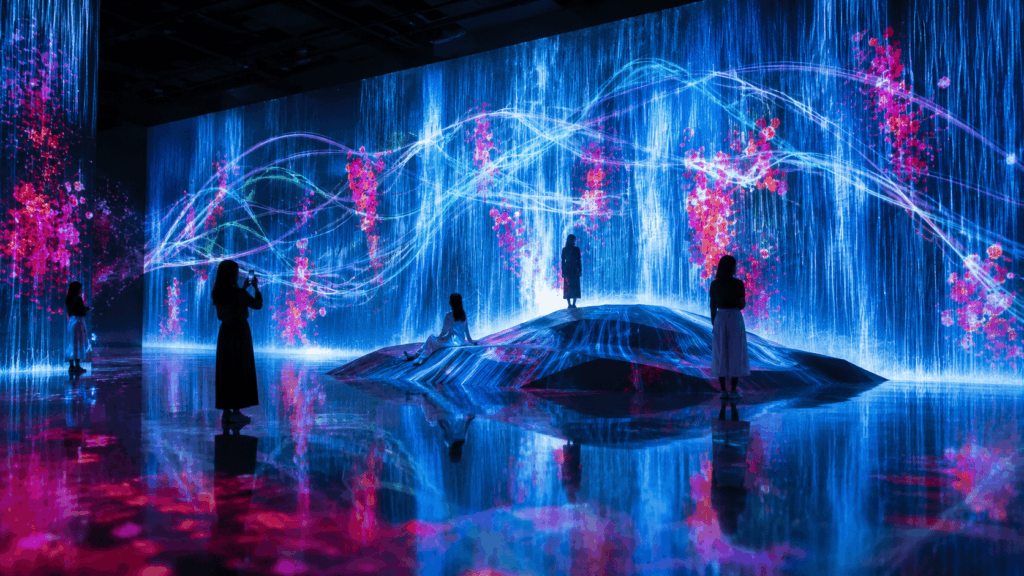
teamLab Borderless reopened in Azabudai Hills in 2024 and offers a very different experience from Planets. Instead of following one clear route, you move through a dark, shifting digital world where artworks move, change and interact across rooms.
The main concept is that Borderless is a museum without a map. That is part of the appeal, but it also means you should expect to wander, backtrack and occasionally miss things unless you explore slowly.
Who Is teamLab Borderless Best For?
Borderless is usually the stronger choice for adults, couples, photography-focused travelers and visitors who want a more atmospheric art experience. It is less about touching, splashing or moving through water, and more about being surrounded by large-scale projections, sound, darkness and constantly changing visuals.
It is especially good for travelers who want:
- A dry museum where you keep your shoes on
- A more sophisticated visual experience
- A flexible visit with no fixed route
- Easy pairing with Azabudai Hills, Tokyo Tower or Roppongi
- A central Tokyo location that may fit more smoothly into a packed itinerary
Borderless is also a better choice if the idea of removing your shoes, getting your feet wet or planning your clothes around mirrored floors sounds annoying. You still need comfortable shoes because you may walk and stand for several hours, but the clothing risk is much lower than at Planets.
What Should You Know About Access at teamLab Borderless?
Strollers are not allowed inside Borderless and must be left in the luggage area. If you are visiting with a baby, a carrier is usually more practical than relying on a stroller.
Wheelchair access is available at Borderless, and it is generally the easier of the two museums for wheelchair users. However, some artworks may not be accessible by wheelchair, and entry may be managed depending on capacity. Travelers with mobility concerns should still check the latest access guidance before choosing a date.
Borderless is not a quiet or brightly lit museum. The spaces can be dark, visually intense and disorienting, which is part of the experience. If someone in your group is sensitive to darkness, crowds, sound or strong light, Planets may feel more structured, while Borderless may feel more overwhelming.
Which teamLab Tokyo Should You Book?

After comparing teamLab Planets vs Borderless, the best choice depends on your group, your comfort level and the rest of your Tokyo itinerary.
Should You Book teamLab Planets?
Book teamLab Planets if you want the more physical and playful experience. It is the better fit if walking barefoot through water sounds exciting rather than inconvenient, and if your group wants a clear route instead of a dark, open-ended maze.
Planets is usually the better choice for:
- Families with children who enjoy movement and interactive spaces
- First-time visitors who want a famous, highly memorable Tokyo experience
- Travelers building a day around Toyosu Market, Odaiba, Ginza or Tokyo Bay
- People who prefer a more structured route through the museum
- Visitors who do not mind removing shoes and planning clothes carefully
Avoid Planets if you strongly dislike bare feet, water, mirrored floors or clothing restrictions. It is also the museum that requires more planning if someone in your group has mobility concerns.
Book teamLab Planets TOKYO tickets here
Should You Book teamLab Borderless?
Book teamLab Borderless if you want the more atmospheric and visually immersive museum. It is the better fit if you prefer to keep your shoes on, stay dry and explore a large digital art space without following a fixed route.
Borderless is usually the better choice for:
- Adults, couples and groups of friends
- Photography-focused travelers
- Visitors staying around central Tokyo, Roppongi, Akasaka or Tokyo Tower (if you are still undecided, check our guide on where to stay in Tokyo)
- People who want to combine teamLab with Azabudai Hills
- Travelers who prefer visual immersion over physical interaction
Avoid Borderless if you dislike dark spaces, heavy visual stimulation, crowds or not knowing exactly where to go next. The no-map design is part of the experience, but it can feel disorienting for some visitors.
Book teamLab Borderless tickets here
How Should You Fit teamLab Into Your Tokyo Itinerary?
Location can be the deciding factor if both museums sound appealing. Neither choice is wrong, but each one fits a different kind of Tokyo day. If you are still mapping out your schedule, you can see how we structure a Tokyo in a day itinerary to balance major sights effectively.
What Can You Pair With teamLab Planets?
Planets is in Toyosu, so it works best with a Tokyo Bay or eastern Tokyo itinerary. It is especially easy to combine with:
- Toyosu Market: A natural pairing before or after your museum visit
- Odaiba: Good if you want waterfront views, shopping or family-friendly attractions
- Ginza: Useful if you want shopping or dinner after returning toward central Tokyo
- Tokyo Bay: Best if your day already includes bay-area sightseeing
If your Tokyo schedule is already focused on Shibuya, Shinjuku, Roppongi or Tokyo Tower, Planets may require more travel time than Borderless.
What Can You Pair With teamLab Borderless?
Borderless is in Azabudai Hills, which makes it easier to combine with central Tokyo plans. It works especially well with:
- Azabudai Hills: The simplest pairing because the museum is inside the complex
- Tokyo Tower: A strong before-or-after combination for first-time visitors
- Roppongi: Good for dining, nightlife or other art museums
- Akasaka or Toranomon: Convenient if you are staying nearby
If your day already includes Tokyo Tower or Roppongi, Borderless usually fits more smoothly than Planets.
Frequently Asked Questions About teamLab Planets vs Borderless
Do You Need to Book teamLab Tickets in Advance?
Yes. Both teamLab Planets and teamLab Borderless use timed-entry tickets, and popular dates can sell out, especially weekends, holidays and peak travel periods. If your dates look unavailable, check our guide on how to buy teamLab Tokyo tickets for alternative booking strategies. It is better to book online once your Tokyo dates are fixed rather than relying on same-day availability.
Always check the conditions of the ticket seller you use. Entry time, cancellation rules, late-arrival handling and ticket transfer rules can vary depending on where you book.
Is teamLab Planets or Borderless Better for Kids?
For many families, teamLab Planets is the easier recommendation because it is more physical, more playful and more immediately understandable for children. The barefoot water areas and interactive spaces tend to feel exciting rather than purely visual.
teamLab Borderless can still work well for older children and teens, especially if they enjoy photography, digital art or exploring freely. However, younger children may find the dark rooms, crowds and no-map layout more tiring.
Are Strollers Allowed Inside teamLab Planets or Borderless?
No. Strollers are not allowed inside the exhibition areas at either museum. Planets has stroller parking outside the building, while Borderless requires strollers to be left in the luggage area.
If you are visiting with a baby or toddler, bring a baby carrier if possible. This is especially important if your child may get tired while waiting, walking or moving through darker rooms.
Which teamLab Is Better for Wheelchair Users?
teamLab Borderless is generally the easier choice for wheelchair users because it does not involve barefoot water areas. However, some artworks may still have access limits, and entry may be managed depending on conditions inside the museum.
teamLab Planets also offers wheelchair access, but some works may require detours, special routes, a dedicated wheelchair or viewing from limited areas. If accessibility is a major factor, check the latest official guidance before choosing between the two.
What Happens If You Are Late for Your Entry Time?
Do not assume that late entry rules are the same for both museums or for every ticket seller. If you are late, check the terms on your voucher and the latest visitor rules for the museum you booked.
As a general rule, aim to arrive at least 15 minutes before your entry time. This gives you time for navigation, lockers, stroller storage, shoe removal at Planets and any queue at the entrance.
Is teamLab Planets or Borderless Better on a Rainy Day?
Both museums are indoor attractions, so either can work well on a rainy day. The difference is comfort.
Borderless is easier if you want to stay completely dry and keep your shoes on. Planets can still be a good rainy-day choice, but you should be more careful with clothing because the museum already involves barefoot water areas and mirrored floors.
Can You Visit Both teamLab Planets and Borderless?
Yes, but most travelers do not need to visit both unless they are especially interested in digital art or have enough time in Tokyo. The experiences are different enough that doing both is not repetitive, but it can take a large part of your itinerary.
If you visit both, do them on separate days if possible. Planets pairs better with Toyosu and Odaiba, while Borderless pairs better with Azabudai Hills, Tokyo Tower and Roppongi.
Which teamLab Is Better for Photos?
Both museums are photogenic, but in different ways. Planets is better for dramatic barefoot water and flower-room photos, while Borderless is better for darker, more atmospheric projection-based images.
If your priority is clothing control and staying dry, Borderless is usually easier. If you want more distinctive physical scenes, Planets may feel more memorable.
Which teamLab Tokyo Is Worth It in 2026?
Both are worth visiting, but not for the same traveler. Choose teamLab Planets if you want the more tactile, water-based and family-friendly experience. Choose teamLab Borderless if you want the more visual, exploratory and central Tokyo experience.
The best choice is the one that fits your group’s comfort level. If anyone in your group is worried about bare feet, water, clothing restrictions or mobility, Borderless is usually safer. If everyone is excited by a more unusual physical experience, Planets is the more distinctive choice.
Where Should You Book Your teamLab Tickets?
Book the museum that matches your itinerary and comfort level, then choose a timed-entry slot that gives you enough travel time before and after the visit. Avoid placing teamLab too tightly between other reservations, because queues, lockers, stroller storage and transport can take longer than expected.
Before booking, confirm the latest opening hours, ticket price, cancellation rules, access information and entry conditions for your exact date.

Hi, I’m Kai. I’m a Tokyo-based travel writer, tourism industry insider, and the author of a published guidebook for international visitors to Japan. With over 10 years of professional experience at a leading Japanese tourism company, my mission is to help you skip the tourist traps and navigate Japan’s best destinations like a local. I believe the perfect day trip is like a traditional kaiseki meal: a beautiful balance of precise planning and unforgettable seasonal discovery. When I’m not out conducting field research, you’ll usually find me drafting new itineraries with one of my favorite fountain pens!