
If you are planning a day trip to Nara from Kyoto or Osaka, the easiest choice is usually this: take Kintetsu if you want the most convenient station for sightseeing, and take JR if you already have a JR Pass. For most first-time visitors, the biggest difference is not just the train time, but which station you arrive at.
This guide compares the trains from Kyoto, Osaka-Namba, Osaka (Umeda), Tennoji and Tsuruhashi, then explains what happens after arrival. The fastest train between stations is not always the fastest route to the Great Buddha or the deer.
Quick answer:
- Best overall for most travelers: Kintetsu. It is usually more convenient for Nara Park and the main sights.
- Best for JR Pass holders: JR. The ride is covered, so it is the best-value option if you already have the pass.
- Best from Namba: Kintetsu from Osaka-Namba Station.
- Best from Umeda or Osaka Station: A direct JR Yamatoji Rapid is usually easiest if its departure is convenient; compare the full journey if your hotel is closer to a subway connection for Osaka-Namba.
- Using an IC card: You can tap in with Suica, ICOCA, or PASMO on regular JR and Kintetsu trains.
- Best from Tennoji: Use JR to JR Nara. Best from Tsuruhashi: Use Kintetsu to Kintetsu-Nara.
For a quick comparison, here is what matters most for travelers choosing between JR and Kintetsu. Travel times and fares can vary slightly depending on the train type and time of day.
Check Availability: Nara: Private Tour with Deer Park & Temples (Licensed Guide)
At a Glance: JR vs Kintetsu for Nara

| Category | Kintetsu Line | JR Line |
|---|---|---|
| Best for | Most visitors without a JR Pass | JR Pass holders |
| Arrival station | Kintetsu Nara Station | JR Nara Station |
| Distance to Nara Park | About 5 minutes on foot | About 20 minutes on foot or a short bus ride |
| From Kyoto | Express about 45–50 minutes (¥760); regular Limited Express about 35 minutes (¥1,280 total) | Miyakoji Rapid about 45–50 minutes (¥720) |
| From Osaka | Best from Osaka-Namba or Tsuruhashi | Direct from Osaka Station or Tennoji |
| JR Pass covered? | No | Yes |
| Seat reservation | Not for Express/Rapid Express; required for Limited Express | Not necessary for ordinary unreserved rapid services |
The Golden Rule: Kintetsu Nara vs JR Nara Station
Before you compare train times, you need to know one important fact: Nara has two main stations, and the station you choose can change your entire day trip.
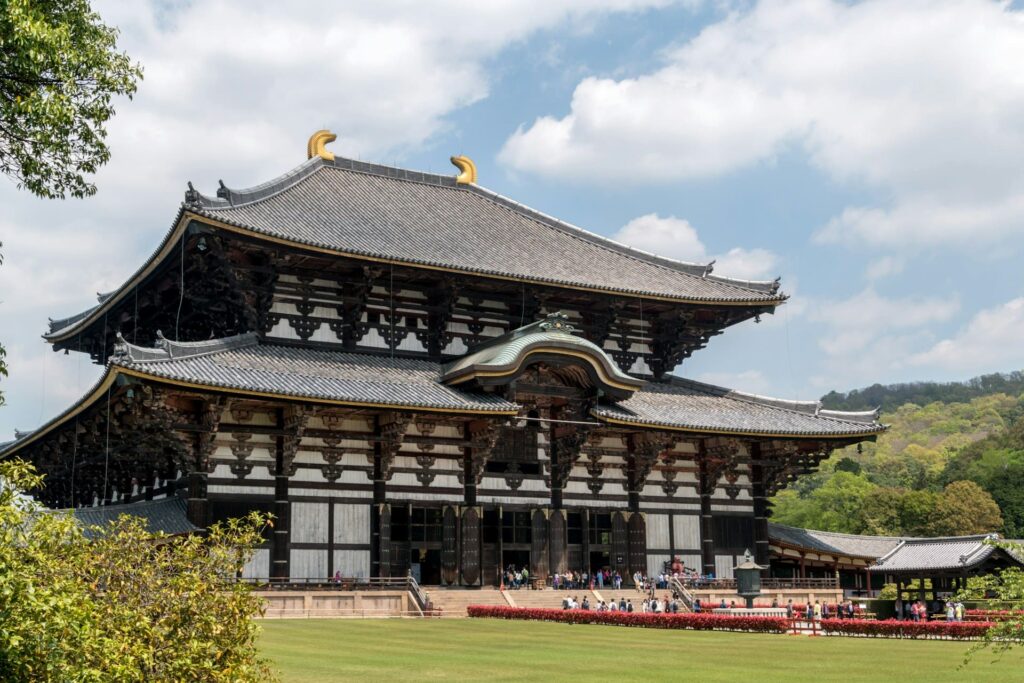
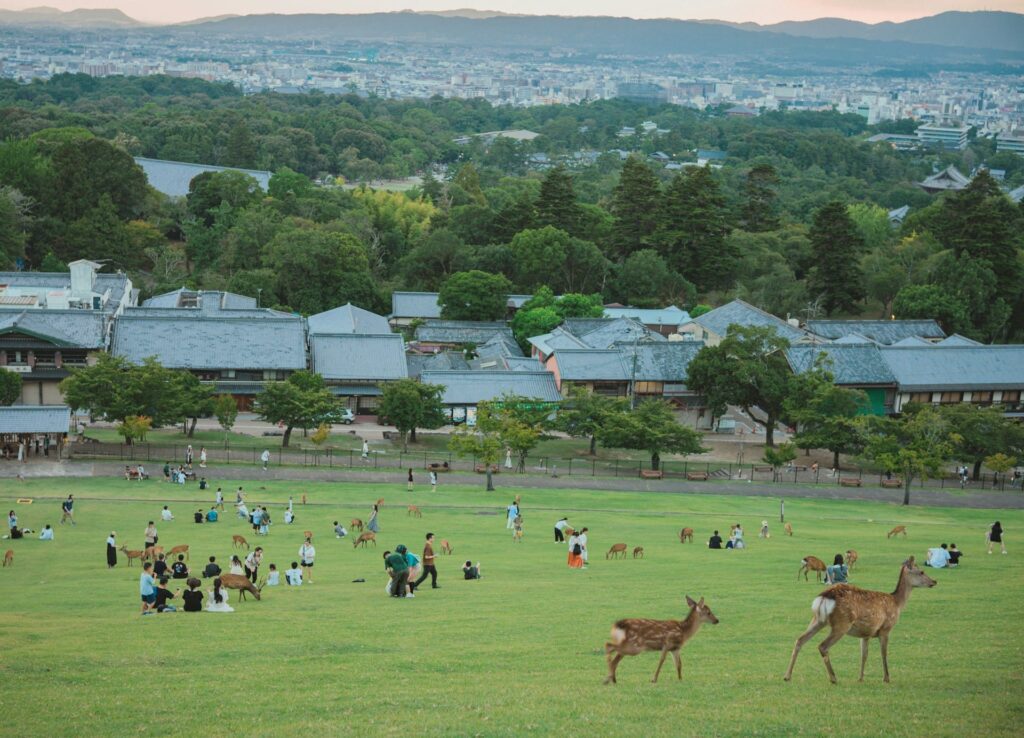
- Kintetsu Nara Station: This is the most convenient station for sightseeing. It is close to Nara Park, and you can usually reach the famous deer area within a few minutes on foot. That is the edge of the park area, not Todai-ji’s Great Buddha Hall, which takes about 20 minutes on foot from the station according to the temple.
- JR Nara Station: This station is farther from the main attractions. You may need to walk around 20 minutes or take a local bus before your sightseeing really begins.
If you are traveling with bags, both stations have luggage storage and coin lockers available before you head into the park.
The stations are not interchangeable: Kintetsu-Nara is the eastern, more convenient sightseeing arrival; JR Nara is to the west. Make sure your map app is set to the station operated by the company you actually plan to use.
Walking and Bus Access from Nara Stations
Do not confuse “five minutes to Nara Park” with “five minutes to the Great Buddha.” The park covers a wide area, and the route to Todai-ji, Kasuga Taisha or Naramachi can change how you should judge a train.
| First stop | From Kintetsu-Nara | From JR Nara |
|---|---|---|
| Nara Park, western edge | About 5 minutes on foot | About 20 minutes on foot |
| Kofuku-ji | Short walk east from the station | Longer walk along Sanjo-dori or via bus toward the park |
| Todai-ji (Great Buddha) | About 20 minutes on foot per Todai-ji’s access guidance | Use a sightseeing bus toward Todai-ji or allow a substantially longer walk |
| Kasuga Taisha | Longer walk through the park or local bus | Bus toward Kasuga Taisha is often less tiring |
| Naramachi (Gango-ji Temple) | About 15 minutes on foot to Gango-ji | About 20 minutes on foot to Gango-ji |
How to catch a bus from JR Nara Station
For the Todai-ji and Kasuga Taisha side of the park, leave via JR Nara Station’s East Exit and look for bus stop 2, where Nara Kotsu lists the city loop’s outer service and buses toward the park and Kasuga Taisha. Confirm the direction on the electronic display before boarding; city loop buses have different directions.
For Todai-ji, the temple recommends the bus stop Todai-ji Daibutsuden / Kasuga Taisha-mae, followed by about five minutes’ walking. The standard Nara city loop bus fare is typically ¥250 for an adult, separate from the train fare; check the bus operator’s latest fare and timetable before travel. The separate Gurutto sightseeing bus has different routes and operating days, so do not assume it is interchangeable with the regular city loop.
For current stops and schedules, check the official Nara Kotsu boarding-point guide and Todai-ji’s official access page.
Compare the whole trip, not just the train ticket
From Kyoto, a ¥720 JR ticket plus one ¥250 local bus ride costs ¥970 one way; a ¥760 Kintetsu Express ticket followed by a walk may cost less overall. But if you prefer walking, the JR total stays ¥720. Treat these as examples, not universal door-to-door prices: add your journey to the departure station, train waiting time and any further sightseeing transport.
How to Get to Nara from Kyoto
Getting to Nara from Kyoto is simple, and both JR and Kintetsu are good options. The better choice depends on whether you want the closest station or the best value with a JR Pass.
Option 1: Kintetsu Line
Kintetsu is usually the most convenient option for sightseeing because it brings you straight to Kintetsu Nara Station, which is closer to Nara Park.
- Limited Express: About 35 minutes. 1,280 JPY total (¥760 base fare + ¥520 standard Limited Express charge). Reserved seats only.
- Express: About 45 to 50 minutes. 760 JPY. No reservation needed.
Board at Kintetsu Kyoto Station, located inside the Kyoto Station complex.
Direct trains or a transfer at Yamato-Saidaiji?
Check the destination shown on the train, not just its speed category. Some Kyoto departures run all the way to Kintetsu-Nara without a change. Others finish at Yamato-Saidaiji or head to a different destination, in which case you need a connection for Kintetsu-Nara. A change at Yamato-Saidaiji is normal and does not mean you bought the wrong ticket.
If you board a train marked Kintetsu-Nara, stay on through Yamato-Saidaiji. If it terminates there, check the departure display for a train bound for Kintetsu-Nara, typically only a short ride away. Platform assignments can vary; follow the live signs rather than a platform number copied from an old blog post.
Is the Limited Express worth the extra fare?
The ordinary Kintetsu Express is usually sufficient for a day trip. The Limited Express saves roughly 10–15 minutes on a typical direct Kyoto run and guarantees a reserved seat. It is more attractive with luggage, when traveling with someone who needs a seat or when a particular departure fits your itinerary.
The Limited Express ticket is additional to the base fare. You can pay the base fare by a supported IC card but still need a separate reserved-seat Limited Express ticket before boarding. The sightseeing Limited Express AONIYOSHI is a separate premium option: Kyoto–Kintetsu-Nara starts at ¥1,490 for an adult sharing a twin compartment as specified by Kintetsu; a solo traveler using the twin arrangement pays more. It is an experience, not the default budget route. Check Kintetsu’s AONIYOSHI fare and timetable page if considering it.
Confirm your departure, connection and Limited Express seat availability using the official Kintetsu route and fare search.
Option 2: JR Nara Line
If you have a JR Pass, this is the best-value route. From JR Kyoto Station, take the JR Nara Line and look for the Miyakoji Rapid Service. The ride takes about 45 minutes and costs around 720 JPY if you are paying separately.
Avoid the local train if possible. It stops at every station and takes much longer than the Miyakoji Rapid.
Since March 14, 2026, the Miyakoji Rapid and Regional Rapid services also stop at Inari Station, close to Fushimi Inari Taisha. If you are combining Fushimi Inari and Nara on the same day, JR can be the simplest choice even without a JR Pass. Use the JR Nara Line to Inari, visit the shrine, and resume toward Nara. A normal single ride to Nara does not automatically allow a stopover outside the fare gates; pay or tap for the appropriate separate legs.
JR’s Miyakoji Rapid uses ordinary unreserved seating, so you do not need a seat reservation for a standard ride. Check current services on JR West’s official website.
Which is better from Kyoto?
Take Kintetsu if your first stop is around Nara Park and you value walking access. Take JR if you already hold a valid JR Pass, are near a JR Nara Line station or want to combine Inari and Nara. Compare the actual departure and wait times before choosing a more expensive train.
How to Get to Nara from Osaka
The best way to travel to Nara from Osaka depends mostly on where you are staying. This is the most important decision point for Osaka visitors.
From Namba, Shinsaibashi, or Dotonbori
Kintetsu is the best choice if you are staying in southern Osaka. From Osaka-Namba Station, take the Kintetsu Nara Line Rapid Express. The journey takes about 35 to 40 minutes, costs around 680 JPY, and arrives at Kintetsu Nara Station, which is the most convenient station for Nara Park. Osaka-Namba is not the same station as JR Namba; follow the signs for Kintetsu/Hanshin platforms, not JR.
From Umeda or Osaka Station
JR is usually the easiest option if you are staying in northern Osaka. From JR Osaka Station, take the Yamatoji Rapid Service. The trip usually takes about 45 to 55 minutes, costs around 840 JPY, and arrives at JR Nara Station. Check that your train is a Yamatoji Rapid bound for Nara: some services on the Osaka Loop Line head elsewhere, and the route shown on platform boards matters.
From Tennoji
From JR Tennoji Station, take a Nara-bound Yamatoji Rapid or another suitable direct JR Yamatoji Line service. Faster daytime journeys take around 30–35 minutes and the standard adult one-way fare is ¥510. That is usually more sensible than going north to Osaka Station or across town to Namba first. Arrival is at JR Nara Station, so budget for the walk or bus toward the park.
From Tsuruhashi
If your hotel is near Tsuruhashi, take a Kintetsu Nara Line Rapid Express or Express toward Kintetsu-Nara. Direct daytime services can take about 30–35 minutes, with a standard adult fare of ¥590. Tsuruhashi is also an interchange with the JR Osaka Loop Line, but remember that changing between JR and Kintetsu means changing railway companies and paying the relevant fare.
From Shin-Osaka
There is no Kintetsu station at Shin-Osaka. For JR, one option is to travel one stop to Osaka Station and catch a Nara-bound Yamatoji Rapid. Another is the JR Osaka Higashi Line toward Kyuhoji, changing there to the Yamatoji Line for Nara. Some Direct Rapid trains on the Osaka Higashi Line continue from Shin-Osaka to JR Nara without a change, but those departures are limited and depend on the timetable. A subway connection to Namba followed by Kintetsu is also possible. Compare departure times, transfers and the station you want to reach in Nara before choosing.
Which is better from Osaka?
- Staying near Namba: Take Kintetsu.
- Staying near Umeda or Osaka Station: Take JR.
- Staying near Tennoji: Take JR; near Tsuruhashi: take Kintetsu.
- Want the closest station to the sights: Kintetsu is still the more convenient arrival point.
Tickets, IC Cards and Rail Passes for Nara

The nationwide Japan Rail Pass covers JR trains to Nara from both Kyoto and Osaka. That includes the JR Nara Line from Kyoto and the Yamatoji Rapid from Osaka, provided you are using a valid pass and eligible JR service.
However, the JR Pass does not cover Kintetsu. So even though Kintetsu is often more convenient for sightseeing, you will need to pay separately if you choose it.
Buying a regular train ticket or using an IC card
For ordinary JR rapid/local and Kintetsu Express/Rapid Express services, a compatible IC card such as ICOCA, Suica or PASMO is usually the simplest payment method. Tap at the gate where you start and tap out at your destination. You can also buy a normal paper ticket from the vending machine.
Do not attempt to board a Kintetsu Limited Express using only the balance on your IC card. You need a separately purchased Limited Express reserved-seat ticket. The ordinary Express and Rapid Express do not require that supplement.
JR regional passes: Kansai Mini Pass
The JR Kansai Mini Pass is a separate regional product from the nationwide Japan Rail Pass. Its advertised adult price is ¥3,000 for three consecutive days, and its covered area includes JR rapid and local services to Nara from Kyoto or Osaka. It can offer value if you are making several eligible JR journeys over those three days, but it is not economical solely for a Kyoto–Nara return trip costing ¥1,440 at regular fare. The pass is for travelers holding a passport issued by a foreign government who enter Japan with Temporary Visitor status. A passport is required for exchange; the pass is sold via authorized overseas travel agencies rather than at JR station counters. Kintetsu services are outside its coverage.
Review the official JR West Kansai Mini Pass conditions before buying.
Is the KINTETSU RAIL PASS 1day worthwhile?
The KINTETSU RAIL PASS 1day costs ¥1,900 for an adult and covers designated Kintetsu lines around Osaka, Kyoto and Nara plus specified Nara Kotsu bus routes. It is a tourist pass for foreign visitors to Japan with Temporary Visitor status, not a general-use ticket for every resident. Carry your passport in case staff ask to inspect it. The digital pass requires a smartphone or other Internet-connected device, and a Kintetsu Limited Express seat reservation remains extra.
For comparison, a return on ordinary Kintetsu trains from Kyoto is ¥1,520, and from Osaka-Namba is ¥1,360. A single simple return therefore does not cover the pass price. Add the bus rides covered by the pass or additional rail trips you actually plan to make before deciding; not every bus in Nara is necessarily included. See the official pass coverage, purchase rules and map.
Want a smoother day trip after you arrive?
Once you get to Nara, the next challenge is making the most of your time. The park is large, the temple area is spread out, and it is easy to waste time walking in the wrong direction. A private local guide can help you move efficiently, understand the history, and see more in one day.
Check Availability: Nara: Private Tour with Deer Park & Temples (Licensed Guide)
Frequently Asked Questions
Which station is better for Nara Park: JR Nara or Kintetsu Nara?
Kintetsu Nara Station is better for most visitors. It is closer to the Nara Park approach and Kofuku-ji. For Todai-ji, still allow about 20 minutes on foot from Kintetsu-Nara; from JR Nara, walking is longer or you can take a bus.
Is Kintetsu worth paying for if I do not have a JR Pass?
Yes, particularly if you want to start on the Nara Park side of town: the standard express fare from Kyoto is only ¥40 above the JR fare. From Osaka, the right answer also depends on whether your starting point is Namba, Tennoji or Umeda.
Can I use an IC card like Suica, ICOCA, or PASMO?
Yes. You can use an IC card on regular JR and Kintetsu trains to Nara. Just tap in and out at the gates. The main exception is the Kintetsu Limited Express, which requires an additional limited express ticket on top of the base fare.
Can I visit Nara from Tokyo as a day trip?
It is possible, but it is not the best use of your time. There is no direct Shinkansen to Nara, so you will first need to travel to Kyoto and then transfer to JR or Kintetsu. In practice, a round trip takes most of the day, which makes sightseeing feel rushed. Nara is much better as a day trip from Kyoto or Osaka.
Can I visit Nara as a half-day trip from Kyoto or Osaka?
Yes, especially from Kyoto or Osaka. If you start early and use the most convenient route, you can see the deer park area, Todai-ji, and a few major sights in half a day. For a more relaxed pace, a full day is still the better choice. Following a clear Nara day trip itinerary can help you make the most of your time.
Is there a direct train from Kyoto to Nara?
Yes. JR Miyakoji Rapid trains run directly to JR Nara, and some Kintetsu Express and Limited Express services run directly to Kintetsu-Nara. Other Kintetsu departures require a transfer at Yamato-Saidaiji, so check the destination display or official route search.
Do I need to book a seat on the Kintetsu train?
Not for ordinary Express or Rapid Express services. Kintetsu Limited Express services require a separate reserved-seat Limited Express ticket in addition to the base fare.
Can I travel from Osaka Station to Nara without changing trains?
Yes. Take an appropriate direct JR Yamatoji Rapid from Osaka Station to JR Nara. Not every Osaka Loop Line train serves Nara, so confirm the destination before boarding.
Can I visit Fushimi Inari on the way from Kyoto to Nara?
Yes. The JR Nara Line serves Inari Station, close to Fushimi Inari Taisha, and Miyakoji Rapid trains now stop there. Plan the separate ticket or IC-card journeys when you exit to visit the shrine.
Final Verdict: Which Train Should You Choose?
Your best route is the one that works from your actual starting point to your first stop in Nara—not necessarily the train with the shortest advertised ride. Before boarding, check the departure board for the train’s destination, any required transfer and the correct arrival station on your map. Those checks matter more than saving a few minutes on the train.
Make your Nara day trip easier: Nara: Private Tour with Deer Park & Temples (Licensed Guide)

Hi, I’m Kai. I’m a Tokyo-based travel writer, tourism industry insider, and the author of a published guidebook for international visitors to Japan. With over 10 years of professional experience at a leading Japanese tourism company, my mission is to help you skip the tourist traps and navigate Japan’s best destinations like a local. I believe the perfect day trip is like a traditional kaiseki meal: a beautiful balance of precise planning and unforgettable seasonal discovery. When I’m not out conducting field research, you’ll usually find me drafting new itineraries with one of my favorite fountain pens!