
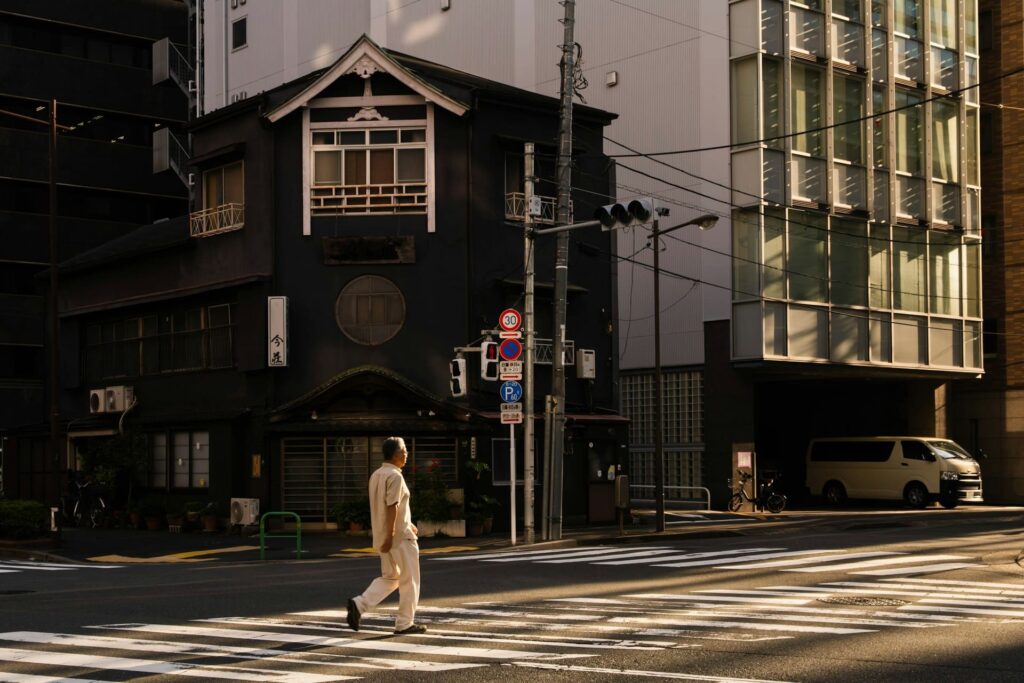
Is Jimbocho Worth Visiting in 2025?
Yes, Jimbocho is worth visiting in 2025 if you like old bookstores, retro cafés, curry, photography books, design magazines, and quieter Tokyo neighborhoods that still feel lived-in. It is less ideal if you want nightlife, vintage fashion shopping, or a district where every sign and menu is easy to understand in English.
- Best for: book lovers, design fans, repeat Tokyo visitors, café hunters, curry lovers, and travelers looking for a slower side of Tokyo.
- Not best for: travelers who want nightlife, trendy fashion boutiques, loud photo spots, or a fully English-friendly shopping area.
- No Japanese needed: You can still enjoy Jimbocho by focusing on English-language books, art books, photo books, vintage prints, retro cafés, and curry restaurants.
- Best timing: Weekdays and Saturdays are usually safer than Sundays or national holidays, but closure days vary by shop.
- Rainy-day value: Jimbocho works well on rainy Tokyo days because many of its best stops are indoors.
Why Was Jimbocho Named the Coolest Neighborhood 2025?
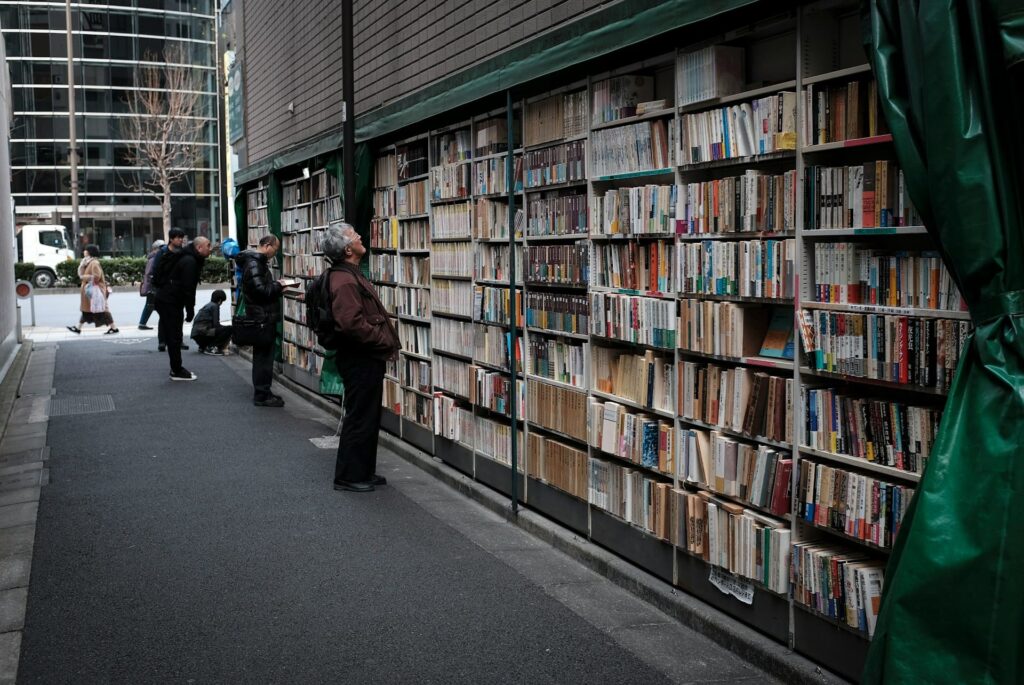
Jimbocho gained global attention after Time Out named it the world’s coolest neighborhood in 2025. The choice makes sense because Jimbocho is not trying to be flashy. Its appeal comes from old bookshops, academic energy, retro coffee shops, curry restaurants, narrow streets, and the feeling that the area still belongs to people who use it every day.
The neighborhood is best known as Tokyo’s book town. Around Jimbocho, you will find used bookstores, specialist publishers, university buildings, vintage magazines, art books, and long-running cafés. Compared with Shibuya or Shinjuku, Jimbocho feels quieter and more analog, which is exactly why many travelers are now paying attention to it.
That said, the “coolest neighborhood” label does not mean Jimbocho is for everyone. It is not a polished shopping district. Many shops are small, some signs are Japanese-only, and opening days can vary. The reward is a more local, intellectual side of Tokyo that feels very different from the city’s famous neon image.
How Does Jimbocho Compare With Shimokitazawa?
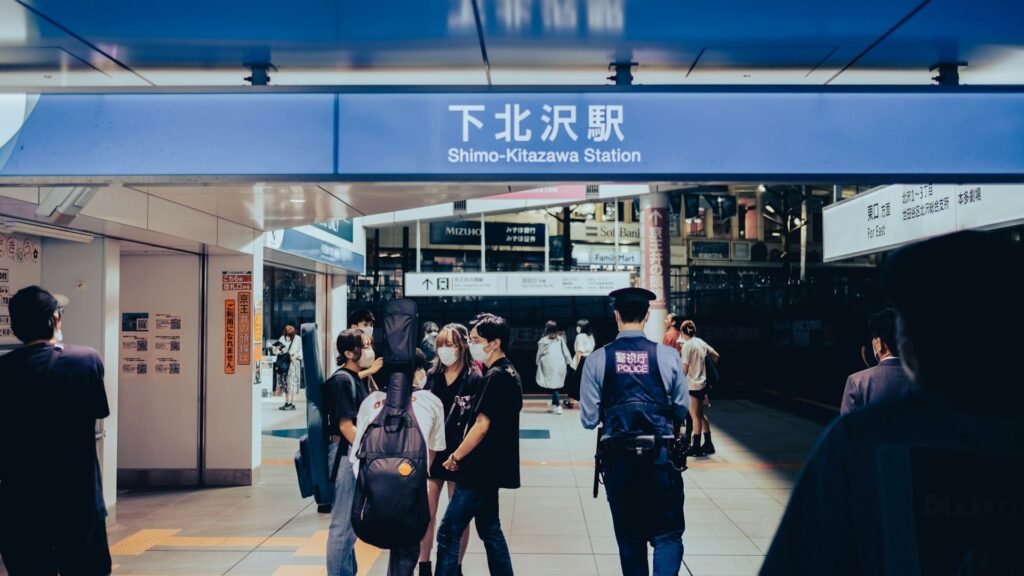
The Jimbocho vs Shimokitazawa question depends on what kind of Tokyo experience you want. Shimokitazawa is better for vintage clothing, indie music, bars, and younger street culture. Jimbocho is better for books, retro cafés, curry, photography, design, and a quieter daytime walk.
Some travelers feel Shimokitazawa has become more crowded and more tourist-facing in recent years. That does not make it a bad place to visit. It simply means Jimbocho may feel more rewarding if you want a neighborhood that is less about shopping trends and more about atmosphere, browsing, and slow discovery.
| Traveler Type | Choose Jimbocho If You Want… | Choose Shimokitazawa If You Want… |
|---|---|---|
| Main Interest | Used books, art books, cafés, curry, and quiet streets | Vintage fashion, live music, bars, and youth culture |
| Best Time to Visit | Late morning to afternoon | Afternoon to evening |
| Atmosphere | Academic, retro, calm, and bookish | Trendy, social, fashionable, and energetic |
| Best For First-Time Visitors? | Better for travelers who want a deeper Tokyo neighborhood | Better for travelers who want an easy, lively, photogenic area |
| Language Barrier | Manageable if you choose visual books, English books, cafés, and curry | Usually easier for shopping and casual browsing |
If this is your first trip to Tokyo and you want a lively, easy-to-understand neighborhood, Shimokitazawa may be the safer choice. If you have already seen the major sights or want a more specific Tokyo experience, Jimbocho is likely to feel more memorable.
What Can You Do in Jimbocho Without Reading Japanese?
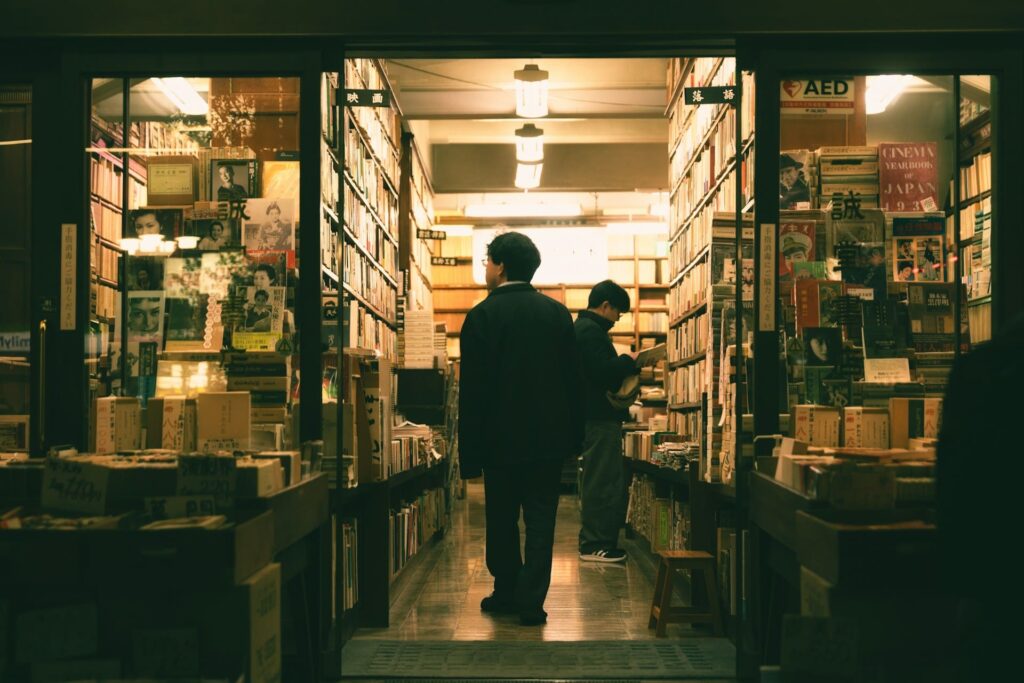
You do not need to read Japanese to enjoy Jimbocho, but you should choose your stops carefully. The easiest approach is to focus on English-language books, visual culture, coffee, curry, and short walks to nearby neighborhoods such as Kanda, Ochanomizu, or Akihabara.
Can You Browse English Books at Kitazawa Books?
Yes. Kitazawa Books is one of the easiest Jimbocho stops for English-speaking visitors. The shop specializes in English-language used books, including literature, history, humanities, art, and beautifully bound older volumes. It feels more like a classic library than a modern bookstore, which makes it especially appealing if you enjoy quiet browsing.
Planning note: Opening hours and holidays can change, but Kitazawa Books is commonly listed as closed on Sundays and national holidays. Check current hours before visiting, especially if this is your main reason for going to Jimbocho.
Can You Enjoy Art Books and Vintage Prints at Komiyama Tokyo?
Yes. Komiyama Tokyo is one of the best Jimbocho stops if you care more about visuals than text. It is known for photography books, fashion books, art books, design magazines, posters, and vintage print culture. Even if you cannot read Japanese, you can still enjoy the covers, layouts, images, and objects.
Planning note: As of May 2026, Komiyama Tokyo is commonly listed as closed on Tuesdays and Wednesdays, with shorter hours on Sundays and national holidays. Always check the latest shop information before making a special trip.
Can You Experience Retro Kissaten Culture?
Yes. Jimbocho is a strong area for kissaten, traditional Japanese coffee shops with a slower, older atmosphere than modern chain cafés. These are good places to rest between bookstores, especially if you are visiting during summer heat or on a rainy day.
Sabouru is one of the best-known examples in the area, famous for its retro interior, colorful drinks, and long-running local character. It can be popular, so expect a possible wait during busy periods. If you are visiting mainly for Sabouru or another specific café, check the current opening days before you go.
Can You Try Jimbocho Curry?
Yes. Curry is one of the main reasons to visit Jimbocho beyond bookstores. The neighborhood has a deep curry culture, with many small restaurants serving Japanese curry, European-style curry, and other variations. Lunch hours can be busy, so go slightly before or after the main lunch rush if you want a smoother experience.
For a simple first visit, plan your Jimbocho walk around three things: one bookstore, one visual book or print shop, and one café or curry stop. That gives you the neighborhood’s character without turning the day into a long checklist.
Should You Visit Jimbocho on Your Own or With a Private Car?
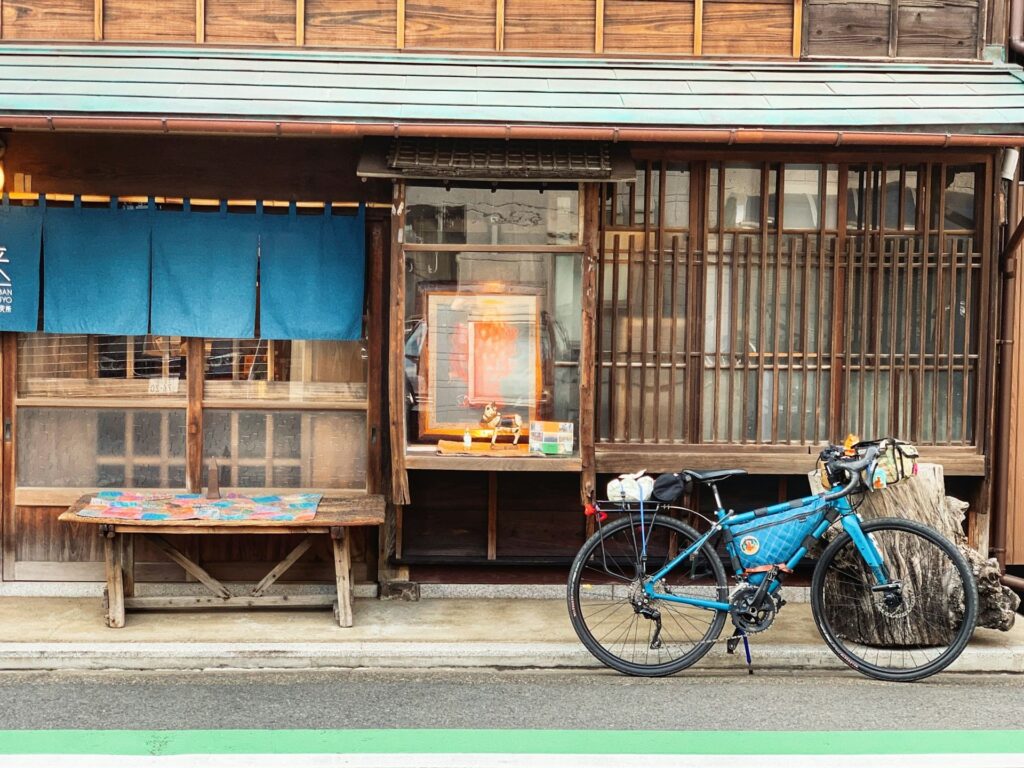
Most travelers can visit Jimbocho on their own. The neighborhood is walkable, public transport access is good, and the main pleasure of the area is slow browsing. A private car is not necessary if you only want a half-day bookstore and café walk.
A private car starts to make more sense if Jimbocho is one stop in a larger Tokyo day, especially if you want to combine it with Akihabara, Ueno, Asakusa, Tokyo Station, or another area. It can also help if you plan to buy heavy art books, travel with family, avoid rainy transfers, or reduce the fatigue of carrying purchases on crowded trains.
| Decision Point | DIY Jimbocho Walk | Private Car Tour |
|---|---|---|
| Best For | A half-day bookstore, café, and curry walk | A multi-neighborhood Tokyo itinerary |
| Cost | Lowest option | Higher cost, more comfort |
| Book Shopping | Fine for light purchases | Better if buying heavy art books or magazines |
| Rainy Day Comfort | Manageable because many presidential stops are indoors | Easier if you want to avoid wet transfers |
| Area Pairing | Best with nearby Kanda or Ochanomizu on foot | Best with Akihabara, Ueno, Asakusa, or Tokyo Station |
| Who Should Skip It? | Not ideal if you dislike walking or carrying purchases | Not necessary if you are only visiting Jimbocho |
Verdict: Visit Jimbocho on your own if you want a relaxed bookshop and café afternoon. Consider a private car only if you are building a fuller Tokyo day around several neighborhoods, traveling in bad weather, or planning to buy bulky books and prints.
Check availability for a Tokyo Private Customizable City Tour with Chauffeur
What Should You Know Before Visiting Jimbocho?
Jimbocho is easy to enjoy, but it works best when you plan it like a small neighborhood walk rather than a major sightseeing attraction. The area rewards slow browsing, short breaks, and choosing a few specific stops instead of trying to see every bookstore.
What Is the Best Day to Visit Jimbocho?
Weekdays and Saturdays are usually the safest choices. Some well-known bookstores and classic cafés close on Sundays or national holidays, while other shops may close on different weekdays. If there is one shop or café you really want to visit, check its current hours before you go.
As of May 2026: Kitazawa Books is commonly listed as closed on Sundays and national holidays, while Komiyama Tokyo is commonly listed as closed on Tuesdays and Wednesdays. Opening hours can change, so treat this as a planning reminder rather than a fixed rule.
Do You Need Cash in Jimbocho?
Bring some cash. Tokyo is much more card-friendly than it used to be, but older used bookstores, small cafés, and family-run restaurants may still prefer cash or have limited payment options. A small amount of Japanese yen makes the day smoother, especially if you plan to buy second-hand books, magazines, or coffee.
How Long Should You Spend in Jimbocho?
For most travelers, two to three hours is enough for a first visit. That gives you time for one English-friendly bookstore, one visual book or print shop, and one café or curry stop. If you are a serious book collector, photographer, designer, or vintage magazine fan, you could easily spend half a day here.
Is Jimbocho Good on a Rainy Day?
Yes. Jimbocho is one of the better Tokyo neighborhoods for rainy weather because many of the best activities are indoors. You can move between bookstores, cafés, and curry restaurants without needing a perfect blue-sky day. The main downside is that carrying books in the rain can be annoying, so bring a foldable tote bag or waterproof shopping bag.
What Other Areas Pair Well With Jimbocho?
Jimbocho pairs naturally with Kanda, Ochanomizu, Akihabara, Ueno, or Tokyo Station. Kanda and Ochanomizu are easy nearby add-ons for shrines, music shops, and student-town atmosphere. Akihabara works well if you want to contrast Jimbocho’s analog book culture with Tokyo’s electronics, anime, and gaming scene.
FAQs About Visiting Jimbocho
Is Jimbocho Worth Visiting in 2025?
Yes, Jimbocho is worth visiting in 2025 if you want a quieter, more bookish side of Tokyo. It is especially good for travelers interested in used bookstores, retro cafés, photography books, design magazines, curry, and neighborhoods that feel less polished than major tourist districts.
Can You Enjoy Jimbocho Without Reading Japanese?
Yes. You can enjoy Jimbocho without reading Japanese by focusing on English-language books, art books, photo books, vintage prints, café culture, and curry restaurants. Kitazawa Books is a good stop for English books, while Komiyama Tokyo is easier to enjoy visually through photography, fashion, art, and design books.
Is Jimbocho Better Than Shimokitazawa?
Jimbocho is better if you want books, cafés, curry, quiet streets, and a more intellectual atmosphere. Shimokitazawa is better if you want vintage clothing, live music, bars, and a younger nightlife feel. The better choice depends on your travel style, not on which neighborhood is objectively cooler.
What Is Jimbocho Famous For?
Jimbocho is famous for used bookstores, specialist bookshops, publishing culture, universities, old cafés, and curry restaurants. It is often described as Tokyo’s book town because of its unusually high concentration of second-hand and specialist bookstores.
What Should You Do in Jimbocho on a First Visit?
For a first visit, keep it simple: browse English books at Kitazawa Books, look for photography or design books at Komiyama Tokyo, stop at a retro café, and eat curry if you are visiting around lunch or dinner. This gives you a balanced taste of Jimbocho without making the day feel too planned.
What Day Should You Avoid in Jimbocho?
There is no single day when all of Jimbocho is closed, but Sundays and national holidays can be risky if you are visiting for specific bookstores or classic cafés. Tuesdays and Wednesdays can also be an issue for some visual bookshops. Check the current hours of your must-visit stops before you go.
Is Jimbocho a Good Area for First-Time Tokyo Visitors?
Jimbocho can be a good area for first-time visitors, but it is not the easiest Tokyo neighborhood to understand at a glance. If you only have one or two days in Tokyo, places like Shibuya, Asakusa, Shinjuku, or Ueno may feel more immediately rewarding. If you have extra time or want a less obvious Tokyo experience, Jimbocho is a strong choice.
Do You Need a Private Car to Visit Jimbocho?
No. Most travelers can visit Jimbocho by train and explore it on foot. A private car is useful only if you are combining Jimbocho with several other Tokyo neighborhoods, traveling with family, visiting in bad weather, or planning to buy heavy books, magazines, or prints.
If your Tokyo day includes Jimbocho plus Akihabara, Ueno, Asakusa, or Tokyo Station, a customizable chauffeured route can reduce transfers and make it easier to carry purchases between stops.
Explore customizable private car tours in Tokyo here
Hi, I’m Kai. I’m a Tokyo-based travel writer, tourism industry insider, and the author of a published guidebook for international visitors to Japan. With over 10 years of professional experience at a leading Japanese tourism company, my mission is to help you skip the tourist traps and navigate Japan’s best destinations like a local. I believe the perfect day trip is like a traditional kaiseki meal: a beautiful balance of precise planning and unforgettable seasonal discovery. When I’m not out conducting field research, you’ll usually find me drafting new itineraries with one of my favorite fountain pens!