
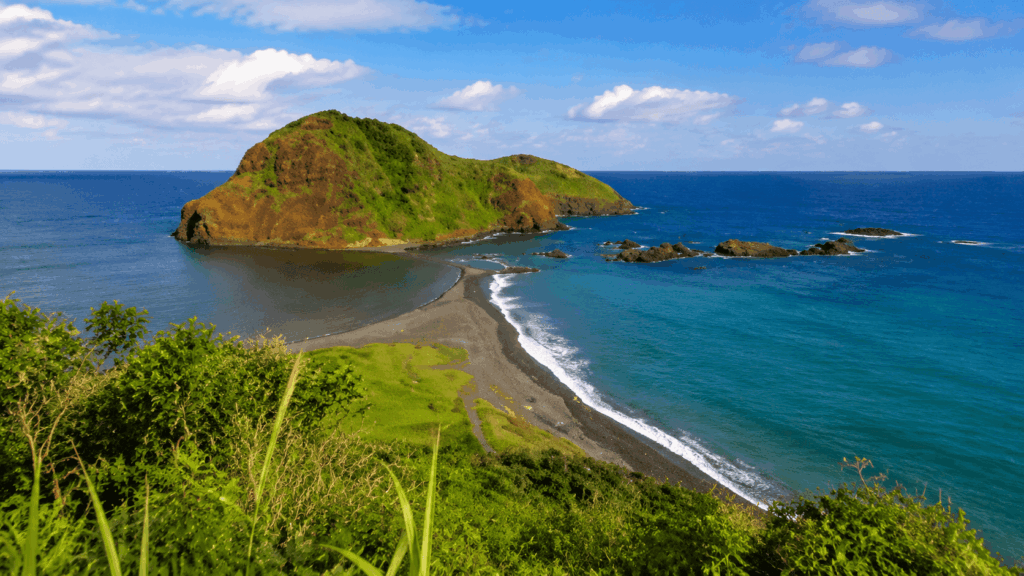
If you’re planning a first trip to Sado Island and want one straightforward answer: October is the best all-round time to visit. Summer’s heat and humidity have dropped, the skies are relatively settled, and you can combine outdoor sightseeing, a scenic drive, and a reasonable chance of spotting wild toki (Japanese crested ibis) around the harvest-season rice fields.
That’s the answer for a typical first visit. If you’re coming specifically for the sea, July–August is your window; if you want the most comfortable walking weather, aim for late May–early June; and if autumn foliage and toki are the priority, late October–early November is the strongest stretch. Whichever month you choose, keep this in mind: Sado covers roughly 855 km² — bigger than Singapore — so the season you pick matters, and so does how you plan to move around the island. This guide compares each season by weather, what you can realistically do, and the transport reality, so you can settle on the month that fits your trip.
If you’re planning a short Sado visit without a rental car: there is a private day tour from Niigata that combines the ferry, island transport, and major sights in one booking. Check the current itinerary, starting times, and availability for the Sado Island day tour before deciding whether the DIY route is worth the extra coordination.
What Is the Best Time to Visit Sado Island?
For most first-time visitors, October offers the best balance. Daytime highs sit around 21°C and nights around 15°C — comfortable for walking, driving, and spending long hours outside. The Osado Skyline scenic road is normally still open, the Sado Gold Mine is pleasant at any temperature, and by late October the foliage at Momijiyama Park is coming into its own. Visit Sado also notes that toki are easier to spot in the rice fields of the Kuninaka Plain in October, after the harvest has opened up the view.
The trade-offs are simple to map: July–August is the best season for the sea but brings heat, humidity, and crowds. Late May–early June is the most pleasant for walking, but the water is still cold and the rainy season can arrive mid-June. Late October–early November delivers the best foliage and toki conditions, but days are shorter and the Osado Skyline can close from mid-November depending on snowfall. Winter has its own appeal, but ferry cancellations and reduced services make it a specialist choice.
The mistake I see first-time visitors make is underestimating how big the island is. A day trip or a single overnight only gives you time for one corner of Sado — which is why the island’s official tourism site recommends two nights and three days as a realistic minimum. The good news is that you don’t have to solve the ferry, the rental car, and the itinerary all at once: if you’d rather not piece together the transport yourself, a guided day tour from Niigata covers the ferry and island movement in one package — more on that later in this guide.
Sado Island Best Months at a Glance
If you only have thirty seconds, use this table to narrow down the season:
| Period | Best for | Weather feel | Main advantage | Main downside | My verdict |
|---|---|---|---|---|---|
| Late May–early June | Walking, greenery, comfortable sightseeing | Mild; highs around 20–24°C | Best overall walking conditions; light crowds before summer | Sea still cold for swimming; rainy season can start mid-June | Best for active travelers who want mild weather |
| July–August | Beaches, sea activities, boat trips | Hot and humid; highs near 30°C | Sea season at its peak; festivals and events | Heat, crowds, harder rental-car bookings; typhoon season | Choose only if the sea is your main reason |
| October | Balanced first visit | Mild; highs around 21°C, lows around 15°C | Comfortable sightseeing, roads open, autumn food season | Sea too cold to swim; foliage peaks late in the month | Best all-round month for most travelers |
| Late Oct–early Nov | Autumn foliage, toki viewing | Cool; highs around 15–18°C | Peak koyo; toki easier to spot after harvest | Shorter days; Osado Skyline may close from mid-November | Best for photographers and nature lovers |
| Winter (Dec–Feb) | Seafood, quiet scenery, onsen | Cold; averages around 3–5°C | Few crowds; the season’s best seafood | Ferry cancellations more likely; reduced services; skyline closed | Only for travelers who specifically want winter |
Late May to Early June — Best for Walking and Mild Sightseeing
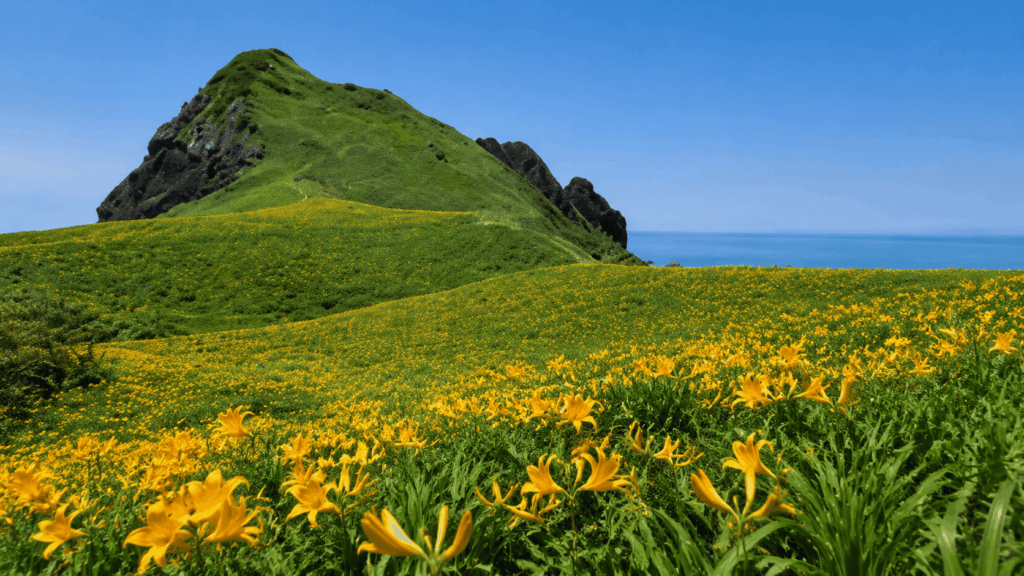
If your ideal day involves long walks, fresh greenery, and temperatures that never make you sweat, late May to early June is Sado’s sweet spot. The island’s official seasonal guide highlights early June in particular, when the tobishima kanzo (amur daylily) blooms across the Onogame outcrop — described as one of the largest clusters of its kind in Japan.
What you can realistically do:
- Sado Gold Mine (Aikawa): tour the Sotayu and Doyu tunnels, see the Doyu no Warito open-cut cliff, and visit the museum. Allow about 60–90 minutes; entry is around 1,500 yen for adults. The tunnel sits at roughly 10°C all year, so a long-sleeve layer matters even in spring.
- Onogame: the daylily meadows reach full bloom in early June, right before the summer crowds build.
- Osado Skyline: the 30 km scenic drive through the northern mountains is usually open again after its winter closure, with views across the island.
- Walking and cycling: mild, dry days make this the most comfortable season for exploring on foot or by bike.
One honest observation from my own visits: at the Doyu no Warito, the famous split in the mountain, the viewpoint up high is the one everyone heads for, but trees can partly block the view from that angle. From the flat ground below, the full split is actually easier to read. If you’re short on time, take a look from the lower area first, then decide whether the climb is worth it — and what you carry in terms of layers matters more here than anywhere else on the island.
Who it’s best for: walkers, photographers, and anyone who wants to see the island’s green season without heat or crowds. Who should skip it: travelers who mainly want beaches and swimming — the sea is still cold, and the rainy season can arrive in the second half of June.
July and August — Best for the Sea, but Not for Everyone
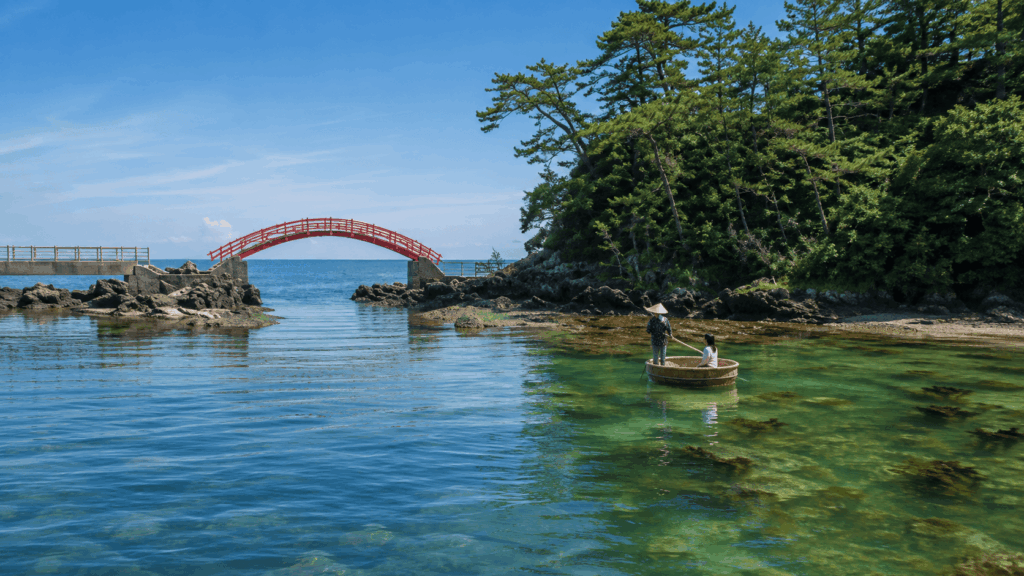
Summer is when Sado’s coast comes alive. If beaches, sea kayaking, and boat trips are the point of your trip, this is the season — but it comes with heat, humidity, and the island’s busiest crowds, so it’s not the automatic choice for a general first visit.
What you can realistically do:
- Senkaku Bay (Ageshima Park): take the roughly 15-minute glass-bottom boat cruise around the cliffs. The boats typically run from mid-March to late November, so summer is squarely in season.
- Ogi area: ride a taraibune tub boat, a Sado classic that suits the relaxed pace of summer.
- Beaches and sea sports: swimming, diving, and sea kayaking in the island’s clearest conditions of the year.
- Festivals: summer is event season, including Earth Celebration, the international taiko event hosted by Kodo on the island’s coast.
Kai’s tip: Don’t assume the Sado Gold Mine is a cool escape from the summer heat — it’s genuinely cold. The tunnels hold around 10°C year-round, and I’ve watched guests in July walk out of the Sotayu tunnel genuinely chilled after an hour underground. Bring a light jacket or long-sleeve layer even on the hottest day; you’ll want it the moment you step inside.
The downsides are real: highs near 30°C with humidity, full ferries, and rental cars that need booking well ahead — the island’s official transport guidance recommends reserving early in summer. Typhoon season also begins building from late summer, so keep an eye on ferry status if your dates are flexible.
Who it’s best for: swimmers, families with kids who want beach days, and travelers who accept heat in exchange for the sea. Who should skip it: anyone whose priority is sightseeing comfort, photography of autumn colors, or avoiding crowds.
October — The Best Overall Month for a First Trip
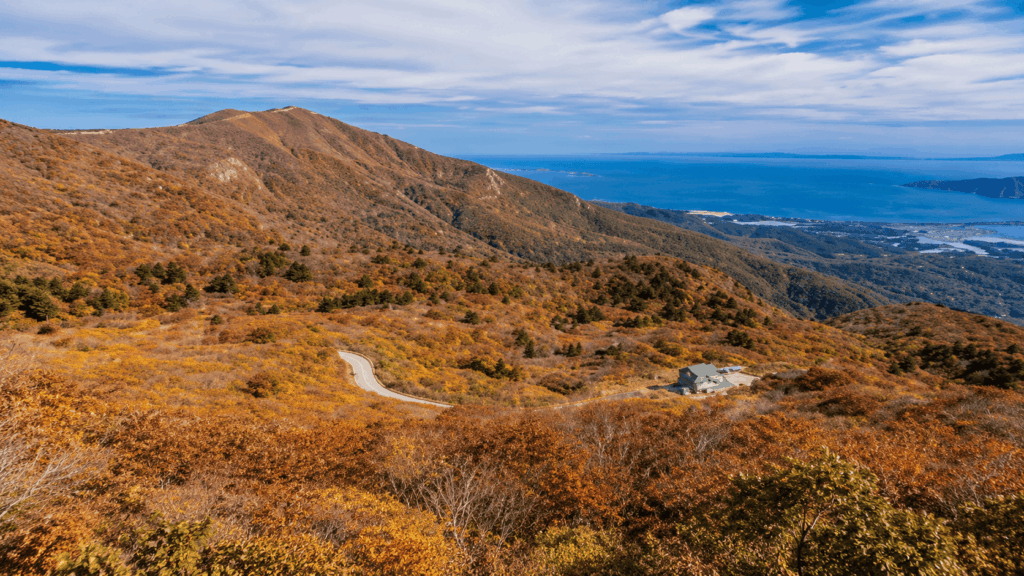
October is the month I’d put in front of a first-time visitor who has no strong seasonal preference. The reasons are practical rather than romantic: comfortable temperatures, roads that are still fully open, autumn food in season, and the start of the island’s best foliage window.
What you can realistically do:
- Osado Skyline: the full scenic route through the mountains is normally still open, with maples and rowan trees beginning to color along the way.
- Momijiyama Park: the foliage here typically peaks from late October through mid-November — time your visit for the end of the month if leaves are the priority.
- Sado Gold Mine: the mine runs all year, and with cooler outdoor temperatures the 10°C tunnels feel less jarring than in summer.
- Toki around the Kuninaka Plain: after the rice harvest, the fields open up and toki become easier to spot — Visit Sado notes they’re particularly findable in October.
- Autumn food: harvest-season rice, Okesa persimmons, and the island’s seafood all hit their stride.
If I had to show a first-time guest the island’s variety in a single month, it would be October — not because the weather is guaranteed perfect, but because it combines the widest range of activities with the fewest seasonal risks. The roads that close in winter are still open, the mine is comfortable, and the day can end with a meal that only autumn provides.
The trade-offs: the sea is too cold for swimming by October, the foliage only peaks at the end of the month, and the occasional tail end of typhoon season can still bring a stormy day. But for a balanced first trip, nothing else on the calendar lines up as well.
Late October to Early November — Best for Autumn Scenery and Toki
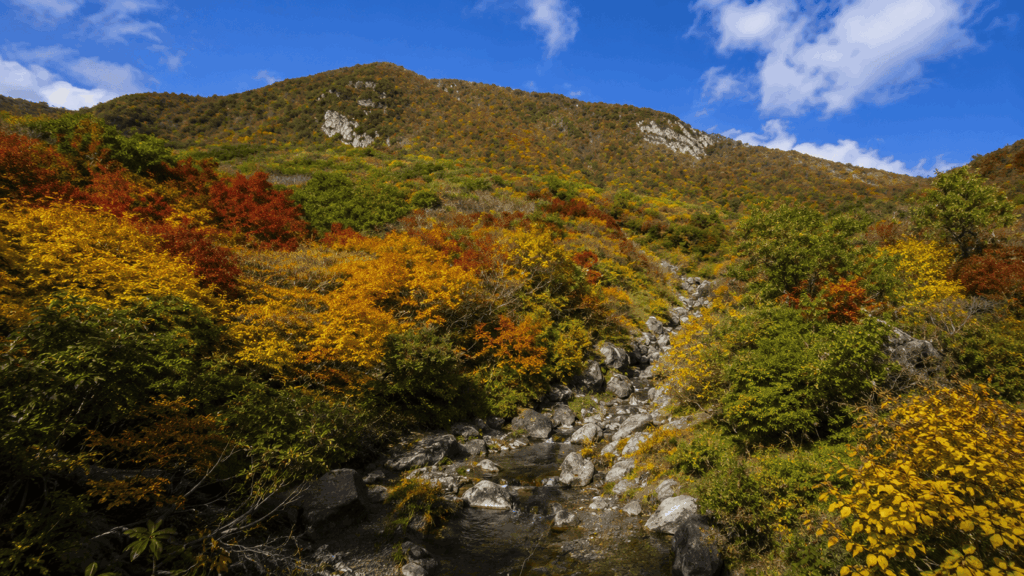
If foliage and wildlife photography are the reasons you’re coming, the window from late October to early November is the strongest stretch of the year. This is when the island’s autumn colors peak and the harvest-season landscape lines up with the toki’s habits — but it comes with shorter days and a few seasonal closures to plan around.
What you can realistically do:
- Momijiyama Park: the island’s best-known koyo (autumn leaves) spot, with a pond and a viewing deck reached by a roughly 25-minute walk uphill. The peak typically runs from late October to mid-November.
- Osado Skyline: usually still open in early November, with maples and rowan coloring the mountain route. Note that the section from Hakuundai toward Shimo-Aikawa can close from around mid-November depending on snowfall, so check before you go.
- Toki around the Kuninaka Plain: the central grain belt is the island’s best area for spotting wild toki. After the rice harvest, fields open up and the birds become far easier to see — one recent visitor I know watched a small group feeding in a harvested paddy in mid-November.
- Seafood and sake: cooler weather brings the start of the island’s winter seafood season, alongside the year’s new sake releases.
On the toki: I’ve seen them myself in the fields of the Kuninaka Plain around this time of year, standing in stubble after the harvest. It’s a genuinely special sight — but it’s never guaranteed, and I’d treat it as a bonus rather than the sole reason for your dates. When you do spot them, keep your distance, stay on the road or path, and don’t disturb the fields or the farmers working them. Quiet, patient viewing from the roadside is how local etiquette works.
October vs. November in one line: choose early-to-mid October for the widest range of open activities and comfort, and late October–early November if foliage and toki viewing outweigh everything else. In both cases, remember the sun sets noticeably earlier than in summer — start your outdoor plans before noon.
Who it’s best for: photographers, nature lovers, and repeat visitors who’ve already seen the island in warmer months. Who should skip it: swimmers, and anyone uncomfortable with the idea that a scenic road or ferry service could be affected by weather.
Is Winter a Good Time to Visit Sado Island?
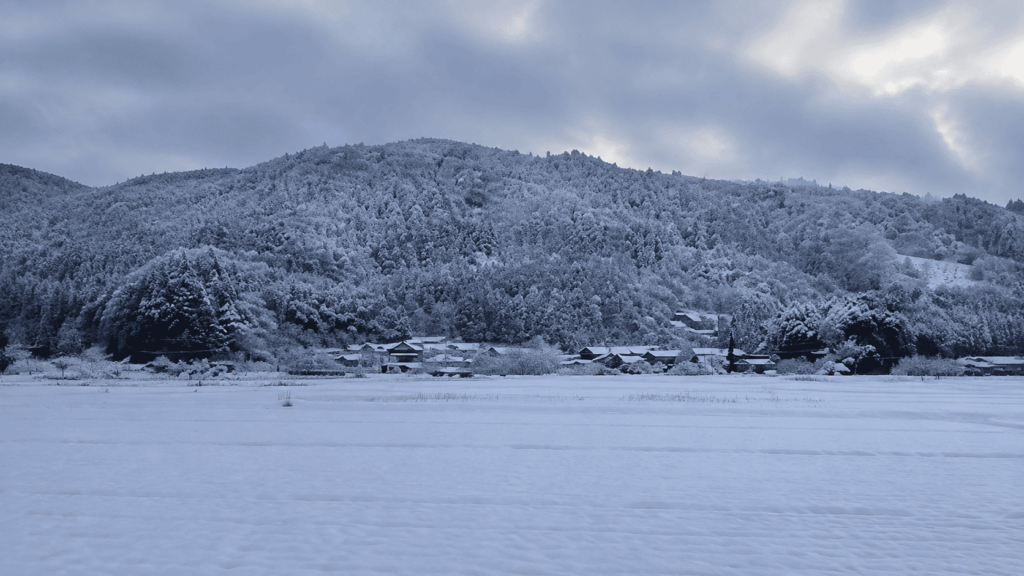
Winter is a specialist season. The island is quieter, cheaper, and at its most atmospheric — but the constraints are real, and it’s not the season I’d recommend for a first visit (for more details, see our guide to Sado Island in winter).
What the season actually involves:
- Weather: average highs around 5–7°C and lows around 1–3°C. Snowfall is generally lighter than on the mainland side of Niigata, but cold, windy days are common.
- Ferries: the Sado Kisen car ferry and jetfoil between Niigata Port and Ryotsu Port continue through winter, but rough seas make cancellations more likely. Check the daily operating status before booking anything non-refundable.
- Roads and views: the Osado Skyline is closed through winter — the Hakuundai viewpoint is only reachable when the road is open. Plan your sightseeing around the island’s lower-elevation areas.
- Food: this is the season for winter yellowtail (buri), oysters, and snow crab — the island’s strongest food argument for a winter visit.
- Activities: the Sado Gold Mine stays open year-round with shorter hours (last entry in winter is earlier in the afternoon), and the island’s onsen and seafood restaurants carry the season.
Recent travelers’ feedback paints a consistent picture: winter visitors who plan around the ferry schedule and stick to low-elevation sights enjoy the calm, while those who assume summer-level service are caught out by reduced bus frequency and closed mountain roads. If you’re coming in winter, treat the ferry as the backbone of your plan and confirm its status every day.
Who it’s best for: food-focused travelers, onsen lovers, and photographers chasing a quiet, snow-dusted island. Who should skip it: first-time visitors, anyone on a tight schedule, and travelers who want the full range of the island’s outdoor sights.
The Season Matters — but Your Transportation Matters Almost as Much

Here’s the honest part most seasonal guides skip: Sado is roughly 855 km² — bigger than Singapore — and it has no railway. You can pick the perfect month and still lose most of a day if your transport plan doesn’t match the island’s reality.
The three ways to get around:
| Option | Time & reach | Cost feel | Flexibility | Who it’s best for |
|---|---|---|---|---|
| Rental car | Ryotsu Port to Aikawa (Sado Gold Mine) ~50 min; to Ogi ~60 min; to Onogame ~60 min; full loop of the island ~7–8 hours | Moderate; book early in summer | Highest — you set the pace and the route | Most travelers, especially families and anyone covering multiple areas |
| Public bus (Niigata Kotsu Sado) | Network covers the main towns, but frequencies are limited; Ryotsu to Ogi requires a transfer and takes around 2 hours one way | Low; cash only, no IC-card payment | Low — the timetable dictates your day | Budget travelers with simple routes and generous time |
| Guided tour from Niigata | Covers ferry, island transport, and itinerary in one package | Higher, but replaces separate bookings | Low, but zero logistics effort | Travelers who don’t want to drive or coordinate ferry times |
Kai’s tip: If you’re using the bus, don’t underestimate how much the timetable will shape — or constrain — your day. The direct bus from Ryotsu Port to the Sado Gold Mine runs infrequently, and connections to Ogi eat up about two hours each way. What I’ve found works is to work backwards: lock in your ferry departure, then check the island bus times that connect to it, and build the sightseeing around those two fixed points. Most itinerary problems on Sado start with choosing sights first and transport second.
For most visitors, a rental car is the most practical choice, and the island’s official transport guidance says the same — booking early is strongly recommended in summer. Sado Kisen operates rental outlets at Ryotsu Port (with another in Ogi), so you can pick up a car the moment you arrive. If you’re staying on a budget, the SADO NIIGATA PASS offers a discount package for overseas visitors covering the return ferry plus island bus travel — check the current terms before relying on it.
If you’d rather not drive at all, or you’re short on time and want the ferry and island movement handled in one booking, a guided day tour from Niigata is a realistic alternative — it bundles transport and a fixed itinerary, which suits travelers who’d otherwise spend their whole day watching timetables.
If you want to see Sado in a single day but don’t want the ferry timetable, rental car, and island route to become separate planning jobs, this is the guided option that fits that problem most closely.
Why I’d book this one
- The booking combines the return ferry with private transport on Sado, so the hardest logistics are handled together.
- An English-speaking guide is included, along with major stops such as Sado Gold Mine and the traditional tarai-bune experience.
- The listing offers flexible booking terms; check the latest cancellation conditions and payment options for your date before finalising.
What to Pack for Sado Island in Each Season
Packing for Sado comes down to three rules: layer for the mine, expect more walking than you planned, and treat the ferry deck as an outdoor environment.
Kai’s tip: Whatever month you visit, assume you’ll walk more than you expect. Sado’s sights aren’t lined up along one street — the gold mine alone involves long tunnels and stairways, and even a “quick stop” at a viewpoint usually means a real walk. I’d pack proper walking shoes for every season, not just sandals for summer. Outdoor temperature alone won’t tell you what you need; the day always includes a cooler indoor or coastal moment.
| Season | Daytime layering | What catches people out |
|---|---|---|
| Late May–early June | Light layers plus a mid-weight jacket | The gold mine sits at about 10°C year-round — a long-sleeve layer is essential even in mild weather |
| July–August | Light clothing, sun protection, a light jacket | The mine is still ~10°C in summer; the ferry deck and coastal viewpoints are windier than inland |
| October | Long sleeves, a warm mid-layer, a windproof shell | Mornings and evenings drop noticeably; the skyline road is cooler than the coast |
| Late Oct–early Nov | Warm layers, a proper jacket, hat and gloves | Sunset comes early; viewpoints and the mine exit are exposed to wind |
| Winter | Heavy coat, hat, gloves, warm footwear | Ferry decks and terminals are exposed; reduced services make waiting outside more likely |
One more thing that surprises visitors: the jetfoil and car ferry between Niigata and Ryotsu run in open water, and the crossing can be noticeably cooler and windier than either shore. A shell layer in your daypack earns its keep on the way over and back, whatever the forecast says.
FAQ: Best Time to Visit Sado Island
What is the best month to visit Sado Island?
For most first-time visitors, October offers the best all-round balance: comfortable temperatures, roads still fully open, autumn food in season, and the start of the island’s best foliage window. If you’re coming mainly for the sea, July–August is better; if walking comfort is the priority, late May–early June; and if foliage and toki viewing come first, late October–early November is the strongest stretch.
Is Sado Island worth visiting in summer?
Yes, if the sea is your main reason. Senkaku Bay’s glass-bottom boats, Ogi’s taraibune tub boats, beaches, and summer events all shine in July–August. Just accept the trade-offs: highs near 30°C with humidity, busier ferries, and rental cars that need booking well in advance. For general sightseeing comfort, October is the better all-round choice.
Why is October the best time to visit Sado Island?
Because it combines the widest range of activities with the fewest seasonal risks. The Osado Skyline is normally still open, the Sado Gold Mine is comfortable, the foliage at Momijiyama Park starts peaking late in the month, and toki become easier to spot in the harvested rice fields of the Kuninaka Plain. The main limitation is that the sea is too cold for swimming by October.
Can you see toki (Japanese crested ibis) in autumn?
Autumn is the best season for it, but it’s never guaranteed. After the rice harvest, the fields of the Kuninaka Plain open up and the birds become far easier to spot — Visit Sado notes they’re particularly findable in October. When you do see them, keep your distance and watch quietly from the roadside without disturbing fields or farmers.
Can you visit Sado Island without a car?
Yes, but with clear limits. The public bus network (Niigata Kotsu Sado) covers the main towns, yet frequencies are limited, the direct bus from Ryotsu Port to the Sado Gold Mine runs infrequently, and reaching Ogi requires a transfer and about two hours each way. Buses are cash-only with no IC-card payment. A rental car is the most practical option for most travelers, and guided day tours from Niigata bundle the ferry and island transport for those who don’t want to drive.
My Recommended Sado Seasons by Traveler Type
If I were planning a first trip for a guest with no strong preference, I’d lean toward October — it’s the month that lets you see the island’s variety without fighting the calendar. Here’s how I’d steer different travelers:
- Choose October if you’re a first-time visitor who wants a balanced mix of history (Sado Gold Mine), scenery (Osado Skyline, Momijiyama Park), wildlife (toki around the Kuninaka Plain), and autumn food — all with comfortable walking weather and open roads.
- Choose late May–early June if you’re an active traveler who prioritizes walking comfort, fresh greenery, and light crowds — and you’re willing to skip swimming and accept the chance of rainy-season weather in mid-to-late June.
- Choose July–August if you’re coming for the sea — beaches, sea kayaking, glass-bottom boats at Senkaku Bay, and summer festivals. Book the ferry and rental car early, carry a light jacket for the mine, and stay flexible about typhoon-season weather.
- Choose late October–early November if you’re a photographer or nature lover chasing peak foliage and the best toki conditions. Start your days early, and check the Osado Skyline’s status before relying on the mountain route.
- Choose winter only if you specifically want the quiet season’s seafood and atmosphere — and you’re comfortable with a higher chance of ferry cancellations, reduced bus service, and closed mountain roads. It’s a specialist visit, not a first-trip recommendation.
- If you don’t want to drive or coordinate ferry times at all, a guided day tour from Niigata is the practical alternative — the ferry, island transport, and a fixed itinerary are handled in one booking, which removes the transport risk entirely from the season question.
Whatever month you settle on, the one decision that will shape your trip more than the forecast is how you plan to move around an island bigger than Singapore. Pick the season for the experience you want, then build your transport around the ferry timetable — and the trip will take care of itself.

Hi, I’m Kai. I’m a Tokyo-based travel writer, tourism industry insider, and the author of a published guidebook for international visitors to Japan. With over 10 years of professional experience at a leading Japanese tourism company, my mission is to help you skip the tourist traps and navigate Japan’s best destinations like a local. I believe the perfect day trip is like a traditional kaiseki meal: a beautiful balance of precise planning and unforgettable seasonal discovery. When I’m not out conducting field research, you’ll usually find me drafting new itineraries with one of my favorite fountain pens!