
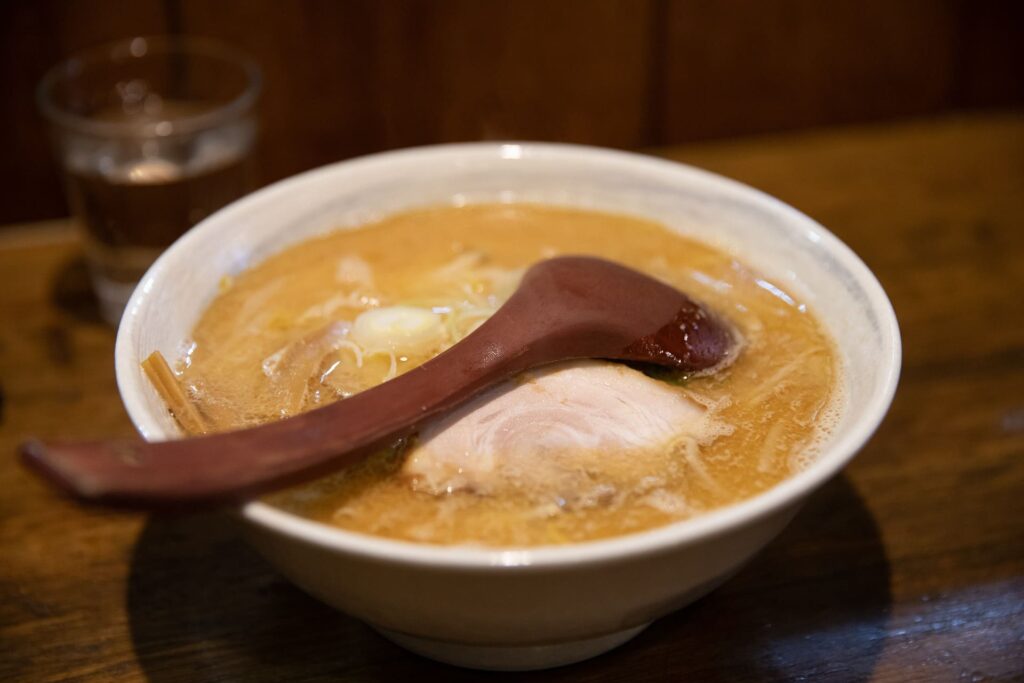
Noboribetsu may be famous for its steaming Jigokudani (Hell Valley) and historic hot springs, but for many visitors, the real question is: what should I eat when I get here? With limited dining hours, a handful of iconic local dishes, and a 15-minute bus ride separating the station from the onsen town, it pays to have a plan before hunger hits.
This guide covers exactly that — the best food in Noboribetsu, where to find it, when to go, and how to choose based on your spice tolerance, schedule, and appetite for local flavours. I’ve tried several of these dishes on reporting trips to the area, and the recommendations below reflect what I’d tell a friend visiting for the first time.
Want to make part of your Noboribetsu food stop hands-on? If you have about 90 minutes near JR Noboribetsu Station, check current start times, availability, and inclusions for the Hokkaido Sushi Making Experience.
The Best Food in Noboribetsu: Quick Verdict
If you only have one meal in Noboribetsu, make it Noboribetsu Enma Yakisoba at Onsen Ichiba. It’s the most locally specific dish in town — a spicy seafood yakisoba made with Hokkaido wheat noodles that you won’t find outside the Noboribetsu area — and Onsen Ichiba sits right next to Enmado in the heart of the onsen town, making it easy to fit into a Jigokudani walking route.
On a recent reporting trip, I brought a small group of international travellers to Onsen Ichiba for lunch. The Enma Yakisoba, paired with a local Ao-Oni Pilsner, was the dish that generated the most enthusiasm around the table — even from those who were initially unsure about “”spicy noodles”” on a hot spring day. The spice is moderate, the seafood is generous, and the setting (a lively market-style restaurant steps from the demon statue) gives it an atmosphere that a solo ramen shop can’t match.
That said, the right choice depends on your situation:
- You want serious heat: Head to Hell Ramen at Aji no Daio instead
- You’re avoiding spice entirely: Go for fresh seafood at Onsen Ichiba, pizza at Pizzeria Astra, or book a ryokan dinner
- You’re only at JR Noboribetsu Station with a short window: Grab a milk soft serve from UNMIXed on the station forecourt
- You’re arriving late and need dinner: Check if Isekura (open until 1:00 AM) is operating that evening
- You want to turn eating into an activity: Book the Hokkaido Sushi Making Experience near the station
Best Noboribetsu Food at a Glance
| Food | Best for | Where | Area | Spice | Best Time | Main Drawback |
|---|---|---|---|---|---|---|
| Enma Yakisoba | First-timers wanting the signature local dish | Onsen Ichiba | Onsen town | Light-moderate | Lunch (11:30–14:00) | Can have a queue at peak |
| Fresh Seafood | Sashimi & kaisendon lovers | Onsen Ichiba | Onsen town | None | Lunch or early dinner | Pricier than a single dish |
| Hell Ramen | Spice chasers | Aji no Daio | Onsen town | Very high | Lunch only (until 15:00) | Closed Tuesdays; short hours |
| Milk Soft Serve | A quick sweet break | UNMIXed (station) / Milky House (onsen town) | Both areas | None | Mid-afternoon | UNMIXed open weekends only |
| Wood-fired Pizza | Non-spicy dinner, families | Pizzeria Astra | Onsen town | None | Lunch or dinner (closed Tue–Wed) | Not a local specialty |
| Jingisukan (BBQ) | Hearty late meal | Isekura | Onsen town | None | Evening (18:00–1:00) | Irregular closures possible |
| Ryokan Dinner | Convenience, multi-course experience | Your accommodation | Onsen town | Varies | Evening | Cost; must book half-board |
| Sushi-making Class | Hands-on food experience | Near JR Noboribetsu Station | Station area | None | Morning (1.5 hours) | Requires advance booking |
1. Noboribetsu Enma Yakisoba at Onsen Ichiba
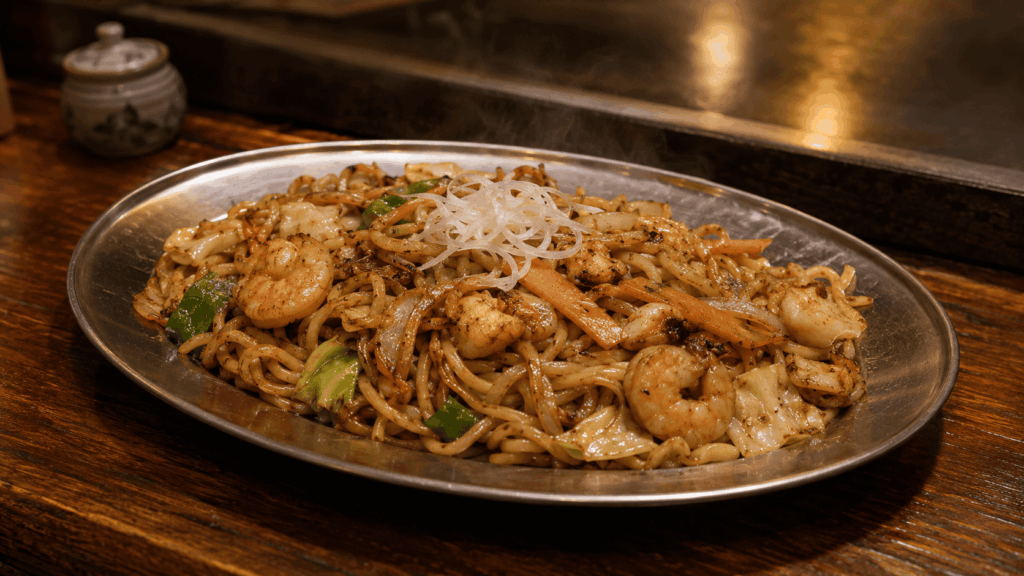
What Is Noboribetsu Enma Yakisoba?
Noboribetsu Enma Yakisoba is a regional specialty that was officially launched in 2015 as part of a local revitalisation project. Unlike the thin, curly noodles used in standard yakisoba, this version uses flat noodles made from Hokkaido-grown wheat, giving them a noticeably chewier, more substantial bite. The noodles are stir-fried with a sesame-based spicy sauce and generous amounts of seafood — typically shrimp and scallop — sourced from Noboribetsu Fishing Port just a few kilometres away.
The dish is named after Enma Daio, the King of Hell, whose massive statue sits at Enmado just across the street from Onsen Ichiba. It’s a themed local dish done right: the name and the demon branding are playful, but the cooking itself is serious.
What made the biggest impression on me was the texture of the noodles. They’re noticeably thicker and flatter than the standard yakisoba you’d get from a convenience store or a festival stall, and the sesame-spice sauce clings to them differently as a result. The shrimp and scallop pieces are substantial — not the thin slivers you sometimes get in Japanese fried noodles — and the dish as a whole feels more like a proper meal than a snack.
The Onsen Ichiba version costs around 980 yen, and they also serve it alongside an Ao-Oni Pilsner from the local Oni Densetsu Brewery — a crisp Czech-style pilsner that cuts through the sesame oil nicely. It’s a combination I’d recommend to anyone who drinks beer.
Is Enma Yakisoba Very Spicy?
This is the question I hear most often from travellers considering it. The answer is: moderately spicy, but not punishing.
The heat comes from the sesame-based sauce rather than a direct chili hit, which means it builds gradually and doesn’t linger uncomfortably. The seafood and the flat noodles balance the spice with sweetness and texture. Everyone in the group I brought — a mix of Southeast Asian, European, and North American palates — finished their plates without reaching for water constantly.
Kai’s tip: What catches some travellers off guard is that “”moderate spice”” in a Japanese context can feel stronger than expected for those unaccustomed to chili, simply because it arrives without the dairy or sugar that Western spicy dishes often use to temper heat. If you’re unsure, order a cold drink alongside it — the Ao-Oni Pilsner or a glass of iced matcha works well to reset your palate between bites.
If you’re after genuinely extreme heat, skip the Enma Yakisoba and head to Aji no Daio for their Hell Ramen (covered later in this guide). The two dishes share a demon-themed name but live on completely different spice planets.
When to Visit Onsen Ichiba
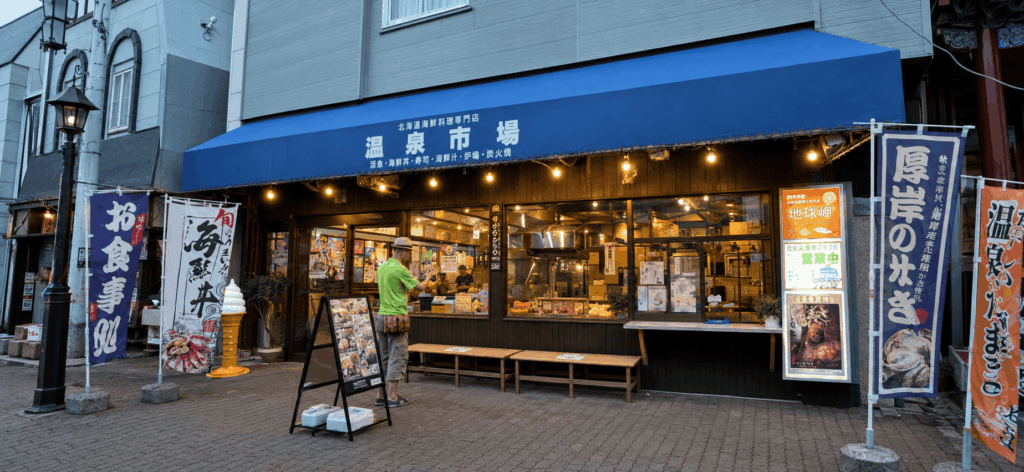
Onsen Ichiba operates from around 11:30 to 19:30 daily (hours may extend to 21:00 during peak winter season). It does not take reservations — it’s a first-come, first-served market dining space.
The lunch rush tends to hit between 12:00 and 13:30, when tour groups and hotel guests descend on the onsen town’s main dining corridor. I visited around 15:00 on a weekday and walked straight to a seat without waiting, though this timing won’t work for everyone’s schedule.
Kai’s tip: Late lunch (around 14:00–15:00) is the easiest window to get a seat without a queue, but it comes with a trade-off: some seafood items, particularly the popular grilled shellfish, can sell out by mid-afternoon. If you have your heart set on a specific seafood platter, arriving closer to opening time is safer even if it means a short wait.
The restaurant is located inside Gokuraku Shopping Street, a covered arcade that runs through the centre of the onsen town. Enmado — the temple housing the giant King of Hell statue — is directly across the road, making this a logical stop after visiting the statue and before or after walking up to Jigokudani.
2. Fresh Seafood at Onsen Ichiba
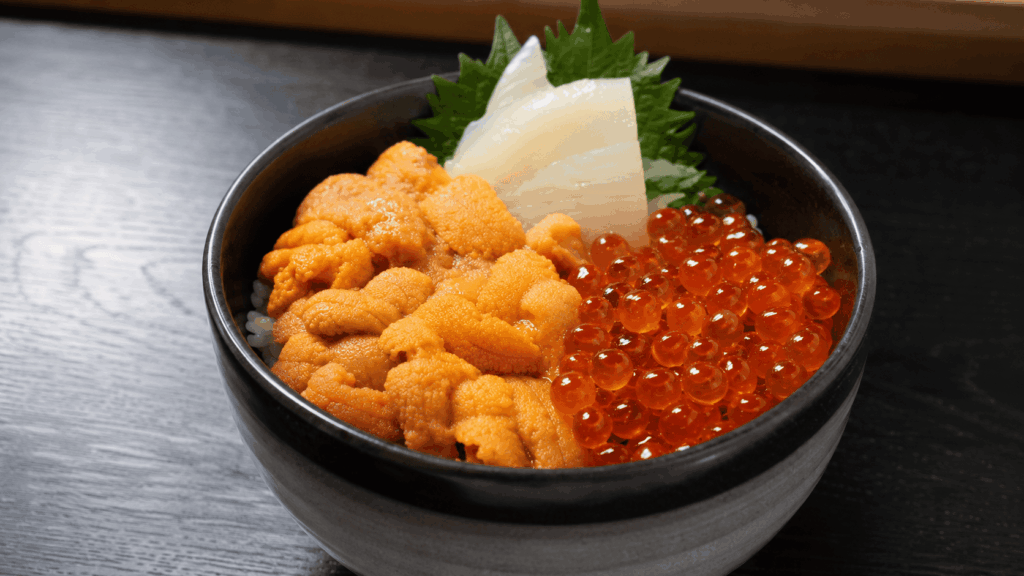
If spice isn’t your thing — or if you want a second meal that showcases what Hokkaido is known for — Onsen Ichiba also functions as a full seafood restaurant. It originally opened in 1999 as a wholesale seafood supplier for local inns, and it still operates large UV-sterilised tanks holding live crab, shellfish, and fish sourced from the nearby coast.
You can order your seafood several ways:
- Sashimi platters — the freshest option, with whatever came in that morning
- Kaisendon (seafood rice bowl) — a generous bowl of assorted sashimi over vinegared rice
- Grilled or butter-seared seafood — scallops, crab, and fish prepared at your table’s grill
- Kaki Kōri — a piled-high oyster dish available in summer
- Kegani (hairy crab) — a winter seasonal specialty
The seafood here is genuinely good, and it’s the most reliable place in the onsen town for a non-spicy meal that still feels distinctly Hokkaido. That said, it’s not cheap — a full kaisendon or a combination of grilled items can run 2,000–4,000 yen per person — and the atmosphere is more casual market hall than fine dining.
If you’d rather turn your seafood interest into a hands-on activity, the sushi-making class near JR Noboribetsu Station is an excellent alternative for travellers with a bit more time.
3. Hell Ramen at Aji no Daio
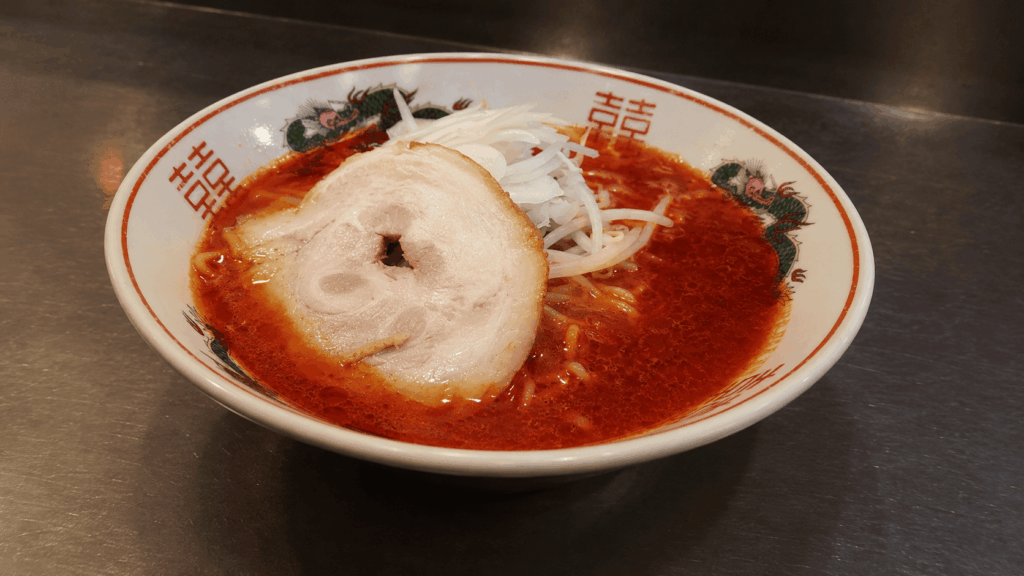
If your primary reason for visiting Noboribetsu is to eat something that matches the hellish theme of Jigokudani, Hell Ramen at Aji no Daio is the dish you’re looking for. This is not a moderate-spice experience — it’s a deliberate challenge, built around a broth that’s loaded with ground chili, spices, and a deep pork-and-soy base that lets the heat take centre stage.
Aji no Daio is a small ramen shop tucked away from the main Gokuraku Shopping Street, a short walk from the onsen town centre. The interior is unpretentious — a handful of counter seats and tables — and the walls are covered with handwritten names of customers who have successfully finished the Hell Ramen challenge. It has the feel of a local institution rather than a tourist draw, which adds to its authenticity.
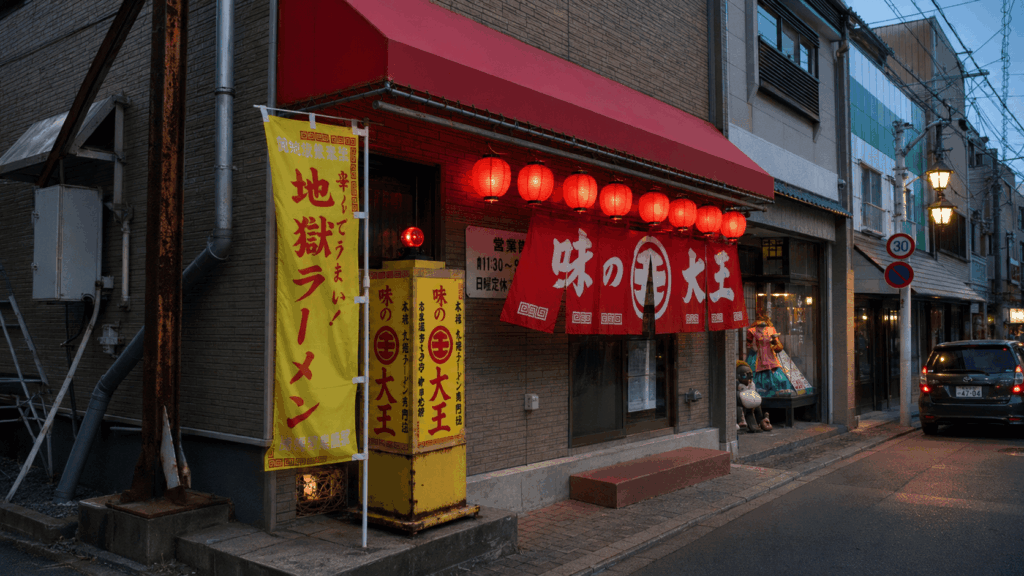
Important practical note: Aji no Daio operates only for lunch, from around 11:30 to 15:00, and is closed on Tuesdays (with additional irregular closures on some public holidays). This means you cannot eat here for dinner, and if you’re visiting on a Tuesday, it’s not an option at all. Always confirm the latest hours before making the walk over.
Enma Yakisoba vs Hell Ramen: Which One Should You Choose?
| Enma Yakisoba (Onsen Ichiba) | Hell Ramen (Aji no Daio) | |
|---|---|---|
| Spice level | Light to moderate | Extreme |
| Local specialty? | Yes — Noboribetsu-specific dish | No — house ramen with a themed name |
| Meal size | Medium (lunch/snack portion) | Large (full bowl of ramen) |
| Queue risk | Moderate at peak hours | Low (small shop, but less well-known to tourists) |
| Opening hours | 11:30–19:30 (daily) | 11:30–15:00 (closed Tuesdays) |
| Best for | First-time visitors wanting one iconic dish | Spice enthusiasts seeking a challenge |
If you have two meals in Noboribetsu — say, lunch and a late afternoon snack — you could reasonably try both. But if you only have one slot, I’d lean toward the Enma Yakisoba. It’s more locally specific, available over a longer window, and doesn’t risk overwhelming your palate before a Jigokudani walk. Save Hell Ramen for a return trip or for the dedicated spice seeker in your group.
4. Noboribetsu Milk Soft Serve

Hokkaido is famous across Japan for its dairy, and Noboribetsu is no exception. A milk soft serve ice cream — rich, not too sweet, with that distinctive Hokkaido milk flavour — is one of the simplest and most satisfying things you can eat here, especially after a walk around Jigokudani where the sulphurous steam can leave you feeling like you’ve been through the underworld.
I tried a soft serve made with Noboribetsu grass-fed milk near JR Noboribetsu Station on a reporting visit, and what struck me most was how clean the flavour was — less creamy and heavy than a Hokkaido soft serve you’d find in Sapporo or Otaru, with a noticeably lighter finish that worked well as a palate cleanser after a rich lunch. It’s not a destination dish in the way Enma Yakisoba is, but it’s the perfect bridge between meals or a reward after the walk back down from the valley.
Where to Try Noboribetsu Milk Soft Serve
There are two reliable spots, depending on whether you’re at the station or in the onsen town:
UNMIXed SOFT SERVE ICE CREAM (JR Noboribetsu Station)
- Location: 1-minute walk from JR Noboribetsu Station, on the forecourt of Noboribetsu Guest House AKA & AO
- Hours: Weekends only — Friday, Saturday, Sunday, 10:00–16:00
- Closed: Monday to Thursday
- Note: Uses 100% Noboribetsu grass-fed milk from a local farm
Milky House (Onsen Town)
- Location: Across from the 7-Eleven on the main street through Noboribetsu Onsen
- Hours: 9:00–17:00 daily
- Menu: 8 varieties of soft serve (plain milk, matcha, mixed berry, etc.) plus light lunch items like curry and zenzai (sweet red bean soup)
- Note: More convenient for visitors staying in the onsen town; open every day
If you’re visiting on a weekday and staying in the onsen town, Milky House is your option. If you’re passing through JR Noboribetsu Station on a weekend with time to spare, UNMIXed is worth the short walk from the ticket gates.
5. Pizza at Pizzeria Astra
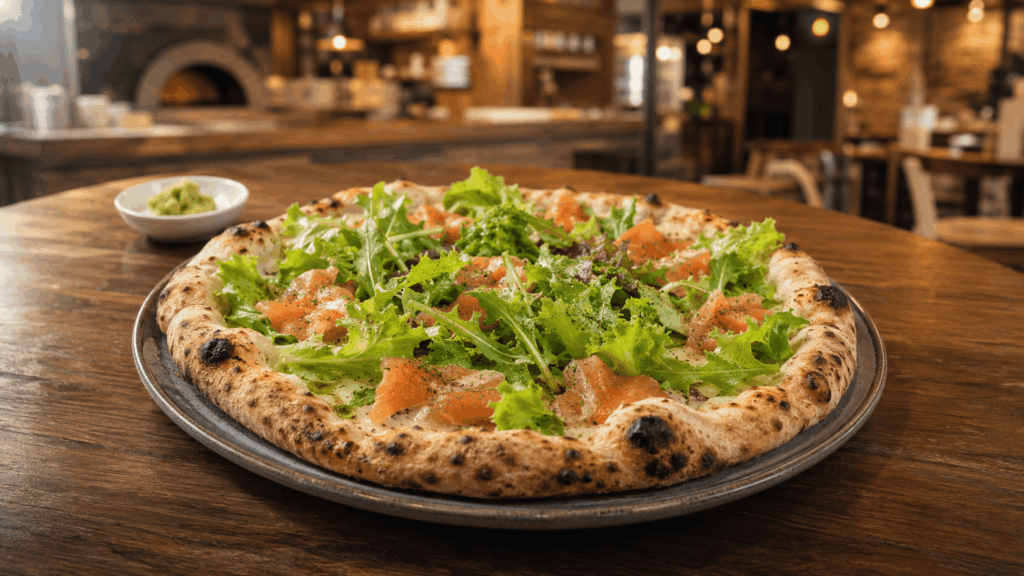
If you need a non-spicy, reliable dinner option in the onsen town and seafood isn’t what you’re after, Pizzeria Astra is the highest-rated restaurant in Noboribetsu across major review platforms — not because it’s touristy, but because it does one thing well. The pizza is wood-fired in an oven built with Noboribetsu stone, and the toppings make clever use of Hokkaido ingredients: local cheese, fresh wasabi, seasonal Hokkaido vegetables.
I should be clear — this is not a Noboribetsu-specific dish in the way Enma Yakisoba or fresh seafood is. The appeal here is quality, not uniqueness. But for travellers who want a break from Japanese food, or who need a confirmed dinner option in a town where evening dining can be limited, Astra is a genuinely good restaurant that happens to be in Noboribetsu rather than specifically of it.
Key details:
- Hours: 11:00–16:00 (last order 15:00) / 17:00–21:00 (last order 20:00)
- Closed: Tuesday and Wednesday
- Reservations: Recommended — walk-ins can be turned away at peak dinner hours
- Best for: Non-spicy dinner, families, couples, anyone needing a change from noodles
6. Jingisukan and Late Dinner at Isekura
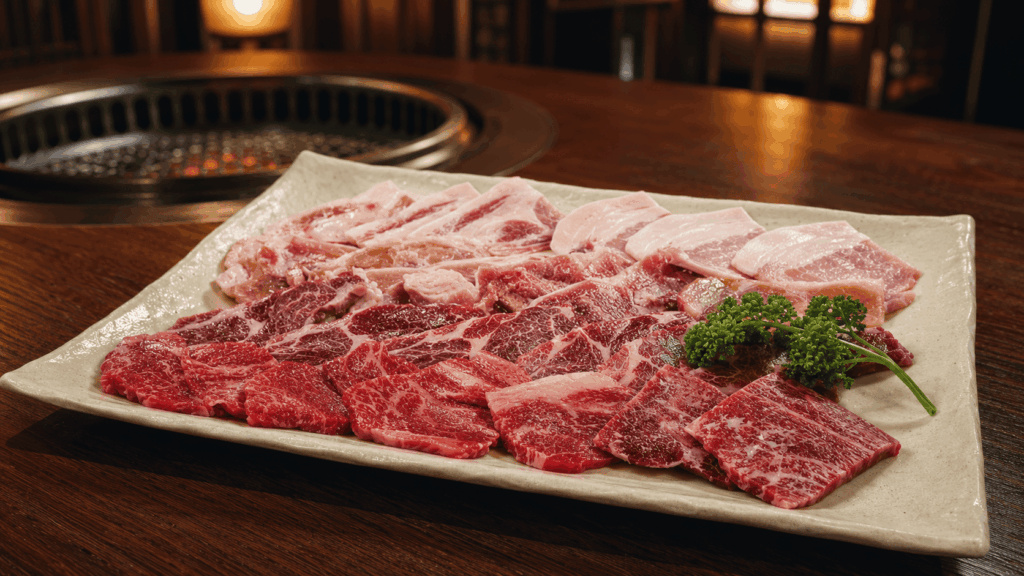
Charcoal BBQ & Ramen Isekura is the only restaurant in the onsen town that consistently stays open until 1:00 AM (some sources report last entry around midnight), making it a critical backup option for travellers arriving late, staying in for a soak and emerging hungry, or finding that their first-choice restaurant is closed or fully booked.
Isekura serves two main things: jingisukan (Hokkaido-style grilled mutton and lamb) on a charcoal grill, and ramen. The jingisukan is the better choice — the charcoal heat gives the meat a smoky edge that the standard gas grills in many Sapporo jingisukan restaurants don’t achieve.
Practical notes:
- Hours: 18:00–1:00
- Closed: Irregular — some sources report Tuesday closures, others list it as open daily. Check before heading out.
- Payment: Cash is safest; card acceptance is not confirmed
- Language: Japanese-only menu is likely — pointing at the jingisukan set or using a translation app is the standard workaround
Isekura is not a destination restaurant — the atmosphere is casual and slightly smoky, and it’s definitely not a place for a quiet romantic dinner. But it fills a genuinely important gap in Noboribetsu’s dining scene: late-night, hearty, non-spicy food in the onsen town.
Should You Book a Ryokan Dinner or Eat in Town?
This is one of the most common questions I hear from travellers planning a night in Noboribetsu. The answer depends on what you value more: convenience or choice.
Choose a ryokan dinner (half-board) if:
- You want the full onsen experience without leaving your accommodation
- You’re travelling with children and don’t want to navigate evening dining logistics
- You’re visiting on a Tuesday or Wednesday, when Aji no Daio and Pizzeria Astra are closed
- Your ryokan serves a well-reviewed kaiseki dinner featuring local seafood and Hokkaido ingredients
Choose to eat in town if:
- You want to try Enma Yakisoba or another specific restaurant dish
- You prefer flexibility over a set multiple-course meal
- You’re on a tighter budget (town dining can be cheaper than a half-board upgrade)
- You’re staying for two or more nights and want variety
Kai’s tip: If you skip the ryokan dinner, decide where you’ll eat before you arrive in Noboribetsu. The onsen town has fewer evening dining options than most visitors expect, and several of the more popular restaurants close between 15:00 and 17:00 or are closed on certain days of the week. By late evening, your realistic choices may narrow to Pizzeria Astra (if it’s not a Tuesday or Wednesday), Isekura, or convenience store food. A little planning goes a long way here.
Where to Eat: Noboribetsu Onsen or JR Noboribetsu Station?
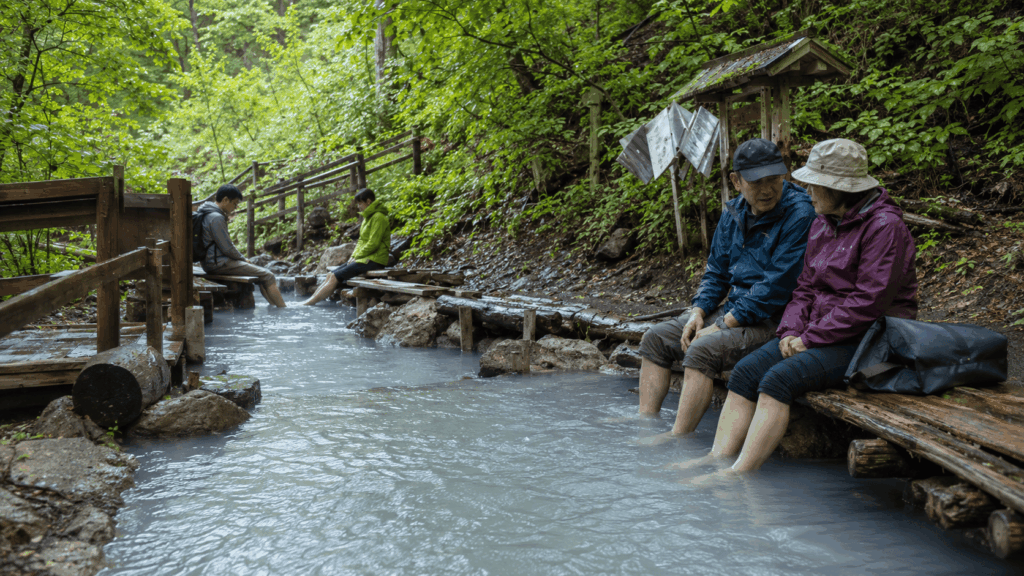
One of the most common planning mistakes travellers make is assuming that “”Noboribetsu”” is a single walkable area. It’s not. The JR station and the onsen town are 8 kilometres apart, connected by a 27-minute bus ride that costs 450 yen each way (see our breakdown on how to get to Noboribetsu Onsen).
| Noboribetsu Onsen (Town) | JR Noboribetsu Station Area | |
|---|---|---|
| Restaurant density | Moderate (8–10 options within walking distance) | Low (2–3 options near the station) |
| Local specialty options | Enma Yakisoba, fresh seafood, Hell Ramen | Milk soft serve, sushi-making class |
| Evening dining | Limited after 15:00; a few restaurants open for dinner | Very limited |
| Transit connection | Donan Bus from station (27 min, ¥450) | Same bus back; last bus around 20:35 |
| Best for | Anyone spending time at Jigokudani and the onsen | Day-trippers with tight train schedules, or before/after the sushi class |
Kai’s tip: Don’t assume you can walk between the station and the onsen town. I’ve met travellers who planned to “”just walk over”” after arriving at the station and found themselves facing a 90-minute uphill road with no pedestrian-friendly path. The bus is the only practical option unless you have a rental car. The journey takes around 27 minutes, so factor that into your meal timing — especially if you’re catching a train afterwards. The last Donan Bus from the onsen town to the station departs around 20:35, which will affect your evening dining choices.
Practical Tips for Eating in Noboribetsu
- Check opening days before you go: Aji no Daio (closed Tuesdays), Pizzeria Astra (closed Tue–Wed), and UNMIXed (weekends only) all have limited schedules. A restaurant that’s listed in a guidebook may not be open on the day you visit.
- Lunch is the most reliable meal: Most Noboribetsu restaurants serve lunch (11:30–15:00) more consistently than dinner. If you have only one meal, make it lunch.
- Carry cash: Several smaller restaurants in the onsen town operate on cash-only or have inconsistent card acceptance. ATMs are available at the 7-Eleven on the main street and at Japan Post Bank near the station.
- Prepare for queues at peak times: Onsen Ichiba is the busiest restaurant in town. A 15–20 minute wait at 12:30 is not unusual. Late lunch (14:00+) is quieter but popular items may sell out.
- Popular items can run out: Grilled shellfish and certain seafood platters at Onsen Ichiba sometimes sell out by mid-afternoon. Arrive early if a specific dish is your priority.
Vegetarian, Vegan and Halal Food in Noboribetsu
I want to be upfront about this: Noboribetsu is a challenging destination for travellers with dietary restrictions beyond standard allergies. I have not been able to independently verify a fully vegetarian-, vegan-, or halal-certified restaurant in the onsen town as of my latest visit.
Pizzeria Astra offers vegetarian pizza options (the Margherita and seasonal vegetable pizza are likely suitable, though this should be confirmed with the restaurant directly). The seafood at Onsen Ichiba is pescatarian-friendly. For stricter dietary needs, the most reliable approach is to contact your ryokan in advance — many can accommodate dietary restrictions with advance notice and will prepare a modified kaiseki dinner.
For halal needs specifically, the closest verified halal-friendly dining is in Sapporo, which has a small but growing number of halal-certified and Muslim-friendly restaurants. If you’re day-tripping from Sapporo, eating before or after your Noboribetsu visit may be the most practical solution.
As a general rule: if you have a dietary restriction that goes beyond “”no raw fish”” or “”no pork,”” contact your accommodation or any restaurant you’re considering at least 2–3 days before your visit and ask about their ability to accommodate you.
Is a Noboribetsu Food Experience Worth Booking?
There is one structured food experience available in Noboribetsu: a Hokkaido Sushi Making Experience near JR Noboribetsu Station. It runs for about 1.5 hours, costs around 9,000–10,000 yen per person (approximately $60–$65), is conducted in English, and includes making several types of nigiri and maki sushi with Hokkaido seafood. The class meets at a cooking studio a short walk from the station.
Is it worth booking? It depends on what you’re looking for.
- Book it if: You have 1.5 hours to spare before or after your train connection, you enjoy hands-on cooking experiences, or you’re travelling with children or a group and want a structured activity beyond sightseeing.
- Skip it if: Your priority is purely eating (you can order excellent sushi at a restaurant for less money and less time), you’re on a tight day-trip schedule, or cooking classes aren’t your thing.
The class is a genuine experience run by a local host, and the reviews consistently mention it as a highlight for those who take part. But for the majority of first-time visitors focused on Jigokudani and the onsen, a regular meal at Onsen Ichiba or a bowl of Enma Yakisoba will deliver more food satisfaction per minute of your limited time in Noboribetsu.
If you want to do more than order sushi — and your train timing leaves you about 90 minutes near JR Noboribetsu Station — this is the one structured food booking to compare.
Why I’d book this one
- A sushi chef demonstrates both nigiri and maki techniques step by step.
- A bilingual guide helps translate the chef’s instructions and questions during the session.
- The beginner-friendly format ends with eating the sushi you have made.
FAQ
What is the one food I absolutely must eat in Noboribetsu?
For most first-time visitors, it’s Noboribetsu Enma Yakisoba at Onsen Ichiba. It’s the only dish that’s truly specific to Noboribetsu — made with Hokkaido wheat flat noodles, a sesame-spicy sauce, and seafood from the local fishing port — and the restaurant sits alongside Enmado in the centre of the onsen town, making it a convenient stop during a Jigokudani walk. If you have only one meal in town, this is the one.
Is Enma Yakisoba very spicy? Can I eat it if I don’t handle spice well?
Enma Yakisoba is moderately spicy — the heat comes from a sesame-based sauce rather than direct chili, so it builds gradually and doesn’t linger. Most people with average spice tolerance can finish a plate comfortably, especially if paired with a cold drink. That said, it is not a mild dish. If you avoid spice entirely, choose fresh seafood at Onsen Ichiba, a wood-fired pizza at Pizzeria Astra, or book a ryokan dinner instead. For extreme spice seekers, Hell Ramen at Aji no Daio is a separate category altogether.
Where can I eat dinner in Noboribetsu Onsen town?
Evening dining options in the onsen town are more limited than most visitors expect. Your reliable choices are: Pizzeria Astra (17:00–21:00, closed Tue–Wed, reservation recommended), Charcoal BBQ & Ramen Isekura (18:00–1:00, irregular closures possible), and dinner at your ryokan (requires a half-board booking in advance). Onsen Ichiba serves until around 19:30 but is best for late lunch rather than dinner. Always check the latest opening hours before heading out, as schedules change and some restaurants close on certain days of the week.
Can I walk from JR Noboribetsu Station to the onsen town for food?
No. The station and the onsen town are 8 kilometres apart with no pedestrian-friendly walking route. The only practical connection is the Donan Bus (27 minutes, 450 yen one way), which runs regularly until around 20:35. If you’re dining in the onsen town and need to return to the station for a train, check the last bus time carefully — missing it means a very expensive taxi ride.
Is there halal, vegetarian, or vegan food in Noboribetsu?
Options are very limited. Pizzeria Astra can accommodate vegetarian pizza (confirm with the restaurant directly). Onsen Ichiba’s seafood is suitable for pescatarians. For strict halal, vegan, or other dietary restrictions, the most reliable approach is to contact your ryokan 2–3 days in advance — many can prepare modified meals with notice. Otherwise, eating in Sapporo before or after your Noboribetsu visit is the safest plan. I’ve been transparent about this because arriving in Noboribetsu with dietary restrictions and expecting a wide range of options is a setup for disappointment.
Final Verdict — What Should You Eat in Noboribetsu?
There is no single “”best”” food in Noboribetsu — there’s only the right choice for your spice tolerance, schedule, and appetite for local flavours. Here’s how to decide based on your situation:
For first-time visitors with only one meal in Noboribetsu:
Choose Noboribetsu Enma Yakisoba at Onsen Ichiba. It’s the most locally specific dish available, the spice level is approachable for most eaters, and the location beside Enmado makes it easy to fit into a Jigokudani visit. Pair it with an Ao-Oni Pilsner if you drink beer. This is the recommendation I’d give to a friend visiting for the first time.
For spice lovers who want a challenge:
Head to Aji no Daio for Hell Ramen — but go for lunch (11:30–15:00) and avoid Tuesdays. If you have time for two meals, try the Hell Ramen for lunch and a milk soft serve as a cooling afternoon reward.
For non-spicy eaters, families, and those who want a relaxed dinner:
Your best options are fresh seafood at Onsen Ichiba (lunch or early dinner), Pizzeria Astra (dinner, reservation recommended, closed Tue–Wed), or a ryokan kaiseki dinner (requires half-board booking). If you’re arriving late, Isekura (18:00–1:00) covers the evening gap that other restaurants leave open.
For day-trippers from Sapporo with a tight schedule:
Eat lunch in the onsen town (Onsen Ichiba is the most efficient choice) and grab a milk soft serve from Milky House on the walk back to the bus stop. Factor the 27-minute bus ride into your timing both ways — it’s easy to underestimate how long the round trip takes.
For travellers arriving late or without a dinner plan:
Decide where you’ll eat before you arrive in Noboribetsu. The onsen town has genuine gaps in its evening dining — a little planning turns a potential evening of convenience store food into a satisfying meal at Isekura or Astra.
For travellers who want a hands-on food experience:
The Hokkaido Sushi Making Experience near JR Noboribetsu Station is well-reviewed and genuinely enjoyable for those who book it — but it’s an activity that competes with your sightseeing time, not a meal replacement. Save it for a visit where you have 1.5 hours to spare, or if you’re specifically looking for a cooking class rather than just a good meal.

Hi, I’m Kai. I’m a Tokyo-based travel writer, tourism industry insider, and the author of a published guidebook for international visitors to Japan. With over 10 years of professional experience at a leading Japanese tourism company, my mission is to help you skip the tourist traps and navigate Japan’s best destinations like a local. I believe the perfect day trip is like a traditional kaiseki meal: a beautiful balance of precise planning and unforgettable seasonal discovery. When I’m not out conducting field research, you’ll usually find me drafting new itineraries with one of my favorite fountain pens!