
Yes, Amanohashidate is worth visiting if you want coastal scenery, a hilltop panorama, and a walk or bicycle ride through the pine-covered sandbar. Give it four to five hours on site, plus roughly two hours each way from Kyoto. On a short first trip with only a few days in Kyoto, I would put the city’s main sights first.
The main decision is how you want to spend the day: explore Amanohashidate at your own pace, or see a shorter version of it alongside Ine’s boathouses. Those are different trips, with different costs and time for cycling.
Want Amanohashidate and Ine in the same day?
This shared coach tour connects both places from Kyoto or Osaka. Choose your departure and compare the options with or without the attraction tickets.

So, Is Amanohashidate Actually Worth It?
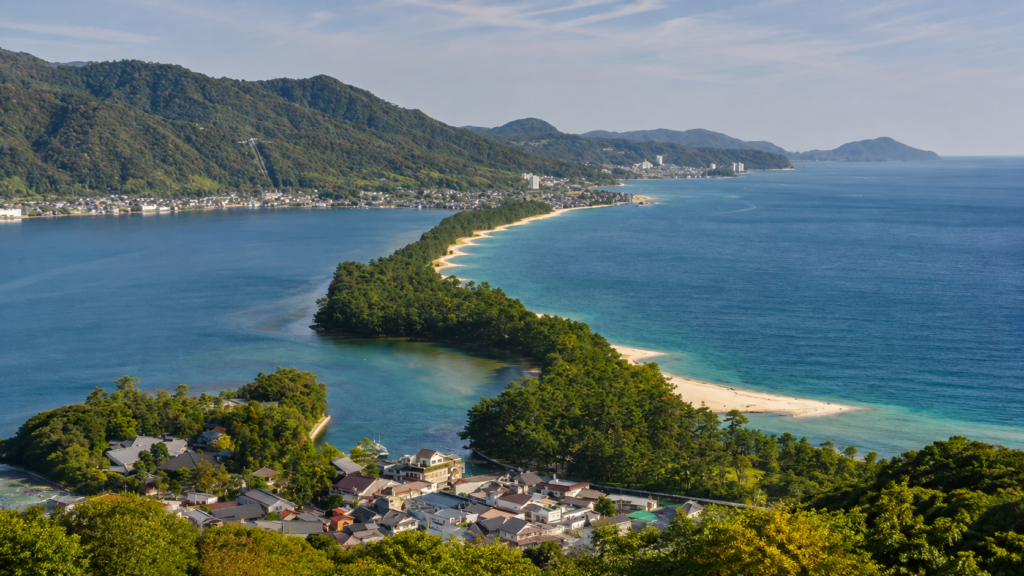
Amanohashidate is one of Japan’s Three Scenic Views: a sandbar about 3.6 km long, with pine trees separating Miyazu Bay from the inner Aso Sea. Its appeal is the combination of the view from above and the experience at ground level. It is a quiet coastal outing rather than a day packed with major monuments.
The reason I keep recommending it comes down to standing at an observation deck and seeing the sandbar stretch across the bay. Photographs flatten that view. Then, down among the pines, you get the sea breeze, beaches, and a completely different sense of scale.
You do not have to cycle the entire sandbar to enjoy it. A viewpoint and a short beach walk can be enough for someone who loves scenery. But if you are weighing a long journey against a single photograph, adding time among the pines makes the day easier to justify.
Who Will Love Amanohashidate—and Who Might Want to Skip It?
- Scenery lovers and photographers: worth a full day, especially when visibility is good. Choose a viewpoint first, then leave time to explore the shoreline.
- Repeat visitors and cyclists: a good change from Kyoto’s temples and Osaka’s streets. The flat crossing is a large part of the attraction.
- First-time visitors with a short Kyoto stay: lower priority if going means losing your only day for the city’s main sights. The return journey alone uses roughly four hours.
- Travelers who dislike long transfers: consider staying overnight nearby, or choose a shorter outing from your base.
- Families: the boat and viewpoint rides offer variety, but small children cannot automatically use the rental bicycles. Plan a version that works without cycling.
Expect a low, pine-lined landscape rather than towering cliffs or mountains. That distinction matters: the pleasure is in the shape of the bay and an unhurried few hours outdoors. A tightly scheduled visit in poor visibility offers much less of that.
If you have only two or three hours locally, pick one viewpoint and the nearby waterfront. You can still see the famous view; you simply need to leave the full crossing and Ine for another day.
What Makes Amanohashidate Worth the Trip?

The View From Above Is the Main “Wow” Moment
There are two principal hilltop viewpoints. For a first visit by train, Amanohashidate View Land is the simplest choice: its lower station is about five minutes’ walk from Amanohashidate Station. Kasamatsu Park is across the bay on the northern, Fuchu side, near Kono Shrine and the Ichinomiya boat pier, about 130 meters above sea level.
| Choice | View Land: south / Monju | Kasamatsu Park: north / Fuchu |
|---|---|---|
| Best fit | A convenient first viewpoint near the railway station; small amusement rides at the top | A northern-side route with Kono Shrine, the sandbar crossing, or onward travel toward Ine |
| Classic view | Hiryukan, the “flying dragon” | Shoryukan, the “rising dragon” |
| Ride up | Chairlift or monorail | Cable car or chairlift |
| Adult / elementary-school child | ¥1,000 / ¥500, including park entry and the return ride | ¥800 / ¥400 for the return cable car/chairlift ride |
| Getting there from the station | Walk to the lower station | Cross by bicycle, on foot, or by sightseeing boat, or use a road bus to the northern side |
Choose one unless the viewpoints themselves are your main interest. Kasamatsu is not automatically quiet, and neither park has a universally better view. If you have five hours and enjoy the crossing, a second viewpoint is an optional addition. With a shorter visit, I would keep that time for lunch and the pines.
Matanozoki Is Fun—But Don’t Make It the Reason You Go
At the viewpoints you will see people doing matanozoki: bending forward and looking between their legs so that sky and sea appear to swap places. The sandbar then seems to float across the sky. Kasamatsu Park is traditionally associated with the origin of this viewing custom.
The first time I saw someone do it, I laughed—and so did the person doing it. It is a playful photo ritual, but the ordinary panorama is enough reason to visit. Skip the pose if bending or balancing is uncomfortable.
Ride the Sandbar: Why the Second Half of the Experience Matters
At ground level, the sandbar becomes a route through pine woodland, with beaches and small shrines along the way. Allow about 50–60 minutes to walk across, or 15–20 minutes of riding time by bicycle. Stops for photographs make either journey longer.
The main route follows the pines; stepping onto the beach is optional. You can enjoy the coast without walking the entire distance on loose sand. That makes a short walk practical even if you do not want a full 3.6 km crossing.
Walk or Cycle the Amanohashidate Sandbar?
For most visitors who can ride comfortably, I would choose a bicycle. Walking is pleasant when the walk itself is part of your plan, but the return route needs thought: walking both ways means roughly 7 km before adding the station, lunch, and viewpoint.
| Option | Crossing time | Adult cost | Useful when |
|---|---|---|---|
| Walk | About 50–60 minutes one way, before longer stops | Free | You want a slow walk and have arranged the return |
| Rental bicycle | About 15–20 minutes riding one way | ¥500 for two hours; ¥300 for each additional hour | You want to cross without using much of the day |
| Bicycle out, boat back | The ride plus a 12-minute boat crossing and waiting | ¥1,200 adult package, including two hours’ bicycle use | You want the pines and a view from the water without retracing the route |
Where to rent: Tankai rents bicycles at Amanohashidate pier on the station side and Ichinomiya pier on the northern side. One-way return is allowed between these piers. Hand the bicycle back to staff before continuing on foot or taking the boat; do not assume a bicycle from a different shop has the same return policy.
The pier rentals are 20-inch bicycles, with no children’s models and no advance reservations. Riders must be able to put their feet on the ground. Helmets are available free. For a family with younger children, a short walk and a boat ride can work better than making the whole outing depend on finding suitable bikes.
Plan on a standard bicycle here. If you need electric assistance, arrange a suitable rental separately rather than counting on an e-bike at the pier.
Kai’s tip: When I walked the sandbar, sand in my shoes became an annoyance for the rest of the day. Wear shoes you can easily empty if you plan to step onto the beach. On later visits, I preferred renting a bike: I could enjoy the pine-lined route and arrive with energy left for the viewpoint and Monju’s temple streets.
Why I Prefer a Rental Bike
On my first full walk across, I was paying more attention to my tired feet by the far end than to the scenery. The bicycle changed that. The sea views and pine forest were still there, with a breeze in my face, but the crossing used much less energy.
Keep the rental clock in mind. If you intend to spend a long time at Kasamatsu Park, return the bicycle at Ichinomiya first, then walk to the cable car. Leaving it parked while you eat and visit the park can turn a short ride into a longer rental.
When Walking Still Makes Sense
Walk if you enjoy being on foot, want frequent stops, or are with children who prefer a short section of the path. There is no need to cross the whole sandbar to make the visit worthwhile. Bring water, especially in warm weather, and leave time for the return boat rather than treating its 12-minute journey as the whole transfer.
Rentals may be suspended in rain or bad conditions. If bikes are unavailable, choose a shorter walk plus the boat, or stay on the station side. The pier rental rules and sightseeing boat timetable are useful for planning that alternative.
Chairlift, Monorail, or Cable Car? Know Which Side You’re Visiting
View Land’s chairlift takes about six minutes each way. Its enclosed monorail takes about seven minutes and normally departs every 20 minutes. The same return ticket lets you use different rides uphill and downhill; amusement rides inside the park cost extra.
Children of elementary-school age and older can use View Land’s chairlift alone. Younger children ride on an adult’s lap under its rules; the monorail is an alternative if that arrangement does not suit your family.
At Kasamatsu Park, the cable car runs every 15 minutes during its operating hours, with a common ticket for the cable car and chairlift. The chairlift has shorter hours: normally until 16:00, with weekend-and-holiday-only operation from January 6 through the end of February. The cable car remains the main winter option when the chairlift is not running.
For exact departures and access arrangements, use View Land’s ride information or Kasamatsu’s cable car and lift schedule. A park’s closing time is later than some of its final uphill rides.
Why the Downhill Chairlift Is My Pick
At View Land, I prefer the chairlift down on a clear day. You face the sandbar as you descend, with the panorama opening ahead of you over several minutes. It gives you a different perspective from standing still at the top.
Kai’s tip: The downhill ride can be the most memorable part of the viewpoint visit. When both rides are operating, you can take the monorail up and the chairlift down on the same ticket. Choose the enclosed ride if open seats or the weather would make the descent uncomfortable.
A Note for Anyone Afraid of Heights
Kasamatsu’s Sky Deck includes a see-through section with the ground about 40 meters below. I have traveled with someone who took one look at the transparent floor and declined to step onto it. You can use the other viewing areas and still enjoy the panorama.
For a visit without an open chairlift, use View Land’s monorail or Kasamatsu’s cable car. View Land also publishes wheelchair access arrangements for its monorail; confirm operation and your needs before traveling. The shared coach tour discussed below is listed as unsuitable for wheelchair users, so it should not be treated as an accessibility solution.
What Time Should You Arrive at Amanohashidate?

Aim for around 10:00–11:00 for a relaxed day. That leaves room for a viewpoint, lunch, and the crossing before the afternoon becomes a race against ride and shop closing times. Holiday queues can still be substantial, so allow extra time rather than assuming a morning arrival guarantees an empty park.
View Land’s winter season, November 16–February 15, normally has ticket sales until 16:30 and the park open until 17:00; the last uphill monorail is 16:20. Summer hours are longer. Kasamatsu’s cable car normally finishes at 17:00 in December–January and 17:30 in February and November, while its chairlift finishes earlier.
December 2026 maintenance: View Land is fully closed December 15–17. On December 14 and 18, only the monorail operates, so queues can be longer. Kasamatsu Park, its cable car, lift, mountain bus, and shops are closed December 18. Use the View Land notices and Kasamatsu closure notice when choosing those dates.
Kai’s tip: I once arrived late enough that the little shops near the base had closed by the time I came down from the viewpoint. Getting there by mid-morning gives you time for the panorama and the streets afterward. Do the viewpoint before settling into a long lunch if you are already arriving late.
Is It Worth Going in Rain or Winter?
For a trip mainly about the panorama, visibility matters more than the season. Check the viewpoint’s live camera before committing to a long journey in low cloud. In persistent heavy rain, I would save the trip for another day; buying a tour does not improve the view.
Winter can be rewarding, but snow is not guaranteed, daylight is shorter, and a bicycle loop may be impractical in wet or icy conditions. Plan one viewpoint and a short walk, then add more only if conditions allow. See the separate Amanohashidate winter guide for weather and clothing details.
How Long Do You Need at Amanohashidate?
- Two to three hours: enough for one viewpoint and a short look at the temple or beach near the station. Skip the full crossing if queues eat into that time.
- Four to five hours: a comfortable starting point for a viewpoint, lunch, bicycle crossing, return boat, and the Monju streets.
- Amanohashidate plus Ine: reserve the whole day. From Kyoto, roughly 10–12 hours station to station is a more useful planning range than a half-day label; Osaka adds travel depending on your route.
From Kyoto, the direct Limited Express Hashidate takes roughly two hours each way and requires a reserved seat. Some departures involve a change instead. From Osaka, allow approximately 2.5–3 hours each way depending on the connection. These are travel estimates, with hotel-to-station time still to add.
The nationwide Japan Rail Pass does not cover the Kyoto Tango Railway section beyond Fukuchiyama. Some regional passes do: the Kansai WIDE Area Pass is one example. If you already hold a valid pass, that changes the cost comparison; buying a pass for this outing alone is a separate calculation.
A Four-to-Five-Hour Visit With Time for Lunch
This is an example local schedule, not a guaranteed train connection. It uses View Land and one bicycle crossing, with the sightseeing boat back from Ichinomiya. Arrange your arrival before the start and reserve a return train or highway bus with a buffer.
| Time | Plan |
|---|---|
| 10:30–10:45 | Station toilets, any luggage arrangements, and walk to View Land’s lower station |
| 10:45–11:45 | Tickets, ride up, viewpoint, and ride down; extend this if there is a queue |
| 11:45–12:25 | Lunch on the Monju side |
| 12:25–12:40 | Walk to Amanohashidate pier, rent a bicycle, and adjust the seat |
| 12:40–13:10 | Cycle across with short photo stops |
| 13:10–13:45 | Return the bicycle to staff; take a brief northern-side walk and be back at Ichinomiya pier before departure |
| 13:45–13:57 | Sightseeing boat back to Amanohashidate pier |
| 13:57–14:50 | Chionji Temple, Monju’s shops, a snack, or a short beach walk |
| 14:50–15:15 | Retrieve any locally stored bags, use the toilets, and return to the station |
The 13:45 boat is in the published timetable checked in November 2026; confirm operation for your date. If you miss it, the next listed departure is 14:15, arriving 14:27: shorten the shops and snack stop rather than rushing the bicycle return or missing your train. If bikes or boats are suspended, keep to a shorter station-side walk.
Adding Kasamatsu means allowing roughly another hour, including walks, waiting, rides, and the view. Return the bike before going up, then move the boat and departure later. For a longer route, use the Amanohashidate day-trip itinerary.
How Much Does an Amanohashidate Day Trip Cost?
The sandbar is free to enter, but getting here is the main expense. For one adult starting at Kyoto Station, this is a useful budget for the View Land–bicycle–boat outing above:
| Expense | By limited express | By highway bus |
|---|---|---|
| Kyoto–Amanohashidate return | Allow about ¥10,000; train fares vary by date and service | ¥6,800–7,800 at the standard published fares |
| View Land return ride and entry | ¥1,000 | ¥1,000 |
| Bicycle out / boat back package | ¥1,200 | ¥1,200 |
| Lunch allowance | ¥1,500 assumed | ¥1,500 assumed |
| Planning total | About ¥13,700 | ¥10,500–11,500 |
These totals exclude travel to Kyoto Station, snacks, luggage storage, Ine, and extra attractions. The train figure and lunch are planning allowances, not fixed quotes. If you walk instead of taking the ¥1,200 package, you save that amount only if you also walk back or stay on one side. Walking out and returning by boat costs ¥800 for the adult one-way boat fare; a boat-only return ticket is ¥1,300.
The reserved Tankai highway bus is worth comparing if you do not have a suitable rail pass. Since October 1, 2026, the standard Kyoto–Amanohashidate adult fare is ¥3,400–3,900 each way, depending on the date. One usable pair is Kyoto 08:20 → Amanohashidate 10:25, returning 16:20 → Kyoto 18:30. That leaves spare time after the local schedule above. Book both directions; traffic can delay the return.
Should You Combine Amanohashidate With Ine?

Ine adds a different coastal landscape: funaya boathouses with boat garages below and living space above. If that waterfront architecture is a major reason for traveling north, combining the two places makes sense. If cycling and a relaxed lunch are your priorities, Amanohashidate alone fills the day comfortably.
Allow roughly an hour each way on the regular bus from Amanohashidate Station, plus waiting. Northern-side stops are closer to Ine. The regular bus timetable distinguishes weekday and holiday services; choose the return connection before leaving for Ine.
There is also a limited-period sightseeing express bus running October 1–December 20, 2026. For example, 12:50 from Amanohashidate Station reaches Ine at 13:33; the 15:50 return reaches Amanohashidate at 16:33. That allows about two hours in Ine and a 37-minute scheduled connection to the 17:10 highway bus to Kyoto, arriving 19:20. Delays can reduce that buffer. The express costs ¥1,200 each way unless covered by an accepted pass.
That example gives Amanohashidate only the morning: choose a viewpoint, lunch, and a short waterfront walk. Do not also insert the full bicycle-and-boat loop above. The express is a temporary service, so use the regular timetable for travel after December 20 rather than assuming it continues.
Also distinguish the two boats. The Amanohashidate sightseeing boat crosses between the sandbar’s two sides; the Ine Bay cruise is a separate attraction in another town. A ticket for one does not automatically cover the other.
Combine them if both landscapes interest you and you accept a long day. Stay with Amanohashidate if you want a slower pace, have young children who tire easily, or would resent leaving the sandbar to catch a bus. An overnight around Amanohashidate or Miyazu gives you more room for both places.
DIY or Take an Amanohashidate Day Tour From Kyoto?

Go independently for a day centered on the sandbar; compare a tour for a day centered on seeing both Amanohashidate and Ine. The train is straightforward once you have chosen your services. The harder part of the two-stop trip is fitting the local connections and visits into the remaining hours.
| Decision | Independent visit | Existing Kyoto/Osaka coach tour |
|---|---|---|
| Pace | You choose how long to spend at the viewpoint and on the sandbar | Fixed group schedule |
| Main advantage | Time for cycling, lunch, and changes of plan | Transport between the city and both coastal stops is arranged |
| Time locally | Four to five hours works well for Amanohashidate alone | The advertised reference itinerary allows about two hours at Amanohashidate and 1.5 hours at Ine |
| Cost comparison | Transport plus your chosen local rides and food; a valid rail pass can reduce the additional cost | Compare the selected package price per person, attraction-ticket inclusions, and separate food costs |
| Full sandbar crossing | Easy to make it the center of your plan | Do not assume enough free time for the full bicycle-and-boat loop |
For a two-stop coastal day without arranging the local bus connections
- Return transport: shared coach transfers from the selected Kyoto or Osaka meeting point.
- Both destinations: Ine’s boathouse area and Amanohashidate in one planned outing.
- Language support: an English/Chinese bilingual guide.
Meals are separate. The Ine cruise and viewpoint ride are included only with selected options. This is a group outing with set stop times.
For this tour, arrive 10–15 minutes before the specified meeting time and disclose large luggage or a stroller when booking. The listing offers cancellation up to 24 hours before departure, subject to the booked terms. Avoid a tight onward flight or Shinkansen connection after a coach day: the return can run late.
If you prefer the train, the Kyoto–Amanohashidate transport guide covers the route choices. You do not need a tour simply to reach View Land from the station.
When a Rental Car Makes Sense
A car is useful for a wider coastal trip, particularly with an overnight stay and stops beyond the sandbar. Compare the party’s rental total, fuel, tolls, and parking against individual fares. For Amanohashidate alone, the station-side sights are close enough that a car adds little once you arrive.
If collecting and returning a car in Kyoto, leave time for both rental-office procedures and the drive back. Choose the actual branch and return hours before planning your last stop; winter equipment depends on the booking and conditions.
Luggage: Keep the Crossing Simple
If you are returning to the same Kyoto hotel, ask it to hold your suitcase. Station lockers are another option. Carrying a large bag through the sandbar or onto a bicycle makes the outing unnecessarily awkward.
For a checkout day that ends back in Kyoto, bookable storage can help. Many shops near Kyoto Station open at 09:00 or later, which does not work for the 08:20 bus. The Near Keihan Shichijo Station partner lists 24-hour access. If that location fits your route, aim to finish dropping off by 07:30 and allow 30 minutes to reach Kyoto Station and find the bus stop. Confirm the selected date’s access hours and collect your bag after returning to Kyoto.
Enter Kyoto and choose a store whose drop-off and collection hours fit your trip. If you are staying on the coast or continuing elsewhere, arrange storage at your destination instead of creating a return journey just to collect a bag.
Reading Amanohashidate Reddit Reviews
If you are searching for “Amanohashidate Reddit” before deciding, look for the details behind each verdict: where the traveler started, how long they had locally, the weather, and what they actually did. A viewpoint stop, a bicycle outing, and a two-stop coach trip describe quite different days.
A review can help you decide whether the scenery appeals to you. For train coverage, bicycle rules, seasonal buses, and closures, use the current operator information. In particular, check which rail pass a commenter used: the nationwide JR Pass and regional JR West passes have different coverage here.
My own preference is a viewpoint followed by the sandbar, with enough time to stop. That is an itinerary recommendation, not a promise that everyone who stays longer will enjoy the place more.
Final Verdict: Is Amanohashidate Worth Visiting?
I would choose Amanohashidate for a clear-weather day when coastal scenery sounds more appealing than another city sightseeing circuit. Start with one viewpoint and leave room for the pines, lunch, and the return journey. Add Ine when its boathouses are a priority of their own.
Is Amanohashidate Worth a Day Trip From Kyoto?
Yes, if you can give it a full day. The journey is roughly two hours each way, so choose services that leave enough time locally. On a very short Kyoto stay, decide which city sights you would be giving up first.
Can You Enjoy Amanohashidate Without Cycling?
Yes. Take a viewpoint ride, walk a short section of the pine-lined route, and use a sightseeing boat if you want to cross the bay. The full sandbar crossing is optional.
Should You Visit Both View Land and Kasamatsu Park?
Usually one is enough on a first day trip. View Land is easiest from the railway station; Kasamatsu fits a northern-side route. Do both only if you have time for the extra transfer and viewpoint visit.
Is Amanohashidate or Ine Better?
Choose Amanohashidate for the panoramic sandbar view, pines, and beaches. Choose Ine when the waterfront boathouses and fishing-village setting are your main interest. Seeing both is possible, but a relaxed four-to-five-hour Amanohashidate visit and a substantial Ine visit are better spread over two days.
Hi, I’m Kai. I’m a Tokyo-based travel writer, tourism industry insider, and the author of a published guidebook for international visitors to Japan. With over 10 years of professional experience at a leading Japanese tourism company, my mission is to help you skip the tourist traps and navigate Japan’s best destinations like a local. I believe the perfect day trip is like a traditional kaiseki meal: a beautiful balance of precise planning and unforgettable seasonal discovery. When I’m not out conducting field research, you’ll usually find me drafting new itineraries with one of my favorite fountain pens!