
Hokkaido’s ski resorts are not short of beginner terrain. Almost every major resort has a green run, a ski school and a rental counter, which makes the choice look simpler than it is. In practice, the right resort depends less on how many beginner runs it lists and more on three things: whether you can already stop and turn, how much walking and queuing your first morning involves, and where you are sleeping the night before.
My overall pick is Niseko Annupuri. It has the widest, most forgiving beginner slopes I have skied with first-timers in Hokkaido, and the layout lets you repeat the same easy run without accidentally drifting into steeper terrain.
But Annupuri is not the answer for everyone. If you have never stood on skis and want a dedicated learning area with a conveyor belt, Hanazono’s bowl is an easier place to start. If you are based in Sapporo for a few days, Sapporo Teine gets you onto snow without a long transfer. If you are travelling with family members who will not ski, Tomamu is built around that. If you have four or five days and want to improve rather than just try it, Furano rewards a longer stay.
This guide compares six resorts on the things that actually shape a beginner’s first day: slope angle and width, learning facilities, how easily you can repeat a run, the friction before and after skiing, and what the day really costs.
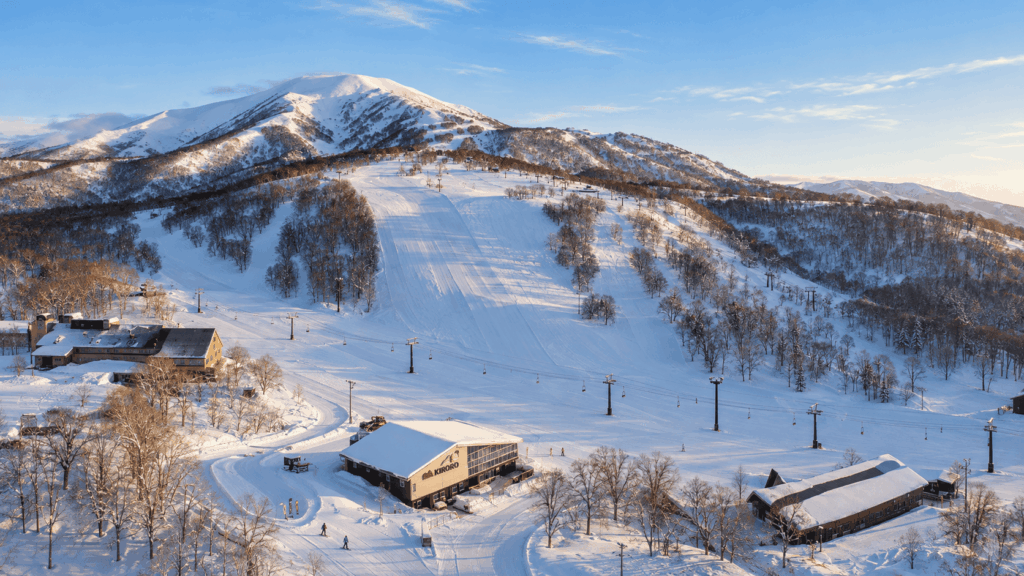
Considering a private ski lesson at Annupuri? If Annupuri is already on your shortlist and you want individual instruction on beginner-friendly terrain, a private lesson is worth comparing before you finalise your dates. An Annupuri starting point needs to be arranged in advance, and lift passes and rentals are separate. Check available dates, lesson options and meeting arrangements for this Niseko private ski lesson.
Which Hokkaido Ski Resort Is Best for Beginners?
Quick answer:
- Best all-round beginner slopes: Niseko Annupuri
- Never skied before and want a conveyor-belt learning area: Niseko Hanazono
- Based in Sapporo for one day: Sapporo Teine
- Family trip with non-skiers: Hoshino Resorts TOMAMU
- Four or more days to progress: Furano
- Beginner joining experienced friends: Rusutsu
That list is an editorial judgement based on official trail data, school information and the recurring themes in traveler reviews, not a third-party ranking. Snow conditions, lift operations and your own tolerance for cold can all change the answer on the day.
| Ski resort | Best for | Beginner advantage | Main drawback | Best base |
|---|---|---|---|---|
| Niseko Annupuri | Wide, gentle slopes and repeat practice | Three beginner runs, all lit for night skiing, with a very low-angle family run | Fewer restaurants, bars and off-snow options than Grand Hirafu | Annupuri or Niseko Village |
| Niseko Hanazono | Absolute first-timers | Hanazono Bowl with free magic-carpet access and an on-site international school | Lodging skews expensive, and peak-season lessons book out early | Hanazono |
| Furano | Multi-day progression | Beginner zones with snow escalators at both base areas, plus English-speaking schools | The two zones connect mainly via the top of the mountain | Kitanomine |
| Hoshino Resorts TOMAMU | Families with non-skiers | Free, no-booking snow escalator at the Ski Resort Debut Park, plus childcare | Resort pricing throughout, and little of a ski-town feel | Tomamu (stay on site) |
| Rusutsu | Mixed-ability groups | Wide beginner runs on West Mt. directly in front of the hotel | You pay for terrain a beginner will not use | Rusutsu Resort |
| Sapporo Teine | A first ski day from Sapporo | Olympia Zone bunny slope with a magic carpet, 11–18 minutes by train from Sapporo Station to JR Teine Station, then a bus to the Olympia slopes | Not a stay-put resort, and the first-timer package is ski-only | Sapporo |
The mistake I see most often is choosing a resort by its total number of beginner runs. A resort can list eight green runs and still send you down a narrow traverse to reach them. What matters on day one is whether one easy run is wide enough to repeat ten times without feeling crowded, and whether the lift back up is short.
First-Time Skier or Beginner Who Can Already Turn?
“”Beginner”” covers two quite different people, and they need different resorts.
If you have never stood on skis or a snowboard — you cannot stop on demand and a gentle slope still feels fast — your first priority is a dedicated learning area. That means a separate enclosure or very low-angle slope, a conveyor belt or short lift, an instructor who speaks your language, and as little walking as possible in ski boots. Hanazono Bowl, the Ski Resort Debut Park at Tomamu and the Bunny Slope in Sapporo Teine’s Olympia Zone are built for exactly this stage.
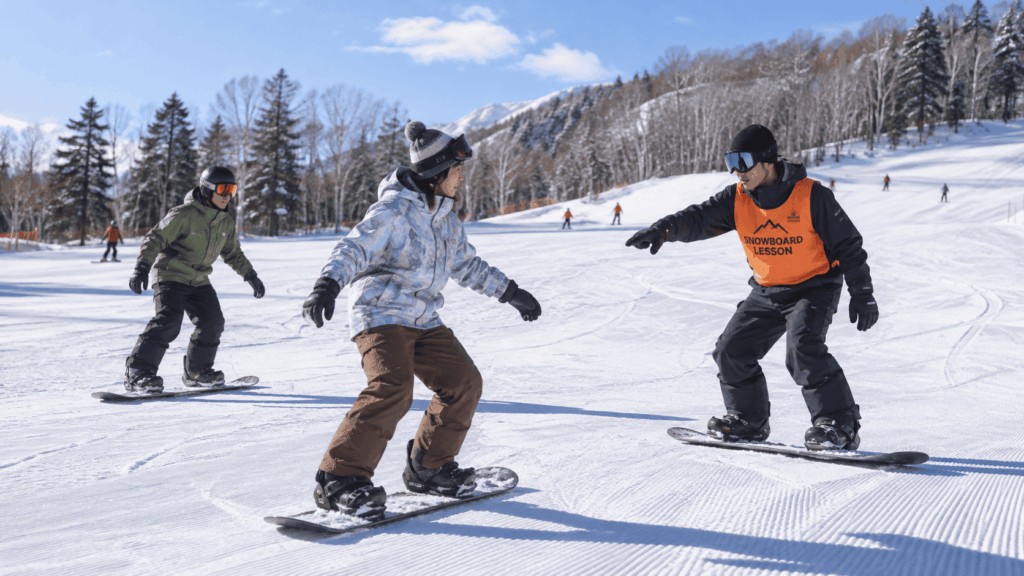
If you can stop and link a few turns, you have already cleared the hardest part. What you need now is mileage: a wide, low-angle run served by a fast lift, where you can make twenty laps without negotiating a steep pitch or a crowded junction. This is where Annupuri’s beginner terrain earns its reputation, and it is also why a resort with fewer beginner runs can be the better choice for you.
Be careful with the word “”beginner”” on a trail map. A green run in Hokkaido can still have a pitch that feels alarming if you cannot yet control speed. Average gradient tells you more than the colour of the line, and so does the width of the run.
Niseko Annupuri — Best Overall for Gentle, Wide Slopes
Niseko Annupuri sits at the western end of the Niseko United area, and it is the resort I keep coming back to when someone asks where to learn. The beginner terrain is not just mellow on paper; it is wide enough that a missed turn does not immediately put you in someone else’s line.
To be clear about the limits of that experience: Annupuri is the resort I know on the ground. The other five resorts in this guide are compared using official trail data, school information and the patterns that recur in traveler reviews, not from my own visits.
The three beginner runs are measured and published, which makes them easy to compare honestly:
- Family Course: 580 m, average gradient 6°, maximum 11°
- Paradise Course: 560 m, average gradient 11°, maximum 12°
- Junior Course: 960 m, average gradient 9°, maximum 13°
Those numbers describe a sensible progression rather than three versions of the same run. Family is the gentlest and the place to spend your first hour. Junior is nearly a kilometre long at a slightly steeper average, which makes it the natural next step once you can control speed. Paradise, at an 11° average, is where “”beginner”” starts to feel like a real ski slope.
All three are served by the lower-mountain lifts rather than the gondola, so you do not need to ride to the summit on day one. That sounds minor until you are standing at the top of the gondola wondering how to get down.
Why the Wide Slopes Matter When You’re Learning
When a beginner misses a turn, the body tends to drift sideways and pick up speed. On a narrow run, that means either stopping abruptly or worrying about the person downhill. On a wide run, there is room to correct, slow down and try again without an audience. The Family Course’s 6° average gradient is gentle enough that the slope itself does not accelerate you much, which leaves your attention free for balance and turn shape.
I have watched people who arrived nervous — the kind of nervous that makes you lean back and sit down — get to a point where they were linking turns and enjoying it within a few hours. That is not a promise. Some people need two days to reach the same point, and a few need a private lesson before it clicks. But the terrain gives you a fair chance, because it does not punish small mistakes.
Traveler reviews of Annupuri tend to make the same point in different words: compared with Grand Hirafu, the runs feel easier and less intimidating. That feedback is consistent, but it is not a safety guarantee. Beginners still fall, and collisions still happen on busy days.
The Downsides: Walking, Crowds and Night Skiing
Annupuri is not frictionless. The walk from the car park to the ticket counter includes a slope, and in rental ski boots that short climb is more tiring than it looks on a map. The lower slopes also get busy in the middle of the morning, when ski school groups and families with small children converge on the same gentle terrain.
Off the snow, Annupuri is quieter than Grand Hirafu. If you want a choice of restaurants and bars within a five-minute walk of your bed, this is not that village. If you want a short walk to the lift and an early night, it is.
Night skiing runs from 16:30 to 19:30 and, for the 2026–27 season, is scheduled from 12 December 2026 to 22 March 2027. Unusually for a resort of this size, all three beginner runs are lit. That gives you a second practice window on the same terrain you used in daylight, which is useful if your mornings disappear into rental queues.
Kai’s tip: What catches people out at Annupuri is the ten minutes before the skiing starts. The walk up from the parking area in rented boots, then the queue for tickets and rentals, can leave a first-timer tired before the first run. If you can, collect your rental gear the afternoon you arrive and start the next morning already booted and ticketed.
One caution on night skiing: do not make it your very first snow experience. Visibility is lower, temperatures drop, and fatigue after a full day is real. Treat it as a bonus session once you can stop reliably, and check which lifts are running that evening before you buy a night pass.
Where to Take a Lunch Break at Annupuri
There are three practical options at the base, and they suit different moments in the day.
- Restaurant Nook Annupuri (Center House, 2nd floor, 286 seats): open 11:00–16:00 with last orders at 15:00, extending to 20:00 from 19 December to 28 February. You can walk in straight from the slopes.
- Rest House (at the foot of the slopes, 300 seats): open 12 December 2026 to 22 March 2027, 10:00–15:00. It has a free rest area where you can eat your own lunch, which matters if you are feeding a family on a budget.
- Paradise Hutte (Bears Café) (below the top station of the Jumbo Quad Lift #1, 26 seats): a small log-cabin café open 10:00–16:00, best for a quick hot drink rather than a full meal.
Kai’s tip: The lunch crush at Annupuri is real and it is short. Between about 11:45 and 13:00, finding a seat in the Center House becomes a hunt rather than a choice. I would eat at 11:00 before the rush, or wait until 13:30 when the tables empty out. If your lesson finishes at noon, take a coffee break first and eat afterwards.
Menus change by season and by outlet, so treat any specific dish you have read about — including the curries that Annupuri is known for — as something to check on the day rather than a guarantee.
Five Other Beginner-Friendly Ski Resorts in Hokkaido
Annupuri is a strong default, but it is the wrong choice for some trips. The five resorts below each solve a problem that Annupuri does not: a dedicated first-timer enclosure, a long stay with room to progress, non-skiing family members, experienced friends who want more terrain, or a base in Sapporo with no time for a long transfer.
One point of transparency before the details. I have not skied these five resorts as a beginner guide; the comparisons here draw on official trail data, published school information and the complaints and praise that recur across traveler reviews. Where a number is published, I have used it. Where something depends on the season, I have said so.
Niseko Hanazono — Best for Absolute Beginners
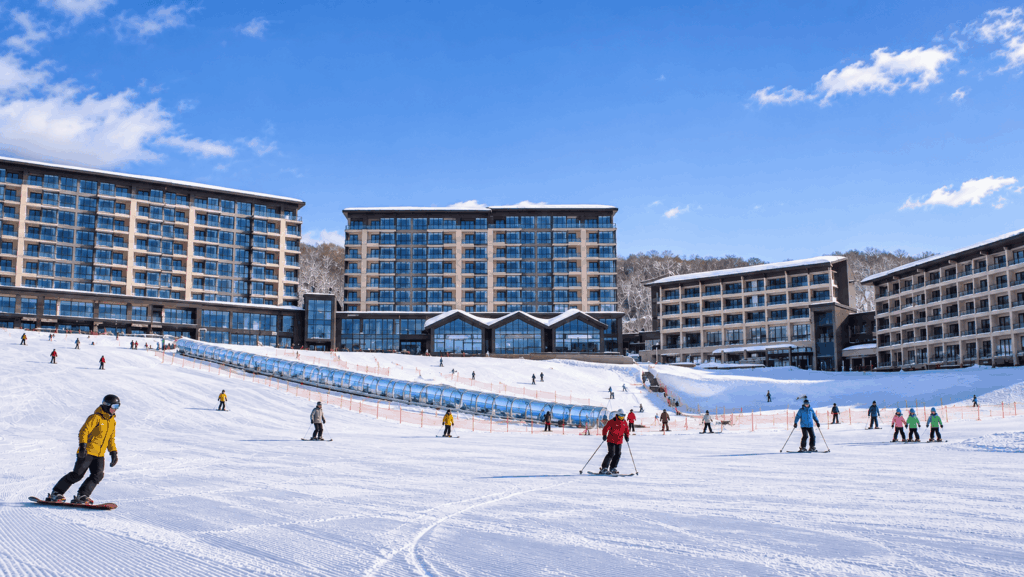
Hanazono is the Niseko area to choose if your priority is the hour before you ever ride a lift. Hanazono Bowl is a wide, sheltered learning area served by free-to-use magic carpets. Confirm the operating beginner facilities for your date, especially when visiting with a three-year-old. That combination — a contained space, a conveyor belt and no lift ticket needed to practise — is the easiest possible start on snow.
The on-site school is Niseko International Snowsports School, an official resort-operated school that teaches in multiple languages and can run lessons across all four Niseko United resorts. Its 2026–27 season is scheduled from 28 November 2026 to 11 April 2027. One condition matters when you book: during peak season, advance bookings are generally limited to full-day lessons, so a half-day request in late December or February may not be available.
Who it suits: complete beginners, families with young children, and anyone who wants the learning area and the accommodation in the same place.
Who should look elsewhere: travellers on a tight budget, and anyone who wants a village with a range of cheap restaurants. Hanazono’s lodging runs to the premium end, and the surrounding dining is limited compared with Grand Hirafu.
Furano — Best for Learning Over Several Days
Furano is the resort to pick if you are staying four or five nights and want to finish the trip skiing rather than just having tried it. Both base areas — Furano Zone and Kitanomine Zone — have beginner zones with snow escalators, so you can start in a controlled area at either end of the resort (if you aren’t sure which base is right for your trip, check out our comparison of the Furano vs Kitanomine zones). The beginner runs themselves are long: on the Kitanomine side, for example, one green run stretches to 1,900 m at a 10° average, which gives you time to actually hold a rhythm instead of stopping every fifteen seconds.
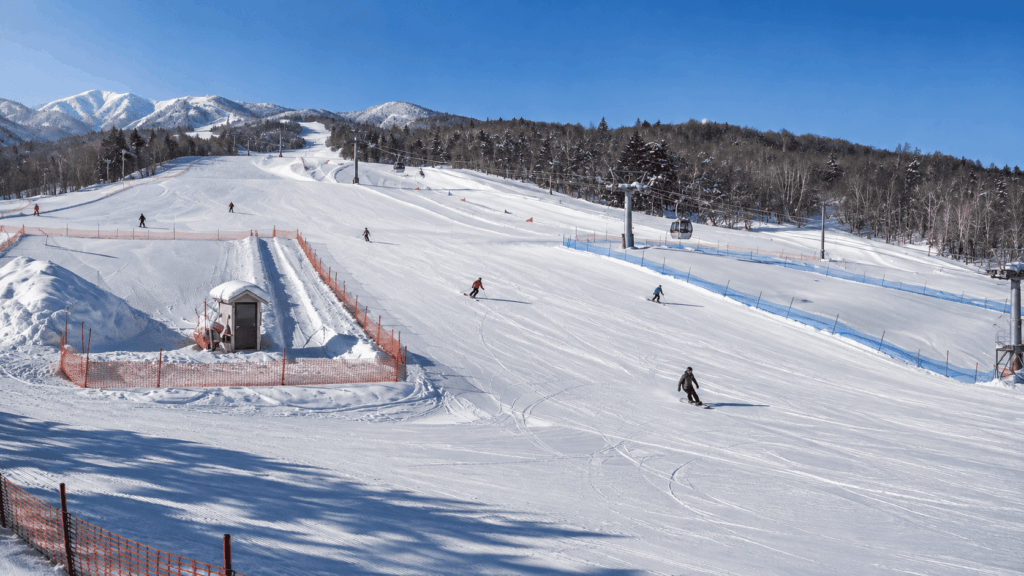
English-language instruction is well established. Furano Snow School has desks at the Kitanomine Gondola Terminal and Shin Furano Prince Hotel on the Furano side, and FISS also takes bookings. Confirm your lesson meeting point before choosing a base, so you do not have to move between zones in ski boots.
Who it suits: travellers who want a proper progression over several days, and anyone combining skiing with Furano’s other winter activities.
Who should look elsewhere: anyone with only one day. Also be aware that the two zones are connected mainly by a trail from the top of the mountain. For a beginner, that traverse can be the most intimidating part of the day, so plan to stay within one zone rather than skiing across the resort to meet someone.
Hoshino Resorts TOMAMU — Best for Families
Tomamu is the clearest answer for a family where not everyone skis (though you can find other excellent options in our guide to family-friendly ski resorts in Hokkaido). The Ski Resort Debut Park has a snow escalator — a moving walkway you ride up with your skis on — that is free, needs no reservation, runs from 1 December 2026 to 5 April 2027, and has English-speaking staff available. For a first-timer, that removes the lift, the ticket and the fear in one step.
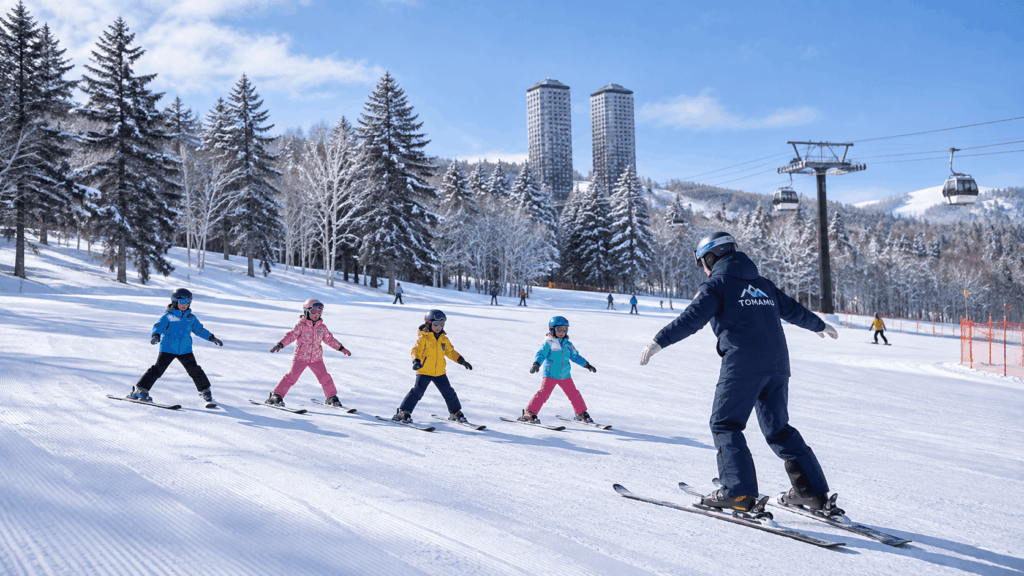
The rest of the resort is built for the same audience: a dedicated two-hour private ski debut lesson for three-year-olds (listed at ¥18,300, with ski equipment during the lesson), standard group lessons from age four, a nursery, indoor play areas and snow activities for non-skiers. Confirm language availability for the three-year-old lesson before booking. Accommodation at Tomamu The Tower connects conveniently with the ski facilities, while other resort buildings may require a shuttle. Access is unusually easy for a Hokkaido resort — about five minutes by free shuttle from JR Tomamu Station, or roughly 100 minutes by bus from New Chitose Airport.
Who it suits: families with young children, mixed groups where some members will not ski, and travellers who value convenience over a ski-town atmosphere.
Who should look elsewhere: solo travellers, couples looking for a lively village, and anyone trying to keep costs down. Tomamu is a resort you stay inside, and the pricing reflects that.
Rusutsu — Best for Mixed-Ability Groups
Rusutsu solves a specific social problem: you are a beginner, and your friends are not. The beginner runs on West Mt. sit directly in front of the hotel, which means the group can split up in the morning and meet for lunch without anyone losing an hour to transfers. The Family run is 650 m at a 10° average with a 12° maximum; White Lover is the same length at a 10° average, wide and straight, and is the better of the two for repeating turns.
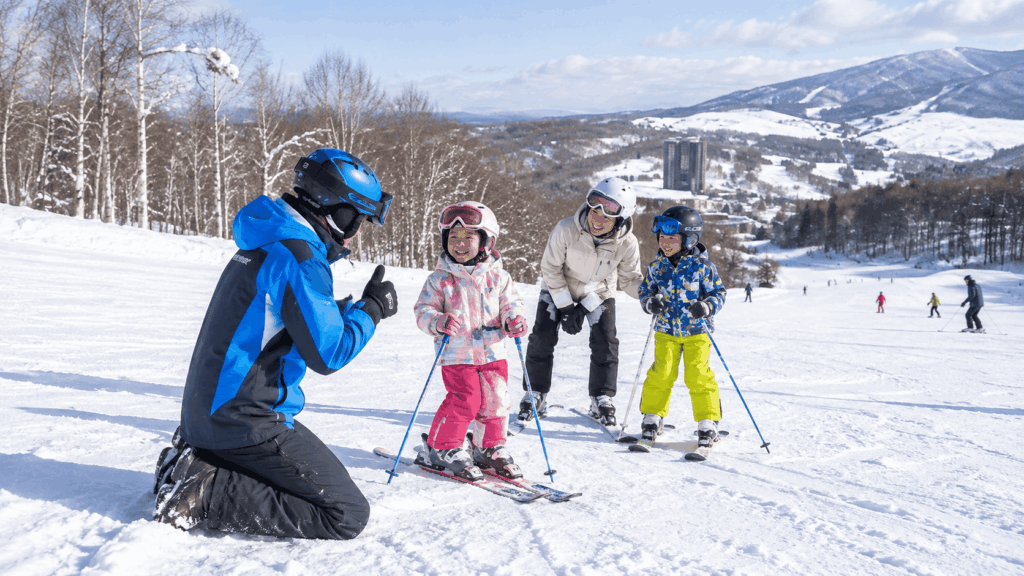
English-language private lessons are available for one to five people in three, five and six-hour formats, with dedicated children’s programmes from ages four to fourteen. The catch is value: a beginner uses a small fraction of the mountain, but you pay for the whole resort. If everyone in your group is a beginner, that money buys less than it would at Annupuri or Furano.
Who it suits: groups of mixed ability, and families where the adults want terrain beyond the beginner runs.
Who should look elsewhere: all-beginner groups, and travellers watching the budget.
Sapporo Teine — Best for a First Ski Day from Sapporo
If you are in Sapporo for three nights and want to try skiing without losing a day to transfers, Teine is the practical choice. It is 11–18 minutes by train from JR Sapporo Station to JR Teine Station (¥360), then about 15 minutes by bus to the Olympia Ski Center (see our detailed guide on getting to Sapporo Teine without a car). A bus package combining round-trip transport from central Sapporo hotels with a seven-hour lift ticket is also available for ¥11,000, running from 5 December 2026 to 28 March 2027.
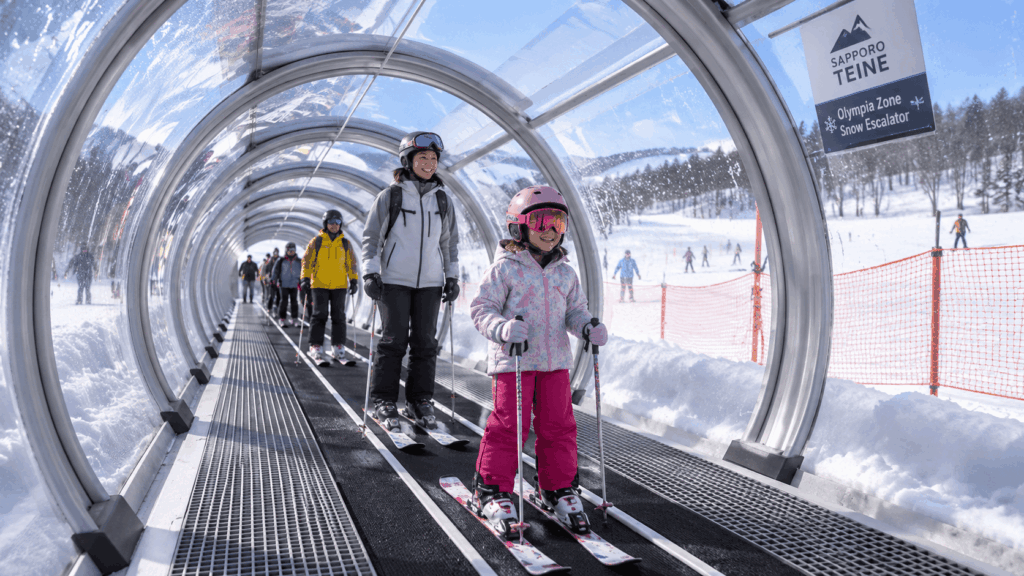
The Olympia Zone is the beginner side, with a Bunny Slope and a magic carpet. Teine Olympia Ski School runs a First-Time Ski Experience that is genuinely all-in: rental gear and lift access during the lesson are included, instruction is in English, and the price is ¥34,000 for a half day or ¥39,000 for a full day. Read the conditions carefully, though. It is ski only — snowboarders need a different programme — the minimum age is seven, at least two people must join, and check-in closes at 9:30.
Who it suits: Sapporo-based travellers, anyone testing whether they even like skiing, and short trips where a resort stay is not realistic.
Who should look elsewhere: snowboarders wanting a packaged first lesson, solo travellers who cannot meet the two-person minimum, and anyone hoping for a multi-day resort atmosphere.
If you are arranging your own lessons and rental gear but want an easier transfer from Sapporo, compare the current Sapporo Teine round-trip bus and lift-ticket package on Klook. Check the pickup location, package inclusions and where the bus stops relative to the Olympia beginner area before choosing.
Niseko Annupuri vs Hanazono vs Grand Hirafu: Which Is Better for Beginners?
Niseko is not one ski resort. It is four connected areas under one lift pass, and the beginner experience differs sharply between them. Choosing “”Niseko”” without choosing an area is how people end up in the wrong place.
| Area | Best beginner use | Learning facilities | Atmosphere and convenience | Main caution |
|---|---|---|---|---|
| Annupuri | Repeating wide, gentle runs once you can stop | Three beginner runs, all lit at night; lower-mountain lifts | Quiet base, short walk to lifts, limited dining | Lower slopes busy mid-morning; car park walk |
| Hanazono | The very first hour, before using a lift | Hanazono Bowl with free magic-carpet access; international school on site | Premium lodging, limited independent dining | Peak-season advance lessons often full-day only |
| Grand Hirafu | Staying where everything is walkable | Beginner terrain at the base; large ski school | The busiest base: restaurants, bars, shops | Most crowded lifts and slopes in the area |
| Niseko Village | Ski-in, ski-out hotel stays | Beginner slopes served from the village side | Self-contained resort with hotel dining | Fewer dedicated first-timer facilities than Hanazono |
If I am taking a nervous beginner and we are staying in the Niseko area, Annupuri is the area I steer towards, because the terrain forgives errors and the base is calm. That is a personal comparison, not a verdict on safety or crowding. Hanazono has the better first hour; Grand Hirafu has the better evening. Niseko Village makes sense mainly if you are staying in one of its hotels and want to walk out of the lobby onto snow.
One practical consequence: a Niseko United pass covers all four areas, but a beginner rarely needs it. If you are staying at Annupuri and practising on the same three runs, a single-area ticket is the cheaper and simpler choice.
Do Beginners Need Ski Lessons in Hokkaido?
For a complete beginner, a lesson on the first morning is the highest-value purchase of the trip. Not because you cannot learn without one, but because an instructor compresses the confusing part — how to stand, how to stop, how to ride a lift without falling at the dismount — into a couple of hours, and teaches you the mountain etiquette that keeps you out of other people’s way.
The options in Niseko alone are broader than most visitors realise. Niseko Annupuri Snow School runs private lessons with English-speaking instructors, though availability tightens in peak season; lift tickets are not included, and helmets are mandatory. NISS at Hanazono teaches across all four Niseko United areas in multiple languages. Independent operators such as Snow and Flow also run private lessons in the region. Outside Niseko, Furano Snow School and FISS cover Furano, and Teine Olympia Ski School handles Sapporo.
What I have seen work is straightforward: a nervous first-timer takes a lesson in the morning, practises the same thing alone after lunch, and by the end of the day is making deliberate turns rather than surviving them. What I would not promise is speed. Some people get there in three hours, others need three days, and a lesson does not change your body’s learning speed — it just stops you from practising the wrong thing.
Group Lessons vs Private Lessons
Group lessons are cheaper per hour and give you other people to learn alongside, which some beginners find reassuring. The trade-off is fixed timing, a fixed level, and less individual attention. Private lessons cost more but suit short trips, families who want to stay together, anxious beginners, and anyone whose schedule is built around a single day on snow.
Two conditions are easy to miss. First, ski and snowboard lessons do not always run on the same schedule or under the same age rules, so check the discipline you actually want. Second, a school’s base area is not necessarily where your lesson meets — some operators pick up from multiple resorts, and the meeting point is confirmed with your booking.
What to Check Before You Book
- Meeting point and area: a lesson sold as “”Niseko”” may start at Grand Hirafu, Annupuri or Moiwa. Confirm the location for your date, not just the resort name.
- Language: “”English available”” can mean a native speaker or an interpreter. Ask which, especially for children.
- Discipline: ski and snowboard are often separate products with separate minimum ages.
- What is included: rental gear, helmet and lift ticket are sometimes bundled and sometimes not.
- Numbers and ages: minimum participants, maximum group size, and whether a parent must accompany a child.
- Seasonal restrictions: some private lesson products restrict certain dates to a single resort. One widely sold Niseko private lesson product, for example, runs only at Moiwa from 18 to 31 December.
- Cancellation terms: weather cancellations are common in January and February; know the cut-off before you pay.
If you are going to book one thing in advance for this trip, make it the lesson rather than the lift ticket. Lessons sell out in peak weeks, while lift tickets can be bought on the day.
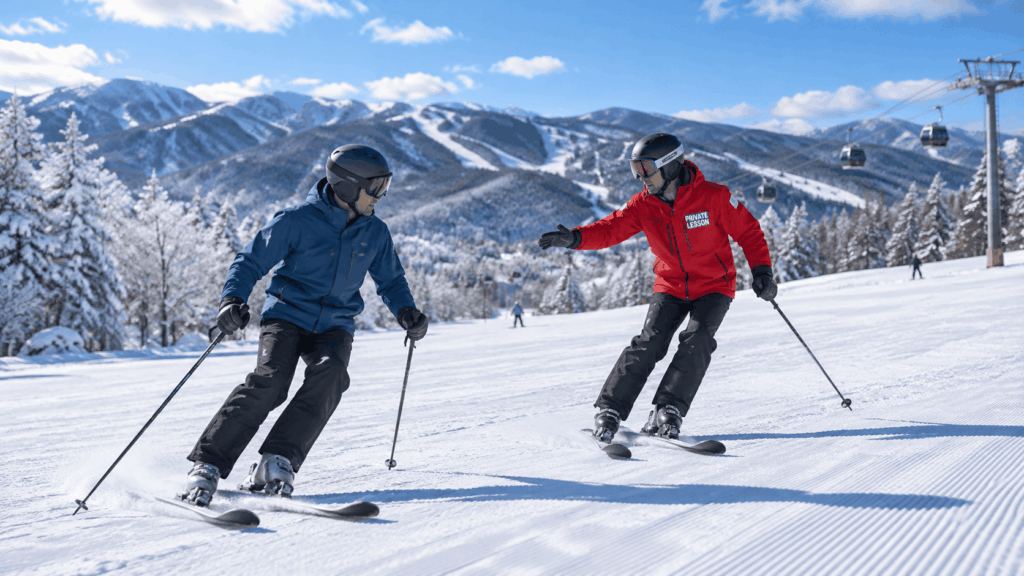
If you want focused English-language instruction in Niseko rather than a fixed group lesson, the following private option is worth considering, particularly if Annupuri is your preferred base.
Why I’d book this one
- Individual instruction: A certified instructor can adapt the lesson to your current skiing level, whether you are working on your first controlled stops or trying to link turns more confidently.
- Annupuri as a possible starting point: The operator allows an Annupuri meeting arrangement to be requested in advance, which can reduce the need to travel to another Niseko base. Confirm the exact meeting point before booking.
- Encouraging but limited feedback: Published traveler feedback includes positive comments about the instruction, although the review sample is still small. Check the latest reviews and cancellation conditions rather than relying on ratings alone.
See live availability, lesson options, meeting arrangements and recent traveler reviews for the Niseko Private Ski Lesson (Certified Instructor). Lift tickets, ski rentals and meals are not included, so compare the full cost before deciding whether a private lesson fits your trip.
How Much Does Skiing in Hokkaido Cost for Beginners?
The lift ticket is the number everyone compares and the least useful one on its own. A beginner’s first day is really seven costs, and the lift ticket is often not the largest.
| Cost item | When you pay it | What to check | Where to confirm |
|---|---|---|---|
| Lift ticket | On arrival, or online in advance | Single-area vs all-mountain; half-day or night pass if you start late | Resort ticket page |
| Lesson | Usually in advance in peak season | Group or private; language; whether lift and rental are included | Resort school or booking platform |
| Ski or snowboard rental | On arrival, or reserved ahead | Boot fit; whether helmet and goggles are separate | Resort rental shop |
| Helmet and clothing | On arrival | Waterproof outer layers; gloves and goggles often not included | Rental shop or local store |
| Transport | Before travel | Bus reservation requirements in winter; luggage space | Bus operator or rail operator |
| Accommodation | Before travel | Distance to the lift; whether breakfast is included | Hotel or booking site |
| Food | Daily | On-mountain prices; free rest areas where you can bring lunch | Resort restaurant page |
For scale, Annupuri’s published 2026–27 rates are ¥7,800 for an adult one-day pass from 24 December to 28 February, ¥7,500 in the shoulder weeks, ¥6,700 for a five-hour pass in peak, and ¥3,700 for a night pass. A beginner who starts at 10:00 and stops at 15:00 may not need a full-day pass at all.
Treat every figure here as a starting point rather than a quote: rates are set per season, peak weeks cost more than shoulder weeks, and rental or lesson bundles can change the total significantly.
Kai’s tip: The instinct is to buy the biggest pass available “”just in case””. On a first day, it rarely pays. Between rental fitting, a lesson, lunch and fatigue, most beginners get four to five hours of actual sliding. A five-hour pass or a half-day lesson package usually matches the day better than a full-day ticket, and you can always upgrade once you know how you feel.
Do You Need a Niseko All Mountain Pass?
Usually not, if you are learning at Annupuri. The Niseko United All Mountain one-day pass is ¥13,500 at the counter, or ¥12,600 online, against ¥7,800 for Annupuri’s own peak-season day pass. The all-mountain pass only makes sense if you plan to ski two or more areas in the same day — which for a beginner means spending the day traversing rather than practising.
The exception is a group that splits up: experienced friends may well want the all-mountain pass while you stay on the beginner runs. Buying different tickets for different people is normal and saves money.
Where Should Beginners Stay in Hokkaido for Skiing?
Base choice determines more of your trip than resort choice. The relevant question is not “”which resort is best”” but “”how long do I want to spend getting to the lift each morning””.
- Annupuri or Niseko Village: quiet, close to the beginner terrain, limited evening options. Good for a short, focused learning trip.
- Grand Hirafu: walkable restaurants and bars, busiest slopes. Good if you want a holiday around the skiing.
- Kitanomine (Furano): a 10-minute bus or drive from JR Furano Station, with the gondola and English-speaking schools at the base.
- Tomamu: stay inside the resort; a free shuttle connects JR Tomamu Station in about five minutes.
- Rusutsu: hotel-based, with the beginner runs outside the door; roughly two hours by bus from New Chitose Airport.
- Sapporo: the practical base for a day trip to Teine, with the city’s hotels and food as the trade-off for a mountain village.
From New Chitose Airport, Annupuri is roughly three hours by winter bus, and Sapporo to Annupuri is also about three hours. Those transfers are the main reason Sapporo-based travellers should consider Teine instead of pushing on to Niseko for a single day.
What I would flag to anyone booking accommodation: check the walk from the building to the lift, not just the distance on a map. A 400-metre walk in ski boots carrying skis is a different experience from a 400-metre walk in trainers, and it is the detail that decides whether you ski on the morning you planned to.
A Simple First-Time Skiing Plan for Hokkaido
A first day works better when you plan to stop early. The goal is to finish wanting more, not to ski until you are cold, tired and making mistakes.
Your First Day: Lesson, Lunch and Easy Practice
Here is a realistic shape for a first day at Annupuri. It is a planning template, not a record of a specific trip, and the order shifts depending on when your lesson is booked.
- Morning: collect rental gear, buy your ticket, check in at the school desk. Aim to be booted and ready 30 minutes before your lesson.
- Late morning: lesson on the Family Course. Focus on stopping and controlling speed, not on turning prettily.
- Around 11:00 or after 13:30: lunch, timed to avoid the noon crush.
- Early afternoon: practise the same thing alone on the same run. Repetition beats variety at this stage.
- Mid-afternoon: stop while you still have legs. Cold and fatigue make the last run the riskiest one.
- Evening (optional): night skiing only if you can stop reliably and the lifts you need are running.
Kai’s tip: On one January visit, the night session at Annupuri was almost empty — a handful of people on slopes that had been busy all afternoon, and the beginner runs lit and quiet. I would not treat that as a guarantee; crowds vary by date, weather and holiday period. But if you are already staying in the area and your legs are still fresh, an evening session can be the most relaxed practice you get all day. Check the night operating dates and which lifts are running before you count on it.
One last thing about timing: Hokkaido’s snow is at its best in January and February, but those are also the coldest and busiest weeks (if you are still deciding when to visit, see our comparison of the best month to ski in Hokkaido). Early December and late March are quieter and cheaper, with the trade-off of thinner cover and, in early season, fewer lifts open. Whichever you choose, build one flexible day into the itinerary for weather — a storm day is not a skiing day, and resorts will close lifts when wind or visibility makes it unsafe.
Frequently Asked Questions
Is Niseko good for complete beginners?
Yes, but the area matters more than the name. Niseko United is four connected resorts, and a complete beginner will have a very different first morning at Hanazono, where a free magic carpet area sits in front of the base, than at Grand Hirafu, which is the busiest and most restaurant-heavy base. Annupuri is the best choice once you can stop and want wide, gentle runs to practise on. If you have never worn skis, start at Hanazono and move to Annupuri on day two.
Is Niseko Annupuri better than Grand Hirafu for beginners?
For learning, yes — Annupuri’s beginner runs are wider and less steep, and the base is calmer. Its Family Course averages 6°, and all three beginner runs are lit for night skiing. Grand Hirafu is better if you want restaurants, bars and shops within walking distance of your accommodation, or if you are travelling with people who care more about the village than the terrain. Neither is safer in any absolute sense; both get busy, and both have collisions.
Can you learn to ski in Hokkaido in one day?
You can learn the basics in a day: how to stand, glide, stop and ride a lift. Whether you are skiing confidently by the afternoon depends on you, not on the resort. A half-day lesson in the morning followed by solo practice on the same gentle run is a realistic plan. What a single day will not give you is the mileage that makes turning automatic, which is why two or three days produces disproportionately better results than one.
Are English-speaking ski lessons available in Hokkaido?
Yes, at all six resorts covered here. NISS at Hanazono teaches in multiple languages across the Niseko United areas, Niseko Annupuri Snow School runs English-language private lessons, Furano Snow School and FISS serve Furano, Rusutsu offers English private lessons, and Teine Olympia Ski School runs an English-only first-timer programme. Availability is the constraint rather than language: peak weeks fill up, and some schools have fewer English-speaking instructors in late December and February. Book before you travel, and confirm whether “”English”” means a native instructor or an interpreter.
Can you ski in Hokkaido as a beginner without renting a car?
Yes. Sapporo Teine is the easiest without a car — a train to JR Teine Station and a short bus ride to the Olympia Zone. Annupuri is about ten minutes by bus or taxi from JR Niseko Station, with winter buses from Sapporo and New Chitose Airport. Tomamu has a free shuttle from JR Tomamu Station, and Rusutsu has ski and airport buses rather than a rail station at the resort. Furano is accessible via JR Furano Station followed by a local bus or taxi, with some seasonal resort transfers. What you give up is flexibility: bus timetables shape your day, evening options shrink, and a missed connection in heavy snow is a real risk. If your trip is short, base yourself where the lift is walkable rather than relying on daily transfers.
Final Verdict: Which Resort Should You Choose?
If you want the short version, match your situation to one line:
- Wide, gentle slopes and room to practise: Niseko Annupuri
- Never skied before and want a dedicated learning area: Niseko Hanazono
- Four or more days to improve: Furano
- Family trip with non-skiers: Hoshino Resorts TOMAMU
- Beginner joining experienced friends: Rusutsu
- One day, based in Sapporo: Sapporo Teine
Choose Annupuri if you are staying in the Niseko area for two or more nights and your goal is to come home able to ski. You will trade evening choice for quiet, and you will spend your days on the same three runs — which is exactly what learning requires.
Choose Hanazono if the first hour is what worries you. The free-to-use magic carpets and the contained bowl let a first-timer practise without paying for a chairlift ticket or joining its queue. Budget for the lodging, and book lessons early, because peak-season advance bookings are often full-day only.
Choose Furano if you have four or five days and want to finish the trip skiing rather than having tried it. Stay on one side of the mountain rather than planning to ski across, and use the two English-speaking schools as a backup if your first choice is full.
Choose Tomamu if you are travelling with children or with someone who will not ski. The free snow escalator, the childcare and the indoor options mean a non-skiing day is not a wasted day. Accept that you are buying convenience, and that the resort is the holiday.
Choose Rusutsu if your group’s ability is uneven. The beginner runs in front of the hotel let you meet for lunch without a transfer. If everyone in the group is a beginner, the money is better spent elsewhere.
Choose Sapporo Teine if you have one day and a hotel in Sapporo. Check the First-Time Ski Experience conditions before you commit: ski only, age seven and up, minimum two participants, check-in by 9:30.
For most first-timers who can already stop and are staying in Niseko, the answer is Annupuri. For most first-timers who have never clicked into a binding, it is Hanazono for the first morning and Annupuri afterwards. And if you are still torn between two resorts, pick the one that keeps your walk to the lift short — on day one, that decision affects your experience more than the trail map does.

Hi, I’m Kai. I’m a Tokyo-based travel writer, tourism industry insider, and the author of a published guidebook for international visitors to Japan. With over 10 years of professional experience at a leading Japanese tourism company, my mission is to help you skip the tourist traps and navigate Japan’s best destinations like a local. I believe the perfect day trip is like a traditional kaiseki meal: a beautiful balance of precise planning and unforgettable seasonal discovery. When I’m not out conducting field research, you’ll usually find me drafting new itineraries with one of my favorite fountain pens!