
If you have visible tattoos and you’ve been assuming Kinosaki Onsen is off-limits, it isn’t. Kinosaki is one of the easiest places in Japan for tattooed travelers to enjoy a traditional public bath — and you don’t need to hide anything to use the town’s famous bathhouses.
Kinosaki’s seven public bathhouses (the soto-yu) accept tattoos of all shapes and sizes. There is no “small tattoos only” rule, no cover-sticker requirement, and no reason to book a private bath because of your tattoos. The two things that actually catch people out are different: a ryokan’s in-house bath may not follow the town’s policy, and choosing the wrong bathhouse for your first soak can make the experience feel far more awkward than it should.
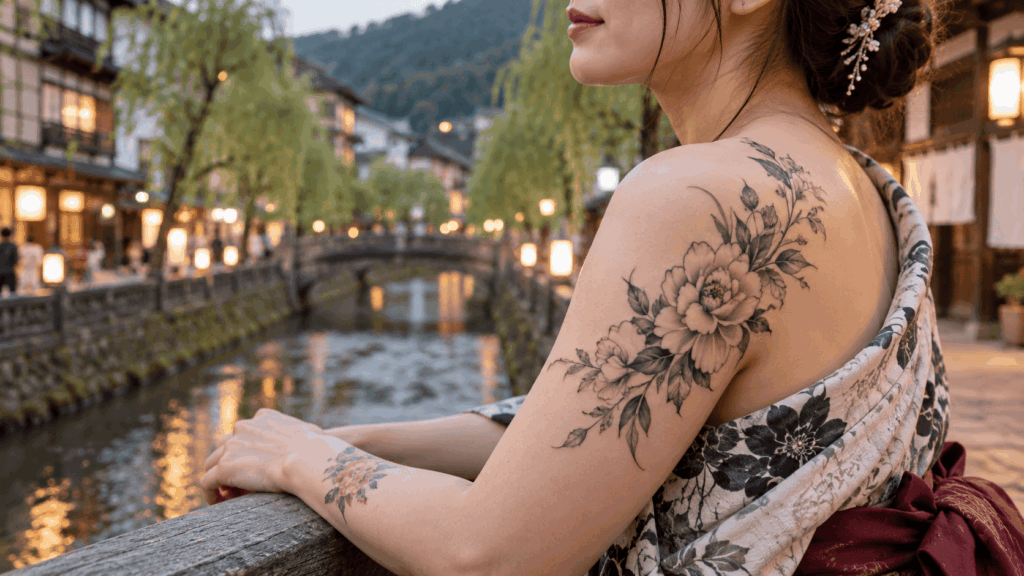
In one line: Tattoos are welcome in Kinosaki’s public baths — size does not matter and covering is not required — but check your accommodation’s own bath rules before you book, and choose your first bathhouse with comfort in mind, not just policy.
- Best for: travelers with large or visible tattoos who want the classic onsen-town experience of hopping between public bathhouses in a yukata.
- Check first if: you mainly want to use your ryokan’s communal bath, or you’re a couple or family hoping to bathe together — those situations have different rules and options, explained below.
Staying overnight? If you want to avoid uncertainty around a ryokan’s in-house tattoo policy, check current room availability and stay conditions for Kinosaki Yamamotoya, the tattoo-friendly property covered later in this guide.
Can You Go to Kinosaki Onsen With Tattoos?
Yes. The official tourism site for Kinosaki Onsen (Visit Kinosaki) states that all seven public bathhouses allow tattoos of all shapes and sizes, with no need to cover them up. That makes Kinosaki unusual even by Japanese standards — in many onsen towns you’ll find “small tattoos only” rules, cover stickers, or private-bath-only policies. Kinosaki’s town-run bathhouses don’t work that way.
- Full sleeves, back pieces, hand and neck tattoos — the same policy applies; it isn’t based on how much skin your ink covers.
- Cover stickers — not needed at the public bathhouses.
- Day visitors — you don’t need to stay overnight to use the baths; a single-entry ticket or day pass works fine.
What surprised me most, honestly, was how far the policy goes. When I first read the official wording I assumed there would be a catch — a smaller-print rule about covering up inside the bath. There wasn’t. The public bathhouses are separated by gender, you bathe naked (no swimsuits), and tattoos are simply accepted.
Public Baths vs Ryokan Baths: The Tattoo Rule Is Not the Same
This distinction causes the most confusion — and the most booking anxiety. The town’s public bathhouses are clearly tattoo-friendly. Your ryokan’s own communal bath is a separate question, because each accommodation sets its own rules. Visit Kinosaki says so explicitly: baths in accommodations may have different rules, and guests should ask their accommodation for details.
In other words, “Kinosaki is tattoo-friendly” does not automatically mean “the bath in your hotel is tattoo-friendly.” For a traditional onsen-town trip this usually works out fine, because the whole point of staying in Kinosaki is walking between public bathhouses in your yukata. But if you plan to rely on your ryokan’s bath instead, confirm the policy before you book.
| Bath type | Tattoo rule | Need to cover? | Reservation needed? | Best for | Main caution |
|---|---|---|---|---|---|
| Kinosaki public bathhouses (soto-yu) | Tattoos of all shapes and sizes accepted — official town-wide policy | No | Usually not; pay at the entrance or show your pass | Traditional public onsen and yukata bath-hopping | Not all seven baths are open during the current renovation period — check status before planning your route |
| Ryokan / hotel communal baths | Varies by property — confirm with your accommodation | Depends on the property | No, but access may be limited to guests | Soaking close to your room, including early morning or late night | Never assume the town policy applies here; ask before booking |
| Private / family baths | Property-specific, but many tattoo-friendly ryokan allow them | Usually no | Often yes — limited slots per day | Couples, families, or anyone who wants privacy or is uneasy about public nudity | Slots fill up; reserve in advance and check if it’s for guests only |
Your biggest booking risk is not the town baths — it’s assuming your ryokan follows the same rule. If you plan to stay overnight, choose a ryokan that clearly publishes its tattoo policy before you book.
Do You Need to Cover Tattoos in Kinosaki?
At the public bathhouses, no. Covering is not required, and the official policy does not distinguish by tattoo size. The only place to check is your accommodation’s in-house bath: if the property restricts tattoos there, ask about a private bath or plan to use the public bathhouses during your stay.
Do You Need a Private Onsen if You Have Tattoos?
Not because of your tattoos. Since the public bathhouses accept everyone, a private bath is an optional upgrade rather than a workaround — and knowing that can save you from overpaying out of anxiety. A private or family bath becomes genuinely useful when:
- you want privacy rather than a communal bath experience;
- you’re a couple or family who wants to bathe together (public baths are separated by gender);
- you’re uncomfortable with public nudity, regardless of tattoos; or
- your ryokan’s communal bath restricts tattoos and you still want an in-house soak.
Some tattoo-friendly ryokan in Kinosaki offer private open-air baths for exactly this purpose — Yamamotoya’s “Senyu,” for example, is available to staying guests by advance reservation. More on choosing accommodation later in this guide.
What It Was Like Taking a Tattooed American Guest to Kinosaki
I’ll be honest: knowing the policy on paper and walking a guest with prominent tattoos on both arms into a Japanese public bath for the first time felt different. My guest had the same hesitation — he had read that Kinosaki was tattoo-friendly, but he still braced for the possibility of being turned away or asked to cover up.
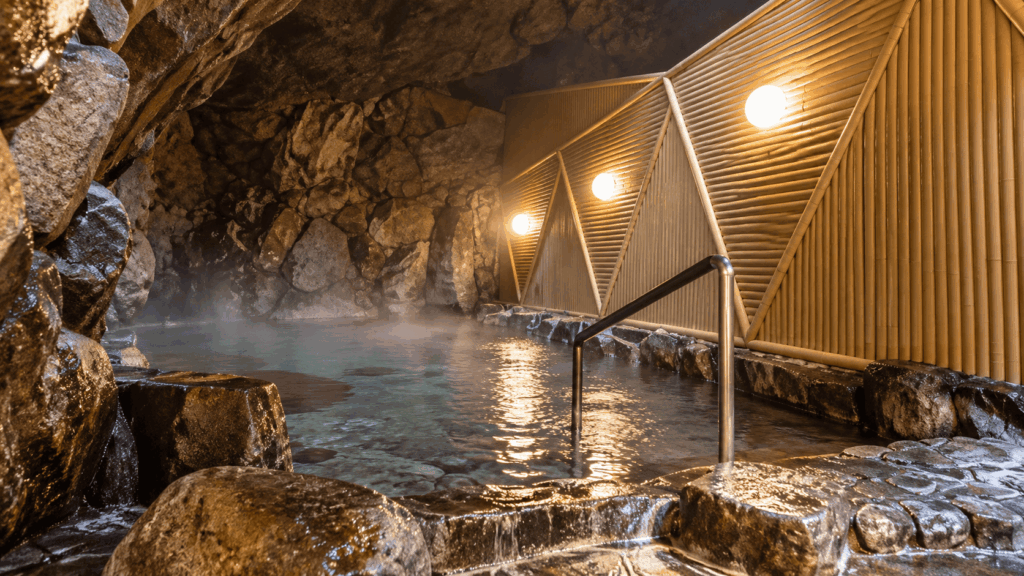
We started with Ichino-Yu, one of the central bathhouses, using the Yumepa day pass. At the entrance we handed over the pass and went in — no one asked him to cover anything. He bathed with both sleeves fully visible, and that was simply that. What I remember most clearly is how quickly the tension left him. The cave-style bath, dimly lit and built with natural boulders, probably helped: there is something about that atmosphere that makes a first onsen visit feel less exposed and more like an experience worth savoring. I also noticed the changing area at Ichino-Yu felt comparatively spacious — useful when you’re new to the locker-and-yukata routine.
The takeaway is not that nobody will ever glance at your tattoos — I can’t promise that, and in any busy public bath you’re one of many people simply getting on with their soak. The takeaway is that Kinosaki is set up so you don’t have to negotiate, explain, or hide. You walk in, bathe, and leave, exactly like everyone else. That is rarer in Japan than it should be, and it’s the real reason tattooed travelers keep recommending this town.
One thing worth repeating: this applies to the public bathhouses. On that same trip we confirmed our ryokan’s own policy separately — a habit I’d recommend to anyone booking accommodation in Kinosaki.
Which Kinosaki Public Bath Is Best for a Tattooed First-Timer?
Here’s the part most guides skip: every Kinosaki public bathhouse follows the same tattoo-friendly policy, so the policy question is settled before you choose a bath. What actually determines whether your first experience feels comfortable is bath design, space, crowds, and water temperature — and those vary a lot between the seven. Four baths deserve your attention as a first-timer; the other three (Jizo-Yu, Kono-Yu, Satono-Yu) are covered in the operating-status section below. If you want a detailed breakdown of every option, check out our ranking of all seven public baths for first-timers.
| Bath | Best for | Main feature | First-timer comfort | Watch out for |
|---|---|---|---|---|
| Ichino-Yu | A first public onsen | Cave-style bath built with natural boulders | High — central, spacious-feeling changing area, opens early | Closed Wednesdays |
| Goshono-Yu | Scenery and open space | Large outdoor bath with a waterfall backdrop | High if you go at a quieter time | Can get busy on Friday and Saturday evenings |
| Mandara-Yu | Something unusual | Two small ceramic outdoor baths off the main street | Moderate — the bathing area is small | Weekend waits; doesn’t open until 15:00 |
| Yanagi-Yu | Traditional, cozy soak | Kinosaki’s smallest bathhouse, with a notably hot bath | Lower if you dislike very hot water | Closed Thursdays; the heat can be intense |
Ichino-Yu: My Pick for a First Public Onsen
Ichino-Yu is the bathhouse I choose when someone is trying a Japanese public bath for the first time — tattooed or not. It’s in the center of town, open from 7:00 to 23:00 (closed Wednesdays), and its signature cave-style bath gives you something memorable to focus on beyond your own self-consciousness. The changing area is one of the more spacious in town, which matters when you’re figuring out the routine for the first time.
Kai’s tip: If you’re nervous about your first public bath, start at Ichino-Yu early in your stay rather than saving it for last. The dim, cave-like atmosphere feels less exposed than a bright, open bath, and the roomy changing area gives you time to get your bearings. It’s also the bath I took an American guest with full-sleeve tattoos to on his first visit — within a few minutes the nervousness was gone and he was just enjoying the soak.
Goshono-Yu: Best for a Big Outdoor Bath and Scenery
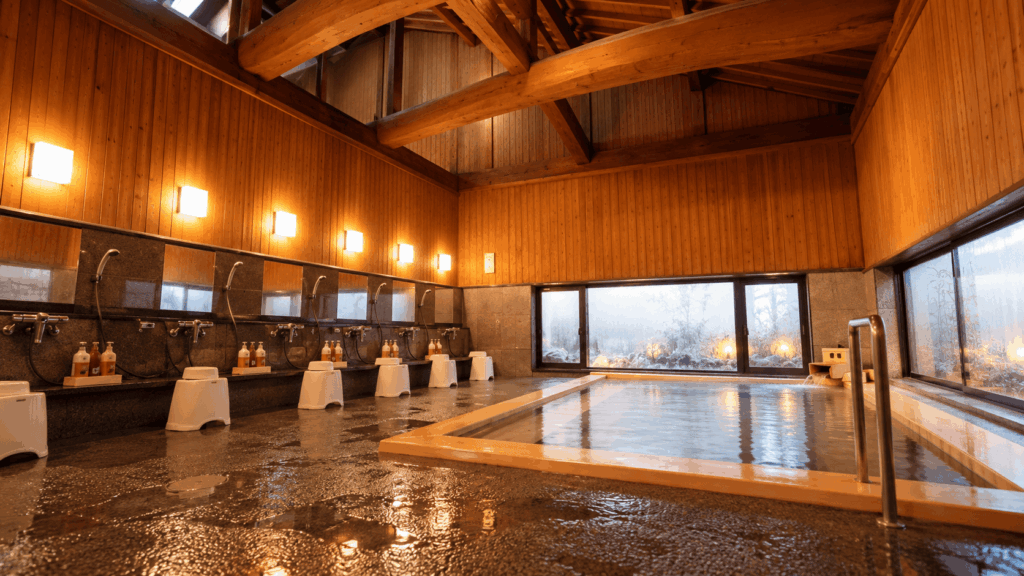
If you want the classic image of a Japanese outdoor bath, Goshono-Yu delivers. Its current layout centers on a spacious open-air bath surrounded by trees, with the sound and view of a waterfall on the mountainside beside it — the setting is closer to nature than any of the other public baths. Hours are 7:00 to 23:00, closed Thursdays.
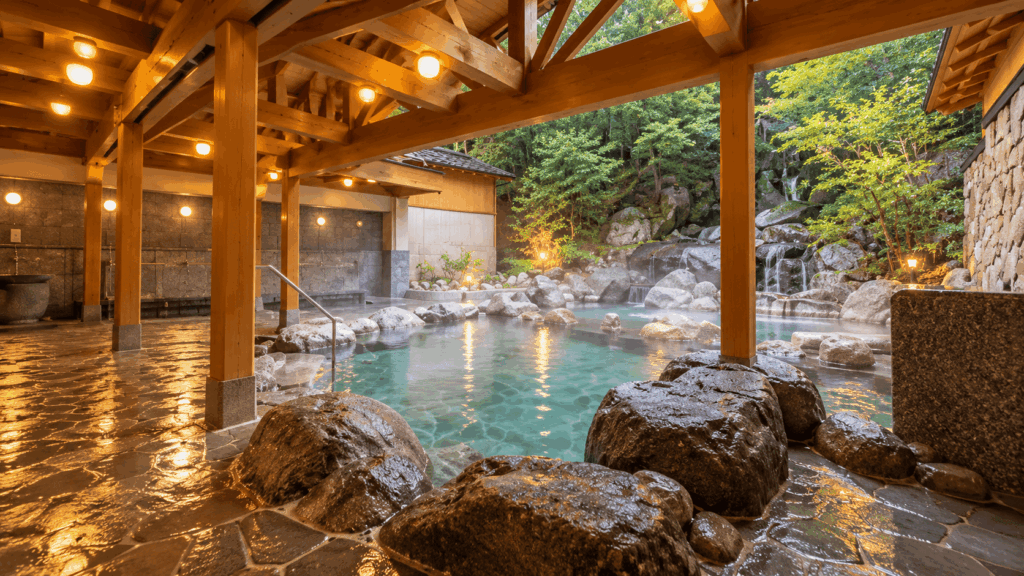
Kai’s tip: Goshono-Yu is the bath I use most often, so I’ve learned its rhythm the hard way. On Friday and Saturday evenings I’ve waited for a washing station here more than once. My own habit is to aim for the early-evening window around 18:00–19:00, before the after-dinner rush, or to go just after it opens at 7:00. Treat that as a personal strategy, not a guarantee — the town publishes live crowd levels for each bath, and checking them before you walk over is the more reliable move.
Mandara-Yu: Fun, but the Small Outdoor Baths Can Mean Waiting
Mandara-Yu sits just off the main street and stands out for its two small ceramic outdoor baths, which give it a quirkier feel than the larger bathhouses. The catch is space: the bathing area is compact, and on weekends I’ve seen bathers waiting — in the nude, as is the custom — for a spot in one of the outdoor tubs. Mandara-Yu also doesn’t open until 15:00, so it won’t fit a morning route. Closed Wednesdays.
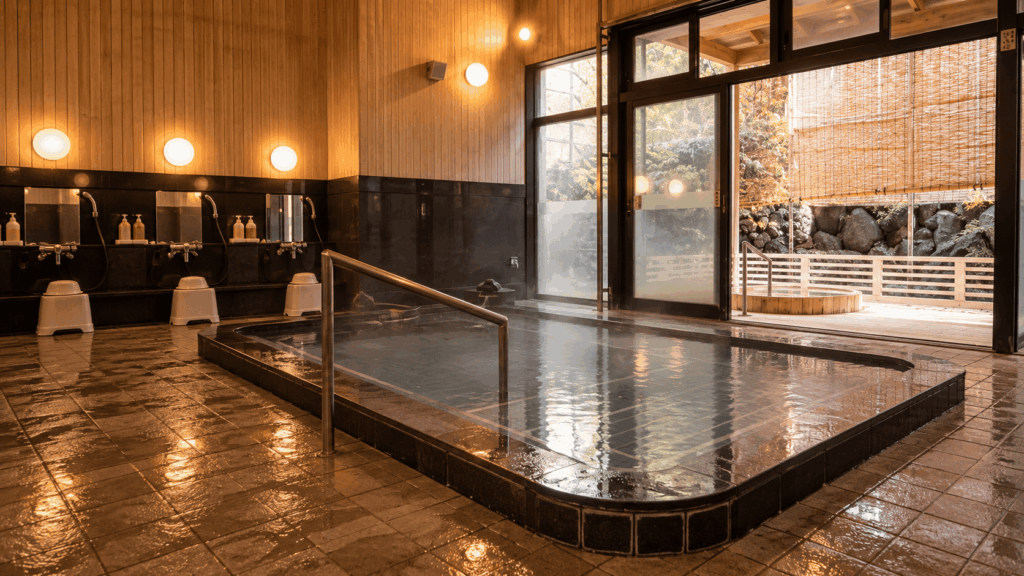
If queuing naked sounds like a bad time, save Mandara-Yu for a weekday or go near the 15:00 opening, when the baths are freshly available. It’s a fun bath — just don’t make it your only stop on a busy weekend.
Yanagi-Yu: Think Twice if You Struggle With Very Hot Water
Yanagi-Yu is Kinosaki’s smallest bathhouse and, by general consensus among visitors and guidebooks, runs noticeably hotter than the others. For heat lovers that’s a selling point; for anyone who finds Japanese baths already borderline, it can end the soak in under a minute. It opens at 15:00 (closed Thursdays).
Kai’s tip: I’ve watched more than one traveler — including a first-time onsen guest I was escorting — step into Yanagi-Yu and bail after barely getting a foot in the water. I won’t quote an exact temperature because it varies, but if you dislike very hot water, treat Yanagi-Yu as an advanced bath: try it later in your route once you’ve adjusted to onsen heat, or skip it entirely. There’s no rule that says you have to complete all seven.
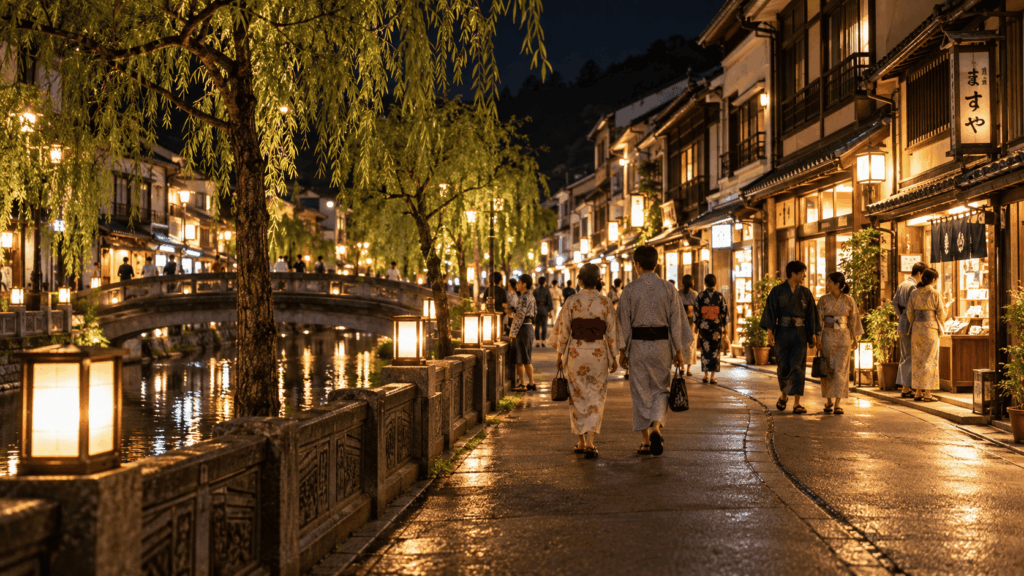
If you’re staying overnight, you’ll find the baths take on a different rhythm in the evening and early morning. After the day-trippers leave, the streets and bathhouses settle down, and a pre-breakfast soak in a yukata is one of the most memorable parts of a Kinosaki stay.
Check Which Baths Are Actually Open Before You Go
“Kinosaki has seven public baths” describes the town’s bathhouse network, but it doesn’t mean all seven are open on any given day. As of September 2026, two are closed for renovation:
- Satono-Yu — closed since April 2024, with no confirmed reopening date.
- Kono-Yu — closed for renovation from 11 May through 30 October 2026.
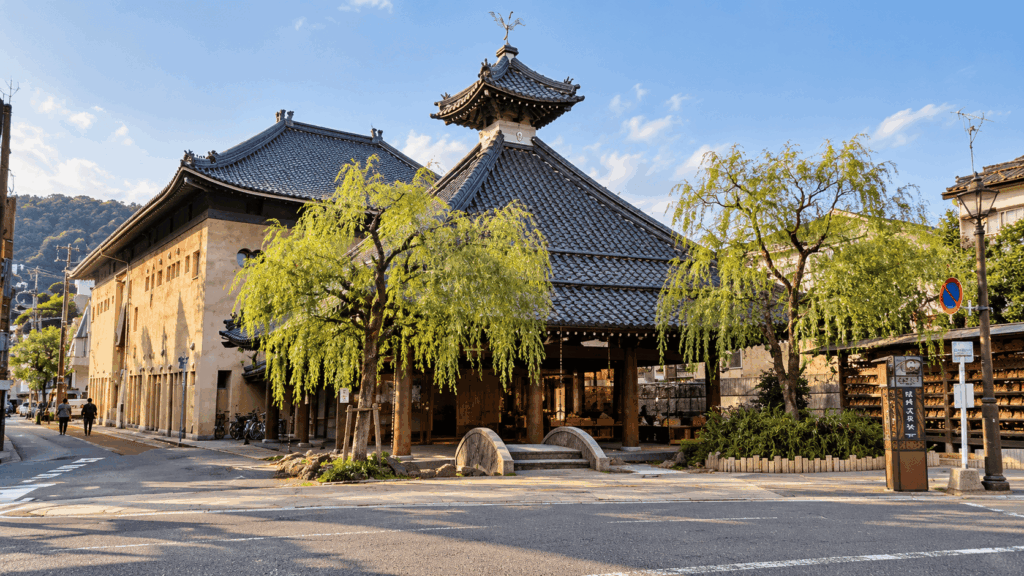
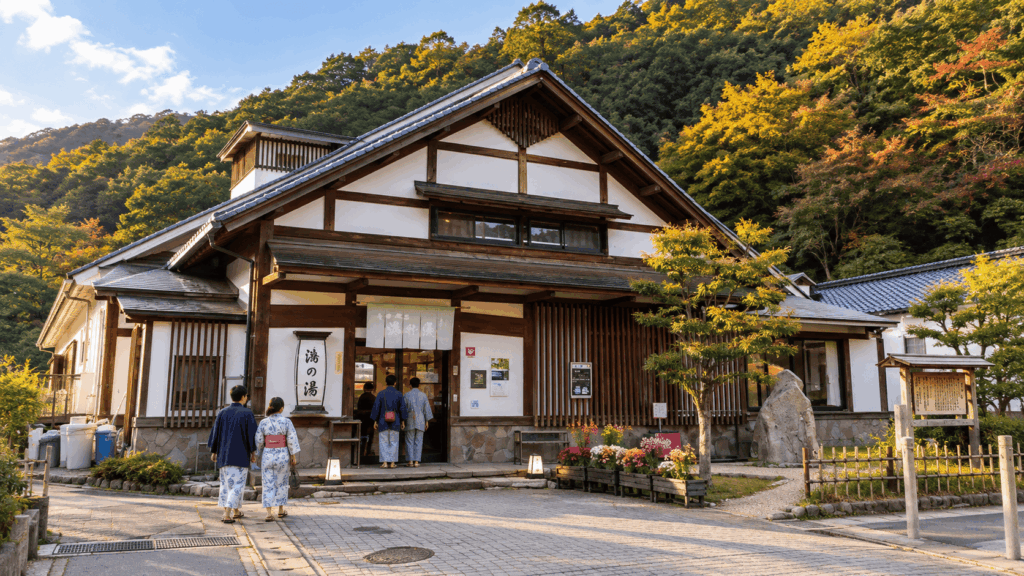
That leaves five in operation: Ichino-Yu, Goshono-Yu, Mandara-Yu, Yanagi-Yu, and Jizo-Yu. Each also has one weekly closing day (Wednesdays for Ichino-Yu and Mandara-Yu; Thursdays for Goshono-Yu and Yanagi-Yu; Mondays for Jizo-Yu), so check the combination before planning a route.
On the day itself, the official Visit Kinosaki site runs a live crowd-status board showing each open bath’s current usage level. It’s worth a quick look before you leave your ryokan — it saves you from walking across town to find your chosen bath packed.
How to Use the Kinosaki Public Baths Without Feeling Awkward
A tattoo-friendly policy doesn’t mean anything goes. The bathhouses are separated by gender, swimwear isn’t allowed, and the routine follows standard Japanese onsen etiquette:
- Leave your shoes at the entrance and pay — or show your pass — at the counter.
- Undress in the changing area and take only a small towel into the bath room.
- Wash thoroughly at the washing stations before entering the bath, sitting down so you don’t splash others.
- Never put your towel in the bath water — fold it on your head or leave it at the edge.
- Keep noise moderate and give other bathers space.
Most ryokan provide a yukata for the walk to the baths, and you’ll see guests strolling the streets in them all evening — that’s part of the Kinosaki experience, not something you’re doing wrong. If you’re unsure about any step, watch what the bathers around you do; the routine becomes obvious within minutes.
Do You Need to Buy the Yumepa Pass?
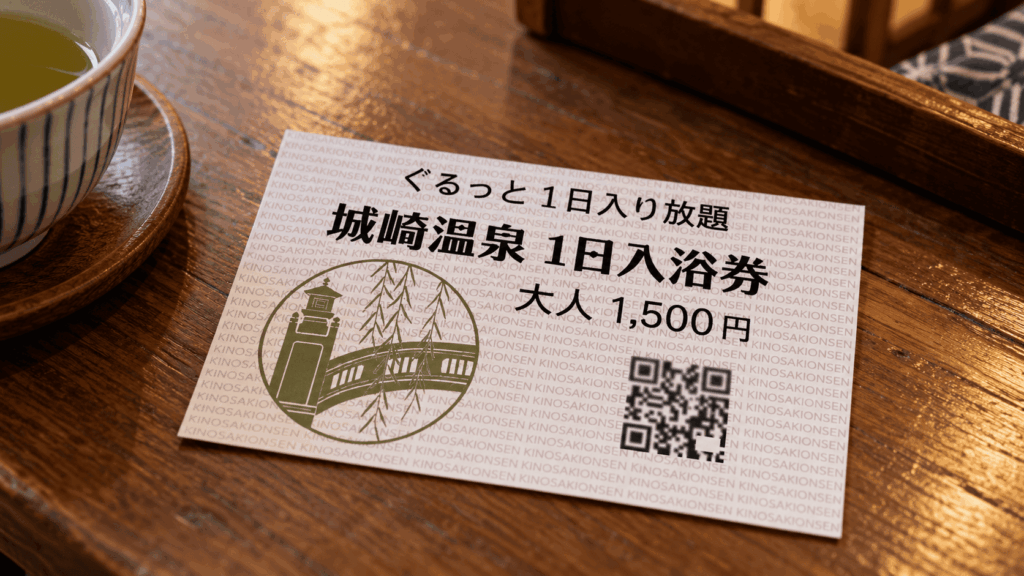
The Yumepa is a one-day pass covering the public bathhouses. As of late 2026 it costs ¥1,500 for adults and ¥750 for children, against roughly ¥800 for a single bath — prices can change, so confirm before your trip.
- Day visitor planning two or more baths: buy the Yumepa. It pays for itself from the second bath and removes the friction of paying at every entrance.
- Day visitor with time for one bath: pay for a single entry instead.
- Overnight guest: most ryokan give you a free bath pass at check-in, typically valid until 13:00 on your checkout day — confirm the terms at your accommodation.
Where Should Tattooed Travelers Stay in Kinosaki?
Once you’ve confirmed the public baths aren’t a problem, accommodation becomes the last decision that matters. Weigh these points:
- Published tattoo policy: the most important filter. If a property doesn’t state its policy anywhere public, email them before booking.
- Location: staying in the town center means the bathhouses are a short yukata-walk away, which is what makes evening and morning bath-hopping practical.
- Communal bath access: to use your ryokan’s in-house bath, you need its own confirmed policy — not the town’s.
- Private bath availability: useful for couples, families, or anyone who wants a solo soak without the communal setting.
Yamamotoya is a good example of a property that removes the guesswork. Its official English site states plainly that guests with tattoos are allowed to use the baths at the hotel; it sits in the center of town about a minute’s walk from Ichino-Yu and Yanagi-Yu; and the front desk provides a free pass to the public bathhouses. It also runs a private open-air bath called “Senyu” — available only to staying guests by advance reservation, for up to two people, 40 minutes for ¥1,100 including tax, with only five slots a day. Pricing and availability can shift, so reconfirm when you book.
If your priority is removing the uncertainty around the in-house bath policy while staying in the middle of Kinosaki, Yamamotoya is the accommodation option in this guide that most directly fits that need.
Why I’d book this one
- Clear tattoo policy: the property publishes that tattooed guests may use its hotel baths, removing the biggest accommodation-specific uncertainty in this guide.
- Built for bath-hopping: its central location keeps Ichino-Yu and Yanagi-Yu close, so you can still make the town’s public baths the main event.
- Low-commitment comparison: you can check current room availability, stay conditions, photos, and recent guest reviews before deciding whether it suits your trip.
See current room availability, stay conditions, and recent guest reviews for Kinosaki Yamamotoya.
If you want zero ambiguity, choose a ryokan that publishes its tattoo policy before booking rather than assuming every in-house bath follows the town’s rules. That one check turns the riskiest part of a Kinosaki stay into a non-issue.
Is Kinosaki the Best Tattoo-Friendly Onsen Choice in Kansai?
I won’t tell you Kinosaki is objectively the best onsen town in Kansai for tattooed travelers — “best” depends on what you want from a trip. What I can say is that for one specific combination — large or visible tattoos plus a desire for the traditional public-bath experience — Kinosaki is about as frictionless as Japan gets:
- The town-wide public policy is official, written down, and applied consistently across every bathhouse.
- Several bathhouses sit within walking distance, so one stay gives you variety without any single bath being make-or-break.
- You don’t need a private bath to bathe at all; private options exist for travelers who want them.
- The yukata-and-bath-hopping culture means the whole town is organized around moving between baths — exactly the experience most tattooed visitors worry they can’t have in Japan.
The trade-off is access: Kinosaki sits on the Sea of Japan coast in northern Hyogo, roughly 2.5 hours from Kyoto and around 3 hours from Osaka by limited express train, so it doesn’t fit a tight day-trip as comfortably as an onsen closer to those cities. If you’re on a strict schedule, you might wonder whether a day trip from Osaka is actually worth the train ride. For a one-night stay with a full evening of bath-hopping, though, the distance is exactly what makes it feel like a real escape.
FAQ
Are all Kinosaki Onsen public baths tattoo friendly?
Yes. Official Visit Kinosaki guidance states that all of the town’s public bathhouses allow tattoos of all shapes and sizes. The same policy applies across the network, so you don’t need to research each bath individually for tattoo rules. Note that not every bathhouse is open on any given day — as of September 2026, Satono-Yu and Kono-Yu are closed for renovation, and each open bath has one weekly closing day.
Do I need to cover my tattoos in Kinosaki Onsen?
No, not at the public bathhouses. Covering is not required and the policy does not distinguish by tattoo size — full sleeves and large pieces are treated the same as small tattoos. The exception is your accommodation’s in-house bath, where the property sets its own rules.
Can I use a Kinosaki ryokan onsen if I have tattoos?
It depends on the property, not the town. Some ryokan in Kinosaki — Yamamotoya, for example — state openly that tattooed guests can use their baths. Others may restrict in-house communal baths even though the public bathhouses next door are fully accepting. Check the specific ryokan’s published policy or email them before booking.
Do I need to book a private onsen in Kinosaki if I have tattoos?
No. Since the public bathhouses accept tattoos without covering, a private bath isn’t necessary because of your tattoos. It’s worth booking when you want privacy, when you’re a couple or family hoping to bathe together, or when you’re uncomfortable with a communal naked bath. If you do want one, private baths such as Yamamotoya’s “Senyu” require advance reservation and have limited daily slots.
Which Kinosaki public bath is best for a first-time visitor with tattoos?
Start with Ichino-Yu: it’s central, opens at 7:00, has a spacious-feeling changing area, and its cave-style bath is a calm, distinctive first experience. If open-air scenery matters more, choose Goshono-Yu for its large outdoor bath and waterfall — ideally on a weekday or outside Friday and Saturday evenings. Save Yanagi-Yu for later if you’re sensitive to very hot water, and treat Mandara-Yu as a fun extra rather than your only stop.
Final Verdict: Is Kinosaki Onsen Good for Travelers With Tattoos?
Yes — and for travelers with large or visible tattoos, it’s one of the most straightforward onsen towns in Japan. The public bathhouses accept tattoos of any size with no covering required, the policy is official and consistent, and the whole town is designed around strolling between baths in a yukata. The only real homework is your accommodation: confirm the ryokan’s own bath policy before you book, and the last source of anxiety disappears.
- Choose Kinosaki if you want to experience traditional Japanese public baths without hiding your tattoos, negotiating at the entrance, or paying for a private bath you don’t actually need.
- Look elsewhere if you want to rely mainly on a hotel’s private or in-house bath, or if a 2.5–3-hour journey from Kyoto or Osaka doesn’t fit your itinerary.
- For first-timers: base yourself in the town center, start with Ichino-Yu, and check the official live crowd status before each soak.
- For scenery lovers: make Goshono-Yu your priority, and time it to avoid the Friday and Saturday evening rush.
- If you dislike very hot water: treat Yanagi-Yu as optional and try it last, if at all.
- For couples and families who want to bathe together: book a ryokan with a private bath (like Yamamotoya’s “Senyu”) and reserve early — the public baths are separated by gender.
If you’re still on the fence about adding it to your itinerary, read our honest review on whether Kinosaki is worth it and how long to stay.
What I’d tell a friend visiting Japan with tattoos for the first time is this: treat the town baths as the easy, enjoyable part of Kinosaki — they genuinely are — and treat the ryokan policy as the one question you must ask before booking. Get that right, and the evening you spend hopping between lantern-lit bathhouses in a yukata will be the memory you keep, not the anxiety you expected.
Hi, I’m Kai. I’m a Tokyo-based travel writer, tourism industry insider, and the author of a published guidebook for international visitors to Japan. With over 10 years of professional experience at a leading Japanese tourism company, my mission is to help you skip the tourist traps and navigate Japan’s best destinations like a local. I believe the perfect day trip is like a traditional kaiseki meal: a beautiful balance of precise planning and unforgettable seasonal discovery. When I’m not out conducting field research, you’ll usually find me drafting new itineraries with one of my favorite fountain pens!