
Hashima Island — better known as Gunkanjima, or “Battleship Island” — is one of Nagasaki’s most searched day trips, and also one of the most misunderstood. The short version: you cannot take a public ferry there and wander the ruins on your own. You visit on an authorized sightseeing cruise, and even then, reaching the island is never a guarantee. This guide walks you through how to get there, which tour to book, why landing can be cancelled on a sunny day, and what the visit is actually like once you arrive.

If you would rather make Hashima part of a fully guided Nagasaki day instead of coordinating each part yourself, compare the English-guided Hashima Island and Mount Inasa day tour from Nagasaki Station. Check the current itinerary, availability and landing-related conditions for your date before finalising.
The Quick Answer: How Do You Get to Hashima Island?
Book an authorized cruise from Nagasaki rather than trying to reach Hashima independently. There is no public ferry that lets travelers land and explore the island at their own pace. Nagasaki City currently licenses five tour operators to run landing cruises, and each has its own departure point, schedule and rules. Most cruises leave from the Nagasaki Port area in the city center and take roughly half a day from start to finish.
The part that surprises most first-time visitors is this: booking a landing tour does not guarantee a landing. Sailing happens first, and whether you step ashore depends on sea conditions on the day. Even when you do land, you walk a short guided route rather than exploring freely.
- Getting there: choose an authorized operator, reserve in advance, and go to that operator’s specific check-in point.
- The reality check: the boat may sail even when landing is not possible, so plan for the possibility of a cruise-only visit.
- Worth it? For travelers interested in industrial heritage, ruins and photography — yes, if you accept the uncertainty. For anyone expecting free urban exploration, it will disappoint.
I guide overseas visitors to Gunkanjima, and the biggest misunderstanding I see is exactly that one: people assume that a booked landing tour equals a confirmed landing. It does not, and understanding that before you book is the difference between a great day out and a frustrating one.
Can You Visit Hashima Island Without a Tour?
No — not as an independent traveler. Landing on Hashima is restricted, and ordinary sightseers can only go ashore with one of the authorized operators approved by Nagasaki City. You cannot hire a private boat to drop you off, and you cannot walk around the island outside the managed sightseeing route. If your plan was “figure it out at the port,” it will not work: these cruises require an advance reservation and operate on fixed schedules.
Step-by-Step: Getting to Hashima Island from Nagasaki
The process looks simple, but each step has a detail that trips people up. Here is the full sequence:
- Choose and book an authorized Gunkanjima tour — ideally several days ahead, especially on weekends and holidays.
- Go to the correct check-in point — this is not the same pier for every operator, and some check in at a museum rather than at the dock.
- Check in, sign the landing safety agreement, and receive your boarding instructions.
- Board and cruise out to the island — Hashima sits about 19 km offshore, and the crossing takes roughly 30–50 minutes depending on the vessel and route.
- Land if sea conditions allow — you typically get around 45–60 minutes ashore with your guide before the return crossing.

Step 1 — Choose and Book an Authorized Gunkanjima Tour
Reservation is the first step, not the last one. All authorized operators run on pre-booked schedules, and while you can sometimes find a seat on the day, weekend and holiday cruises sell out well in advance. In peak seasons, even the online booking calendars fill up, so book as soon as your Nagasaki dates are fixed.
You can book directly through each operator’s official website, through English-language pages where available, or through booking platforms such as Klook and Viator that resell authorized cruises. If an official site shows sold out, it is worth checking a platform — but read the listing carefully, because the operator, meeting point and cancellation conditions are not always obvious. Tour prices for adults generally land in the roughly ¥4,000–¥6,500 range, plus a separate Hashima island admission fee of ¥650 for adults (as of September 2026) that every operator passes on to Nagasaki City. Prices change frequently, so treat any number you see online as an estimate until you confirm it at booking.
If you only need the Gunkanjima cruise rather than a full guided Nagasaki day, check the current Battleship Island cruise schedule, meeting instructions and booking terms on Klook. Confirm the no-landing policy for your date before paying.
Step 2 — Get to the Correct Departure Terminal
This is where the biggest day-of-tour mistakes happen. Gunkanjima tours do not all leave from the same pier, and one operator’s meeting point is not interchangeable with another’s. Trust your booking confirmation over any general advice, including this guide. Check the meeting point again the night before.
As a rough map of where the five operators are based (all details confirmed in September 2026 — reconfirm with your operator):
- Yamasa Shipping — checks in at Nagasaki Port Terminal (Ohato area) and boards at Ohato Pier 2. Easiest from central Nagasaki: about 10 minutes by streetcar from Nagasaki Station to the Ohato stop.
- Gunkanjima Cruise (Takashima Marine Transportation) — checks in near Motofuna-machi and boards at Motofuna Terminal, a short walk from the Ohato streetcar stop.
- GUNKANJIMA CONCIERGE — checks in at the Gunkanjima Digital Museum (5-6 Matsugae-machi, near the Oura/Glover Garden area), then walks about 5 minutes to Tokiwa Pier for boarding.
- Seaman Company — meets and boards at Tokiwa 2nd Terminal, in the same Oura-side harbor area.
- 7th Ebisumaru — the outlier: departs from Nomo Port on the Nomozaki peninsula, well south of central Nagasaki. Only practical if you already have transport to that side of the city.
If you are staying near Nagasaki Station, the Ohato-side departures (Yamasa and Gunkanjima Cruise) are the most convenient. The Tokiwa-side departures (GUNKANJIMA CONCIERGE and Seaman) are about 20 minutes by streetcar to the Oura Kaigan-dori stop. Whichever you choose, plan to arrive at check-in at least 20–30 minutes before boarding; the operators are strict because they have a fixed sailing window.
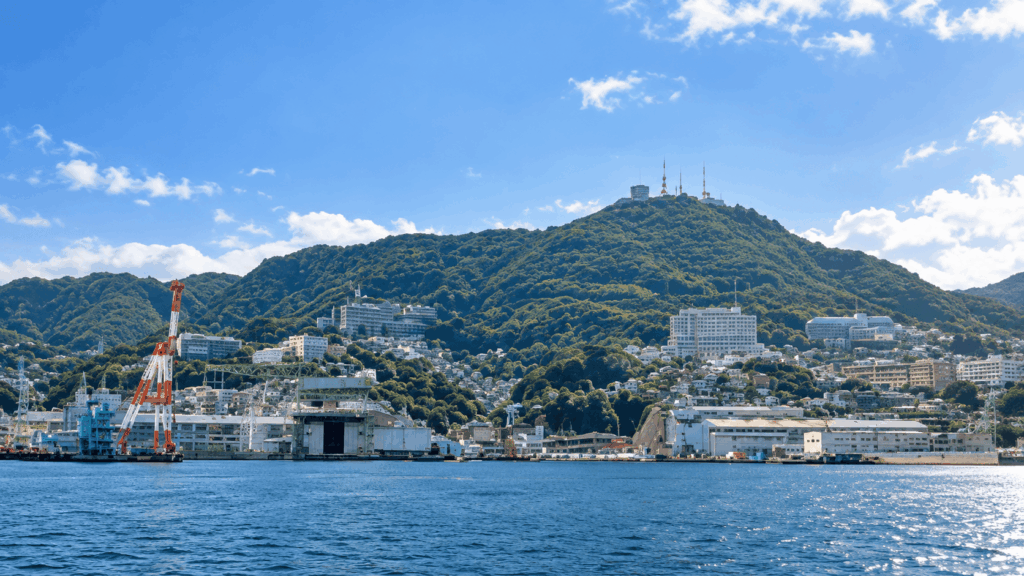
Which Gunkanjima Tour Should You Choose?
Do not pick purely by the lowest price. The five authorized operators differ in where they leave from, how much English support they provide, what the boat is like, and how they handle a cancelled landing. For most international visitors, the deciding factors are the meeting point, the quality of English information, and a clear no-landing policy — in that order.
| Operator | Departure & check-in | Tour style | English support | Notable feature | Best for | Important caveat |
|---|---|---|---|---|---|---|
| Yamasa Shipping | Nagasaki Port Terminal (Ohato), Pier 2 | Large cruise vessels; ~2.5 hours | Free English guide on Tue/Thu/Sat/Sun (as of Sep 2026) | Longest-running operator with the largest boats | First-timers based in central Nagasaki who want the smoothest logistics | Schedule and guide-language days change; confirm at booking |
| GUNKANJIMA CONCIERGE | Check-in at Gunkanjima Digital Museum, board at Tokiwa Pier | Museum + cruise combo; ~2.75 hours | English guidebook and materials; Japanese-speaking live guide | Only operator that includes Digital Museum admission | Travelers who want context before or instead of landing | Live commentary is not fully in English; museum time is built into the tour |
| Gunkanjima Cruise (Takashima Marine Transportation) | Motofuna Terminal (Ohato area) | Larger vessel; ~3 hours 10 minutes | Limited; primarily Japanese operations | Often among the cheaper fares; rooftop seating | Budget-conscious travelers who can manage without much English guidance | Longer tour; check the current fare and English materials before booking |
| Seaman Company | Tokiwa 2nd Terminal (Oura side) | Mid-size vessel; ~2.5 hours | Limited; official site is Japanese-only | Spacious seating and open upper deck | Travelers staying on the Oura side of the harbor | Booking in English may require a platform rather than the official site |
| 7th Ebisumaru | Nomo Port, Nomozaki peninsula (south of the city) | Small-group cruise; ~1.5 hours | Limited; Japanese-focused | Former island residents join as guides on a small boat | Travelers already in southern Nagasaki or seeking an intimate, story-driven trip | Far from central Nagasaki; not the choice for a quick trip from downtown |
Prices shift constantly, so the table deliberately leaves fares out. As a planning figure, expect to pay around ¥4,000–¥6,500 per adult depending on operator and seating class, plus the ¥650 island admission fee. Always check the total — boat fare, island fee, and whether a museum visit is included — before you book.
Best Criteria for First-Time International Visitors
If this is your first visit and you are booking from outside Japan, weigh these three things above the fare:
- City-center accessibility — a departure you can reach without a long detour reduces the stress of the morning. The Ohato-side operators are the easiest from Nagasaki Station; the Tokiwa-side operators are easy if you are staying around Oura or Dejima.
- Understandable English information — check whether the operator provides an English guide, an English guidebook, or at least an English booking confirmation with clear meeting instructions.
- A clear no-landing policy — the operator should state, in writing, what happens if the boat cannot land: a cruise-only alternative, a partial refund, or both. If that policy is hard to find, treat it as a red flag.
In my experience taking overseas visitors, the fare difference between operators matters far less than whether people can find the check-in point and understand what the guide is saying. A slightly more expensive tour with clear English information almost always produces a better day than the cheapest ticket with no communication — especially on a visit where you cannot freely explore on your own.
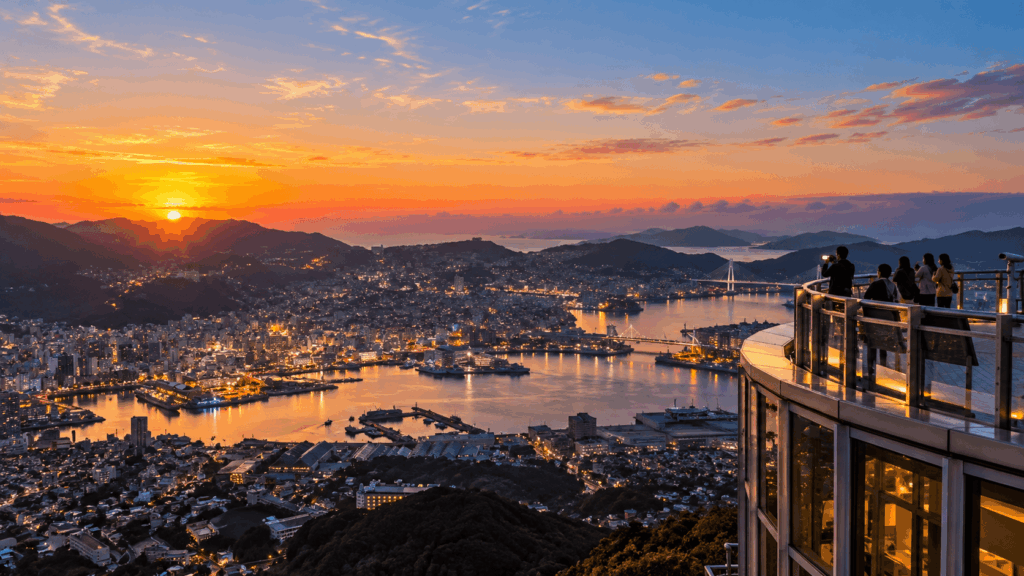
If you want English guidance and fewer moving parts rather than assembling the day yourself, the private Hashima Island and Mount Inasa day tour is the higher-comfort option to compare.
Why I’d book this one
- It starts from Nagasaki Station and includes live English guidance, reducing the meeting-point and language friction that matters most for first-time international visitors.
- It combines Hashima Island with Mount Inasa in one guided day, which suits travelers who would rather not coordinate separate sightseeing plans.
- The listing offers flexible booking terms such as free cancellation within the stated window and a reserve-now-pay-later option; check the current conditions before confirming.
See live availability, start times, current cancellation terms and the latest traveler feedback for the Hashima Island and Mount Inasa guided tour. A reservation still does not guarantee that sea conditions will allow a landing on Hashima, so confirm the current landing policy as part of your booking decision.
Landing on Gunkanjima Is Never Guaranteed
This is the single most important thing to understand before you book: the boat can sail even when landing is not possible. Operators decide whether to approach the island against a safety standard set by Nagasaki City, not against the weather app on your phone. Landing is typically stopped when wave height exceeds 0.5 m, wind speed around Hashima exceeds 5 m/s, or visibility drops below 500 m — and even when conditions stay inside those limits, the captain can still call it off if the sea looks unsafe.

Kai’s tip: I always tell the overseas visitors I guide to take seasickness medicine before boarding, even if they think they do not need it — the crossing is open water, and a rough ride is the most common way the day turns miserable. And check the sea forecast, not just the sunshine icon: I have been out on calm, sunny mornings when the swell around the island was simply too high to land. Plan for the possibility, and you will not be blindsided by it.
Does Good Weather Mean You Will Land?
No. The weather you feel in central Nagasaki is a poor guide to conditions 19 km offshore. Rain alone does not cancel a landing, and sunshine alone does not guarantee one. What matters is the sea state around Hashima itself — wave height, wind and visibility — plus the judgment of the captain and the operator’s safety team on the day. Operators post updates on their official sites and social channels, so check the morning of your tour rather than assuming anything from the forecast.
| Factor | What travelers often assume | What actually matters |
|---|---|---|
| Sunny weather | “It’s sunny, so we will land.” | Waves and wind offshore can still exceed the limits on a sunny day. |
| Rain | “It’s raining, so the tour is cancelled.” | Light rain usually does not stop a cruise; visibility and sea state matter more. |
| Wave height | Checked only at the port. | The limit applies to conditions around Hashima, which can differ from the harbor. |
| Wind | Only a concern in storms. | Even moderate wind can make docking at the island’s pier unsafe. |
| Visibility | Not part of the decision. | Below 500 m of visibility around the island, approach is stopped. |
| Captain / operator decision | “If the rules allow it, we will land.” | Safety discretion overrides the numbers; the final call is made on site. |
What Is the Gunkanjima Landing Rate?
Nagasaki’s official tourism materials cite a landing success rate of roughly 60%, similar across the authorized operators, while noting that the rate at which boats actually depart can vary with vessel size and conditions. Operators publish their own figures over different periods and with different definitions, so treat any single number as a rough guide rather than a promise. Yamasa Shipping, for example, states that only about 100 days a year meet the conditions for a landing at all.
The practical takeaway: a high historical landing rate does not tell you whether your particular cruise will land. Check the operator’s recent notices, keep your schedule flexible, and decide in advance how you will feel about a cruise-only day. The travelers who rate this trip most highly are usually the ones who accepted that uncertainty before they booked.
What Happens If You Cannot Land?
If landing is called off, the cruise does not simply turn around. In most cases the boat continues as a sightseeing cruise around the island, giving you the full view of the ruins from the water — which, honestly, is where the famous “battleship” silhouette reads best. Whether you receive a partial refund or a credit depends entirely on the operator, so read the no-landing policy before you pay. Yamasa Shipping, for instance, states that a cancelled landing turns the trip into a longer cruise around the island with a partial refund; other operators have their own rules. If a company cannot show you its policy in writing, choose a different one.
A Good Backup Plan: Gunkanjima Digital Museum
The Gunkanjima Digital Museum, a short walk from the Oura / Glover Garden area, is not just a rainy-day fallback — it is the closest you can get to the parts of the island you are not allowed to see. Large-scale projections, archival images and VR exhibits recreate the interiors of the apartment blocks, the mine workings and the restricted zones that landing tours never enter. It is open daily around 9:00–17:00 (last entry 16:30) with adult admission of about ¥1,800; as hours and prices change occasionally, confirm the latest details on the official site before visiting.
Kai’s tip: When a landing gets cancelled, I send visitors to the museum rather than letting the morning feel wasted — and the view from the boat on the way back still gives you the island’s scale and drama. If you do land, the museum works just as well afterwards as the “answer key” to what you saw: it shows the interiors behind the sealed facades, which is the part a guided walk cannot show you.
Can You Walk Around Hashima Island Freely?
No — and this is the expectation that causes the most disappointment. You cannot wander freely among the ruins, enter the buildings, or explore the island at your own pace. Visitors follow a single guided route of roughly 220 meters, stopping at three observation areas while the guide explains what you are looking at. Everything else is fenced off as restricted area. The concrete structures you see in photographs are decaying under salt, wind and weather, and the city keeps visitors strictly away from anything unstable.

Kai’s tip: The reality of the visit is a short, managed walk with a guide — not urban exploration. What surprises the people I take is that the freedom they expected simply is not there: no building interiors, no shade, and no umbrellas allowed on the route. Come for the scale and the history, guided by someone who can bring the empty buildings to life, and the 220 meters will feel like enough.
What Can You Actually See on the Island?
Keep your expectations calibrated: the island is not a theme park, and there are not many “things to do” in the usual sense. The experience is built around a handful of elements:
- Three observation areas along the designated route, with views over the sealed apartment blocks and the harbor.
- The ruined concrete structures — the school, the shaft tower and the high-rise housing that once held the world’s highest population density.
- Mining-related remains and the pier area, explained by the guide.
- Photography from permitted spots — no tripods are practical on a tight guided route, and umbrellas are banned.

Review patterns from recent visitors tell the same story from both sides: travelers who expected free exploration tend to rate the trip lower, while those who understood it is a regulated heritage visit often call the scale of the ruins unforgettable. The quality of the guide matters enormously here — a good explanation turns a row of empty concrete shells into a story about the 5,000 people who once lived on 6.4 hectares of rock.
Prepare for Seasickness, Heat and Exposure
Hashima is an exposed offshore island with almost nothing in the way of visitor facilities. There are no toilets on the island, no vending machines, no shops and no shade, and the operator safety rules ban umbrellas and parasols outright — so on a sunny day you stand on bare concrete under open sky. On one October visit I guided, the temperature was above 30°C, and the exposed concrete made it feel considerably hotter. Dress and pack for a working harbor trip, not a city stroll.
What to Bring
- Motion-sickness medication — take it before boarding, not once you feel unwell.
- Water — there is nowhere to buy a drink on the island.
- A hat and sunscreen — shade does not exist on the walking route.
- Secure, flat walking shoes — heels and open sandals are not allowed ashore.
- A light rain jacket — rainwear replaces the umbrellas that are prohibited.
- Your booking confirmation and a charged phone for the meeting-point details.
Is Hashima Island Worth It?
For the right traveler, yes. Hashima is one of the few places in Japan where you can stand inside a genuinely abandoned industrial city, and the boat approach delivers the battleship silhouette that made the island famous. It is worth it if you are drawn to industrial heritage, ruins, photography, or unusual half-day experiences, and if you can accept that the landing itself is never guaranteed. If your goal is simply to see the island from the water, the trip is low-risk; if you specifically want to set foot on it, build in some flexibility.
It is less clearly worth it if your Nagasaki schedule is very tight, if rough seas make you genuinely unwell, or if your expectation is free exploration of the ruins. The half-day cost — roughly half a day of your trip, plus the tour fare and island fee — is real, and the on-island experience is deliberately limited for safety.
Who Should Skip It?
Skip the landing tour if any of these apply to you:
- You want to walk freely through abandoned buildings — this is not that experience.
- You need a guaranteed outcome for your money and cannot tolerate a cruise-only day.
- You are prone to severe motion sickness and are not willing to medicate beforehand.
- You have only a few hours in Nagasaki and the tour would crowd out other priorities.
- You expect to enter the building interiors — visitors stay on the outside route only.
If any of these fit, Hashima still makes a striking sight from a cruise, and the Gunkanjima Digital Museum offers the interpretive depth without the boat ride. But as a landing destination, it rewards travelers who come for what it actually is: a fragile, regulated and extraordinary piece of industrial history.
Practical Tips Before You Book
- Reserve ahead — weekends, Japanese holidays and peak travel seasons sell out, sometimes days in advance.
- Verify the exact meeting point from your confirmation email; do not assume every operator leaves from the same pier.
- Read the no-landing and refund policy before paying, and keep a screenshot of it.
- Check the operator’s updates on the morning of the tour — landing status can change overnight.
- Prepare for seasickness in advance, regardless of the forecast.
- Do not rely on a sunshine icon; watch the sea conditions and the operator’s own notices.
- Leave flexibility in your Nagasaki plan if the landing is a highlight of your trip — a spare day gives you a second chance at the island.
Once you have confirmed the meeting point, the no-landing policy and the operator running your date, the booking itself is straightforward — the research ahead of time is what separates a smooth day from a stressful one.
FAQ
Can you visit Hashima Island without a tour?
No. Independent travelers cannot reach or explore Hashima on their own. There is no public ferry service that allows landing, and Nagasaki City restricts shore access to the five authorized tour operators. You must book a cruise with one of them, check in at that operator’s specific meeting point, and follow the guided route once ashore. Showing up at the port without a reservation is not a reliable option — these cruises run on fixed, pre-booked schedules.
Can you walk around Hashima Island freely?
No. Visitors follow a single guided route of roughly 220 meters with three observation areas; the buildings and the rest of the island are restricted. You cannot enter the structures, wander between them, or explore at your own pace. Umbrellas, high heels and open sandals are not permitted on the walking route. If your image of the trip is free exploration of the ruins, adjust that expectation before you book — the experience is a regulated heritage visit with a guide, not urban exploration.
How often do Gunkanjima tours fail to land?
Nagasaki’s official tourism materials cite a landing success rate of roughly 60%, similar across the authorized operators, though the rate at which boats depart can vary with vessel size and conditions. Operators publish their own figures using different periods and definitions, so no single number is a promise for your specific cruise. Yamasa Shipping, for example, notes that only about 100 days a year meet the conditions for landing at all. Treat the landing as possible but not guaranteed, keep your schedule flexible, and decide how you will handle a cruise-only day before you pay.
What happens if your Gunkanjima tour cannot land?
In most cases the boat continues as a sightseeing cruise around the island, which still gives you the full view of the ruins from the water. What you receive in return — a partial refund, a credit, or nothing beyond the cruise — depends entirely on the operator, so read the no-landing policy before booking. Yamasa Shipping, for instance, states that a cancelled landing becomes a longer cruise around the island with a partial refund; other operators have different rules. A cruise-only day can still be worthwhile, and the Gunkanjima Digital Museum near the Oura area is a strong complement if you want the interior views the landing tour cannot provide.
Is Hashima Island worth visiting if you get seasick?
It depends on how badly the sea affects you. The crossing is open water and the boats do rock, especially outside the sheltered harbor, so if you are prone to motion sickness, take medication before boarding rather than waiting to see how you feel. Choosing a larger vessel, such as the large cruise boats operated by Yamasa Shipping, tends to reduce the motion compared with small craft. If you have severe seasickness that medication does not control, the landing tour is a poor use of a half-day; consider the Gunkanjima Digital Museum instead, which covers the island’s story and interiors without leaving the ground.
Final Verdict: Match the Trip to the Traveler
Hashima Island is one of those destinations where satisfaction depends almost entirely on expectation. Here is how the decision breaks down by traveler type.
Choose the landing tour if you are drawn to industrial heritage, ruins, photography or unusual experiences, and you can genuinely accept that the landing may not happen. Book from central Nagasaki for the smoothest logistics: Yamasa Shipping for reliable English guide days on large vessels, or GUNKANJIMA CONCIERGE if you want the Digital Museum context folded into the same outing. Choose another option if you expect free exploration, need a guaranteed landing, or have very limited time in Nagasaki — the museum alone may serve you better.
For first-time visitors, the practical formula is: reserve a few days ahead from the Ohato or Tokiwa side, confirm the exact check-in point the night before, take seasickness medication, and read the no-landing policy before you pay. Do those four things and the day itself becomes simple — even the uncertainty stops being stressful.
For travelers on a tight schedule, weigh the half-day honestly. From first check-in to return to the city, plan for around three hours plus travel to the terminal. If Hashima is your main reason for visiting Nagasaki, leave a spare day in your itinerary so a weather cancellation does not end your chance; if it is one stop among many, the museum plus a harbor view may give you the essence in less time.
For repeat visitors or those who want depth, the landing tour plus the Gunkanjima Digital Museum makes the strongest combination: the walk gives you the scale and the salt air, and the museum’s projections and VR fill in the interiors and restricted zones that the island itself will never open to the public.
My honest bottom line: if you go expecting a controlled, atmospheric and genuinely unique heritage site — and you plan for the possibility that the boat cannot land — Hashima is one of the most memorable half-days in Kyushu. If you go expecting a free-roaming ghost town, no tour company can fix that mismatch. Adjust the expectation, and the island delivers.

Hi, I’m Kai. I’m a Tokyo-based travel writer, tourism industry insider, and the author of a published guidebook for international visitors to Japan. With over 10 years of professional experience at a leading Japanese tourism company, my mission is to help you skip the tourist traps and navigate Japan’s best destinations like a local. I believe the perfect day trip is like a traditional kaiseki meal: a beautiful balance of precise planning and unforgettable seasonal discovery. When I’m not out conducting field research, you’ll usually find me drafting new itineraries with one of my favorite fountain pens!