
Yes—December is a very good time to visit Kinosaki Onsen, especially if hot springs and winter crab matter more to you than a guaranteed snow-covered town. December falls squarely inside the Matsuba crab season, and it is the last month of the year when fresh-season Sekogani (female snow crab) is on menus in most years. What December does not promise is snow: it is possible but not dependable, and January or February give you statistically higher odds of a white town. This guide compares the three months, explains the crab terminology you will see on ryokan plans, and covers what to expect from a December stay.
If December is already your choice and the ryokan dinner is part of the reason for going, check current December availability, room types, and recent guest reviews for Nishimuraya Honkan before fixing your dates.
Is December a Good Time to Visit Kinosaki Onsen?
The short answer: yes, if your priorities are onsen and crab. December is the overlap month that no other winter month quite offers: the main Matsuba crab season is running, and the shorter Sekogani season lasts only until around the end of December in a typical year. The catch is snow. Visit Kinosaki’s own climate data shows far higher average snowfall in January (126 cm) and February (113 cm) than in December (44 cm), and the official tourism office says the timing of winter snow is difficult to predict.
Choose December if:
- crab is a major reason for the trip
- you want a winter onsen atmosphere without needing deep snow
- you would like a chance to try Sekogani, which is rarely available after the New Year
Consider January or February instead if:
- a snow-covered street scene is the main reason you are visiting
- you would rather trade the December-only Sekogani window for higher snow odds
- you want to avoid the busy holiday period between Christmas and early January
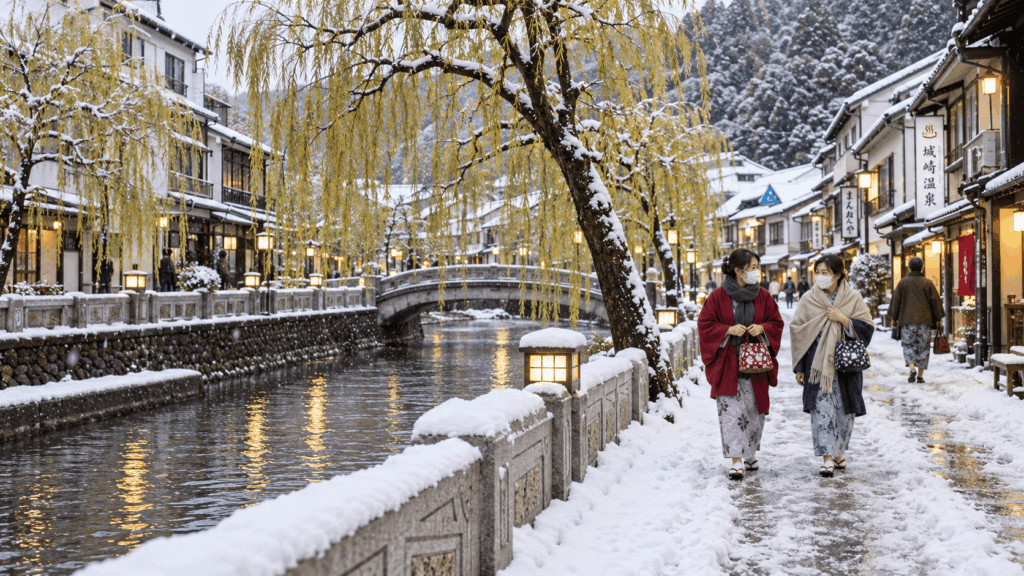
What surprises many first-time visitors is how quickly the town changes with the forecast: the same willow-lined canal looks completely different under snow, slush, or clear winter sun. The planning mistake I see most often in reader questions is treating December as “the snowy month.” In a normal year, December is transitional—cold and atmospheric, but not reliably white.
What Is Kinosaki Onsen Weather Like in December?
Kinosaki Onsen sits on the Sea of Japan coast of Hyogo Prefecture, about 2.5 hours by limited express from Kyoto or Osaka. Visit Kinosaki, the official tourism office, defines winter as mid-December to early March, and its climate data puts December at an average high of 10.6°C (51°F), an average low of 2.2°C (36°F), and an overall average of 5.8°C (42°F). Average precipitation is 197.8 mm and humidity runs around 81%. The days are short—the sun sets around 4:47 p.m. in December—so plan outdoor exploring for the morning and early afternoon.
Visit Kinosaki lists December’s average snowfall at 44 cm. To be clear about what that figure means: it is the average monthly total of snow that falls across the month, not a snow depth that stays on the ground. December snow in this region tends to fall, melt, and fall again. A deep, lasting cover is more typical of January and February, which average 126 cm and 113 cm respectively. These are long-term averages from the official tourism office (accessed September 2026); any single winter can differ.
Does It Snow in Kinosaki Onsen in December?
It can—but you should not book December on the assumption that the town will be white. Visit Kinosaki itself notes that the area usually sees snow in winter, yet it is difficult to predict when it will fall. Last winter, for example, Toyooka—the city that includes Kinosaki, about 10 minutes away by local train—recorded its first snow of the season on the night of December 3, and it melted quickly over the following days. Recent visitor reports suggest the most common December disappointment is not the cold but arriving to find the town snow-free after booking for a postcard winter scene.
If the snowy-townscape photo is your goal, January and February are the rational choice—and even then, snow is a weather event, not a schedule. If you book December, treat snow as a bonus: the onsen and the crab do not depend on it.
December vs January vs February: Which Month Is Better?
If you can choose your dates freely, this is the decision that matters most. In one line: December is the strongest month for crab variety (including Sekogani), while January and February are the stronger months for snow. The table below compares the three months using Visit Kinosaki’s climate data and the crab seasons.
| Factor | December | January | February |
|---|---|---|---|
| Average high / low | 10.6°C / 2.2°C (51°F / 36°F) | 7.1°C / 0.1°C (45°F / 32°F) | 7.9°C / -0.1°C (46°F / 32°F) |
| Average snowfall (monthly total) | 44 cm | 126 cm | 113 cm |
| Matsuba crab (male snow crab) | In season—peak winter menus | In season | In season |
| Fresh-season Sekogani | In season (typically until the end of December) | Over in most years | Over in most years |
| Snow-covered town odds | Possible, not dependable | Highest | High |
| Best for | Crab-first trips and winter atmosphere without guaranteed snow | Snow-first trips, still within the full Matsuba season | Snow-first trips, often quieter after the New Year rush |
| Main downside | Snow not guaranteed; short daylight | Coldest month; fresh Sekogani gone; holiday crowds in early January | Cold lows; fresh Sekogani gone; heavy snow can disrupt trains |
| Recommendation | Book December if crab and onsen lead | Book January if a white town is the goal | Book February for similar snow odds with quieter weeks |
Choose December If Crab Matters Most
If eating crab is a major reason you are going to Kinosaki, December has a clear advantage over January and February. Visit Kinosaki notes that ryokan banquet dinners feature snow crab through the winter months—roughly November to March—so Matsuba crab is available in all three months. The December extra is Sekogani: the female snow crab fishery typically opens in early November and closes around the end of December to protect the stock, which is why ryokan winter plans often state that Sekogani dishes are available only until the end of December. Book a late-November or December date and you get both the male and female crab experience in one meal season.
Choose January or February If Snow Matters Most
If the image you are chasing is the willow-lined canal under fresh snow, January and February are the statistically safer months: their average snowfall (126 cm and 113 cm) is roughly three times December’s 44 cm. A white town is still not guaranteed, but the odds improve substantially. The trade-offs are real: the December-only Sekogani window is gone (male Matsuba crab remains in season), January is the coldest month, and the heavy snow you came for can occasionally delay trains—check JR West’s real-time service information on the day you travel. Also note that the first week of January overlaps Japan’s New Year holiday travel period, so early January can be busy and expensive.
Why December Is Special for Crab in Kinosaki
December is not merely “crab season”—it is the overlap month. The male snow crab season runs from early November through March, while the female Sekogani season in most years ends on or around December 31. That means a December stay can include both at their freshest, which is why locals and repeat visitors treat December as the crab month rather than just another winter month. Around town, the season also spills onto the streets: from November to March, shops sell snow crab meat buns and warm crab soup for eating while you walk between baths.
Matsuba Crab vs Snow Crab: Are They Different?
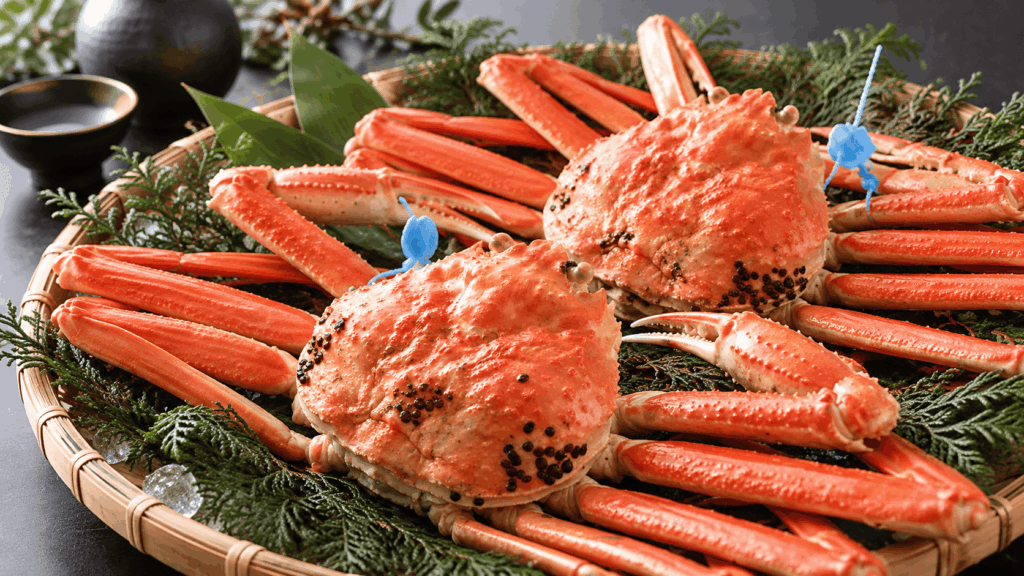
No—they are the same species, with different naming. “Snow crab” is the English name for zuwai-gani, and “Matsuba crab” is the local name used in the San’in region for the male snow crab caught in the waters off Kinosaki and nearby Tsuiyama. Visit Kinosaki puts it plainly: “The Snow Crab, also known as Matsuba Crab.” When a ryokan plan says “Matsuba crab,” you are getting male snow crab; when a plan says only “snow crab,” the same species is normally intended, but it is worth checking how specific the plan is about origin and size.
What Is Sekogani? Uchiko and Sotoko Explained
Sekogani is the female snow crab, sometimes called the “queen” of the winter catch. She is significantly smaller than the male Matsuba crab, and the appeal is different: instead of long legs full of meat, Sekogani is prized for its roe. Visit Kinosaki notes that a single Sekogani can carry an average of 100,000 eggs. In Japanese crab terminology you will often see two words: uchiko, the creamy roe inside the body, and sotoko, the eggs carried on the outside of the shell. What exactly arrives on your plate depends on the season and how the crab is prepared, so if a particular dish matters to you, ask your ryokan what the Sekogani course includes rather than assuming both types of roe will appear.
Kinosaki Crab Terms at a Glance
| Term | What it is | Why it matters in December | What to look for on a plan |
|---|---|---|---|
| Matsuba crab | Regional San’in name for the male snow crab (zuwai-gani) caught off the Kinosaki coast | At the heart of winter ryokan dinners from roughly November to March | A plan that explicitly says “Matsuba crab” rather than just “crab” |
| Sekogani | Female snow crab, smaller, prized for roe (uchiko and sotoko) | Short season; typically available only until the end of December | “Sekogani included,” plus any “until the end of December” wording |
| Tsuiyama crab | Matsuba crab landed at Tsuiyama Fishing Port, the port closest to Kinosaki | Same winter season; the port holds crab festivals and auctions in November | “From Tsuiyama Port” or the local blue tag guarantee mark |
| Kasumi crab (red snow crab) | Beni-zuwai-gani—a different species landed at Kasumi Port further along the same coast | Not the crab most Kinosaki ryokan plans center on; included here so the names do not get confused | If a plan says “Kasumi crab,” it is a different crab from Matsuba |
How to Choose a Crab Ryokan Plan Without Overpaying
A plan that simply says “crab dinner included” is not enough to book on. Winter crab plans in Kinosaki differ in four ways that change both the experience and the price: which crab is named, where it was landed, how much you get per person, and where you eat it. Reading the plan description carefully matters more than comparing room photos.
| Check before you book | Why it matters | Where to look |
|---|---|---|
| Does the plan explicitly say “Matsuba crab”? | “Crab” alone can mean a smaller or unspecified course. Naming Matsuba crab confirms you are getting male snow crab, the local winter centerpiece. | Plan title and meal description on the booking page |
| Is the crab locally landed or tagged? | Plans that name Tsuiyama Port or carry the local blue tag guarantee are making a specific origin claim about crabs from the port closest to Kinosaki. | Wording such as “from Tsuiyama Port” or “local tag” |
| How many crabs per guest? | Quantity is the biggest driver of both price and fullness. Some plans promise one whole crab per person; others build the course around half a crab or one crab shared. | “One crab per person,” “1.5 crabs,” or dish-count descriptions |
| Full crab course, or mixed with Tajima beef? | The region is equally famous for Tajima beef. A mixed plan lets you try both in one dinner; a full crab course goes deeper on crab but is a lot of seafood. | Menu list in the plan details |
| Room dining, private dining, or restaurant? | Crab is messy, slow food. Room or private dining suits travelers who want to eat unhurried without an audience. | “Room service”/“in-room dining” wording, or photos of the dining setup |
| Dinner start time and latest arrival? | Ryokan dinners are usually served at a fixed time—commonly around 18:00—and a late arrival can mean losing the dinner. Check-in deadlines on winter plans vary (some ask you in by 17:00 or 18:00). | Plan terms and the confirmation email; tell the ryokan your train time |
| Cancellation terms? | December and New Year dates often carry stricter cancellation rules than off-season stays. | Booking site terms or the ryokan’s cancellation policy |
| Dietary restrictions? | Allergies or foods you cannot eat need to reach the kitchen before your stay. | Contact the ryokan directly rather than relying on booking-note fields |
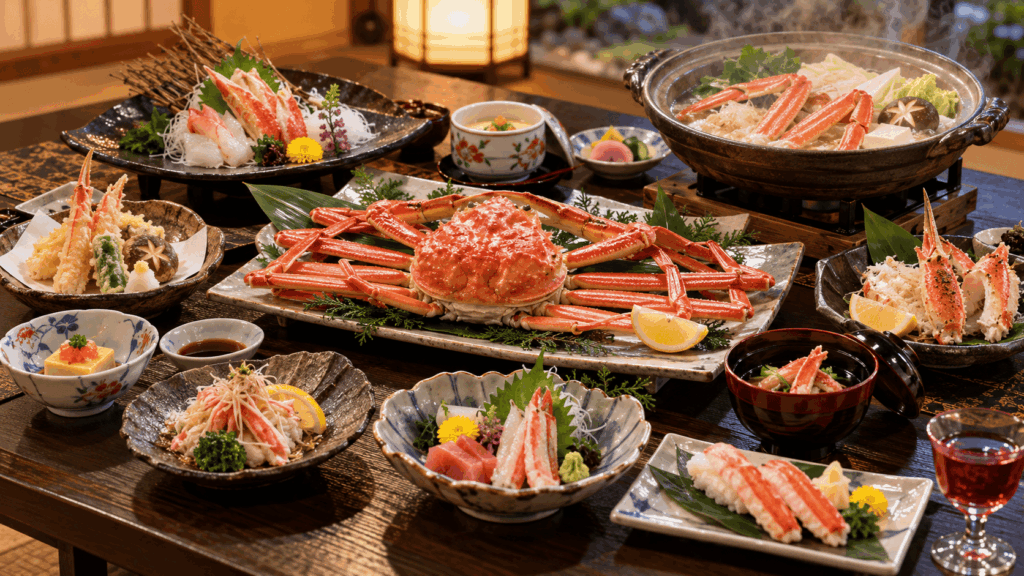
To show how much the wording varies, here are three real examples from ryokan winter plans advertised as of September 2026 (plans change each season, so treat these as illustrations of what to look for, not endorsements):
- Seri advertises a “Blue Tag Certified Live Matsuba Crab from Tsuiyama Port” plan—an example of a plan that names the port, the local guarantee tag, and the crab all in one line.
- Ryokan Sensui lists a plan with “one Matsuba crab with a local tag” per person, and separately a brand-tagged course at 1.5 crabs per person—an example of quantity being stated openly.
- Tsuchiya notes that its Sekogani dish is offered only until the end of December and states a dinner start around 18:00—an example of season limits and meal timing appearing in the fine print.
I can also tell you how a crab-heavy ryokan dinner actually plays out, from a stay at a Kinosaki property I will not name, because the specifics belong to that inn. A friend and I booked the room-service plan that combined crab with Tajima beef steak. The beef, grilled at the table on a hot iron plate, was the highlight for both of us, and the crab portion was generous—we finished the meal very full. Eating in the room made it easy to take our time cracking crab without worrying about anyone watching, which I now think is the strongest argument for room dining on a crab night. The one small negative was that the staff gave little explanation of what each dish was; if knowing each course matters to you, check reviews of the service style before booking.
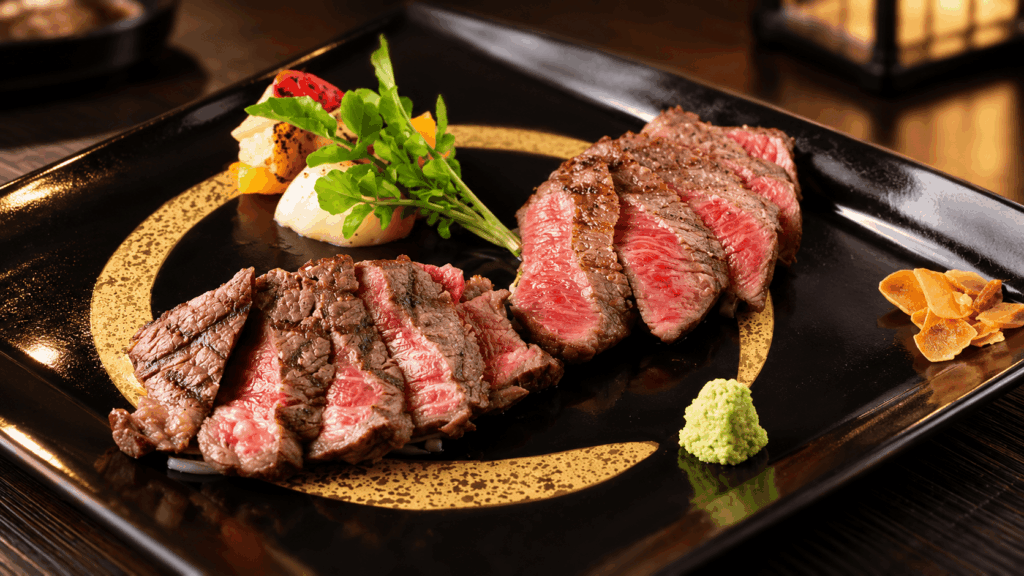
What that experience converts to, in practical booking terms:
- If it is your first Kinosaki stay and you want both local specialties, a crab-and-Tajima beef plan is a rational choice—you are not choosing between the region’s two famous foods.
- If you book a full crab course, ask how many crabs or dishes per person; some courses are designed to be shared, and quantity surprises are the most common post-booking complaint I see in reviews.
- If you like to eat slowly and quietly, prioritize room or private dining over a busy restaurant hall.
- If detailed dish explanations matter to you, check the meal service style in recent guest reviews, not just the menu photos.
Because December dates and meal inclusions differ by property, compare Kinosaki ryokan stays with winter crab dinner plans side by side, and check what the meal description actually includes before you book.
If you want a traditional Kinosaki stay where the ryokan itself is part of the winter experience rather than just somewhere to sleep, Nishimuraya Honkan is a useful property to compare against other December options.
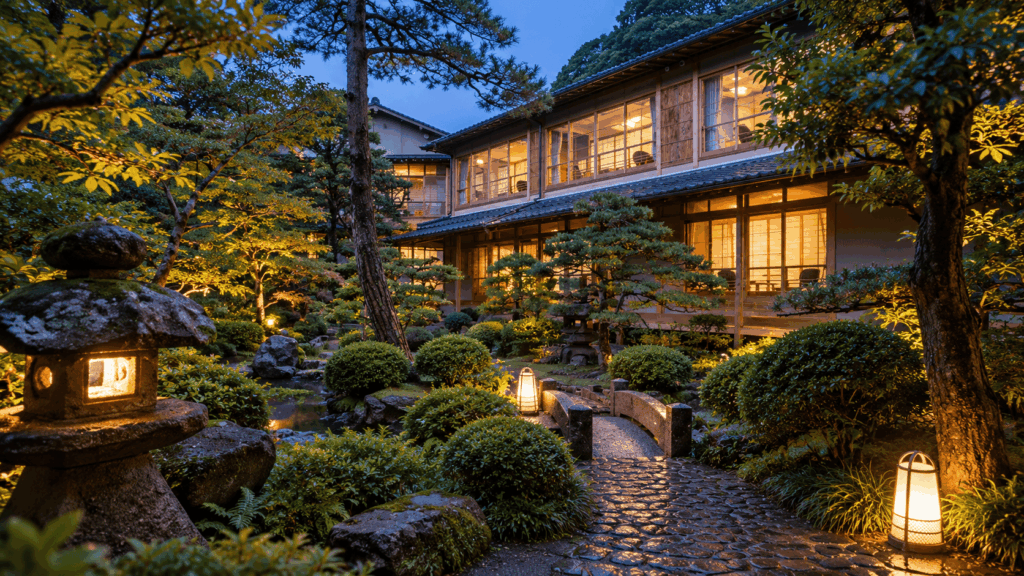
Why I’d book this one
- Recent travelers consistently highlight the attentive service and traditional ryokan atmosphere.
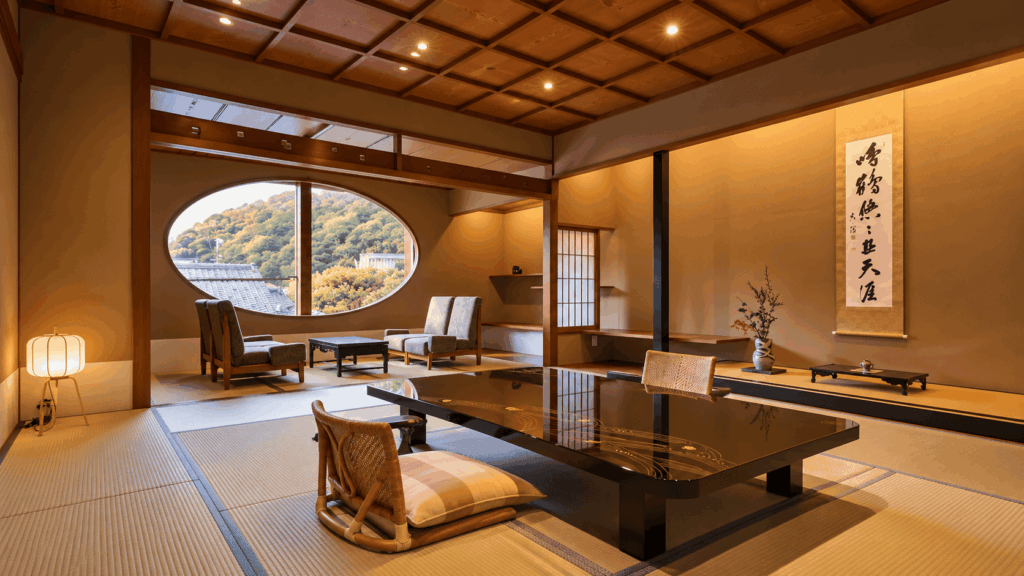
- The onsen experience and dining are recurring positives in guest feedback, including comments about unhurried in-room meals.
- The ryokan is known for winter Matsuba crab cuisine, but meal inclusions vary, so check the exact plan for your dates rather than assuming every room rate includes the same dinner.
What Is Onsen Hopping Like in Winter?
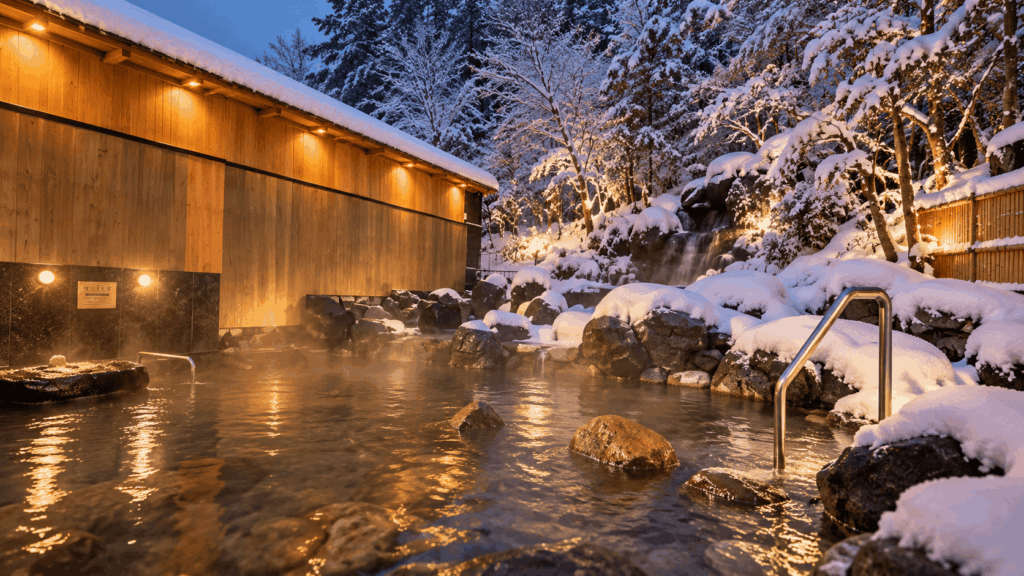
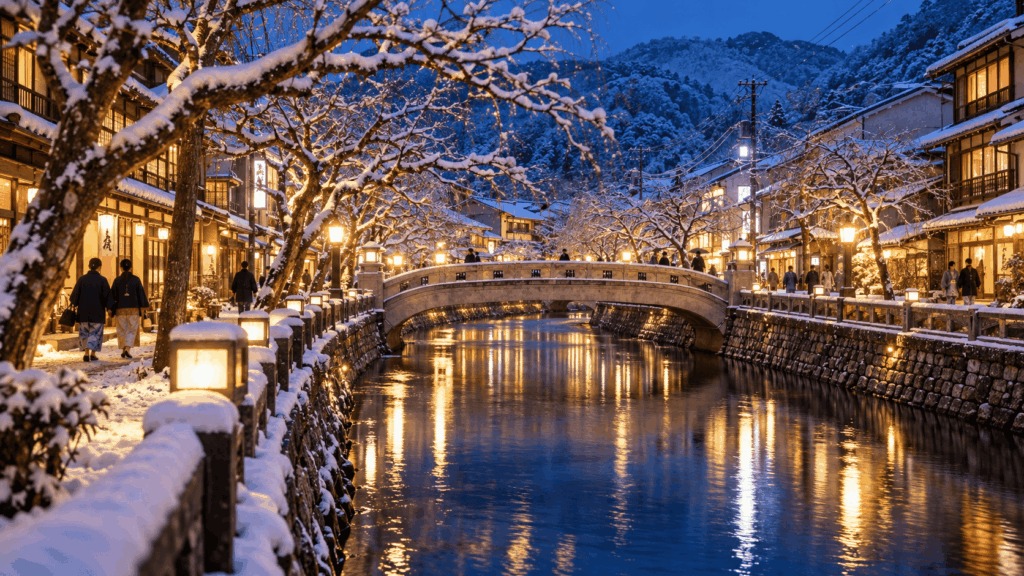
Kinosaki’s signature experience is walking between its public bathhouses—often in the yukata provided by your ryokan—rather than staying in one bath. In winter this becomes a pleasant rhythm of warm bath, cold street, warm bath. The distances are short, the streets are lantern-lit, and evening hopping after dinner is one of the most atmospheric things you can do in the town.
A few facts worth knowing before you go, based on the official visitor information (current as of September 2026 and subject to change):
- The town has seven public baths: Goshono-yu, Ichino-yu, Jizo-yu, Yanagi-yu, Mandara-yu, Kono-yu, and Satono-yu. Satono-yu has been closed indefinitely since April 2024 for renovation. Kono-yu is closed for renovation from May 11 through October 30, 2026 and is scheduled to be available again after that period; for a December trip, confirm the official listing before you go in case the reopening schedule changes.
- Hours differ by bath. Most open from 7:00 to 23:00, but Mandara-yu and Yanagi-yu open later, from 15:00 to 23:00. Each bath also closes one day a week (for example, Jizo-yu on Mondays and Goshono-yu on Thursdays). If you are only in town one night, check which baths are open on your date.
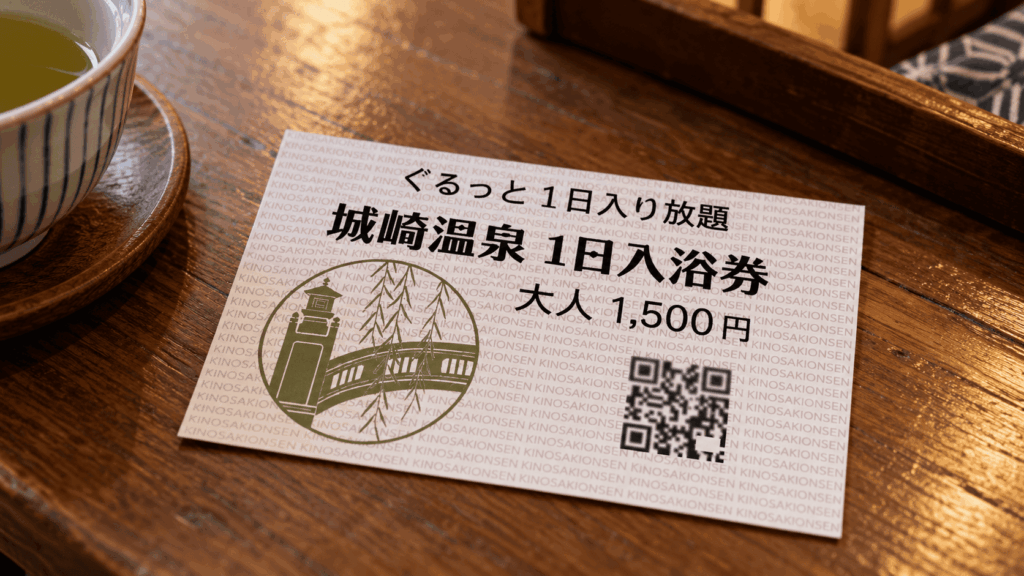
- Guests of most ryokan receive a free bath pass, valid from check-in until 13:00 on the checkout day. If you are not staying overnight, a one-day pass costs 1,500 yen for adults.
- All seven public baths accept guests with tattoos, unlike many private ryokan baths—but confirm your own ryokan’s policy for its in-house baths.
- Soap and shampoo are provided in the bathing areas; you only need to carry your pass and a towel. Note that public bathhouses and small shops in town tend to be cash-only, so keep some yen on you.
Kai’s tip: At the ryokan where I stayed, we borrowed a yukata basket from the lobby to carry towels and small items between baths, and colorful yukata with hair ornaments were available to rent. Not every property offers exactly this, so ask what your ryokan provides at check-in—it changes how you pack for the evening. One more thing: the open-air private bath at that property had no washing area, so we learned to do our shampooing at the main bath or a public bath first and use the private bath purely for soaking. Check whether yours has a shower before you strip down.
Recent visitor reports consistently describe the same winter surprise: wet pavement. Once snow starts to melt—or if it rains—the streets between baths become slick, and traditional wooden geta are not the safest option. The town is compact, so this is not a reason to skip the yukata stroll; it is a reason to watch your footing and have a practical pair of shoes for the walk to and from your ryokan.
What to Pack for Kinosaki Onsen in December
You do not need heavy expedition gear for a December stay—the daytime average is around 10.6°C (51°F)—but you do need to prepare for cold, wet conditions and possible snow. The practical list:
- A warm coat and layers you can remove quickly when going from the cold street into a hot bathhouse
- Waterproof or water-resistant shoes with decent grip (more useful than snow boots in December, when slush and rain are more common than deep powder)
- Warm socks and a compact umbrella
- Gloves and a scarf if you are sensitive to cold, especially for the evening yukata stroll
- Cash: public baths and many small shops do not take cards
Your ryokan provides yukata, towels, and bath amenities, and the public baths supply soap and shampoo, so you can leave heavy toiletries at home. If you plan to walk between baths in yukata after dinner, bring something warm to throw over it—December nights drop toward freezing even when the day was mild.
Train or Rental Car in December?
| JR limited express | Rental car | |
|---|---|---|
| Journey from Kyoto / Osaka | About 2.5 hours; JR Pass valid | About 2.5–3 hours by expressway, depending on traffic and weather |
| Arrival point | Kinosaki Onsen Station, at the edge of the hot spring town; free ryokan shuttle buses meet limited expresses (roughly 12:30–18:00) | Your ryokan’s parking, which you should confirm in advance |
| Winter risk | Heavy snow can delay services on the Sea of Japan side—check JR West’s real-time information on the day | Snow driving, winter tire requirements, and unfamiliar narrow roads |
| Best for | First-time visitors and anyone who wants to remove driving from the equation | Regional trips combining Kinosaki with Izushi, Takeno, or the Kannabe highlands |
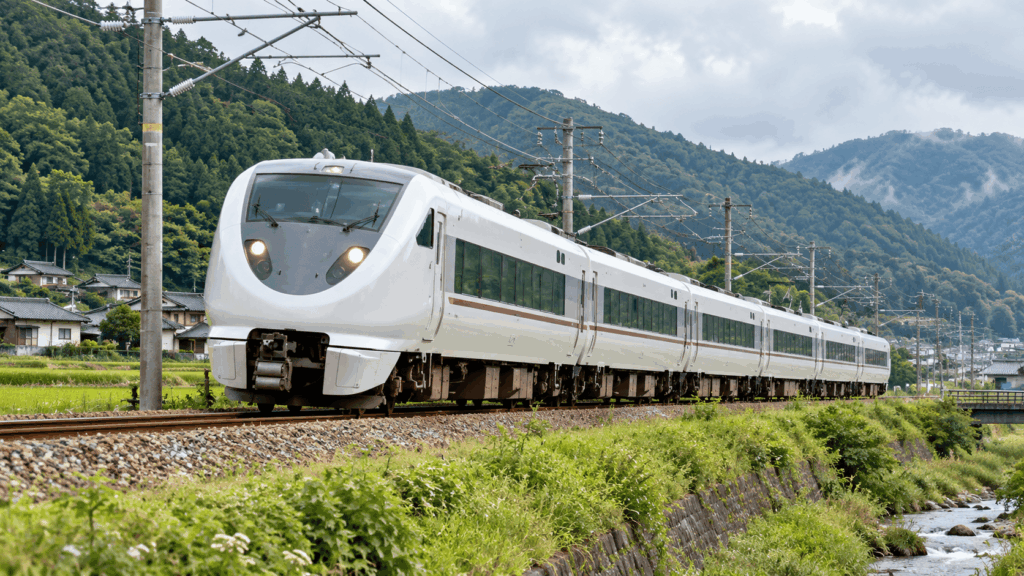
For a first winter visit, the train is usually the lower-stress choice: the station sits right at the edge of the compact town, the shuttle to ryokan is free, and you avoid snow driving entirely. A car earns its keep only if you are using it to explore the wider Tajima region, since the town itself is walkable. Note that even the train is not a guarantee in heavy snow—JR services on the Sea of Japan side can be disrupted in January and February—so check the live JR West status the morning you travel.
Kai’s tip: If you do drive, ask your ryokan about the parking access before you arrive. At the property I stayed at, the final approach into the parking area included a narrow section—perfectly fine in a compact car, but something to know if you are renting larger. Confirm winter tires with the rental company too, and remember that the station shuttle means arriving by train lets your ryokan handle the last stretch for you.
Visiting Kinosaki Onsen at Christmas or New Year
If your December dates fall over the holidays, the key reassurance is this: the public baths keep their regular schedules through Christmas and the New Year period, according to the official visitor information. The town does not shut down. What changes is more granular:
- Shops and restaurants set their own holiday hours, so check individual places rather than assuming a town-wide schedule.
- Ryokan New Year plans often run on special meal schedules and pricing, and many properties open bookings four to six months ahead—December holiday dates sell early.
- Travel peaks around December 29–31 and January 2–3 as domestic visitors move around Japan, which affects train reservations and prices.
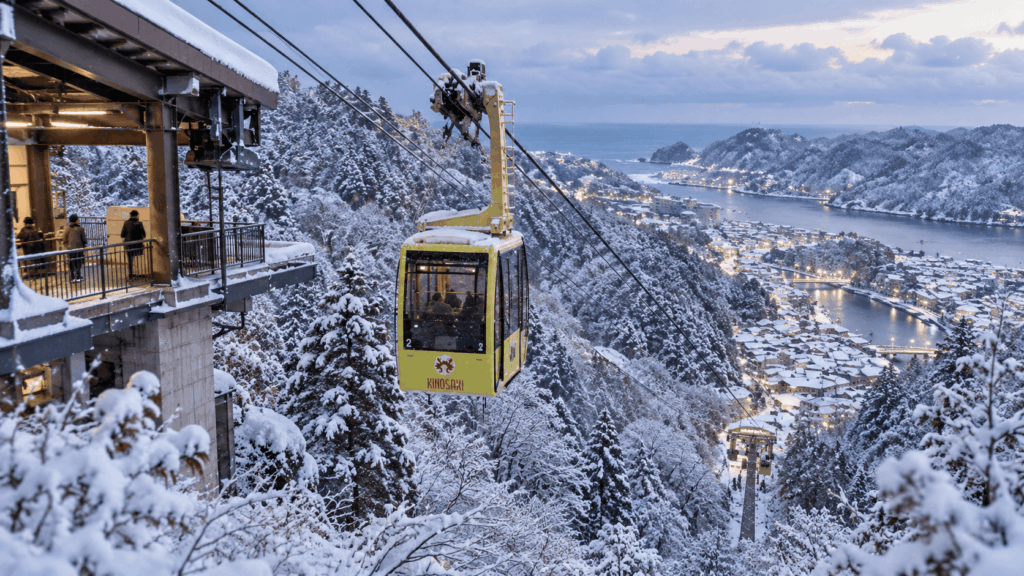
- The ropeway up Mount Daishi normally starts at 9:10, with the last uphill departure at 16:50, and closes on the second and fourth Thursday of each month (except public holidays). The official site states that it operates over the New Year period from December 29 to January 5; weather, inspections or repairs can still cause schedule changes.
If you are staying on December 31 or January 1, confirm your ryokan’s dinner time and meal plan directly—and whether anything you want to eat in town will be open, since New Year is when many small restaurants close for a day or two.
Is One Night Enough in Kinosaki Onsen in December?
For most first-time visitors adding Kinosaki to a wider Kansai trip, one night is enough—provided you arrive by early afternoon and leave late the next morning. The town is compact, the public baths are open into the evening, and a single night comfortably fits an afternoon bath, the ryokan crab dinner, and a morning soak. Two nights makes more sense if you want unhurried onsen hopping, a buffer against bad weather, or simply a relaxed ryokan stay rather than a checklist visit.
Kai’s tip: If you book a room-service crab dinner, do not fill the hours before it with three baths and a long walk. A crab course is a long, generous meal—ours ran well past what we expected and left us very full—so count backward from the dinner time and keep the late afternoon light: one bath, a short canal stroll, then dinner.
A Simple One-Night December Plan
Adjust the times to your ryokan’s check-in, dinner, and checkout—they vary by property:
- Early afternoon: Arrive at Kinosaki Onsen Station and take the ryokan shuttle or walk to your inn. Drop your luggage even if the room is not ready.
- Mid-afternoon: Visit one or two public baths and walk the canal before dark—the sun sets around 4:45 p.m. in December.
- Evening: Return for the crab dinner at your ryokan’s fixed time (commonly around 18:00).
- After dinner: Change into yukata and take the classic evening stroll; several baths are open until 23:00.
- Next morning: Breakfast, one more bath before the pass expires at 13:00, then check out around 10:00.
- Late morning: If the weather and schedule allow, ride the ropeway to Mount Daishi—the Onsenji Temple sits at the middle station—before catching your train. Check the ropeway’s weekly closing day first.
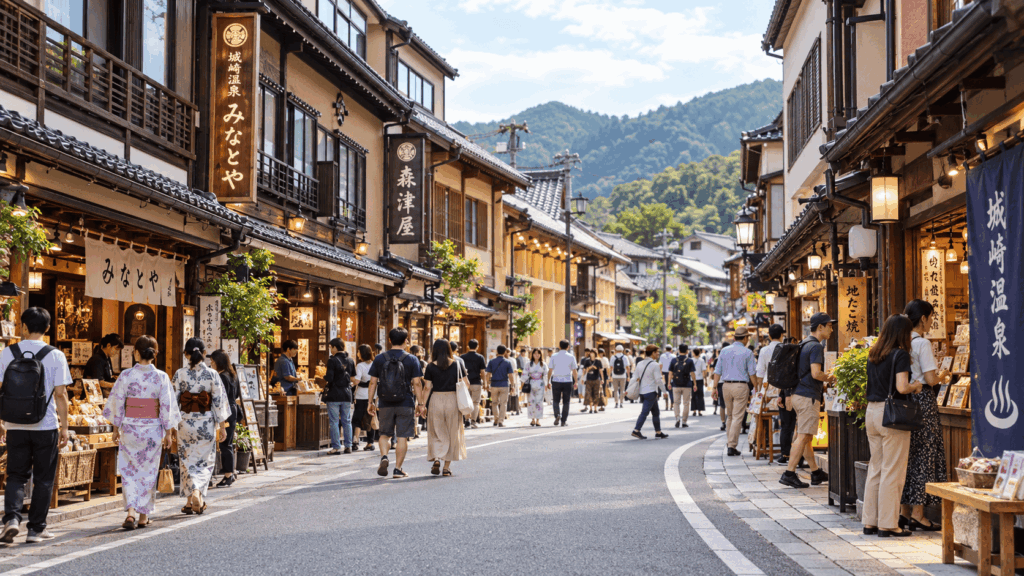
If you prefer two nights, use the second day for slower bath hopping and a wider wander around town—and remember that heavy snow, however beautiful, is easier to enjoy when you are not racing a checkout time.
FAQ
Does it snow in Kinosaki Onsen in December?
It can, but December is not the month to count on snow. Visit Kinosaki’s climate data puts December’s average snowfall at 44 cm for the whole month, compared with 126 cm in January and 113 cm in February, and the official tourism office says the timing of winter snow is difficult to predict. December snow in this region tends to fall and melt quickly. Book December for crab and onsen, and treat any snowfall as a bonus.
Is December crab season in Kinosaki Onsen?
Yes—December is peak crab season, and it is the one month when both sides of the winter catch overlap. Male snow crab (Matsuba crab) is in season from early November through March, while female snow crab (Sekogani) is typically available only until around the end of December. Ryokan crab dinners run through the winter months, so a December stay gets you the fullest crab picture of the season.
What is the difference between Matsuba crab and snow crab?
There is no species difference. “Snow crab” is the English name for zuwai-gani, and “Matsuba crab” is the local name used in the San’in region for the male snow crab landed around Kinosaki and Tsuiyama. When a ryokan plan names Matsuba crab, it is being specific about what you are getting; a plan that says only “snow crab” usually means the same species, but check the details.
Can you eat Sekogani in January?
In most years, no—at least not as fresh-season Sekogani. The female snow crab fishery closes around the end of December to protect the stock, which is why ryokan winter plans often note that Sekogani dishes are offered only until the end of December. Male Matsuba crab remains in season through the winter. If trying Sekogani is one of your goals, book a December date rather than a January one.
Is December or January better for Kinosaki Onsen?
It depends on what you are optimizing for. December is better for crab variety, because it is the last month for fresh-season Sekogani, and it comes with milder cold and a shorter risk of heavy-snow travel disruption. January is better if you are chasing a snow-covered town: its average snowfall (126 cm) is nearly three times December’s (44 cm), and male Matsuba crab is still fully in season. Choose the month by your priority—crab first, or snow first.
So, Should You Visit Kinosaki Onsen in December?
If you came here for one decision, here it is: book December when crab leads your trip, and shift to January or February when a snow-covered town leads it. Everything else—which ryokan, how many nights, train or car—follows from that choice.
Choose December if: Matsuba crab and a chance to try Sekogani are major reasons for the trip; you want a winter onsen atmosphere without requiring deep snow; or you would rather avoid the deeper cold and the higher snow-disruption risk of January and February.
Choose January or February instead if: the willow-lined canal under fresh snow is the image you are chasing; you are comfortable giving up the December-only Sekogani window; or you specifically want the deepest winter atmosphere the town can offer.
Choose another season if: you want to avoid cold-weather packing and any chance of snow-related travel disruption, or crab plays no part in your interest in Kinosaki—the town is lovely in other seasons, and its famous baths work year-round.
For first-time visitors on a Kansai itinerary: one December night works well if you arrive by early afternoon and stay for the ryokan dinner; the train from Kyoto or Osaka takes about 2.5 hours, and the station sits at the edge of the hot spring town. Book your ryokan early—many open reservations four to six months ahead, and December fills quickly.
For travelers who eat with intention: this is where December genuinely earns its reputation. If meals are the center of your stay—as a crab and Tajima beef dinner eaten in your room was for me—then the winter crab season, not the snow forecast, is what guarantees the experience you are paying for. I cannot promise you snow in December. I can tell you that a long, generous crab dinner at a good ryokan is the kind of evening that defines a Kinosaki visit in any winter month.
For repeat visitors and snow lovers: give yourself two nights in January or February, when the odds of a white town are highest, and use the buffer to enjoy the baths at a slower pace if snow does disrupt a train.
Once you know your dates, compare winter ryokan stays with crab dinner plans for your December dates, and check the meal details—the crab name, the tag, the quantity, and where you will eat it—before you commit.
Weather averages, bath schedules, crab plan contents, and prices all change from season to season. Figures in this article were checked against official sources in September 2026; confirm the details for your travel dates before booking.

Hi, I’m Kai. I’m a Tokyo-based travel writer, tourism industry insider, and the author of a published guidebook for international visitors to Japan. With over 10 years of professional experience at a leading Japanese tourism company, my mission is to help you skip the tourist traps and navigate Japan’s best destinations like a local. I believe the perfect day trip is like a traditional kaiseki meal: a beautiful balance of precise planning and unforgettable seasonal discovery. When I’m not out conducting field research, you’ll usually find me drafting new itineraries with one of my favorite fountain pens!