
Best Onsen in Kinosaki: All 7 Public Baths Ranked for First-Time Visitors
Kinosaki Onsen is famous for its seven public bathhouses, the soto-yu — but the best one for you depends on what you want from a soak, and two of the seven are not even open right now. As of September 2026, five of the seven baths are operating, so checking the current closures before you plan a route matters more than any ranking.
For most first-time visitors, Goshono-Yu is the best overall public bath in Kinosaki. Its open-air pool and waterfall create the most memorable single bathing experience in town. That said, “best” shifts with your tastes: Ichino-Yu wins if you want a cave-like bath, Yanagi-Yu is the pick for people who love water hot enough to make you gasp, and Jizo-Yu suits families. And despite the famous “seven baths” number, I would not try to complete them all on a one-night stay — two to four baths chosen for different experiences will serve you better.
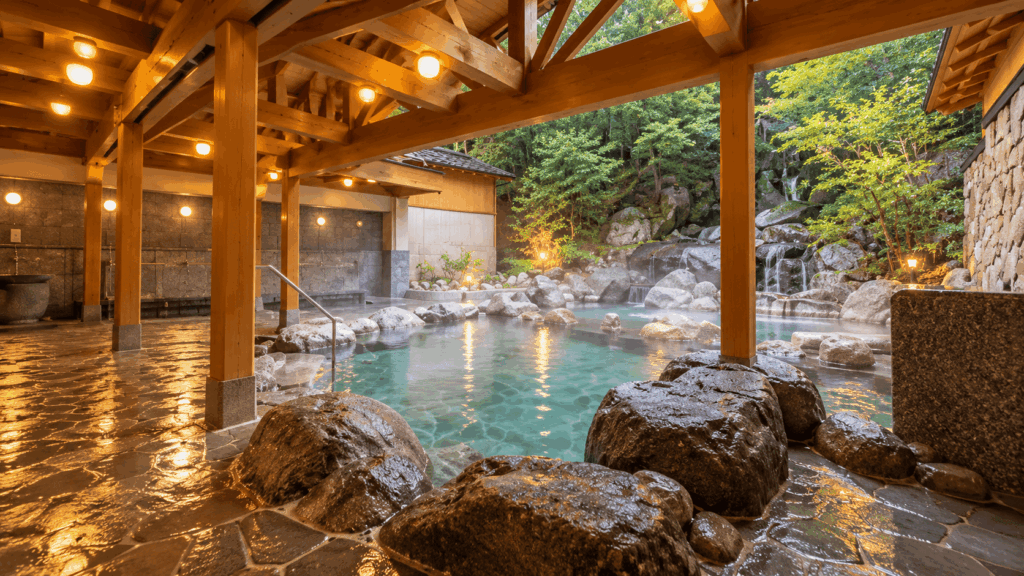
If you want to spread your baths across the evening and the next morning instead of squeezing them into a day trip, check current room availability, stay options, and recent guest reviews for Nishimuraya Hotel Shogetsutei.
Which Kinosaki Onsen Is Best? My Short Answer
If you only visit one public bath in Kinosaki, make it Goshono-Yu. The setting is the reason: you soak in an open-air pool surrounded by trees while a waterfall crashes close by, which feels a world away from the standard indoor bathhouse. On my visit, that view was the single strongest bathing memory of the town.
But Goshono-Yu is not automatically the right choice for everyone:
- Ichino-Yu is the better pick if you want a genuinely unusual bath — its cave built from natural boulders feels more like exploring than bathing.
- Yanagi-Yu is the one to add if you like your onsen seriously hot. If you do not, skip it.
- Jizo-Yu is the most family-friendly of the seven, with a separate lukewarm children’s bath.
- Mandara-Yu offers a smaller, more traditional stop with outdoor ceramic tubs.
The practical point behind the ranking: all seven baths use Kinosaki’s centrally managed natural hot spring water, so the differences between them are atmosphere, layout and temperature rather than water quality. Chasing all seven means changing clothes and walking between baths seven times. On a typical one-night visit you get much more value from picking baths whose experiences do not overlap.
If you want to enjoy two or three public baths without rushing, staying overnight in Kinosaki makes the experience much easier — most inns give guests a pass to the public baths, and you can spread your soaks across the evening, night and the next morning.
Kinosaki’s Public Baths at a Glance
The table below summarizes all seven baths as of September 2026. Use it as a 30-second filter: find the baths that are open on your day, then read the individual reviews below for the detail.
| Public bath | Best for | Main feature | Typical hours | Weekly closed day | Current status (Sep 2026) | My priority |
|---|---|---|---|---|---|---|
| Goshono-Yu | First-time visitors; overall experience | Open-air bath with waterfall | 7:00–23:00 | Thursday | Open | 1 |
| Ichino-Yu | Unique cave bath | Cave of natural boulders | 7:00–23:00 | Wednesday | Open | 2 |
| Yanagi-Yu | Lovers of very hot water | Smallest bath; cypress tub | 15:00–23:00 | Thursday | Open | 3 |
| Jizo-Yu | Families; a simple soak | Separate children’s bath | 7:00–23:00 | Monday | Open | 4 |
| Mandara-Yu | A smaller, traditional stop | Two outdoor ceramic baths | 15:00–23:00 | Wednesday | Open | 5 |
| Kono-Yu | — (closed) | Outdoor bath | 7:00–23:00 when open | Tuesday when open | Closed for renovation until 30 Oct 2026 | — |
| Satono-Yu | — (closed) | Closest bath to the station | — | — | Closed for renovation; no reopening date announced | — |
Entry to each open bath costs ¥800 for adults and ¥400 for children (about 12 and under). Hours, closed days and fees are checked against the official Visit Kinosaki site as of September 2026 and can change — confirm before you go.
Which Kinosaki Onsen Should You Choose?
If you would rather skip the rankings and match a bath to your situation, use this table:
| Your priority | Best pick | Why |
|---|---|---|
| Best overall | Goshono-Yu | Open-air pool and waterfall give the most distinctive single experience. |
| Best cave bath | Ichino-Yu | A boulder-built cave with soft lighting — unlike any other bath in town. |
| Best for very hot baths | Yanagi-Yu | Regularly described as noticeably hotter than the others. |
| Best for families | Jizo-Yu | Has a separate lukewarm children’s bath. |
| Best for a more traditional stop | Mandara-Yu | A bath tied to Kinosaki’s founding legend, with small outdoor ceramic tubs. |
| Only have time for one bath | Goshono-Yu | The one bath that captures what makes Kinosaki different. |
| Best two-bath combination | Goshono-Yu + Ichino-Yu | An open-air highlight plus an indoor cave experience; the two do not repeat each other. |
| Best three-bath combination | Goshono-Yu + Ichino-Yu + one more | Add Yanagi-Yu if you love hot water; otherwise choose Jizo-Yu or Mandara-Yu. |
Kinosaki’s 7 Public Baths Ranked
One honest note before the ranking: as of September 2026, only five of Kinosaki’s seven public baths are actually open. Kono-Yu is closed for renovation until late October 2026, and Satono-Yu has been closed since April 2024 with no confirmed reopening date. Rather than force a 1–7 order that would recommend baths you cannot enter, I have ranked the five operating baths below, then covered the two closed ones separately so you do not accidentally plan a route around them.
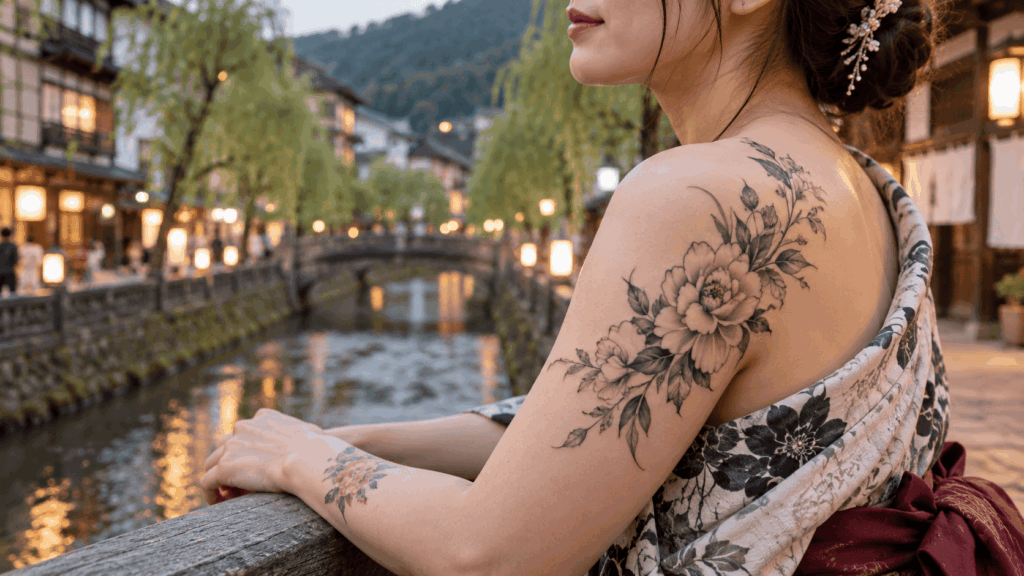
A useful Kinosaki detail for international visitors: all seven public bathhouses are tattoo-friendly, which is still rare in Japan. Each bath is separated by gender, and soap, shampoo and conditioner are provided in the washing area — you only need to bring a small towel.
1. Goshono-Yu — Best Overall for First-Time Visitors
The short version: if you only soak once in Kinosaki, make it here.
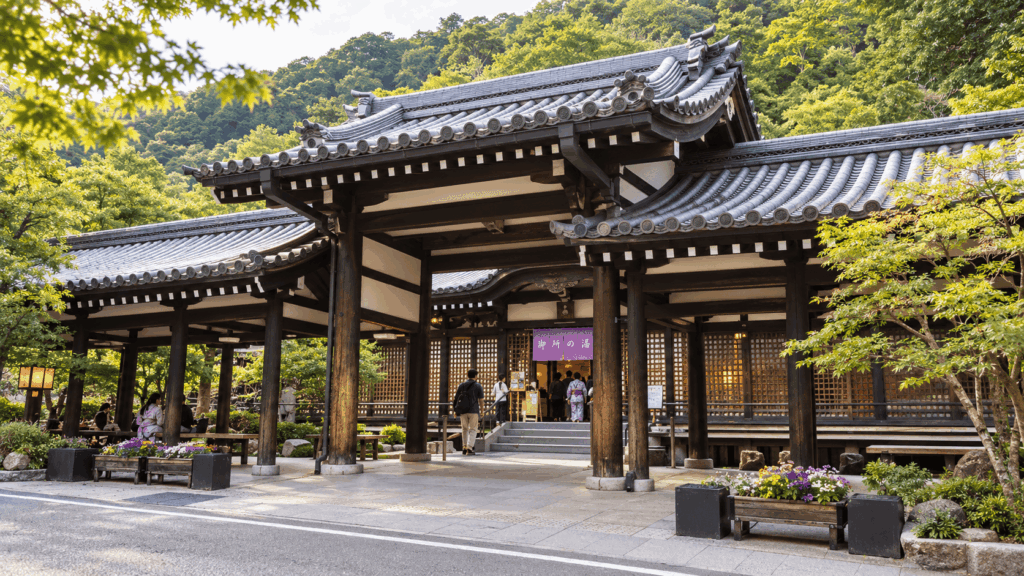
Goshono-Yu, nicknamed the “Water of Beauty,” is the bath most travelers describe as their favorite, and the reason is easy to see: the outdoor pool sits among trees with a waterfall just behind it. The building itself was designed in the style of Kyoto’s Imperial Palace, with painted ceiling panels in the lounge, but the open-air water is the main event. On my visit I found the temperature comfortable enough to stay in for a long soak while watching the waterfall — the kind of quiet moment that defines a Kinosaki evening.
Plan around: 7:00–23:00, closed Thursdays, ¥800 adults / ¥400 children. The bath’s popularity is its only real weakness: on a busy weekend evening the changing room gets crowded, and I spent a few extra minutes hunting for a free locker. Timing matters more than the bath itself — more on that below.
Skip if: you are set on an indoor-only soak (the appeal here is the outdoor setting) or you are visiting on a Thursday.
2. Ichino-Yu — Best for the Cave Bath Experience
The short version: the strongest “second bath” in town, and the one to choose if you want something visually and atmospherically unusual.
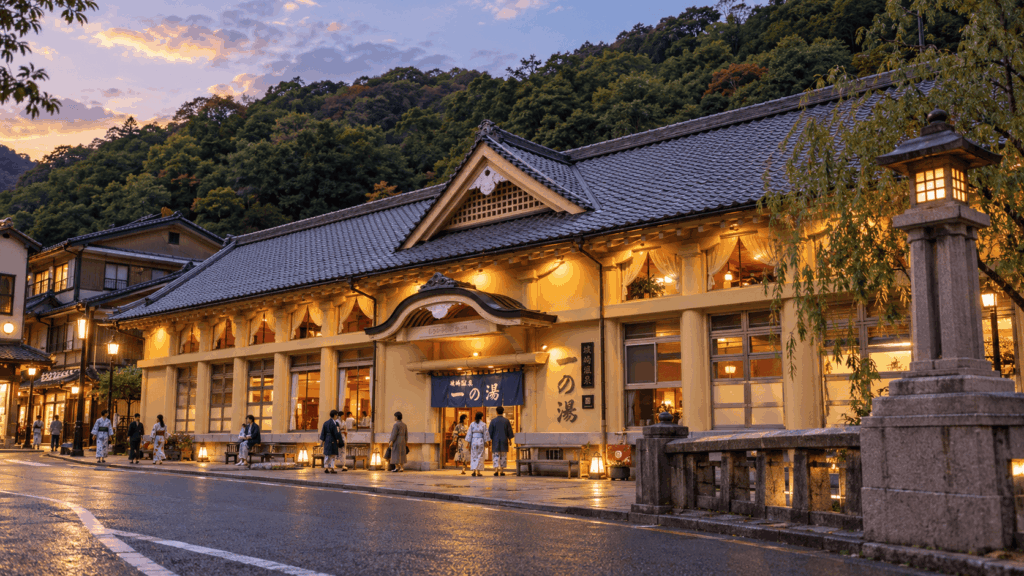
Ichino-Yu’s facade resembles a kabuki theater and has become a photo-worthy landmark on the canal. Inside, the standout is a cave built from natural boulders, lit softly enough to feel calm rather than dramatic. Compared with a conventional indoor bath, it gave me a slight sense of discovery — you are soaking inside a rock grotto, not a tiled room.
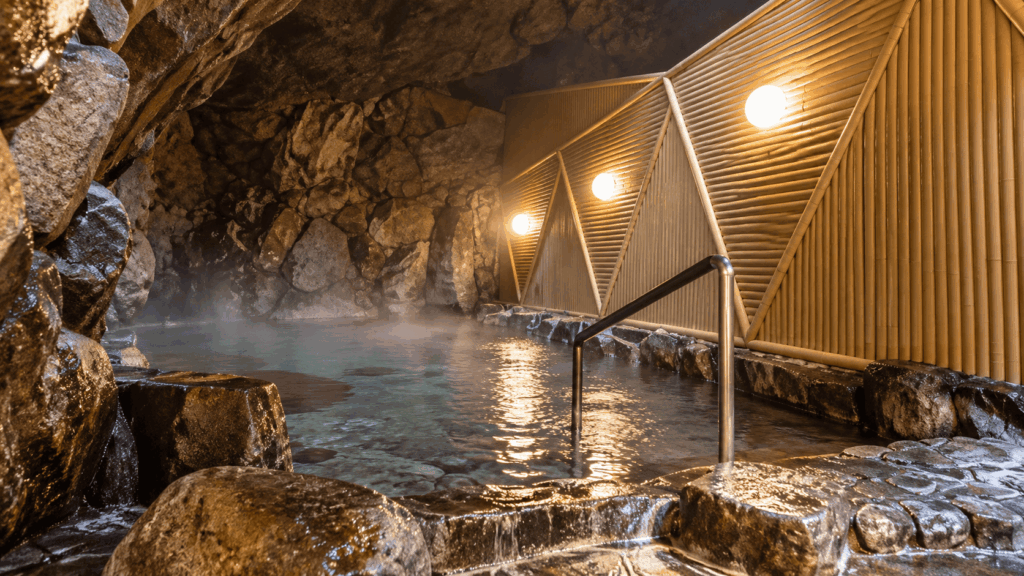
Plan around: 7:00–23:00, closed Wednesdays, ¥800 adults / ¥400 children. It opens early, which makes it a good morning option, and it pairs naturally with Goshono-Yu for a two-bath evening.
Skip if: you prefer bright, simple bathhouses or you are visiting on a Wednesday.
3. Yanagi-Yu — Best for Lovers of a Very Hot Bath
The short version: the smallest of the seven baths, and the one where hot-water lovers will feel most at home.
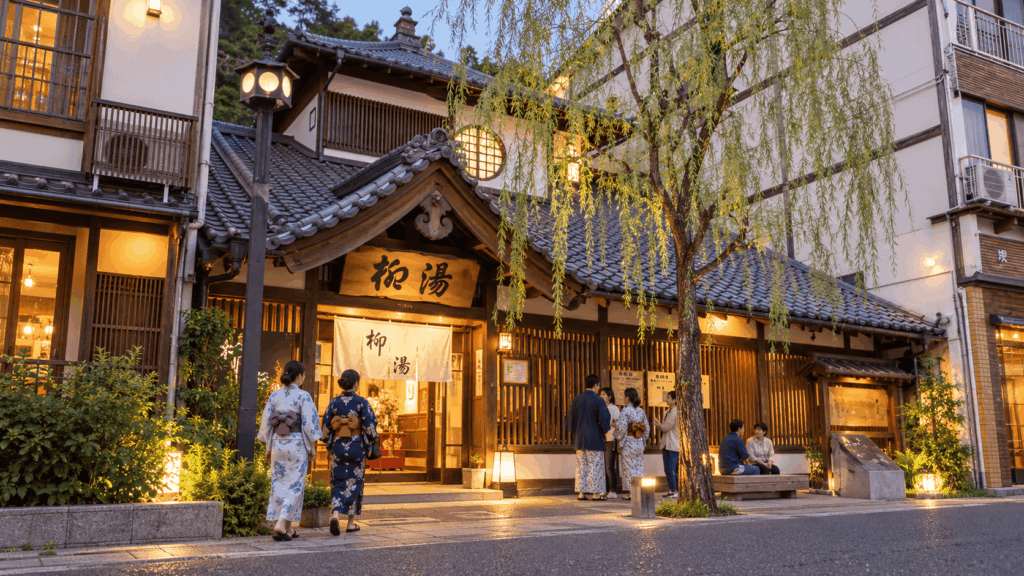
Yanagi-Yu (“willow bath”) is a cozy wooden bathhouse with a cypress tub, named after the willow-lined street nearby. What travelers consistently mention — and what I felt on my recent visit — is the heat. I lowered myself in intending to soak up to the shoulders and could not stay that deep for long; it was noticeably hotter than the other baths I tried that day. The official listing puts all seven baths at around 42°C, so treat this as how the water is experienced rather than an official temperature record. If you enjoy a sharp, bracing soak, Yanagi-Yu will reward you.
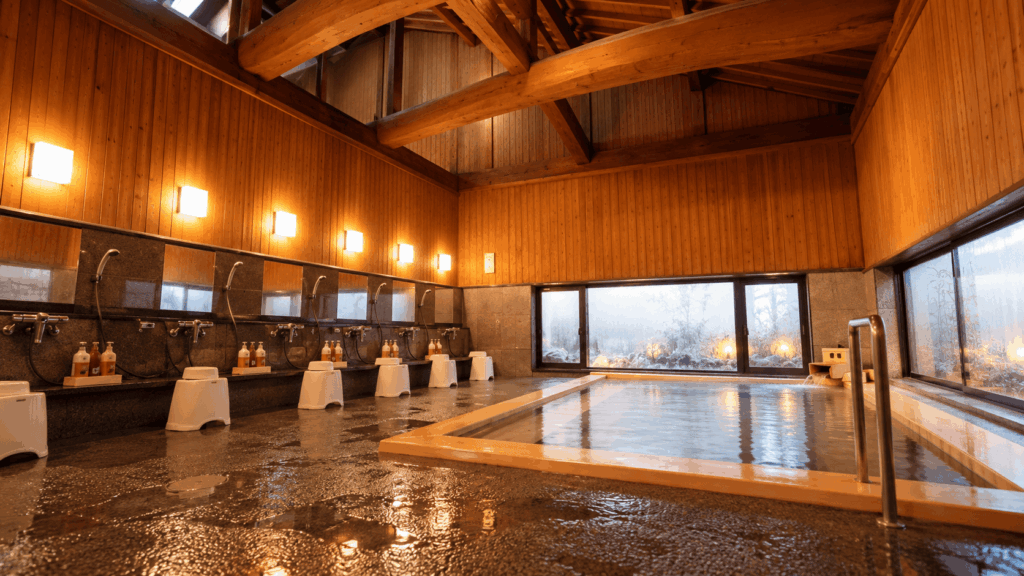
Plan around: this bath does not open until 15:00 and closes at 23:00, closed Thursdays, ¥800 adults / ¥400 children. Because of the heat, I would put it late in your route — or leave it out entirely if you know you are sensitive to hot water.
Skip if: you dislike very hot baths. This is the one skip decision most first-time visitors should make honestly.
4. Jizo-Yu — Best for Families or a Simpler Soak
The short version: the least flashy of the open baths, and the most practical for children.
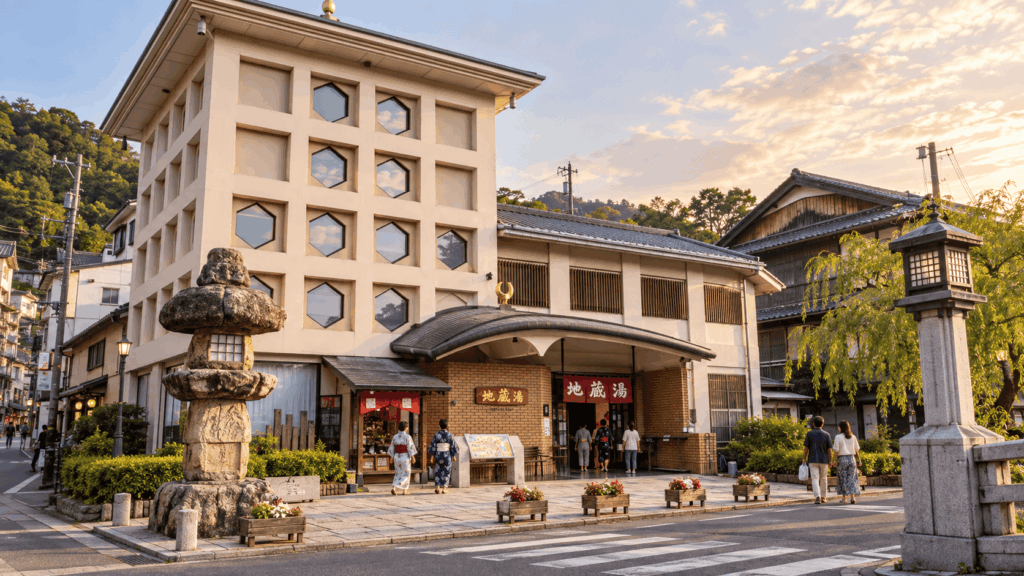
Jizo-Yu is a retro-style bathhouse that remains a genuine local favorite — the kind of place neighborhood families use before bed. The building takes its design from a Japanese lantern, and next to the main bath there is a smaller, lukewarm pool made for children. It does not have the drama of Goshono-Yu or the novelty of Ichino-Yu, but it is clean, welcoming and easy.
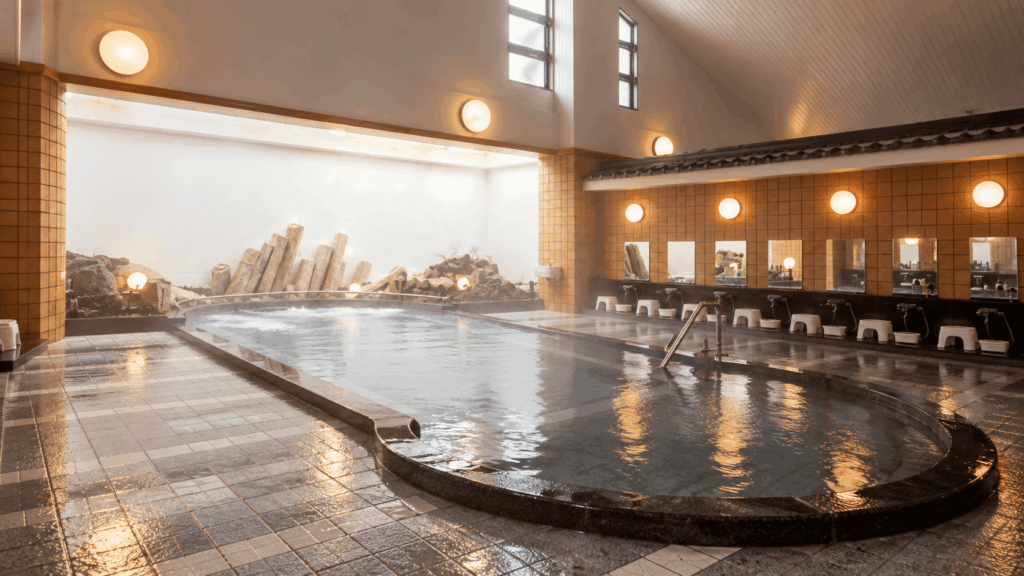
Plan around: 7:00–23:00, closed Mondays, ¥800 adults / ¥400 children. Early opening makes it a sensible morning soak before checkout.
Skip if: you want a visually striking bath rather than a simple, functional one.
5. Mandara-Yu — Best for a Smaller, Traditional Stop
The short version: a bath closely tied to Kinosaki’s founding story, with a quieter, more traditional character.
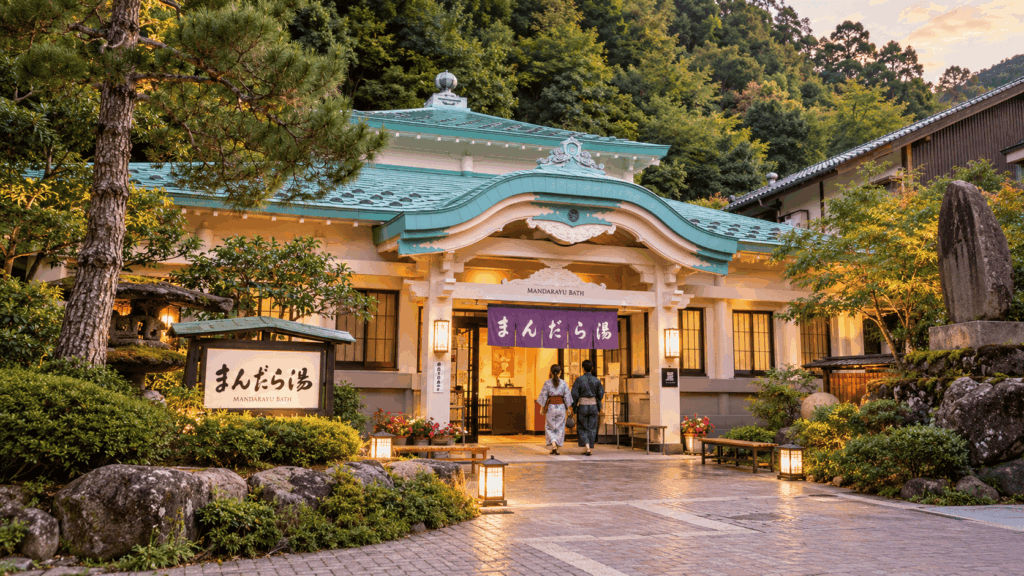
Mandara-Yu is closely tied to Kinosaki’s founding story — local legend traces the spring to a monk who prayed here for a thousand days — and the bathhouse keeps that old-town feel. Its defining feature is a pair of small ceramic tubs outdoors with a view toward the mountains. It is compact, so it works well as a shorter stop rather than a long evening soak.
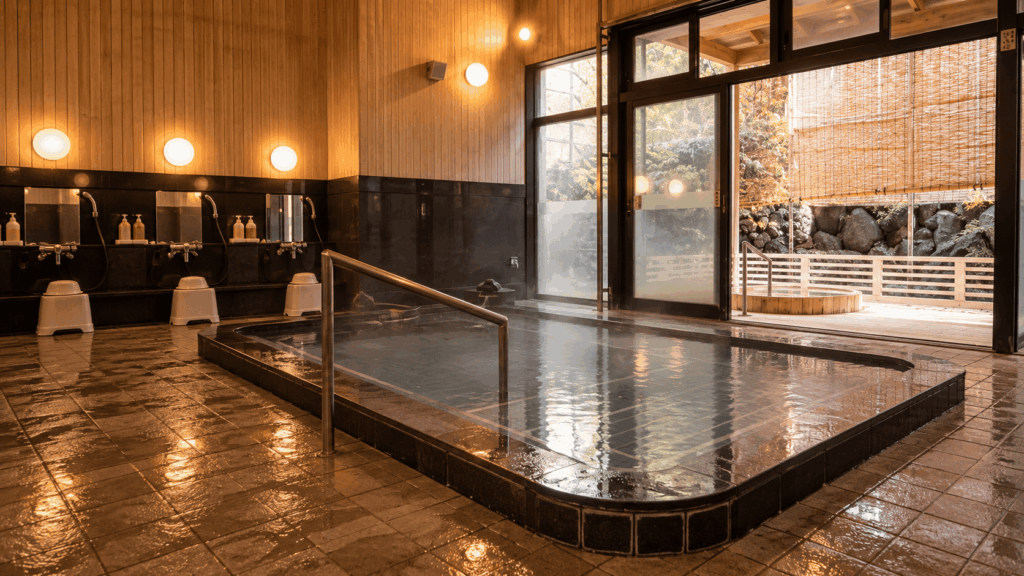
Plan around: 15:00–23:00, closed Wednesdays, ¥800 adults / ¥400 children. Because it opens in the afternoon, save it for after dinner or as a late-day addition rather than a morning bath.
Skip if: you only have time for two baths — Goshono-Yu and Ichino-Yu cover more ground.
Kono-Yu — Closed for Renovation Until Late October 2026
Kono-Yu is one of the baths with an outdoor pool and, in normal years, a strong contender for any shortlist. Right now it does not matter: it is closed for renovation from 11 May 2026 to 30 October 2026, covering the summer and autumn foliage seasons. If your trip falls inside that window, do not build your route around it. If you are traveling after reopening, its usual schedule is 7:00–23:00 with Tuesdays off — worth confirming on the official site before you rely on it.
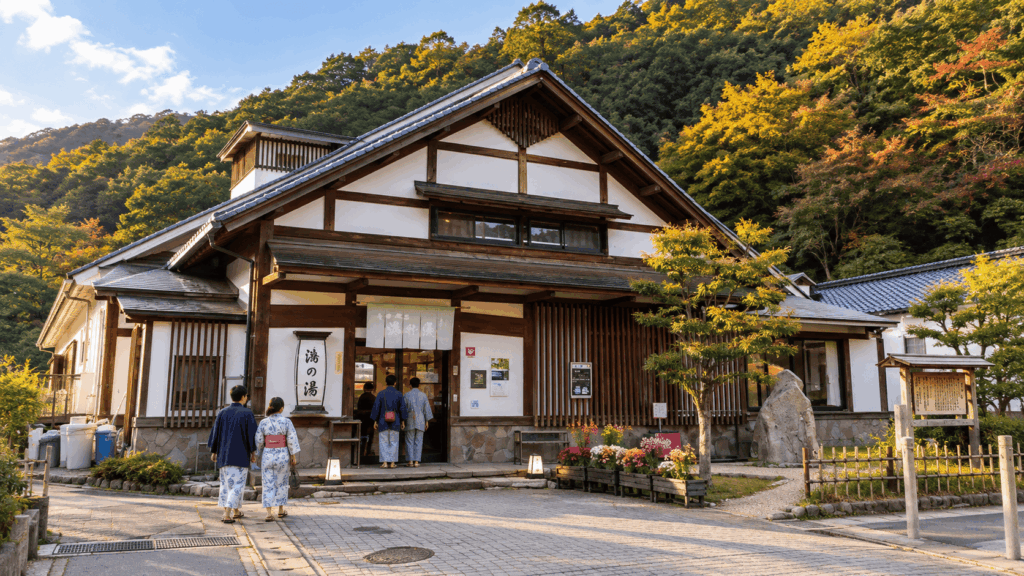
Satono-Yu — Currently Closed, So Don’t Plan Around It
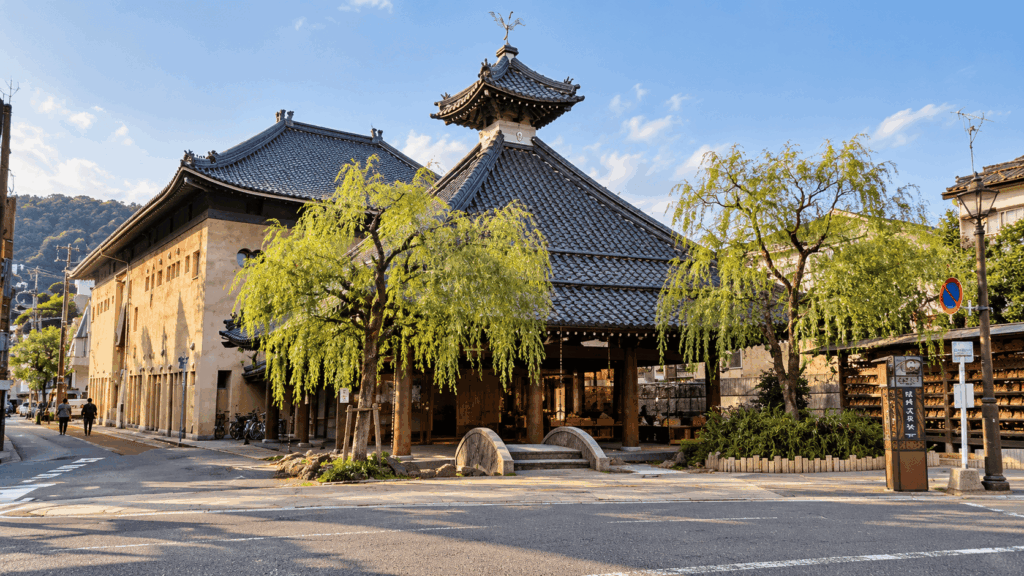
Satono-Yu is the bath closest to Kinosaki Onsen Station, which makes it an easy first or last stop in normal times. However, it has been closed for renovation since 1 April 2024 with no reopening date announced. Many older guides and map pins still list it as an active option, so if you see Satono-Yu recommended as a “convenient stop near the station,” check the date of the information — as of September 2026, you cannot enter it.
Do You Need to Visit All 7 Kinosaki Onsen?
No — and for most first-time visitors, trying to is a mistake. All seven baths use Kinosaki’s centrally managed natural hot spring water, so you are not collecting seven distinct spring sources; you are collecting different rooms, views and temperatures. Once you have felt the open-air drama of Goshono-Yu and the cave atmosphere of Ichino-Yu, the remaining baths add comfort and variety rather than totally new experiences.
The real cost of “completion” is practical: every bath means undressing, washing, soaking, drying and walking to the next one in yukata. Do that seven times in a day and you spend more time changing clothes than relaxing. When I guided overseas guests through the town, we walked the canal before dinner and chose baths by what was open and what looked different from the last one — not by chasing a full set. That is the approach I would repeat with any first-time visitor.
Realistic targets for a one-night stay:
- One bath: Goshono-Yu.
- Two baths: Goshono-Yu + Ichino-Yu.
- Three baths: Goshono-Yu + Ichino-Yu + one more. Add Yanagi-Yu if you love hot water; otherwise choose Jizo-Yu (family-friendly) or Mandara-Yu (small and traditional).
- Four baths: possible if you spread them across time slots — two before dinner, one after dinner, one the next morning — rather than trying to fit them all into one evening.
Spreading baths across an evening and the next morning is far easier when you are staying overnight in Kinosaki than when you are visiting for the day.
Kinosaki Onsen Pass: Do You Need Yumepa?
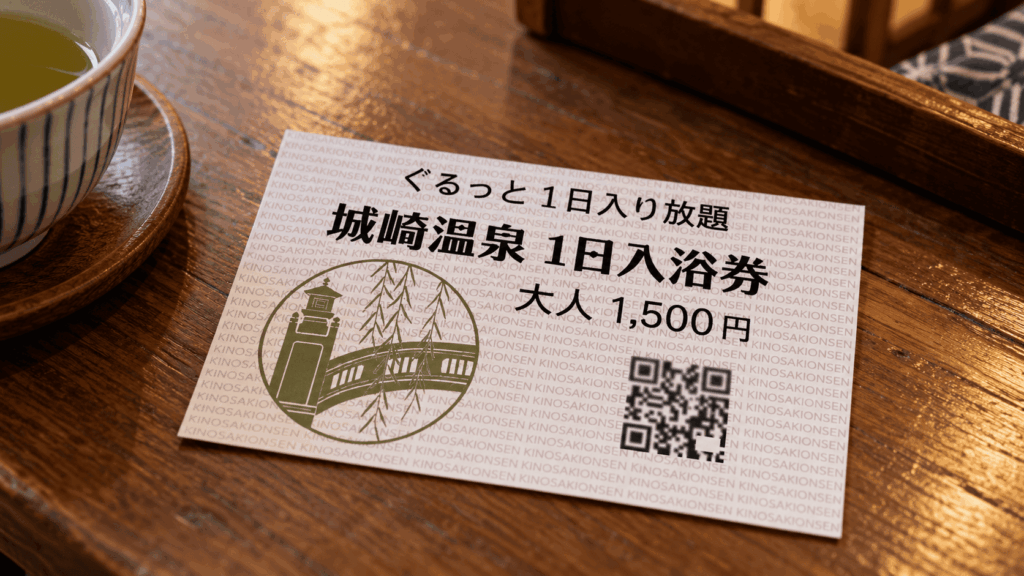
Kinosaki’s day pass is called Yumepa. At current pricing it costs ¥1,500 for adults and ¥750 for children (middle-school age and under), and you can buy it at the reception counter of any open public bathhouse. A single entry costs ¥800 per bath, so the pass pays for itself once you visit two baths — which is the minimum most people should plan for anyway.
For day visitors, the calculation is simple:
- One bath only: skip the pass, pay ¥800.
- Two or more baths: buy Yumepa (¥1,500) rather than two single tickets (¥1,600).
For overnight guests, check your inn before buying anything. Most ryokan in Kinosaki give guests a free public-bath pass at check-in, typically valid from check-in until 13:00 on the day you check out. It scans at the entrance of every open bath, so you can come and go freely during your stay. I have used the inn-provided pass when guiding guests, and it is the easiest system in town — but policies vary by property, so confirm with your accommodation instead of assuming.
If you are planning to stay overnight in Kinosaki, compare ryokan options before buying a separate day pass — most inns include access to the public baths.
Kinosaki Onsen Closed Days: Check This Before You Choose Your Order
Every Kinosaki public bath closes one day a week, on a rotating schedule, and the two closed-for-renovation baths do not follow it. This is the detail that quietly ruins onsen-hopping plans: a guide may tell you to start at Goshono-Yu, but if you arrive on a Thursday, it is shut.
Current schedule (as of September 2026):
- Monday: Jizo-Yu closed.
- Tuesday: Kono-Yu would normally be closed — but Kono-Yu is closed for renovation until late October 2026 anyway.
- Wednesday: Ichino-Yu and Mandara-Yu closed.
- Thursday: Goshono-Yu and Yanagi-Yu closed.
- Friday–Sunday: all currently operating baths open.
Notice what that means in practice: on a Wednesday you lose two afternoon/evening options at once, and on a Thursday you lose both the town’s most famous bath and its hottest one. If your visit lands on those days, your shortlist and route change completely — which is exactly why the schedule should come before any “best order” advice.
Kai’s tip: The mistake I see first-time visitors make is choosing baths first and checking the calendar later. In Kinosaki, do it in reverse: note which baths are closed on your arrival day, then sketch a rough order around what is actually open. It takes two minutes and it is the difference between a relaxed evening of soaks and a disappointed walk to a locked door.
What Is the Best Order for Kinosaki Onsen Hopping?
There is no single best order — and any article that gives you one fixed route is ignoring the weekly schedule. The right order depends on the day you arrive, the time your inn serves dinner, and how you handle heat. These principles have served me better than any fixed route:
- Remove closed baths first. Use the schedule above for your arrival day.
- Note which baths open at 15:00. Yanagi-Yu and Mandara-Yu do not open until the afternoon, so they cannot be morning stops. Goshono-Yu, Ichino-Yu and Jizo-Yu open at 7:00.
- Put popular baths outside the busiest window. Goshono-Yu draws the biggest crowds in the evening, so consider it earlier in the afternoon or the next morning.
- Keep Yanagi-Yu late — or drop it. If you are heat-sensitive, do not start your evening with the hottest bath in town.
- Work backwards from dinner. Most ryokan serve dinner around 18:00–19:00, which naturally splits your evening into a before-dinner and after-dinner window.
- Save one bath for the morning. Your inn pass usually works until 13:00 on checkout day, and morning baths are noticeably quieter.
A sample one-night rhythm that works when the schedule allows:
- Before dinner: Goshono-Yu → Ichino-Yu (walk the canal between them in yukata).
- After dinner: Yanagi-Yu if you like heat, otherwise Mandara-Yu.
- Next morning: Jizo-Yu or whichever open bath fits your checkout time.
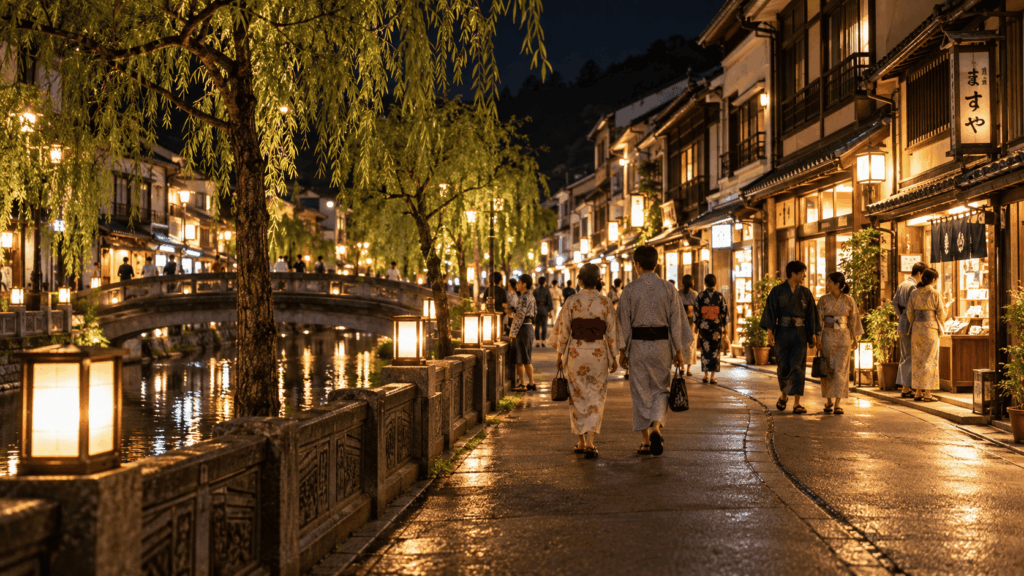
When I walked this kind of route with guests, the rhythm mattered more than the individual baths: a soak before dinner, a stroll in yukata, a second soak after the meal, and one quiet bath the next morning felt complete — without ever rushing to “see” all seven.
If that evening-to-morning rhythm is what you want, an overnight ryokan stay removes much of the time pressure that comes with visiting Kinosaki as a day trip.
Why I’d book this one
- Recent travelers consistently mention attentive service, spacious rooms, and the convenience of shuttle support.
- An overnight stay fits Kinosaki’s bath-hopping rhythm well: you can soak before dinner, go out again later, and leave one quieter bath for the next morning.
- Room types, meal plans, and stay inclusions vary, so you can compare the options that make sense for your dates before committing.
How to Avoid the Worst Crowds
Goshono-Yu’s only genuine weakness is its own popularity, and in 2026 crowd pressure can be higher than usual because two of the seven baths are closed, concentrating bath-hopping visitors across five operating bathhouses.
The busiest windows tend to be weekend evenings, when ryokan guests check in and head out before dinner, and again after dinner before the 23:00 closing time. Weekday mornings are the quietest slots in town. Rather than guess, use the official tool: the Visit Kinosaki website runs a live Bath House Crowd Status display on each bathhouse page, showing current occupancy so you can see which bath is emptier right now.
Kai’s tip: On a busy weekend evening I found Goshono-Yu’s changing room packed and spent several minutes circling for a free locker — the bath itself was wonderful, the entrance was not. My takeaway was not to skip Goshono-Yu but to time it: check the live crowd status, go earlier in the afternoon or the next morning, and leave the after-dinner window for a less famous bath. Popularity here is a timing problem, not a reason to cross a bath off your list.
Practical Tips I’d Give a First-Time Visitor
- Confirm closures the day before — and again at check-in. Your inn’s front desk will tell you which baths are open that evening and whether anything is under renovation.
- Do not make “all seven” your goal. Two to four well-chosen baths make a better memory than seven rushed ones.
- Bring a small towel. Soap, shampoo and conditioner are provided in the washing area of every public bath; you supply the towel. Some visitors bring two — one for the bath and one for the walk back.
- Carry cash. Many of the public bathhouses and small shops in Kinosaki are cash-only, even though larger hotels and some restaurants accept cards.
- Wear the yukata your inn provides. Walking the canal in yukata and geta is half the Kinosaki experience, and you can wear it straight into the baths. The rhythmic click of geta on the stone streets at night is one of the town’s quiet pleasures.
- If you are visiting in winter, think about your feet. The town is beautiful under snow, but barefoot in geta gets cold fast between baths.
- Plan a morning bath. Public baths open from 7:00, and your inn pass usually works until 13:00 on checkout day — a morning soak is the calmest one you will get.
- Tattoos are welcome at the public baths. All seven soto-yu allow tattoos of any size, which is uncommon in Japan. Private baths at some inns may have separate rules, so ask if it matters to you.
Kai’s tip: If you are soaking in winter, check whether your inn offers tabi socks before you head out — most do, though not all advertise it. They make walking in geta over cold stone far more comfortable, and on my winter visits they were the small detail that kept the evening enjoyable. If your inn does not have them, thick socks you can slip into sandals work almost as well.
FAQ
Which is the best onsen in Kinosaki?
For most first-time visitors, Goshono-Yu is the best overall public bath. Its open-air pool and waterfall create the most memorable single experience in town. But the right choice depends on what you value: Ichino-Yu is best for a cave-like bath, Yanagi-Yu for very hot water, Jizo-Yu for families, and Mandara-Yu for a smaller, traditional stop.
Do you need to visit all 7 onsen in Kinosaki?
No. All seven baths use Kinosaki’s centrally managed natural hot spring water, so the differences are atmosphere, layout and temperature rather than seven distinct spring sources. Most first-time visitors get plenty of variety from two to four baths chosen for different experiences, and you avoid the fatigue of changing clothes and walking seven times. Note that only five of the seven are open as of September 2026, so “all seven” is not currently possible anyway.
Is the Kinosaki Onsen pass worth it?
For day visitors using two or more baths, yes — Yumepa costs ¥1,500, while a single entry is ¥800, so the pass pays for itself from the second bath. If you are staying overnight, first check whether your inn provides a free public-bath pass at check-in; most Kinosaki ryokan do, and that pass is typically valid until 13:00 on your checkout day.
Which Kinosaki public bath is the hottest?
Yanagi-Yu is the bath travelers most often describe as particularly hot, and I found it noticeably hotter than the others on my visit — I could not soak up to my shoulders for long. The official listing puts all seven baths at around 42°C, so treat this as a widely reported experience rather than an official temperature difference. If you love hot water, prioritize Yanagi-Yu; if you do not, skip it.
What is the best order for Kinosaki onsen hopping?
There is no universal order that works every day. Start by removing baths that are closed on your arrival day, note which baths only open at 15:00 (Yanagi-Yu and Mandara-Yu), put popular Goshono-Yu outside the busiest evening window, and save one bath for the quiet morning before checkout. Check the official live crowd status on the day for the final call.
My Final Pick: Which Kinosaki Bath Should You Choose?
If you only visit one bath: Goshono-Yu. The open-air pool and waterfall are the experience that makes Kinosaki different from any other onsen town, and it is the one bath almost every first-time visitor remembers.
If you visit two baths: Goshono-Yu and Ichino-Yu. They do not repeat each other — one is open air with a waterfall, the other is an indoor cave — and together they show the range of what Kinosaki offers.
If you love very hot baths: add Yanagi-Yu to that pair. Its cypress tub runs noticeably hotter, and it opens only from 15:00, so slot it in after dinner.
If you dislike very hot water: skip Yanagi-Yu without guilt and choose Jizo-Yu (family-friendly, with a children’s bath) or Mandara-Yu (small outdoor ceramic tubs) as your third bath instead.
If you are traveling with children: make Jizo-Yu part of your plan. It is the only open bath with a dedicated lukewarm children’s pool, and its retro, unhurried feel suits a family visit.
If your top-ranked bath is closed on your day: do not rearrange the whole trip around it. Pick the best combination among the baths that are actually open — on a Thursday that means skipping Goshono-Yu and Yanagi-Yu entirely, not waiting around for them.
Whichever baths you choose, the best version of Kinosaki onsen-hopping is unhurried: a soak, a slow walk along the canal in yukata, another soak after dinner, and one quiet bath the next morning. Staying overnight in the town is what makes that rhythm possible, and it is the single best investment you can make in the experience.
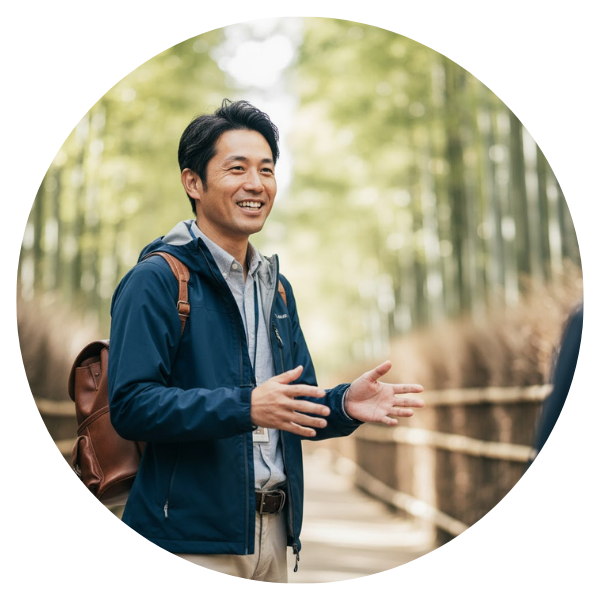
Hi, I’m Kai. I’m a Tokyo-based travel writer, tourism industry insider, and the author of a published guidebook for international visitors to Japan. With over 10 years of professional experience at a leading Japanese tourism company, my mission is to help you skip the tourist traps and navigate Japan’s best destinations like a local. I believe the perfect day trip is like a traditional kaiseki meal: a beautiful balance of precise planning and unforgettable seasonal discovery. When I’m not out conducting field research, you’ll usually find me drafting new itineraries with one of my favorite fountain pens!