
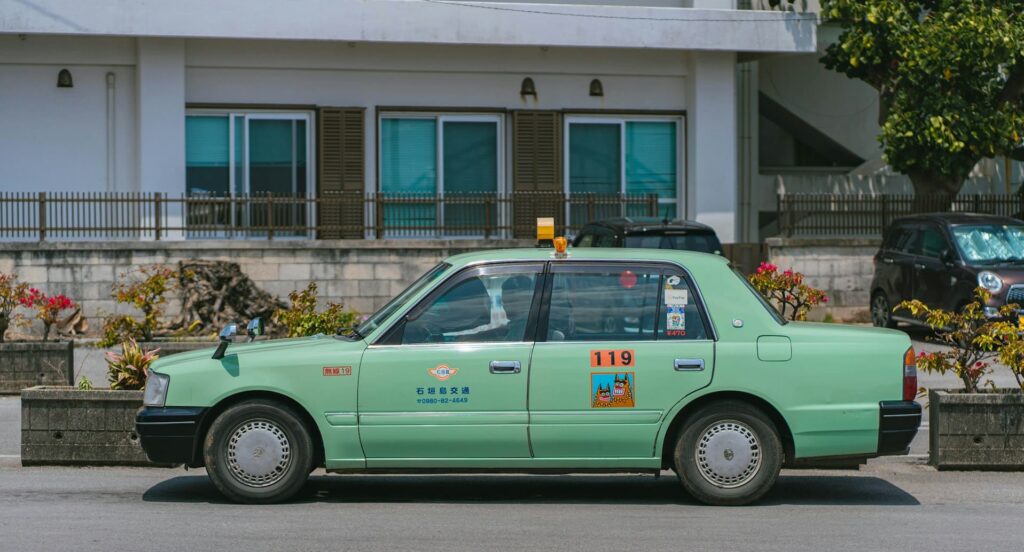
No, you do not need a rental car for every day in Ishigaki. I have taken the Azuma Bus out to Kabira Bay and back on a car-free day, and it worked—because the plan was built around the timetable. Whether you can do the same depends less on where you want to go and more on how many rural stops you want to make in one day. That single question decides whether Ishigaki works fine without a car, or whether you should rent one (or join a tour) for part of your stay.
If your plan includes Kabira plus several other island stops in one day, compare a transfer-included tour before committing to a rental car. You can check current dates, pickup options and the itinerary for this full-day Ishigaki island tour to see whether it fits your route.
Do You Need a Car to Get Around Ishigaki?
Quick answer: Not for every day. Ishigaki City, the ferry terminal, airport transfers and a single major sight such as Kabira Bay can all be managed by bus if you plan around the timetable. A car (or a transfer-included tour) becomes the more sensible option when you want to visit several northern or rural sights in one day—Kabira, Yonehara, Tamatorizaki and Hirakubo, for example—because bus frequency, not distance, is the real constraint.
The mistake I see first-time visitors make is choosing transport before choosing the itinerary. Travelers who report that “no car was needed” almost always stayed near the ferry terminal and treated each day as one destination; travelers who report getting “stuck” were usually trying to string two or three northern stops together on one bus day. Both experiences are real—they just describe different itineraries.
| Transport | Best for | Flexibility | Main drawback | Booking needed? |
|---|---|---|---|---|
| Local bus (Azuma Bus) | City, ferry terminal, airport run, one main sight such as Kabira Bay; budget travel | Low—fixed timetable, limited evening runs | Long gaps between buses on rural routes | No |
| Rental car | Several northern sights in one day; families; a rainy-day backup | High—leave and stop whenever you like | IDP, left-hand traffic, daily cost | Yes, especially in peak seasons |
| Taxi / Uber | Airport–city transfers, filling a schedule gap, groups of 3–4 | High, on demand | Expensive for full-day exploring | No (taxi stands; app for Uber) |
| Guided tour | A one-day northern loop without driving or waiting for buses | Fixed itinerary, set pace | Least flexible; minimum group sizes | Yes, in advance |
If you only want to see one rural place, buses are a realistic choice. If you want to cover the north in a single day, buses stop being practical somewhere around the second stop—that is the point where a car or a tour earns its cost. The rest of this guide explains exactly where that line falls.
The Simple Rule: One Rural Stop Is Fine, Several Stops Are Not
Ishigaki’s bus network looks simple on Google Maps, and the routes genuinely reach the famous spots. What the map does not show you is the schedule. Apply this rule when planning:
- City, ferry terminal and one rural sight in a day — buses are fine. You are moving between two or three points on routes with reasonable frequency.
- Two or three northern sights in one day — buses get hard. You will spend more time waiting at stops than standing at viewpoints.
- A full northern loop (Kabira + Yonehara + Tamatorizaki + Hirakubo) — take a car for the day or book a tour. This is not about distance; it is about connecting schedules.
The reason is simple. Routes serving the city and the airport run roughly every 30 minutes during the day, but the routes that reach Yonehara, Tamatorizaki and Hirakubo run only a handful of times a day. On one of my planning sessions I mapped a north-island bus day and found a gap of nearly two hours between the arrival at the last viewpoint and the next return bus. That is not an unusual schedule for Ishigaki—it is the normal rhythm of the north—so the plan has to respect it, or the day needs a car or a tour.
Getting From Ishigaki Airport to the Ferry Terminal

Two companies run the airport–city route from Painushima Ishigaki Airport to the Ishigaki Bus Terminal and the Euglena Ishigaki Port Remote Island Terminal. In practice, you take whichever leaves next—both get you to the same area for roughly the same fare.
| Company | Route | Stops | Typical time | One-way fare |
|---|---|---|---|---|
| Karry Kanko | 55 | Non-stop direct | About 25 min | Around 550 yen |
| Azuma Bus | 4 / 10 | Via city (Route 10 also stops at ANA InterContinental and Art Hotel) | 30–40 min depending on route | Around 550 yen |
| Azuma Bus | 14 | Direct to Bus Terminal via the ferry terminal (new from July 2026) | About 30 min | Around 550 yen |
The airport-line buses leave roughly every 30 minutes during the day, timed to the flight schedule, with the last departure from the airport around 9:45 PM. At the airport, look for the bus platforms in front of the arrivals hall: Azuma Bus airport-line services use platforms A and B, and the Karry Kanko direct bus stops nearby. Both accept cash and contactless credit cards; the direct Karry Kanko bus does not need a reservation.
If you are heading straight to Taketomi or Iriomote, the ferry terminal is the destination to match. The bus drops you at the terminal area, and the Remote Island Terminal building—where the ferries depart—is a short walk from the bus stop.
If you will fly out of Ishigaki at the end of the trip, the round-trip airport ticket (1,000 yen for airport–city both ways) is a small but convenient saving over two one-way fares, and it means you do not need exact change on the return. You can buy it from the driver on airport-line buses or at the Bus Terminal counter.
What surprises travelers who arrive from mainland Japan is that there is no fixed “airport bus” to chase—you simply walk out, see which bus is at the curb, and board. With both companies charging similar fares to the same area, the next departure is the right one. The only real decision point is whether you are staying at a hotel along Route 10 (ANA InterContinental or Art Hotel), in which case that bus saves you a transfer.
Can You Use Suica on Ishigaki Buses?
No. Suica and other Japanese transit IC cards are not accepted on Azuma Bus. The payment options are simpler than you might expect:
- Contactless credit card (Visa, JCB, American Express and similar) — accepted. Tap the reader when you board and tap again when you get off.
- Cash — accepted. Take a numbered ticket when boarding, then pay the amount shown on the fare display when alighting. The onboard change machine handles 1,000-yen notes, so a 1,000-yen note is fine; larger notes are not.
- Transit IC cards (Suica, Pasmo, ICOCA) — not accepted.
Kai’s tip: If you are arriving from Tokyo or Kyoto with Suica habits, the card reader on an Ishigaki bus will not recognize your IC card. I tapped my phone out of habit on my first ride and got nothing back—the driver pointed me to the contactless credit-card reader beside the fare box instead. The practical fix is to keep a contactless credit card (or cash with small notes) in your pocket for buses, and treat Suica as a mainland-Japan tool. The reader is easy to spot: it sits at the front by the fare box, and you tap it when you board and again when you get off.
Using Local Buses Around Ishigaki
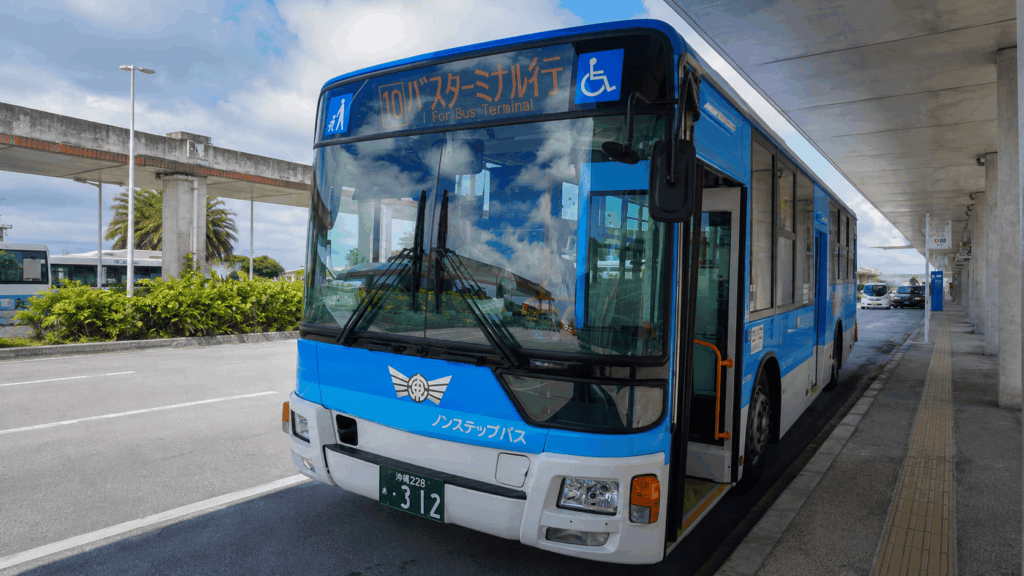
Azuma Bus operates the island’s local network—12 routes as of mid-2026. Two hubs matter for every car-free plan: the Ishigaki Bus Terminal (the main transfer point, surrounded by hotels and restaurants) and the Euglena Ishigaki Port Remote Island Terminal, about a minute’s walk away, where ferries leave for Taketomi, Iriomote and the other Yaeyama islands. Staying near this pair makes a no-car trip dramatically easier—it is the most practical choice when deciding where to stay in Ishigaki.
The routes you will actually use as a visitor:
- Route 9 (Kabira Resort Line) — Bus Terminal to Kabira Bay and Fusaki Beach, serving the resort hotels along the way. Around six runs a day. This is the practical bus route to Kabira.
- Route 11 (Yonehara Campground Line) — the only direct airport link to Yonehara Beach and Kabira Bay, but it runs only twice a day. Useful if your flight times align; otherwise take the airport line into town and transfer.
- Route 5 / 6 (Hirano Line) — toward the north, reaching Tamatorizaki Observatory and Hirakubo Lighthouse on Route 6 (about four runs a day). Frequency drops sharply once you pass Yonehara.
- Route 12 — Azuma Bus’s daily sightseeing bus, a reservation-based one-day loop. Geared toward Japanese-speaking visitors, but a budget alternative if you want a guided circuit without driving.
Where to look: Google Maps shows live routes and stop locations, which is the easiest way to check connections on the go. For timetables, the boards at the Bus Terminal are reliable, and Azuma Bus publishes the full schedule on its official site (Japanese only). A quick check of the return times before you board is the habit that keeps a bus day from going wrong.
Boarding is front-in, front-out: take a numbered ticket when you step on, and pay or tap at the front when you get off. Buses here run on time most days, but a late ferry or a crowded resort stop can shift things, so give yourself a buffer if you are connecting to a ferry.
Is the Ishigaki Bus Pass Worth It?
Azuma Bus sells two unlimited-ride passes (as of mid-2026):
- 1-Day Pass — 1,000 yen, valid 24 hours from purchase
- 3-Day Pass (Michikusa Free Pass) — 2,000 yen, valid 72 hours from purchase
Both cover all Azuma Bus local routes and can be bought from the driver or at the Bus Terminal counter. Show the pass when boarding and alighting—no exact change needed.
Is it worth it? A single airport–city round trip costs about 1,100 yen, so the 1-Day Pass pays for itself with the airport run plus one more ride. If you plan to use buses on three separate days with several rides each, the 3-Day Pass is the better deal than buying daily. If you only take the airport bus twice and one Kabira day trip, the 1,000-yen round-trip ticket may be all you need. One note: older guides still mention a five-day pass, but the current lineup is the 1-day and 3-day passes—confirm the details when you buy.
Can You Visit Kabira Bay Without a Car?
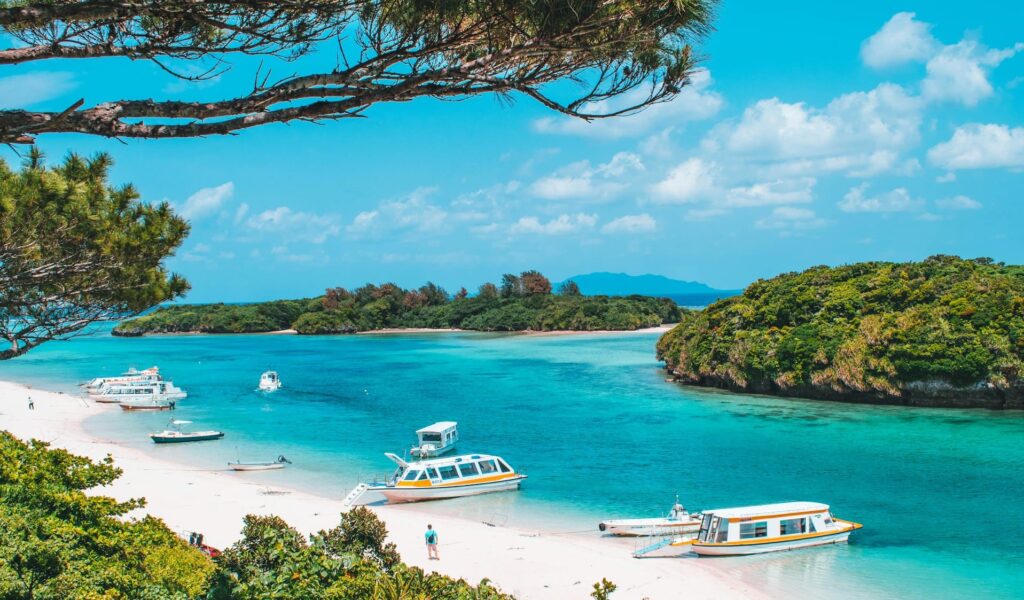
Yes. Kabira Bay is the one major sight that works realistically as a no-car day trip, as long as you treat it as your main destination for the day rather than one stop in a long loop. Route 9 (Kabira Resort Line) runs from the Ishigaki Bus Terminal to the Kabira area—the Kabira Park bus stop is about a two-minute walk from the Kabira Bay viewpoint—and around six services run each day. The ride from town takes roughly 40 minutes. For a complete breakdown of schedules and options, see our detailed guide on how to get to Kabira Bay.
What makes Kabira workable by bus is that everything you came to see sits close together: the bay viewpoint, the glass-bottom boat pier, and the row of small restaurants along the main road are all within a short walk of the bus stop. You arrive, walk the viewpoint, take the glass-bottom boat if you like, eat lunch, and catch the return bus. That is a full, pleasant day built around one timetable.
Kai’s tip: On the day I visited Kabira by bus, the habit that saved the trip was checking the return schedule before doing anything else—I walked to the bus stop first, noted the times on the display, and only then went to the viewpoint. The reason this matters on Ishigaki is that rural routes can leave gaps of an hour or more between services, and the last bus back to town leaves earlier than you might expect. If you check the return times first, lunch and the glass-bottom boat fit around the bus instead of the other way around. The timetables are posted at the Kabira Park bus stop, and the driver can confirm the final service if you ask.
Recent visitors consistently describe Kabira as the easiest northern sight to reach without a car, and the common complaint is not the ride itself but the wait on the way back in the late afternoon. That wait is avoidable with a quick look at the schedule before you commit to a long lunch.
Why Buses Get Harder Once You Head North
Everything changes past Yonehara. The routes that reach the far north—Tamatorizaki Observatory, Hirakubo Lighthouse—run only about four times a day, and they do not connect to each other the way city routes do. The problem is not distance; it is that the schedules leave long gaps, and missing one connection can mean waiting well over an hour at a rural stop with little shade and no café nearby.
To put the frequency in perspective: the airport line and the main city routes run roughly every 30 minutes during the day, while the northern routes run a handful of times. If you plan to visit just Yonehara Beach, the bus can still work. If your list is Kabira, then Yonehara, then Tamatorizaki—or any combination that strings together three northern sights—the day becomes a series of waits, and the viewpoint time you actually get is short.
This is the point where many no-car travelers switch strategy. If your northern day looks like this, a rental car for that single day or a transfer-included tour is usually the more honest plan: you trade the cost of the car or tour for your actual sightseeing time, and you stop checking the clock between stops.
For context on the taxi alternative, an airport taxi to Tamatorizaki Observatory runs around 3,600 yen, and to Hirakubo Lighthouse around 7,100 yen—useful for covering one gap, but a full day of point-to-point taxis adds up quickly.
When Renting a Car Is Worth It
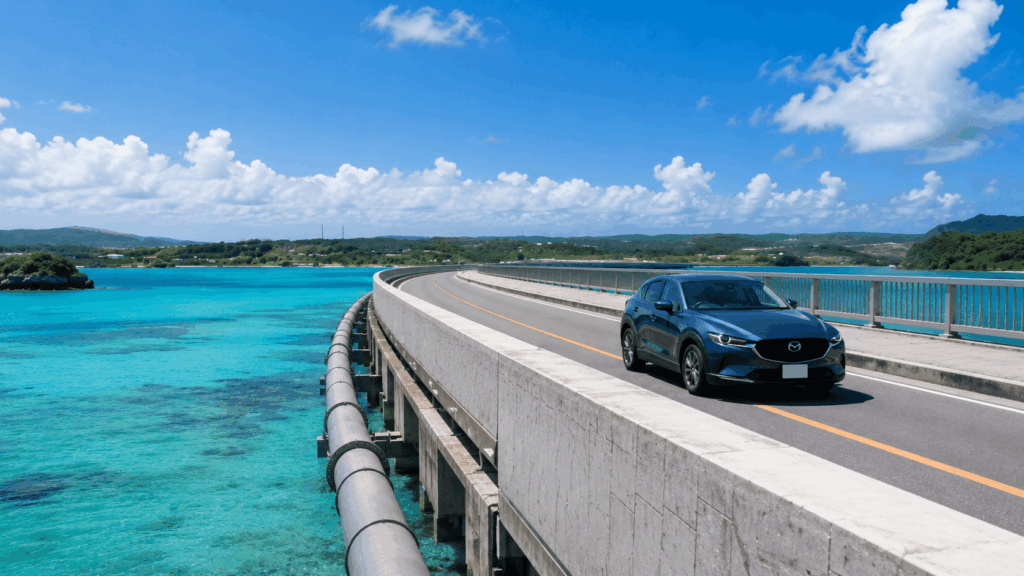
The most efficient way to use a rental car in Ishigaki is not to hold it for the whole trip, but to take it for the one or two days your itinerary actually needs it—typically the northern-loop day, or the day you want to reach beaches and viewpoints on your own schedule. Rental offices cluster around the Euglena Ishigaki Port Remote Island Terminal and the city center, so you can pick up in the morning, drop off the same evening, and keep the rest of the trip car-free.
Day rates generally land in the 5,000–8,000 yen range depending on the car class, season and insurance options. Peak seasons (Golden Week, summer, the New Year period) fill up, so booking even a one-day rental in advance is worth it.
Driving requirements are straightforward but worth checking before you arrive: most nationalities need an International Driving Permit based on the 1949 Geneva Convention, which you arrange in your home country. Some countries (including Belgium, France, Germany, Switzerland and Taiwan) are exempt and can drive with their national licence plus an official Japanese translation. If you hold a licence from one of those countries, arrange the translation in advance; otherwise, plan to bring your IDP plus your home licence.
Check Shuttle Rules Before Pickup
Kai’s tip: If you rent a car for the day, sort out the office shuttle at the time of booking, not on the morning of pickup. Rental companies around the ferry terminal and city center run free shuttles to their offices, but the booking window and procedure vary by company. On one visit I asked for a same-day shuttle and was told it was not possible, then walked to the office instead—manageable in the city, but a much bigger problem if you are staying at a resort hotel on the other side of the island. Ask the company directly when you book: whether the shuttle is included, where it picks up, and how far ahead you need to reserve it. Do not assume the airport shuttle or hotel shuttle works the same way.
Do Not Get Into a Rental Car Wet or Sandy
A practical detail that surprises first-time renters: some Ishigaki rental companies do not allow passengers to board with wet swimwear or sand-covered gear, and beach days are exactly when this becomes an issue. After a morning at a beach or a snorkel stop, the sand and seawater on your clothes are the problem. Keep a dry set of clothes and a towel in the car, and change before getting back in—it protects both the interior and your deposit. If you are not sure about a company’s policy, ask when you book.
What If You Cannot or Do Not Want to Drive?
Not driving does not mean committing to buses for everything. There are three realistic no-car options, and the right one depends on the day you are planning.
| Day plan | Buses practical? | Better option | Why |
|---|---|---|---|
| Airport to city / ferry terminal | Yes | Airport-line bus (Karry Kanko or Azuma Bus) | Roughly every 30 min, about 550 yen, no reservation |
| City sights, shopping, ferry terminal | Yes | Walk or short bus rides | Compact downtown; everything walkable in 15–20 min |
| Kabira Bay only | Yes | Route 9 bus | Around 6 daily runs; one main destination fits the timetable |
| Kabira + Yonehara same day | Stretch | Taxi for one leg, or tour | Two stops can fit, but waits add up |
| Kabira + Yonehara + Tamatorizaki / Hirakubo | No | Car for the day, or full-day tour | Northern routes run about 4 times a day; connections leave long gaps |
| Ferry day (Taketomi, Iriomote) | N/A | Walk to ferry terminal | Stay near the terminal and no transport is needed |
| Beach-hopping day | Hard | Car, or one beach per day by bus | Beaches are spread out; bus frequency drops outside the main lines |
Taxi and Uber
Taxis are metered and reliable, with a flag-fall of around 500 yen. Typical reference fares from the airport: to the ferry terminal area about 3,500 yen (25 minutes), to Kabira Bay around 5,600 yen (40 minutes), to Tamatorizaki about 3,600 yen (25 minutes), and to Hirakubo about 7,100 yen (45 minutes). A taxi is the right tool for a single airport run or for covering one bus gap, but a full day of exploring by taxi is expensive.
Uber: as of 2026, the Uber app can dispatch licensed taxis in Okinawa, including Ishigaki, so you can request a ride in English and pay through the app. Service availability can vary by area and time of day, so check the app when you need it rather than assuming it is always available. There is no local ride-hailing fleet on the island beyond the taxi companies.
Guided Tour vs Public Sightseeing Bus
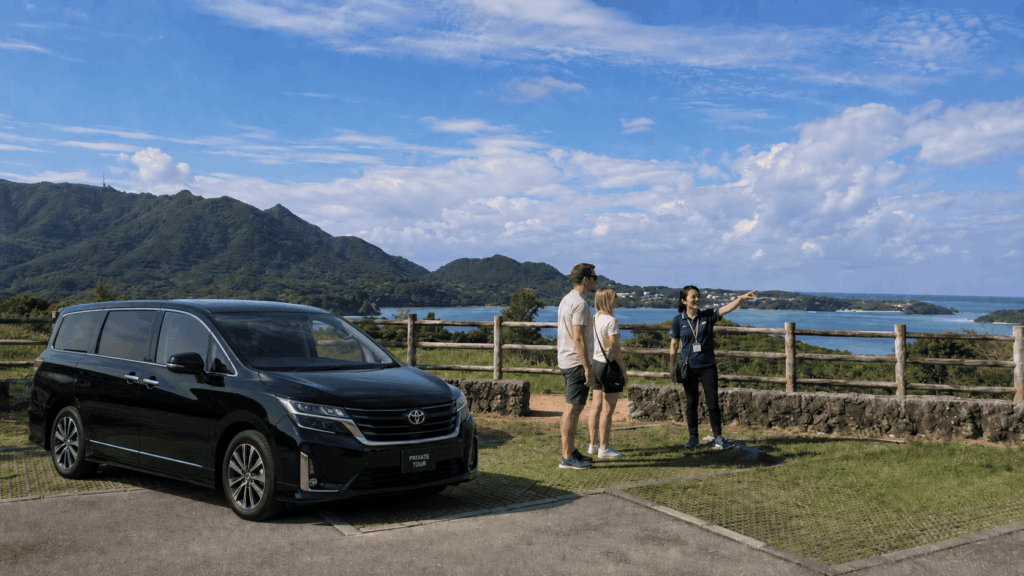
If you want to cover the north without driving and without bus waits, the two guided options are very different in practice:
- Azuma Bus Route 12 (daily sightseeing bus) — a reservation-based one-day loop run by the local bus company. The budget option, but announcements are Japanese-focused, so it suits travelers comfortable with following along rather than expecting an English commentary.
- Full-day island tour with transfers (English-speaking guide) — a roughly 7.5-hour tour that picks up at the ferry terminal area and southern hotels, covering Nagura Bay’s mangrove viewpoint, a glass-bottom boat at Kabira Bay, a lighthouse on the west coast, lunch free time in the city, a lookout point, a Yaeyama palm grove and a shisa garden. Pricing typically starts around US$90–100 per person, with free cancellation up to 24 hours before and pay-later booking. It suits travelers who want the famous sights in one day, in English, without any transport planning.
Two practical notes on the guided tour option. First, it is not ideal for travelers who want to linger—each stop is timed, and the pace is set by the group. Second, tours can require a minimum number of participants to run; if the minimum is not met, the operator may offer an alternative date or a refund. Recent traveler reports mention exactly this: a booking confirmed, then moved to a different tour when the group did not fill. It is not a reason to avoid the option, but it is a reason to book early and keep a backup plan for that day.
If this describes your itinerary—you want Kabira, the north and the west coast in one day, you do not want to drive, and you do not want to watch the clock between buses—a transfer-included full-day tour is the option to compare against a one-day rental. Check the current itinerary, pickup area and cancellation terms before booking, since details change seasonally.
If you fall into that camp—you want several of Ishigaki’s headline sights in one day but do not want to drive or build the day around rural bus connections—this is the tour option that most directly matches that problem.
Why I’d book this one
- Transport between the stops is handled for you, so the day is not dependent on matching several infrequent northern bus services.
- The itinerary combines Kabira Bay with other island viewpoints and nature stops, which is where a guided day becomes more useful than using the bus for a single destination.
- You can check the latest pickup coverage, cancellation conditions, language details and itinerary before committing, which matters because operating details can change by date.
See live availability, start times and the current itinerary for the Ishigaki full-day island tour.
Best Transport Strategy for a 2- to 4-Day Ishigaki Trip
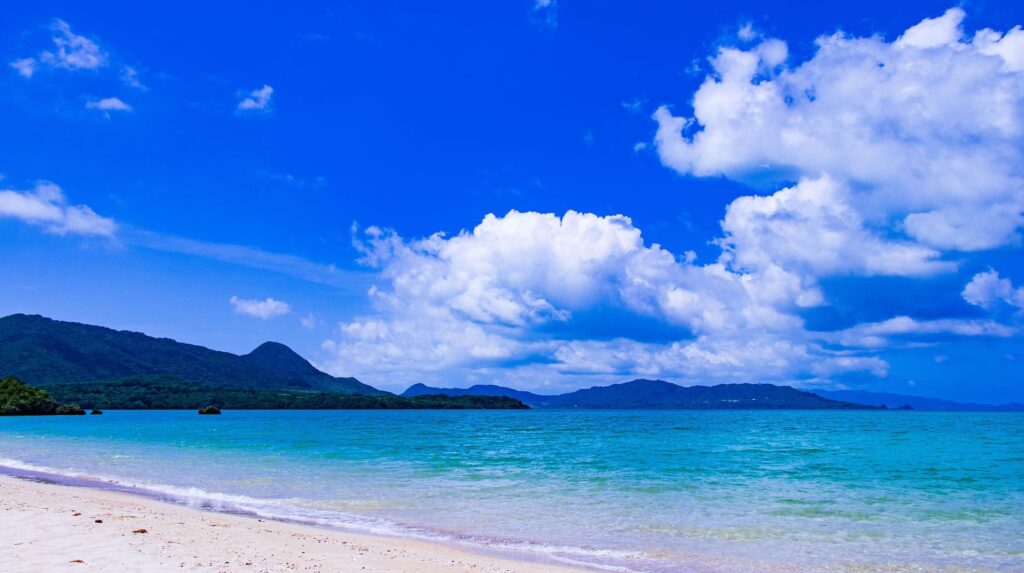
Based on how the island’s transport actually fits together, here is a workable way to divide a typical first visit—adjust it to your own pace and interests (or see our full 3–5 day Ishigaki itinerary for more detailed planning):
- Day 1 — Arrival and the city: airport-line bus to town, check in near the Ishigaki Bus Terminal or the ferry terminal, and spend the afternoon in the city. No car needed.
- Day 2 — Ferry day: walk to the Euglena Ishigaki Port Remote Island Terminal and take a ferry for a day trip to Taketomi Island or Iriomote. No car needed (and no reason to have one—cars do not go on these ferries with you).
- Day 3 — One major sight or the north: Kabira only → Route 9 bus works. Kabira plus more northern stops → this is the day for a rental car or a full-day tour.
- Day 4 — Departure: bus or taxi to the airport. If you have time, a morning at a city café before the flight.
Staying near the Bus Terminal / ferry terminal pair is the single most useful choice for a no-car visit: the airport buses, the ferry terminal and the city’s restaurants and shops are all within walking distance, which means most of your transport problems disappear before you even plan a route.
If your trip is longer, keep the same logic: rent a car only for the days with multiple rural stops, and let buses handle the city, airport and ferry days. That hybrid approach keeps the car cost down and still gets you to the north on your own schedule.
My Practical Tips for Getting Around Ishigaki
- Check the return bus before the outbound one. Rural routes have long gaps; know the last bus before you commit to a spot.
- Do not rely on Suica. Ishigaki buses take contactless credit cards or cash (1,000-yen notes accepted, with change machines).
- Carry small notes. Larger bills are not accepted on buses, and change machines stop at 1,000 yen.
- Stay near the Bus Terminal / ferry terminal. It makes the airport run, ferry days and city evenings all walkable.
- Book the rental-car shuttle when you book the car. Same-day requests are often refused.
- Pack a dry change of clothes for beach rental days. Some companies will not let wet, sandy passengers back in.
- Do not overstuff a bus day. One rural sight per day is comfortable; two is a stretch; three needs a car or a tour.
- Re-check timetables before you travel. Frequencies and fares change; the official Azuma Bus site (Japanese) and the Bus Terminal boards are the current source.
FAQ
Do you need a car in Ishigaki?
Not for every day. Ishigaki City, the ferry terminal, the airport run and one major sight such as Kabira Bay work fine by bus if you plan around the timetable. A rental car (or a transfer-included tour) becomes the more sensible choice when you want to visit several northern sights in one day, because northern bus routes run only a handful of times a day. Many first-time visitors manage the whole trip without a car; the key is matching your transport to the number of stops you want to make.
Can I use Suica on Ishigaki buses?
No. Suica, Pasmo and ICOCA are not accepted on Azuma Bus. You can pay with a contactless credit card (Visa, JCB, American Express and similar) by tapping on and off, or with cash—take a numbered ticket on boarding and pay the amount shown on the fare display when you get off. The onboard change machine accepts 1,000-yen notes, so carry small notes rather than larger bills.
How do I get from Ishigaki Airport to the ferry terminal?
Two bus companies run the airport–city route: Karry Kanko (direct, about 25 minutes, around 550 yen) and Azuma Bus (routes 4, 10 and 14, about 30–40 minutes depending on the route, around 550 yen). Buses leave roughly every 30 minutes during the day, with the last departure from the airport around 9:45 PM. Both drop you in the area of the Ishigaki Bus Terminal and the Euglena Ishigaki Port Remote Island Terminal. A taxi takes about 25 minutes and costs around 3,500 yen.
Can I take a bus to Kabira Bay?
Yes. Route 9 (Kabira Resort Line) runs from the Ishigaki Bus Terminal to the Kabira area, with about six services a day. The Kabira Park bus stop is about a two-minute walk from the bay viewpoint. Treat Kabira as your main destination for the day, and check the return schedule first—rural routes can leave gaps of an hour or more between services. Route 11 also connects the airport directly to Yonehara and Kabira, but it runs only twice a day.
Does Uber work in Ishigaki?
As of 2026, the Uber app can dispatch licensed taxis in Okinawa, including Ishigaki, so you can request a ride in English and pay through the app. Availability can vary by area and time of day, so check the app when you need a ride rather than assuming it is always available. Metered taxis at taxi stands remain the reliable fallback, with a flag-fall of around 500 yen.
Final Verdict: How Should You Get Around Ishigaki?
My honest advice after planning and riding Ishigaki’s buses: do not decide between “car” and “no car” for the whole trip—decide day by day.
Choose the bus for: the airport run, city days, ferry days, and any day with a single rural destination such as Kabira Bay. Plan those days around the timetable, check the return bus first, and they will work without a car.
Choose a rental car or a transfer-included tour for: the day you want to cover Kabira, Yonehara, Tamatorizaki and Hirakubo in one go. The north is not hard to reach—it is hard to leave, with four daily runs on some routes. That single day is where a car or a tour earns its cost.
For first-time visitors: stay near the Ishigaki Bus Terminal / ferry terminal pair, and use the hybrid approach—buses for the easy days, one rental day or one tour for the north. You see everything without spending the whole trip watching a timetable.
For families: the rental car is usually the better call for any day with beaches or several stops. The freedom to stop for a bathroom break, a snack or a swim on your own schedule is worth the daily rate, and it removes the stress of a missed bus with tired kids. Keep bus days to the airport run and the ferry day.
For travelers on a tight schedule: a transfer-included full-day tour is the most efficient way to see Kabira and the north in one day—you trade flexibility for guaranteed movement. If you prefer independence, rent a car just for that day instead.
For repeat visitors: you already know the island’s rhythm, so consider staying somewhere quieter and renting a car only when you need to reach a specific beach or viewpoint. Buses still handle the city and the ferry terminal better than parking ever will.
For travelers who do not drive: buses plus one guided tour day is the strongest combination. Use taxis or Uber to cover single gaps, keep one rural sight per bus day, and the no-car trip works—the line is not “can I get there” but “how many stops am I trying to make in one day.”

Hi, I’m Kai. I’m a Tokyo-based travel writer, tourism industry insider, and the author of a published guidebook for international visitors to Japan. With over 10 years of professional experience at a leading Japanese tourism company, my mission is to help you skip the tourist traps and navigate Japan’s best destinations like a local. I believe the perfect day trip is like a traditional kaiseki meal: a beautiful balance of precise planning and unforgettable seasonal discovery. When I’m not out conducting field research, you’ll usually find me drafting new itineraries with one of my favorite fountain pens!