
Onomichi is not a traditional onsen town — there is no hot-spring district with ryokan lining a single street. But it does have real hot springs, and the choice matters more than most travel guides admit, because each of the three main options forces a trade-off between sightseeing convenience and the actual bath experience.
If you are staying overnight and want an onsen near the sights, Onomichi Minatokan is the obvious pick. If a spacious outdoor bath is the whole point of your visit, take the extra travel time to Natural Hot Springs Onomichi Fureai no Sato. And if you are not staying overnight at all, Onomichi Hirahara Onsen Poppo no Yu is the strongest day-use option. The rest of this guide explains the trade-offs in detail so you can match one facility to your own itinerary.
Planning a first Onomichi stay? If the onsen is one part of a one-night trip and you also want Senkoji, the temple slopes, and local context without building the sightseeing route yourself, a private licensed-guide tour can fit that city-center itinerary well. Check live start times, current cancellation terms, and recent traveler reviews for the Onomichi customized private tour.
Is Onomichi an Onsen Town?
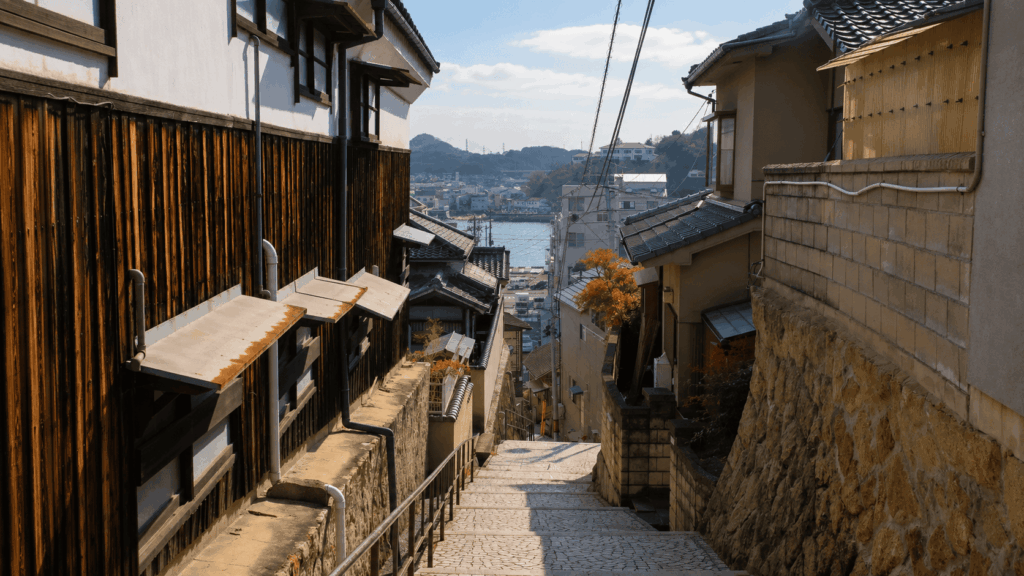
Strictly speaking, no. Onomichi is a hillside port city known for the Senkoji Temple ropeway, temple walks, and the retro shopping streets around JR Onomichi Station — not for a hot-spring district in the Dogo or Beppu sense. There is no onsen quarter where you can stroll between baths.
What Onomichi actually offers is three genuine hot springs in three very different locations:
- Onomichi Minatokan — a converted kominka (traditional house) hotel in the city center, with a natural radium hot spring on site. Closest to the sights, but no regular outdoor bath.
- Natural Hot Springs Onomichi Fureai no Sato — a large ryokan-style facility in the hills of Mitsugi, about 25 minutes by car from Shin-Onomichi Station. The only option with a real outdoor bath experience, at the cost of sightseeing convenience.
- Onomichi Hirahara Onsen Poppo no Yu — a day-use-only bathhouse in the Hirahara district with outdoor baths and saunas. No overnight stay.
Understanding that distinction is the key to choosing well: the facility closest to the sights gives you the weakest bath, and the best bath requires the longest trip. That is the trade-off this guide is built around.
Quick Verdict: The Best Onomichi Onsen for Each Type of Traveler
If you only read one section of this guide, read this. The table below matches each facility to the traveler it actually suits — not to an abstract “best” ranking.
| Facility | Best for | Where it is | Outdoor bath | Day use | Overnight stay |
|---|---|---|---|---|---|
| Onomichi Minatokan | First-time visitors staying one night who want an onsen close to Senkoji Temple, the ropeway, and the shopping streets | City center — about 15 minutes on foot from JR Onomichi Station, 5 minutes from the ropeway | No regular rotenburo in the shared bath (an open-air jacuzzi exists only in a premium rooftop room type) | Yes — mornings 6:00–9:30 and afternoons 12:00–22:00 | Yes — the strongest choice if you want to sleep near the sights |
| Onomichi Fureai no Sato | Travelers who specifically want a spacious outdoor bath with a mountain view, especially those with a car | Mitsugi hills — about 25 minutes by car from Shin-Onomichi Station | Yes — 13 bath types including a rotenburo overlooking the Mitsugi mountains | Yes — 10:00–22:00 (last entry 21:30) | Yes — a large ryokan-style facility with meals |
| Onomichi Poppo no Yu | Day-trippers and cyclists who want a soak without changing hotels | Hirahara district — about 15 minutes by car or a bus ride from JR Onomichi Station | Yes — open-air baths, plus bubble and tub baths | Yes — this is its only purpose; no lodging | No — day-use only |
When I help first-time visitors plan an Onomichi stay, the deciding factor for most of them is the ropeway. If your day starts with Senkoji Temple — and for most one-night visitors it does — Minatokan’s five-minute walk to the ropeway station makes it the least stressful base in town. Fureai no Sato becomes the right answer only when the outdoor bath itself is the destination.
Onomichi Minatokan — Best for Sightseeing and a Convenient Overnight Stay
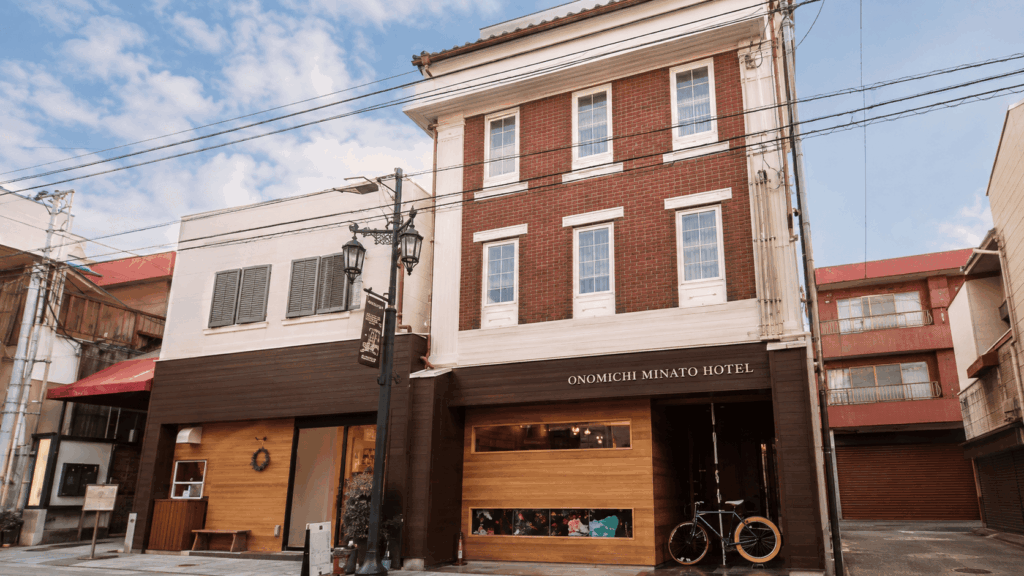
Minatokan is a converted kominka hotel in the Kubo district, about a 15-minute walk from JR Onomichi Station through the Hondori shopping arcade (or a short bus ride to the Nagaeguchi stop, then about 3–5 minutes on foot). The Senkoji Temple ropeway station is roughly a 5-minute walk away, which puts the city’s signature view within easy reach before breakfast.
The hotel is the only accommodation in Onomichi’s city center with a natural hot spring on site. The water is a weakly radioactive simple cold mineral spring — the same radium-spring family as Misasa Onsen in Tottori — and the shared bath offers a large indoor tub, a cold bath, and a dry sauna (sauna use is an extra charge for day visitors). Guests staying overnight can also use the bath on a day-visit basis outside their own bathing time.
What I Like About Minatokan
- The location genuinely saves you time. After the ropeway, the shopping arcades, and a temple stroll, you are back at the hotel in minutes. For a one-night stay built around Senkoji Temple, this is the most efficient onsen base in Onomichi.
- The bath is quiet in the evenings. The shared bath is calm after the day-visit crowd thins out, and the radium-spring water is mild and odorless — nothing dramatic, just a genuinely restful soak after a day of hills and stairs.
- It sleeps quietly. The kominka rooms sit away from main traffic, and in my stay the night was remarkably still — worth knowing if you are choosing between this and a busier business hotel near the station.
- It is built for travelers without a car. English support is available, luggage storage is offered, and cyclists can bring bicycles into the hotel with advance notice — practical for Shimanami Kaido riders arriving by ferry.
The Main Drawbacks: No Regular Rotenburo and Some Rooms Have No View
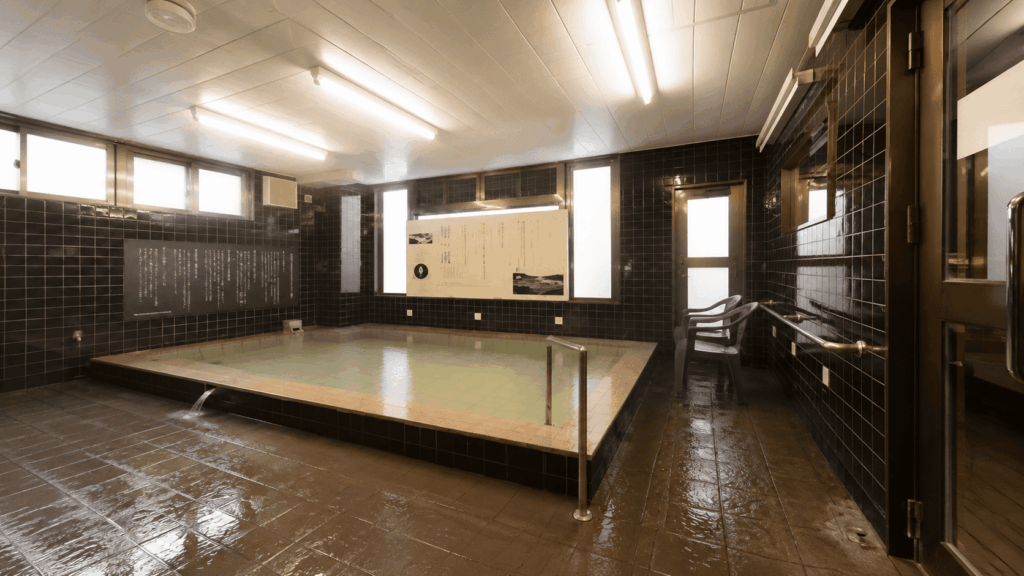
Minatokan’s weakness is exactly what its marketing photos can obscure: the shared bath has no outdoor bath. It is a solid indoor experience — large tub, cold bath, dry sauna — but if an open-air soak under the sky is what you came for, this is not the place to find it. (There is an open-air jacuzzi, but only in the “Premium Rooftop” glamping-style room type, which is a separate premium product limited to one group per night — not part of the regular room inventory.)
The second drawback is room-level and easy to miss before booking: some rooms have windows that cannot be opened, and in at least one room type the window looks onto a wall rather than the street. I have stayed in a room like this, and it is worth knowing in advance because the kominka charm makes you expect light and airflow. Recent guest reviews mention the same thing, so treat it as a real pattern rather than a one-off. If natural light matters to you, it is worth asking the hotel which rooms have openable windows before you confirm.
Two smaller practical points: Minatokan has no parking of its own (use nearby coin parking), and several room types have no private bathroom — the shared bath and toilets are steps away, which is normal for a kominka-style property but worth knowing if you prefer an ensuite.
On balance, I would describe Minatokan as the best onsen base in Onomichi rather than the best onsen experience. If your priority is a convenient overnight stay with a genuine soak, it is the right call. If the bath itself is the main event, the next section is where you should look.
If you have already decided that Minatokan’s city-center trade-off works for your stay, check current room types and availability for Natural Hot Spring Onomichi Minato Kan on Klook. It is worth checking the room details before finalising if the rooftop jacuzzi or the view matters to you.
One Winter Detail I Would Plan For
The rooms at Minatokan are spread through a converted kominka, and the walk to the shared bath crosses an open courtyard. In warmer months that is part of the charm. If you are visiting Onomichi in winter, crossing that courtyard in just a yukata is noticeably cold — the bath itself is warm and pleasant, but the trip there and back is not something the hotel’s photos prepare you for.
Kai’s tip: If you are staying at Minatokan between roughly December and February, bring a robe, hoodie, or any layer you can throw over your yukata for the walk to the bath. It is a short distance, but in midwinter it is the difference between a relaxing soak and a shivering sprint, and a dry towel to wrap around your shoulders on the way back helps just as much.
Breakfast: The White Soup Curry Is More Filling Than It Looks
Breakfast at Minatokan is served to guests by reservation (around 800 yen) and centers on the hotel’s signature white soup curry — a mild, creamy curry poured over rice, served alongside a morning plate and a clear lemon consommé. It is a genuinely good breakfast, and it is easy to underestimate how filling it is.
Kai’s tip: The white soup curry looks modest on the plate but it is surprisingly substantial — after eating my fill, I had almost no appetite left by midday. That matters if your plan includes Onomichi ramen for lunch or a full food-walk through the shopping arcades. If your day is built around eating, take a lighter portion; if you are heading straight up the ropeway to Senkoji Temple, it is the best fuel in town.
Onomichi Fureai no Sato — Best if You Really Want an Outdoor Bath
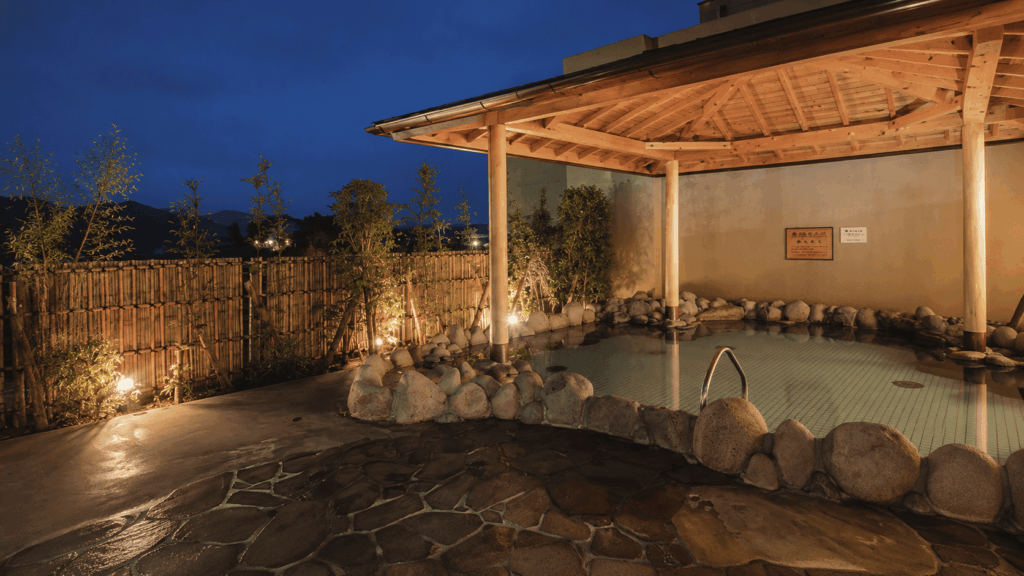
If the bath itself is the destination of your trip, this is the facility to build the day around. Natural Hot Springs Onomichi Fureai no Sato sits in the hills of Mitsugi, about 25 minutes by car from Shin-Onomichi Station (or about 5 minutes from the Onomichi North IC). It is a large, ryokan-style hot spring center with the strongest outdoor bath experience in the Onomichi area.
The spring is a weakly radioactive simple cold mineral spring — radon content 11.3 Mach, pH 8.7 — and the facility spreads it across 13 bath types, including a plasma large bath and a rotenburo (outdoor bath) that opens onto the Mitsugi mountains and, in the evening, the sky. Men’s and women’s bathing areas swap on even and odd days, so the bath you get depends partly on the date of your visit.
Day use runs 10:00–22:00 (last entry 21:30), with entry around 850 yen on weekdays and 900 yen on weekends and holidays (children 500 yen, under-3 free). Towel sets are available for around 100 yen. Overnight guests can use the baths until 23:00 and again from 6:30–9:00 the next morning. Prices and hours checked in August 2026 — confirm on the official site before you go.
What Fureai no Sato Feels Like
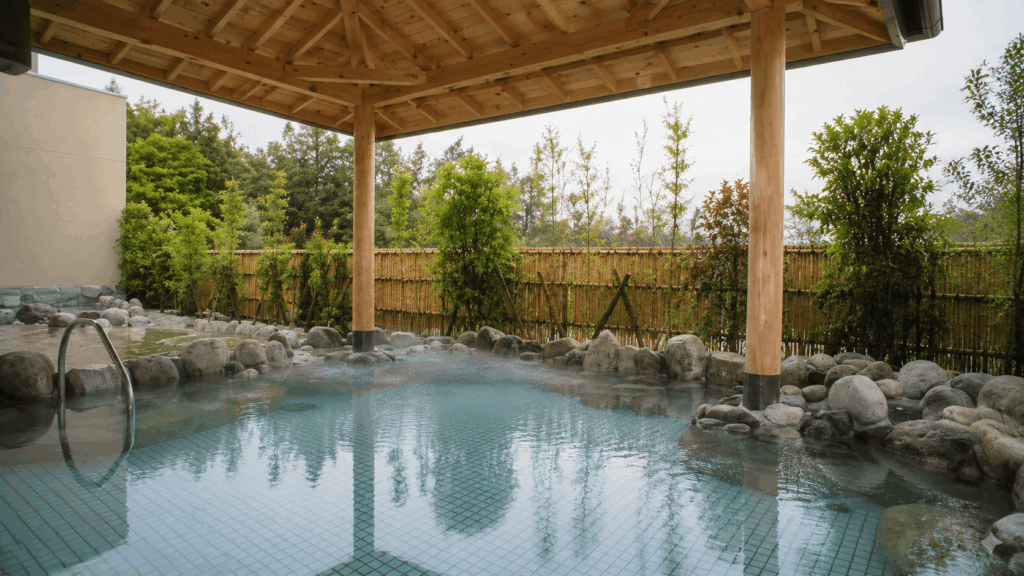
- The rotenburo is the real thing. Soaking outdoors with the mountain air and, on a clear night, a surprising amount of sky is exactly the experience Minatokan cannot offer. On my summer visit, wind chimes hung near the open-air bath and the sound carried across the water — a small detail, but it set the tone for the whole place.
- It is a community facility, not a resort. Local families come to bathe here, and the atmosphere is practical and unpretentious rather than luxury. That is part of the appeal, but if you are expecting a polished ryokan with attentive service, adjust your expectations.
- The evening meal is honest value. Dinner is kaiseki-style and the breakfast is a buffet, and recent guest reviews consistently say the quantity and quality are generous for the price. My own impression matches that: the meal had a semi-self-service rhythm to it, but the food was good and the portions were serious.
- Even the vending machines are local. Drink prices inside the facility are refreshingly normal rather than resort-inflated — a small sign that this place serves the region first and tourists second.
One honest caveat: the building shows its age. Reviews — and my own visit — describe a facility that is well run and clean, but not new. If you weigh luxury interiors heavily in a hotel choice, Fureai no Sato may disappoint; if you weigh the bath and the food more heavily, it overdelivers.
Who Should Skip Fureai no Sato?
- One-day sightseeing visitors. The round trip from the city center eats roughly an hour out of your day before you even bathe. On a tight one-night itinerary built around Senkoji Temple, that hour is usually better spent in town.
- Travelers without a car who dislike coordinating transfers. The free daily shuttle from the Crossroad Mitsugi roadside station helps a lot, but it still adds planning steps compared with walking out of a hotel into the sights.
- Anyone looking for a luxury ryokan stay. This is a large, practical, family-friendly facility — strong on baths and food, moderate on polish.
Poppo no Yu — Best for a Day-Use Onsen Without Staying Overnight
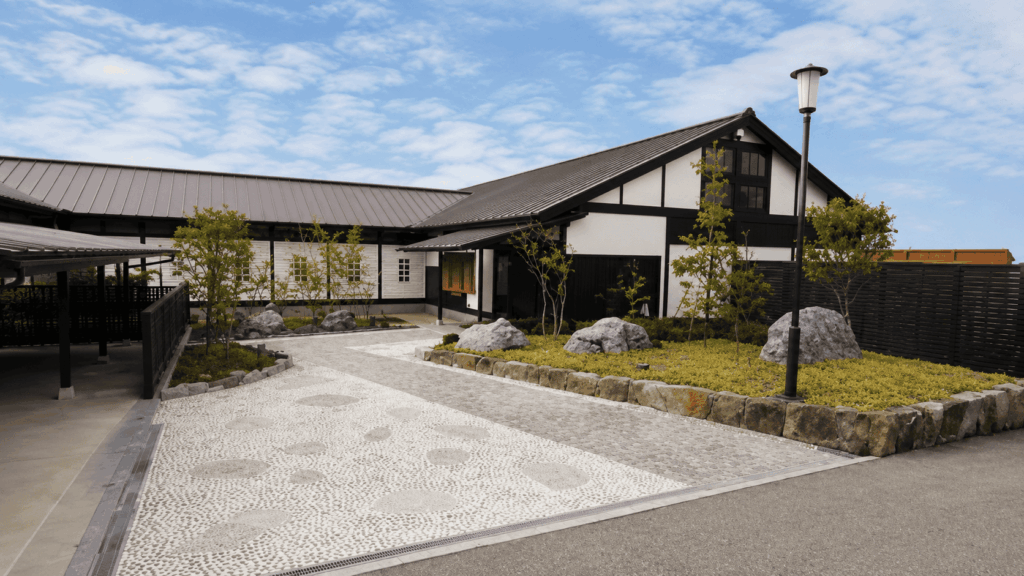
Onomichi Hirahara Onsen Poppo no Yu is the only one of the three facilities that is day-use only — its own FAQ is explicit that there is no lodging. If you already have a hotel booked and simply want a proper soak without switching beds, this is the dedicated option.
It sits in the Hirahara district, about 15 minutes by car from JR Onomichi Station, with free parking for around 134 vehicles. By public transport, take a route bus from Onomichi Station toward the Totsu Honsha stop (about 5 minutes on foot from there) — a “Poppo no Yu mae” stop also exists on some services. There is no shuttle service.
Opening hours are 10:00–22:00 (last entry 21:30), year-round apart from occasional maintenance closures. Entry is around 860 yen on weekdays and 1,000 yen on weekends and holidays for adults, with children’s rates around half that; special periods such as Obon carry a surcharge. Towel sets rent for around 200 yen and indoor wear sets for around 400 yen. Rates checked in August 2026 — confirm on the official site before you go.
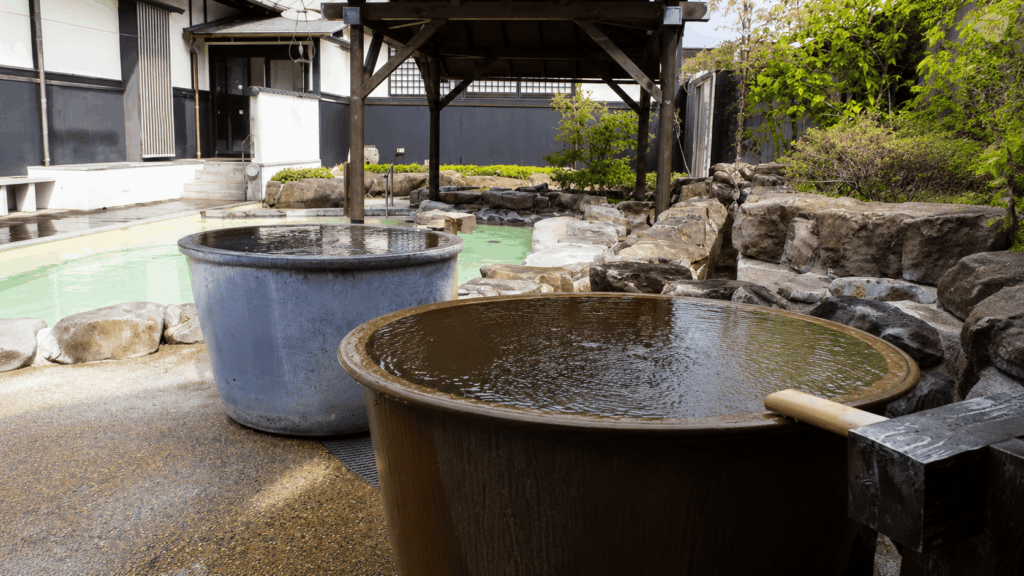
The baths include a rotenburo (outdoor bath), a “silk” bubble bath, and tub baths, with a salt sauna and herbal sauna on the women’s side. The spring is the same weakly radioactive simple cold mineral spring family as the other two facilities. Poppo no Yu also regularly appears in Nifty Onsen’s annual prefectural rankings — it took 5th place in Hiroshima Prefecture in the 2025 edition — and its loyal local following shows in the crowds.
The facility itself is open about when those crowds hit: its official FAQ flags Saturdays from around 17:00 until close, Sundays from 15:00–20:00, and all day on the middle days of long holiday weekends. If you are flexible, aim for weekday mornings or early afternoons.
I have not stayed or bathed at Poppo no Yu myself, so I am deliberately not giving it a personal verdict — the information above comes from the facility’s official materials and its published reviews. What I can say from a planning standpoint is that it fills a specific gap: a quality day-use onsen in Onomichi that does not require you to change hotels.
Minatokan vs Fureai no Sato: Which Should You Stay At?
Both facilities offer overnight stays, and this is where most travelers actually get stuck. The table below compares them on the axes that matter for a one-night Onomichi trip.
| Onomichi Minatokan | Onomichi Fureai no Sato | |
|---|---|---|
| Location | City center (Kubo district), near Senkoji ropeway and shopping streets | Mitsugi hills, about 25 min by car from Shin-Onomichi Station |
| Access without a car | About 15 min on foot from JR Onomichi Station, or bus to Nagaeguchi | Bus/taxi to Crossroad Mitsugi, then a free daily shuttle or short taxi ride |
| Bath experience | One large indoor tub, cold bath, dry sauna — radium spring | 13 bath types including plasma bath and mountain-view rotenburo |
| Outdoor bath | No regular rotenburo (open-air jacuzzi only in the Premium Rooftop room type) | Yes — the main reason to choose it |
| Meals | Breakfast with signature white soup curry (reservation) | Kaiseki dinner and breakfast buffet |
| Atmosphere | Converted kominka, quiet and intimate; some rooms have windows that cannot be opened | Large ryokan-style community facility; building shows its age |
| Best for | First-time visitors, sightseeing-focused one-night stays, cyclists | Travelers who want a real outdoor bath and have time or a car |
When travelers ask me which one to book, I ask them to answer one question first: what is the bath for in this trip? If the honest answer is “a convenient soak after a day of sightseeing,” Minatokan is the better base — you trade the outdoor bath for location, and that trade is usually worth it for a first visit. If the honest answer is “I want a proper rotenburo experience,” the extra travel time to Fureai no Sato is the price of getting what you actually came for. I have sent guests down both paths, and the ones who chose based on that question rather than on photos tended to be glad they did.
Can You Visit an Onsen in Onomichi Without a Car?
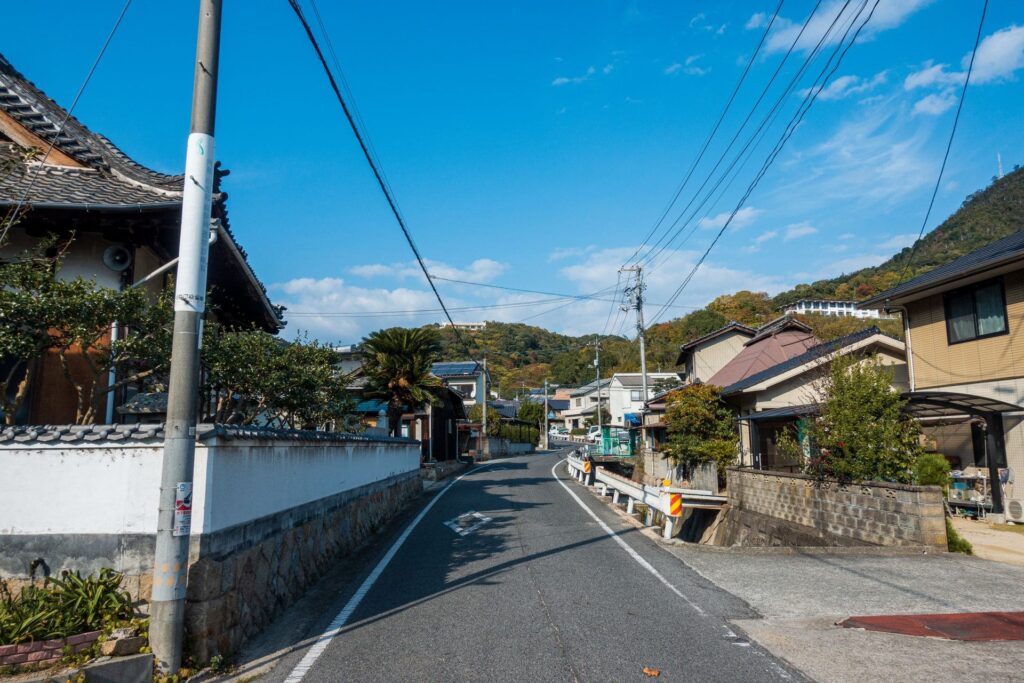
Yes — all three facilities are reachable without a car, but the effort involved is very different, and this is where expectations tend to break down.
- Minatokan: about 15 minutes on foot from JR Onomichi Station through the Hondori shopping arcade, or a short bus ride to the Nagaeguchi stop followed by a 3–5 minute walk. This is the only option that feels effortless without a car.
- Poppo no Yu: a route bus from Onomichi Station to the Totsu Honsha stop, then about 5 minutes on foot. Doable, but it adds scheduling to your day; a taxi from the station takes roughly 15 minutes.
- Fureai no Sato: from Shin-Onomichi Station, the practical no-car route is a bus or taxi to the Crossroad Mitsugi roadside station, then the free daily shuttle or a short taxi ride. The facility is about 25 minutes from Shin-Onomichi by car in total. Workable, but the round trip is a real chunk of a day.
Kai’s tip: “Walkable from the station” is the phrase that causes the most confusion with Minatokan. It genuinely is walkable — the route through the shopping arcade is flat and interesting — but it is not station-front. It is about 15 minutes with luggage, which feels different after a long train day or a Shimanami Kaido ride. If you are arriving with bags and a tired day behind you, take the bus to Nagaeguchi and save the walk for the sightseeing part of your trip.
Which Onomichi Onsen Works Best With Your Itinerary?
Rather than a one-size-fits-all pick, match the facility to how your day is actually shaped:
- One night, Senkoji Temple first, no car: Minatokan. The 5-minute walk to the ropeway makes it the least stressful base in town.
- One night, the outdoor bath is the main event, car available: Fureai no Sato. Give it the evening it deserves instead of squeezing it into a sightseeing day.
- Already staying at a regular hotel in town, want a soak without switching beds: Poppo no Yu as a day visit. Plan around its busiest hours (weekend evenings) and you get a genuine onsen without repacking.
- Shimanami Kaido cyclist finishing in Onomichi: Minatokan, which accepts bicycles inside with advance notice and sits close to the port. The on-site bath is exactly what a day of pedaling calls for.
- Family with children: Fureai no Sato for the variety of baths and the family-friendly price structure, or Minatokan if staying in the center matters more.
- Travelers with tattoos: all three facilities currently prohibit entry with tattoos (including one-point tattoos) — see the practical notes in the next section before you book.
If your itinerary matches the first-time, no-car camp — Senkoji and the old slopes matter as much as the soak, but you would rather not spend your limited time designing the sightseeing route — this is the guided option worth comparing.
Why I’d book this one
- It is private and customizable. The route can be shaped around the parts of Onomichi you care about rather than forcing a fixed sightseeing circuit into your day.
- Recent travelers repeatedly mention the guide’s local knowledge and flexibility. That matters in a city where the temples, slopes, viewpoints, and small streets are more rewarding with context than with a checklist.
- The 4–6 hour format keeps the commitment bounded. You can cover the sightseeing side of Onomichi without automatically giving up the rest of the day for check-in and an evening soak.
Practical Things to Know Before Visiting an Onsen in Onomichi
Tattoo Rules
As of August 2026, all three facilities — Minatokan, Fureai no Sato, and Poppo no Yu — explicitly prohibit entry with tattoos, including one-point tattoos and adhesive-type seals. This is stated in the official terms of each facility, and it is stricter than at many larger city onsen in Japan. If you have tattoos, do not plan around this being flexible; check the official pages directly before your trip in case policies change, and have a backup plan such as a private bath at your hotel or a nearby sento that accepts tattoos.
Day-Use Hours and Prices at a Glance
Prices and hours below were checked in August 2026. They change, so treat them as planning ranges and confirm on each facility’s official site before you go. A Hiroshima prefecture accommodation tax may apply to overnight stays.
| Facility | Day-use hours | Day-use entry (adult) | Notes |
|---|---|---|---|
| Onomichi Minatokan | 6:00–9:30 (mornings); 12:00–22:00 (afternoons) | Around 500 yen (morning); 651–751 yen (afternoon, weekend/holiday higher) | Sauna is an extra charge for day visitors |
| Onomichi Fureai no Sato | 10:00–22:00 (last entry 21:30) | Around 850 yen (weekday); 900 yen (weekend/holiday); children 500 yen | Largest bath variety including rotenburo |
| Onomichi Poppo no Yu | 10:00–22:00 (last entry 21:30), year-round | Around 860 yen (weekday); 1,000 yen (weekend/holiday) | Day-use only; surcharges during Obon and special periods |
FAQ
Is Onomichi an onsen town?
Not in the traditional sense. Onomichi has no hot-spring district where ryokan line a single street, the way Dogo Onsen or Beppu do. It has three genuine hot springs spread across different parts of the city: Onomichi Minatokan in the center, Fureai no Sato in the Mitsugi hills, and Poppo no Yu in Hirahara. Choosing between them is really a question of whether you want sightseeing convenience, an outdoor bath, or a day-use-only soak.
Does Onomichi Minatokan have an outdoor bath?
The regular shared bath does not. It offers a large indoor tub, a cold bath, and a dry sauna. An open-air jacuzzi does exist, but only in the “Premium Rooftop” room type — a separate premium product limited to one group per night, not part of the standard room inventory. If an outdoor bath is essential to you, Fureai no Sato or Poppo no Yu are the facilities that genuinely deliver it.
Can I visit an onsen in Onomichi as a day trip without staying overnight?
Yes. All three facilities accept day-use visitors: Minatokan (mornings and afternoons), Fureai no Sato (10:00–22:00), and Poppo no Yu (10:00–22:00), which is day-use only and has no lodging at all. Poppo no Yu is the best fit if you already have a hotel in town; Fureai no Sato is the best fit if you want an outdoor bath and have the time to get out to the hills.
Which onsen in Onomichi is closest to the station?
Onomichi Minatokan is the closest, at about 15 minutes on foot from JR Onomichi Station through the Hondori shopping arcade — or a short bus ride to the Nagaeguchi stop, then 3–5 minutes on foot. It is also about a 5-minute walk from the Senkoji Temple ropeway station, which makes it the most convenient onsen base for sightseeing. Fureai no Sato and Poppo no Yu both require a bus, taxi, or car ride from the station area.
Can I use an onsen in Onomichi with a tattoo?
As of August 2026, no — all three facilities explicitly prohibit entry with tattoos, including one-point tattoos and adhesive-type seals. This is stricter than many larger city onsen in Japan, so if you have tattoos, check each facility’s official policy directly before booking and prepare a backup option such as a private bath at your hotel.
Is it worth staying overnight at an onsen in Onomichi?
It depends on what you want from the night. If you are staying one night in Onomichi anyway and want a genuine soak without sacrificing sightseeing time, Minatokan is worth it — the on-site radium spring and the 5-minute walk to the ropeway make it a practical and restful base. If the outdoor bath experience itself is the point of the trip, staying at Fureai no Sato is worth the extra travel time. If you are only after a soak and already have a hotel booked, a day visit to Poppo no Yu is the efficient choice.
Final Verdict: Which Onomichi Onsen Would I Choose?
There is no single best onsen in Onomichi — there is a best one for your itinerary, and the choice comes down to one honest question: what is the bath for in this trip?
- Choose Onomichi Minatokan if you are staying one night, sightseeing Senkoji Temple and the shopping streets, and want a convenient soak without losing time. It is the strongest base in town: the radium spring is genuine, the nights are quiet, and the ropeway is a 5-minute walk away. Accept that the shared bath is indoor-only and that some rooms have windows that cannot be opened, and it is the right call for most first-time visitors.
- Choose Onomichi Fureai no Sato if the outdoor bath is the destination. The rotenburo overlooking the Mitsugi mountains, the 13 bath types, and the generous kaiseki dinner justify the 25-minute drive from Shin-Onomichi Station. Skip it if you are on a tight one-night sightseeing schedule or expecting a polished luxury ryokan — this is a practical, community-centered facility with a dated building.
- Choose Onomichi Poppo no Yu if you already have a hotel in town and simply want the best day-use soak without changing beds. It is the only day-use-only onsen in the area, with an outdoor bath and saunas — just plan around its busy weekend evenings.
For first-time visitors with one night and no car, I would send you to Minatokan without hesitation — the location does more for a first Onomichi trip than any bath does. For families, Fureai no Sato’s bath variety and price structure give it the edge, provided you can manage the transfer. For travelers on a tight schedule, keep the soak in the city center; for repeat visitors who have already seen the sights, the rotenburo at Fureai no Sato is the experience that will make this trip different from the last one.
Whichever facility you choose, the decision itself is simple once you separate the two things this guide has tried to keep apart: where you want to sleep, and what you want from the bath.
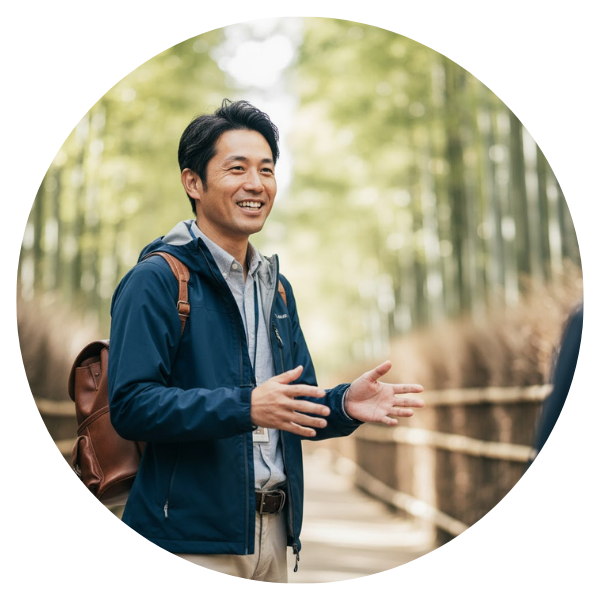
Hi, I’m Kai. I’m a Tokyo-based travel writer, tourism industry insider, and the author of a published guidebook for international visitors to Japan. With over 10 years of professional experience at a leading Japanese tourism company, my mission is to help you skip the tourist traps and navigate Japan’s best destinations like a local. I believe the perfect day trip is like a traditional kaiseki meal: a beautiful balance of precise planning and unforgettable seasonal discovery. When I’m not out conducting field research, you’ll usually find me drafting new itineraries with one of my favorite fountain pens!