
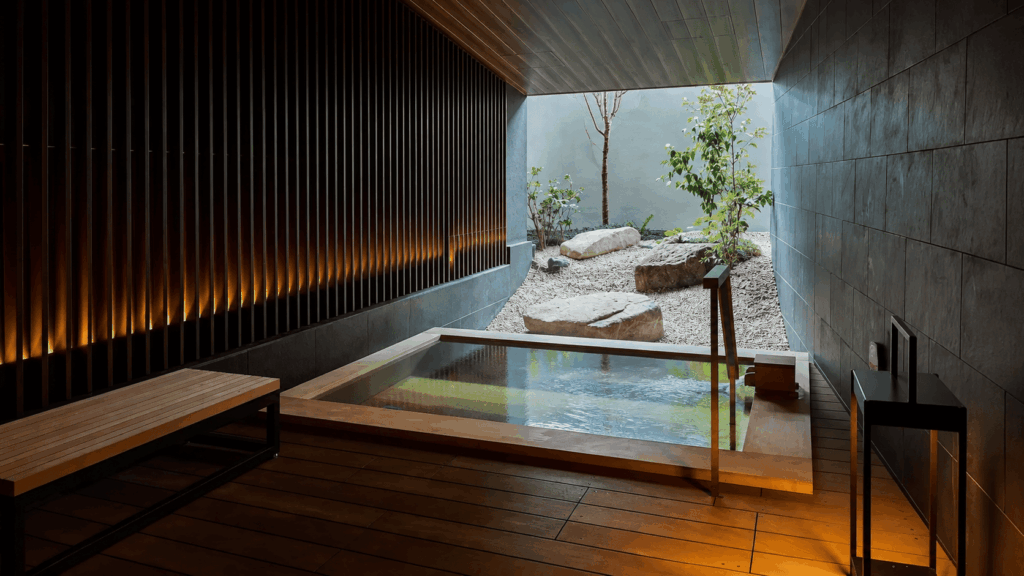
Yes, you can book a private-bath hotel stay in Tokyo without leaving the city — and without going to Hakone. This guide compares 8 Klook-listed Tokyo properties with in-room private baths inside Tokyo’s 23 wards. Only Tokyo Toyosu Manyo Club’s Special Japanese Room has an officially confirmed natural onsen in the guest room. The other seven options prioritize privacy, bath style, and location over hot-spring water. If you want a broader selection of genuine in-room onsen, check out our dedicated guide to Hakone hotels with private onsen.
This article contains affiliate links. If you book through them, we may earn a commission at no extra cost to you.
Best overall for an in-room private bath in Tokyo: Tokyo Toyosu Manyo Club — the only Klook-listed Tokyo stay with an officially confirmed natural onsen in a guest room. Check the Special Japanese Room with Private Hot Spring on Klook.
Quick Comparison of Tokyo Hotels with Private Baths
All eight hotels below are located within Tokyo’s 23 wards and have a Klook booking page. The table shows what kind of private bath each offers, which room to book, and whether natural hot-spring water is confirmed in the guest room.
| Hotel | Best for | Private bath type | Room to book | Onsen verified? | Quick drawback |
|---|---|---|---|---|---|
| Tokyo Toyosu Manyo Club | Genuine in-room natural onsen | In-room open-air bath (natural hot spring) | Special Japanese Room with Private Hot Spring (Non-Smoking) | Yes — the only one in this guide | Designated rooms only. Strict tattoo policy. Inconvenient for west-side sightseeing. |
| Prostyle Ryokan Tokyo Asakusa | Private open-air bath for couples | In-room open-air or half open-air bath | Corner Suite / Suite / Corner Twin (Skytree view) / Corner Twin / King Bed Room | No | Easy to book a room without a bath. Bath size varies by category. |
| TSUKI Tokyo | In-room hinoki bath near Ginza | In-room indoor hinoki bath | Premier Double with “furo” / Premier Twin with “furo” / Deluxe Twin with “furo” | No | Indoor, not open-air. Superior and Standard rooms lack the hinoki bath. |
| Onsen Ryokan Yuen Bettei Tokyo Daita | Urban ryokan atmosphere | In-room outdoor bath (not a natural onsen) | Deluxe Twin Room with Outdoor Bath | No — the hotel clearly states the outdoor bath is not a hot spring | Only one room category has a private bath. Shared bath has natural onsen instead. |
| Dormy Inn PREMIUM Ginza | Ginza location and groups of 2–4 | In-room hinoki bath with roof terrace | Japanese-style Superior (2/3 beds) or Japanese-style Deluxe (3/4 beds) | No | Japanese-style Standard rooms lack the hinoki bath. Similar room names cause booking mistakes. |
| Stay SAKURA Tokyo Shinjuku Hyaku kura | Shinjuku-area access and apartment space | In-room private open-air bath | Queen Suite with Spa Bath (or any suite explicitly labeled with a spa bath) | No | Only the suite category has a private bath. Limited availability across 15 rooms. |
| Stay SAKURA Tokyo Asakusa Yokozuna Hotel | Families and groups | In-room open-air bath | Deluxe Suite (96 sqm, sleeps up to 6) | No | Private bath is in the Deluxe Suite only, not all rooms. A walk from the station with luggage. |
| Ochanomizu Hotel Shoryukan | Traditional room in central Tokyo | In-room hinoki open-air bath | Japanese-style Room with Open-Air Bath (Room 505 Akane or 506 Akebono) | No | Only 2 rooms out of 42. Traditional facilities, not a luxury hotel. |
Ratings and availability on Klook change over time. Always confirm the exact room name and bath description on the booking page before purchasing.
What “Private Onsen” Means in Tokyo
In Japan, “onsen” legally refers to natural hot-spring water meeting specific temperature and mineral criteria. Many English-language travel searches use “private onsen” loosely to mean any bath you can use alone — whether it contains natural hot-spring water, ordinary heated water, or even a reservable shared tub.
This guide separates those categories clearly:
- In-room natural onsen (Category A): A guest-room bath confirmed by the property to use natural hot-spring water. In this list, only Tokyo Toyosu Manyo Club’s Special Japanese Room qualifies.
- In-room private bath, onsen unconfirmed (Category B): A dedicated bath inside the guest room. It provides full privacy and may use hinoki wood or an open-air setup, but the water is not verified as natural hot-spring water. Seven of the eight hotels fall here.
- Reservable private bath (Category C): A shared facility you can book for a fixed time slot. It is not inside the guest room and may require a separate fee. Two properties are covered in a separate section below.
A hinoki wooden bath suggests craftsmanship and comfort, but the material of the tub does not confirm natural hot-spring water. An open-air bath on a balcony provides fresh air and privacy, but the water source remains a separate fact to check.
This honest breakdown is the main difference between this guide and shorter lists that label every private bath an “onsen.”
Best Tokyo Hotels with In-Room Private Baths
1. Tokyo Toyosu Manyo Club — Best for a Genuine In-Room Onsen
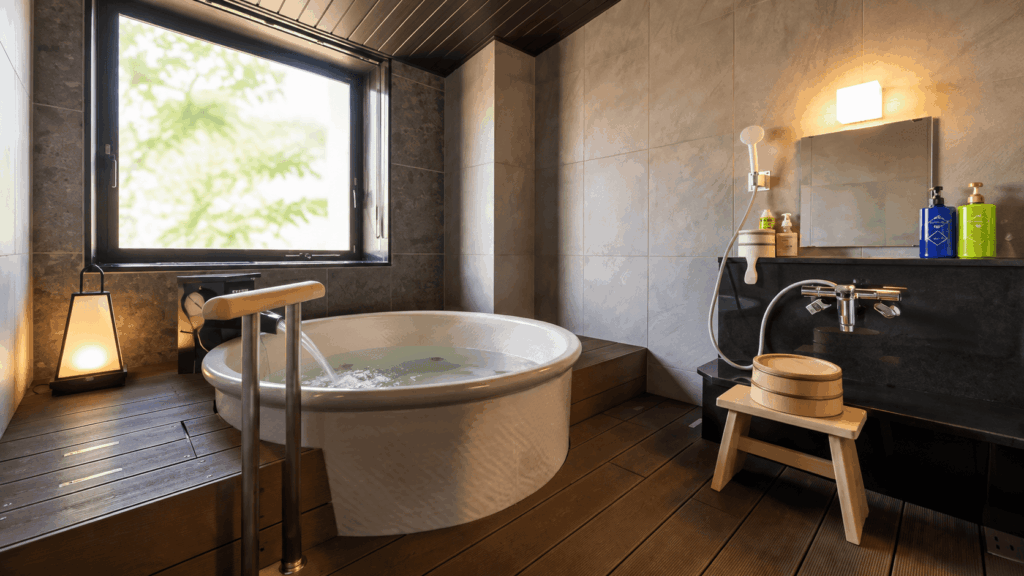
Tokyo Toyosu Manyo Club is the only Klook-listed property inside Tokyo’s 23 wards where the guest-room bath is officially confirmed to use natural hot-spring water. The water is transported from the Yugawara and Hakone areas, and the property’s accommodation page explicitly lists the Special Japanese Room with Private Hot Spring (Non-Smoking) as a room with an in-room onsen overlooking Tokyo Bay.
This is a Category A property — the highest classification in this guide — but the private onsen is limited to the Special Japanese Room category. Standard Twin, Standard Japanese, Superior, and other room types do not include a private hot spring. The Special Room also benefits from direct pedestrian deck access to Shijo-mae Station and proximity to Toyosu Market and teamLab Planets.
Primary experience notes: On a weekend stay, the 3 PM check-in queue was comparable to a theme-park line, and the main public bath was noticeably crowded. Booking the reservable family bath (4,500 yen per hour) in advance was the right call — it provided a spacious private bath with a TV, even though construction outside required the blinds down. Rooftop foot baths with Tokyo night views are a standard post-bath ritual. The buffet breakfast includes a customizable hot-pot option, though the dining floor felt slightly sticky in places. The property provides yukata and samue (workwear-style robes), plus clay face packs for women — truly a hands-free stay.
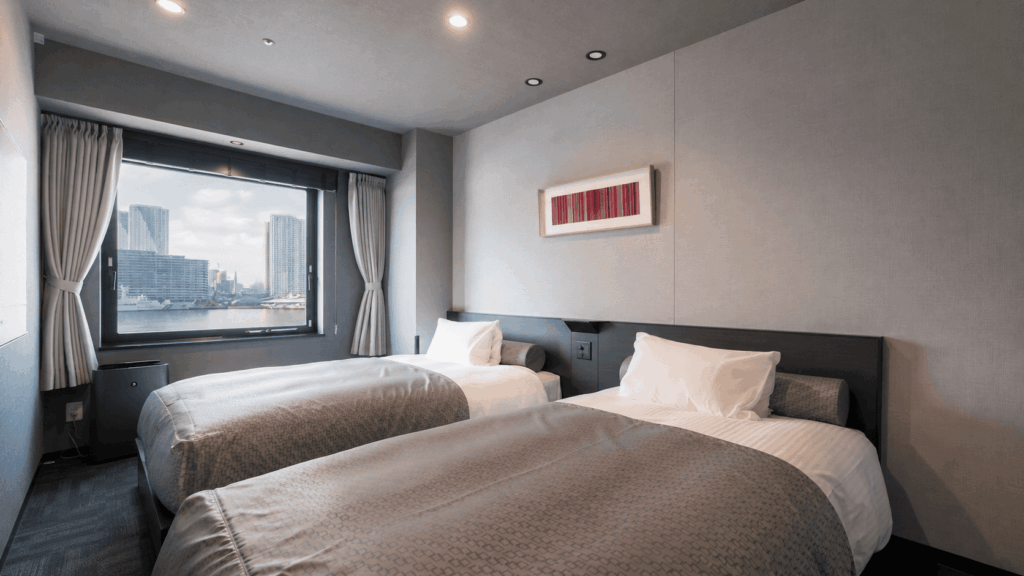
Important caveat: Tokyo Toyosu Manyo Club publishes facility-wide tattoo conditions. Cover sheets (up to two, max 11 cm × 20 cm each, 110 yen each) are required during the stay — including inside the guest room, according to the property’s published policy. The main public bath allows entry with cover sheets, but the private family bath avoids this rule entirely. The Special Japanese Room’s in-room onsen provides privacy, but the property’s entrance policy still applies.
Reality check from recent guest patterns: Based on recent guest reviews, the Special Japanese Room has limited availability and may not appear for all dates on Klook. The hotel’s location near Toyosu Market is excellent for east-side itineraries but less convenient for Shinjuku, Shibuya, or west-side sightseeing. The breakfast buffet and rooftop foot bath receive frequent praise, while the main public bath is regularly described as crowded during peak evening hours.
Check rates for the Special Japanese Room with Private Hot Spring on Klook.
2. Prostyle Ryokan Tokyo Asakusa — Best for a Private Open-Air Bath
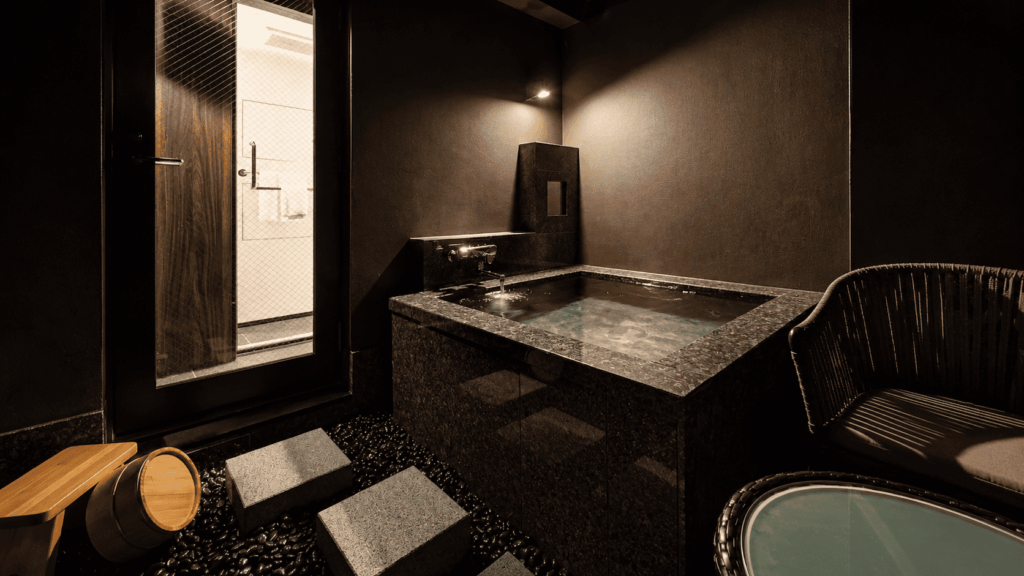
Prostyle Ryokan Tokyo Asakusa offers five room categories with a private open-air or half open-air bath: Corner Suite Room, Suite Room, Corner Twin Room (Skytree view), Corner Twin Room, and King Bed Room. All five are classified as Category B — the baths provide full privacy but natural hot-spring water is not confirmed. The hotel provides bath salts, which guests consistently appreciate.
The property’s location is a clear strength: a 5–7 minute walk from Senso-ji Temple and within easy reach of Asakusa’s dining and nightlife. The tatami flooring with low-set beds (rather than traditional futons on the floor) works well for Western travelers unfamiliar with floor sleeping. Rooms on the Skytree side offer a view of the illuminated tower from the balcony bath in the evening.
Primary experience notes: During a winter stay, the balcony open-air bath was surprisingly spacious — much larger than expected for a Tokyo hotel room. Soaking while facing the lit Skytree in cold outdoor air is a genuinely uncommon Tokyo experience. The Japanese set breakfast with grilled beef (gyu-yaki) was excellent enough to warrant a rice refill. Front desk service was warm and attentive, but breakfast-area staff were noticeably slower — on multiple occasions, guests waited at the entrance without being seated promptly. A slight odor around the bed area has been mentioned in some reviews; opening the window for a few minutes upon check-in helped.
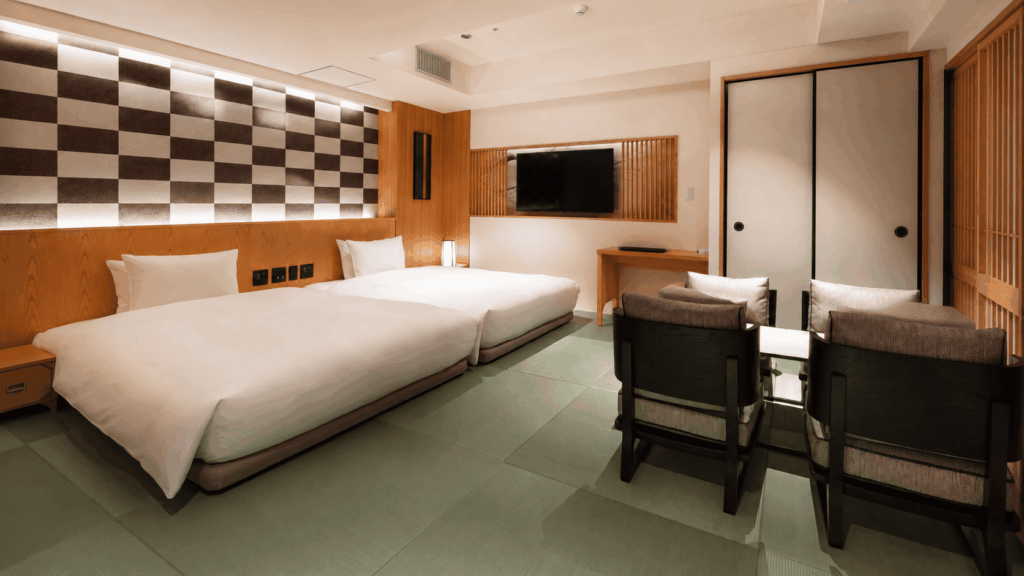
Rooms to avoid: The 2 Beds Double Room, Double Room, and Private Sauna Room do not include an open-air bath. Only the five categories listed above should be selected.
Based on recent guest feedback: Reviews frequently note variation in open-air bath size across categories — the Corner Suite provides the most spacious bath, while the King Bed Room’s half open-air bath is more compact for two. Winter travelers mention that outdoor temperatures affect the bath experience, and the balcony’s privacy from neighboring buildings varies by room position.
Check current open-air-bath room types at Prostyle Ryokan on Klook.
3. TSUKI Tokyo — Best for an In-Room Hinoki Bath Near Ginza
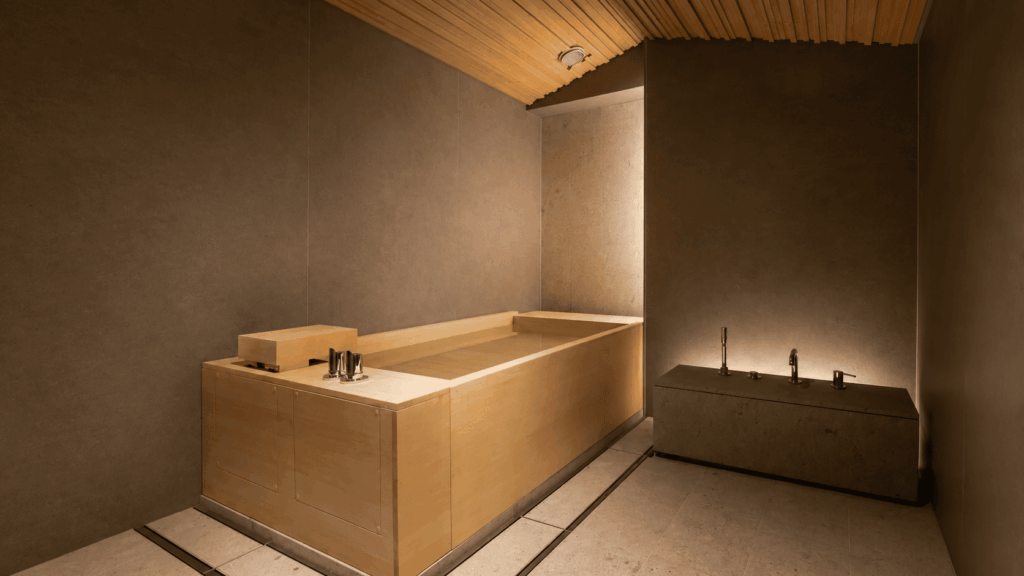
TSUKI Tokyo is a 31-room design hotel a 3-minute walk from Tsukiji Station and within walking distance of Ginza. Three room categories include an in-room hinoki (Japanese cypress) wooden bath: Premier Double with “furo,” Premier Twin with “furo,” and Deluxe Twin with “furo.” These are Category B — indoor hinoki baths using ordinary heated water, not natural onsen. The baths are indoor only, not open-air.
The hotel’s small scale means attentive service and a quiet atmosphere. Free bread and coffee are available in the first-floor lounge each morning, and a sake bar opens in the evening. Hinoki aroma balls are placed in the bath area — a thoughtful touch for a relaxing soak.
Primary experience notes (YUUYA reservable bath): The separate YUUYA private bath (reservable, 3,300 yen for 60 minutes, Aomori hinoki wood) is spacious enough for three adults, and the wood scent is immediately noticeable upon entering — genuinely relaxing after a full day walking through Shibuya and Asakusa. The hotel’s lounge attracts a natural mix of international travelers over morning coffee, creating a friendly atmosphere. On one visit, a faint cigarette-like smell was detected in the room; the front desk moved the guest to another room promptly. The room’s modern Japanese design includes slight floor level changes — worth noting for guests who may trip easily.
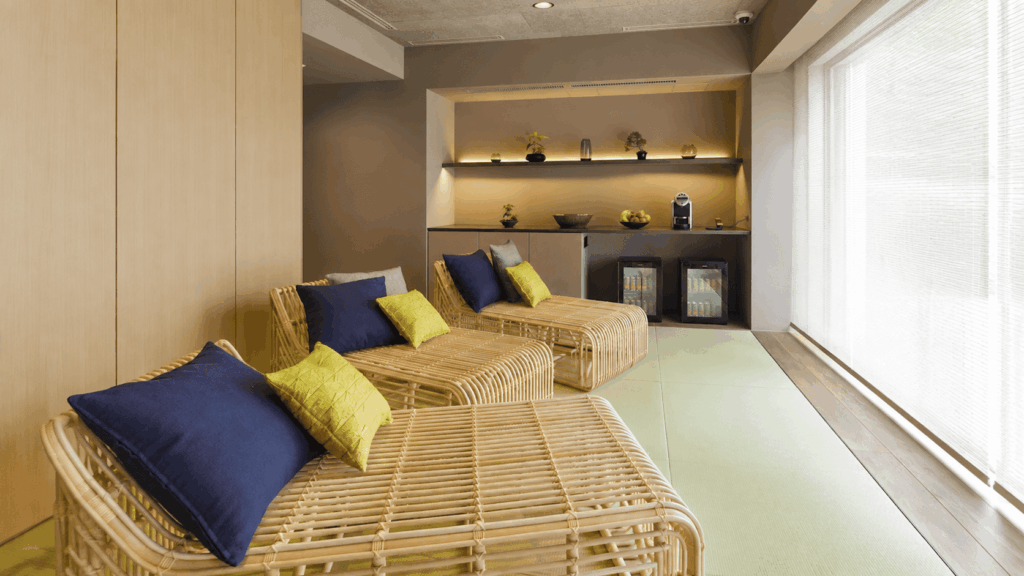
Important distinction: The YUUYA private bath is separate from the in-room hinoki bath. It requires an advance reservation and an additional fee. The in-room “furo” categories provide a hinoki bath inside the room, not the YUUYA facility.
Rooms to avoid: Superior Double and Standard Semi Double do not include a hinoki bath.
Based on recent guest feedback: The hinoki bath aroma and the hotel’s proximity to Tsukiji Outer Market are frequently praised. Some guests find the rooms compact, while the free lounge breakfast and evening sake bar are commonly noted as unexpected perks. The private YUUYA bath receives strong reviews but availability is limited.
Check current “furo” room types at TSUKI Tokyo on Klook.
4. Onsen Ryokan Yuen Bettei Tokyo Daita — Best for an Urban Ryokan Stay
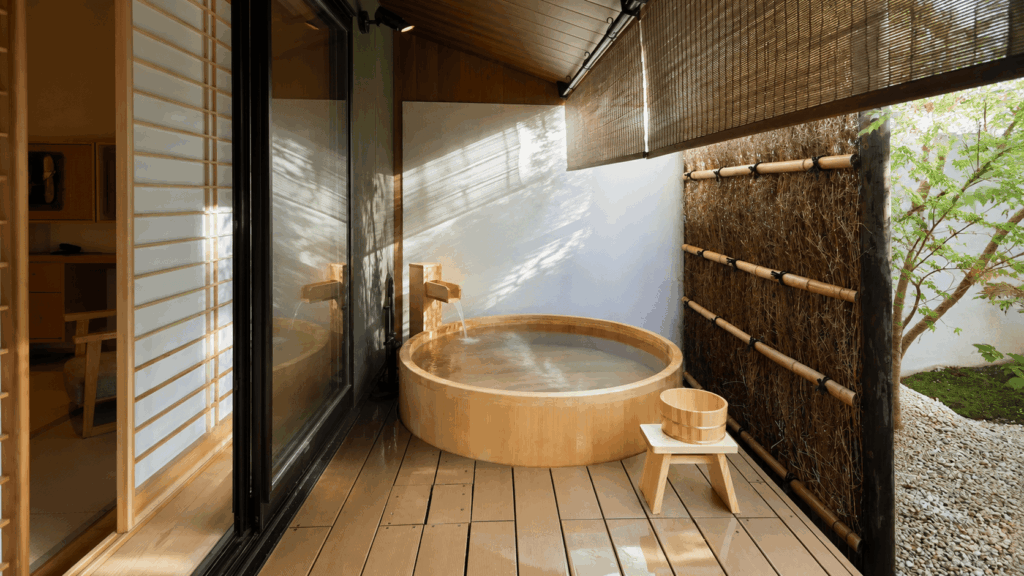
Onsen Ryokan Yuen Bettei Tokyo Daita combines a ryokan atmosphere with a Tokyo residential setting near Setagaya-Daita Station (1-minute walk) and Shimokitazawa (8-minute walk). The room to book is the Deluxe Twin Room with Outdoor Bath (24 sqm, 1st floor, sleeps 3) — classified as Category B. The property explicitly states on its website: “The outdoor bath is not a hot spring.”
The hotel’s shared large bath, however, does use natural hot-spring water sourced from Lake Ashi in Hakone (a simple alkaline spring). This distinction is important: the shared bath offers natural onsen, while the private outdoor bath in the booked room uses ordinary heated water.
The ryokan sits in a quiet residential neighborhood, far from the high-rise hotel districts. Guests who want a traditional ryokan experience — tatami, yukata, multicourse dinner — without leaving central Tokyo will find this a strong fit. The evening kaiseki-style dinner receives consistent praise, and the location offers easy access to Shimokitazawa’s cafes, vintage shops, and nightlife.
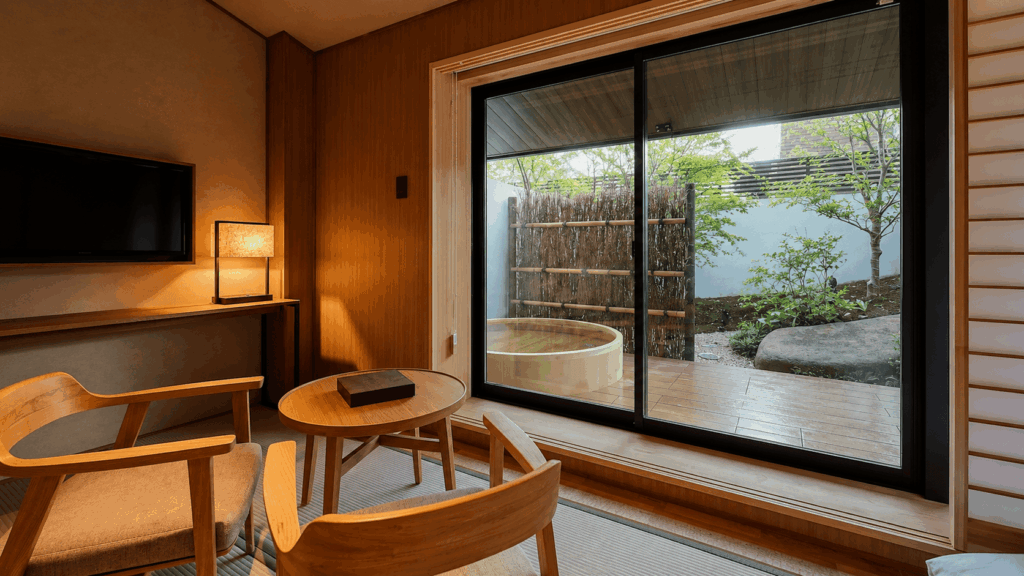
Rooms to avoid: Any room without “with Outdoor Bath” in the name. The standard Deluxe Twin Room, Deluxe Double, and Standard Double share similar names but lack a private outdoor bath.
Based on recent guest feedback: The shared onsen bath and multicourse dinner are the most frequently praised features. The residential location is appreciated for its quiet atmosphere but requires a train ride to Shinjuku or Shibuya. English-speaking staff levels are adequate but not as extensive as larger international hotels. The 1st-floor location of the outdoor-bath rooms means less privacy from the garden side than higher-floor rooms in other hotels.
Check current outdoor-bath room availability at Yuen Bettei on Klook.
5. Dormy Inn PREMIUM Ginza — Best for Ginza and Groups
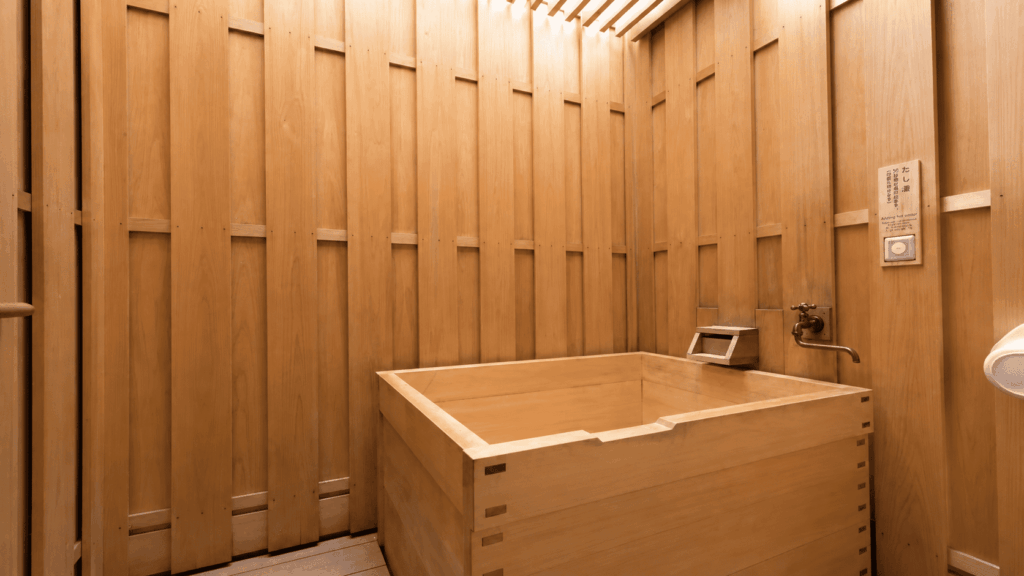
Dormy Inn PREMIUM Ginza offers four room categories with an in-room hinoki bath and a roof terrace: Japanese-style Superior (2 beds), Japanese-style Superior (3 beds), Japanese-style Deluxe (3 beds), and Japanese-style Deluxe (4 beds). All four are Category B — the in-room hinoki bath uses ordinary heated water, while the property’s shared large bath (Nanatsunoyu) is a natural black-spring onsen.
The Ginza location is hard to beat for shopping and dining. The hinoki bath and small roof terrace provide a private outdoor relaxation space within walking distance of Tsukiji, Shimbashi, and Yurakucho. For groups of 2 to 4 travelers sharing a room, the Japanese-style categories offer practical sleeping arrangements with tatami areas.
The similar room names across the Japanese-style categories pose a real booking risk. The Japanese-style Standard (2 beds) looks nearly identical in name but does not include a hinoki bath or roof terrace. Confirm the official room name and bath description at the final step of booking.
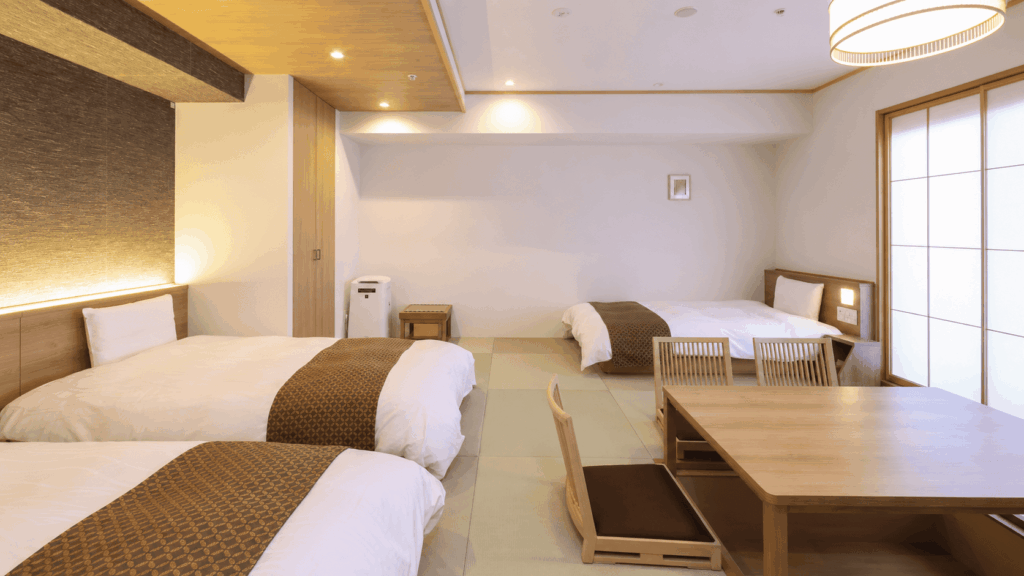
Rooms to avoid: Japanese-style Standard (2 beds), Double, Twin, and Universal rooms — none include the hinoki bath.
Based on recent guest feedback: The shared natural onsen on the top floor receives strong regular praise. The roof terrace provides a rare outdoor space in central Ginza. Room size is functional but not spacious — the Deluxe categories offer noticeably more floor space than the Superior. Some guests note that the hinoki bath water temperature can be inconsistent during peak usage hours.
Check current hinoki-bath room types at Dormy Inn PREMIUM Ginza on Klook.
6. Stay SAKURA Tokyo Shinjuku Hyaku kura — Best Near Shinjuku
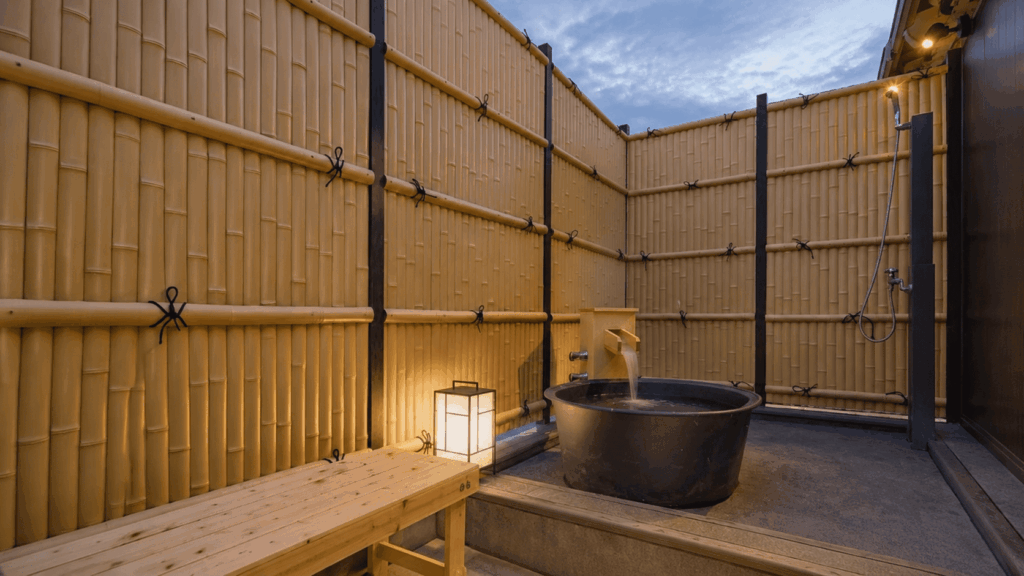
Stay SAKURA Tokyo Shinjuku Hyaku kura is a 15-room property a 2-minute walk from Okubo Station and 5 minutes from Shin-Okubo Station — placing it close to Shinjuku’s west side and the Koreatown area. The room to book is the Queen Suite with Spa Bath (40–42 sqm), which includes a private open-air bath. This is Category B — the bath provides privacy and open-air comfort, but natural hot-spring water is not confirmed.
The suite includes a kitchen and dining area, making it practical for longer stays or small groups who prefer self-catering. The property’s thematic design incorporates traditional Japanese elements, and the open-air bath on the suite’s balcony offers fresh-air soaking within the Shinjuku area.
Only the suite category includes a private open-air bath. The other room types (Comfort Quadruple, Family Studio, Apartment, Twin) do not. Klook lists multiple suite variations with similar names and different sizes — check the final booking screen for “spa bath” or “open-air bath” in the facilities description.
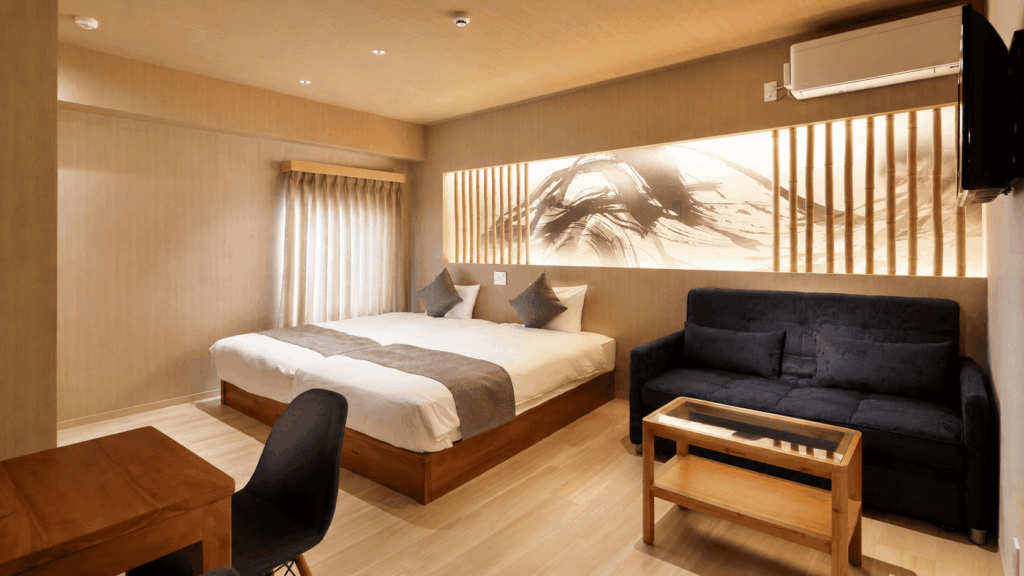
Important note: The front desk operates with limited hours (typically until 9 PM based on published information), so late check-in arrangements should be confirmed in advance. The property’s small size means the open-air bath suite has limited availability.
Based on recent guest feedback: The open-air bath and proximity to Shin-Okubo’s Korean restaurants are frequently mentioned positives. The kitchen facilities are appreciated by longer-stay travelers. Some guests note that the room’s open-air bath faces nearby buildings, so privacy expectations should be adjusted. The limited front desk hours have been mentioned as an inconvenience for late arrivals.
Check suites with a spa bath at Stay SAKURA Shinjuku on Klook.
7. Stay SAKURA Tokyo Asakusa Yokozuna Hotel — Best for Families
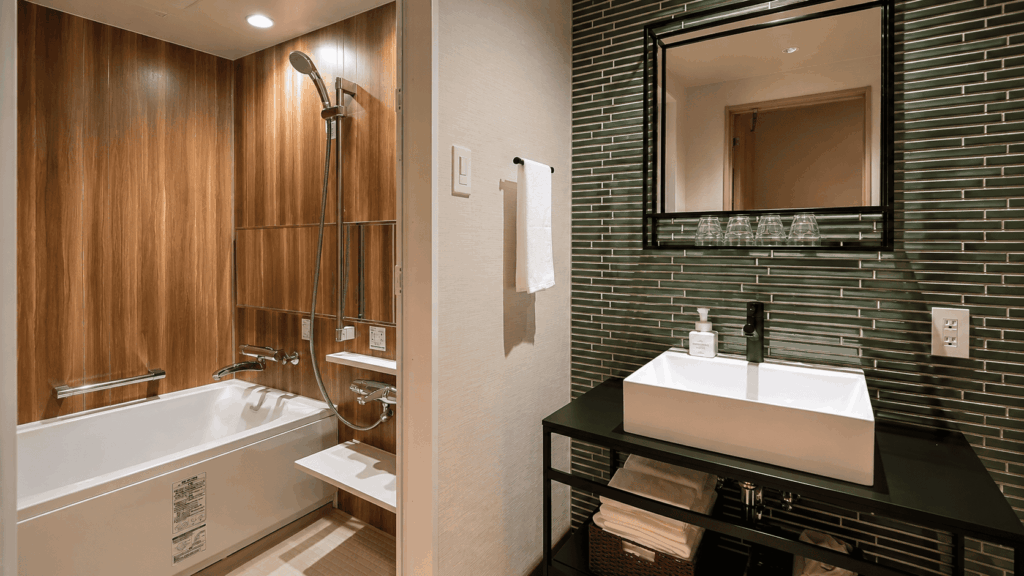
Stay SAKURA Tokyo Asakusa Yokozuna Hotel offers the largest private-bath room in this guide. The Deluxe Suite (96 sqm and above, sleeps up to 6) includes a private open-air bath and a full kitchen, all within a former sumo-stable-themed property a 1-minute walk from Senso-ji Temple. This is Category B — the open-air bath uses ordinary heated water.
The suite’s size is its strongest argument. A 96 sqm private room with an open-air bath, multiple sleeping areas, and a kitchen is rare inside Tokyo’s 23 wards. For families or groups of 4–6 travelers who want to stay together in one room with a private bath, this is the most practical option in the ranking.
Only the Deluxe Suite includes an open-air bath. The other room categories (2 Bedroom Suite, Suite, Twin, Studio) do not. The hotel is a 10–12 minute walk from Asakusa Station, which is manageable but noticeable with luggage.
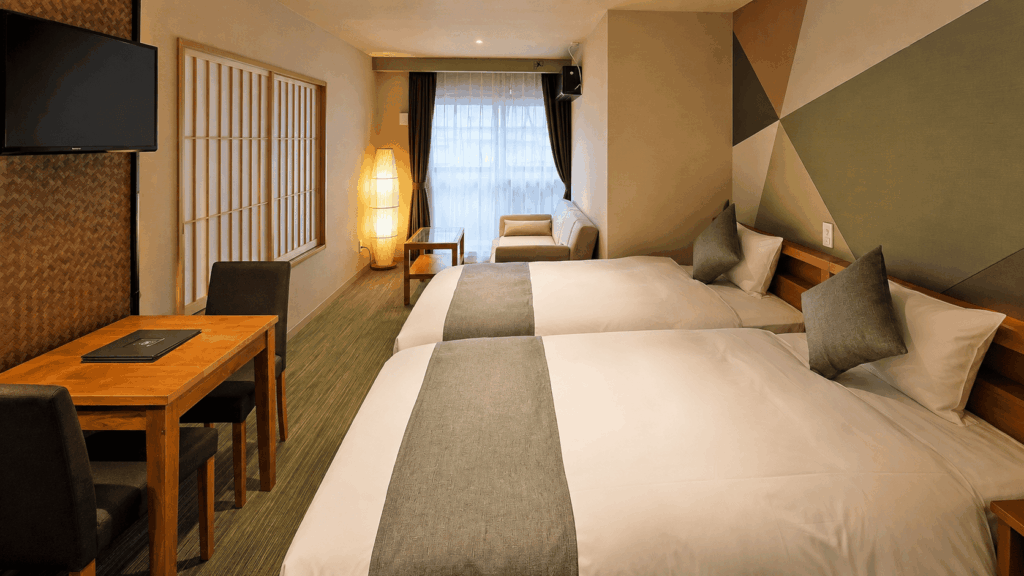
Based on recent guest feedback: The room size and proximity to Senso-ji are consistently praised. The sumo theme adds character that families with children particularly enjoy. The walk from the station, especially with luggage, is a recurring mention in reviews. The limited front desk hours and the absence of a 24-hour reception are noted by some guests who arrived outside operating hours.
Check whether the Deluxe Suite is available at Yokozuna Hotel on Klook.
8. Ochanomizu Hotel Shoryukan — Best for a Traditional Central Stay
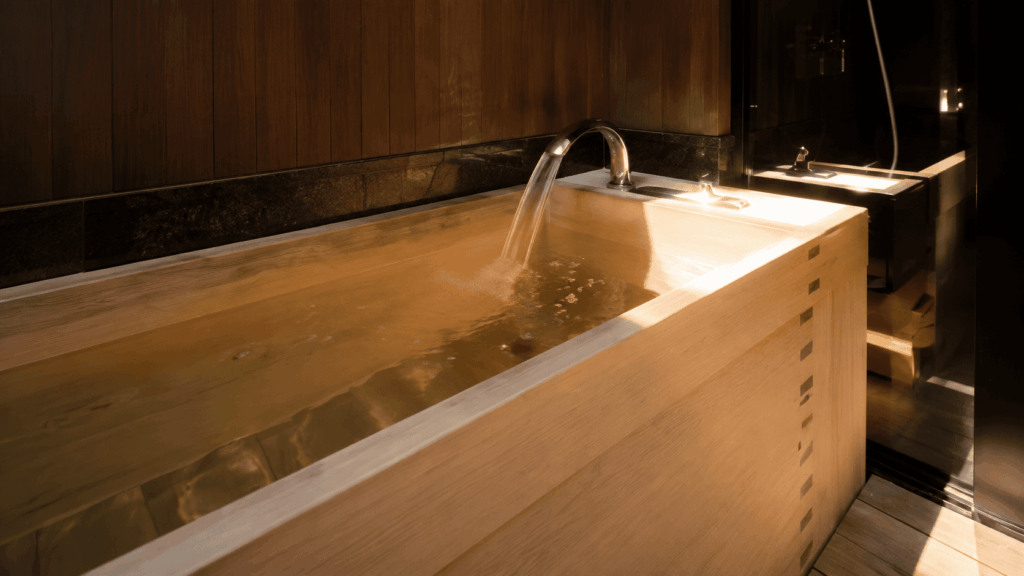
Ochanomizu Hotel Shoryukan is a traditional Japanese hotel with 42 rooms, only two of which include a private open-air bath: Japanese-style Room with Open-Air Bath — Room 505 Akane and Room 506 Akebono (34.1 sqm, 10 tatami mats, sleeps up to 5). This is Category B — the hinoki open-air bath uses ordinary heated water, not natural onsen.
Both rooms are on the 5th floor with a hinoki wooden open-air bath, traditional futon bedding, and a separate tatami living area. A free simple breakfast is included, and the hotel has a shared bath and relaxation area. Ochanomizu Station and Shin-Ochanomizu Station are within walking distance, placing you close to Jimbocho’s bookshops, Kanda Shrine, and Tokyo Dome.
The hotel is not a luxury property — its traditional furnishings and facilities are well maintained but modest compared to newer hotels. This is a fair trade-off for an in-room hinoki open-air bath at a reasonable price point in central Tokyo. The two open-air bath rooms book out quickly and may not appear on Klook for all dates.
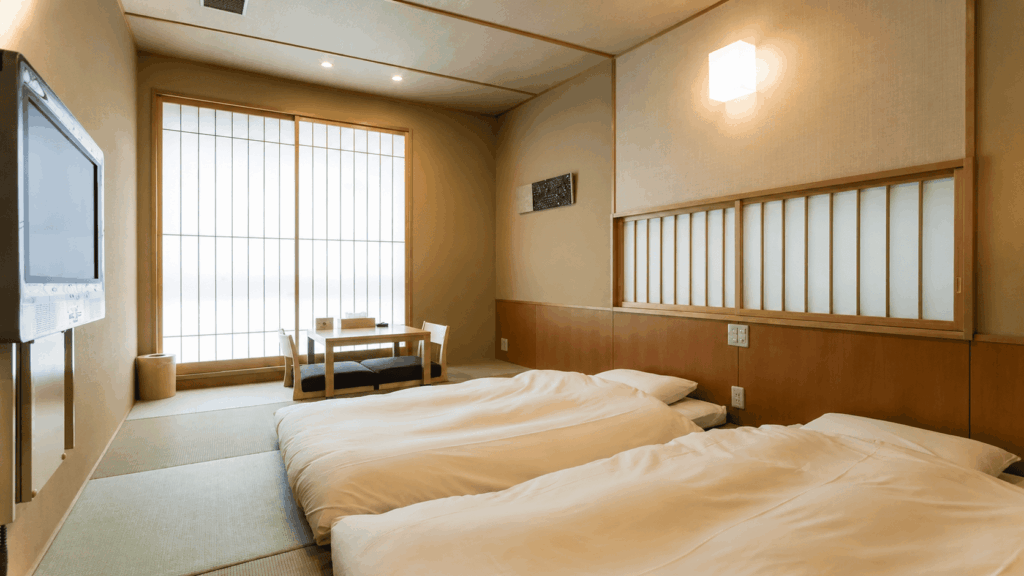
Important distinction: Only two rooms out of 42 have a private open-air bath. Rooms 505 and 506 are the only targets. All other room categories, including standard Japanese-style rooms and Western-style rooms, use a shared bath or a standard in-room bathroom.
Based on recent guest feedback: The private open-air hinoki bath is the main reason guests book and receives consistently positive feedback. The free breakfast is simple and functional, not elaborate. The hotel’s traditional character is appreciated by travelers seeking an authentic Japanese room, while some guests note the facilities feel dated compared to chain hotels. The Ochanomizu location is well connected by train to central Tokyo destinations.
Check for the Japanese-style room with an open-air bath at Shoryukan on Klook.
Tokyo Ryokan with Reservable Private Baths
The two properties below offer private baths that are not inside the guest room — they are shared facilities reservable for a fixed time slot. Both provide privacy and a traditional bath experience, but they do not qualify as “in-room private baths.” They are listed here as alternatives for travelers who prioritize a private soak over in-room convenience.
Cyashitsu Ryokan Asakusa — Best for a Rooftop Hinoki Bath
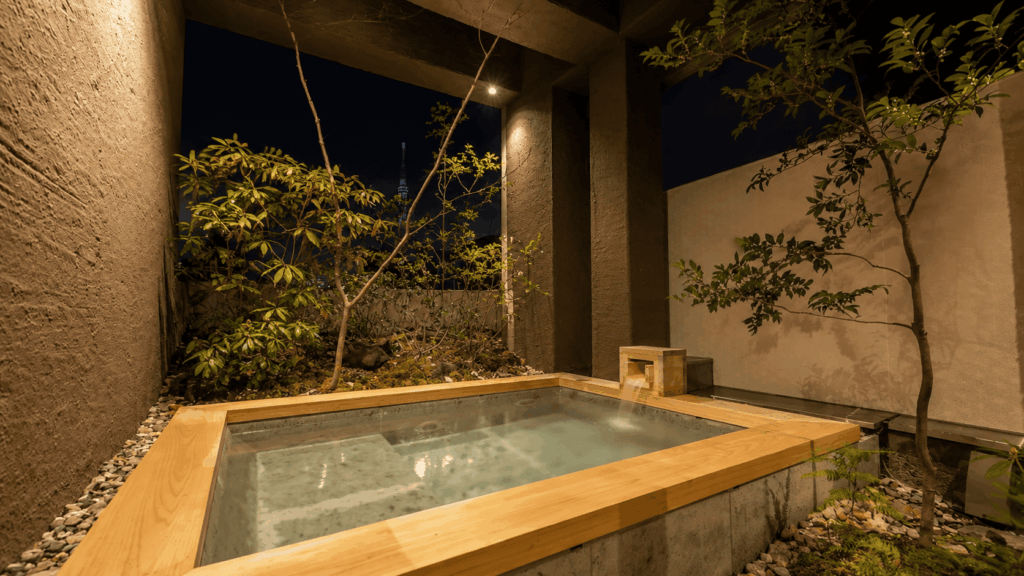
Cyashitsu Ryokan Asakusa is a 7-room ryokan in the heart of Asakusa with a rooftop hinoki wooden bath available for private reservation (1-hour time slots). This is a Category C property — the bath is reservable but not inside the guest room. The ryokan holds a strong 4.9 Klook rating based on recent reviews.
Each room at Cyashitsu is unique, with different layouts, toilet configurations, and floor levels. Some rooms have private toilets while others share facilities, so the exact room assigned affects the overall experience. The rooftop hinoki bath overlooks the Asakusa skyline, and the small guest count means reservations are generally available without heavy competition.
Based on recent guest feedback: The rooftop bath and the host’s hospitality are the most praised aspects. Guests recommend confirming bathroom arrangements before booking, as the room differences are significant. The ryokan’s location is a short walk from Senso-ji and the Asakusa dining district.
Check stay availability at Cyashitsu Ryokan Asakusa on Klook.
The Edo Sakura — Best for a Budget-Friendly Private Soak
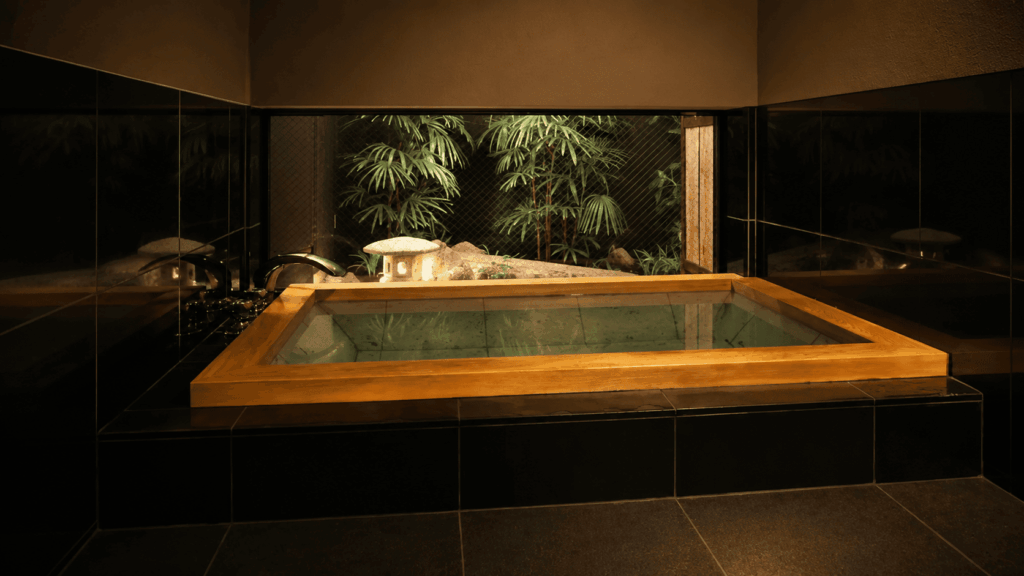
The Edo Sakura is a 30-room inn near Iriya Station (a 10-minute walk from Asakusa) that offers a reservable private bath at 500 yen per 40-minute session, available from 3 PM to 11 PM. This is Category C — the bath is not in the guest room and requires a separate reservation at the front desk. The Klook rating stands at 4.7 based on recent reviews.
The private bath uses a traditional tiled bathroom with a deep wooden soaking tub, and the 500 yen fee is notably affordable compared to other Tokyo reservable bath options. With 30 guest rooms and limited private bath time slots, reservations fill early in the evening. The property’s location in a quiet residential area near Ueno Park and Asakusa provides a calm base for city sightseeing.
Check rooms at The Edo Sakura on Klook.
What About FUFU TOKYO GINZA?
FUFU TOKYO GINZA opened with 34 rooms, each featuring a private bath using natural hot-spring water from Atami — and no shared public bath. Multiple media outlets (Michelin Guide, Condé Nast Traveler) have covered the property, and the official website confirms the in-room onsen setup. However, we could not verify a direct Klook booking page for FUFU TOKYO GINZA at the time of research. Because this guide prioritizes properties confirmed on Klook with bookable private-bath rooms, FUFU TOKYO GINZA is listed here as a notable mention rather than a ranked entry. If you are willing to book outside the Klook platform, it remains a rare Tokyo option with in-room natural onsen across all rooms.
Should You Stay in Tokyo or Hakone?
Choose a Tokyo private-bath hotel when:
- You want to stay inside Tokyo’s 23 wards without a separate trip to the mountains
- Privacy and convenience matter more than natural hot-spring water
- You are a couple or family sharing one room
- Your trip is short (3–5 days) and every night counts for sightseeing
Choose Hakone when:
- You want a genuine in-room natural onsen with confirmed hot-spring water
- You prefer a ryokan setting with mountain views, kaiseki dinner, and a slower pace
- You have at least one full day and night to dedicate to the hot-spring experience
- You want multiple in-room onsen options to compare, not just one confirmed choice
Hakone stays typically require a 90-minute train ride from central Tokyo, so they work best as a 1–2 night extension rather than a daily commute from the city. Compare genuine in-room onsen stays in Hakone.
How to Avoid Booking the Wrong Room
Booking a private-bath hotel in Tokyo requires more than selecting the hotel name. The difference between a room with a private bath and a room without one often comes down to a few words in the room title. Use this checklist before confirming any reservation:
- Check the exact room name on the booking page, not just the hotel name. Most private-bath rooms in this guide are limited to specific categories — booking the wrong room type means no private bath.
- Look for bath-specific terms in the room title or facilities list: “private open-air bath,” “private hot spring,” “spa bath,” or “with furo.” If these terms appear only in the hotel description rather than the specific room’s details, the bath may be a shared facility.
- Do not assume natural onsen based on the hotel name alone. A hotel with “onsen” or “hot spring” in its name may offer natural hot-spring water in the shared bath but ordinary water in the guest-room bath. Check the room description separately.
- If a room does not appear on Klook for your date, it may be sold out. Properties like Ochanomizu Hotel Shoryukan’s two open-air bath rooms and Manyo Club’s Special Japanese Room have very limited inventory — try multiple dates or wider date ranges.
- Review the final booking screen — specifically the facilities or amenities section — before entering payment details. Klook’s room title and photo may not always match the actual bath configuration, but the facilities list is more reliable.
- Confirm whether a reservable private bath requires advance booking and an additional fee. For Category C properties (Cyashitsu, The Edo Sakura), the private bath is not guaranteed at check-in without a prior reservation.
- Check the property’s tattoo policy separately from the room’s privacy level. An in-room private bath provides visual privacy, but facility-wide tattoo rules (especially at Manyo Club) still apply during your stay. Some properties require cover sheets even in the guest room.
FAQ
Are there hotels in Tokyo with a genuine private onsen?
Yes — but only one Klook-listed hotel inside Tokyo’s 23 wards offers a guest room with an officially confirmed natural onsen: Tokyo Toyosu Manyo Club’s Special Japanese Room with Private Hot Spring. FUFU TOKYO GINZA also offers in-room natural onsen across all rooms, but its Klook booking page could not be confirmed at the time of research. All other properties in this guide provide private baths with ordinary heated water.
Are private baths in Tokyo always natural hot springs?
No. Most private baths in Tokyo hotels use ordinary heated tap water. A hinoki (cypress wood) tub, a balcony open-air bath, or a large soaking tub does not indicate natural hot-spring water. Always check the room description for explicit terms such as “natural hot spring,” “natural onsen,” or “mineral spring water” — if these terms are absent, the bath is not a natural onsen.
Which Tokyo hotel is best for couples?
For couples who want a confirmed natural onsen in their room, Tokyo Toyosu Manyo Club is the only option in this guide. For couples who prioritize an open-air bath with a view, Prostyle Ryokan Tokyo Asakusa (Skytree-side Corner Suite or Corner Twin) offers the most romantic setting. TSUKI Tokyo’s Premier Double with a hinoki indoor bath suits couples who prefer a quiet design-hotel atmosphere near Ginza and Tsukiji.
Can travelers with tattoos use a private bath in Tokyo?
An in-room private bath provides visual privacy, but the property’s facility-wide tattoo policy still applies during your stay. Tokyo Toyosu Manyo Club requires tattoo cover sheets (up to two, 11 cm × 20 cm each, 110 yen each) — this applies even inside the guest room based on the property’s published rules. The reservable family bath at Manyo Club provides an alternative that avoids the main public bath’s restrictions. For other properties, guest-room private baths generally do not interact with shared bath rules, but it is worth confirming the policy directly with the property before booking.
Is a reservable private bath the same as an in-room bath?
No. A reservable private bath (Category C in this guide) is a shared facility that you book for a fixed time slot — it is not inside your guest room. This means you have to leave your room, follow a specific schedule, and may have to pay an additional fee. Cyashitsu Ryokan Asakusa (rooftop hinoki bath, 1-hour reservation, included in the stay) and The Edo Sakura (500 yen per 40-minute slot) are the two Category C properties covered in this guide. In-room baths (Category A and B) are available at any time within your own room without reservation or additional charge.
Is Hakone better than Tokyo for a private onsen?
Yes — if your priority is a genuine in-room natural onsen with multiple options to choose from. Hakone offers a much wider selection of ryokans with confirmed natural hot-spring water in guest rooms, mountain views, and multicourse kaiseki dinners. Tokyo is the better choice if you want to stay inside the city for sightseeing, prefer convenience over hot-spring water, or have a short trip with no extra night to spend outside Tokyo. Explore our full Hakone private onsen guide.
Final Verdict by Traveler Type
If you want a genuine natural onsen inside Tokyo’s 23 wards: Book Tokyo Toyosu Manyo Club’s Special Japanese Room with Private Hot Spring. Confirm the exact room, date availability, and tattoo policy before purchase.
If you want a private open-air bath with a view: Prostyle Ryokan Tokyo Asakusa offers the most dramatic setting with Skytree-side balcony baths. Book a Corner Suite or Corner Twin with Skytree view.
If you want a quiet design hotel near Ginza and Tsukiji: TSUKI Tokyo’s Premier Double or Premier Twin with “furo” provides an indoor hinoki bath in a small, well-managed property.
If you want an urban ryokan with a shared natural onsen and a private outdoor bath: Onsen Ryokan Yuen Bettei Tokyo Daita’s Deluxe Twin with Outdoor Bath delivers a ryokan atmosphere with a proper onsen in the shared bath.
If you are a group of 2–4 and want to stay in Ginza: Dormy Inn PREMIUM Ginza’s Japanese-style Superior or Deluxe rooms offer a hinoki bath and roof terrace in a prime location.
If you are a family of 4–6 traveling together: Stay SAKURA Tokyo Asakusa Yokozuna Hotel’s Deluxe Suite gives you 96 sqm, an open-air bath, and a full kitchen near Senso-ji.
If you want an affordable traditional room with a private open-air bath in central Tokyo: Ochanomizu Hotel Shoryukan’s two Japanese-style rooms with open-air bath (505 Akane and 506 Akebono) offer exceptional value — if you can secure one of the two rooms.
Hi, I’m Kai. I’m a Tokyo-based travel writer, tourism industry insider, and the author of a published guidebook for international visitors to Japan. With over 10 years of professional experience at a leading Japanese tourism company, my mission is to help you skip the tourist traps and navigate Japan’s best destinations like a local. I believe the perfect day trip is like a traditional kaiseki meal: a beautiful balance of precise planning and unforgettable seasonal discovery. When I’m not out conducting field research, you’ll usually find me drafting new itineraries with one of my favorite fountain pens!