
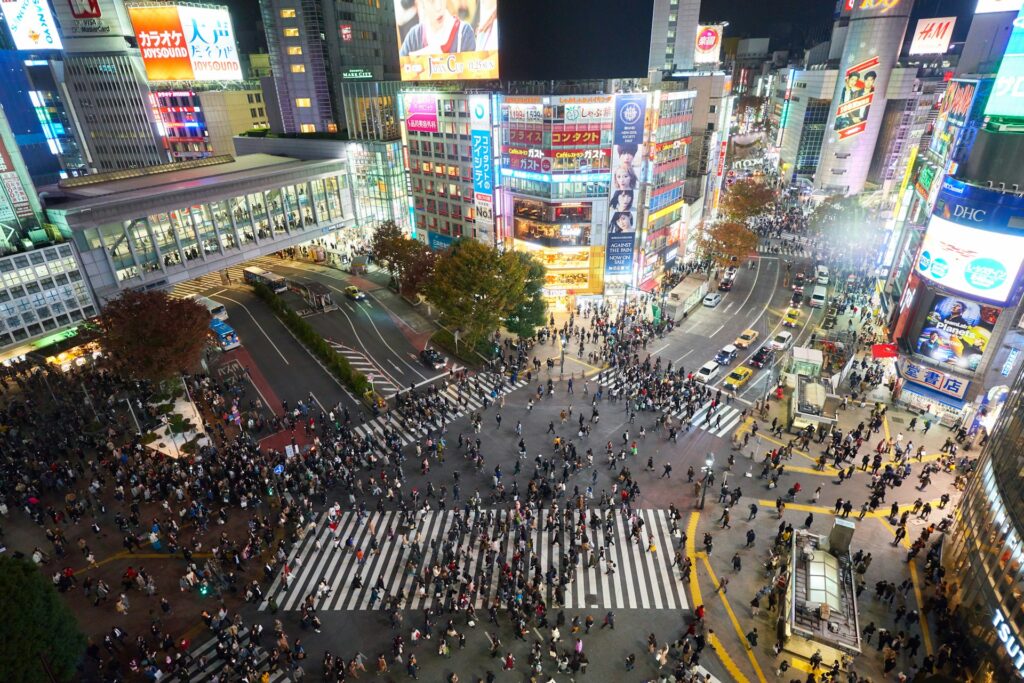
Most visitors to Tokyo have one question about Shibuya: is it just a crossing and a dog statue, or is there actually a full day’s worth of things to do here?
The honest answer is that Shibuya is one of those rare neighbourhoods that works at any pace. You can see the headline act—the Scramble Crossing—in under ten minutes and feel satisfied. Or you can spend a full day exploring its layers: the rooftop views, the pop-culture rabbit warren inside PARCO, the backstreet drinking alleys that survive from the postwar era, and the new developments that keep arriving each year. What you shouldn’t do is arrive without a plan for which view to choose, when to book, and where to point yourself first.
This guide is built around exactly those decisions. You’ll get a local’s half-day walking route, a straight comparison of every spot that overlooks the crossing, and the practical reality of booking Shibuya Sky—including what to do when the sunset slots sell out (which they will).
If you want Shibuya Sky handled as part of a short guided route rather than treating it as a separate ticket hunt, compare start times and recent traveler reviews for the Shibuya Sky, Crossing & Hachiko guided tour before you lock in your half-day plan.
Quick Answer: What to Do in Shibuya in Half a Day
If you only have three to four hours in Shibuya, here is the priority order that gives you the most return for your time:
- Walk the Scramble Crossing at street level during a busy signal change—it’s free, it takes five minutes, and it’s genuinely impressive.
- Choose one elevated view of the crossing. Shibuya Sky is the best, but if tickets are sold out, MAG8 (¥1,800 with a drink) or the free Hikarie Sky Lobby both deliver.
- Visit PARCO 6F for Nintendo TOKYO, Pokémon Center Shibuya, and Jump Shop—even if you’re not a hardcore fan, the energy on this floor is worth a walk-through.
- End at Nonbei Yokocho for a drink in one of Shibuya’s last surviving shotengai alleys. Just remember: street drinking is now banned year-round from 6pm, so keep your drinks inside the bars.
What to Do in Shibuya – First, Nail the Big Three
Before you go anywhere else, these three experiences are the foundation of any Shibuya visit. They cluster within a three-minute walk of each other, so you can knock them out in under an hour—or stretch each one into something longer.
1. Walk the Shibuya Scramble Crossing
The iconic crossing isn’t just a photo op—it’s a functioning intersection that around 500,000 people use daily. The experience of standing at the centre during a busy scramble (especially just after the traffic stops) is something no photograph can replicate. Go during a weekend afternoon for maximum crowd energy, or early on a weekday morning for a rare moment when you can actually see the crossing without a wall of people.
2. Meet Hachiko
The Hachiko Statue, just outside the Hachiko Exit of Shibuya Station, is the city’s most famous meeting point. It’s a small bronze tribute to the loyal Akita who waited for his owner at this station every day for nearly ten years. Most visitors spend no more than five minutes here—it’s worth a quick photo and a moment of recognition, but the real draw is that this is your landmark for navigating the station area.
3. Go Up for the View
Seeing the crossing from above is where Shibuya separates itself from every other Tokyo neighbourhood. The question is where to go, and that depends on your budget, tolerance for queues, and whether you managed to book the sunset slot at Shibuya Sky. The next section breaks down every option so you can decide at a glance.
Shibuya Crossing View Comparison: Free vs Paid
There are five main spots to view the Scramble Crossing from above. Each one offers a different angle, price point, and crowd level. Here is how they compare:
| Spot | Height / Angle | Price | Reservation | Crowds | Best for |
|---|---|---|---|---|---|
| Shibuya Sky Shibuya Scramble Square, 14F→rooftop |
229m, open-air 360° | ¥2,700–3,700 (time-dependent) | Required; 14 days ahead, sunset slots sell out in minutes | High (timed entry controls flow) | The definitive overhead view; sunset chasers; photographers |
| MAG8 (Crossing View & Rooftop Lounge) MAGNET by Shibuya109, rooftop |
Direct overhead, slightly lower than Sky | ¥1,800 (includes 1 drink) | Walk-in; not usually needed | Moderate | Budget-conscious visitors; drink-included experience; backup if Sky is sold out |
| Shibuya Hikarie Sky Lobby 11F | Distant panoramic, indoor | Free | Not needed | Quiet | Free option; night views (open until midnight); calm break from the crowds |
| Shibuya Mark City Walkway JR–Mark City connecting bridge |
Side-angle, glass-walled, mid-height | Free | Not needed | Very quiet | A quick stop; time-lapse photos without crowds; travellers in transit |
| Starbucks SHIBUYA TSUTAYA 2F Q-FRONT building, directly on the crossing |
Street-level angle from above, front-row | Cost of a drink (~¥500+) | Not needed (but seats are first-come) | Very high; seat competition is fierce | The iconic café view—if you can get a window seat; casual coffee stop |
Kai’s tip: The window seats at the Starbucks inside SHIBUYA TSUTAYA are famous for a reason, but the competition for them has gotten worse since the store reopened in 2024. On a busy afternoon you can spend 20 minutes waiting for a seat and another 30 trying to get a clear photo through the reflections. For a calmer experience at the same height, walk five minutes to the Shibuya Mark City walkway—it’s free, almost always empty, and gives you a clean side-angle shot of the crossing without the stress.
Shibuya Sky: Is It Worth It, and How to Get Tickets
Shibuya Sky, on the 14th-to-rooftop level of Shibuya Scramble Square, is the highest open-air observation deck in the area at 229 metres. The 360° view takes in Mount Fuji on clear days, the skyscrapers of Shinjuku, and—directly below—the Scramble Crossing in a way no other spot can match. Is it worth the price? For first-time visitors and sunset chasers, yes. For anyone who just wants to see the crossing from above without the advance planning, one of the alternatives above will serve you just as well.
If you fall into that camp — you want the definitive rooftop view, but the ticket timing and station-area navigation feel like one more thing to manage — this is the guided option to compare first.
Why I’d book this one
- It matches the article’s core route: Hachiko, the Scramble Crossing, and Shibuya Sky are bundled into a short guided walk instead of treated as separate decisions.
- It adds English context without eating the whole day: recent travelers often highlight the guide’s local explanations, friendly support, and practical Shibuya tips.
- It keeps planning flexible: the listing lets you check current start times, live availability, cancellation terms, and recent traveler reviews before committing.
See live availability, start times, and recent traveler reviews for the Tokyo: Shibuya Sky, Crossing & Hachiko Guided Tour.
Ticket Pricing – Online vs On-the-Day
Shibuya Sky uses a two-tier pricing system based on time of day:
| Time Slot | Online Price (Adult) | On-the-Day Counter Price |
|---|---|---|
| Before 3:00 PM | ¥2,700 | ¥3,000 |
| 3:00 PM onward (sunset window) | ¥3,400 | ¥3,700 |
If you only need the observation deck ticket and prefer to explore Shibuya on your own, check current Shibuya Sky ticket availability on Klook before finalising your route.
Children’s tickets (elementary and junior high) are sold only at the counter on the day; children under five enter free. Important: if adult tickets are sold out online, they are also unavailable at the counter. The online allocation is the only allocation.
When Sunset Slots Sell Out (and What to Do Instead)
This is the part most guides gloss over, and it matters. Tickets for Shibuya Sky are released exactly 14 days in advance at midnight Japan Standard Time. The sunset window—roughly 4:00 PM to 5:30 PM depending on the season—sells out within minutes of release. If you have your heart set on a golden-hour view, you need to be on the official website at midnight JST, 14 days before your preferred date, with your payment details ready.
Kai’s tip: If the sunset slot at Shibuya Sky is sold out by the time you book—which happens more often than not—don’t abandon the idea of seeing the crossing from above. Head to MAG8 (¥1,800 with a drink included) or the Hikarie Sky Lobby 11F (free, open until midnight). Neither is as high as Shibuya Sky, but both offer excellent views of the crossing, and neither requires a reservation. I’ve sent countless friends to Hikarie as a fallback, and every single one has come back satisfied.
Bad Weather and Rooftop Closures
The rooftop observation area closes during rain, strong wind, and thunderstorms. When the roof is closed, ticket holders are redirected to the indoor observation area on the 46th floor of Scramble Square—the view is still good, but the open-air experience is the main reason to book. Check the official SHIBUYA SKY website for the day’s operating status before heading up, especially if you’re visiting during typhoon season (June–October). Refund and rescheduling policies depend on the severity of the closure; check the terms at the time of booking.
Getting to the Crossing: The Hachiko Exit Rule
Shibuya Station is one of Tokyo’s most complex stations, and ongoing redevelopment means the walking routes change every year or so. If your only goal is to reach the Scramble Crossing, always aim for the Hachiko Exit (ハチ公口). This exit places you directly at the statue and the edge of the crossing. Any other exit—especially the south exits or the underground passageways—will send you into a maze of corridors that take ten minutes to navigate back from.
Kai’s tip: The new JR Shibuya Station New South Exit (opened 2024, connected to Sakura Stage) is convenient if you’re arriving on the Yamanote Line from Shinjuku or Harajuku direction, but it drops you on the opposite side of the station from the crossing. If you accidentally exit here, follow the signs to “Hachiko Exit” through the station’s central corridor—it takes about five minutes. Or better yet, stay on the train one more stop if you can, and get off at the main Shibuya Station platforms instead.
A Local’s Half-Day Walking Route in Shibuya
This route strings together the essentials from mid-afternoon through evening. It avoids backtracking and keeps walking time between stops under five minutes. Total walking distance is roughly 2 kilometres.
Mid-Afternoon (2:00 PM – 4:00 PM): Miyashita Park or PARCO
Start from the Hachiko Exit, but instead of heading straight into the crossing crowds, turn left towards Miyashita Park (a two-minute walk along the Meiji-dori avenue). This 2020 development stacks a shopping centre, a rooftop park with a skate bowl and bouldering wall, restaurants, and a hotel into one long block. It’s a good warm-up for the neighbourhood—spacious, less frantic than the main crossing area, and popular with locals rather than tourists.
From Miyashita Park, walk ten minutes north along Cat Street (the backstreet that leads towards Harajuku) or take the shorter route through Center-gai to reach Shibuya PARCO. The sixth floor, called CYBERSPACE SHIBUYA, is the main event: Nintendo TOKYO, Pokémon Center Shibuya, Jump Shop (for One Piece, Dragon Ball, and My Hero Academia), and a Capcom Store all share the same floor. Each shop is compact but well-stocked, and the combined foot traffic means you’ll queue briefly for Nintendo and Pokémon on weekends.
Kai’s tip: The queue for Nintendo TOKYO and Pokémon Center Shibuya tends to be longest between 1:00 PM and 3:00 PM on weekends. If you arrive at PARCO around 4:00 PM, the wait usually drops to under ten minutes for each store. Use the earlier part of the afternoon for Miyashita Park or a view spot, then hit the pop-culture floor later—it’s a small scheduling shift that makes a noticeable difference.
Late Afternoon (4:00 PM – 5:30 PM): Your View Stop
This is the window for the elevated view of the crossing. If you have a Shibuya Sky ticket, head to Shibuya Scramble Square. If not, choose between MAG8 (¥1,800 with one drink, no reservation needed) or the Hikarie Sky Lobby 11F (free, open until midnight). Both are within a five-minute walk of PARCO.
Evening (6:00 PM onward): Nonbei Yokocho & Dogenzaka
From your view spot, walk five minutes north-west to Nonbei Yokocho (literally “Drunkard’s Alley”), a narrow lane of tiny standing bars that has survived since the postwar era. The alley runs parallel to the railway tracks just north of the station’s Hachiko Exit. Most bars seat only four to six people, and many specialise in a single style—yakitori, oden, natural wine, or whisky. There is no cover charge at most places, but expect to order a drink and a small food item per person (budget around ¥2,000–¥3,000 per bar).
If the alley feels too quiet or you want a bigger night, head up Dogenzaka, the slope leading away from the crossing towards the Love Hotel Hill area. This is Shibuya’s nightlife spine, with live-music venues, cocktail bars, and clubs. The scene here skews younger and louder than Nonbei Yokocho.
Shopping & Pop Culture: Nintendo, Pokémon, and More
PARCO 6F – CYBERSPACE SHIBUYA
This single floor is the densest concentration of Japanese pop-culture retail anywhere in Tokyo. The four anchor stores are:
- Nintendo TOKYO – official merchandise, character plush, limited-edition hardware. No tax-free counter; bring your passport for the refund desk on a different floor.
- Pokémon Center Shibuya – the standard Pokémon Center experience with a Shibuya-exclusive design: Pikachu wearing a Shibuya Scramble-themed hoodie. (If you’re also hoping to visit the café in Nihonbashi, read our Pokemon Cafe reservation tips).
- Jump Shop – merchandise from Weekly Shonen Jump titles (One Piece, Jujutsu Kaisen, Spy x Family, Chainsaw Man).
- Capcom Store – Monster Hunter, Street Fighter, and Ace Attorney goods.
Each store has a separate entrance and its own queue on busy days. Count 30–45 minutes to browse all four comfortably.
Miyashita Park – Rooftop Green + Shopping
Beyond the skate bowl and climbing wall on the rooftop, the indoor levels include a mix of Japanese and international fashion brands, a food hall (Miyashita Park Eats), and a café-lined promenade. The rooftop is a rare spot of open space in central Shibuya—useful if you need a break from the crowds.
Shibuya Sakura Stage – Newest Complex (2024)
Opened in July 2024, Sakura Stage is Shibuya’s newest large-scale development, connected directly to the JR Shibuya New South Exit. It houses around 37 shops and restaurants across two buildings, including a Tokyu Foods store, a MUJI, and several casual dining spots with outdoor terraces. It’s still less crowded than the main crossing area, and worth a walk-through if you’re arriving by train from Shinjuku or Harajuku.
Note on Seibu Shibuya: The Seibu department store at the west end of the crossing is scheduled to close permanently at the end of September 2026. If you’re visiting after that date, this landmark will no longer be there.
Shibuya at Night: Where to Go, and What’s Changed
Nonbei Yokocho (Drunkard’s Alley)
The alley comes alive from around 6:30 PM. Bars open their tiny doors, lanterns light the narrow lane, and a mix of locals and travellers squeeze onto stools for a drink and conversation. The atmosphere is informal—you can usually walk in alone and find a spot at the counter. Most bars accept credit cards now, but cash is still preferred at the smaller, older places.
Dogenzaka and the Bar Scene
The Dogenzaka area offers a wider range of nightlife: jazz bars, listening bars, craft beer pubs, and late-night ramen shops. For a quieter evening, the bars around Udagawacho (the block between Shibuya and Omotesando) are known for a more sophisticated, less rowdy crowd.
⚠️ Important: Street Drinking Is Now Banned Year-Round
Since October 2024, a city ordinance has banned drinking alcohol on the streets and in public spaces around Shibuya Station every day from 6:00 PM to 5:00 AM. The ban covers the main crossing area, Center-gai, Miyashita Park, and the Dogenzaka and Maruyamacho districts. This means no convenience-store beers on the steps near Hachiko, no cans of chu-hi while walking down Center-gai—any open alcohol in a public space during those hours can be confiscated. The rule is enforced by patrols, especially on weekends and during Halloween. It’s not a draconian crackdown; it’s a response to years of litter, noise, and public intoxication that made the area less pleasant for everyone.
Kai’s tip: If you’re visiting Shibuya for a night out, the new drinking ban changes the practical strategy. You can still drink freely in bars, pubs, and restaurants—no restrictions there. But the old habit of grabbing a can from a convenience store and drinking it on the street while walking between spots is no longer an option after 6 PM. Plan to have your drinks inside a bar or restaurant, and if you’re moving between two spots, finish your drink before stepping out. This is one of those rules that catches returning visitors off guard much more than first-timers, because the image of Shibuya at night from a few years ago was very different.
Practical Tips for Your Shibuya Visit
Best Time of Day to Visit
- Early morning (7:00 AM – 9:00 AM): The crossing is almost empty. Great for photos without people, but most shops don’t open until 10:00 AM or 11:00 AM.
- Late afternoon (3:00 PM – 5:00 PM): The sweet spot. Good light, moderate crowds, and you can flow into the evening seamlessly.
- Weekends and public holidays: Expect heavy crowds from midday onward. The crossing will be at its most dramatic, but moving through Center-gai and PARCO will be noticeably slower.
- Avoid if you dislike crowds: Saturday afternoons and the entire Halloween-to-New-Year corridor (late October through early January).
Shibuya Station: Quick Exit Guide
| Train Line | Best Exit for the Crossing | Notes |
|---|---|---|
| JR Yamanote / Saikyo / Shonan-Shinjuku | Hachiko Exit (ハチ公口) | Directly to the statue and crossing |
| Tokyo Metro (Ginza, Hanzomon, Fukutoshin) | Exit 4A or 5 (follow signs to Hachiko) | Underground passages connect; look for “Hachiko Exit” signs |
| Keio Inokashira Line | Central Exit → Hachiko Exit | A short underground walk; exit to ground level near the east side of the station |
| Tokyu (Toyoko / Den-en-toshi) | Hachiko Exit (upper ground level) | Follow the station corridor towards the main JR concourse |
Family-Friendly Tips
For more comprehensive advice on navigating the city with little ones, see our Tokyo with Kids survival guide.
- PARCO 6F (Nintendo, Pokémon) is a hit with children aged 4–14. The queues move faster than they look, and the Pokémon Center has a small play area near the entrance.
- Miyashita Park’s rooftop is stroller-friendly and has a skate bowl that’s fun to watch even if you don’t skate. The bouldering wall accepts children from around age 6.
- Most restaurants in Shibuya have English menus or picture menus, but few have dedicated kids’ menus. Larger chains (Saizeriya, Gusto, Jonathan’s) and some conveyor-belt sushi places near Center-gai are the safest bet for picky eaters.
Rainy Day Options
- Shibuya Sky’s rooftop closes in rain, but the indoor observation area on the 46th floor remains open.
- PARCO, Miyashita Park, and Shibuya Sakura Stage are all fully indoor, connected by covered walkways or short underground passages.
- Shibuya Hikarie (11F Sky Lobby) is indoors and free—good for a rainy-day view fix.
- Nonbei Yokocho’s bars are tiny and covered; you can hop between them without getting wet, but the alley itself is open to the sky.
FAQ
Is Shibuya Sky worth the money?
For first-time visitors who want the definitive overhead view of the Scramble Crossing and a 360° panorama of Tokyo—including Mount Fuji on clear days—yes. The rooftop open-air experience is unique among Tokyo observation decks. If your main goal is simply to see the crossing from above and you’re on a tighter budget, MAG8 (¥1,800 with a drink) or the free Hikarie Sky Lobby 11F will meet your needs without the advance booking pressure.
Can I buy Shibuya Sky tickets on the day?
Only if online tickets for your preferred time slot have not sold out. Online adult tickets are ¥2,700 (before 3:00 PM) or ¥3,400 (3:00 PM onward). If those are sold out online, they are also unavailable at the counter. Children’s and junior high tickets are sold only at the counter on the day, regardless of online availability.
What time does the Shibuya Crossing look best?
For the dramatic full-crowd experience, visit between 4:00 PM and 7:00 PM on a weekend when the pedestrian flow is heaviest and the neon signs are lit. For clean photos without people, arrive before 8:00 AM. The golden hour (around 4:00 PM–5:00 PM depending on the season) gives the best light for photos from above, especially from Shibuya Sky or MAG8.
Is it legal to drink on the streets in Shibuya at night?
No. Since October 2024, a city ordinance bans drinking alcohol in public spaces around Shibuya Station every day from 6:00 PM to 5:00 AM. This covers the main crossing area, Center-gai, Miyashita Park, and the surrounding streets. You can still drink freely inside bars and restaurants. Open containers in public during the restricted hours may be confiscated.
How much time should I spend in Shibuya?
With a focused plan, three hours is enough to walk the crossing, visit one view spot, and browse PARCO 6F. For a relaxed pace that includes a meal, Nonbei Yokocho in the evening, and time to explore Miyashita Park or Sakura Stage, plan for five to six hours. Shibuya works well as an afternoon-to-evening slot in a day that includes nearby Harajuku.
Is Shibuya family-friendly?
Yes, especially if you’re visiting with children aged 4 to 14. The main draw for families is PARCO 6F (Nintendo TOKYO and Pokémon Center Shibuya). Miyashita Park has a rooftop with a skate bowl and bouldering wall that entertains most kids for 30–40 minutes. The crossing itself is impressive at any age. What Shibuya lacks compared to nearby Harajuku or Ueno is dedicated children’s activities or play spaces—treat it as a walking-and-looking neighbourhood rather than a hands-on attraction for very young children.
Can I see the Scramble Crossing from above for free?
Yes. The Shibuya Hikarie Sky Lobby 11F is free, open until midnight, and offers a distant panoramic view that includes the crossing. The Shibuya Mark City walkway (connecting JR Shibuya Station to Mark City) is also free and gives a clear side-angle view of the crossing below. Both are excellent alternatives to the paid viewpoints. (For more budget-friendly views across the city, check out our guide to the 5 best free observation decks in Tokyo).
What happened to MAG’s Park on top of MAGNET?
It reopened in March 2026 as MAG8 (Crossing View & Rooftop Lounge), with a new name, updated interior, and a ¥1,800 entry fee that includes one drink. It’s located on the rooftop of MAGNET by Shibuya109 and offers a direct overhead view of the crossing. No reservation is required under normal conditions.
Final Verdict: Is Shibuya Worth Half a Day?
The answer depends entirely on how you spend your time. Shibuya can feel like a 30-minute neighbourhood if you only see the crossing and the statue. It becomes a five-hour experience when you layer in a rooftop view, a walk through the pop-culture floor at PARCO, a quiet drink at Nonbei Yokocho, and a stop at one of the newer developments like Sakura Stage or Miyashita Park.
Choose Shibuya if:
- You’re a first-time visitor to Tokyo and want to see one of the city’s most iconic intersections from above and at ground level.
- You’re travelling with children or teenagers who are excited about Nintendo, Pokémon, or anime merchandise.
- You’re looking for an energetic evening neighbourhood with small bars, live music, and a dense, walkable nightlife scene.
- You’re pairing it with nearby Harajuku or Yoyogi Park/Meiji Jingu as a single afternoon-to-evening route.
Consider skipping Shibuya (or keeping it to a quick stop) if:
- You strongly dislike large crowds and don’t find the spectacle of a busy intersection worth the density of people.
- You have only one full day in Tokyo and your priorities lean toward historic temples, gardens, or museum districts (Asakusa, Ueno, Yanaka).
- You’re coming specifically for a quiet, romantic evening—the energy here is buzzy and loud, not intimate.
For first-time visitors: Make the effort to book Shibuya Sky’s sunset slot if you have the flexibility. If you miss it, the alternatives (MAG8 or Hikarie) are genuinely good, and a half-day route that includes the crossing, PARCO, and an evening at Nonbei Yokocho will leave you with a strong sense of what makes this neighbourhood distinct from Shinjuku, Harajuku, or Ginza.
For repeat visitors: Skip the crossing during the day unless you need a photo. Come at night instead—the neon reflection on wet pavement after rain is one of the best urban scenes in Tokyo. Explore Udagawacho for bars, or check out what’s new at Sakura Stage. The area changes noticeably every 12 to 18 months, so there is almost always something you haven’t seen.
For families: Set realistic expectations for how much ground you can cover. The combination of PARCO 6F + one view spot + a meal at Miyashita Park Eats is a solid four-hour plan that keeps walking distances short and the entertainment density high. Skip Nonbei Yokocho—the tiny bars are not designed for children—and save Dogenzaka for a future adults-only trip.
Hi, I’m Kai. I’m a Tokyo-based travel writer, tourism industry insider, and the author of a published guidebook for international visitors to Japan. With over 10 years of professional experience at a leading Japanese tourism company, my mission is to help you skip the tourist traps and navigate Japan’s best destinations like a local. I believe the perfect day trip is like a traditional kaiseki meal: a beautiful balance of precise planning and unforgettable seasonal discovery. When I’m not out conducting field research, you’ll usually find me drafting new itineraries with one of my favorite fountain pens!