
So, Is Enoshima Worth It? (The Short Answer)
Yes, for most travelers—but the honest answer depends on your schedule, your legs, and whether you’re pairing it with Kamakura.
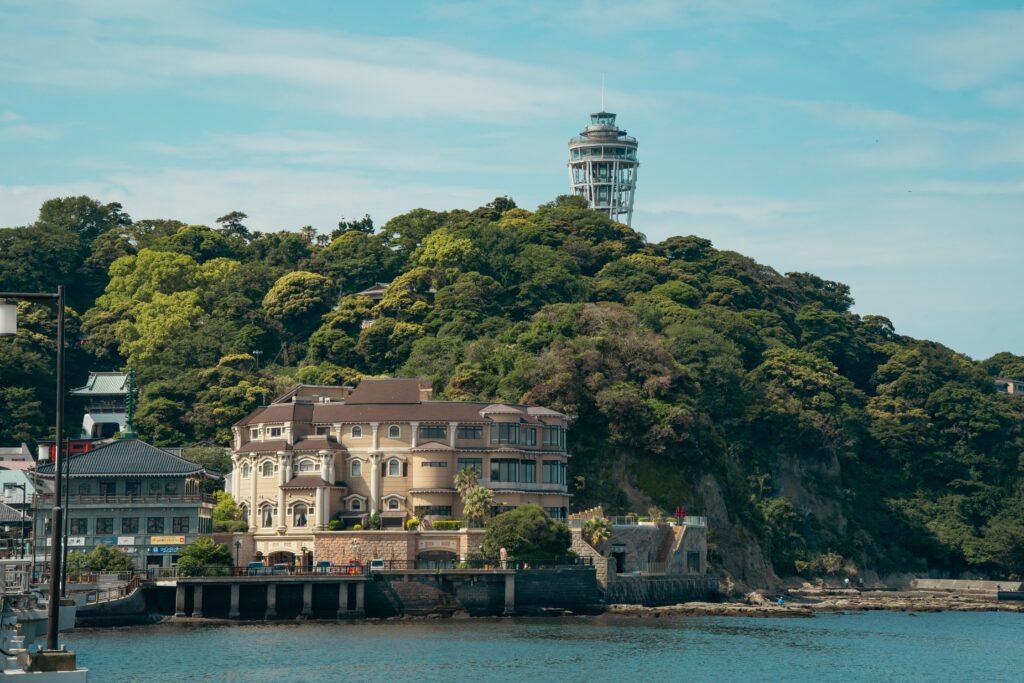
Enoshima is a genuinely beautiful island with 360-degree ocean views, a historic shrine complex, unexpected food discoveries, and (on a clear winter day) one of the best Mount Fuji views within reach of Tokyo. But it’s also a place where the tourist infrastructure—the escalators, the passes, the nakamise street—creates expectations that don’t always match reality.
The mistake I see travelers make most often is treating Enoshima as a quick stop. It’s not. From central Tokyo, you’re looking at roughly 75 minutes each way by train, plus a 10-minute walk across the bridge to the island, plus the time it takes to actually climb and explore. If you’re doing Kamakura on the same day, you’re signing up for a 12-hour day. That doesn’t mean you shouldn’t go—it means you should go knowing what you’re in for.
Read the section below that matches your situation, and you’ll have your answer in under a minute.
If your real question is whether to combine Enoshima with Kamakura in one long day, it is worth checking a guided option before you commit to the DIY route: see live availability, start times, and recent traveler reviews for this Kamakura & Enoshima day trip.
Choose Enoshima If… / Skip Enoshima If…
✅ Choose Enoshima If…
You’re a repeat visitor to Japan who has already seen Kamakura.
Enoshima offers something genuinely different from Kyoto’s temples or Tokyo’s energy: a small island where you can walk from a Shinto shrine to a sea cave to an observation tower in a single afternoon, with grilled seafood and a sunset view of Mount Fuji as your payoff.
You’re a photographer or sunset chaser.
The view from the west side of the island (Chigogafuchi and the Sea Candle observation deck) during golden hour is one of the best free experiences near Tokyo. Winter months deliver clear Fuji silhouettes. Summer is hit-or-miss due to humidity and haze.
You want a nature-meets-culture day that feels like an escape.
The combination of the three Enoshima Shrine sanctuaries (Hetsumiya, Nakatsumiya, Okutsumiya), the Samuel Cocking Garden, the coastal walk to the Iwaya caves, and the sea breeze makes it feel like a genuine trip—not just another Tokyo suburb.
You’re traveling with older kids or teenagers who can handle stairs.
Active kids who enjoy exploring caves, climbing towers, and eating street food will have a great time. The escalator helps with the steepest sections.
❌ Skip Enoshima If…
You’re in Tokyo for only 3–4 days and it’s your first visit.
I’d be honest here: your limited days are better spent in Tokyo itself, or on a day trip that offers a higher payoff-per-hour. Kamakura on its own gives you a richer cultural experience with less travel friction. Save Enoshima for a longer trip or a return visit.
You have mobility issues, use a wheelchair, or struggle with steep stairs.
This is the thing most guides won’t tell you straight: the Escar (paid escalator, ¥500) goes up only—three sections that take you from near the shrine entrance to the top of the island near the Sea Candle. It covers the climb up, but it does not cover the descent to the Iwaya caves on the far side, nor the return climb back. Those sections are all stairs, and the route is not a loop—you go down, then come back up the same way. Wheelchair users cannot access the shrine, the garden, the Sea Candle, or the caves beyond the initial slope.
You want a relaxed, slow-paced half-day with minimal walking.
Even with the escalator, you’ll do significant walking. From the train station to the island is a 15-minute walk across Benten Bridge (about 600m). From the bridge to the Sea Candle at the top involves the escalator plus walking. The full circuit including the caves adds roughly 200 stairs each way beyond the escalator’s coverage. It adds up.
You’re on a tight budget and worried about hidden costs.
The island itself is free to enter, and the shrine is free. But the escalator (¥500), Sea Candle (¥800), and Iwaya caves (¥500) are all paid separately unless you buy the Enoshima 1 Day Pass (¥1,550), which bundles all three. The pass saves money only if you plan to use all three facilities.
The Honest Breakdown: What Delivers vs What Falls Short
What Makes Enoshima Special
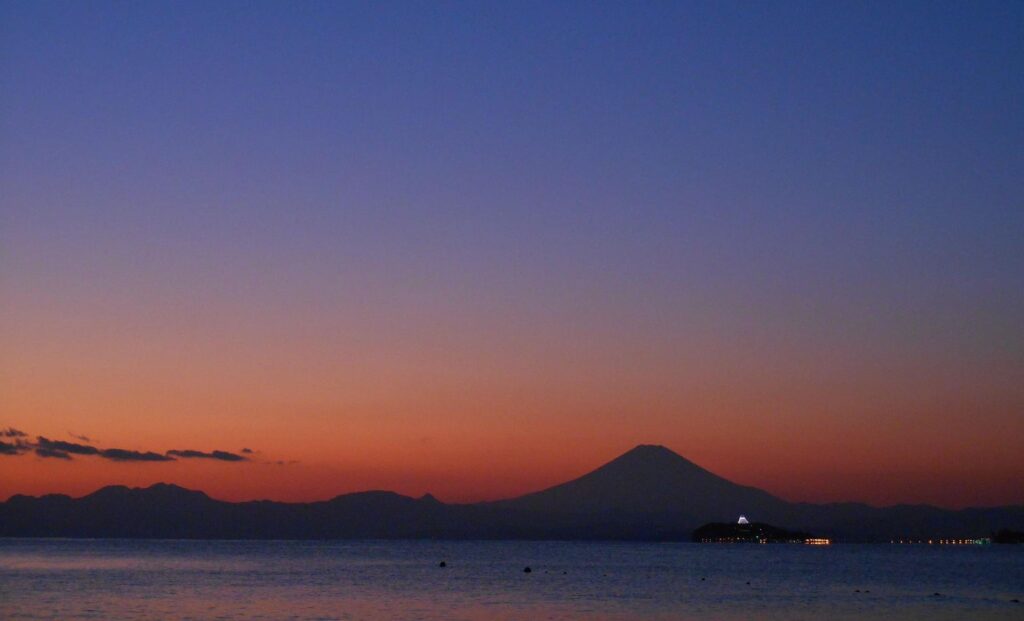
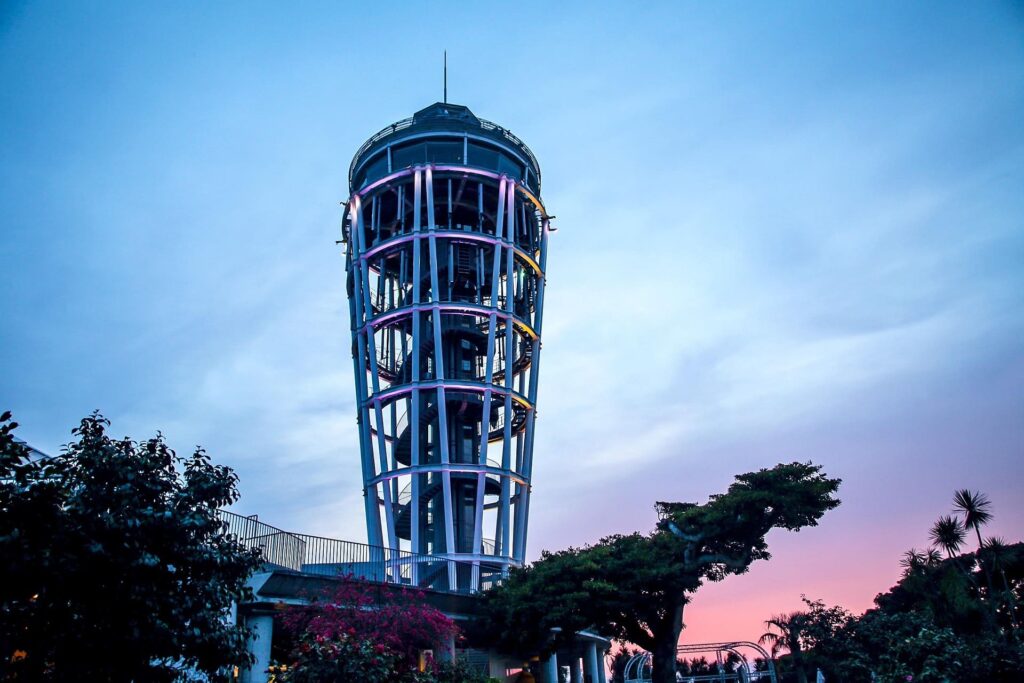
The views are the real deal. From the Sea Candle’s outdoor observation deck at 60 meters, you get a 360° panorama of Sagami Bay, the Shonan coastline, and—on clear winter days—the full silhouette of Mount Fuji across the water. The west-facing side of the island at Chigogafuchi (the rocky tidal flats) offers an equally stunning ground-level perspective at sunset.
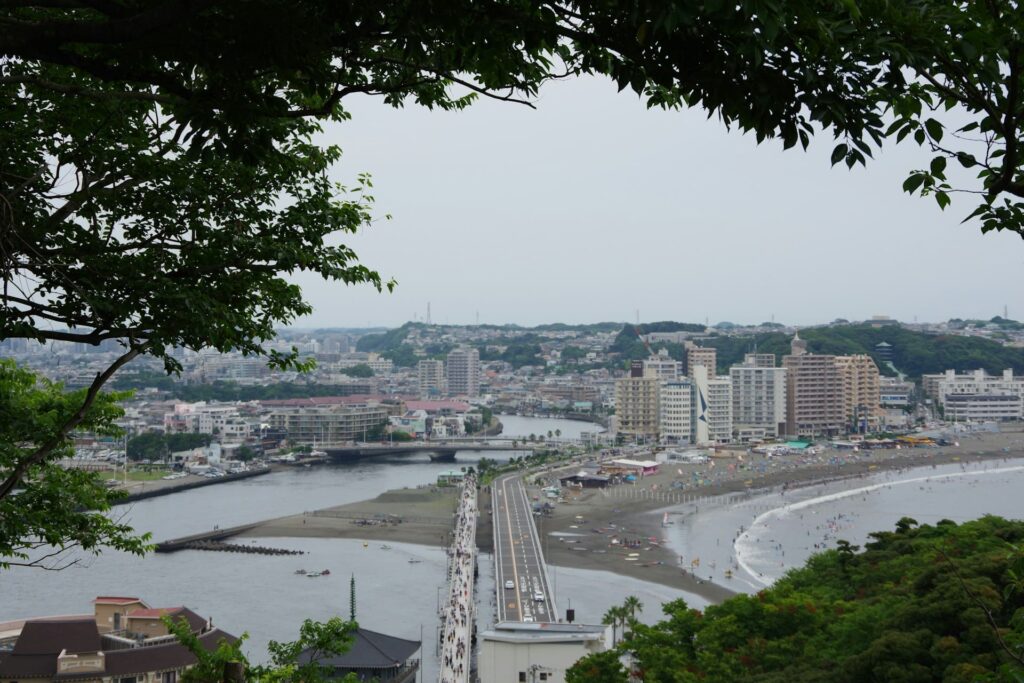
The shrine complex has genuine atmosphere. Enoshima Shrine isn’t one building—it’s three separate sanctuaries (Hetsumiya, Nakatsumiya, and Okutsumiya) spread across the island’s climb. The vermilion Nakatsumiya set against the blue ocean is genuinely striking. The Benten worship tradition (the goddess of arts and music) gives the island a different spiritual character from Kamakura’s Zen temples.
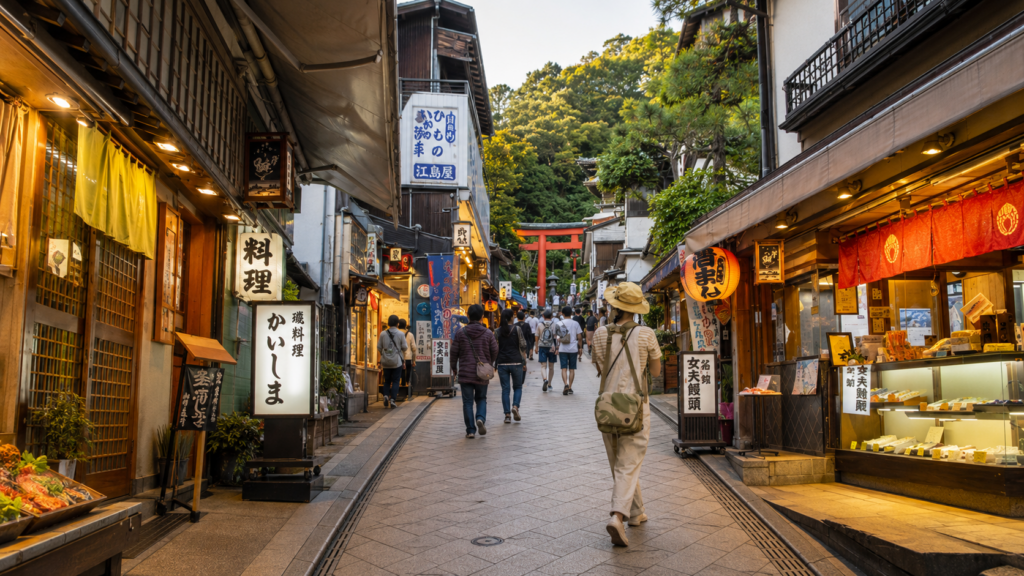
The food scene is unique to this area. Shirasu don (raw or boiled baby sardines over rice), sazae (turbo snails grilled in their shells), and tako senbei (whole octopus pressed into a cracker-like senbei) are all things you’ll find done well on Enoshima and much less commonly elsewhere. The nakamise street (Benzaiten Nakamise-dori) running from the bridge toward the shrine is packed with stalls and small restaurants.
The Real Downsides Nobody Talks About
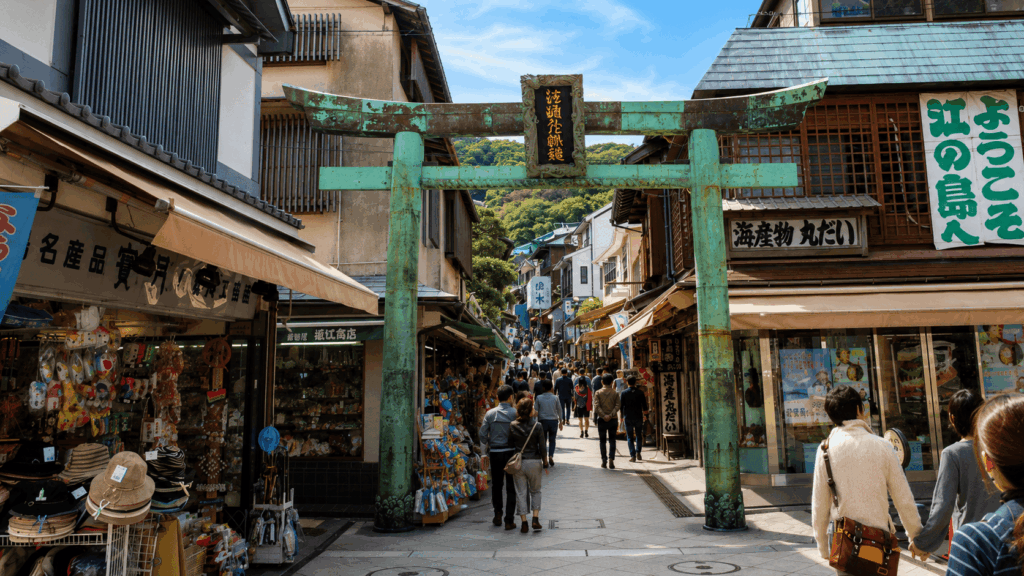
It feels touristy in ways that can disappoint. The nakamise street is a single pedestrian funnel. On weekends and holidays, it’s shoulder-to-shoulder slow-moving crowds from the bridge to the shrine entrance. Some restaurants and shops have aggressive touts. Recent visitors on travel forums consistently mention feeling “funneled” through the shopping street with no alternative route. The escalator, the paid observation tower, the ticketed caves—it can feel like every good view comes with another ticket window.
The pricing during events catches people off guard. The Samuel Cocking Garden (which houses the Sea Candle) is normally free during daytime hours. But during events like the winter illumination “Jewel of Shonan” or the Lantern Festival in summer, entering the garden after 5:00 p.m. costs ¥500 (adult), and many visitors don’t realize this until they’re already inside and trying to leave. Always check whether an event is running before you go, and if you’re planning to stay for sunset + illumination, buy the “+Night” or “1 Day + Night” pass (¥1,950) to avoid the surprise fee.
The “loop” problem. The walking route from the Sea Candle down to the Iwaya caves and Chigogafuchi is not a loop. You walk down roughly 200 feet of stairs to reach the caves and tidal flats, enjoy the view, then climb back up the same route. The Bentenmaru ferry (¥400 one-way from the Iwaya pier back toward the mainland side) solves this if it’s running—but it operates on a day-of-decision schedule, roughly 10:30 a.m. to 2:30 p.m., and stops before sunset. By the time you’re ready to leave after sunset, the ferry has likely stopped.
Getting There: How Much Time Are We Talking?
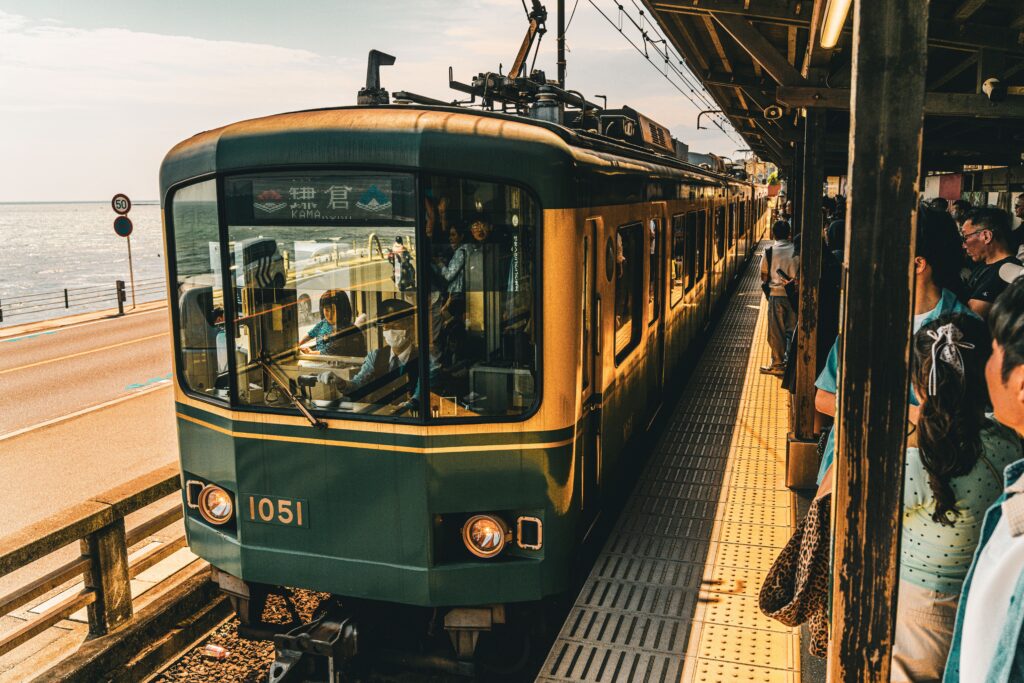
| Route | Time | Cost (one-way, adult) |
|---|---|---|
| Shinjuku → Katase-Enoshima (Odakyu Line, rapid express) | ~65–75 min | ¥620 |
| Shinjuku → Katase-Enoshima (Romancecar limited express) | ~65 min | ¥620 + express fee |
| Kamakura → Enoshima (Enoden local train) | ~25 min | ¥260–300 |
| Ofuna → Enoshima (Shonan Monorail) | ~15 min | ¥320 |
| Katase-Enoshima Station → Enoshima island (walk across Benten Bridge) | ~10–15 min | Free |
The total round-trip time commitment from central Tokyo (Enoshima only, not including Kamakura): about 5–6 hours minimum, including travel, walking across the bridge, the escalator ride, visiting the Sea Candle and shrine, and some food time. If you add the Iwaya caves and Chigogafuchi, budget 6–7 hours. If you’re doing Kamakura on the same day, budget 11–12 hours.
Kai’s tip: The Katase-Enoshima station building itself is worth a quick photo—it’s designed like a Ryugu-jo (Dragon Palace Castle) from Japanese folklore, with turrets and pagoda-style roofs. Most travelers walk straight past it toward the bridge without looking back. Don’t.
If you’re departing from Shinjuku, the Odakyu Enoshima-Kamakura Freepass (¥1,640 from Shinjuku) covers your round-trip Odakyu ride plus unlimited Enoden rides for the day. For an Enoshima-only trip from Shinjuku, the pass doesn’t save money (round-trip fare is about ¥1,240), but it’s worth it if you plan to also ride the Enoden to Kamakura or along the Shonan coast. For a complete breakdown of all train routes, ticket prices, and passes, read our detailed guide on how to get to Enoshima from Tokyo.
The Stairs, the Escar & the Mobility Reality
This is the single most important section if you have any concerns about walking, stairs, knees, or traveling with children, seniors, or anyone with mobility limitations. Most guides skip the hard truth here, so Ill give it to you straight.
From the entrance of Enoshima Shrine (after crossing the bridge and walking through the nakamise street), the island climbs steadily uphill. There are three main tiers of the shrine—Hetsumiya (near the entrance), Nakatsumiya (midway), and Okutsumiya (near the top)—connected by stone steps and sloping paths.
The Escar is a paid escalator system (¥500 for all three sections, children ¥250) that runs parallel to the shrine stairs and lets you skip the steepest climbing sections. It deposits you near the top of the island, right at the entrance to the Samuel Cocking Garden and the Sea Candle observation tower. It saves you the uphill effort of roughly 200 feet of ascent.
But here’s what the escalator does not do:
- It runs up only. There is no escalator or elevator for the return downhill.
- It does not cover the route from the Sea Candle down to the Iwaya caves (the sea caves at the island’s far end). That’s a separate downhill walk of roughly 200 feet of stairs—and then, critically, the same 200 feet back up when you return.
- It does not cover the walk to Chigogafuchi (the rocky tidal flats famous for sunset views), which is even further down from the caves.
Kai’s tip: The mistake I see first-time visitors make is assuming the Escar solves the entire mobility problem. It gets you to the top—the Sea Candle, the garden, Okutsumiya Shrine. But if you want to go down to Iwaya caves or Chigogafuchi (and you should, especially at sunset), you’re committing to a staircase round-trip that neither the escalator nor any other paid service covers. If you skip the caves, you can keep your walking very manageable. If you include them, budget the extra stamina. Seniors or travelers with knee issues should consider whether the caves are worth the return climb.
The island also has the Bentenmaru ferry (¥400 one-way, operating roughly 10:30 a.m. to 2:30 p.m., weather permitting), which runs from the Iwaya pier toward the mainland side of the island. This can save you the return climb if you time it right—but note that it stops well before sunset, so it won’t help you get back after golden hour.
Wheelchair and stroller note: Beyond the initial slope near the shrine entrance, the island’s paths are narrow stone steps, uneven terrain, and steep descents. Wheelchair users cannot access the shrine buildings, the Sea Candle, the garden, the caves, or Chigogafuchi. Strollers are very difficult past the midway point.
Food on Enoshima: What to Eat & Where
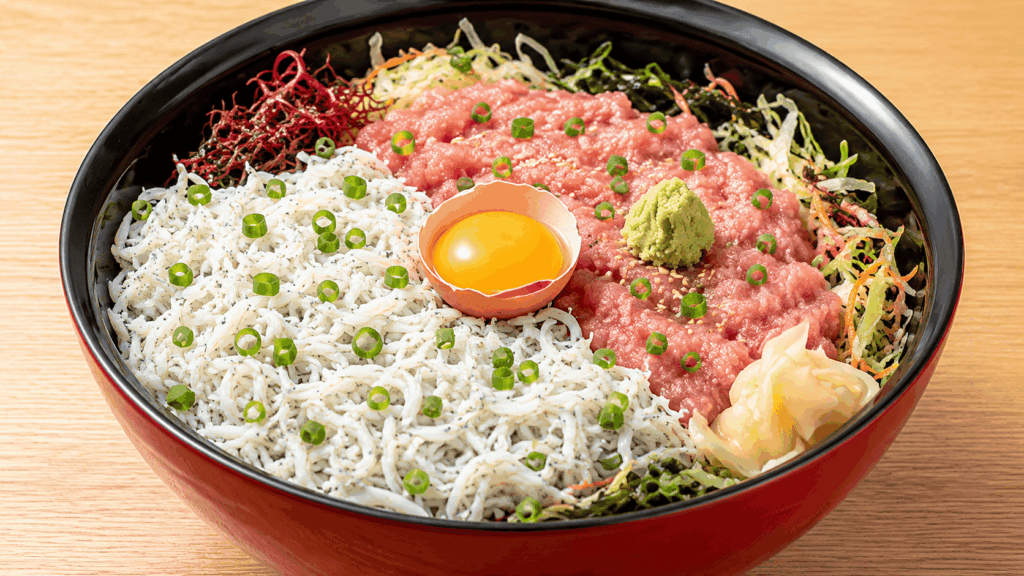
Food is one of the genuine highlights of a visit to Enoshima, and the island offers several dishes that are hard to find this fresh anywhere else in the Tokyo area.
| Dish | What It Is | Where to Find It | Typical Price |
|---|---|---|---|
| Shirasu don | Baby sardines (whitebait) served over rice—raw, boiled, or both | Multiple shops on nakamise street and near Katase-Enoshima Station; Koya near the station is a local favorite | ¥1,000–¥1,500 |
| Sazae | Turbo snails grilled in their shell, often served with soy and butter | Stalls on the upper walking paths near the shrine | ¥500–¥800 per shell |
| Tako senbei | Whole small octopus pressed into a hot iron to create a thin, crispy cracker | Asahi Main Store on nakamise street—watch them make it | ¥500–¥800 |
| Ise ebi | Spiny lobster—grilled, in miso soup, or as curry | Uomitei and other seafood restaurants on the island | ¥2,000–¥4,000+ |
Beyond these island specialties, you’ll also find soft-serve ice cream (matcha, shirasu-flavored—yes, really), kibi dango (millet dumpling skewers), and cold beer at several stalls. The nakamise street (Benzaiten Nakamise-dori) is the main food strip, but some of the best seafood sits a bit further up near the shrine entrance rather than at the very bottom. If you want to know exactly which stalls are worth the wait, check out our Enoshima street food guide.
Kai’s tip: If you buy any open food—octopus skewers, soft-serve, takoyaki—and walk up to the open viewing areas near the top of the island, watch the sky. Black kites (トンビ, tombi) patrol the air above Enoshima constantly, and they’re bold. They will swoop down and snatch food directly from your hands. I’ve watched it happen to three different travelers on a single visit. Eat under a roofed stall area, or at least cover your food with your hand while walking. The birds don’t bother food on plates inside seating areas, but anything carried openly at head height is fair game.
If you’re a vegetarian or have dietary restrictions: shirasu don is obviously fish-based, and many grilled items use seafood broth. Vegetarian options are limited—you’ll mostly find vegetable tempura, rice balls (onigiri), and the tako senbei (though that’s octopus). The soft-serve is usually safe. For more substantial vegetarian food, eat before you cross the bridge.
Is Enoshima a Tourist Trap? An Honest Two-Sided Answer
This question comes up constantly on travel forums (Reddit, TripAdvisor), and the answer isn’t simple. Here’s the honest breakdown.
The “Yes, It Can Feel Like One” Side
- The nakamise street is a single-funnel design. From the bridge to the shrine entrance, there’s essentially one walking route through a dense shopping street. On weekends and holidays, you’re moving at crowd speed with no alternative path. This creates a “packaged” feeling that some travelers dislike.
- Ticket fatigue is real. Escalator (¥500) + Sea Candle (¥800) + Iwaya caves (¥500) adds up to ¥1,800 for the three main features. The Enoshima 1 Day Pass bundles them at ¥1,550 (saving ¥250), but the psychology of paying at each stage bothers some visitors.
- Event pricing surprises. The Samuel Cocking Garden is normally free during the day, but during the Jewel of Shonan illumination (late Nov to mid-Feb) and the Lantern Festival (summer), entering after 5:00 p.m. costs ¥500. Multiple recent reviews mention showing up at 4:30 p.m. intending to see the sunset + illumination transition, only to discover they need to pay to stay.
- Some restaurants use aggressive touts on the main street near the bridge, which can feel pushy, especially for solo travelers.
The “No, It’s Genuinely Good” Side
- Free areas are extensive and excellent. The entire shrine complex (all three sanctuaries) is free. The coastal walk from the Sea Candle around the west side of the island toward Chigogafuchi is free. The Samuel Cocking Garden is free (outside event hours). You can spend 2–3 hours on the island without spending a single yen beyond your train fare and lunch.
- The views cannot be faked. The sunset from Chigogafuchi with Mount Fuji’s silhouette in winter is a genuinely world-class experience that has nothing to do with the commercial infrastructure.
- The food is local, not generic. Shirasu don and sazae aren’t theme-park concessions—they’re traditional local dishes from the Shonan region, and the quality varies significantly between shops. It’s not Disneyland food.
- The island cats are free. A colony of island cats lives around the yacht harbor area near the bridge, and they’re a beloved fixture. Just don’t feed them.
My verdict: Enoshima isn’t a tourist trap in the way some destinations are (overpriced, low quality, zero local value). But it is optimized for tourism, and the commercial elements (the funnel street, the ticket gates, the escalator pricing) can feel grating if you arrive expecting a raw, undiscovered island. Go with your eyes open, and focus on the parts that are free and genuine. The paid attractions are legitimately good, but you don’t need them all.
Best Time to Visit & When You’ll Get the Most Out of It
Timing affects your Enoshima experience dramatically—more than most Tokyo-area day trips.
By Season
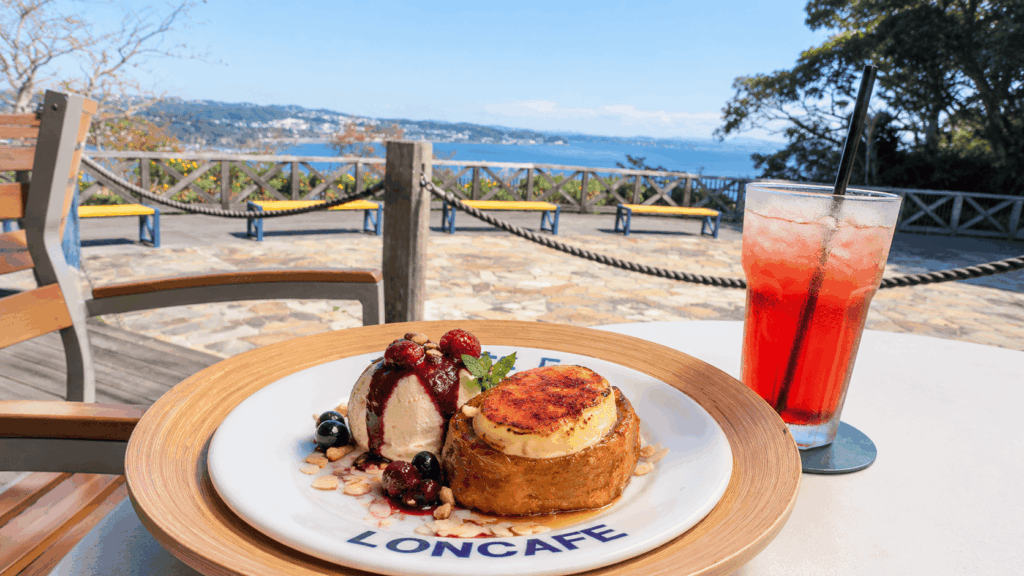
| Season | Pros | Cons |
|---|---|---|
| Winter (Dec–Feb) | Clearest Mount Fuji views of the year; crisp air; Jewel of Shonan illumination | Cold wind off the water; early sunset (around 4:30–5:00 p.m.); some restaurants close earlier |
| Spring (Mar–May) | Mild temperatures; flowers in Samuel Cocking Garden; pleasant walking weather | Fuji often hazy; crowds on weekends; Golden Week is extremely crowded |
| Summer (Jun–Aug) | Fireworks (October, actually—but summer has beach season); Lantern Festival; lively atmosphere | Intense humidity and heat; very hazy (Fuji rarely visible); heavy crowds; mosquitoes on the coastal path |
| Fall (Sep–Nov) | Mild weather; Jewel of Shonan starts late Nov; fewer crowds than spring | Typhoon season (Sep–Oct); shorter daylight hours toward Nov |
By Time of Day
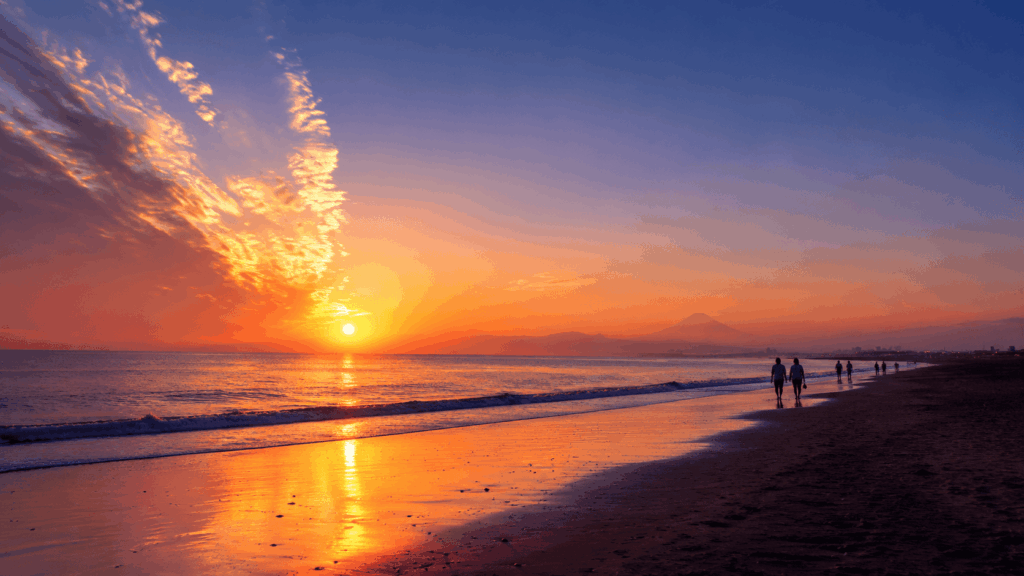
Kai’s tip: The single biggest mistake day-trippers make is treating Enoshima as a morning-to-early-afternoon destination. Most visitors arrive around 10:00–11:00 a.m., see the shrine, climb to the Sea Candle, have lunch, and head back by 2:00–3:00 p.m. This means they miss the island’s greatest asset: sunset. The west-facing side of the island (Chigogafuchi and the Sea Candle’s west-facing observation deck) catches the full golden hour and, in winter, the silhouette of Mount Fuji. If I had to design an optimal time budget, I’d arrive around 1:00–2:00 p.m., take the Escar up, visit the Sea Candle and shrine, wander down toward Chigogafuchi by late afternoon, and watch the sunset from the rocks or from the Sea Candle deck. Then, if it’s Jewel of Shonan season, stay for the illumination and take the Enoden back toward Kamakura or Fujisawa afterward.
Important caveat on summer: From June through August, humidity and haze significantly reduce visibility. Fuji is rarely visible at all. The sunset colors can still be beautiful, but the iconic “Mt. Fuji over Enoshima” shot is strictly a late autumn/winter/early spring phenomenon. Check the weather forecast before you commit. For a complete list of viewing locations and timing tips, see our dedicated guide to Enoshima sunset spots.
Weekend vs weekday: Weekends are noticeably more crowded, especially on the nakamise street and at the Sea Candle. If you have flexibility, visit on a Tuesday through Thursday for the best experience. Monday might still feel busy if it’s a national holiday.
Kamakura + Enoshima Combo? Or Just One?
This is the most common logistical question about Enoshima, and the answer depends entirely on how much you want to pack into a single day.
The honest math: Doing both Kamakura (Tsurugaoka Hachimangu, Hase-dera, Komachi-dori, and at least one bamboo/garden stop) and Enoshima (shrine, Sea Candle, caves, food) in one day without rushing means about 11–12 hours on the move. You’d need to leave Tokyo by 8:00 a.m. at the latest, and you wouldn’t be back until around 8:00 p.m. That’s a full day—and it involves switching between trains (JR to Kamakura, Enoden to Enoshima, Odakyu or Enoden + JR back) multiple times.
Who should do both: Travelers who have already spent several days in Tokyo, have good physical stamina, and are comfortable with train transfers. It’s a rewarding combo if you start early and pace yourself. The Enoshima-Kamakura Freepass (¥1,640 from Shinjuku) makes it more economical by bundling the round-trip Odakyu ride with unlimited Enoden hops.
Who should pick one: First-time Tokyo visitors on a 3–4 day trip. Families with young children (the combined walking is significant). Anyone with mobility concerns. Travelers who prefer a slower, more immersive pace. For those in this group, I’d recommend choosing Kamakura if you want temples and history, or Enoshima if you want coastal views, seafood, and a sunset you’ll remember.
If you are still on the fence about which one to prioritize, check out our comparison of Enoshima vs Kamakura. For the full Kamakura breakdown, see our detailed guide on Is Kamakura Worth It? and the Kamakura Day Trip Itinerary.
DIY vs Tour: Your 3 Options Compared
| Option | Total Time | Physical Effort | Approx. Cost (per person) | Language Support | Best For | Common Pitfalls |
|---|---|---|---|---|---|---|
| ① DIY Enoshima Only | 5–7 hours | Moderate (stairs, ~2–3 miles walking) | ¥4,000–6,000 (¥1,240 train + ¥1,550 pass + food) | Self-guided; some English signs on island | Solo travelers, couples who want flexibility, photography-focused visitors, anyone with strong mobility | Underestimating the walk; missing sunset; not checking Escar coverage |
| ② DIY Kamakura + Enoshima | 11–12 hours | High (lots of walking, 2+ train transfers, the Enoshima climb) | ¥6,000–8,000 (¥1,640 Freepass + food + optional extra entries) | Self-guided; Kamakura has good English signs; Enoshima less so | Repeat visitors, fit travelers, those with 10+ hours energy, history + nature seekers | Time pressure; arriving at Enoshima too late for sunset; returning exhausted |
| ③ Guided Kamakura & Enoshima Bus Tour | 9–9.5 hours | Low–Moderate (bus between sites, shorter walk distances, tour handles all transfers) | ~$64–$79 (¥9,500–12,000 at current rates) including entry fees | English-speaking guide included; full commentary | First-time visitors, families, those who’d rather not navigate train logistics, anyone worried about the 12-hour DIY combo | Less flexibility (fixed schedule); group pace; shorter time on Enoshima (~2 hours free time) |
If the 12-hour DIY combo sounds logistically exhausting, a guided tour solves the transport and navigation problem completely. The bus takes you between Kamakura’s main temples and Enoshima, the guide handles tickets, and you get roughly 2 hours of free time on Enoshima itself—enough for the shrine, Sea Candle, and some food, though not enough for the caves or a long sunset stay. It’s worth considering for first-timers or families who want to see both without the friction.
For travelers who prefer to go at their own pace and spend more time on Enoshima (especially for sunset), DIY Enoshima-only is the better call. The island doesn’t require a guide to enjoy—you just need to know what you’re in for stair-wise.
If you fall into that camp — you want Kamakura and Enoshima in one day, but the DIY transfers and 11–12 hour pacing sound like too much — this is the one booking I’d push you toward.
Why I’d book this one
- Recent travelers consistently mention the guide and transport as the main value, which matters on a route where train transfers and timing can drain your energy.
- The itinerary covers Kamakura’s major stops plus around 2 hours on Enoshima, so it works best for first-timers who want the highlights without building the day from scratch.
- It keeps commitment relatively low: you can check live start times, current pricing, cancellation terms, and recent reviews before deciding.
Check the details before locking in your day: see current availability, start times, and traveler reviews for the Kamakura & Enoshima guided day trip.
FAQ
Is Enoshima worth visiting if I only have one day from Tokyo?
It depends on what you want from that day. If you’re looking for a cultural fix with temples and history, Kamakura alone will give you more depth. If you want coastal scenery, sunset views over the ocean, and a chance to eat unique local seafood, Enoshima is worth the travel time. For a first-time visitor to Japan with only 3–4 days in Tokyo, I’d recommend Kamakura over Enoshima—but if you’ve been to Japan before or have a full day to dedicate, Enoshima won’t disappoint.
Can you do both Kamakura and Enoshima in one day?
Yes, but it’s a long day—roughly 11–12 hours from when you leave Tokyo to when you return. You need to start by 8:00 a.m., manage two train transfers (JR to Kamakura, then Enoden to Enoshima or Odakyu directly), and accept that you’ll be moving consistently throughout the day. It’s rewarding if you have the stamina, but it’s not a relaxing pace. The guided bus tour version of this same combo takes about 9–9.5 hours with less physical effort and all transport handled.
Is the Escar (paid escalator) worth the money?
The Escar costs ¥500 for all three sections and saves you from climbing the steepest part of the ascent—roughly 200 feet of stairs. If you have any mobility concerns, are traveling in hot weather, or simply want to save your energy for the caves and coastal walk later, it’s worth it. Buy the set ticket (¥650) that bundles the Escar with Sea Candle entry and the garden, as it saves you ¥650 compared to buying separately.
Do I need the Enoshima 1 Day Pass?
The 1 Day Pass (¥1,550) covers the Escar, Sea Candle, and Iwaya caves. If you plan to visit all three, it saves you about ¥250 compared to buying individual tickets (¥500 + ¥800 + ¥500 = ¥1,800). If you only want the Sea Candle and the garden, or only the shrine and a walk, you don’t need the pass. The 1 Day + Night Pass (¥1,950) is worth it only if you’re visiting during the Jewel of Shonan illumination period and plan to be on the island after dark.
Is Enoshima suitable for elderly travelers or people with limited mobility?
With caution, yes—but with limits. The Escar (¥500) takes you from near the shrine entrance to the top of the island, covering the steepest sections. The shrine itself has accessible paths in the lower areas. However, the Iwaya caves and Chigogafuchi involve steep stair descents and climbs that the Escar does not cover. Wheelchair users cannot access the upper shrine, Sea Candle, or caves. The bridge to the island is flat and walkable, and the nakamise street is level—so a visitor who stays near the lower shrine and bridge area can still enjoy the atmosphere and food without climbing.
Can you see Mount Fuji from Enoshima?
Yes, but only under specific conditions. The view is clearest from late November through early February on days with low humidity and clear skies. From the Sea Candle observation deck or from Chigogafuchi (the west-facing tidal flats), Mount Fuji appears across Sagami Bay. In summer (June through August), haze and humidity almost always obscure Fuji entirely. Check the weather visibility forecast before you go, and don’t count on it in the warmer months.
Is Enoshima crowded? When is the best time to avoid crowds?
Yes, it gets crowded—especially on weekends, national holidays, and during events like Jewel of Shonan (winter illumination) and the Lantern Festival (summer). The nakamise street is a single pedestrian funnel from the bridge to the shrine, and on busy days you’ll be moving at a slow, shoulder-to-shoulder pace. If you have flexibility, visit on a Tuesday, Wednesday, or Thursday. Arriving around 1:00 p.m. means you’ll walk against the flow of morning departures, and staying through sunset means you’ll experience the island as it quiets down.
What happens if it rains on the day I’m visiting?
A rainy day significantly reduces the experience. The views from the Sea Candle and Chigogafuchi are obscured by clouds or fog. The coastal walking paths to the caves become slippery, and the Bentenmaru ferry stops running. The Escar is covered but the outdoor sections of the shrine and garden will be wet. On a rainy day, your best bet is to focus on food (many nakamise shops have covered seating) and Enoshima Aquarium on the mainland side near Katase-Enoshima Station instead. If your schedule is flexible, reschedule for a clear day.
Final Verdict: Is It Worth It for YOU?
For first-time Tokyo visitors (3–4 day trip)
No, skip it this time. Your limited days are better spent exploring Tokyo itself or doing a Kamakura-only day trip, which offers more cultural density per hour of travel. Save Enoshima for a return visit when you have more time or a different itinerary focus.
For repeat visitors to Japan
Yes, absolutely. You’ve already done the Tokyo essentials and likely Kamakura as well. Enoshima offers something distinct: a compact island with shrine culture, coastal nature, and a sunset view that rivals any day trip from Tokyo. Pair it with Enoden stops at Shichirigahama for a full Shonan coast day.
For families with children (school-age and up)
Yes, if you plan ahead. Kids who enjoy exploration (caves, climbing a tower, watching octopus crackers being made) will have a great time. Take the Escar up to save energy for the fun parts. Skip the Iwaya caves if the return climb is a concern. The jewel illumination season (winter) is magical for children. Strollers are difficult past the midway point—baby carriers work better.
For travelers with mobility concerns
Yes, with clear limits. You can enjoy the bridge, the nakamise street, the lower shrine, and the food stalls without climbing. The Escar takes you to the top if you want to see the Sea Candle. But the Iwaya caves and Chigogafuchi are not accessible without a significant stair descent and return climb. Decide in advance which parts matter to you and plan accordingly.
For sunset and photography lovers
This is the best day trip from Tokyo for you. The combination of Chigogafuchi’s rocky coastline, the Sea Candle’s elevated perspective, and (in winter) Mount Fuji’s silhouette makes Enoshima a genuine photographic destination. Arrive by 1:00–2:00 p.m., explore the shrine and Sea Candle, then settle at Chigogafuchi by late afternoon. Don’t leave before sunset—you’d be leaving just as the island shows its best side.
For travelers who want a relaxed, low-effort day
Not your best choice. Enoshima requires walking, stairs, and planning. Even with the Escar, you’ll cover significant ground. If your ideal day involves minimal planning and gentle walking, consider a Hakone loop (relaxing trains, cable car, cruise) or a Kamakura temple-focused itinerary instead.
In short: Enoshima is worth the trip for most travelers who know what they’re getting into. It rewards the visitors who arrive with good information—about the stairs, about the timing, about the sunset, about the kites. Go with your eyes open, and you’ll leave wondering why anyone ever questioned whether it’s worth it.
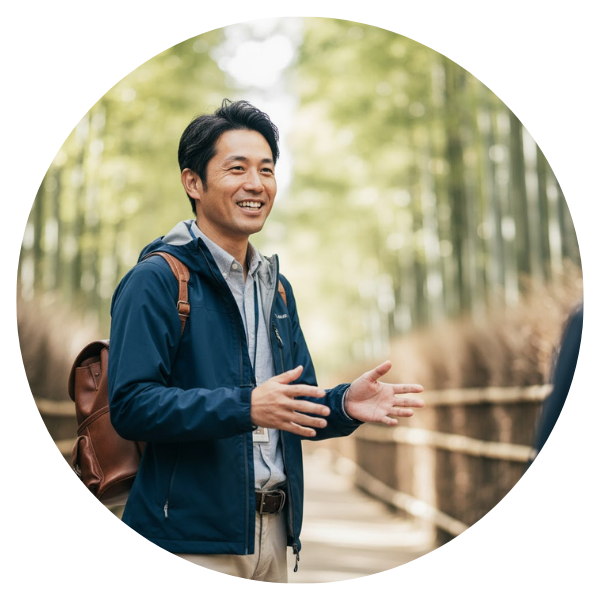
Hi, I’m Kai. I’m a Tokyo-based travel writer, tourism industry insider, and the author of a published guidebook for international visitors to Japan. With over 10 years of professional experience at a leading Japanese tourism company, my mission is to help you skip the tourist traps and navigate Japan’s best destinations like a local. I believe the perfect day trip is like a traditional kaiseki meal: a beautiful balance of precise planning and unforgettable seasonal discovery. When I’m not out conducting field research, you’ll usually find me drafting new itineraries with one of my favorite fountain pens!