
The best time to visit Takachiho Gorge is April–May for fresh greenery, October for an autumn trip before the main foliage season, or mid-to-late November for autumn colors. My first choice for a balanced visit is a weekday in May outside Golden Week. Winter is also worthwhile for the exposed cliffs and local Kagura, provided you plan for cold mornings.
If the rowboat ride is essential, choose the date around boat reservations and river conditions as well as the season. June and July need more flexibility, while an overnight stay makes the biggest difference if you want evening Kagura, autumn sunrise views or an early boat slot.
Visiting from Fukuoka without driving?
This private day tour combines the gorge, a forest shrine and a hearth-grilled lunch. Book at least 15 days ahead for boat arrangements, and ask the operator to confirm availability.
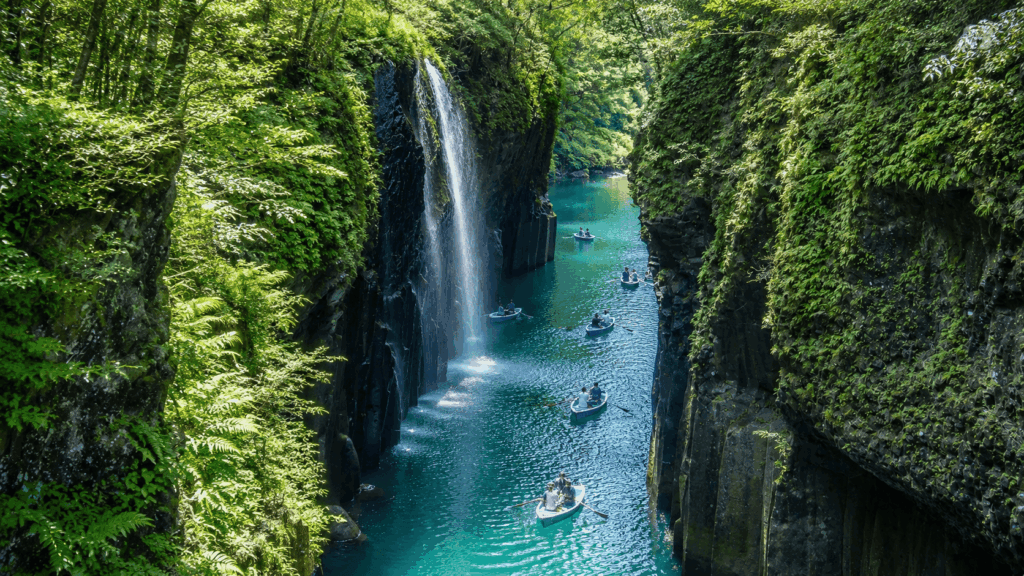
Quick Answer: Takachiho Gorge by Month
For the classic green gorge, start with April, May or October. For red and gold leaves, start with November. The table adds Japan Meteorological Agency averages for Takachiho, 1991–2020, so you can compare the cold and rainfall alongside the scenery.
| Month | Average daily high / low | Monthly rain | Scenery and planning |
|---|---|---|---|
| January | 9.3 / −1.0°C | 59.7 mm | Bare branches and visible rock faces. Allow for frost, holiday demand and boat inspection dates. |
| February | 11.1 / −0.3°C | 80.4 mm | Winter scenery; snow is an occasional bonus. Check dated evening events and the railway’s winter timetable. |
| March | 14.9 / 2.7°C | 121.9 mm | A transition toward spring. Early March does not offer the full green canopy of later months. |
| April | 20.0 / 7.1°C | 126.6 mm | Spring growth and a greener gorge. Check boat maintenance and the late-April start of Golden Week. |
| May | 24.1 / 12.0°C | 164.2 mm | Fresh greenery; my first all-round choice outside Golden Week. Rain becomes more relevant toward month’s end. |
| June | 26.0 / 17.0°C | 419.5 mm | Lush vegetation during the rainy-season period. Keep the visit flexible if boating matters. |
| July | 29.8 / 21.1°C | 403.1 mm | Rainy-season conditions give way to summer. Check recent rain and scheduled boat inspections. |
| August | 30.6 / 21.4°C | 324.5 mm | A green gorge with heat and possible storms. Plan ahead around Obon. |
| September | 27.5 / 17.6°C | 380.7 mm | Mostly green scenery and lingering summer weather. Watch storm forecasts rather than expecting autumn leaves. |
| October | 22.8 / 11.2°C | 145.1 mm | A comfortable autumn option if peak foliage is optional. Check the boat’s inspection calendar. |
| November | 17.2 / 5.3°C | 78.2 mm | The usual foliage window is mid-to-late month. Prioritize reservations and leave extra time for parking. |
| December | 11.5 / 0.3°C | 57.9 mm | Possible lingering leaves, then winter branches. Check cold-weather access and year-end schedules. |
These are town-level climate averages. The shaded gorge can feel cooler, and the figures do not predict river conditions or snow on your day. September is still a wet month in these records; moving a trip just beyond the rainy season does not remove weather disruption.
Best Time of Day to Visit Takachiho Gorge
An early visit works best when you are staying nearby; a later reservation is often more practical after a long journey. Fit your arrival to your boat slot, including parking and the walk to reception. For photography, the sun’s seasonal position, clouds and high gorge walls matter more than a fixed “best hour.”
Early Morning: Useful for a Less Rushed Start
Normal boat hours are 8:30 AM–5:00 PM, with final reception at 4:30 PM; reception may close earlier. An early stay nearby gives you time for the viewpoints before adding shrines or other stops. The river may still be in shade, which gives the cliffs a different atmosphere.
Use the official boat status and availability page before relying on same-day tickets. On reservation-only dates, an early arrival cannot solve a sellout.
Late Morning: Convenient, but Not a Guaranteed Photo Window
Late morning fits a gorge visit followed by lunch and an afternoon elsewhere. Leave time to compare the waterfall viewpoints rather than expecting 10:00 AM–noon to deliver one particular photograph. Water clarity, cloud cover and the season all change the view.
Afternoon: A Valid Choice for a Longer Journey
An afternoon boat slot can work better from Fukuoka, Kumamoto or Aso. Work backward from check-in and your return transport. For a winter visit, put the gorge walk before late-afternoon stops so that steps and viewpoints fit comfortably into daylight.
Evening: Confirm the Actual Lighting Schedule
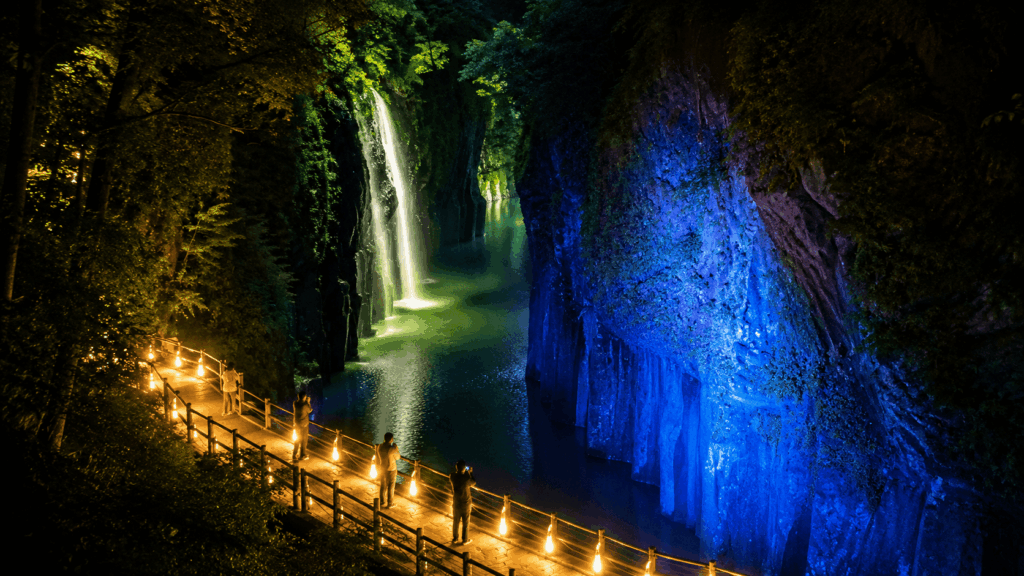
Illumination is a separate evening visit. Boats run during the daytime, and the lighting schedule can change for conservation or special events. In 2026, lighting was suspended May 18–June 18 for the firefly season, subject to conditions; see the tourist association’s firefly notice.
Arrange your evening transport as well as the event. A local stay gives you more freedom than a day trip with a fixed return. The winter KAI event has its own dated announcement, discussed below.
Spring (March–May): Best for Fresh Greenery
April and May are stronger choices than early March if you want green leaves above the basalt cliffs. Spring is my first recommendation for the green version of the gorge without trying to catch a brief autumn peak.
What Makes Spring Appealing
- Fresh leaf growth: the gorge becomes greener as spring progresses.
- A broad scenery window: you have more room to choose a workable date than when chasing peak leaf color.
- A good road-trip stop: make the gorge the day’s main visit, then add shrines according to your available time.
I would start with weekdays after Golden Week in May. The climate averages put May afternoons around 24°C, with cooler mornings, so a light layer remains useful for an early start.
What to Watch For
Golden Week falls around late April and early May. Reserve accommodation and plan the boat as part of choosing your dates. If you want a quieter visit, compare ordinary weekdays outside this holiday period, while still booking ahead.
Heavy rain can change water levels and clarity in spring too. Southern Kyushu’s usual rainy-season onset is around late May, so a late-May trip deserves closer weather attention. April also falls in a regular boat inspection month; use the operating calendar before making the journey.
Choose spring if: fresh greenery is the main attraction. Choose November if red and gold leaves are the reason for your trip.
Summer (June–August): Green Scenery, More Weather Flexibility
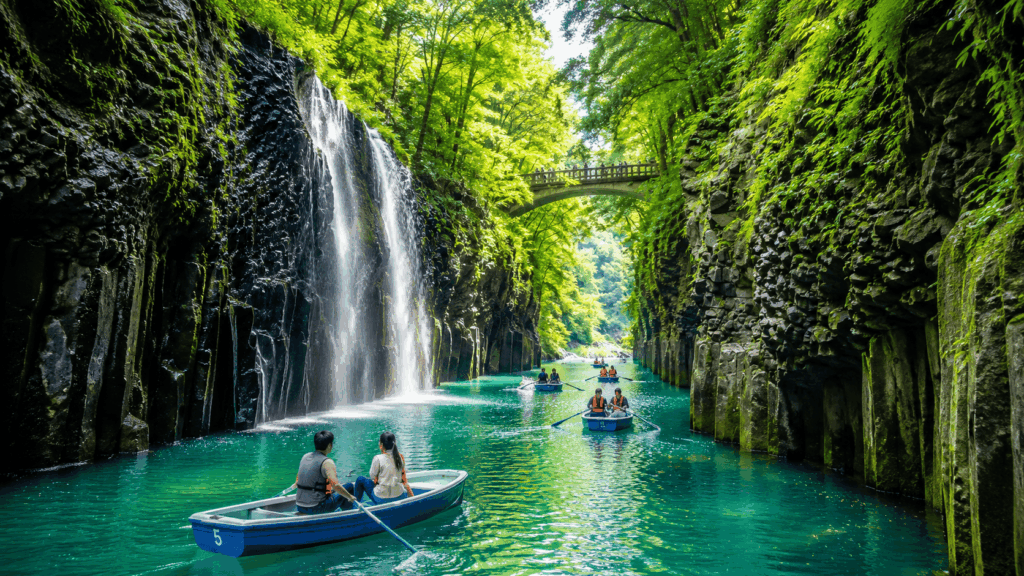
June–July: Understand the Rainy-Season Trade-Off
The JMA rainy-season record for southern Kyushu gives normal dates around May 30–July 15. Actual dates vary, and the transition takes several days. Takachiho’s June and July rainfall averages both exceed 400 mm, which explains why I would want flexibility if boating is essential.
Recent upstream rain can keep the river high or cloudy after the local sky clears. Light rain itself does not automatically stop the boats: the tourist association’s FAQ distinguishes rainy weather from unsafe river levels.
If a boat ride is your only reason to travel a long distance, keep another suitable day available or choose a different season. If you also want the shrines and gorge viewpoints, a visit can still work when access is safe.
August: Plan for Heat, Holidays and Storms
August offers a green gorge, but also hot approaches, Obon demand and possible storm disruption. The town’s average daily high is about 31°C. Carry water and sun protection for exposed walking and wear shoes that grip on wet surfaces.
A compact rain jacket is useful if light rain allows boating. For an evening visit, arrange the lighting schedule and return separately. If your Japan dates are fixed in summer, choose the safest workable day; if you have complete freedom, I would compare May and October first.
Autumn (October–November): Best for Foliage, with More Planning
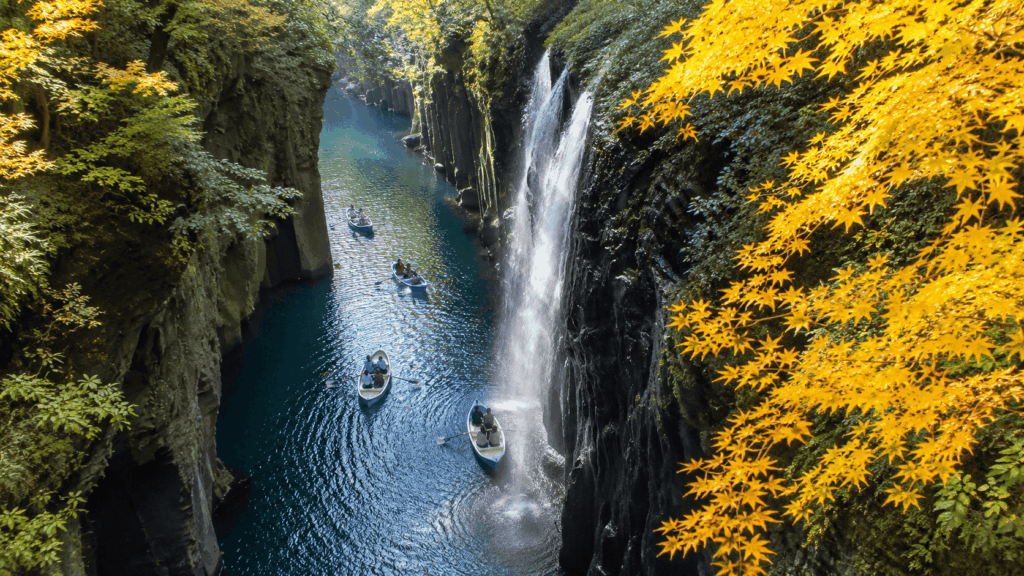
October and November offer different reasons to visit. Choose October for an autumn trip with much of the gorge still green, or November when the leaves justify making reservations further ahead.
When Do the Autumn Colors Peak?
Mid-to-late November is the usual foliage window. The local tourism listing supplied by Takachiho’s tourism department gives this period, with coloring beginning earlier in November. Check that year’s local reports near your trip rather than treating the last week of November or early December as a guaranteed peak.
The leaves, clear water and sunshine do not always line up on the same day. If foliage matters more than rowing, the accessible viewpoints can still meet your goal when boats are suspended but the paths remain open.
How to Handle November Demand
Start with the reservation plan, then fit transport and parking around it. In November 2026, the official boat notice lists every day as reservation-only: once advance places sell out, no walk-up tickets are available. Future calendars may differ.
Our Takachiho Gorge boat booking guide covers the detailed process. Staying nearby is useful if you want an early slot without a long morning drive. A boat booking does not reserve parking.
October: Choose It for the Trip, Not Peak Leaves
October remains my preferred autumn compromise if the gorge matters more to you than red and gold leaves. Its average daily high is around 23°C, with noticeably cooler mornings. Enjoy the waterfall and accessible gorge landscape, including the view of the three arch bridges where the route is open.
October still needs boat planning, including checking the inspection calendar. A weekday outside holidays is a sensible starting point, rather than a promise of empty paths.
An Autumn Overnight Bonus: Kunimigaoka’s Sea of Clouds
Kunimigaoka, about 15 minutes by car from Takachiho Bus Center, offers a different morning view. The usual cloud-sea season is late September–early December, on cold, clear, calm mornings with suitable humidity and a marked temperature difference between day and night.
Stay locally and arrange a car or taxi before sunrise if this is a priority. Return for breakfast before your gorge visit, leaving time for the drive, food and boat check-in. The clouds are a possibility rather than a booking you can secure; sunrise and the mountain panorama are other reasons to go. An ordinary Fukuoka day trip arrives too late for this experience.
Winter (December–February): Rock Formations, Culture and Cold-Weather Planning
Takachiho Gorge is worth visiting in winter if you want cliffs, waterfall views and local culture rather than a lush green canopy. Bare branches reveal more of the rock faces, while some evergreen vegetation remains. January’s average daily high is 9.3°C (49°F), with an average low of −1.0°C (30°F): plan for a cold start and a colder-feeling shaded walk.
Do Not Plan Around Snow—or Assume There Cannot Be Ice
Snow is possible, but the gorge is not a dependable snow-viewing destination. Frost, ice or snow can affect shaded paths and approach roads even when the waterfall viewpoint looks manageable. Wear shoes with grip, bring warm layers and use gloves for an early visit or evening performance.
For a drive through the Aso area, check road conditions and the equipment required for your actual route. If you are uncomfortable on winter roads, compare an operator’s winter arrangements or change the day. A tour handles the driving, while severe weather can still change its route.
The boats can operate in winter when conditions allow. Winter is not a general seasonal shutdown, but inspection closures and advance-only dates still apply; see the planning section below.
Takachiho Evening Kagura: A Reason to Stay Overnight
The visitor performance at Takachiho Shrine normally runs 8:00–9:00 PM, with four dances from the wider Kagura tradition. Admission is ¥1,000; elementary-school children and younger enter free. December 31 and January 1 are scheduled exceptions, and festival dates can replace the usual performance.
Book through the official Kagura schedule and reservation page. Online reservations open 30 days ahead at 10:00 AM JST and close at 5:00 PM on the day. Reserved visitors check in from 7:00 PM; limited walk-up sales begin at 7:30 PM. Take the confirmation QR code and a warm layer. The venue is a tatami hall; a small cushion is useful if sitting on the floor is uncomfortable.
The community’s all-night Yokagura is a different experience, held on selected November–February dates. The 2026–2027 community calendar lists venues and starting arrangements, including January and February events. Choose the date and arrange transport for that specific venue before booking a stay. A day tour returning to Fukuoka does not cover these evening plans.
KAI Lights: Check the Year Before Booking
The published 2026 TAKACHIHO LIGHTS FESTIVAL “KAI” announcement covered February 14–March 22, 2026, 6:00–10:00 PM, with free entry at the gorge and Takachiho Shrine lighting locations. Those dates have passed. For a winter 2027 trip, use a new announcement before making the festival the reason for your stay.
Amaterasu Railway: An Optional Daytime Addition
The open-air sightseeing ride takes about 30 minutes, crossing the countryside and a high railway bridge when conditions allow. It offers a broader landscape view rather than the close-up waterfall view from a boat. The ride fare, revised April 1, 2026, is ¥2,300 for high-school age and above.
Independent visitors buy tickets at the station on the day. Rain or strong wind can stop the ride, and maintenance closures apply. The regular operating information lists the third Thursday as a maintenance day, with holiday exceptions.
For December 14, 2026–February 28, 2027, the railway’s winter notice gives a 9:30 AM opening and departures from 10:20 AM to 3:40 PM. From December 31, 2026–January 3, 2027, the last departure is earlier, at 3:00 PM. Buy your preferred departure when the ticket office opens; allow time for the ride and travel back to the bus center.
Choose the Season Around Your Starting Point
A day trip suits a gorge-focused visit; stay overnight for evening culture or a dawn start. A good month can still produce a rushed day if your first available bus arrives late. These comparisons help you choose the shape of the trip before booking a boat.
| Your plan | What fits | What needs more time |
|---|---|---|
| Fukuoka private day tour | Gorge, arranged transport and the selected daytime stops. | Choose a local overnight stay for Kagura or sunrise at Kunimigaoka. |
| Fukuoka by scheduled bus | A focused daytime visit, with local transfers fitted around both bus reservations. | An overnight stay provides a more relaxed start and evening time. |
| Aso by scheduled bus | The earliest outbound and last return allow a limited gorge visit. | A later arrival, several shrines or evening plans favor an overnight stay. |
| A road trip with a local night | A flexible order for shrines, gorge and morning scenery. | Allow for winter roads, rental-office hours and a separate return or onward journey. |
How Bus Times Change the Best Time of Day
The currently linked Miyazaki Kotsu Gokase timetable lists Hakata Bus Terminal 8:25 AM → Takachiho Bus Center 11:41 AM. Return departures include 4:37 PM → Hakata 7:51 PM and 6:37 PM → Hakata 9:51 PM. Seats require reservation. The final return is before the normal 8:00 PM Kagura performance.
From Aso, the Sanko timetable effective October 1, 2026 lists 9:05 AM → Takachiho Bus Center 11:13 AM, with the final return 3:29 PM → Aso 5:39 PM. That leaves 4 hours 16 minutes in town, including transfers to and from the gorge, lunch and boat check-in. The next outbound arrives at 2:31 PM, leaving only 58 minutes before that return; use an overnight plan for that arrival.
These arrivals are at the bus center, not the boat reception. Arrange local transport and walking time before choosing a boat slot. The earlier Fukuoka return is useful if you want a shorter winter day; take the later one only when its extra time serves your plan. For the detailed routes and alternatives, use our Takachiho bus guide.
Choose the Fukuoka private tour if the daytime journey is the main obstacle.
- Transport and guide: private vehicle from Hakata Station, with English guidance, tolls and parking included.
- A fuller day: Kamishikimi Kumanoza Shrine and a hearth-grilled lunch accompany the gorge visit.
- Boat coordination: the listed fee covers one rowing boat for up to three passengers; larger parties should confirm their provision.
The listing gives about nine hours. Allow at least 15 days for boat arrangements; weather can suspend operations. Review its refund terms when selecting your date.
When Renting a Car Makes Sense
A car is most useful when you want a local night, several shrines or an onward Kyushu road trip. As a broad starting allowance, the tourist association’s access information and tourism map put travel from Fukuoka Airport around 3 hours–3 hours 15 minutes and from Kumamoto Airport around 1 hour 20 minutes–2 hours to Takachiho. Add your actual rental pickup, breaks, traffic, parking and the walk into the gorge.
For a Fukuoka pickup, compare the full rental period with your return: an evening Kagura performance or a local night may require a later return day. On winter dates, ask for the equipment appropriate to your route and confirm it with the rental company.
Which Months Should You Avoid?
No whole month needs to be ruled out for every traveler. Start with the disappointment you most want to avoid.
- Missing the boat: keep June–July flexible, and reconsider any date affected by significant storms or river warnings.
- Busy access and parking: compare ordinary weekdays outside Golden Week, Obon and peak foliage dates.
- Missing autumn colors: use mid-to-late November as a starting window instead of booking October or December for peak leaves.
- Driving on ice: choose another season, change your route or arrange transport if winter road conditions exceed your experience.
For a fixed-date visit, choose two things you would enjoy besides boating. If neither appeals and the boat is essential, a day with uncertain operations may be a poor use of the long journey.
What to Do If the Boats Are Canceled or Sold Out
A sellout and a suspension call for different decisions. A sellout can happen on a fine sightseeing day. A suspension may follow rain or another disruption that also changes access to the paths.
Use the Open Gorge Viewpoints
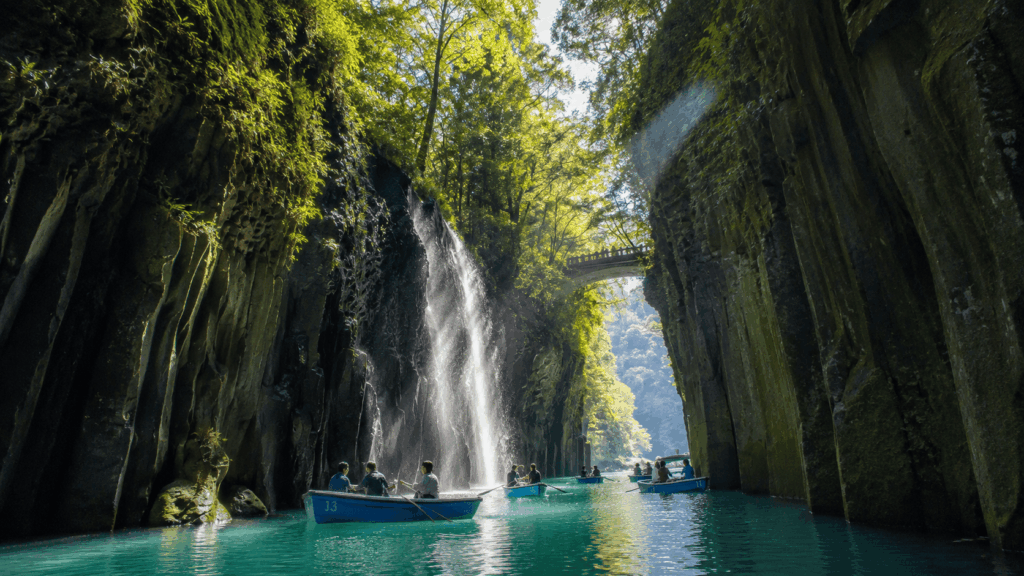
You can see Manai Falls from above without taking a boat. Gorge entry is free. The usual walking route is about 1 km, but the partial trail closure notice and detour map remains important: follow the open route and allow for the road detour.
Around an hour for the accessible viewpoints is a useful unhurried allowance before adding parking walks and boat formalities. In severe weather, replace the outdoor plan rather than treating a riverside walk as an automatic fallback. The tourist association also lists a barrier-free waterfall viewing platform; travelers who need it should confirm the open approach for their date.
Add Shrines When Access Is Safe
Takachiho Shrine and Amano-Iwato Shrine give the day a cultural focus. Amano-Yasukawara adds a riverside walk connected with the local mythology, whose access needs attention after bad weather. Choose stops that fit the conditions and transport you actually have.
Our guide to things to do around Takachiho Gorge helps you choose a fuller visit.
Use the Railway Only If It Is Running
The railway is a useful alternative when boat tickets are sold out and weather permits. Its own service can stop in rain or strong wind, and the same-day tickets can sell out. In winter, use the shorter hours above before traveling to the station.
Practical Planning: Boats, Parking and an Overnight Stay
Book the Boat and Check Operations Separately
Plan an independent reservation around 14 days ahead at 9:00 AM JST; booking closes two days ahead at 9:00 AM. Safety inspections can close boating for a full day in January, April, July or October, with dates announced separately.
- Before release: choose transport that can reach your intended slot and read the date’s calendar. Use a card set up for 3D Secure.
- At release: use the official independent booking site, complete payment within its 15-minute hold, and save the booking number and confirmation email.
- On the day: read operating status, normally updated around 8:00 AM. Leave time for parking and the walk to reception; do not rely on walk-up sales when the notice says none are available.
For rides through November 30, 2026, independent cancellation is free until two days before at 9:00 AM, then 100%. For rides from December 1, 2026, charges begin at 9:00 AM six days ahead: 20%, then 40%, 60% and 80% on successive days, reaching 100% at 9:00 AM two days ahead. Changing a date requires cancellation and rebooking. These rules apply to direct boat reservations; a tour has its own booking terms.
The full boat booking guide covers prices, capacity and the detailed steps, keeping this page focused on choosing when to visit.
Budget for the Current Parking Charges
The tourist association’s parking information lists these charges. They are separate from boat rental. The walking times are its estimates to the boat area, before extra stops or your check-in buffer.
| Parking lot | Listed charge | Planning note |
|---|---|---|
| P1 Oshioi | ¥1,000 | Closest to the boat area; a boat reservation does not reserve a space. |
| P2 Araragi | ¥1,000 | About 15 minutes on foot (700 m). |
| P3 Ohashi | ¥800 | About 20 minutes on foot (1 km). First 60 minutes free; paid hours 8:00 AM–5:00 PM. |
| P4 Oshikata | ¥500 | About 25 minutes on foot (1.5 km). First 60 minutes free; paid hours 8:00 AM–5:00 PM. |
| P5 Taguchino | Free | About 30 minutes on foot (2 km); allow for the return walk too. |
P3 and P4 become paid once the free period is exceeded. A gorge walk, boat ride and lunch can easily take longer than an hour. Follow staff directions when lots are full.
The 2026 parking shuttle notice lists selected dates only, including November 21, 22 and 23, as well as earlier dates that month. On operating dates, it runs 8:30 AM–5:00 PM about every 20–30 minutes; the listed fare is ¥300 for junior-high-school age and above, ¥200 for elementary-school children, cash only. Use its route map for stops, and keep the walk as your plan on other dates.
Stay Overnight If the Evening Matters
For an autumn overnight visit, one sensible order is an afternoon gorge visit, an early dinner, Kagura, then a possible Kunimigaoka sunrise the next morning. Leave room for hotel check-in and an actual dinner reservation. If you choose a morning boat instead, put the longer shrine visits on the preceding afternoon.
For winter, a local night avoids combining a long morning drive with the earliest boat slot and keeps evening culture separate from the return journey. Check the lodging’s dinner time and its distance from the shrine before building the night around Kagura. An overnight stay gives you more time; it does not secure a boat or predictable weather.
For a day visit, anchor the schedule around the gorge and your confirmed transport. Our Takachiho Gorge one-day and overnight itinerary helps you fit the surrounding stops without rushing.
Leave Large Bags Before the Gorge Walk
Ask your hotel about storage first, or use station lockers at your departure base. For a local night, ask your Takachiho lodging about storing bags before check-in. The boat rules exclude large luggage, and the steps and parking walks are easier with a day bag.
If you are making a weekend bus round trip back to Hakata and hotel storage is unavailable, a station-area store with overnight weekend opening can suit an early departure and late collection. Confirm both times on your chosen date before reserving.
Enter Fukuoka and choose a store near Hakata whose drop-off and collection hours fit your trip. For an onward journey elsewhere in Kyushu, keep your luggage plan with that route rather than returning to Hakata just to retrieve a bag.
Frequently Asked Questions
What is the best month to visit Takachiho Gorge?
May outside Golden Week is my first choice for fresh greenery. Choose mid-to-late November if autumn leaves matter most, or October if you want an autumn trip without depending on peak color.
Is Takachiho Gorge worth visiting in winter?
Yes, for the cliffs, waterfall and surrounding culture. Plan warm layers and a local night if you want Kagura. Check boat maintenance and the railway’s shorter winter hours when choosing the date.
Can I see snow at Takachiho Gorge?
It is possible, but snow is not reliable enough to make it the goal of your visit. Check the actual forecast and road conditions during a cold spell.
Does rain always cancel the boats?
No. River conditions determine operation. Boats may run in light rain and remain suspended on a sunny day after heavy rain.
Can I enjoy Takachiho Gorge without a boat?
Yes. The open waterfall viewpoints and gorge scenery are still the main attraction. Allow roughly an hour for an unhurried walk, plus access time, and use the current detour map.
Is arriving at 8:30 AM enough to get a same-day boat ticket?
No. Same-day availability depends on the date and advance sales. Read the official ticket notice before making a long journey for a walk-up purchase.
Final Verdict: Choose the Season, Then Make the Visit Work
Start with May for greenery, November for autumn leaves, or a winter overnight stay for scenery and culture. Then choose transport that leaves enough time at the gorge and book the boat within the appropriate reservation window. For a fixed summer date, keep the outdoor plan flexible around actual conditions.
Planning the Fukuoka private day trip? Before paying, review your chosen date, meeting time and cancellation conditions against the rest of your Kyushu itinerary.

Hi, I’m Kai. I’m a Tokyo-based travel writer, tourism industry insider, and the author of a published guidebook for international visitors to Japan. With over 10 years of professional experience at a leading Japanese tourism company, my mission is to help you skip the tourist traps and navigate Japan’s best destinations like a local. I believe the perfect day trip is like a traditional kaiseki meal: a beautiful balance of precise planning and unforgettable seasonal discovery. When I’m not out conducting field research, you’ll usually find me drafting new itineraries with one of my favorite fountain pens!