
Grilled kusa mochi, spring water tofu, and salt-grilled river fish are the three foods to prioritize at Oshino Hakkai. For most travelers, the smartest plan is to skip the sit-down lunch lines and build a snack crawl with two or three local specialties instead. Here is exactly what to order, what each dish costs, and how to plan your food stop near Mt. Fuji.
- Best first picks: Grilled kusa mochi, spring water tofu, and salt-grilled river fish.
- Best way to eat here: Do a short snack crawl instead of committing to a full restaurant meal.
- Typical spend: Budget around 1,000 to 1,500 JPY per person for two or three snacks and a drink, depending on what you choose.
- Best arrival time: Aim for 9:30 AM to 10:30 AM for lighter crowds and the best selection before the lunch rush builds up around 11:30 AM.
- Best for: Travelers who want a quick, scenic food stop with local specialties.
- Less ideal for: Anyone expecting a large restaurant district or a long, relaxed lunch experience.
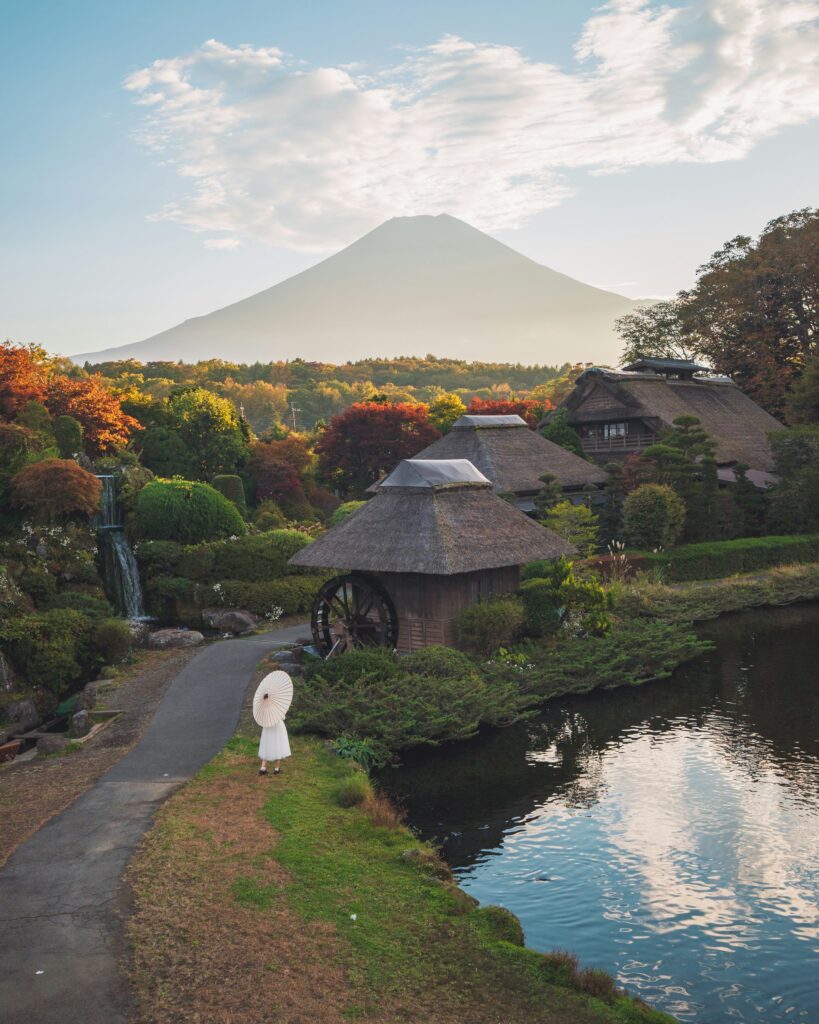
The best Oshino Hakkai foods at a glance
| Food | Sweet or Savory | Typical Price | Filling Level | Queue Risk | Best Time to Buy | Vegetarian-Friendly | Best if Short on Time |
|---|---|---|---|---|---|---|---|
| Kusa Mochi | Sweet | 150–250 JPY | Light | Low to Medium | Morning to early afternoon | Usually yes | Yes |
| Spring Water Tofu | Savory | 200–350 JPY | Light | Medium | Late morning | Usually yes | Yes |
| Salt-Grilled River Fish | Savory | 600–900 JPY | Medium | Medium | Lunch hours | No | Yes |
| Cold Soba | Savory | 900–1,500 JPY | Medium | Medium to High | Right at opening | Sometimes | No |
| Houtou (Miso Noodle Soup) | Savory | 1,000–1,800 JPY | Heavy | Medium | Lunch hours | Usually yes | No |
| Seasonal Fruit or Smoothies | Sweet | 400–900 JPY | Light | Low | When in season | Yes | Yes |
Prices and availability can vary by stall, season, and time of day. Always carry some cash — many smaller stalls prefer it over cards.
The 3 must-try foods at Oshino Hakkai
Not every stall will look equally tempting once the crowds build up. If you want the most efficient food stop, prioritize these three items in this order.
Grilled kusa mochi — the signature snack
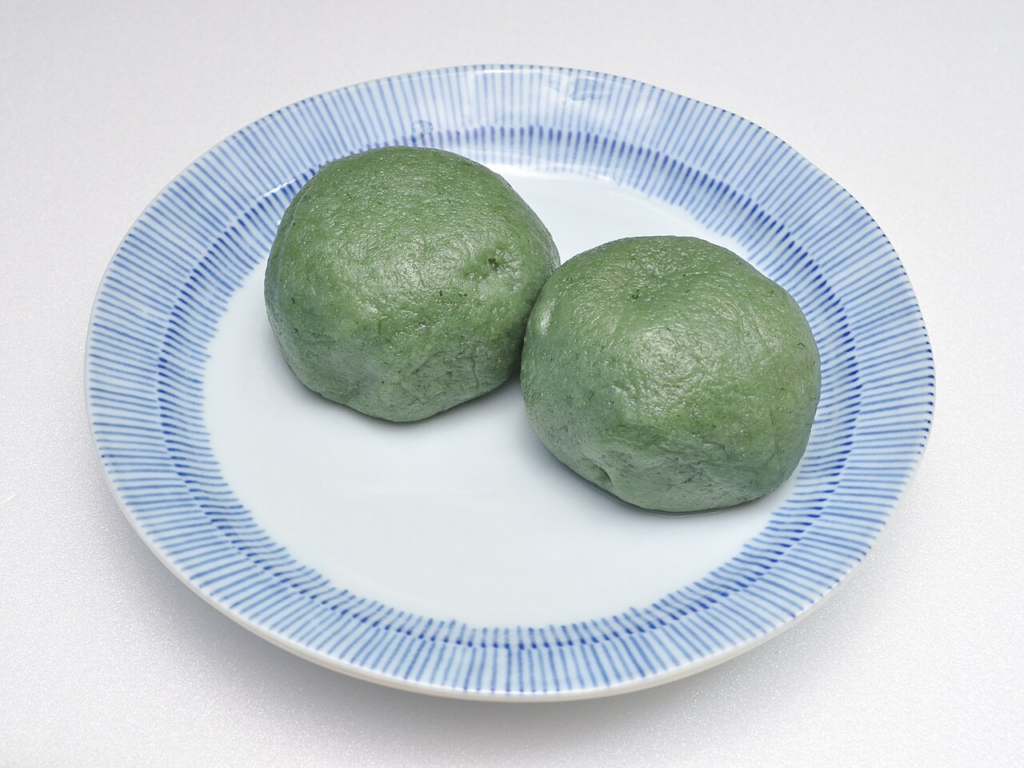
Kusa mochi is the snack most visitors notice first — the smell coming off the grill is hard to miss. It is a soft green rice cake flavored with mugwort (yomogi) and usually filled with sweet red bean paste.
- Why order it: It is quick, affordable, easy to eat while walking, and one of the most recognizable local snacks in the village.
- What it tastes like: Slightly smoky outside, chewy inside, with a gentle herbal note from the mugwort.
- Vegetarian note: Kusa mochi is typically made without eggs or dairy, but if you follow a strict vegan diet, check whether the red bean paste contains honey.
- Who it suits: First-time visitors, light snackers, and anyone who wants something classic without spending much.
Spring water tofu — a taste of the local water
This is one of the foods that feels specific to Oshino Hakkai rather than just generally Japanese. The appeal is not novelty but purity: cold tofu made memorable by exceptionally clear spring water and simple toppings like soy sauce, grated ginger, or green onion.
- Why order it: It is one of the best examples of how the local water affects the food. The tofu itself is mild, but the texture is noticeably silkier than what you find in cities.
- What to expect: A clean, mild, refreshing bite that works best as part of a snack crawl, not as a full meal.
- Vegetarian note: Plain spring water tofu with soy sauce and green onion is usually vegan-friendly. If the stall adds bonito flakes (dried fish shavings), you can ask to skip them — most stalls will accommodate.
- Who it suits: Travelers curious about local ingredients, lighter flavors, and vegetarian-friendly options.
Salt-grilled river fish — the most substantial street food
If you want the one item that feels closest to a real lunch, this is it. Ayu (sweetfish) or iwana (char) grilled over charcoal with salt gives you a smokier, more savory contrast to the sweets and tofu.
- Why order it: It is the most filling street-food option and feels more like a proper lunch item.
- What to expect: Crisp skin, flaky meat, and a noticeable salty finish. The fish is served whole on a skewer.
- Who it suits: Savory snack lovers and visitors who want something substantial without sitting down.
- What to keep in mind: Small bones are common, so it is not the easiest option for very young children or rushed eaters. Not vegetarian-friendly.
Other foods worth trying
Cold soba
Cold soba noodles dipped in chilled tsuyu broth are a solid option if you want a light sit-down meal on a warm day. The spring water in the area is said to make the noodles feel slightly more delicate.
- Best for: Warm-weather visits when you want a clean, light break from grilled street food.
- Queue risk: Medium to High around lunch — arrive early or be prepared to wait.
- Vegetarian note: Standard tsuyu dipping sauce contains dashi (fish stock). Some shops offer a vegetarian-friendly version — ask before ordering.
Houtou — Yamanashi’s miso noodle soup
Houtou (sometimes spelled “hoto”) is Yamanashi Prefecture’s signature comfort dish: thick, flat wheat noodles simmered in a miso-based broth with pumpkin, mushrooms, and seasonal vegetables. It is hearty, warming, and very different from the quick street-food options.
- Best for: Cold-weather visits or rainy days when you want something hot and filling.
- Where to find it: Several sit-down restaurants near Oshino Hakkai serve houtou. Look for signs or ask at a tourist information point.
- Time needed: Plan for 45–60 minutes — this is a sit-down meal, not a grab-and-go snack.
- Vegetarian note: Traditional houtou uses miso and vegetable broth, but some versions add pork or chicken. Ask for “yasai houtou” (vegetable houtou) if you want to avoid meat.
Seasonal fruit and smoothies
Seasonal fruit is more of a bonus pick than a core reason to visit, but it can be a smart add-on if you are there during peak fruit season.
- Summer (June–September): Peaches and peach drinks are the standout choice. Yamanashi is one of Japan’s top peach-producing regions.
- Autumn (August–October): Shine Muscat grapes are the premium option to look for — large, sweet, and seedless.
- Best use: Add one after a savory snack if you want a lighter finish instead of a full dessert.
Snack crawl vs sit-down lunch — which is better for you?
For most travelers, snacking wins. Oshino Hakkai works best as a scenic food stop rather than a destination for a long lunch break. Sit-down restaurants can still be worth it, but mainly if you arrive early and specifically want noodles or houtou.
| Option | Best For | Time Needed | Typical Spend | Queue Risk | Weather Suitability | When to Choose It |
|---|---|---|---|---|---|---|
| Snack Crawl | Short visits, first-timers, flexible itineraries | 45–90 minutes | 1,000–1,500 JPY | Low to Medium | Best in mild weather | Choose this if Oshino Hakkai is one stop in a bigger Mt. Fuji day |
| Sit-Down Lunch | Noodle lovers, slower itineraries, colder days | 60–120 minutes | 900–2,000 JPY | Medium to High | Better in cold or wet weather | Choose this if you arrive early and want a proper meal indoors |
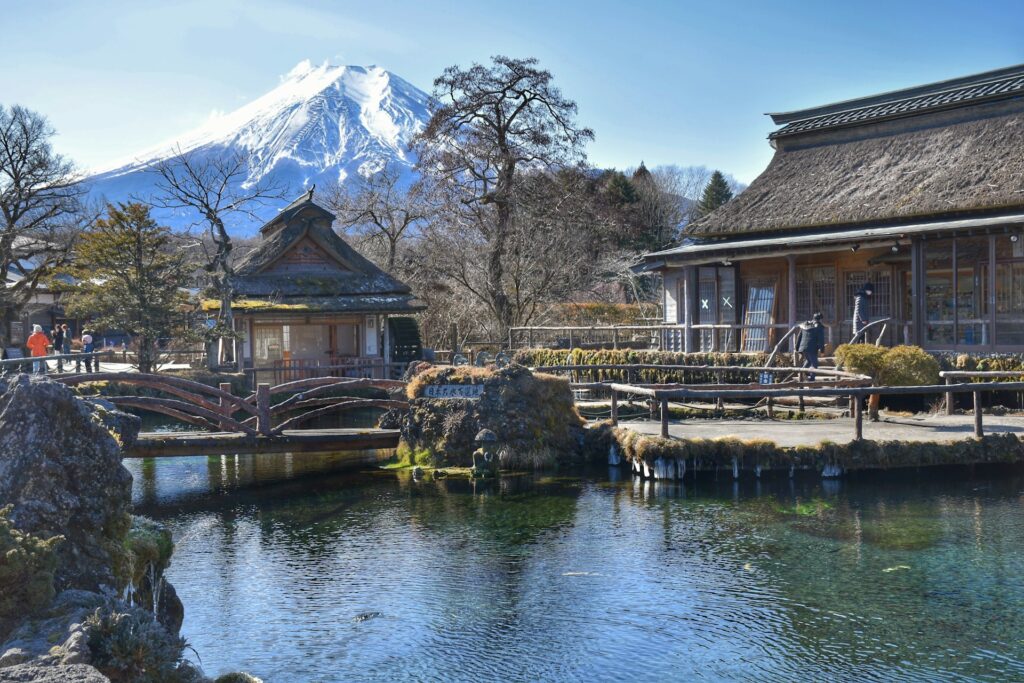
When to choose a snack crawl
- You are visiting Oshino Hakkai as part of a larger Mt. Fuji day trip
- You want to try multiple local flavors in a short time
- The weather is mild and you are happy eating outdoors
- You prefer flexibility over a scheduled meal
When to choose a sit-down meal
- You specifically want houtou or hot soba — these are served at sit-down restaurants, not food stalls
- The weather is cold, rainy, or windy and you want to eat indoors
- You have a slower itinerary and do not mind waiting for a table
Best dishes for vegetarians and vegans
Oshino Hakkai is more accommodating for plant-based eaters than many tourist-heavy spots in Japan, but you still need to choose carefully.
- Safe picks: Kusa mochi (check for honey in the bean paste), plain spring water tofu with soy sauce, seasonal fruit, and vegetable houtou (ask for “yasai houtou”).
- Ask before ordering: Cold soba (dipping sauce usually contains fish stock), grilled river fish (obviously not vegetarian), and some tofu toppings (bonito flakes).
- Pro tip: Carry a small card or note in Japanese explaining dietary restrictions. Simply saying “vegetarian” does not always prevent fish-based ingredients in Japan.
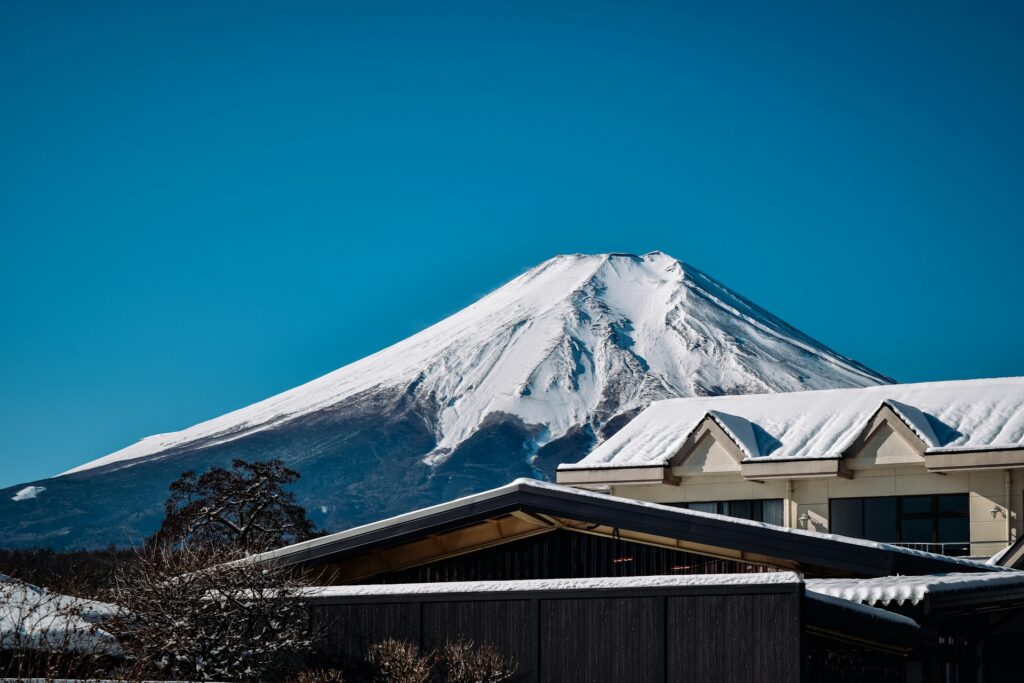
Oshino Hakkai food by season
What you should eat at Oshino Hakkai changes noticeably depending on when you visit. Here is what to look for and what to skip by season.
Spring (March–May)
- Best picks: Kusa mochi (available year-round but especially popular during cherry blossom season), spring water tofu.
- Seasonal note: Early spring can still be cold — houtou is a smart choice if you visit in March or early April.
- Crowd tip: Golden Week (late April to early May) is extremely busy. Arrive by 9:00 AM or expect long queues at popular stalls.
Summer (June–September)
- Best picks: Cold soba, seasonal peaches and peach drinks, spring water tofu.
- Seasonal highlight: Yamanashi peaches are at their peak from mid-June through August. Look for fresh peach juice or sliced peaches at fruit stands.
- Weather note: Hot and humid. The snack crawl works well, but bring water and sunscreen. Thunderstorms are common in August afternoons — go early.
Autumn (October–November)
- Best picks: Salt-grilled river fish, kusa mochi, Shine Muscat grapes (August–October).
- Seasonal highlight: Autumn foliage around the ponds makes this the most picturesque time to visit. The food feels more satisfying in the cooler air.
- Crowd tip: Weekends in November can be crowded with leaf-peeping visitors. Weekday mornings are ideal.
Winter (December–February)
- Best picks: Houtou (the clear winner for cold days), kusa mochi, hot tea or amazake (sweet warm rice drink) if available.
- What to skip: Cold soba and fruit smoothies — they are less appealing in near-freezing temperatures.
- Reality check: Winter is the quietest season. Some stalls may close earlier or operate on reduced hours. The village is still scenic, especially if Mt. Fuji is visible with snow, but do not expect the full summer selection.
Practical tips before you eat
Cash, trash, timing
- Carry cash: Many small stalls prefer cash. Do not rely only on cards or transit IC payments. A few thousand yen is enough for snacks and drinks.
- Eat near the stall: Finish your snack to the side rather than walking through the village while eating. It is considered more polite and helps keep the area clean.
- Return trash when possible: If a stall gave you a stick, wrapper, or cup, hand it back there if they accept it. Public trash bins are limited.
- Go earlier than lunch peak: The experience is much smoother before the biggest midday crowds arrive. By 11:30 AM, popular stalls can have noticeable queues.
- Do not plan for a late visit: Food options thin out after 3:00 PM, and the area is less appealing after dark.
- Bring a water bottle: You can refill it at the free spring water stations near the ponds. The water is safe to drink and tastes noticeably clean.
Tips for families with children
- Easy foods for kids: Kusa mochi (sweet, soft, no bones), seasonal fruit, and spring water tofu are all kid-friendly choices.
- Watch for fish bones: Salt-grilled river fish contains small bones throughout the flesh. It is not recommended for toddlers or young children unless an adult picks through it first.
- Stroller accessibility: The main walking path around the ponds is mostly flat and stroller-friendly, though some sections have uneven stone surfaces. The area is compact enough that a stroller works fine for a short visit.
- Restrooms: Public toilets are available near the main parking area and close to the pond walking route. Cleanliness is generally acceptable but can vary during peak hours.
What to do in bad weather
Oshino Hakkai is less enjoyable in rain, snow, or heavy wind. The snack crawl loses much of its appeal when you cannot comfortably eat outdoors.
- If the weather is bad but you still want to visit: Prioritize sit-down restaurants with houtou or hot soba. These give you a reason to be indoors while still sampling local food.
- If the weather looks genuinely unpleasant: Consider swapping Oshino Hakkai for a more weather-proof option like Kawaguchiko’s restaurants or the Fuji Q Highland area, which has covered food options.
- If you are already there when the weather turns: Check if any stalls have covered seating areas. Some tofu and soba shops have small indoor or covered spaces.
How the spring water shapes the food
Oshino Hakkai’s food reputation is closely tied to its eight spring-fed ponds. The water filters through Mt. Fuji’s volcanic rock over decades, resulting in exceptionally clear and mineral-rich water that affects the taste of local food.
- For tofu: The flavor is mild and clean, with a noticeably silkier texture than city tofu. Simple toppings work best.
- For soba: The noodles and dipping sauce feel lighter and more refreshing when made with local water.
- For river fish: The region’s freshwater fish is a natural match for the village setting and the clean water.
You do not need to build your whole visit around the water story, but it explains why the best foods here are simple rather than flashy.
How to get to Oshino Hakkai
From Tokyo
There is a direct highway bus from Shinjuku to Oshino Hakkai on some services (about 2 hours 20 minutes), and train-and-bus combinations via Kawaguchiko or Fujisan Station. The challenge is less about whether the route exists and more about how much flexibility you want on the day.
- Good fit for DIY: Travelers who do not mind checking bus times carefully and building a slower itinerary.
- Less ideal for DIY: Visitors trying to combine Oshino Hakkai, Lake Kawaguchiko, ropeways, and multiple viewpoints in one rushed day.
From Kawaguchiko or Fujisan Station
If you are already based in the Fuji Five Lakes area, Oshino Hakkai is a straightforward add-on — about 20 to 30 minutes by local bus. This makes the food stop much more enjoyable because you are not spending most of your energy on transfers before you arrive.
When a guided tour makes sense
A guided trip is the smarter choice if your real goal is a smooth Mt. Fuji day from Tokyo rather than a deep dive into Oshino Hakkai itself. If you prefer to have transport handled and combine food, views, and multiple stops in one day, a tour is often the lower-stress option.
Frequently Asked Questions
Is Oshino Hakkai free to enter?
Yes. The main village area and the standard walking route around the ponds are free to visit. One pond, Sokonuke Pond, is inside the Hannoki Bayashi Museum area and requires a separate admission fee (300 JPY for adults as of 2025).
Do the food stalls at Oshino Hakkai accept credit cards?
Some businesses accept cashless payment, but many smaller stalls still prefer cash. Bring enough Japanese yen so you are not forced to skip a snack because of payment issues. A few thousand yen is sufficient for a full snack crawl.
How much time do you need for Oshino Hakkai food?
For most travelers, 1.5 to 2 hours is enough. That gives you time to walk the main area, try two or three local foods, and take photos without turning the stop into a rushed blur.
Is Oshino Hakkai worth visiting in bad weather?
It can still be worth it, but it is much less enjoyable if your main goal is scenic strolling and casual snacking. Rain, snow, wind, or low visibility reduce the appeal, and some food stalls may close earlier than expected. If the forecast looks poor, consider a sit-down houtou lunch instead.
Is Oshino Hakkai food vegetarian or vegan friendly?
Partially. Kusa mochi and plain spring water tofu are usually vegan-friendly. Houtou can be made without meat if you ask for “yasai houtou.” However, cold soba dipping sauce typically contains fish stock, and grilled river fish is obviously not vegetarian. Carry a dietary restriction card in Japanese if you have strict requirements.
Are there toilets near the food stalls?
Yes. Public restrooms are located near the main parking area and along the pond walking route. They are generally clean but can get busy during peak hours.
Can I bring a stroller to Oshino Hakkai?
Yes. The main walking path is mostly flat and stroller-friendly. Some sections near the ponds have uneven stone surfaces, but the area is compact enough that a stroller works fine for a short visit.
Can I drink the spring water at Oshino Hakkai?
Yes. The spring water at the designated drinking stations is safe to drink and known for its clean, smooth taste. Bring a reusable bottle and fill up while you are there.
Final verdict — is Oshino Hakkai food worth it?
Oshino Hakkai food is worth trying if you approach it the right way. This is not the place for a big destination lunch built around famous restaurants. It is the place for a short, satisfying snack crawl built around local specialties like kusa mochi, spring water tofu, river fish, and seasonal treats.
Choose this food stop if:
- You enjoy trying several small dishes rather than one big meal
- You are already visiting the Fuji Five Lakes area
- You want a scenic, walkable food experience with photo opportunities
- The weather is mild and you are happy eating outdoors
Skip or shorten this food stop if:
- You are on a very tight one-day itinerary from Tokyo with limited time
- The weather is rainy, snowy, or extremely windy
- You expect a full-service restaurant district with many seated options
- You or your travel companions have difficulty with walking on uneven ground
For families: Kusa mochi and fruit are easy wins. Skip the grilled fish for young children due to bones. The walkable layout works well with strollers on the main path.
For first-time visitors: Stick to the three must-try foods (kusa mochi, tofu, river fish) and add a seasonal fruit if available. Spend about 1.5 hours and treat it as a scenic food break, not a lunch destination.
For travelers on a tight schedule: Choose the snack crawl over a sit-down meal. You can try three local specialties and see the ponds in under 90 minutes.
If you are visiting from Tokyo and would rather avoid handling the transport yourself, this is the most convenient low-stress option to consider: Check Availability: Tokyo to Mt. Fuji, Hakone Ropeway & Owakudani Tour

Hi, I’m Kai. I’m a Tokyo-based travel writer, tourism industry insider, and the author of a published guidebook for international visitors to Japan. With over 10 years of professional experience at a leading Japanese tourism company, my mission is to help you skip the tourist traps and navigate Japan’s best destinations like a local. I believe the perfect day trip is like a traditional kaiseki meal: a beautiful balance of precise planning and unforgettable seasonal discovery. When I’m not out conducting field research, you’ll usually find me drafting new itineraries with one of my favorite fountain pens!