
Less than two hours from central Tokyo, Hakone is Japan’s classic hot spring escape. Situated inside the volcanically active Fuji-Hakone-Izu National Park, it offers everything a first-time visitor could want: misty mountains, cedar forests, traditional inns, and deep, mineral-rich waters.
When planning a trip, travelers usually search for the same core experiences: a relaxing soak, a taste of traditional Japan (wearing a yukata, eating a multi-course kaiseki dinner), and ideally, a private bath just for two. However, with over a dozen distinct hot spring towns scattered across the valley, figuring out where to go and how to book can be overwhelming.
This guide cuts through the confusion. By the end, you will know exactly which area fits your travel style, whether you should book a traditional ryokan (Japanese inn) or just do a day trip, and how to find private or tattoo-friendly baths without the stress.
TIP: read my full guide to Day Trips from Tokyo for more easy getaway ideas!
Quick Answer: Day Trip vs. Overnight Stay in Hakone
The most common question travelers ask is: “Can I just do a day trip to Hakone, or do I need to stay overnight?”
Both are highly popular, but they offer completely different experiences. Here is a quick breakdown to help you decide:
| Feature | Day Trip to Hakone | Overnight Ryokan Stay |
|---|---|---|
| Best For | Tight itineraries, budget travelers, ticking off main sights. | Couples, honeymooners, slow travel, traditional culture seekers. |
| Time Commitment | Full day (approx. 8:00 AM to 8:00 PM). | 1 to 2 nights (Check-in at 3:00 PM, Check-out at 10:00 AM). |
| Estimated Cost | Low to Medium (Transport + Bath Entry + Lunch = ~$60-100 USD). | High (Ryokan with 2 meals = ~$150-400+ USD per person). |
| Onsen Access | Public bathhouses or day-use hotel baths (often crowded by noon). | Quiet evening and early morning soaking; easy access to private baths. |
Hakone Onsen as a Day Trip from Tokyo
If you are short on time, a day trip is entirely doable. From Shinjuku Station, the Odakyu Romancecar limited express connects you directly to Hakone-Yumoto in about 80–90 minutes. A realistic day trip involves doing a scenic loop (cable car, ropeway, Lake Ashi cruise) and stopping for a 2-hour soak at a day-use bathhouse like Hakone Yuryo or the family-friendly Yunessun before heading back to Tokyo for dinner.
When an Overnight Ryokan Stay Makes More Sense
If your budget allows, spending at least one night in a Hakone ryokan is often the highlight of a Japan trip. An overnight stay removes the rush. You can soak in the hot springs before dinner, enjoy a beautifully presented seasonal feast in your yukata, and take a quiet morning bath before the day-trippers arrive. If you are looking for a private onsen (a bath in your room or a reservable private room), staying overnight gives you the most and best options.
Ready to book? Decide if you want a quick soak or a full cultural immersion.
[内部リンク候補:Klook等の「箱根フリーパス(新宿発)」購入ページへのアフィリエイトリンク]
[内部リンク候補:Booking.com等の「箱根エリアの旅館」一覧ページへのアフィリエイトリンク]
Hakone Onsen Areas: Where to Soak and Stay
Hakone is not one single town; it is a large mountainous region made up of several distinct hot spring villages. Choosing the right base determines how much time you spend relaxing versus sitting on a bus.
Hakone-Yumoto & Tonosawa (Best for Quick Trips)
Hakone-Yumoto is the main gateway town and the terminus of the Romancecar line. It is bustling, lined with souvenir shops, and packed with day-use baths.
- The Vibe: Busy, convenient, and commercial.
- Who it’s for: Day-trippers who want to step off the train and get straight into a hot spring without navigating local buses.
- Keep in mind: It feels more like a lively tourist town than a secluded mountain retreat.
Top pick for this area: If you are looking for an upscale, modern stay right by the station, check out Hakone Airu.
[内部リンク候補:Booking.com等、箱根湯本エリアのおすすめ宿(例: Hakone Airu や 箱根水明荘)へのアフィリエイトリンク]
Gora & Kowakudani (Best for Couples & Private Onsen)
Located further up the mountain via the scenic Hakone Tozan Railway, Gora feels much more like an upscale resort town. It is home to excellent art museums (like the Hakone Open-Air Museum), beautiful gardens, and some of the region’s best mid-range and luxury ryokans.
- The Vibe: Romantic, artistic, and refined.
- Who it’s for: Couples, design lovers, and travelers specifically looking for rooms with private open-air baths on the balcony.
- Keep in mind: Getting here requires a train transfer, and the area is quite hilly for walking with heavy luggage.
Top pick for this area: Hakone Kowakien Ten-yu offers private open-air baths in every single room, making it incredibly popular for couples and those with tattoos. Hakone Yutowa is an excellent modern alternative with free private reservable baths.
[内部リンク候補:Booking.com等、強羅エリアのおすすめ宿(例: 天悠、箱根ゆとわ)へのアフィリエイトリンク]
Sengokuhara & Owakudani (Best for Nature & Quiet)
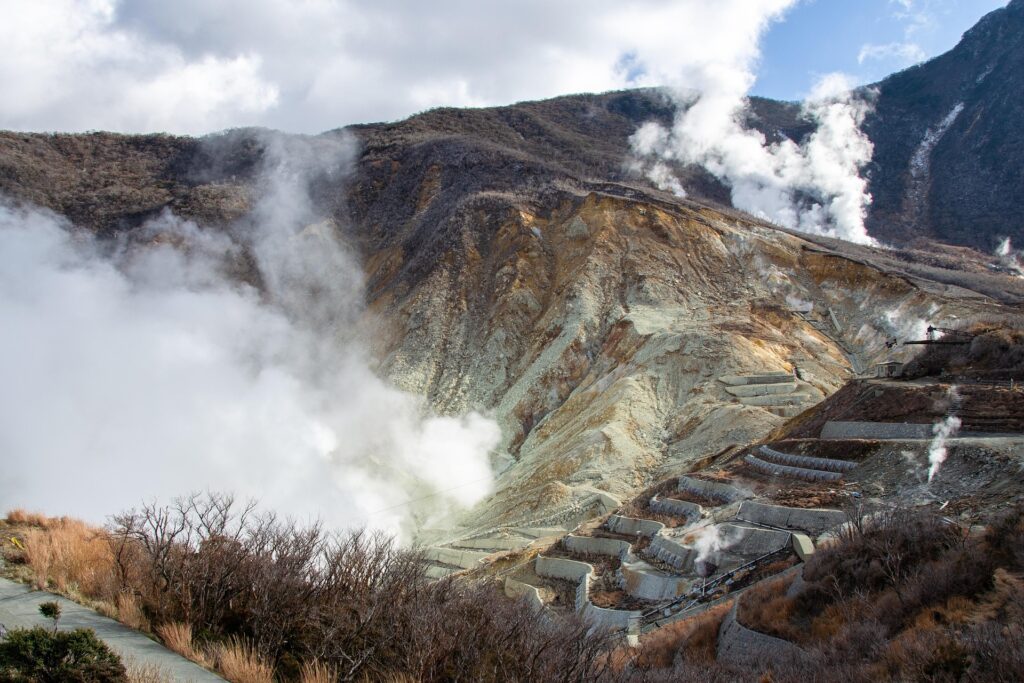
Sengokuhara sits in the northern part of the caldera. Instead of dense towns, you will find open landscapes, famous pampas grass fields, and quiet forests. Nearby Owakudani is a dramatic volcanic valley known for its steaming vents and sulfurous hot springs.
- The Vibe: Secluded, natural, and quiet.
- Who it’s for: Travelers who love boutique inns, milky-white sulfur baths, and don’t mind relying on local buses.
- Keep in mind: Evening dining options outside your hotel are extremely limited. Make sure to book a room with dinner included.
Top pick for this area: Mount View Hakone offers unique, milky-white “nigori-yu” volcanic water and excellent private baths that are popular with international visitors.
[内部リンク候補:Booking.com等、仙石原エリアのおすすめ宿(例: マウントビュー箱根)へのアフィリエイトリンク]
Lake Ashi & Moto-Hakone (Best for Mt. Fuji Views)
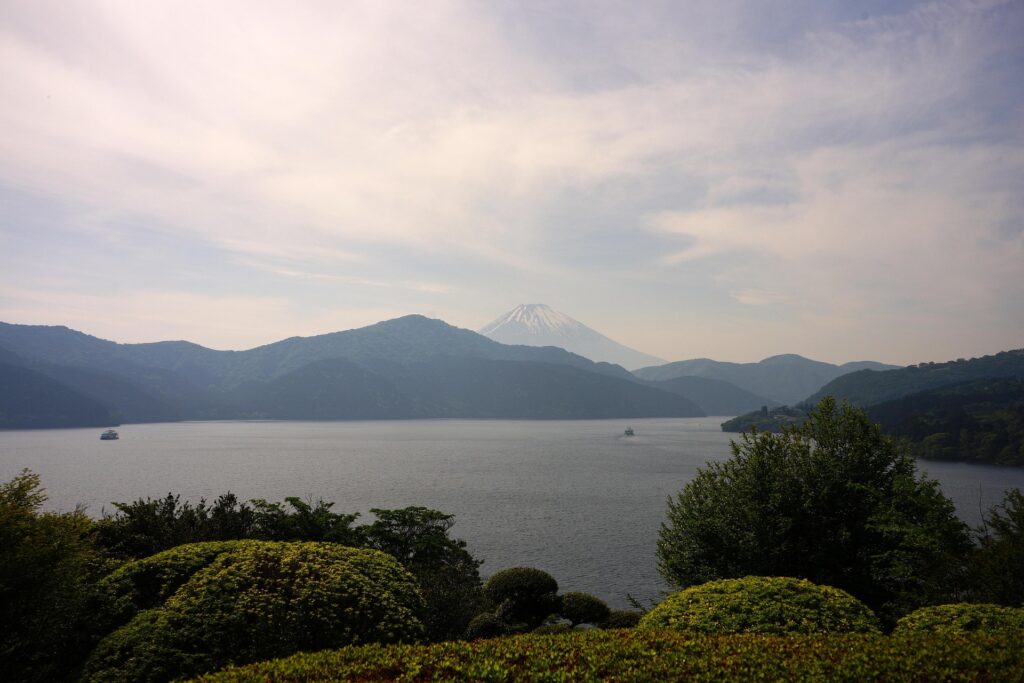
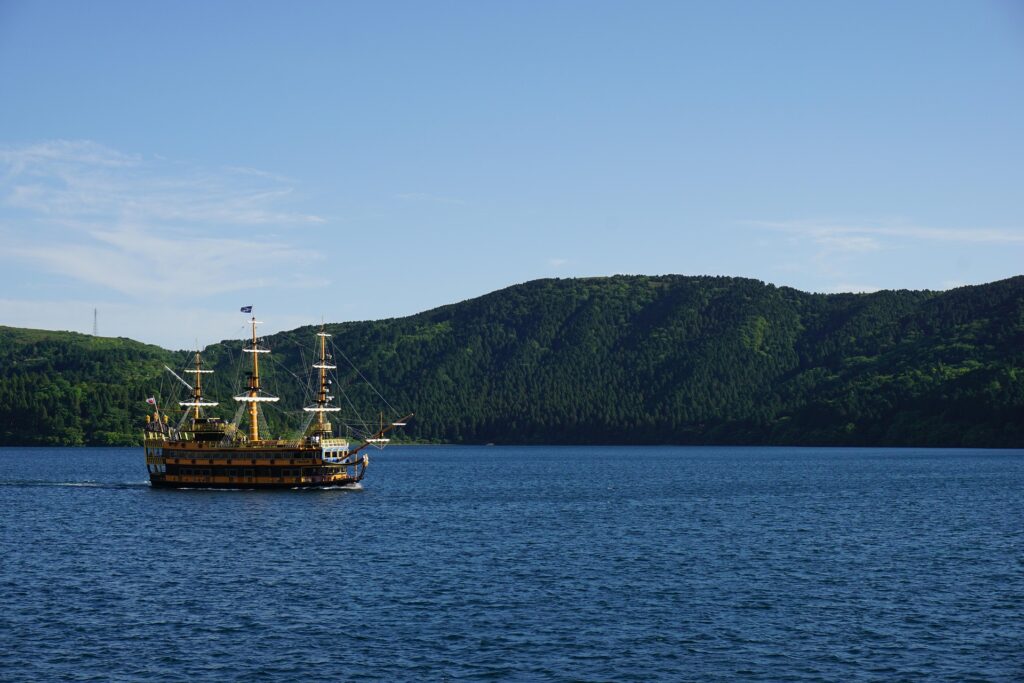
At the bottom of the ropeway lies Lake Ashi. Staying around Moto-Hakone or Hakone-machi gives you a lakeside resort feel. On clear days, the views of Mount Fuji rising behind the lake and the famous red Torii gate of Hakone Shrine are unmatched.
- The Vibe: Resort-style, scenic, and spacious.
- Who it’s for: Travelers prioritizing iconic views and easy access to the sightseeing pirate ships.
- Keep in mind: It takes the longest to reach from Tokyo, making it better suited for a 2-night stay rather than a rushed 1-night trip.
[内部リンク候補:Booking.com等、芦ノ湖エリアのおすすめ宿(例: ザ・プリンス箱根芦ノ湖)へのアフィリエイトリンク]
Types of Hakone Hot Spring Experiences
Not all hot springs are created equal. Depending on your comfort level, budget, and who you are traveling with, you will want to choose the right style of bath. Here is what you need to know about the different setups in Hakone.
Traditional Ryokan with Shared Baths
This is the classic, most authentic experience. A traditional ryokan features large communal baths, usually separated by gender. You will find indoor pools and outdoor rotenburo (open-air baths) surrounded by nature. You undress completely in the locker room, wash at a shower station, and soak naked with other guests. It is incredibly relaxing, deeply cultural, and the standard way Japanese people enjoy onsen.
Private Onsen (In-Room & Reservable Baths)
If you are shy, traveling as a couple and want to bathe together, or have tattoos, a private onsen is the perfect solution. There are two main types:
- In-room private onsen: Your room has its own hot spring tub (often on a balcony with a view). It is expensive, but offers ultimate privacy and 24/7 access.
- Kashikiri (Reservable family baths): Many ryokans and day-use facilities have private bathing rooms you can rent for a 45 to 60-minute time slot. You lock the door and enjoy the bath with your partner or family. Expect to pay around 3,000 to 6,000 JPY per hour for day-use rentals.
Tattoo-Friendly Hot Springs in Hakone
In Japan, visible tattoos are historically banned in public bathhouses. However, Hakone is becoming much more welcoming to international visitors. If you have ink, here is how you can still enjoy the water:
- Rent a private room: Facilities like Hakone Yuryo strictly ban tattoos in the main public baths, but they offer 19 beautiful private open-air rooms that anyone can rent.
- Wear a rash guard: Hakone Kowakien Yunessun is a hot spring theme park. If you wear a rash guard or swimsuit that completely covers your tattoos, you are welcome in their mixed-gender, swimsuit-required zones.
- Find a tolerant public bath: Tenzan Tohji-kyo is a rare public onsen that is genuinely tolerant of tattoos, provided you are traveling solo or are the only one in your group with a tattoo.
Want to secure a private bath without the stress? Book a room that guarantees your own personal onsen.
[内部リンク候補:Booking.com等、箱根の「露天風呂付き客室」絞り込みページへのアフィリエイトリンク]
Hakone Onsen 101: Etiquette & What to Expect
Onsen etiquette might seem intimidating, but it is actually very logical. The main goal is to keep the shared water perfectly clean. If you remember these simple steps, you will blend right in.
How to Use a Japanese Onsen (Step-by-Step)
- Undress completely: Leave all your clothes, underwear, and large bath towels in the locker room. Take only your small modesty towel into the bathing area.
- Wash before you soak: Sit on a small stool at the shower stations. Thoroughly wash your body and hair with soap and shampoo. Rinse off all suds completely.
- Enter the water slowly: The mineral water is usually quite hot (around 40-42°C / 104-107°F). Ease yourself in.
- Keep your towel out of the water: Fold your small towel and place it on your head, or set it on a dry rock next to the bath. Never let it touch the water.
- Relax quietly: Onsen are places for quiet reflection, not swimming or loud chatting.
Nudity, Gender Separation & Swimsuits
Traditional public onsen are strictly gender-separated (men on one side, women on the other) and fully nude. Swimsuits are not allowed because they introduce outside dirt and soap residue into the pure spring water.
If you absolutely cannot bathe naked around strangers, you have two options: book a private reservable bath (where you can be nude in complete privacy), or visit a “hot spring theme park” like Yunessun, where mixed-gender swimsuit zones are the main attraction.
Getting to Hakone & Saving Money
Getting to Hakone from Tokyo is fast and straightforward, making it an ideal destination whether you have a week or just 24 hours.
Tokyo to Hakone: Romancecar vs. Shinkansen
You have two main ways to reach the Hakone-Yumoto gateway station:
- From Shinjuku (The Best Route): Take the Odakyu Romancecar limited express. It goes directly to Hakone-Yumoto in about 80–90 minutes. All seats are reserved, and it is highly comfortable.
- From Tokyo/Shinagawa Station: Take the JR Tokaido Shinkansen (Bullet Train) to Odawara Station (about 35 mins), then transfer to the local Hakone Tozan Railway to Hakone-Yumoto (about 15 mins). This makes sense only if you already hold an active JR Pass.
Is the Hakone Freepass Worth It?
Almost always, yes. Transportation inside Hakone relies on a network of mountain trains, cable cars, ropeways, buses, and pirate ships. Paying for each of these individually adds up incredibly fast.
The Hakone Freepass (around 7,100 JPY for a 2-day pass starting from Shinjuku) covers your round-trip train fare from Tokyo PLUS unlimited rides on all Odakyu-affiliated transport within the Hakone area.
The Break-Even Point: If you plan to do the “Classic Hakone Loop” (Hakone-Yumoto → Gora → Owakudani → Lake Ashi → Hakone-Yumoto), buying individual tickets will cost you over 8,000 JPY. The pass saves you money and, more importantly, saves you the hassle of buying tickets at every single stop.
Note: If you take the Romancecar, you just need to buy a supplementary limited express ticket (about 1,200 JPY) on top of your Freepass.
Ready to save money and skip the ticket lines? Purchase your digital pass in advance and activate it on your phone when you travel.
[内部リンク候補:Klook等の「箱根フリーパス」購入ページへのアフィリエイトリンク]
Frequently Asked Questions (FAQ)
Do I need to book a private onsen in advance?
If you are visiting a day-use facility on a weekend or holiday, yes, absolutely. Private rooms book out quickly. If you are staying at a ryokan with reservable baths, you typically book your time slot at the front desk the moment you check in.
Can I use Hakone onsen if I have tattoos?
Yes, but you must plan ahead. Main public baths at traditional ryokans generally prohibit visible tattoos. Your best options are booking a room with a private open-air bath, renting a private family bath for an hour, or visiting a known tattoo-friendly facility like Tenzan Tohji-kyo.
Do I have to be naked in a private hot spring?
Because it is a private room, what you do behind locked doors is generally up to you. If wearing a swimsuit makes you feel more comfortable in a private rental bath, most facilities will not police it. However, to experience it the traditional Japanese way, bathing nude is recommended.
What is the difference between a ryokan and a normal hotel?
A ryokan is a traditional cultural experience. You sleep on futon mattresses over tatami reed floors, wear a yukata robe everywhere (even to dinner), and meals are usually elaborate, multi-course Japanese kaiseki feasts included in the price. A standard hotel provides Western beds, casual dining options, and a more typical international resort feel.
Wrap-up: Plan Your Hakone Escape
Hakone offers the quintessential Japanese hot spring experience, whether you are looking for a quick day trip from Tokyo or a luxurious overnight stay in a private ryokan. Remember to decide your priority first—convenience (Hakone-Yumoto), romantic private baths (Gora), or Mount Fuji views (Lake Ashi)—and book your accommodation and transport passes well in advance, especially during the busy autumn foliage and cherry blossom seasons.
TIP: Don’t forget to grab your transport pass before you go to make moving around the mountains effortless.
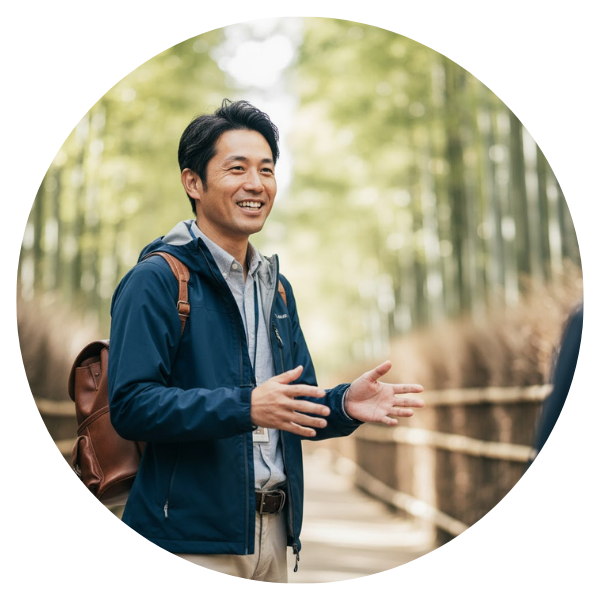
Hi, I’m Kai. I’m a Tokyo-based travel writer, tourism industry insider, and the author of a published guidebook for international visitors to Japan. With over 10 years of professional experience at a leading Japanese tourism company, my mission is to help you skip the tourist traps and navigate Japan’s best destinations like a local. I believe the perfect day trip is like a traditional kaiseki meal: a beautiful balance of precise planning and unforgettable seasonal discovery. When I’m not out conducting field research, you’ll usually find me drafting new itineraries with one of my favorite fountain pens!