
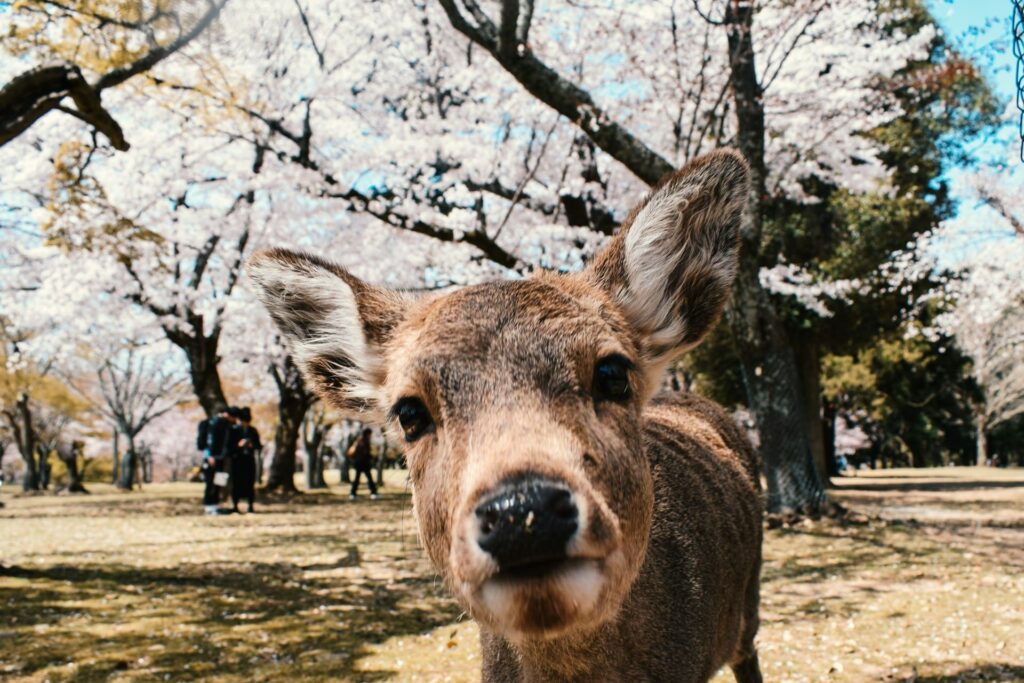
Looking for the best Nara photo spots? Start with Ukimido for calm morning reflections, Kasuga Taisha for lantern-lined paths, Nigatsudo for sunset city views, and Mt. Wakakusa for golden-hour deer photos. If you only have a few hours, focus on one morning spot and one late-afternoon spot rather than trying to photograph everything in one pass.
Nara is one of the easiest places in Japan to photograph deer, temples, forest paths, and wide sunset views in a single day. The key is not just choosing the right place, but arriving at the right time for softer light, fewer crowds, and more natural deer behavior.
Quick Answer: Best Nara Photo Spots
- Best overall: Nigatsudo Hall for wide views, wooden architecture, and sunset light
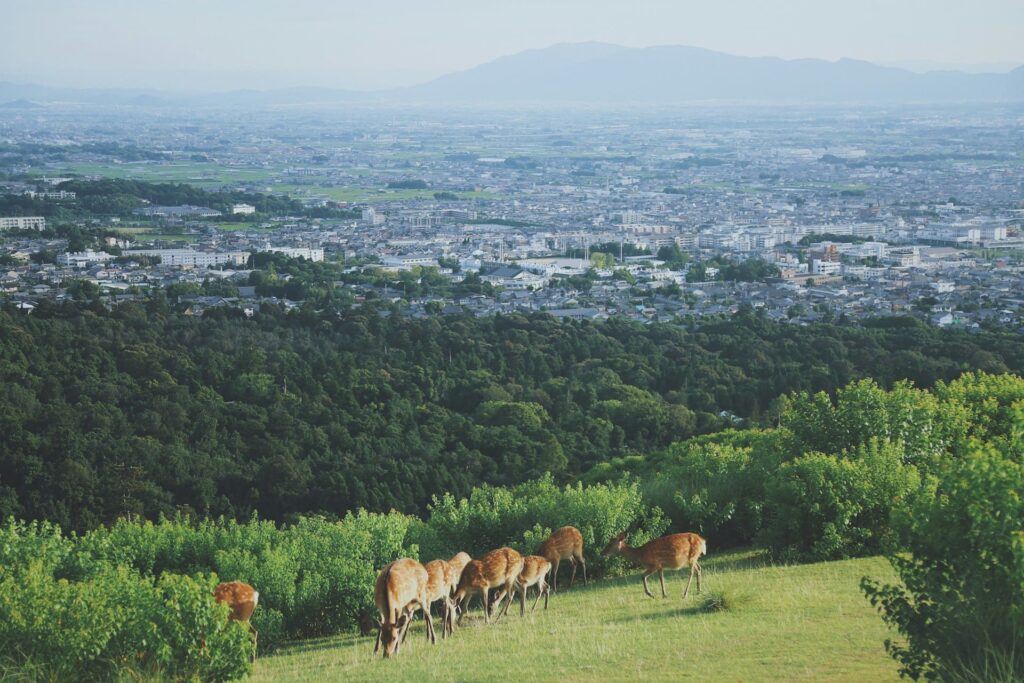
- Best for deer photos: Mt. Wakakusa and the quieter edges of Nara Park
- Best for reflections: Ukimido Pavilion early in the morning
- Best for lantern atmosphere: Kasuga Taisha Shrine
- Best for first-time visitors: Ukimido, Kasuga Taisha, and Nigatsudo in one day
At a Glance: Where to Go and When
| Spot | Best Time | Best For | Crowd Level |
|---|---|---|---|
| Ukimido Pavilion | 7:00 AM-9:00 AM | Reflections, quiet scenes, seasonal colors | Low early, moderate later |
| Kasuga Taisha Shrine | 9:00 AM-11:00 AM | Lanterns, forest paths, vermilion details | Moderate |
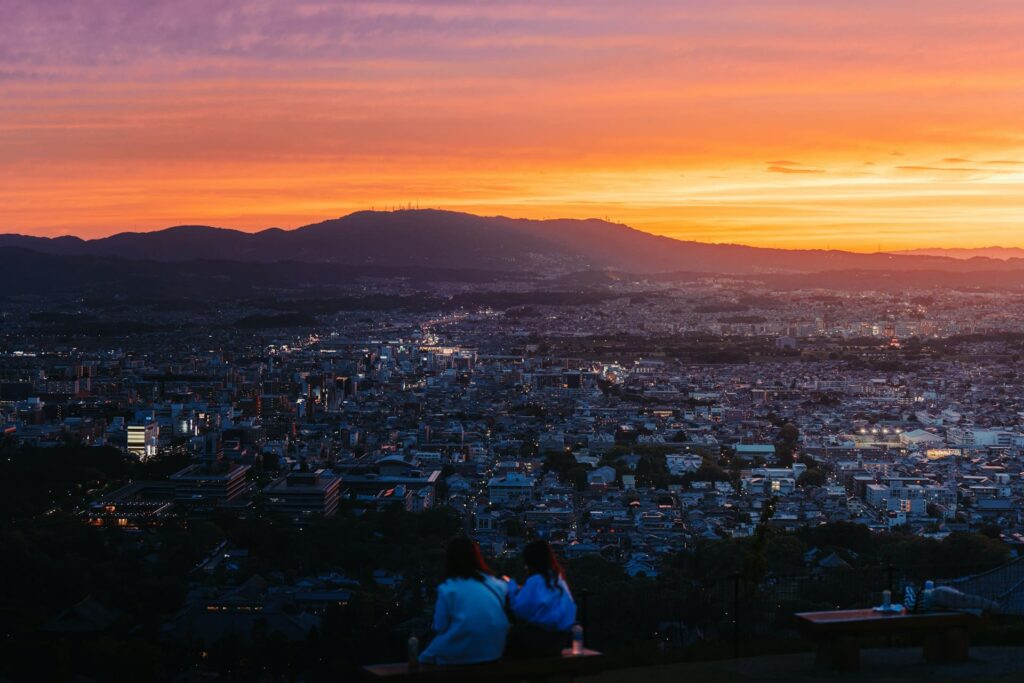
| Nigatsudo Hall | Late afternoon to sunset | Panoramic views, warm light, cityscape photos | Moderate, often calmer near sunset |
| Mt. Wakakusa | Golden hour | Deer with open views, sunset silhouettes | Lower than central park areas |
Important Note Before You Go
The Kofukuji Five-Story Pagoda is a famous Nara photo subject, but it is currently under long-term restoration. If your main goal is to photograph the pagoda itself, check the latest status before your visit. For now, it is better to prioritize the photo spots below instead of building your route around Kofukuji.
Golden Rules for Better Nara Photos
- Go early or go late: The best light is usually before 9:00 AM or in the hour before sunset. Midday brings harsher light and heavier crowds.
- Do not count on using a tripod: Many temple and shrine areas restrict tripods. Be prepared to shoot handheld.
- Let the deer come to you: Natural photos are easier when you stay still, keep a little distance, and wait for the moment instead of chasing them.
- Plan fewer spots, not more: Nara looks compact on a map, but walking time and crowd slowdowns add up quickly.
Want better group photos without juggling your camera, bags, and deer crackers at the same time? A local guide can help you reach the right places at the right time and take photos of your group along the way.
Check Availability: Nara Private Tour with Deer Park & Temples
Top Nara Photo Spots
Ukimido Pavilion
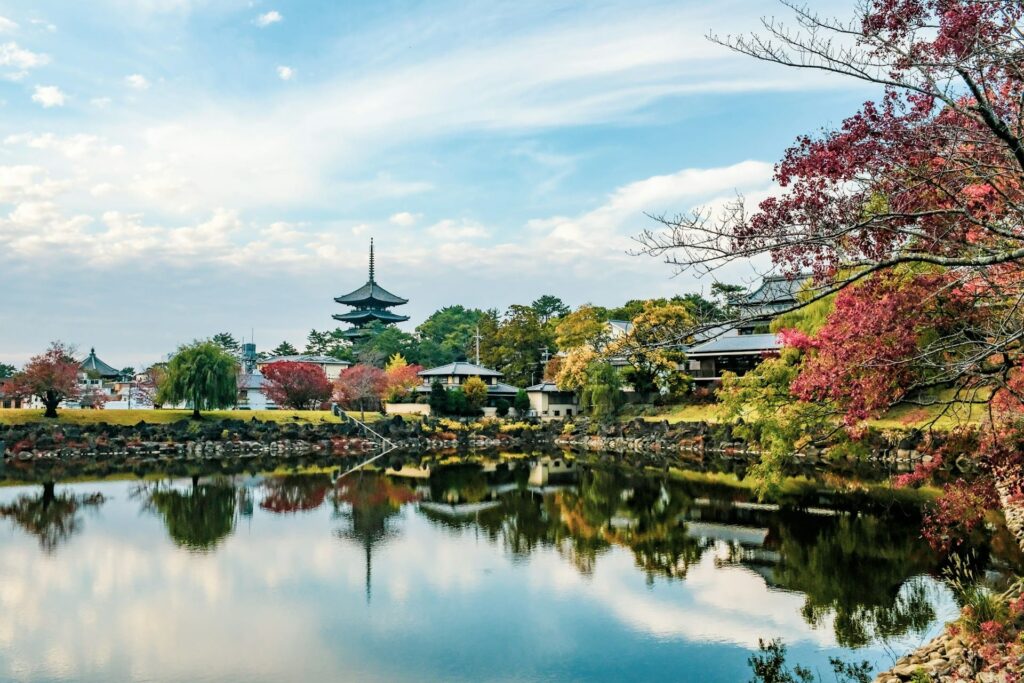
Ukimido is one of the most reliable places for peaceful morning photos in Nara. The hexagonal pavilion appears to float above Sagi-ike Pond, and the water is often calm enough in the early morning to create a clean reflection. This is one of the best choices if you want a quiet start to the day, especially in cherry blossom season or during autumn foliage.
Arrive as early as possible for the smoothest water and the fewest people on the bridge. If you visit later in the day, the scene is still attractive, but the reflective effect is usually weaker and the area feels busier.
Kasuga Taisha Shrine
Kasuga Taisha is best known for its lantern-lined approach and its mix of stone, moss, forest shade, and vivid shrine colors. It is a strong photo stop for travelers who want something more atmospheric than open park scenes. The paths and lanterns create depth naturally, which makes it easier to frame moody shots even with a phone camera.
Mid-morning is often the easiest time to photograph this area. You get enough light to bring out the textures of the lanterns and moss, but the forest still keeps the scene soft and shaded. This is also one of the best places in Nara for detail shots rather than wide skyline views.
Nigatsudo Hall
If you only choose one late-day photo stop in Nara, make it Nigatsudo. The elevated wooden balcony offers one of the best panoramic views in the city, and the warm light before sunset gives the hall, lanterns, and distant skyline a much softer look than midday.
This is the best overall photo spot for travelers who want a classic Nara scene without needing a complicated setup. It works well for architecture, wide landscape shots, and travel portraits. Compared with some central areas of Nara Park, it can also feel more relaxed in the late afternoon as many day visitors begin leaving the city.
Mt. Wakakusa
Mt. Wakakusa is the best choice if your goal is to photograph deer in open golden light. The grassy slope gives you more breathing room than the busiest parts of Nara Park, and the elevated position helps create cleaner backgrounds with fewer distractions.
This spot takes more effort than the others, but it rewards that effort with some of the most dramatic photos in Nara. Come in the late afternoon or around sunset for deer silhouettes, glowing grass, and broad views over the city. To ensure you arrive on time, check the opening hours and trail details in our Mount Wakakusa hike and sunset guide.
How to Take Better Deer Photos in Nara
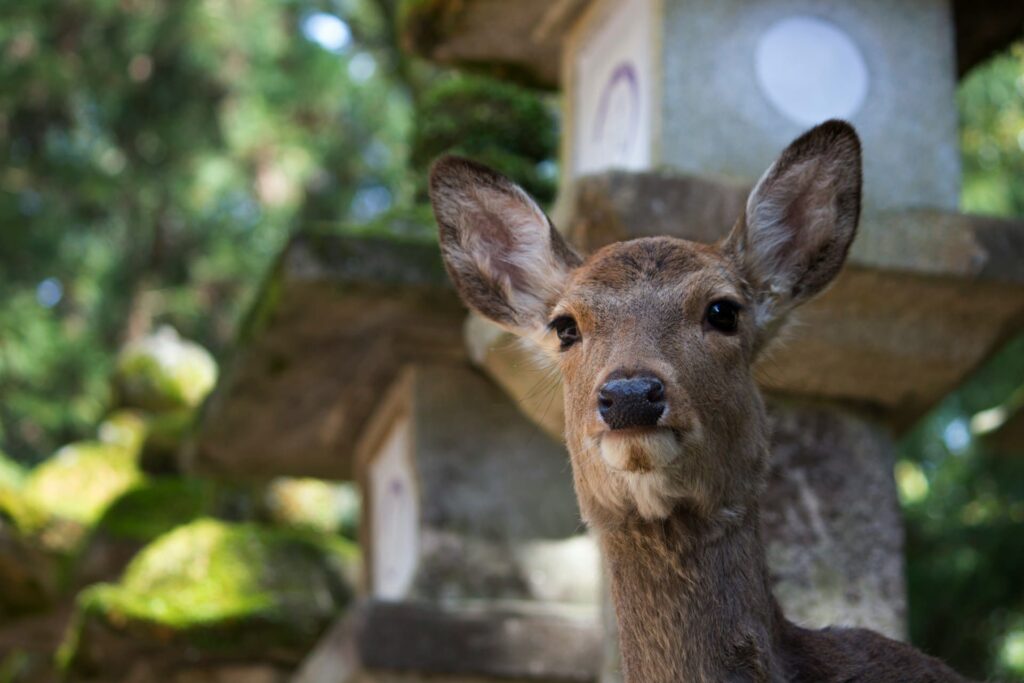
The deer are the most recognizable photo subject in Nara, but the best shots usually come from patience rather than speed. Instead of trying to force a pose, choose a calm area, watch how the deer move, and wait for a clean moment with a simple background.
- Photograph at deer eye level: Crouching down creates a more natural perspective and helps reduce distracting crowds in the background.
- Use food carefully and calmly: Deer crackers can help attract attention, but quick movements often make the scene look chaotic. Keep your distance, avoid crowding the animals, and always follow the official rules for safely feeding the deer.
- Look for clean backgrounds: Open grass, trees, and wide sky work better than busy paths filled with other visitors.
- Take candid photos first: Walking, grazing, or looking toward the light often looks better than a forced pose.
- Choose the right location for the shot you want: Central park areas are convenient, but quieter edges and Mt. Wakakusa usually produce cleaner compositions.
Best Deer Photo Styles and Where to Shoot Them
| Photo Style | Best Place | Why It Works |
|---|---|---|
| Deer with sunset light | Mt. Wakakusa | Open space, warm backlight, and fewer distractions |
| Casual deer portraits | Quieter edges of Nara Park | More room to frame the deer naturally |
| Travel photos with deer | Open park areas near the main walking routes | Easier for quick portraits and first-time visitors |
| Moody deer-and-forest feel | Areas near Kasuga Taisha approaches | Trees, shade, and atmosphere add depth |
Sample Half-Day Nara Photo Route
If you want strong photos without rushing, build your route around the light rather than trying to cover every landmark. This simple plan works especially well for first-time visitors.
- Morning: Start at Ukimido Pavilion for reflections and quiet scenery.
- Late morning: Move to Kasuga Taisha for lanterns, forest paths, and detail shots.
- Afternoon break: Rest, review your photos, and avoid the harshest midday light.
- Late afternoon: Head to Nigatsudo Hall for warm architecture and wide city views.
- Sunset option: Finish at Mt. Wakakusa if deer silhouettes and open golden-hour photos are your priority.
If you only have a short visit, choose Ukimido + Nigatsudo for the easiest mix of calm morning scenery and classic sunset views.
Is a Private Guide Worth It for Photos?
A private guide is not essential for taking good photos in Nara, but it can be useful if you want smoother logistics, better group photos, or help reaching the right places at the best time. This is especially helpful for families, couples, and travelers who do not want to rely on selfies or ask strangers for every shot. If you are still deciding how to plan your day, compare the pros and cons in our review of DIY vs. licensed private tours in Nara.
| Photography Need | Self-Guided | With a Private Guide |
|---|---|---|
| Group photos | Mostly selfies or asking other visitors | Someone can consistently take photos for you |
| Timing | Easy to mistime sunrise, shade, or sunset | Route can be planned around the best light |
| Hidden corners | You will likely stick to the main routes | Local knowledge can save time and improve angles |
| Stress level | You manage navigation, photos, and deer at once | More relaxed if you want photos while exploring |
Book a Private Guide: Nara Private Tour with Deer Park & Temples
Frequently Asked Questions
What are the best Nara photo spots for deer?
Mt. Wakakusa is the best choice for dramatic deer photos in warm light, especially near sunset. For easier access, the quieter edges of Nara Park are better than the busiest central paths because they give you cleaner backgrounds and more natural deer behavior.
What time should I visit Nara for the best photos?
The best times are usually early morning and late afternoon. Morning is ideal for Ukimido and quieter park scenes, while late afternoon is best for Nigatsudo and Mt. Wakakusa. Midday is the hardest time to shoot because the light is harsher and the main sightseeing areas are more crowded.
Is Kofukuji Pagoda visible now?
Kofukuji’s Five-Story Pagoda has been under long-term restoration, so check the latest official status before planning a photo stop around it. If the pagoda is your top priority, confirm conditions before your visit.
Are tripods allowed in Nara temples and shrines?
Tripod rules vary by site, but many temple and shrine areas restrict them or do not allow them in busy or sensitive spaces. It is safest to plan on shooting handheld unless a location clearly permits tripod use.
Which Nara photo spot is best for first-time visitors?
Nigatsudo is the best all-around choice because it is easy to appreciate even on a short visit and works well for architecture, city views, and portraits. If you want a broader first-time route, combine Ukimido, Kasuga Taisha, and Nigatsudo.
Final Tips for Planning Your Nara Photo Day
The best Nara photo spots are not necessarily the most famous at every hour of the day. A quiet pond in the morning, shaded lantern paths in late morning, and a sunset balcony in the evening will usually give you better results than trying to shoot everything at noon. Plan around the light, keep your route realistic, and choose a few strong locations instead of rushing through the whole park.

Hi, I’m Kai. I’m a Tokyo-based travel writer, tourism industry insider, and the author of a published guidebook for international visitors to Japan. With over 10 years of professional experience at a leading Japanese tourism company, my mission is to help you skip the tourist traps and navigate Japan’s best destinations like a local. I believe the perfect day trip is like a traditional kaiseki meal: a beautiful balance of precise planning and unforgettable seasonal discovery. When I’m not out conducting field research, you’ll usually find me drafting new itineraries with one of my favorite fountain pens!