
If you are searching for mochi pounding in Nara, the place most travelers mean is Nakatanidou. The shop is famous for its high-speed mochitsuki, but the most important thing to know before you go is simple: there is no fixed daily mochi pounding schedule.
That does not mean you cannot see it live. It means you need to visit with the right expectations, know the best time window, and understand how the shop decides when to pound the next batch.
Check availability for the Nara old town and fresh mochi tour
Quick Answer: When Can You See the Mochi Pounding at Nakatanidou?
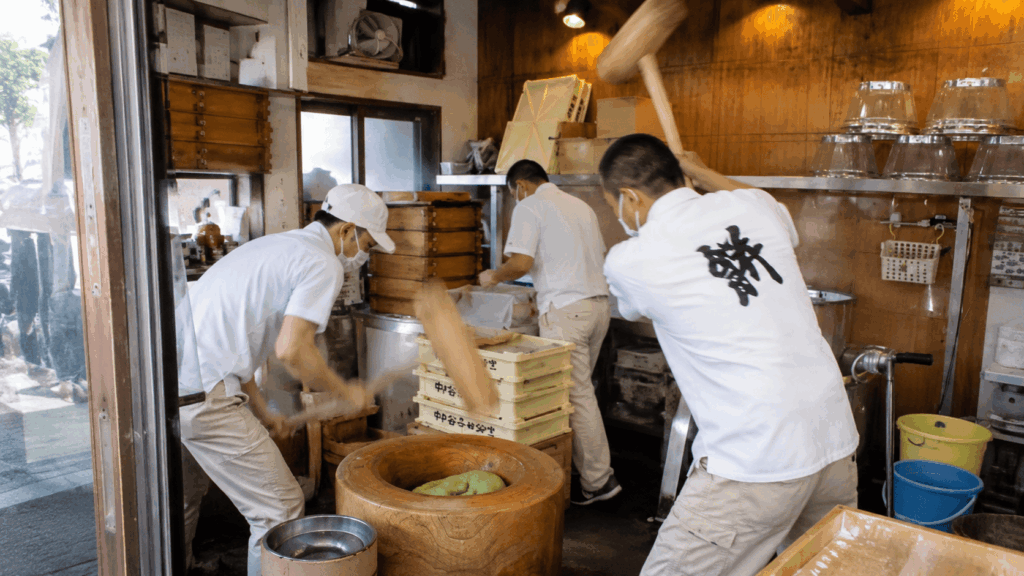
There is no fixed Nakatanidou mochi pounding schedule. The staff makes fresh batches according to sales and demand, so the timing changes throughout the day. Your best chance is usually from after noon to before early evening, when more customers are buying mochi and the shop is more likely to prepare another batch.
| What You Need to Know | Quick Answer |
|---|---|
| Is there a fixed daily schedule? | No. Nakatanidou says the mochi is pounded according to how well it is selling, not at fixed posted times. |
| Best time to visit | After noon to before early evening is usually your strongest window. |
| Official opening hours | 10:00 a.m.–7:00 p.m. according to the official shop page; it may close early if mochi sells out. |
| Official box prices | 3 pieces ¥600; 6 pieces ¥1,200; 10 pieces ¥2,000 (¥200 each in these boxes). Confirm single-piece sales and prices at the counter. |
| Payment | Bring cash. Do not rely on cards or mobile payment unless the shop confirms otherwise on the day. |
| How to know the next batch time | Ask the staff at the shop when the next mochi will be pounded. |
| Nearest station | About 5 minutes on foot from Kintetsu Nara Station; roughly 15 minutes from JR Nara Station. |
How the Nakatanidou Mochi Pounding Schedule Actually Works
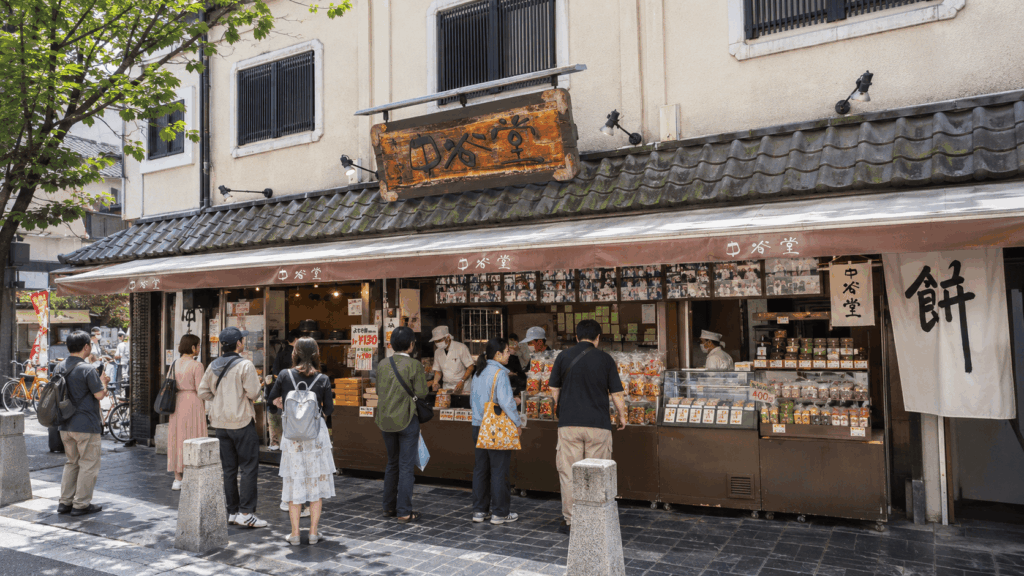
A lot of visitors arrive expecting a performance every hour, but that is not how Nakatanidou operates. The shop makes fresh mochi based on sales, so the famous pounding happens when more stock is needed rather than at a fixed posted time.
That is why two people can visit on the same day and have very different experiences. One person may arrive just before a batch starts, while another may arrive between rounds and need to wait. During busier hours, the shop may pound mochi more frequently, but you should not build your Nara day around an exact interval.
Does the Mochi Pounding Happen Every 30 Minutes?
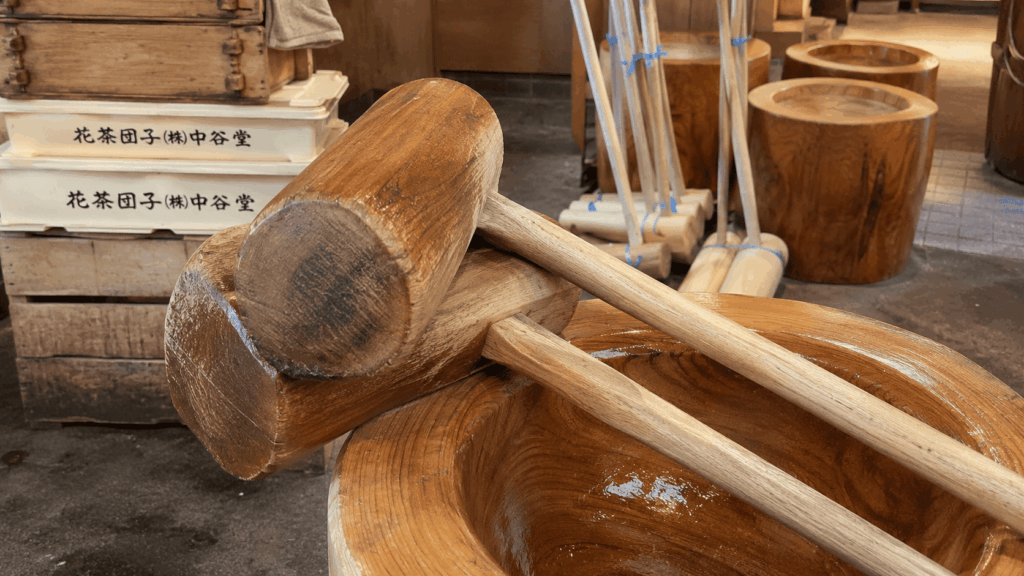
No fixed interval is guaranteed. You may see estimates such as “every 30 minutes” or a certain number of demonstrations per day in travel posts, but these are not an official timetable. The next batch depends on sales, so even arriving at a supposedly ideal time does not mean a round is about to start. If seeing the pounding matters to you, ask at the shop rather than counting from the previous round.
The key point is this: the mochi pounding is part of the production process, not a separate tourist show. Nakatanidou’s own visitor guidance explains that they do not decide fixed pounding times in advance; they make mochi while watching how well it is selling. If you keep that in mind, the whole experience makes much more sense.
Nakatanidou’s mochitsuki technique comes from the owner’s hometown of Kamikitayama Village in Nara Prefecture, where rapid pounding has been used for generations to create especially soft and chewy mochi. The shop’s team has also become famous for its award-winning high-speed mochitsuki technique.
The shop was founded in Nara in 1992. Its owner traces the method specifically to Kotochi, a district of Kamikitayama Village. According to Nakatanidou’s own explanation, the speed has a practical purpose: freshly steamed glutinous rice must be worked and finished while it is still hot to achieve a smooth, stretchy texture with a satisfying firmness.
The technique requires careful coordination, not simply fast hammering. One worker pounds with the wooden mallet while the other turns the rice, judges its texture, and adds water as needed so the batch is worked evenly.
Best Time to Visit Nakatanidou
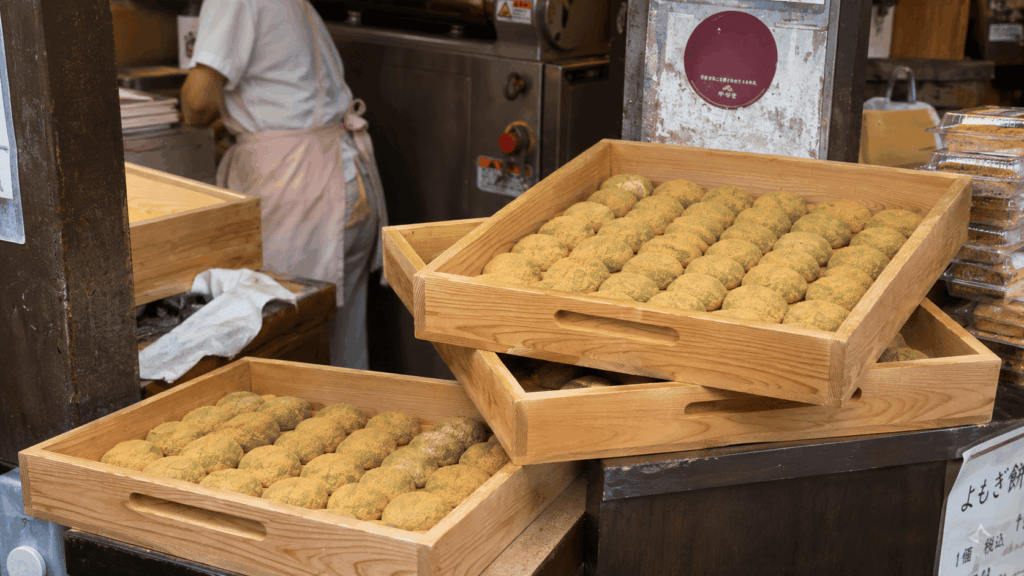
If your goal is to see the mochi pounding live, do not treat this like a strict timetable attraction. A better strategy is to visit during the shop’s busier window, when demand is higher and fresh batches are more likely.
Best Overall Time Window
From after noon to before early evening is usually the best time to try. Nakatanidou explicitly identifies this as its busier period, when it pounds many batches; see its official visitor guidance. Weekends, holidays, and busy sightseeing days can be crowded, but even then there is no guaranteed start time.
When Your Chances Are Lower
If you go right at opening or during a quieter part of the day, you may still be lucky, but there is a greater chance you will arrive between batches. If your schedule is tight, avoid assuming the pounding will happen immediately.
Busy Days vs Quiet Days
On crowded sightseeing days, the turnaround between batches can feel much faster. On quieter weekdays, you may need more patience. That is another reason why a flexible visit works better than trying to target one exact minute.
Kai’s tip: Avoid treating Nakatanidou like a timed stage show. Decide your maximum wait before you arrive—10 minutes, 20 minutes, or no waiting at all. That one decision keeps a snack stop from swallowing your whole Nara itinerary.
Check Before You Go
Nakatanidou’s closed days and operating details can change. The shop posts updates on their official Instagram account (@nakatanidou.jp), so it is worth checking there before planning your visit, especially if you are traveling a long distance.
What the Live Mochi Pounding Is Like
When the staff begins, the whole process is fast, loud, and surprisingly brief. The team works in tight rhythm, pounding and turning the mochi with impressive speed and control. One worker swings the heavy wooden mallet while another reaches in to turn the mochi between strikes—the precisely coordinated movement keeps the turner clear of the mallet. The rhythm is punctuated with energetic calls that add to the atmosphere.
Because the action is over quickly, it helps to be ready before it starts. If you are visiting with friends or family, choose your standing spot early and keep the sidewalk clear for other people passing by.
It feels dramatic in person, even if you have already seen the videos online.
Kai’s tip: The shop faces a busy pedestrian area, and a tight crowd can form quickly once the pounding starts. If staff allow it, standing slightly off-center rather than pressing to the very front can still give you a good view while leaving more room for pedestrians. Follow staff directions and never step into the roadway to film.
Nakatanidou Prices, Hours & Practical Info
| Detail | Information |
|---|---|
| Price | Official listed box prices: 3 for ¥600, 6 for ¥1,200, or 10 for ¥2,000. That is ¥200 per piece in a box. The current single-piece counter price is not confirmed by the official product page; check it on arrival. Official product information. |
| Payment | Bring cash. Small food shops in Japan can change payment options, so do not rely on cards unless confirmed on the day. |
| Opening hours | 10:00 a.m.–7:00 p.m. on the official shop page. It may close earlier when sold out; later opening hours do not guarantee late-day pounding. |
| Closed days | Tuesday is listed as a regular closed day by some directories, but exceptions and changes occur. Check the shop’s official Instagram for current closure notices rather than relying on a fixed weekly rule. |
| Address | 29 Hashimotocho, Nara City, Nara 630-8217 |
| Phone | 0742-23-0141 |
| Official website | nakatanidou.jp |
How to Get There
- From Kintetsu Nara Station (about 5 minutes): Use the East Gate and Exit 3, then walk through Higashimuki Shopping Street toward Sanjo Dori. Nakatanidou is near the entrance to Mochiidono Center Street.
- From JR Nara Station (roughly 15 minutes): Walk east along Sanjo Dori toward Nara Park and Kintetsu Nara Station. The shop is on the way before Sarusawa Pond.
- There is often a crowd outside, so it is usually easy to spot.
Nakatanidou is conveniently located near Nara Park and the Naramachi old town district, making it an easy stop during a wider Nara sightseeing day. If you are traveling to Nara from Kyoto or Osaka, Kintetsu Nara Station is often the most convenient arrival point. If you are planning several Kintetsu rides, it may also be worth comparing the Kintetsu Rail Pass before your trip.
Kai’s tip: If you are coming from Kyoto or Osaka, I would not choose your train time only around Nakatanidou. Build your route around Nara Park, Todai-ji, and Naramachi first, then use Nakatanidou as a flexible food stop between them. That way, a missed pounding round feels like a small detour rather than a failed plan.
What to Do When You Arrive
If you want to improve your chances of seeing the mochi pounding without wasting time, follow a simple routine when you reach the shop.
- Check the display first. If many pieces are available, another batch might not be needed immediately—but stock on the tray cannot reliably tell you the next pounding time.
- Ask the staff about the next batch. This is the most reliable move if you want to know whether it is worth waiting. You can ask, “次のお餅つきは何時ごろですか?” (Tsugi no omochitsuki wa nanji goro desu ka?), meaning “About what time is the next mochi pounding?” Staff may only be able to give an estimate because production depends on sales.
- Stay nearby if the timing sounds close. The live pounding itself is very short, so stepping away too far can mean missing it.
- Keep expectations realistic. Sometimes you will need to wait, and sometimes you may miss the live part even if you arrive during the best window.
What to Do While Waiting
If the next batch is not for a while, Sarusawa Pond is just a short walk away—a peaceful spot to relax before returning. You can also explore the Naramachi old town area nearby, which has charming alleyways and small shops worth browsing.
For most travelers, this approach works better than standing around without context and hoping something starts immediately.
A Two-Pass Plan for a Nara Day Trip
If you are sightseeing on foot, consider passing Nakatanidou once on the way into central Nara and again on the way back. On your first pass, buy mochi or ask about the next batch. If no round seems imminent, visit nearby sights rather than waiting indefinitely, then check again when your route naturally brings you back. This improves your opportunities without promising that either visit will coincide with pounding. If staff say the next batch is close, staying nearby is the more reliable choice.
My Pick If You Do Not Want Nakatanidou Timing to Control Your Day
If the uncertainty around the next batch makes your schedule feel too loose, you can make Nakatanidou a stop on a guided Naramachi walk rather than planning your whole afternoon around the shop. This is especially useful if you want a short, food-and-culture-focused route instead of a long checklist day. A mochi tasting stop, however, does not guarantee that you will see a live pounding round.
Why I’d book this one
- It simplifies your route, not the pounding schedule: A guide organizes the old-town walk and mochi stop, but the live pounding is still unscheduled.
- It matches the neighborhood: Nakatanidou sits naturally between Kintetsu Nara, Sarusawa Pond, and Naramachi, so a local walk makes the geography easier.
- It keeps the focus narrow: This is a better fit if you already know Todai-ji and Nara Park are easy to do on your own, but you want more help with the old town and food side.
Check availability for the Nara old town and fresh mochi tour
Is It Still Worth Going If You Miss the Live Pounding?
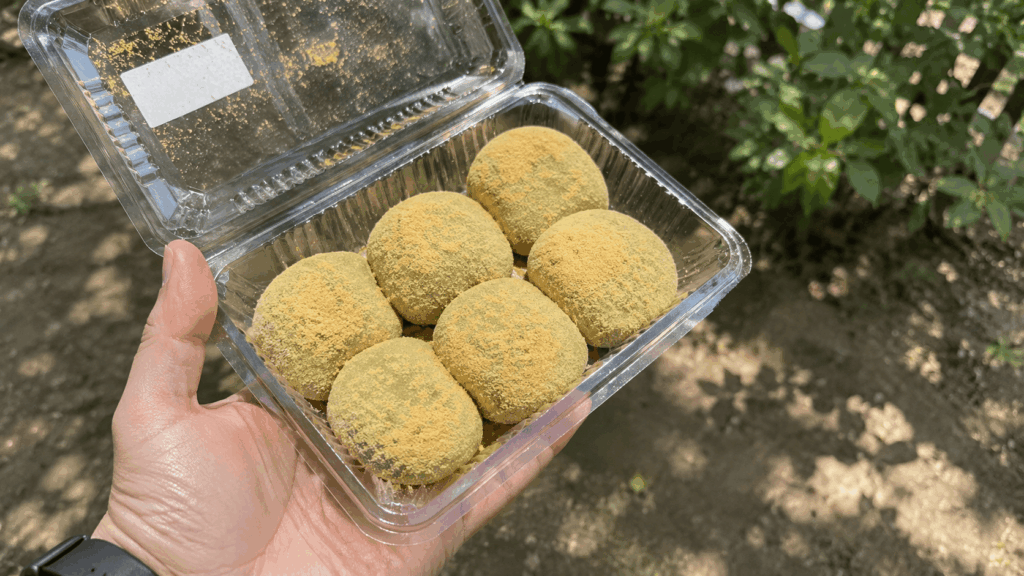
Yes. The live pounding is memorable, but the mochi itself is the real reason Nakatanidou is worth visiting. The shop’s signature yomogi mochi is soft, fresh, and filled with sweet red bean paste, with a dusting of roasted soybean powder.
If you miss the pounding, buying and eating one fresh is still a worthwhile Nara food experience. It is one of the best quick snacks to try alongside other places to eat near Kintetsu Nara Station and Nara Park.
Tip: Eat it as soon as possible after buying it. Fresh mochi is at its best when it is still soft and just made.
If the hands-on pounding experience is the part you are most curious about, check dates for a separate traditional mochi pounding experience with tasting later in your trip.
Nakatanidou Mochi: What to Buy & How to Eat It
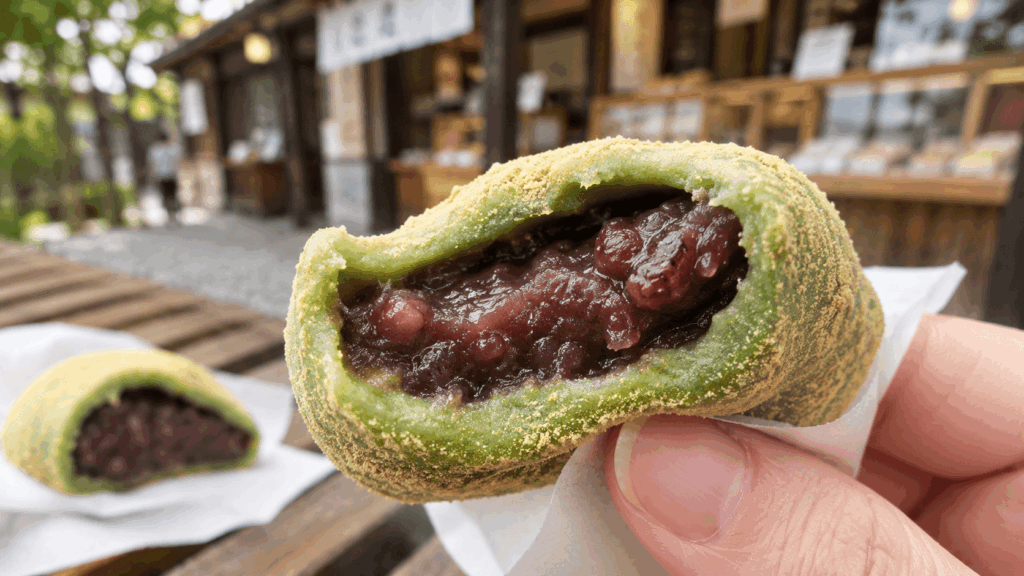
Most visitors come for the live pounding, but buying the mochi itself is the real highlight. Nakatanidou is best known for its fresh yomogi mochi—mugwort-flavored mochi that is soft, stretchy, and filled with sweet red bean paste.
Should You Eat It Right Away?
Yes. Fresh mochi is best enjoyed as soon as possible after purchase, while the texture is still soft and delicate. If you carry it around for later, the mochi will harden and lose its signature chewiness.
Is It Good as a Souvenir?
It can work as a same-day food souvenir if you are heading back to your accommodation within a few hours, but it is better thought of as something to eat fresh. Nakatanidou’s official product page notes that the best-before date is the same day and that regional shipping is not available.
Ingredients, Allergies & Eating Safely
Nakatanidou lists glutinous rice, mugwort (yomogi), red beans, and kinako (roasted soybean powder) among its ingredients. Kinako contains soy, so ask staff about ingredients and cross-contact if you have a food allergy. For children and anyone who may have difficulty chewing or swallowing, cut mochi into small pieces, chew thoroughly, and avoid eating it in a hurry. Check with the shop about individual dietary needs rather than assuming a recipe is allergen-free.
Can You Take Photos and Videos?
Visitors commonly take photos and videos during the pounding, but this should not be taken as blanket permission for every filming setup. Follow any instructions from the shop and crowd-control staff, avoid blocking the sidewalk or road, and ask before using intrusive equipment or filming people closely.
Kai’s tip: Treat fresh mochi as a same-day snack, not a suitcase souvenir. Buy only what you can comfortably eat or share that day. The texture is the point, and that texture does not improve by carrying it around for hours.
DIY vs. Guided Tour: Which Makes More Sense?
For most travelers, Nakatanidou is easy to visit on your own. It is centrally located, well known, and simple to combine with other major sights in Nara. A self-guided visit is usually enough if your schedule is flexible and you do not mind a little waiting.
| Criteria | Self-Guided | Guided Tour |
|---|---|---|
| Ease | Simple if you are already visiting central Nara. | Useful if you want the mochi stop built into a wider Nara plan. |
| Timing | You may need to wait or adjust on the spot. | Provides a structured itinerary, but a mochi tasting stop does not guarantee seeing a live pounding round. |
| Cost | No entry fee; mochi prices should be checked at the shop or official page. | Tour prices vary, so check availability and inclusions before booking. |
| Reservation needed | No. Just show up. | Yes. Book in advance for availability. |
| Best For | Independent travelers with a flexible schedule. | Visitors who want a smoother itinerary with less planning. |
If Nakatanidou is just one stop on a bigger Nara day trip itinerary, a guided tour can make the overall route easier. If watching the live pounding is your main target and you have time to adapt, visiting on your own is usually the better choice because you can adjust your wait or return later on your own terms.
Which Nara Tour Should You Choose?
If you mainly care about Nakatanidou, old-town alleys, and a compact Naramachi walk, I would start with the shorter old town and fresh mochi option, which lists a fresh-mochi tasting stop. If this is your first time in Nara and you want the deer, Todai-ji, and the Great Buddha handled for you, the broader Nara tour makes more sense. Check each operator’s current itinerary and the exact tasting inclusions before booking.
| Tour Option | Best For | Why Choose It | Price |
|---|---|---|---|
| Nara Old Town Alleys, Temple Culture & Fresh Mochi | Travelers focused on Naramachi and a short cultural walk | Better fit if Nakatanidou and the old town are your main interests | Check current price |
| Nara: Deer, Great Buddha & Traditional Mochi Tasting | First-time visitors who want the classic Nara highlights | Better fit if you want Nara Park, Todai-ji, deer, and mochi in one guided route | Check current price |
Review signal: The broader Nara tour has published traveler reviews. Read the latest comments for details about the guide’s explanations, pace, and whether stops matched the advertised itinerary; a review count alone cannot tell you which tour is right for your trip.
Check availability for the old town and fresh mochi tour
Compare the broader Nara deer, Great Buddha, and mochi tasting tour
FAQ: Nakatanidou Mochi Pounding in Nara
Is there a fixed Nakatanidou mochi pounding schedule?
No. The pounding does not happen at fixed times throughout the day. Nakatanidou explains that it pounds mochi while watching sales and demand, rather than following a posted timetable.
What is the best time to visit?
Your best chance is usually from after noon to before early evening, when the shop is busier and more likely to need another fresh batch.
How much does the mochi cost?
Official listed prices are ¥600 for three, ¥1,200 for six, and ¥2,000 for ten (¥200 per piece in a box). Confirm the current single-piece price at the counter.
Does Nakatanidou accept credit cards?
Bring cash. Payment options can change, but a cash-first approach is safest for small food shops in Japan.
What day is Nakatanidou closed?
Tuesday is commonly listed as a closed day by third-party directories, but exceptions are possible. Check the official Instagram account for current closure information.
What should I do if I arrive between batches?
Ask the staff when the next batch is expected, then decide whether waiting fits your schedule. Sarusawa Pond is a short walk away if you want to relax and come back.
How long does the live pounding last?
The visible pounding is brief, often only a few minutes, but the exact duration varies. Stay nearby if staff indicate a batch is about to start.
Can I take photos and videos?
Visitors commonly film, but always follow on-site instructions and keep the sidewalk and roadway clear. Avoid disruptive equipment or close-up filming of others without permission.
Does Nakatanidou sell out?
It can, especially on busy days. That is one reason it is worth checking official updates and avoiding a very late visit if Nakatanidou is important to your Nara plan.
Is it still worth going if I miss the live pounding?
Yes. The fresh yomogi mochi is the main attraction, and many visitors find that tasting it matters more than seeing the action live.
Final Verdict: Is Nakatanidou Worth Visiting?
Yes—especially if you understand that there is no fixed schedule. The best way to enjoy Nakatanidou is not to chase an exact performance time, but to visit during the busier part of the day, ask about the next batch, and stay flexible.
Choose Nakatanidou if:
- You want to try exceptionally fresh yomogi mochi in Nara.
- You are already exploring the area around Kintetsu Nara Station, Sarusawa Pond, or Naramachi.
- You do not mind a short wait to potentially see the famous high-speed pounding.
Consider another option if:
- Seeing a live demonstration at a guaranteed time is your top priority—look for a structured mochi-making experience instead.
- You have very limited time in Nara and cannot afford any waiting.
- Your schedule is completely fixed and any uncertainty is unacceptable.
For families: The live pounding is brief and can hold kids’ attention. Keep the wait short by asking staff about the next batch timing, and serve mochi in appropriately small bites for children who can safely chew it.
For first-time visitors to Nara: Nakatanidou is worth adding to your route. It is a quick stop that pairs naturally with Nara Park, Todai-ji, and Naramachi. If you want those pieces connected for you, compare a guided route before you finalise your day.
For travelers on a tight schedule: If you only have a few hours in Nara, skip the wait and just buy the mochi. The taste alone justifies the stop.
My Final Recommendation
If you are comfortable navigating central Nara yourself, visit Nakatanidou independently, ask about the next batch, and move on if the wait is too long. But if you want the mochi stop to fit smoothly into a guided old-town route, the Nara old town and fresh mochi tour is the more efficient choice.
- Book the old town tour if: You want a compact cultural walk with Nakatanidou-style food context.
- Book the broader Nara tour if: You want deer, Todai-ji, the Great Buddha, and mochi tasting in one route.
- Go DIY if: You are happy to be flexible and treat the live pounding as a bonus.
Check availability for the Nara old town and fresh mochi tour
If you see the pounding live, it is a memorable bonus. If you do not, the freshly made yomogi mochi is still enough reason to stop. That is what makes Nakatanidou one of the most famous and worthwhile food experiences in Nara.

Hi, I’m Kai. I’m a Tokyo-based travel writer, tourism industry insider, and the author of a published guidebook for international visitors to Japan. With over 10 years of professional experience at a leading Japanese tourism company, my mission is to help you skip the tourist traps and navigate Japan’s best destinations like a local. I believe the perfect day trip is like a traditional kaiseki meal: a beautiful balance of precise planning and unforgettable seasonal discovery. When I’m not out conducting field research, you’ll usually find me drafting new itineraries with one of my favorite fountain pens!